Saigon’s Subterranean Secrets

IMG_2827

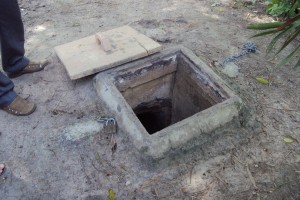
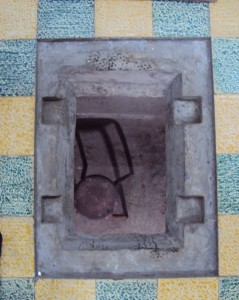
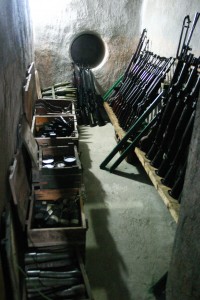
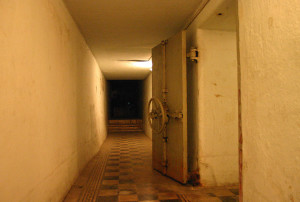
Underground display at Secret Cellar “B,” 122/351 Ngô Gia Tự

With so many other destinations to visit, Hồ Chí Minh City is often regarded as little more than a convenient starting or finishing point for a tour of Việt Nam. However, there is a wealth of untapped touristic resources that could help turn this city into a great deal more than a brief stopover. Prominent amongst them are the little-known registered historic buildings that form the city’s underground tunnel and cellar network.

IMAGE 3 Underground in the Phú Thọ Hòa tunnels

Underground at the Phú Thọ Hoà Tunnels

Secret passageways and compartments may be found throughout the world, but it’s hard to think of anywhere else where underground tunnels and cellars have been put to such extensive or indeed effective wartime use as Hồ Chí Minh City. Which makes it all the more surprising that, in this age of mass tourism, such a prime touristic resource remains unexploited.

The story of Vietnamese reliance on underground hideouts during the struggle for independence may be traced back to the period immediately after World War II, when the French returned to Sài Gòn, driving Việt Minh forces into the hinterland. In the years that followed, the revolutionary command in the south came up with an ingenious solution to the problem of concealing their activities from French eyes – hiding men and weapons underground.

The prototype for many subsequent revolutionary tunnel complexes was the Phú Thọ Hoà Tunnels in Sài Gòn’s northwest suburb of Tân Phú, where, early in 1947, Việt Nam’s first network of interconnected underground caverns was dug beneath cassava fields to serve as a guerilla base and storage facility.

IMAGE 2 One of the Phú Thọ Hòa tunnel entrances

A tunnel entrance at Phú Thọ Hoà

Packed with weapons, food and medical supplies, they played a crucial role in the First Indochina War. However, their close proximity to the French high command in Sài Gòn proved something of a mixed blessing and revolutionary activity soon switched to the more remote Củ Chi underground base, construction of which had got underway soon after the completion of the Phú Thọ Hoà complex.

The development of the Củ Chi Tunnels after 1962 and of residential tunnel networks at Vịnh Mốc, Vĩnh Linh, Mụ Giai and Kỳ Anh in the heavily-bombed “DMZ” after 1965 is of course the stuff of legend. Yet few people realise that Hồ Chí Minh City is also home to an extraordinary network of secret cellars, which were dug under residential buildings from the late 1940s onwards to serve as covert printing houses, weapons stores or safe houses.

Covert publishing

IMG_2834

Underground display at Secret Cellar “B,” 122/351 Ngô Gia Tự

Propaganda was crucial to the success of the revolution, and both the Việt Minh and later the National Liberation Front (NLF) went to great lengths to keep the population informed about events in the north.

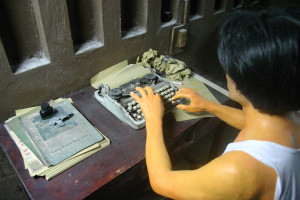
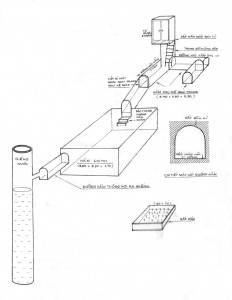
Built to replace an earlier and less secure cellar under a house near Bà Chiểu Market, Secret Cellar “B” (122/351 Ngô Gia Tự, Q 10) was dug under cover of darkness between February and May 1952 by a team of operatives led by Hà Minh Lân, who set up a shrine-making business as daytime cover for the operation. Highly sophisticated in both design and construction, the cellar housed a covert printing press that functioned for over five years, publishing in leaflet form the latest news transcribed from northern radio broadcasts.

IMAGE 5 The ingenious layout of Secret Cellar B

The ingenious layout of Secret Cellar “B”

The cellar was abandoned in December 1957 for security reasons and decommissioned in 1959 by stuffing it with soil-filled containers that preserved the structure intact until after Reunification.

As the insurgency gathered pace in the early 1960s, several other covert printing presses were set up in the city. One of these, the Secret Printing Cellar of the Chinese-language Propaganda and Training Committee in Chợ Lớn, was originally established at 81 Gò Công. However, after several years of operation that address was deemed insecure, so in mid-1965 it was relocated to a quiet back-alley house at 341/10 Gia Phú in District 6. An 11-member NLF team, once more posing as a family, dug two cellars below the house and installed printing machinery. Metal stamping machinery was also acquired to manufacture school bag locks above ground as cover and drown out the clatter of the printing press below their feet. The underground printing press on Gia Phú operated without discovery until 1970, when it moved to another location.

Weapons storage

IMAGE 7 The weapons storage cellar at 183-4 Ba Tháng Hai

The weapons storage cellar at 183/4 3 Tháng 2

The NLF also dug numerous secret cellars to store weapons and explosives brought from rural bases such as Củ Chi, particularly in the run-up to the 1968 Tết Offensive. One of the earliest examples was dug in 1965 by shoemaker and seasoned revolutionary Đỗ Văn Căn under his house at 183/4 3 Tháng 2. Over the four-month period from July to October 1965, Căn secretly collected 50kg of explosive and detonators, 50 grenades, seven AK47 sub machine guns, several pistols, 21,000 bullets and a number of other items of weaponry from a warehouse in An Đông, transporting them back to his house concealed in bales of rubber.

They were stored in his secret cellar until January 1968, when plans were made to use them in an attack on the city Police Headquarters. However, the operation was aborted and the weapons and explosives remained undiscovered in the cellar. In April 1975, as PLA forces approached Sài Gòn, they were unpacked and prepared for an attack on the nearby nearby ARVN barracks, “Camp Lê Văn Duyệt.” However, the Sài Gòn government surrendered before the attack could take place.

IMAGE 8 The weapons cellar at 287-70 Nguyễn Đình Chiểu

The weapons storage cellar at 287/70 Nguyễn Đình Chiểu

Unlike the munitions in the cellar on 3 Tháng 2, those stashed beneath the house at 287/70 Nguyễn Đình Chiểu did see combat. Early in 1967 the house’s owner, NLF operative Trần Văn Lai, dug two cellars underneath the house and from June 1967 onwards, pistols, rifles, grenades and over 350kg of TNT were transported there in hollowed-out boxes and specially-adapted wickerwork baskets and plant pots.

On the evening of 30 January 1968, the 19-strong Special Forces Team 5 collected them and launched an attack on the heavily-defended south gate of the Independence Palace. The attack failed and all of the team members lost their lives, but despite a subsequent search of the address, the secret cellar was never discovered.

Concealment

IMG_2992

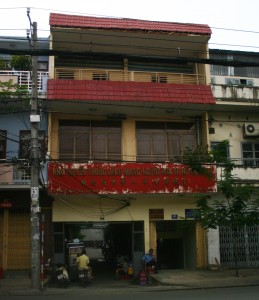
91 Phạm Văn Chí in District 6

Some of the secret cellars established in Sài Gòn and Chợ Lớn during the 1960s were intended not as printing houses or munitions stores, but rather for concealing revolutionary activists.

In 1963 a Chợ Lớn businessman known as Lưu Vinh Phong purchased a house at 91 Phạm Văn Chí, right opposite the District 6 Police Station and Courthouse. He then proceeded to dig a secret cellar under the floor and also created a secret compartment behind a false wall at mezzanine level to hide revolutionary cadres.

From late 1967, many members of the National Chinese Language Committee of the South were successfully hidden in these two spaces, facilitating preparations for the Tết Offensive of 1968. As with other covert bases in the city, a craft workshop was set up here to provide cover.

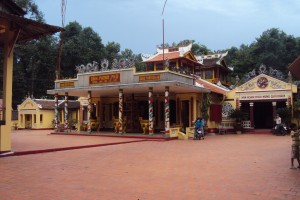
Phong Phú Communal House in District 9 won its revolutionary spurs during the struggle against the French – its remote location made it an ideal spot to train revolutionary youth militia groups and assemble supplies, food and weapons for the armed struggle against colonialism.

IMAGE 9 Phong Phú Communal House

Phong Phú Communal House in District 9

The Communal House was destroyed by the Việt Minh during a scorched earth campaign in 1948, but it was rebuilt in 1952 and later played a key role, becoming the headquarters of revolutionary forces in the Thủ Đức area. In 1960 the entire Communal House Association was arrested on suspicion of ties with the revolution. However, they would not be shaken from their efforts and continued to channel money and supplies to revolutionary forces for the duration of the war. After suffering further damage in 1969, the Communal House had to be rebuilt yet again, this time with a secret cellar underneath a bathroom to hide revolutionary cadres during raids.

Hot-footing it from the palace

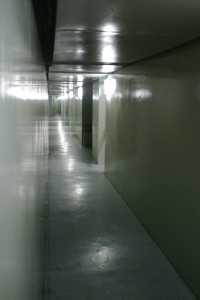
Yet it wasn’t just revolutionaries who dug secret cellars. When South Vietnamese President Ngô Đình Diệm ordered the construction of a new Independence Palace in February 1962 after the bombing of the original Norodom Palace, the plans by architect Ngô Viết Thụ included a network of underground tunnels, reinforced to withstand the impact of 500kg bombs.

IMAGE 10 Underground at the Unification Palace

The underground tunnels built for South Vietnamese President Ngô Đình Diệm at the Independence Palace

At the start of the four-year construction period, Diệm took up temporary residence in the Gia Long Palace – the former French Lieutenant Governor’s Palace, now the Hồ Chí Minh City Museum at 65 Lý Tự Trọng in District 1 – and immediately ordered the construction of a second network of tunnels under that building, so that he could take shelter and if necessary escape in the event of a further coup attempt.

The fact that the tunnels under the Gia Long Palace were also designed by architect Ngô Viết Thụ accounts for the persistent rumour that a connecting tunnel was built between the two palaces. Both sets of tunnels may now be visited by tourists, but with sections of each still cordoned off, that rumour remains alive and well!

Recently-unearthed US photographs and documents (see Saigon’s mystery tunnels) suggest that Diệm also commissioned the construction of at least two other tunnels, leading from the Gia Long Palace all the way to the Mạc Đĩnh Chi Cemetery [now Lê Văn Tám Park] and the Saigon Zoo.

Ironically, when the final coup did take place in November 1963, Diệm only made use of the tunnels under the Gia Long Palace to escape out the back door onto Lê Thánh Tôn street and flee by car to Chợ Lớn, where he and his brother Nhu were assassinated the following day.

IMG_3734

The tunnels built for South Vietnamese President Ngô Đình Diệm under the Gia Long Palace, now the Hồ Chí Minh City Museum

Collectively, the secret tunnels and cellars of Sài Gòn represent a unique type of “revolutionary architecture” which played a crucial role in the fight for independence. Those examples which have survived stand as a tribute to their creators and to the unsung heroes who lived and worked in them.

And for Hồ Chí Minh City’s tourism companies, they provide an opportunity to breathe new life into the city’s tourism industry.

Getting there

Phú Thọ Hòa Tunnels (Khu Di tích Địa đạo Phú Thọ Hòa) at 139 Phú Thọ Hoà, Q Tân Phú are open daily from 7.30am-11.30am and 2pm-5pm.

Secret Cellar “B” – Printing Office of the Patriotic Support Association (Hầm bí mật “B” – Cơ sở In ấn của Hội Ủng hộ Vệ Quốc đoàn) at 122/351 Ngô Gia Tự, Q 10 and the Secret Weapons Hiding Place (Hầm bí mật chứa vũ khí) at 183/4 Ba Tháng Hai, Q 10 may be viewed by special arrangement with the District 10 Office of Culture, Sports and Tourism, 474 Đường 3 Tháng 2, Phường 14, Quận 10, TP.HCM

Secret Printing Cellar of the Chinese-language Propaganda and Training Committee (Hầm bí mật in tài liệu của Ban Tuyên huấn Hoa vận) at 341/10 Gia Phú, Q 6 and Sài Gòn-Gia Định Special Region Committee Secret Headquarters (Cơ sở bí mật của Thành ủy Sài Gòn-Gia Định) at 91 Phạm Văn Chí, Q 6 may be viewed by special arrangement with the District 6 Office of Culture, Sports and Tourism, UBND Quận 6, 107 Cao Văn Lầu, Phường 1, Quận 6, TP.HCM

Secret Weapons Hiding Place Museum (Bảo tàng Hầm bí mật chứa vũ khí) at 287/70 Nguyễn Đình Chiểu, Q 3 opens Mon-Fri on request from 7.30am-11.30am and 2pm-5pm.

Phong Phú Communal House (Đình Phong Phú) at Khu phố 3, Phường Tăng Nhơn Phú B, Q 9 is open daily from 7am-6pm.

Unification Palace (the former Independence Palace, Dinh Thống nhất) at 135 Nam Kỳ Khởi Nghĩa, Q 1 opens daily at 7.30am-11am, 1pm-4pm, admission Đ30,000 adults, Đ3,000 children.

Hồ Chí Minh City Museum (Bảo tàng Thành Phố Hồ Chí Minh) at 65 Lý Tự Trọng, Q 1, opens daily from 8am-4pm, admission Đ15,000.

Tim Doling is the author of the guidebook Exploring Saigon-Chợ Lớn – Vanishing heritage of Hồ Chí Minh City (Nhà Xuất Bản Thế Giới, Hà Nội, 2019)

A full index of all Tim’s blog articles since November 2013 is now available here.

Join the Facebook group pages Saigon-Chợ Lớn Then & Now to see historic photographs juxtaposed with new ones taken in the same locations, and Đài Quan sát Di sản Sài Gòn – Saigon Heritage Observatory for up-to-date information on conservation issues in Saigon and Chợ Lớn.

Old Saigon Building of the Week – Former Grall Hospital, Late 1870s

Grall D iii

The Children’s Hospital 2

This article was published previously in Saigoneer http://saigoneer.com

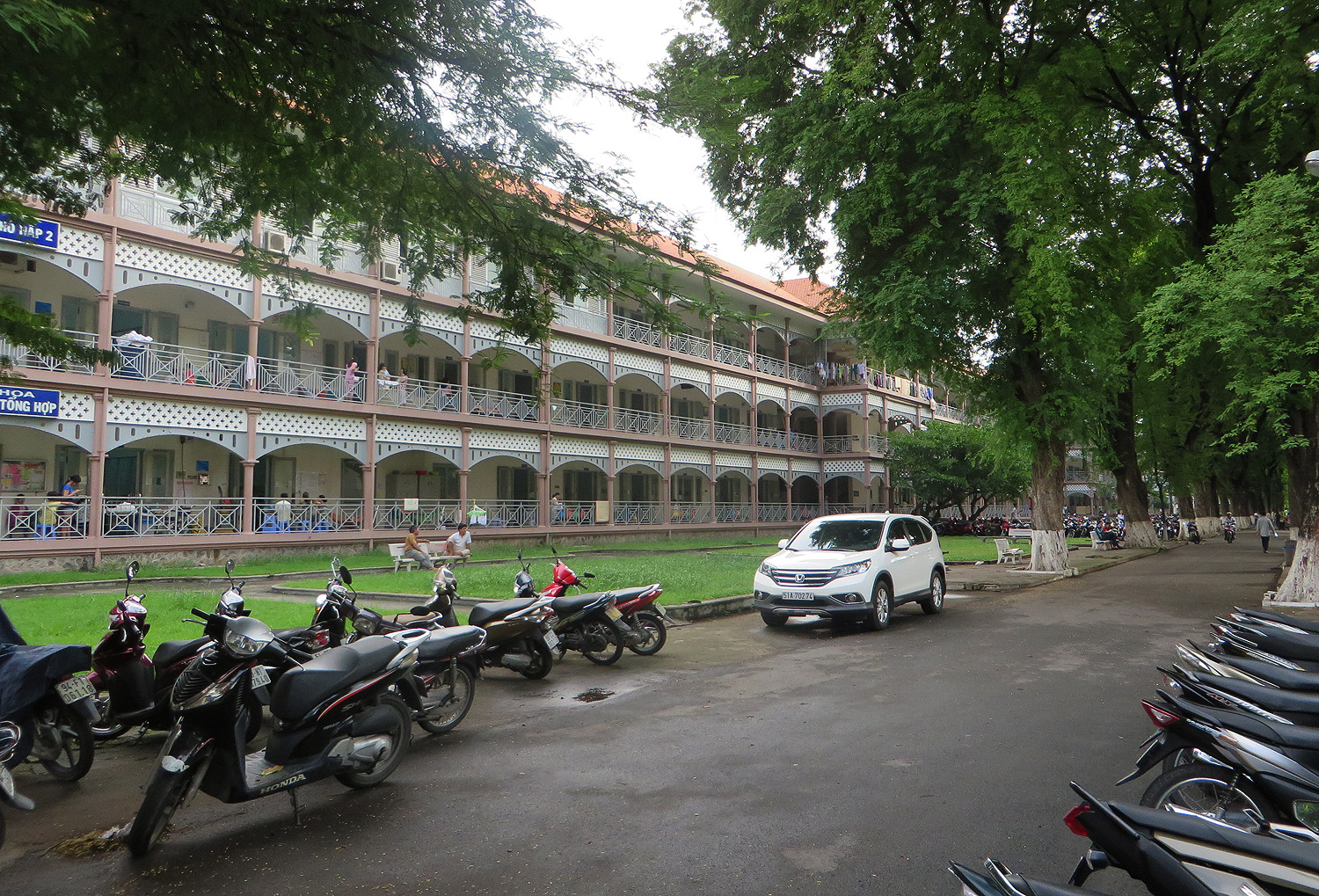
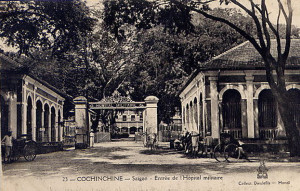
One of the oldest hospitals in Asia, the Children’s Hospital 2 (Bệnh viện Nhi đồng 2) at 14 Lý Tự Trọng began life as a French military hospital.

Saigon 1864

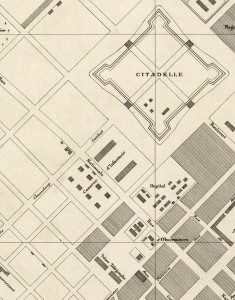
The original location of the hospital is marked clearly on this 1864 map

Founded in 1862 by Admiral-Governor Louis-Adolphe Bonard (1805-1867), the Hôpital Militaire was originally located at the southeast corner of the rue Nationale [Hai Bà Trưng] and boulevard Norodom [Lê Duẩn] intersection, where the Kumho Asiana Plaza now stands.

Its primary function was to serve the marine infantry, who were then garrisoned in makeshift accommodation on the northern side of the same junction. However, from the outset it treated colonial civil servants as well as French and Vietnamese soldiers.

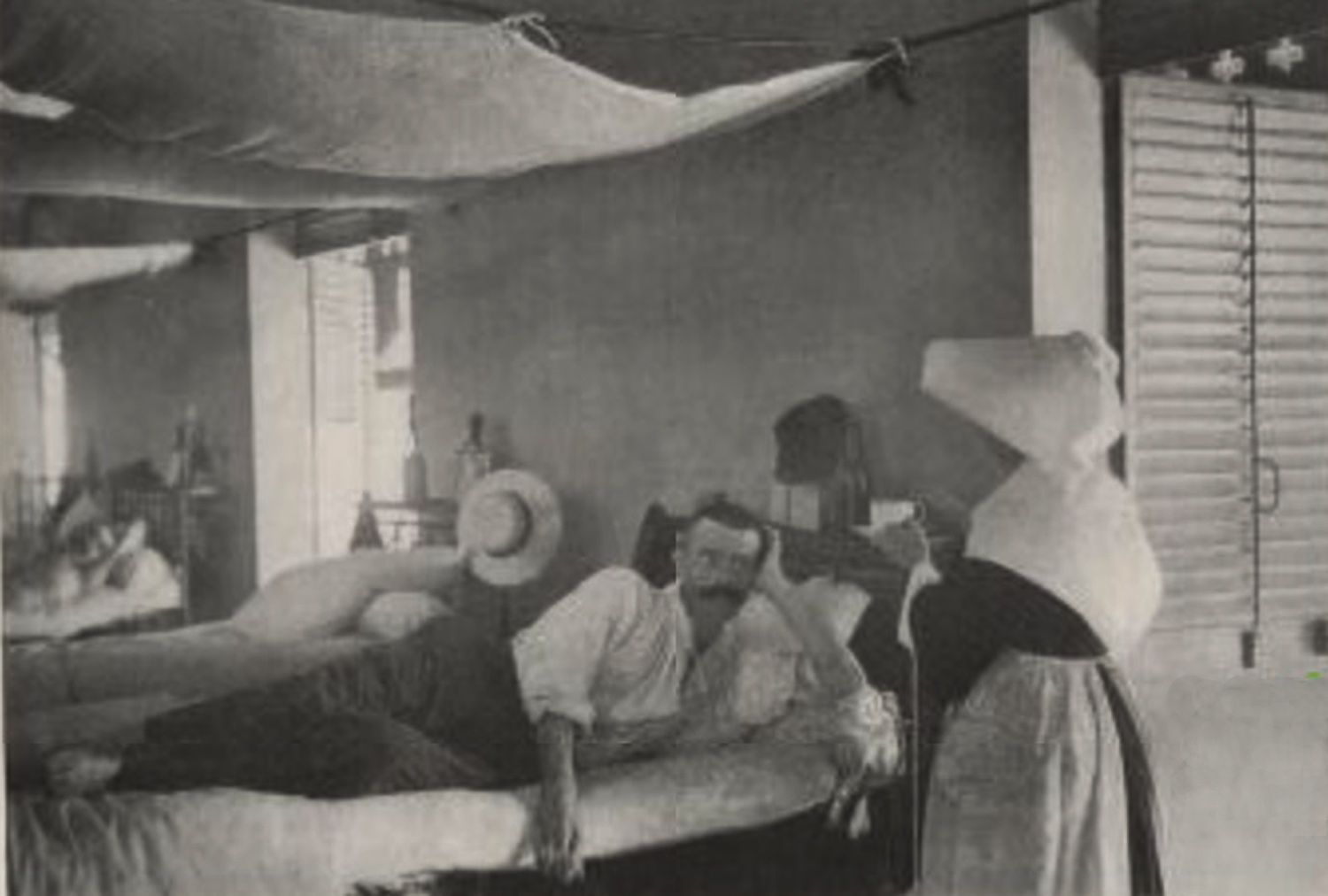
The hospital was staffed by French military doctors, with nursing support provided by the Sisters of Saint-Paul de Chartres.

Published in 1900, Les missions catholiques françaises au XIXe siècle, a history of the French Catholic foreign missions in the 19th century, describes the facilities of this early Military Hospital:

“Naturally, the first Military Hospital was nothing like the magnificent property that exists today: there were just three small rooms for the sick, a cramped room for the Sisters, and another tiny room of the same size for the administrator and doctors – that was all! The furniture was no better; biscuit boxes served as chairs, empty bottles as chandeliers. But the good Sisters hardly thought of comfort; their main concern was looking after the sick.”

4919069256_0957bd006f_o

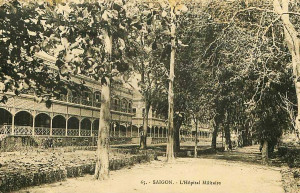
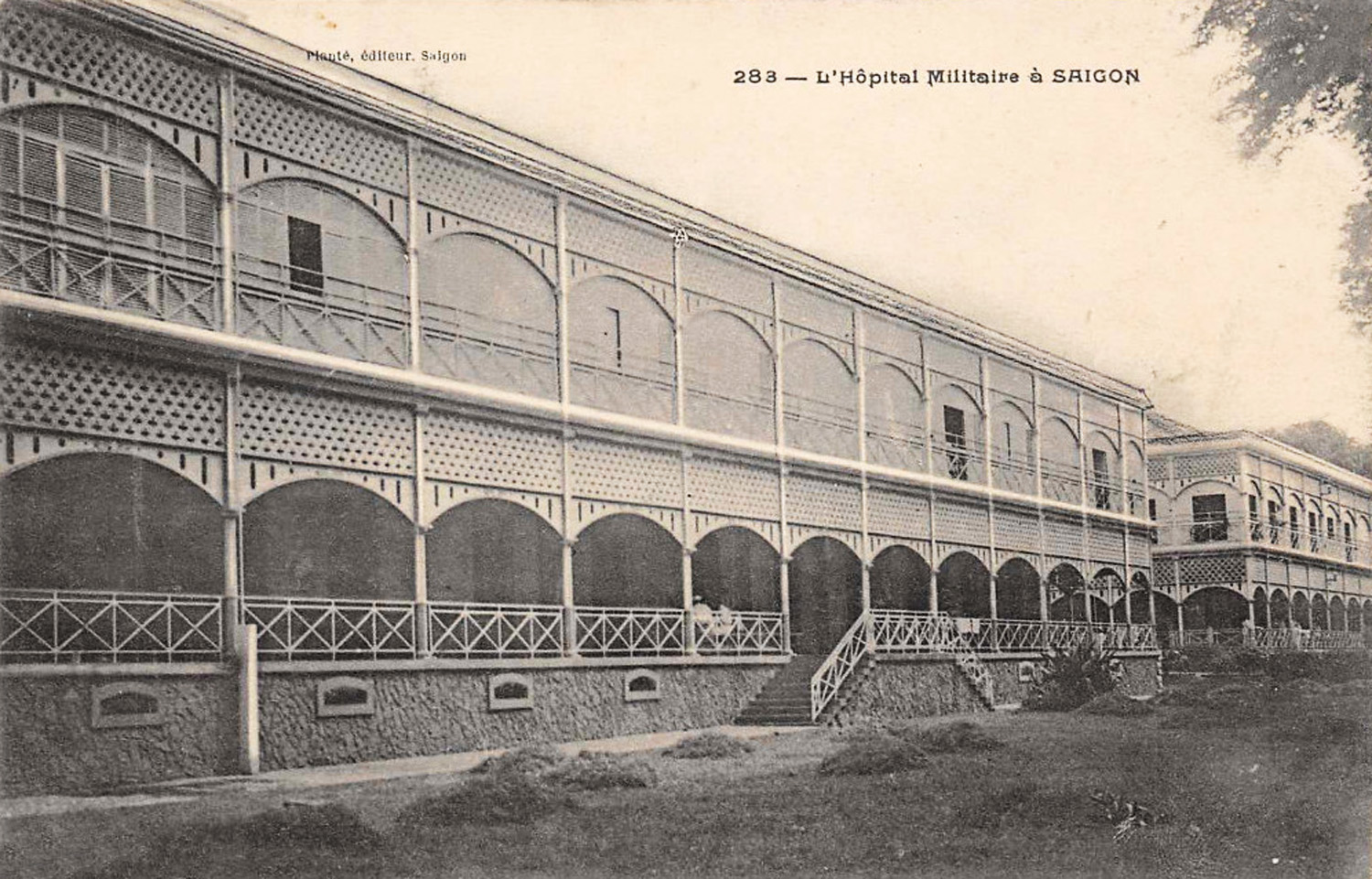
The Military Hospital in the early 20th century

In the late 1870s, the hospital was rebuilt at its current location, 14, rue Lagrandière [14 Lý Tự Trọng], to plans by Lieutenant-Colonel J Varaigne, Director of the Marine Infantry Engineering Corps, and his deputy, Captain A A Dupommier.

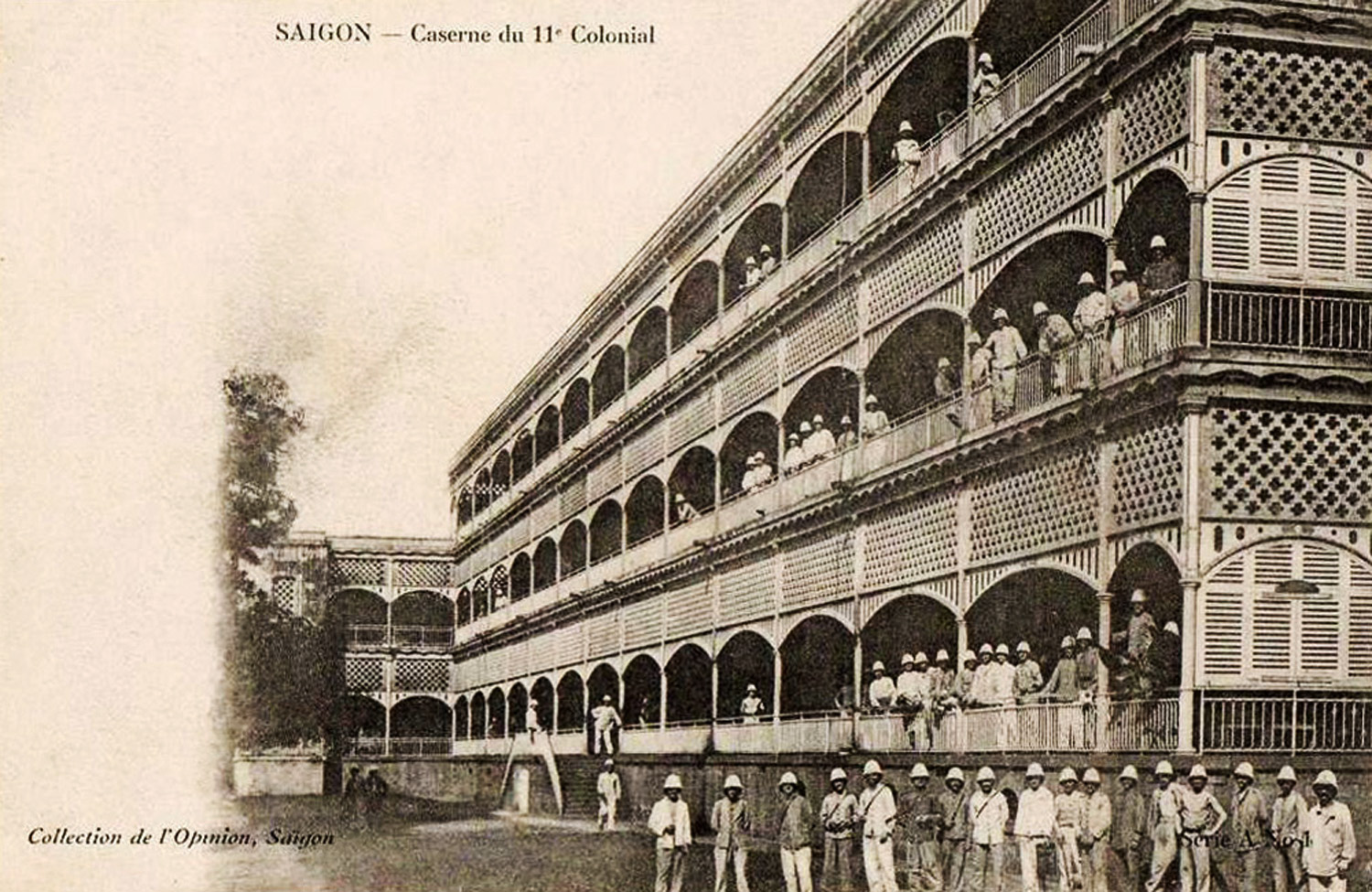
Their design for the Colonial Infantry Barracks (1870-1873) had already attracted considerable acclaim, and it was therefore decided that the hospital buildings should be built in identical style.

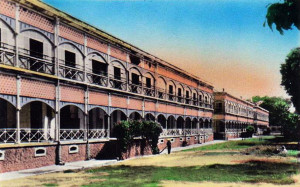
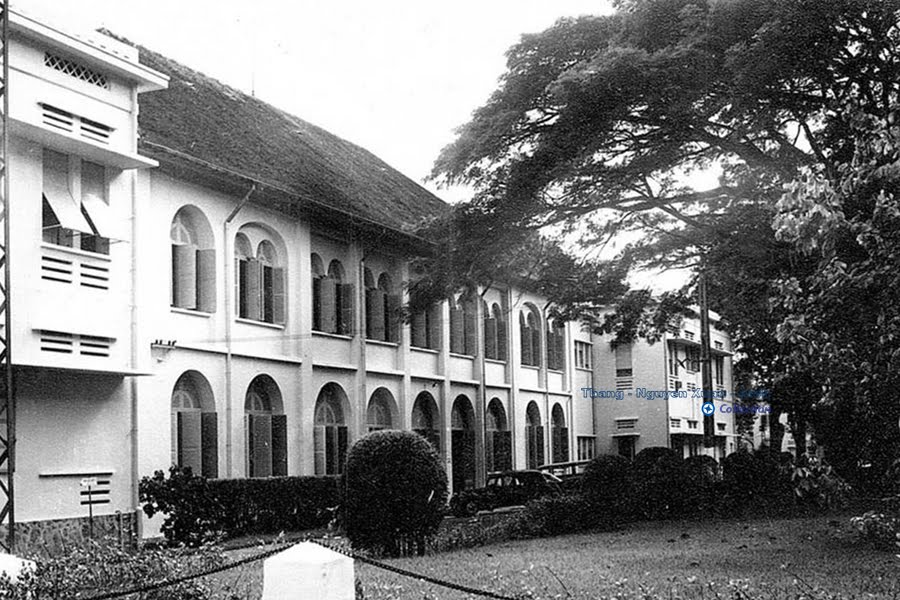
The hospital buildings comprised a series of large pavilions, built from cast iron and brick on raised granite platforms. Linked to each other by gangways, they overlooked a central tree-lined avenue and incorporated peripheric verandas to enhance ventilation and optimise sanitary conditions. All of the construction materials were transported from France.

4492269927_191d6f0038_o

The main entrance to the Military Hospital in the early 20th century

In his memoirs of 1905, former Indochina Governor-General Paul Doumer (1897-1902) described the Military Hospital and the Colonial Infantry Barracks as “models of their kind…. The Hospital in particular, with its huge buildings and gardens lined with trees, plants and flowers, gives an impression of serene beauty that should make pain more bearable, and death sweeter for those who will die – too many, alas!”

It was in one of the hospital’s smaller pavilions that Albert Calmette (1863-1933), tasked with developing vaccines against rabies and smallpox, founded the first Pasteur-Institut outside France in 1891.

In 1904, when Alexandre Yersin (1863-1943) set up a larger Pasteur-Institut in Nha Trang, the Pasteur-Institut in Saigon became its annex. It was relocated to its current address, 167 rue Pellerin [Pasteur], in 1905.

SAIGON - HOPITAL GRALL en 1951

The Grall Hospital in 1951

In 1925, the Hôpital Militaire was transformed into a general hospital and renamed the Hôpital Grall (Grall Hospital), in honour of the former Cochinchina Inspector-General of Medicine, Dr Charles Grall.

During the late colonial period, the hospital’s facilities continued to expand, and by the early 1950s, the Grall offered in excess of 500 beds and was recognised as a flagship of French medicine in Southeast Asia.

After the withdrawal of the last French troops from Indochina in April 1956, an agreement was signed between the French and RVN Foreign Ministries, permitting the French to continue running the hospital. During the 1960s, the hospital’s French medical staff ran training programmes at several universities and teaching hospitals, set up leprosy and polio treatment centres, and conducted several important research projects on Southeast Asian pathology.

DSC01754

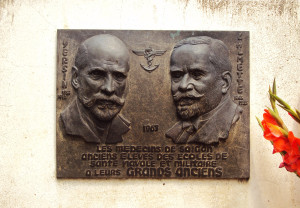
The stele honouring the memory of scientists Calmette and Yersin

In 1963, a stele was set up in the hospital grounds, honouring the memory of scientists Calmette and Yersin, founders of the Pasteur-Institut in Việt Nam, which began life at the Military Hospital.

Following Reunification, the Grall Hospital resumed operation as a general hospital, but on 19 May 1978, it was transformed into a specialist pediatric hospital.

In May 1990, the Association des Anciens et des Amis de l’Hôpital Grall (Alumni and Friends Association of the Grall Hospital) was set up. Five months later, a Memorandum of Understanding was signed between France and Việt Nam, providing for “the Rehabilitation of Children’s Hospital No. 2 in Hồ Chí Minh City, known as the Grall Hospital,” including the upgrading of buildings and the improvement of medical and surgical equipment.

Grall front gate A ii

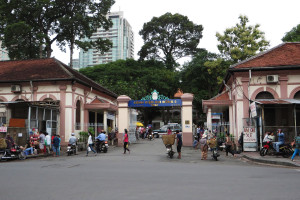
The main entrance to the Children’s Hospital 2 today

Carried out in stages between 1991 and 1995, this major project restored the old hospital pavilions sympathetically, adding an additional floor to what had previously been two-storey buildings, yet retaining all of the original architectural features.

Set amidst lush gardens and shady trees, the Children’s Hospital 2 has been cited as a prime example of how good architecture can make a healthcare environment welcoming to patients and their families, rather than treating them as victims in a stark and sterile space.

SAIGON - CASERNE DU 11e COLONIAL

The design of the 11th Colonial Infantry Barracks buildings became the model for those in the Military Hospital

574_001

The Military Hospital in the late 19th century

Patient

A patient being cared for by one of the Sisters of Saint-Paul de Chartres in the Military Hospital in the early 20th century

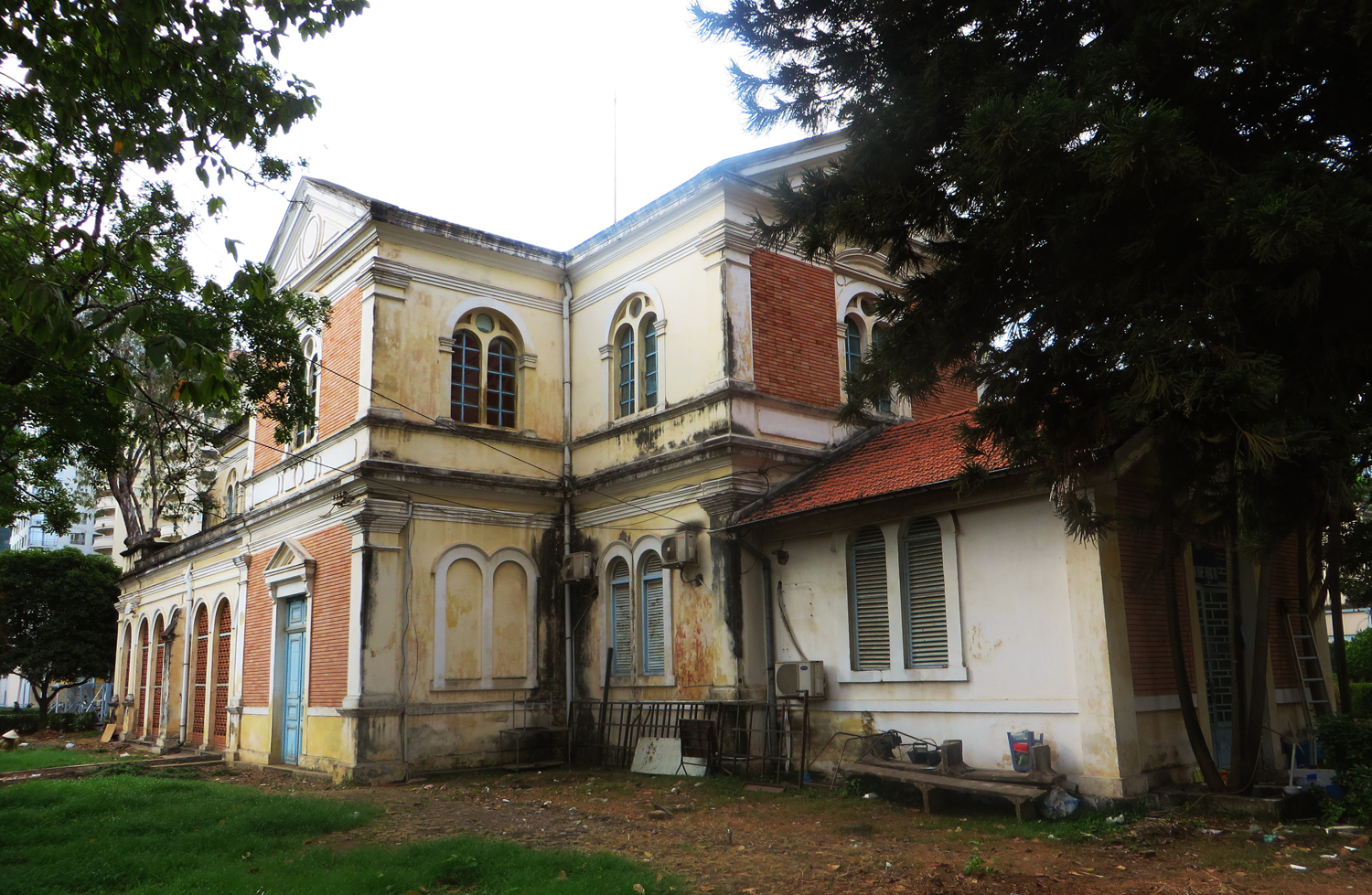
IMG_8199

The hospital chapel, now used as a store

Dr Grall ii

In 1925, the Hôpital Militaire was renamed the Hôpital Grall, after former Inspector-General of Medicine, Dr Charles Grall

Grall Hospital 1946-54 i

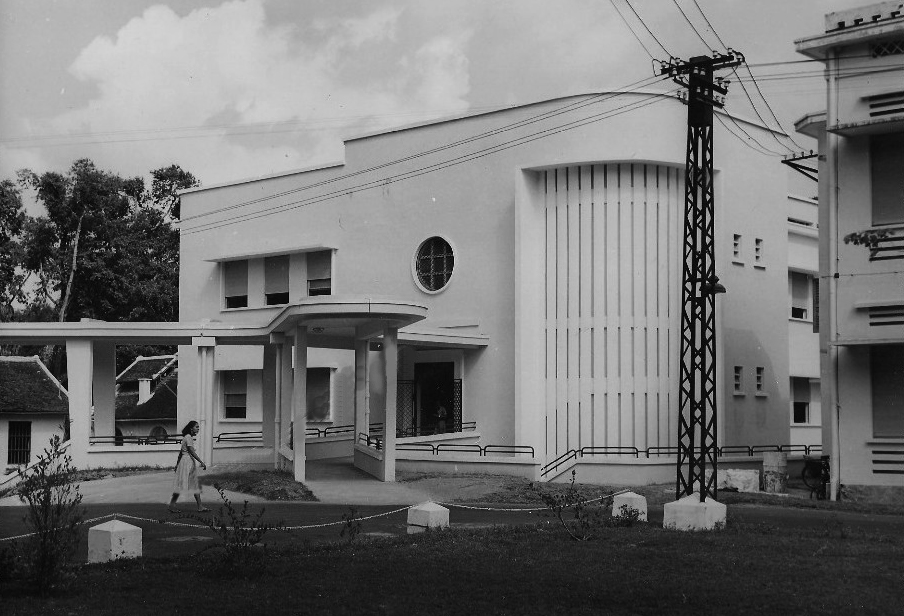
An art deco hospital building, added in the early 1930s

Part of the Grall Hospital in the 1940s

Saïgon 1947 - Hôpital Grall. Infirmiers et boys annamites

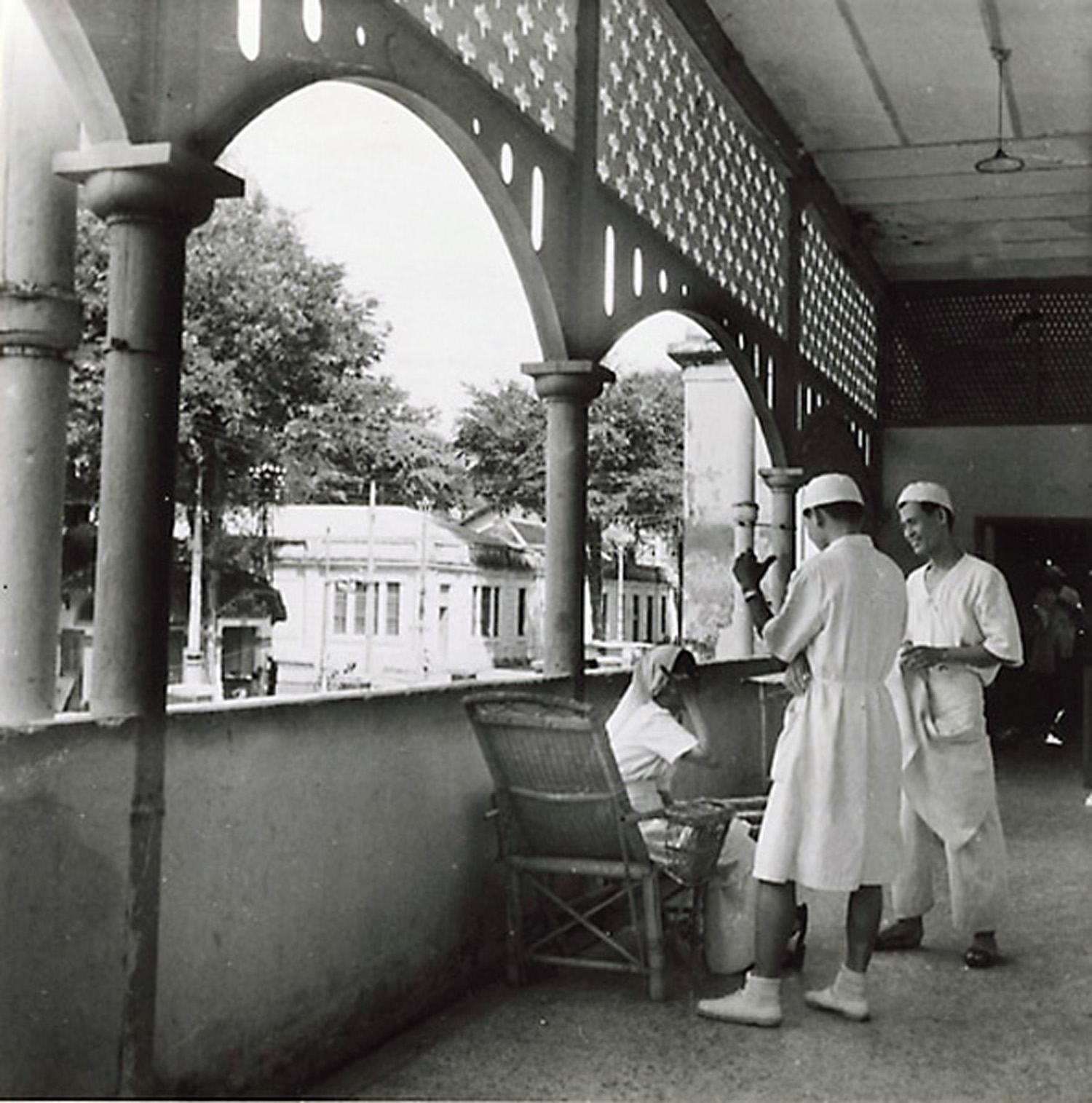
Nurses attend to a patient in 1947

Tim Doling is the author of the guidebook Exploring Saigon-Chợ Lớn – Vanishing heritage of Hồ Chí Minh City (Nhà Xuất Bản Thế Giới, Hà Nội, 2019)

A full index of all Tim’s blog articles since November 2013 is now available here.

Join the Facebook group pages Saigon-Chợ Lớn Then & Now to see historic photographs juxtaposed with new ones taken in the same locations, and Đài Quan sát Di sản Sài Gòn – Saigon Heritage Observatory for up-to-date information on conservation issues in Saigon and Chợ Lớn.

How Vietnam’s Railways Looked in 1927

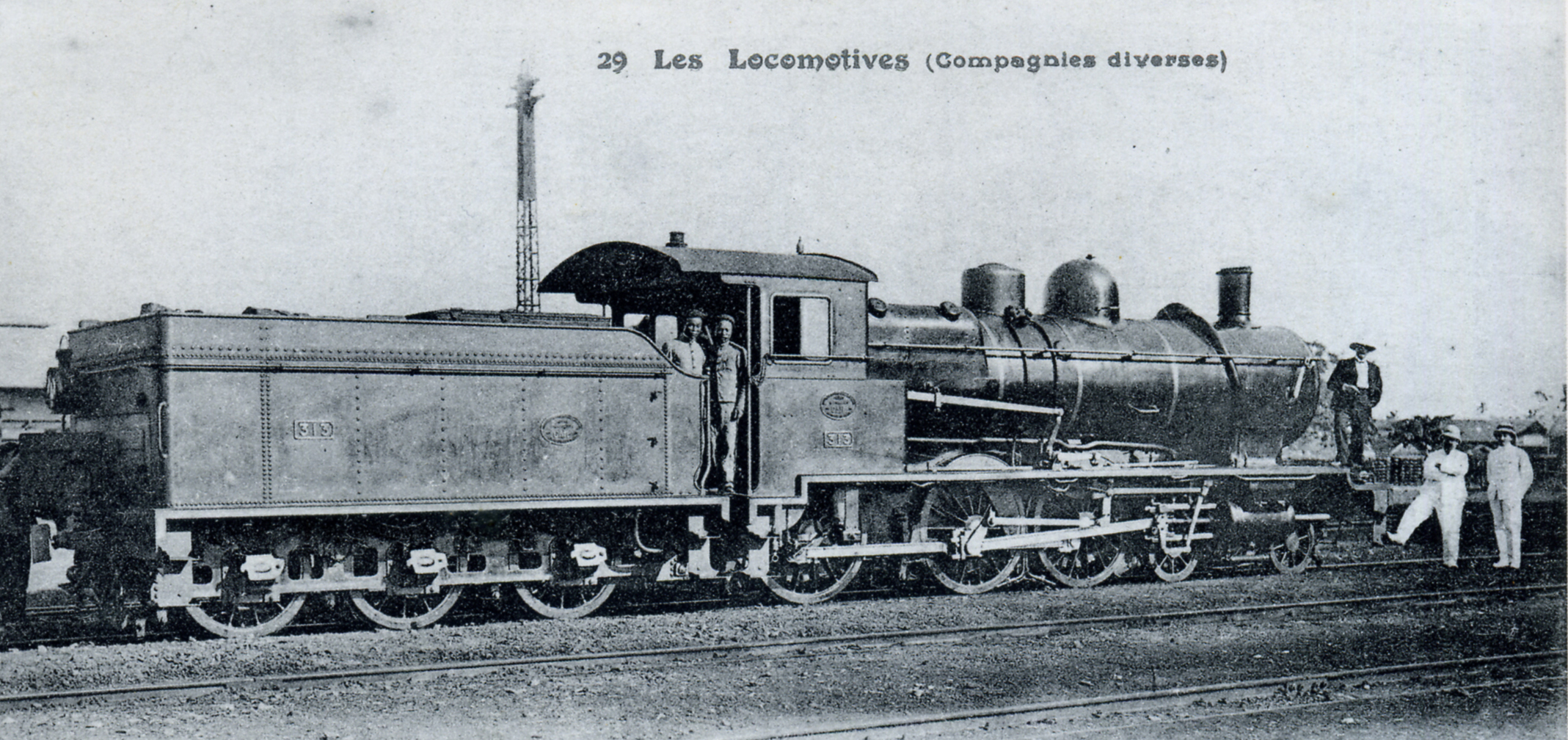
230-313

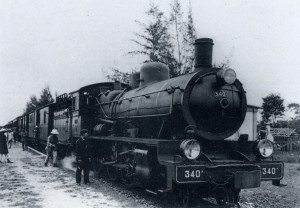
The 4-6-0 “Ten wheel” locomotive, which could haul trains of 300 tonnes at up to 40kph, or trains of 370 tonnes at 20-25kph

As Vietnam Railways draws up plans for a major upgrade of its network, let’s see how that network looked 88 years ago, as described in the February 1927 article “Quelques données techniques sur les chemins de fer de l’Indochine” (Some technical data on the railways of Indochina), published in the Bulletin de l’Agence générale des colonies.

The railway network in Indochina is equipped with 1m gauge track; the width of the track bed is 4.4m, a measurement which was set in anticipation of rolling stock with a body width of 2.8m.

006_001

Floods on the Lạng Sơn line in August 1904

The minimum curve radius is 100m and the maximum gradient is generally 15mm/m, except on some portions of the Saigon-Mytho line, and on the cog rail sections of the line from Krongpha to Dalat. Substantial portions of the line from Lao-Kay to Yunnan-fu have gradients which reach 25mm/m.

In general, small structures such as culvert bridges with openings of less than 6m are built using ordinary masonry. Major bridges have metal decks, because they usually provide passage not only for railway trains, but also for road traffic.

On the lines currently under construction, reinforced concrete is widely used, facilitating bridge spans of up to 15m on the Vinh to Dong-Ha section. The maximum bridge span will be increased to 25m on the new Tan-Ap-Thakhek line and other railways currently under development.

a) Track

The rails are laid on ballast made of crushed stones, 0.50m thick with a 2.40m base width. They are of the flat-bottomed “Vignoles” type, made from steel of 20, 25 or 27kg/m, according to the line. They are laid in sections of 8-12m.

7 Di An Station

Dĩ An Station in the colonial era

The weight of the rails will be increased to 30kg/m on those parts of the Transindochinois [North-South line] which remain to built, and this heavier rail will gradually replace the existing rails on other sections which have already been completed.

Fishplates are of a standard type, ranging from 5.5-6kg in weight. They are used to connect two sections of rail by means of four bolts positioned laterally.

Metal sleepers are employed throughout the Yunnan network and on most of the other lines. They have been very successful, although it is still impossible to indicate what their duration may be. Two types of metal sleeper have been used:

(i) Ménélik sleepers, made from soft steel, straight with curved ends: the rails are secured using steel crapauds, sleeper clips, nuts and bolts.

(ii) Micheville sleepers, also made from soft steel: housings to accommodate the rails are welded to their upper surface.

The weight of a sleeper, including accessories, is 40kg, and 1,250 of them may be laid per km of track.

10 Gianh River Quảng Bình Province 1920s

A train runs along the Gianh River in Quảng Bình Province in the 1920s

In forest areas, wooden sleepers were preferred to metal sleepers because of the lower cost of purchase at the time the lines were constructed. They are made from dense and hard woods (cay nghien, cay sao) and are generally 1.80m long, 0.18m wide and 0.12m high.

However, the increasing difficulty of supplying wooden sleepers and the obvious superiority of metal sleepers have led to a gradual decrease in the use of wooden ones.

(b) Buildings

Most stations and halts are small, comprising only one building with facilities for both passengers and freight. Larger, more important stations have a variety of buildings and outbuildings of different types, including the lodgings of European or indigenous staff.

Workshops and depots are distributed throughout different parts of each network according to need. No construction workshop in the proper sense exists in Indochina. Rolling stock parts usually arrive ready-manufactured from Europe, leaving just the assembly, carpentry and interior work to be carried out in the colony.

Gia Lâm - Chaudronnerie, montage d'une chaudière à l'aide du pont roulant ETHBIB Bildarchiv

Gia Lâm Works in the colonial era (ETHBIB Bildarchiv)

Some small guard huts have been built at level crossings, especially in built-up areas and at entrances to combined road and railway bridges and passing loops.

(c) Fixed equipment

The supply of water has not, in most cases, caused any difficulty. Facilities for the supply of water by gravity are limited and water pumps are used almost everywhere. Tanks, pipes and water cranes are of the current type.

It is the same with swing bridges and weighbridges. However, signalling apparatus is still rather limited: a general modification of signalling, necessitated by the steady increase in traffic, is currently being studied.

(d) Rolling stock

The most commonly-used type of locomotive has three pairs of coupled driving wheels, an adhesion weight of 30 tonnes and can haul trains of 300 tonnes at up to 40kph, or trains of 370 tonnes at 20-25kph.

More powerful locomotives (four pairs of coupled driving wheels with 40 tonnes adhesion weight) are used on the long 25mm/m gradients of the Yunnan railway. The section of the Langbian railway currently under construction will make use of special mixed adhesion and cog rail locomotives.

230-340

One of the second-generation superheated 4-6-0 “Ten wheel” locomotives delivered in the 1920s

Coal firing is used exclusively in Tonkin and in Yunnan, where this fuel is abundant.

In contrast, the Southern and Annam-Central networks burn wood, which is more economical for them.

On all of the various networks, travellers are divided into four classes.

For the first three classes, the carriages in service are usually mixed, with two 1st-class compartments, two 2nd-class compartments and four 3rd-class compartments. The carriages have gangways between the compartments. There are also cars comprising only 3rd-class compartments.

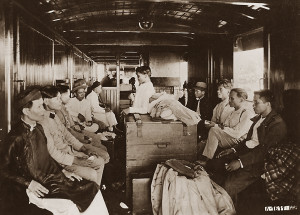
The 4th class is used almost exclusively by indigenous people. The carriages in this class have benches along the side walls, while the central area is kept free for transporting the passengers’ luggage, which is not allowed in the freight vans.

All passenger carriages have two bogies and a weight of around 16 tonnes.

Freight rolling stock includes covered wagons, gondola wagons and flat wagons; this rolling stock is of the current type for 1m gauge railways.

Chemin de fer de l'Indochine. Intérieur d'un wagon de 4ème classe 1921-35

The interior of a 4th-class railway carriage in the 1920s

Covered wagons of 5 tonnes, 10 tonnes and 20 tonnes are currently in use.

The vehicles currently in service on the networks of the colony have simple vacuum brakes, which do not give sufficient security in the event of one of the hoses connecting the vehicles becoming displaced or broken. As these vehicles are used on some sections of track where the gradient is severe, prudence requires the adoption of automatic vacuum brakes. The current brakes must therefore be replaced with automatic brakes.

Signalling is almost non-existent at the moment. However, the increase in the circulation of trains necessitates the installation of protection discs some 500 to 800m before the points of restriction, at least on those parts of line where traffic is highest.

The installation of these disc signals would be most useful on the lines between Phu-Lang-Thuong and Vinh on the Northern network and between Saigon and Muong-Man on the Southern network. On other sections of line, their installation can be temporarily deferred.

The more intense traffic and the use of heavier trains also demands the reinforcement of existing rails. Renewals will be made annually, according to resources, with rails of the 30kg/m type being used for those sections of Transindochinois which remain to be built.

22 Bac Le Station new

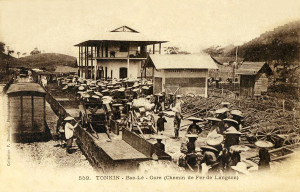
Freight being loaded at Bắc Lệ Station

Metal sleepers will also be substituted for the wooden ones which are still in use on major routes in the Northern and Southern networks as soon as the latter need replacing.

Finally, various complementary works, such as creating or lengthening loop lines and sidings and improving water supplies, will be carried out at various stations.

Tim Doling is the author of The Railways and Tramways of Việt Nam (White Lotus Press, Bangkok, 2012) and also gives talks on Việt Nam railway history to visiting groups.

A full index of all Tim’s blog articles since November 2013 is now available here.

Join the Facebook group Rail Thing – Railways and Tramways of Việt Nam for more information about Việt Nam’s railway and tramway history and all the latest news from Vietnam Railways.

You may also be interested in these articles on the railways and tramways of Việt Nam, Cambodia and Laos:

A Relic of the Steam Railway Age in Da Nang
By Tram to Hoi An
Date with the Wrecking Ball – Vietnam Railways Building
Derailing Saigon’s 1966 Monorail Dream
Dong Nai Forestry Tramway
Full Steam Ahead on Cambodia’s Toll Royal Railway
Goodbye to Steam at Thai Nguyen Steel Works
Ha Noi Tramway Network
Indochina Railways in 1928
“It Seems that One Network is being Stripped to Re-equip Another” – The Controversial CFI Locomotive Exchange of 1935-1936
Phu Ninh Giang-Cam Giang Tramway
Saigon Tramway Network
Saigon’s Rubber Line
The Changing Faces of Sai Gon Railway Station, 1885-1983
The Langbian Cog Railway
The Long Bien Bridge – “A Misshapen but Essential Component of Ha Noi’s Heritage”
The Lost Railway Works of Truong Thi
The Mysterious Khon Island Portage Railway
The Railway which Became an Aerial Tramway
The Saigon-My Tho Railway Line


Tourism for American Servicemen – A 1963 USO Guide to Saigon

USO 1965

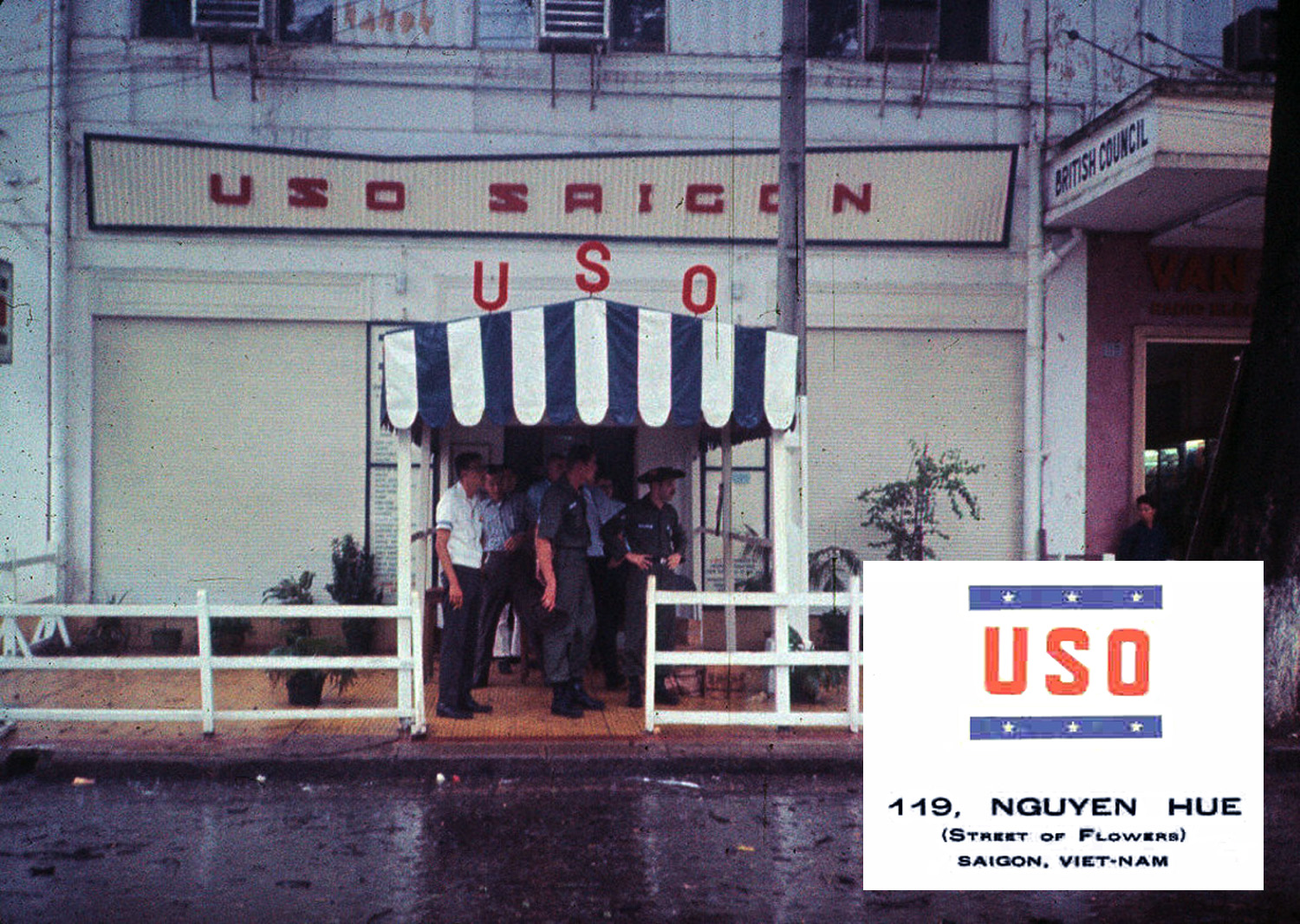
The USO Club of Saigon in 1965 by Bruce Baumler

In 1963, the USO Club of Saigon issued a leaflet promoting its services and suggesting the following tourist itinerary around the city for US military personnel and their dependents.

Saigon 1964 - Le Loi Blvd

Lê Lợi boulevard in 1964, photographer unknown

The newcomer to Saigon is often agog with the myriad of signs on all sides of him, brightly painted in a multitude of colors, proclaiming the fascinating sights to be seen here; the countless shops, row upon row, pressed in so closely together; and here and there, unexpectedly, a truly unusual temple or a very modern building can be seen among the great masses of people hurrying along Saigon’s busy streets.

In an effort to give a little aid to the military personnel and their dependents who are interested in visiting as many of these places as their time allows, the USO has compiled a list of the locations and other available information concerning the most popular points of interest.

Construction of new government building 1963

“Construction of new government building in 1963,” photographer unknown

Perhaps you might start your tour by driving or walking by the Independence Palace, which, until November 11 1962, was the residence of President Ngo-Dinh-Diem. This once beautiful palace is now in the process of being completely rebuilt after a bombing destroyed it. It is expected that it will be finished and ready for President Diem’s occupancy in 1964.

How about a ride in one of the city’s many cyclos? It is an exciting experience and the next stop on our tour might be Our Lady’s Basilica in Hoa-Binh Square, one of the oldest buildings in Saigon. Mass is said here in French and Vietnamese. Everyone is welcome to this lovely old church.

Saigon 1960 - Post Office

Saigon Post Office in 1960, photographer unknown

As we swing around the square, we notice on our left the large clock on the PTT Building (Post Telegrams and Telephones). The commercial post office is located here and all postal services are available. It is also possible to place long distance calls from here. The PTT building is open from 7.30am until 8pm. This includes Holidays but not Sundays.

Continuing down Tu Do Street, we are headed toward the river. On our left we pass a large white building which is the National Assembly Building. No one is allowed to visit unless they have been given special permission to go on official business. Here the government has a meeting hall and offices for the various government officials. Policemen in white uniforms guard this building days and night.

SAIGON - THE TRUNG SISTERS STATUE

Saigon – the Trung Sisters statue, photographer unknown

If we cut over a block to the left, we will be on Hai Ba Trung, and turning right, headed for the river front. Right in front of us is the Memorial to the Trung Sisters. These ladies were the heroines of the Vietnamese Struggle for Independence in 40AD. If you look very closely, we’ve been told that you will see a strong resemblance between the Trung Sisters’ faces and Madame Nhu, the President’s sister-in-law, and the first lady of the Republic of Viet-Nam!

Along this river, which joins the China Sea and has piers for loading and unloading ships for long-range or short-range trips, there are many interesting sights.

Time for lunch? There are many restaurants featuring French and Chinese as well as Vietnamese foods located all over the city, and one can have fun just trying them out, as they have good food and lots of local color. But at the USO, a good old American sandwich and a milk shake tastes pretty good too!

Lê Văn Duyệt

Lê Văn Duyệt Mausoleum, photographer unknown

In this fascinating city of the Far East, the old temples and pagodas are especially interesting to someone from the western world. One such temple is the Tomb of Marshal Le-Van-Duyet, military hero under the Gia-Long dynasty. He was called the Unifier of Viet-Nam in the 19th Century. It is a very impressive place to visit, and also noteworthy that if you can get a little assistance from a Vietnamese person, you can have your fortune told right here! This temple is located all the way out Hai Ba Trung, where it intersects with Chi Lang.

There are other Buddhist temples and pagodas throughout the city. The Xa-Loi Temple is located at Ba Huyen Thanh Quan Street. Here, a statue of Buddha can be seen in a golden case which came all the way from India.

American girls say goodbye to beautiful Xa Loi Pagoda US Pocket Guide

“American girls say goodbye to the beautiful Xa Loi Pagoda,” from the US Pocket Guide, 1962

By the way, a Temple is where Buddhists worship many heroes and heroines but a Pagoda is where many men worship Buddha. There is a Hindu Temple at Ton That Thiep Street, and this the meeting place for the thousands of people from India who own many of the city’s shops. Visitors are welcome here too, but it is customary to remove your shoes before entering.

There are so many other Temples and Pagodas that they are too numerous to mention here, but a little investigating will be all you need to find a different experience in store for you, in quite a few of them.

The National Museum and War Memorial Monument are located at Thong Nhat. The Zoo and Botanical Gardens are also here. The grounds are open every day and admission is 2$ for adults and 1$ for children (except on Thursdays when the admission is free).

SAIGON 1965 - National Museum - Photo by Robert Gauthier

The National Museum in 1965 by Robert Gauthier

In the National Museum there are many exhibits of Vietnamese pottery and the costumes of ancient Kings. Some examples of traditional Vietnamese furniture are on display, along with the cut crystal vase presented to President Diem by our Past-President, Eisenhower.

In the Zoo and Botanical Gardens there are several unusual species of birds and animals, as well as an elephant which will pray for you if you give him a piece of sugar cane.

If we go out Le Loi Street, we will pass the Central Market of Saigon, and we must stop for a while and visit the multitude of tiny stalls, where all kinds of beautiful material can be purchased, as well as many, many other items, such as the lovely lacquerware of Viet-Nam, and anything else you may need, from food to the pots in which to cook it.

SAIGON - QUACH THI TRANG MARKET

The Saigon Cemtral Market, photographer unknown

The merchants speak French or Vietnamese, but don’t let it stop you if you do not speak these languages! Just take along a pencil and paper and show that you want them to write down the price for you, and they will find someone to do that. Then, let’s see how good a bargainer you are!

If we continue in this direction, the street will become Tran Hung-Dao and we will be on our way to Cholon, the Chinese section of Saigon. Here, the shops are very numerous, and there is another large market. Cholon has many excellent restaurants, also. At night, the visitor is treated to a bright display of neon signs almost rivalling the cities in the United States.

7635098010_4c80c7ef5c_o

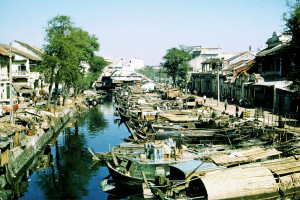
A side canal off the Ben Nghe Creek, in 1965 by Thomas W Johnson.

Since our space is limited here, we will end the tour in Cholon (just take one of the hundreds of tiny taxis back to the center of the city). However, there are many more interesting things to see in this unusual place and we, at the USO, will be more than happy to supply the information you may need in locating these places, or we will find someone for you who can! Be sure to stop in often to see us and say “Hi” (we all speak English!).

Located at 119 Nguyễn Huệ, the USO Club of Saigon was advertised as “a home away from home for American military personnel and associated civilians.” Run by a federation of six civilian agencies (YMCA, YWCA, Salvation Army, National Catholic Community Service, National Jewish Welfare Board and National Travelers’ Aid Association), the USO Club was “an overseas operation administered by USO, through which the American people serve the spiritual, welfare and educational needs of the men and women in the Armed Forces.” It was open every day from 9am to 11pm and contained an information and resource office for US servicemen, a restaurant, a bar and a games hall.

Tim Doling is the author of the guidebook Exploring Saigon-Chợ Lớn – Vanishing heritage of Hồ Chí Minh City (Nhà Xuất Bản Thế Giới, Hà Nội, 2019)

A full index of all Tim’s blog articles since November 2013 is now available here.

Join the Facebook group pages Saigon-Chợ Lớn Then & Now to see historic photographs juxtaposed with new ones taken in the same locations, and Đài Quan sát Di sản Sài Gòn – Saigon Heritage Observatory for up-to-date information on conservation issues in Saigon and Chợ Lớn.

Old Saigon Building of the Week – Saigon Municipal Theatre, 1900

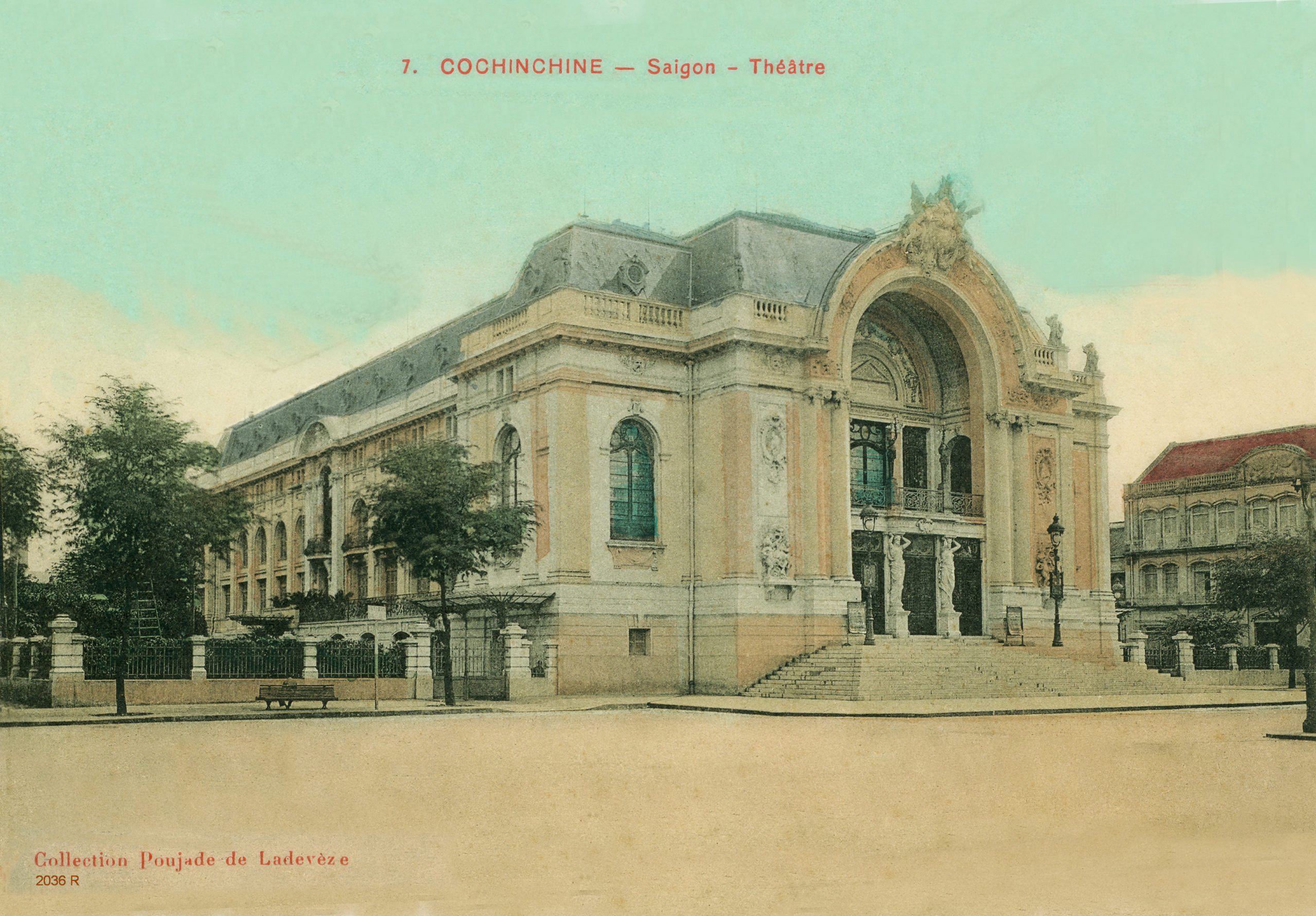
Cochinchine – Saigon – Théâtre Municipal

This article was published previously in Saigoneer http://saigoneer.com

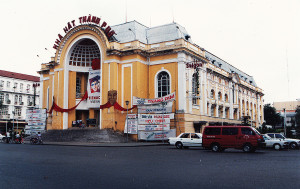
Built by the French at the mid-point of historic rue Catinat, the Municipal Theatre is one of Saigon’s most iconic landmarks.

1

From 1862-1872, performances by visiting French theatre troupes were held regularly in the Salle de spectacles of the first Governor’s Palace – image from Paul Boudet and André Masson, Iconographie historique de l’Indochine française, 1931

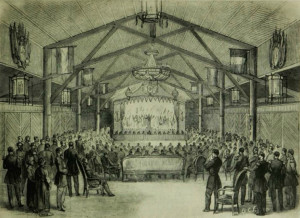
Western theatre was popular in Saigon from the earliest years of the French colony. For more than a decade after the arrival of the first European settlers, performances by visiting French troupes were held regularly in the Salle de spectacles of the first Governor’s Palace, a series of wooden buildings which had been purchased in kit form from Singapore and assembled in 1861-1862 for Admiral-Governor Bonard.

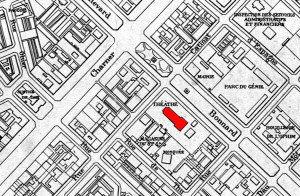
The first purpose-built city theatre was constructed in 1872 on the site of today’s Caravelle Hotel. According to an article of 3 June 1880 in the Courrier de l’Indochine, this first Saigon theatre specialised not in the operas of Gluck or Mozart, but rather in “the works of Offenbach, Lecocq and other geniuses of the comic genre.”

2.1

The location of the second Théâtre de Saïgon on the site of today’s Caravelle Hotel is indicated clearly on this 1893 map of Saigon

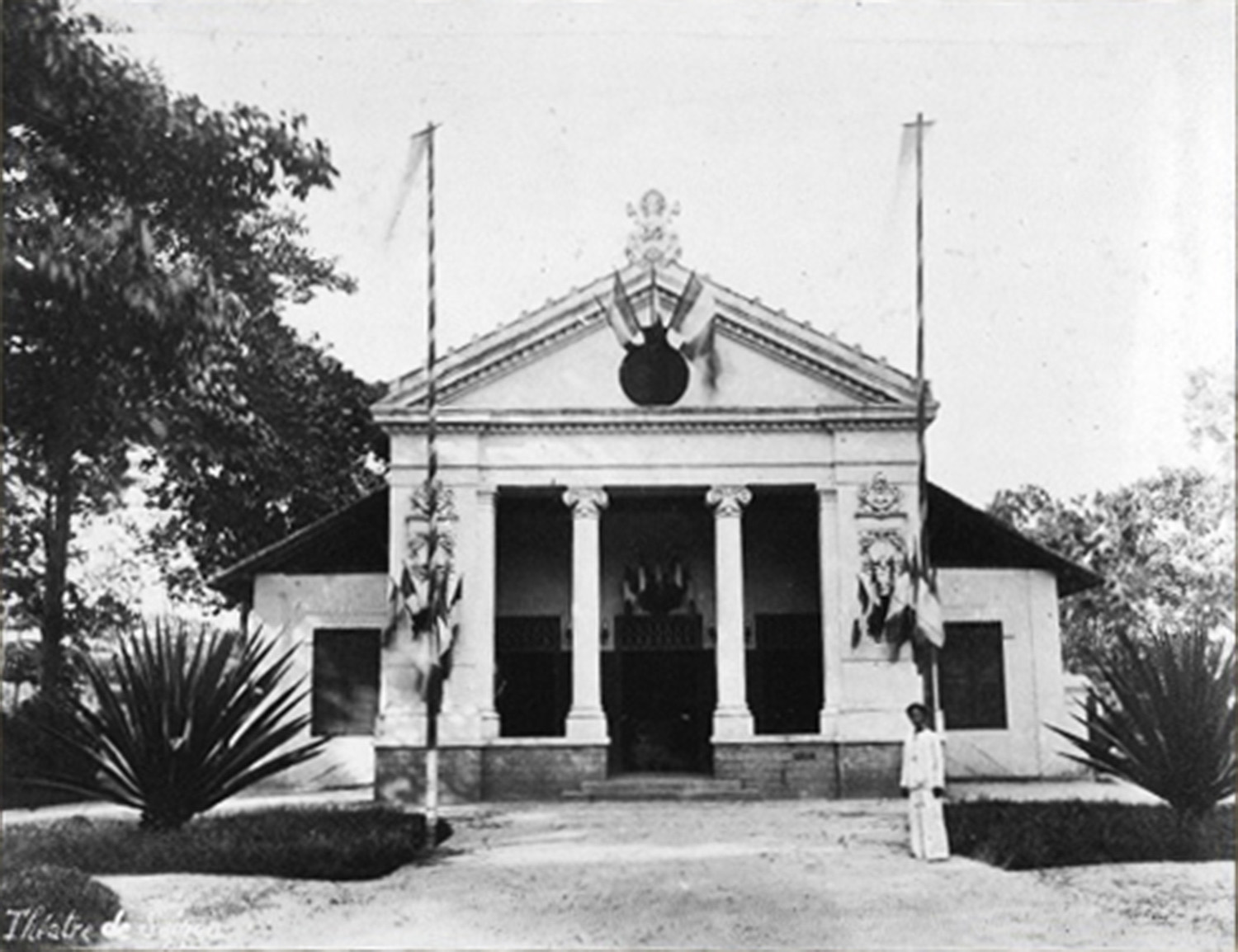
Although this has yet to be verified, some sources suggest that this first Saigon theatre was built from wood, and that in around 1881 it was destroyed by fire. It was rebuilt using more durable materials, and opened in 1884. Describing this second theatre in 1887, Le Figaro newspaper commented: “it is simple and the architecture is very primitive – but it is impossible to burn down!”

Writing in August 1893, La Revue hebdomadaire was more flattering. “It’s so pretty, our Saïgon theatre, with its boxes decorated with hanging plants and its wide verandahs filled with flowers! What more wonderful setting could there be in which to meet pretty ladies wearing the latest fashions, officers in uniforms embroidered in gold, elegant gentlemen, and mandarins dressed in rich silk costumes?”

Saïgon, 1885-1890 – L’ancien théâtre, Extrait d’un album des années 1890, AAVH showing the second Théâtre de Saïgon, which stood approximately on the site of today’s Caravelle Hotel

Two decades later, George Dürrwell would write nostalgically about the former theatre, which he described as “so small and so simply decorated, yet so cosy and intimate, surrounded by lawns and shaded by large trees.”

As early as 1893, the powers-that-be decided that Saigon needed a larger and more impressive theatre building, one which better reflected the perceived glories of the French empire.

In 1895, a design competition was organised and the submissions of three architects – Ferret, Genet and Berger – were shortlisted. Eventually, the judges selected the design of Eugène Ferret, who reportedly had taken his inspiration from the Petit Palais in Paris. Early in the following year, Ferret’s winning plans for the new 800-seat “Grand-Théâtre de Saigon” were placed on display at the 1896 Exposition du théâtre et de la musique in Paris.

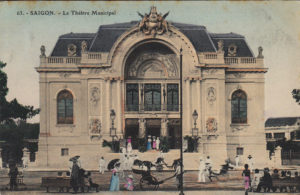
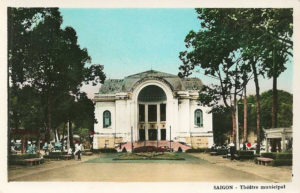
Saïgon – Théâtre Municipal – a “colorised” photograph of the Théâtre de Saïgon in the early 20th century

Work began in late 1896, and Saigon’s third and current theatre was completed in late 1899. It was inaugurated on 15 January 1900, in the presence of Saigon mayor Paul Blanchy and Prince Waldemar of Denmark, who was then making a state visit to Indochina. The inaugural performance featured the Asian premiere of Jules Massenet’s opera La Navarraise.

Ferret’s design was widely praised. The arts correspondent for Le Monde (13 January 1901) described the theatre as “an architectural marvel,” while L’Indo-Chine 1906, by Joseph Ferrière, Georges Garros, Alfred Meynard and Alfred Raquez, commented: “The monument is very fine, indeed, almost luxurious, and cleverly laid out for the needs of the theatrical arts in quite irreconcilable climatic conditions.”

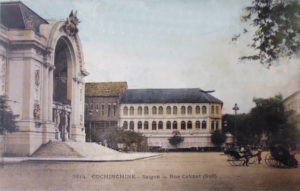
“Cochinchine – Saigon – Rue Catinat (Sud) – another “colorised” photograph featuring the Théâtre de Saïgon in the early 20th century

However, at the outset, the theatre’s substantial construction cost – over 2.5 million francs – attracted much criticism, both in the colony and in France, from those who believed that the money would have been better spent on building a replacement Central Market, or upgrading the city’s inadequate utilities.

Securing enough annual funding to run the new venue proved to be an even bigger headache.

As early as the 1870s, the city decided to engage the services of a director-impresario to run the Saigon theatre and to ship out performing companies from France to perform in it. Before the inauguration of the Grand-Théâtre de Saigon, the colonial records afford us only occasional glimpses of the work of these early director-impresarios, larger-than-life characters such as Emile Pontet and Louis Achard, who constantly fought their corner at municipal council meetings in order to secure an adequate annual subvention.

6965686466_8c4e2ee8d5_o

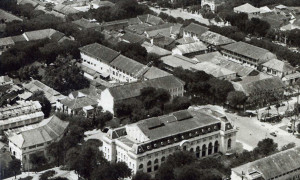
An aerial photograph of the Théâtre de Saïgon in the 1940s

In advance of the opening of the new “Grand Théâtre Municipal de Saigon,” the authorities announced with great fanfare the appointment of Messrs Boyer, Baroche and Compile as director-impresarios to run the new venue. The decision to overlook the incumbent theatre director Paul Maurel was a controversial one, and must have been very hurtful for Maurel himself, particularly since senior partner Aristide Boyer had worked under him for several years as the previous theatre’s secretary general.

After considerable debate, the new theatre was awarded a 200,000 franc annual operating subsidy, out of which 120,000 francs was to be paid by monthly allowance of 20,000 francs to director-impresarios Boyer, Baroche and Compile, and 70,000 francs was allocated for company travel. Just 10,000 francs was provided annually for renewal or maintenance of theatre equipment. It should be remembered that initially, because of the heat, the theatre only functioned for four months of the year (October-January). By 1910, Saigon’s “theatre season” had been extended by two months until April.

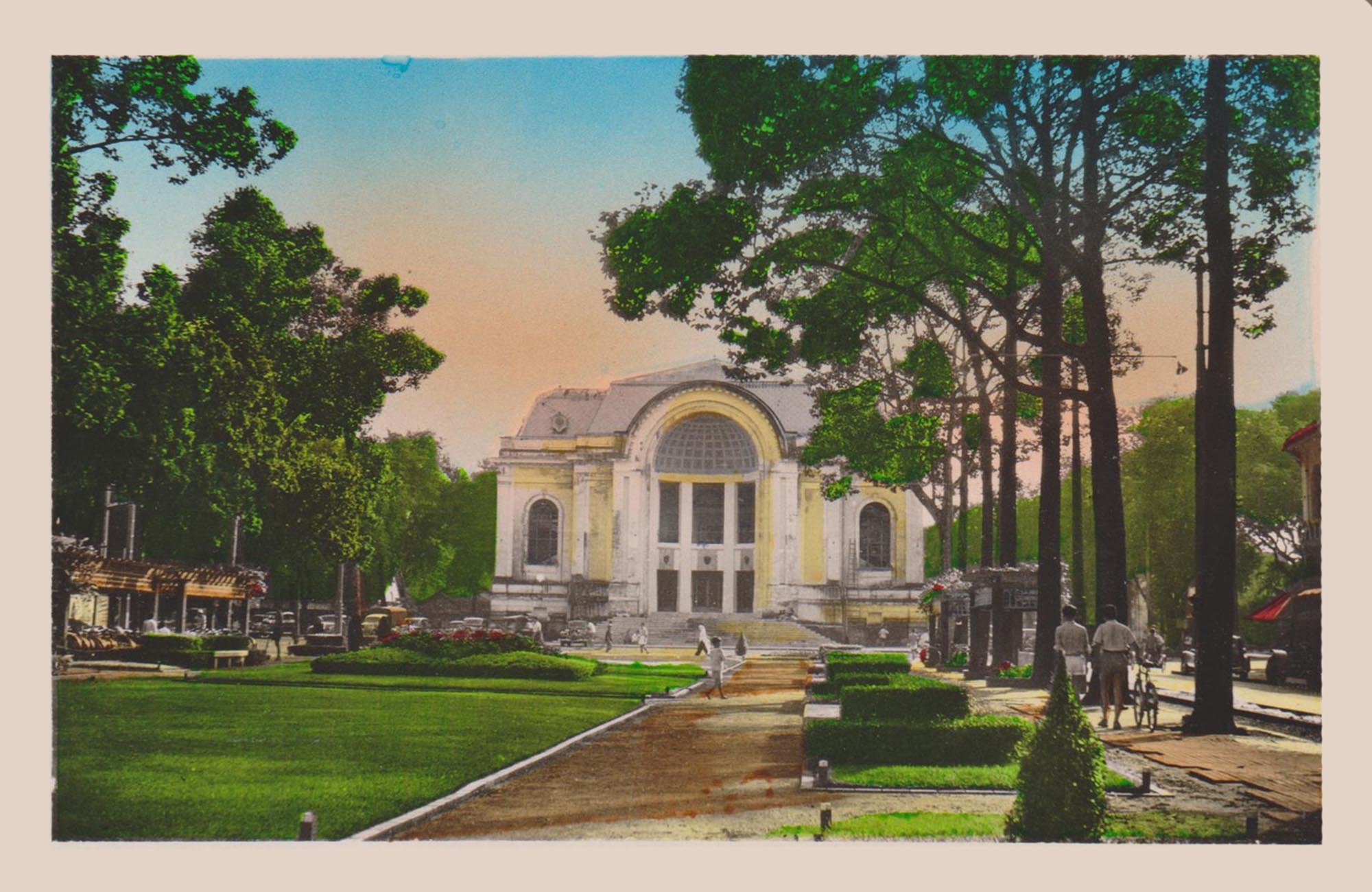
“Saigon – Théâtre municipal” in the early 1950s, showing how the façade was modified in the previous decade

However, within just five months of the opening of the new theatre, Boyer, Baroche and Compile had “accumulated a considerable amount of debts” and resigned their position. Thereafter, the municipal authorities decided to engage their director-impresarios on an annual basis – but not before contrite council members had invited Paul Maurel back to clean up the financial mess left by his predecessors.

The Théâtre de Saigon continued to receive a large annual subsidy for the presentation of “opera, comic opera, operetta and comedy by visiting French theatre companies” until the late 1920s. Then, against a background of economic downturn and increased competition from other places of entertainment, the municipal government pulled the plug. During the later colonial period it was almost exclusively rented out for amateur events and the occasional gala performances.

5 The Municipal Theater in Saigon (~Jul 1972) Kemper

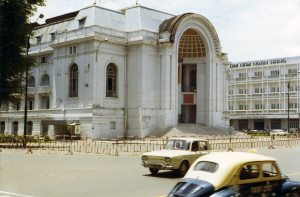
The Municipal Theatre in July 1972, functioning as the Lower House of the National Assembly, photo by Kemper14 via Virtual Saigon

During the Japanese occupation of Indochina (1940-1945), the French Vichy authorities moved to eliminate visible symbols of the now moribund Third Republic. and the façade of the theatre was completely remodelled. Then in 1944, it was seriously damaged by Allied bombing.

Following basic repairs in the early 1950s, the theatre was used in the wake of the Geneva Agreement of 1954 as temporary accommodation for homeless migrants from the north.

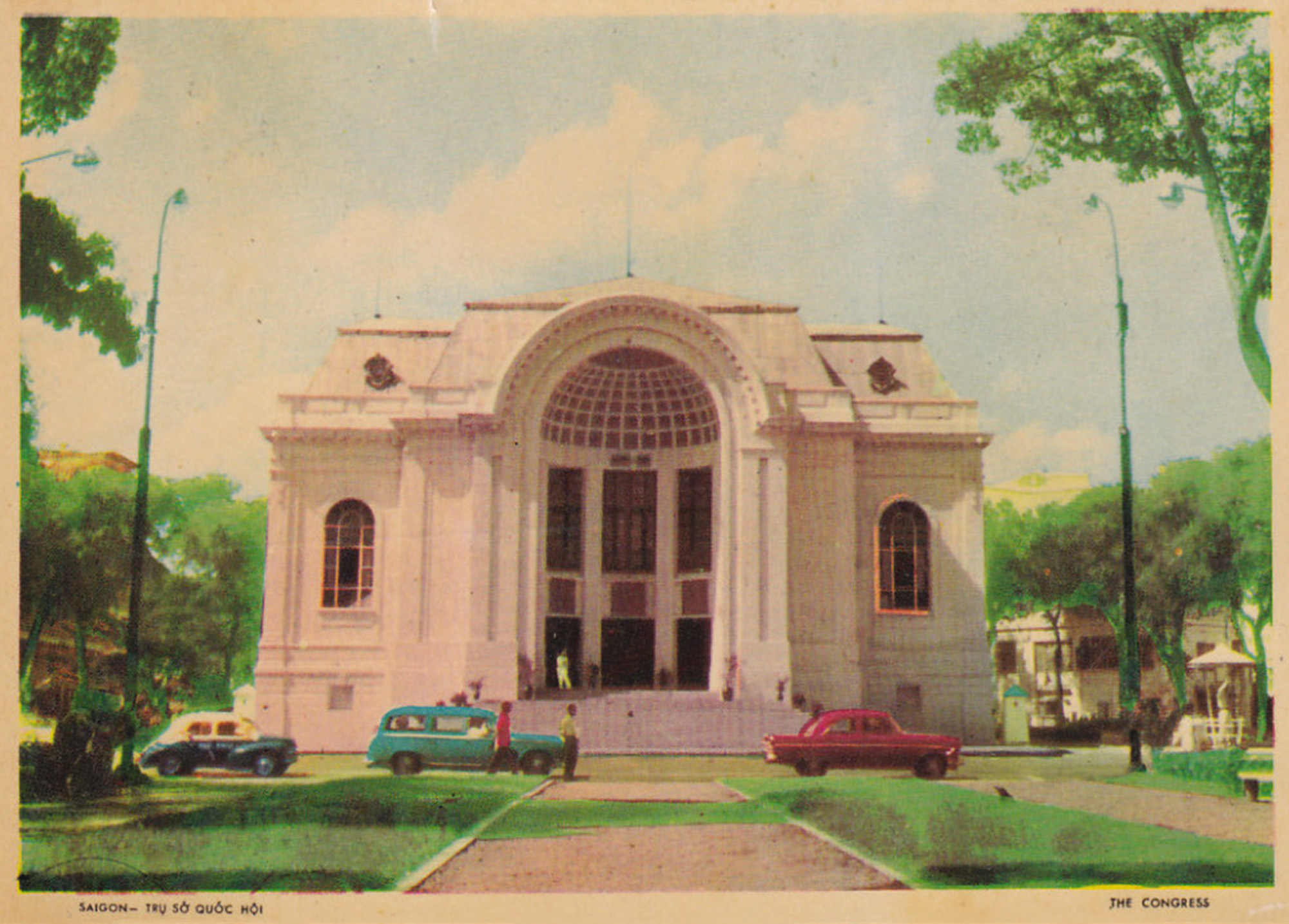
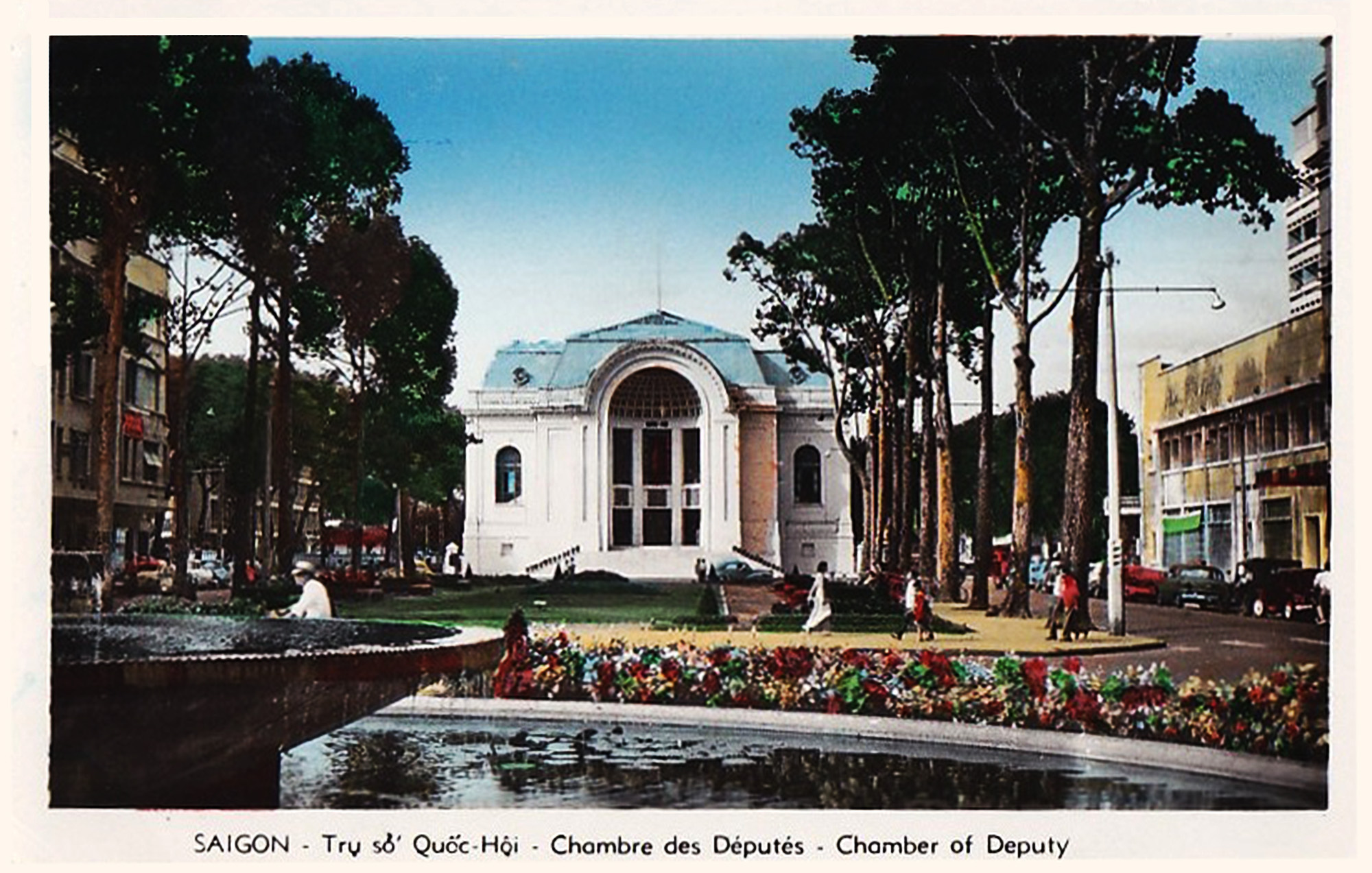
After 1955, the theatre building was completely refurbished and transformed into a National Assembly building. When the constitution of the Republic of Việt Nam was revised in 1967, creating a bicameral parliament, it became the Lower House (Hạ Nghị viện) of the National Assembly, while the Diên Hồng Hall (the former Chambre de commerce) became the Upper House (Thượng Nghị viện) or Senate.

7 1990

The Municipal Theatre in 1991 (photo by Tim Doling)

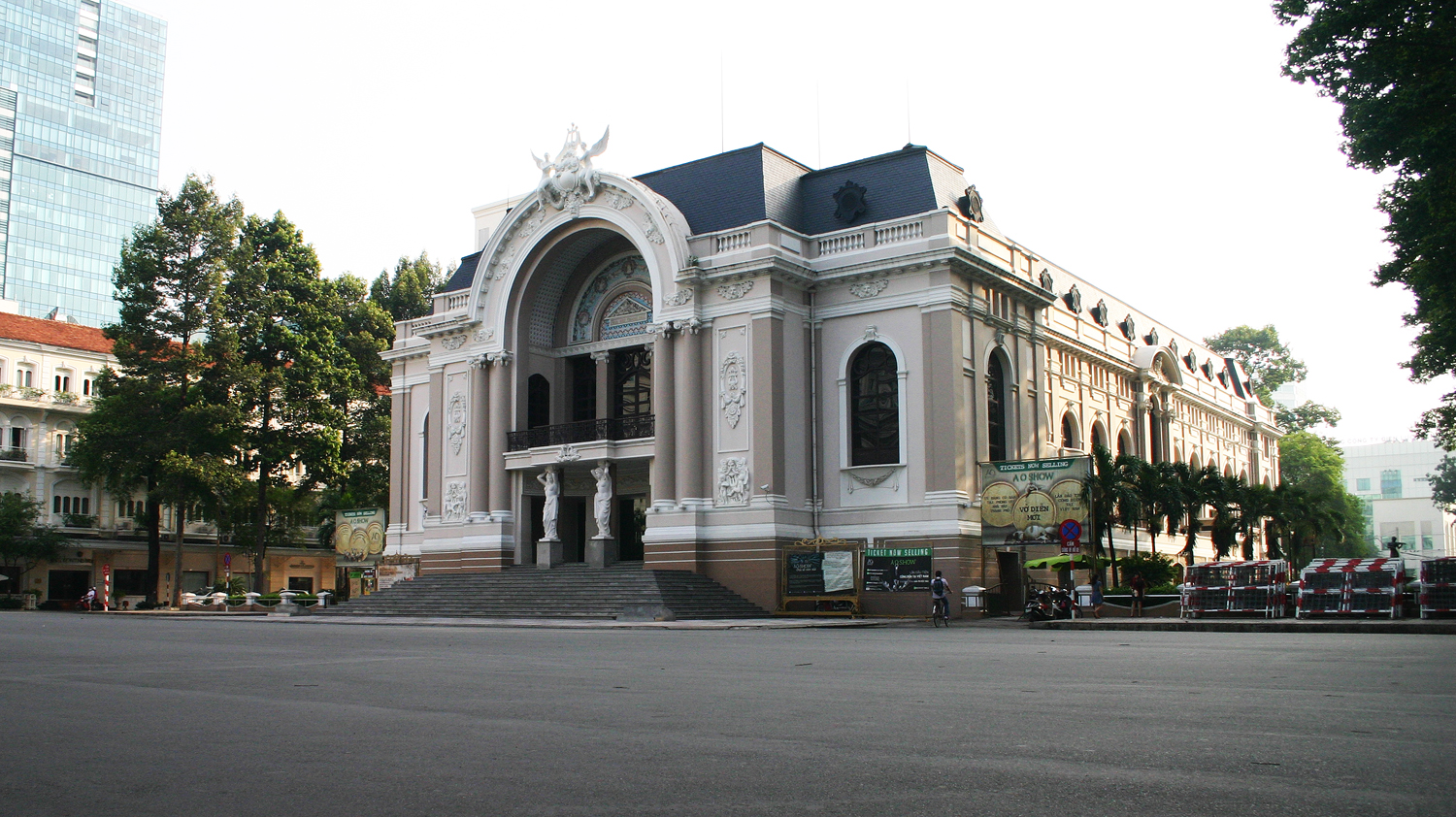
Reopened as a theatre in 1979, it was completely refurbished in 1995-1998 with French assistance to commemorate the 300th anniversary of the city of Saigon. As part of this project, the Municipal Theatre was provided with state-of-the-art electrical equipment, air-conditioning, lighting and sound systems and fire and safety equipment.

Many of its original architectural and decorative features were also reinstated at this time, including the stone veranda and white stone statues at the entrance, granite tiled floors, chandeliers, bronze statues in front of the lobby stairs and auditorium arch and wall bas-reliefs.

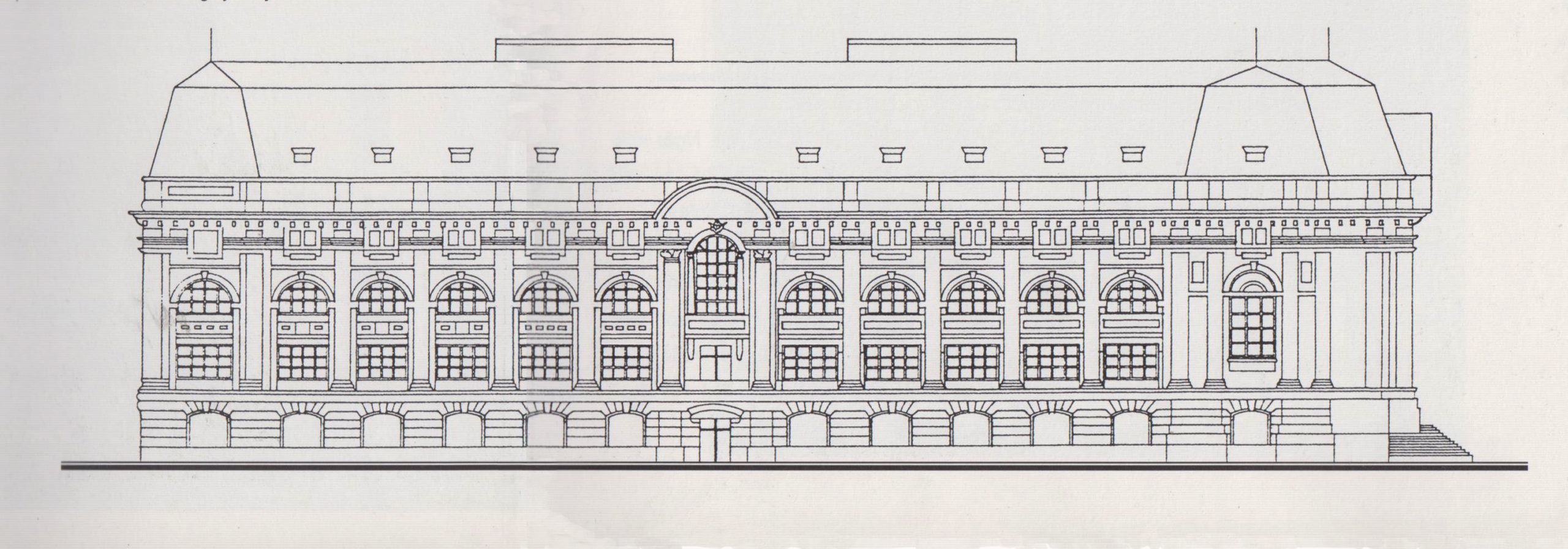
“Dessin architectural du Théâtre Municipal, reproduced in Pairaudeau, Natasha et al (eds), Saïgon 1698-1998 Kiến Trúc/Architectures Quy Hoạch/Urbanisme (Nhà Xuất Bản Thành Phố Hồ Chí Minh, 1998)

Saigon – Théâtre Municipal

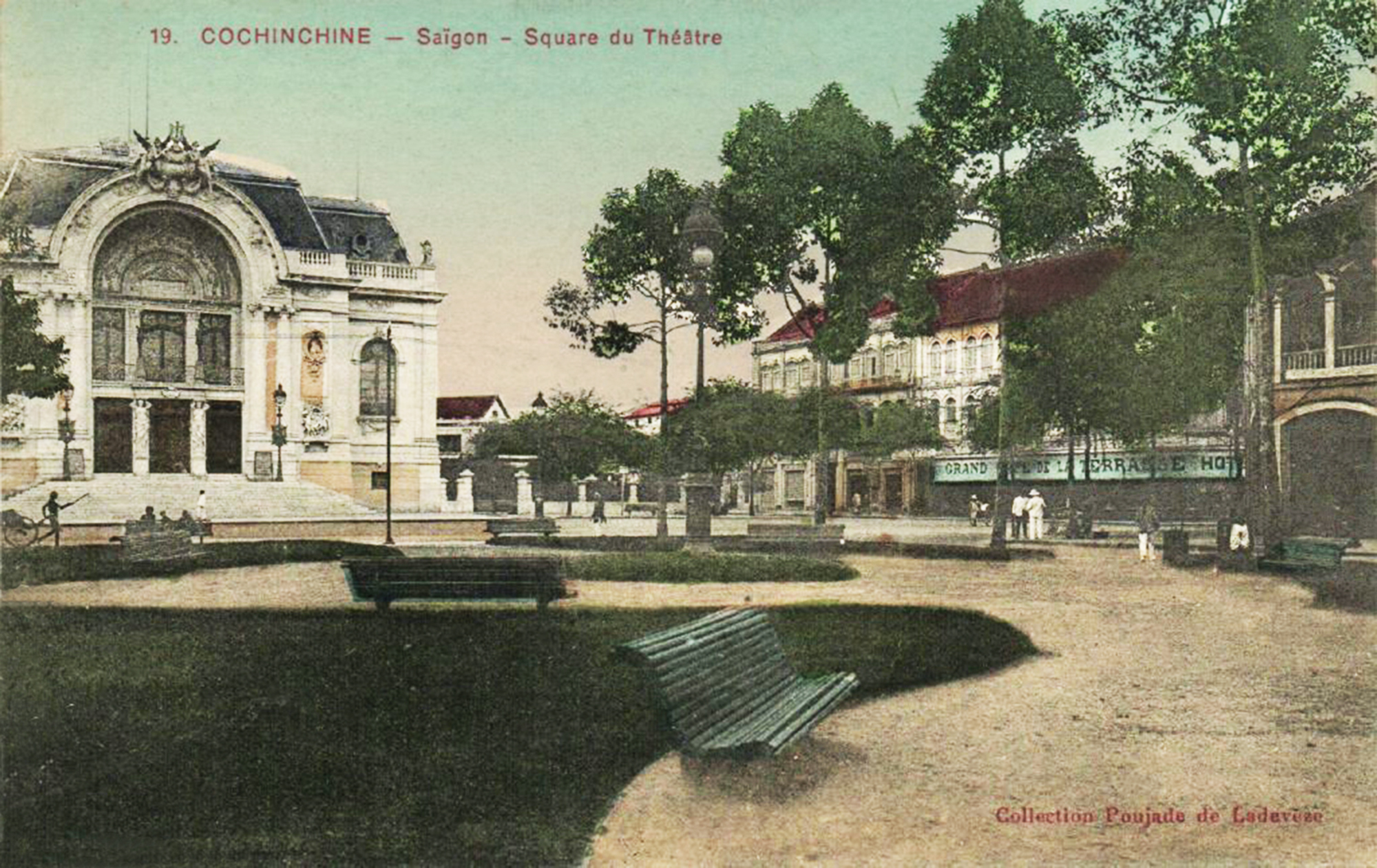
Cochinchine – Saigon – Square du Théâtre

“Saigon, 1960s – Trụ sở Quốc hội – Headquarters of the National Assembly”

“Saigon – Trụ sở Quốc hội – Chambre de Deputes – Chamber of Deputies”

IMG_4772

The Municipal Theatre today (photo by Tim Doling)

Tim Doling is the author of the guidebook Exploring Saigon-Chợ Lớn – Vanishing heritage of Hồ Chí Minh City (Nhà Xuất Bản Thế Giới, Hà Nội, 2019)

A full index of all Tim’s blog articles since November 2013 is now available here.

Join the Facebook group pages Saigon-Chợ Lớn Then & Now to see historic photographs juxtaposed with new ones taken in the same locations, and Đài Quan sát Di sản Sài Gòn – Saigon Heritage Observatory for up-to-date information on conservation issues in Saigon and Chợ Lớn.

Old Saigon Building of the Week – St Paul’s Convent, 1863

IMG_1711

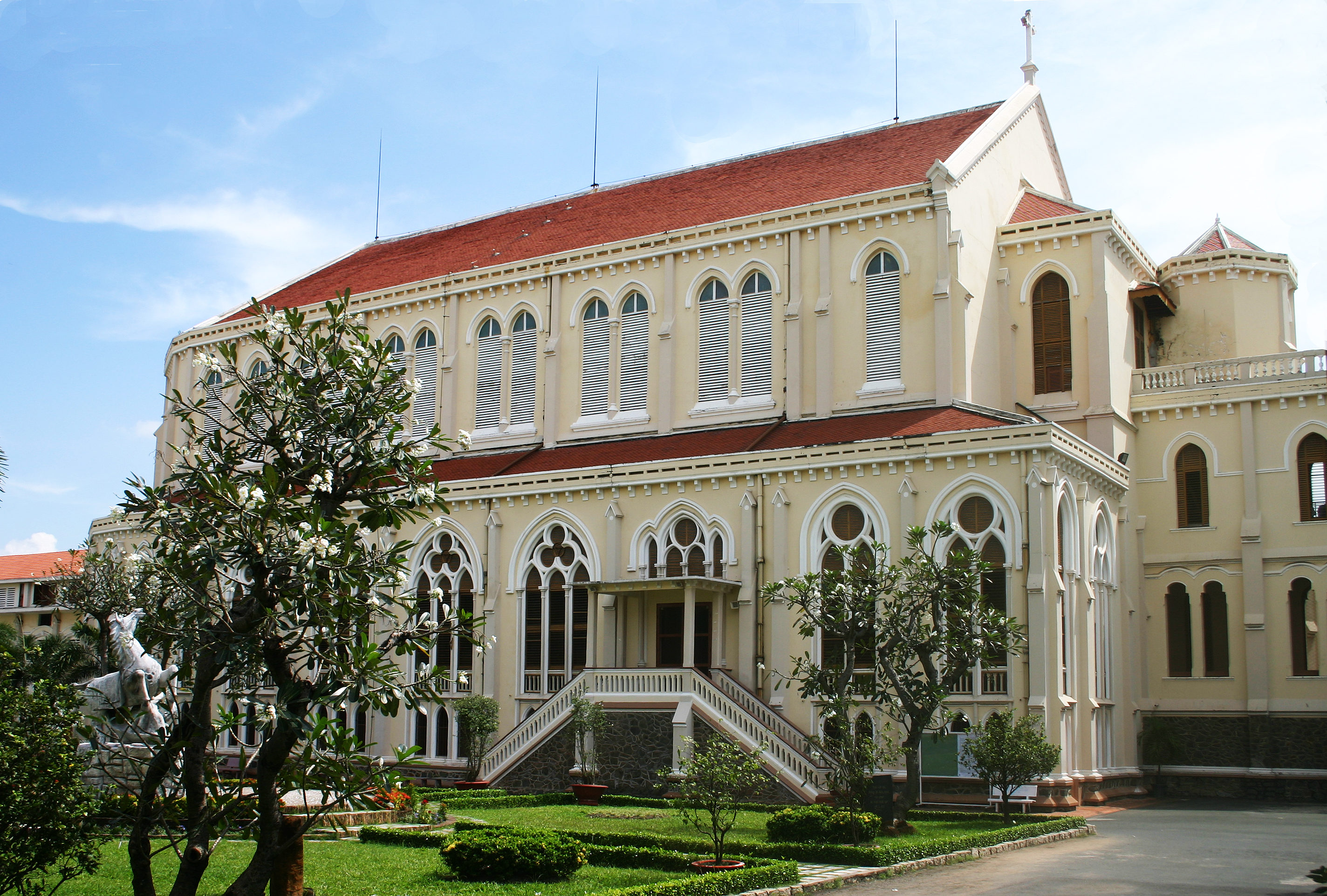
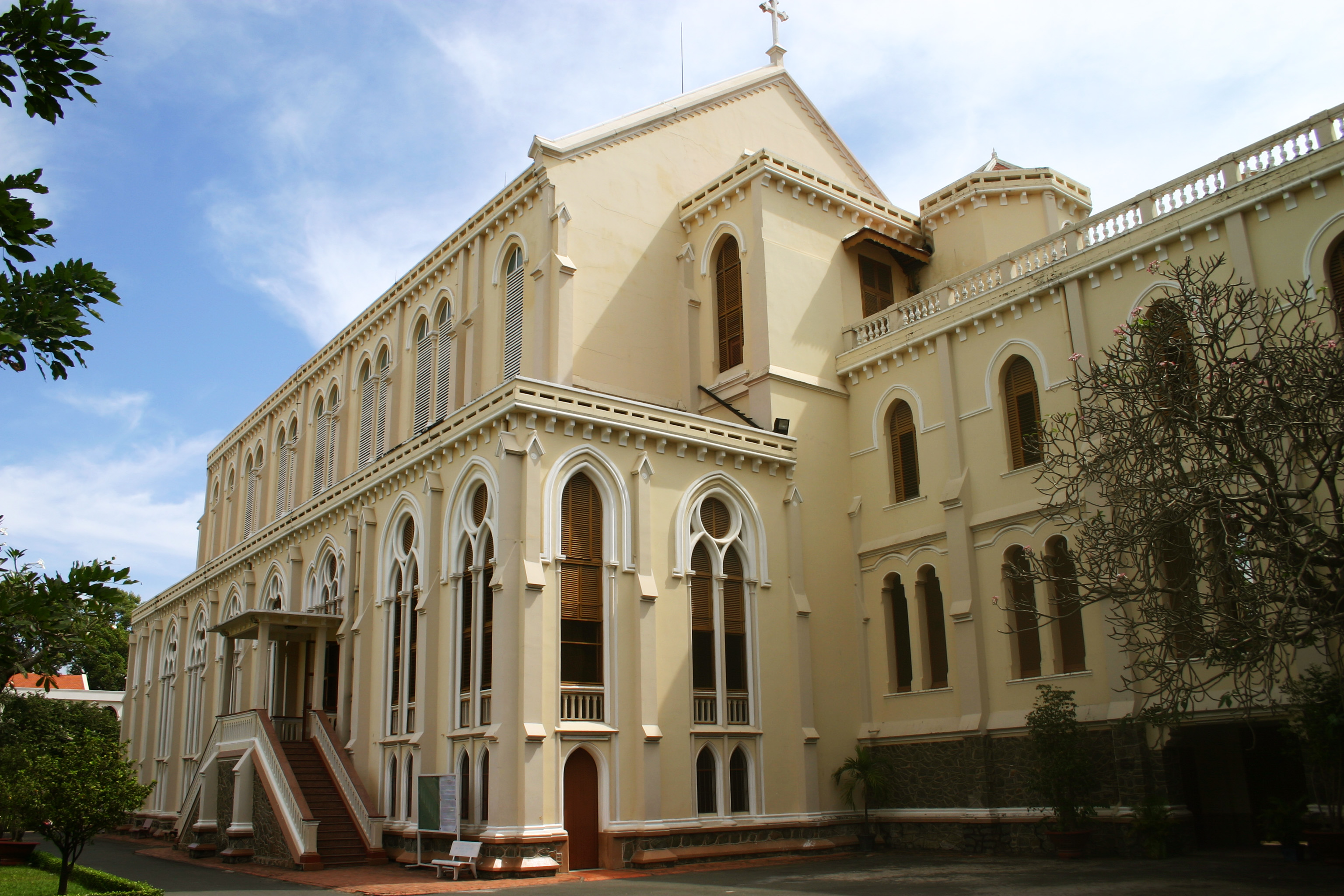
The exterior of St Paul’s Convent Chapel

This article was published previously in Saigoneer http://saigoneer.com

Occupying a large, leafy compound on Tôn Đức Thắng street in District 1, the Convent of Saint-Paul de Chartres is another rarely-visited haven of peace in busy Hồ Chí Minh City.

Faced immediately after the conquest with an urgent need for education, healthcare and welfare facilities in their new colony, the French turned to the religious orders for support.

Mère_Benjamin

Reverend Mother Superior Benjamin (1821-1883)

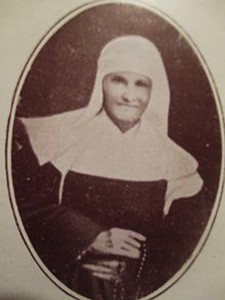
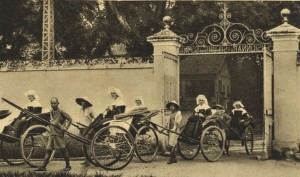
In March 1860, at the invitation of Bishop Dominique Lefèbvre, the Congregation of the Sisters of Saint-Paul de Chartres sent two Sisters to Saigon, where they set up a Sainte-Enfance or “Holy Childhood” orphanage for local street children in temporary premises close to the first bishop’s palace on modern Nguyễn Công Trứ street (District 1). In the following year, the Reverend Mother Superior Benjamin arrived from Hong Kong to manage this establishment.

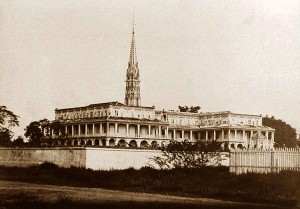
In 1862, Admiral-Governor Bonard responded to a request by the Reverend Mother Superior for larger premises by granting the Sisters a large plot of land on boulevard de la Citadelle (modern Tôn Đức Thắng street), between the St Joseph’s Seminary and the naval shipyard. Nguyễn Trường Tộ was appointed as architect, and in May 1864 the École de Sainte-Enfance complex – comprising Orphanage, Convent and Convent Chapel – was inaugurated.

La Sainte Enfance par Emile Gsell (ca.1866)

Emile Gsell’s 1866 photograph of Nguyễn Trường Tộ’s original Sainte Enfance compound

Over the following decade, as many young Vietnamese women chose to enter the order, the Sisters were able to expand their operations throughout the south. They opened schools and orphanages in Tân Định, Thị Nghè, Biên Hòa, Mỹ Tho and Vĩnh Long; they founded and ran the Chợ Quán Hospital and the Hôpital indigène in Thị Nghè; and they supplied nursing staff to the Hôpitaux militaires (Military Hospitals) in Saigon and Mỹ Tho and the Hôpitaux indigènes (local people’s hospitals) in Mỹ Tho and Biên Hòa. Then in 1883, after the French had established a foothold in the north, the Sisters opened orphanages and hospitals in both Hà Nội and Hải Phòng.

Les Sœurs de Saint Paul à Saigon

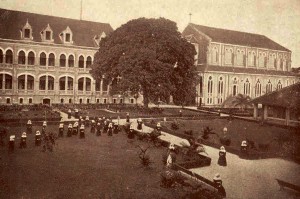
St Paul’s Convent in the early 20th century

Unfortunately, since their original Saigon headquarters buildings had been constructed largely from wood, termite damage and dry rot quickly took its toll, and by the 1880s the Sisters were obliged to carry out a costly rebuild. This time they turned to Father Charles Boutier of the Société des Missions Étrangères de Paris (Society of Foreign Missions of Paris, MEP), an architect of considerable merit who had previously designed the Thủ Đức Church. The new complex was inaugurated in 1895.

In 1924, the name of the compound was officially changed from Saint-Enfance to Couvent St Paul de Chartres (St Paul’s Convent).

b29s

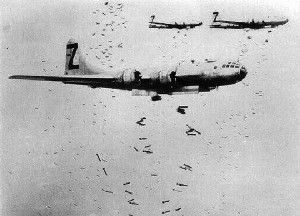
In 1945, the Convent was accidentally hit by more than 30 Allied bombs, causing serious damage to many of the buildings

Being so close to the naval port, the Convent was accidentally hit in 1945 by more than 30 Allied bombs, which caused serious damage to many of the buildings. They were extensively reconstructed in the period 1946-1952. In 2009, the entire compound was completely refurbished.

After 1975, the various educational and medical facilities run by the Sisters were brought under government control. Since that time, St Paul’s has continued to function as a Christian community under monastic vows, although it no longer occupies the whole of the original compound.

IMAGE 4

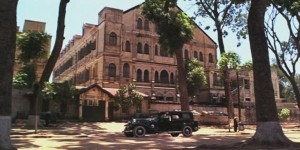
The former convent building used to depict the Pensionnat Lyautey in Jean-Jacques Annaud’s 1992 film version of Marguerite Duras’ The Lover)

The section which from 1908-1939 housed the Clinique du Docteur Angier now functions as a kindergarten, while the building which sits on the Tôn Đức Thắng-Nguyễn Hữu Cảnh street junction (used to depict the Pensionnat Lyautey in Jean-Jacques Annaud’s 1992 film version of Marguerite Duras’ The Lover) was taken over by the government after 1975 and now functions as Saigon University’s Nursery School Teacher Training Faculty.

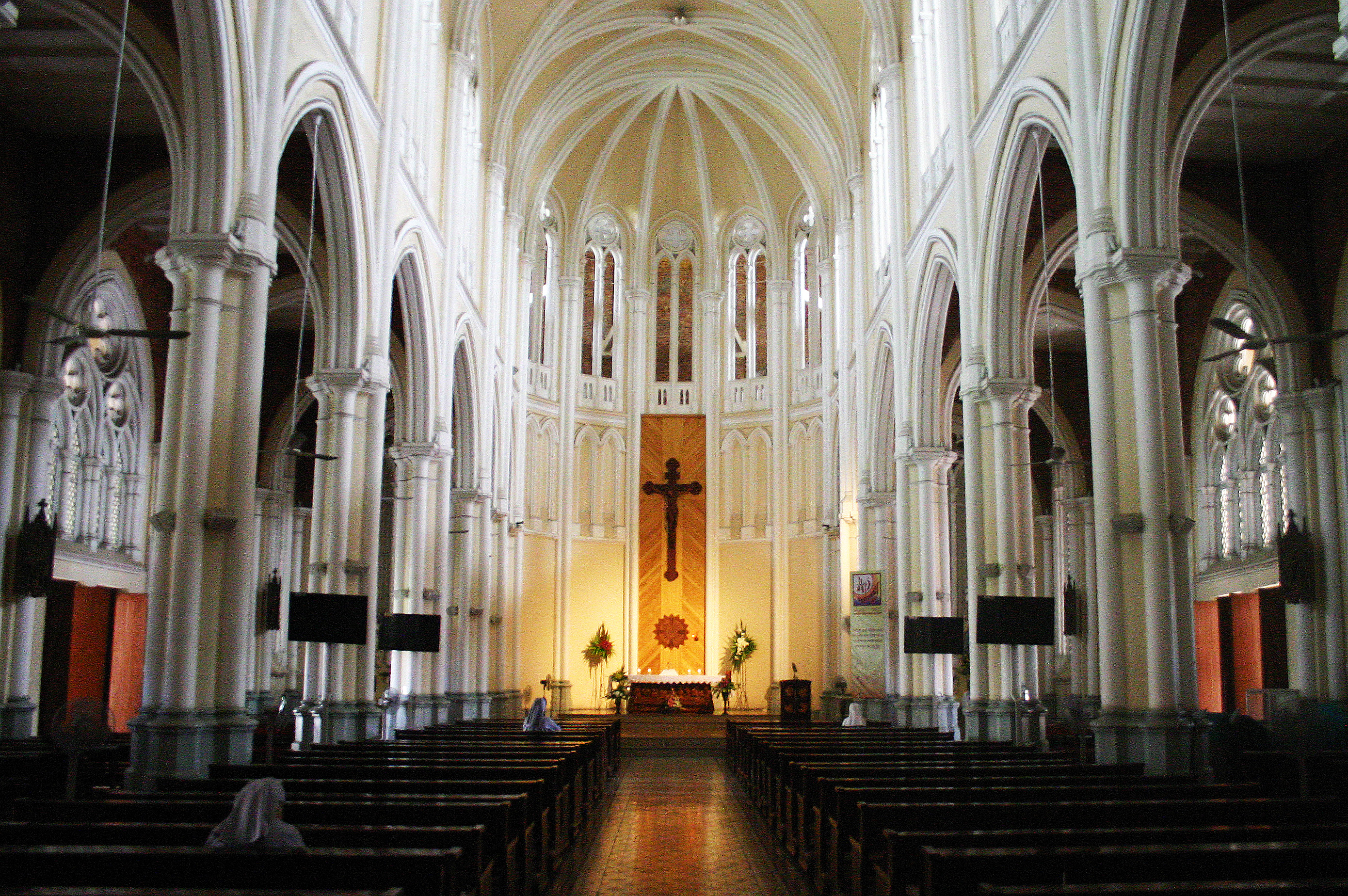
Today, the centre piece of the compound is still the Convent Chapel, a Gothic structure dating from 1895 which was extensively rebuilt after sustaining bomb damage in 1945. Accessed by a side stairway, it comprises a tall vaulted nave flanked by vaulted aisles and side corridors.

Soeurs de Saint-Paul i

Another early 20th century image of St Paul’s Convent

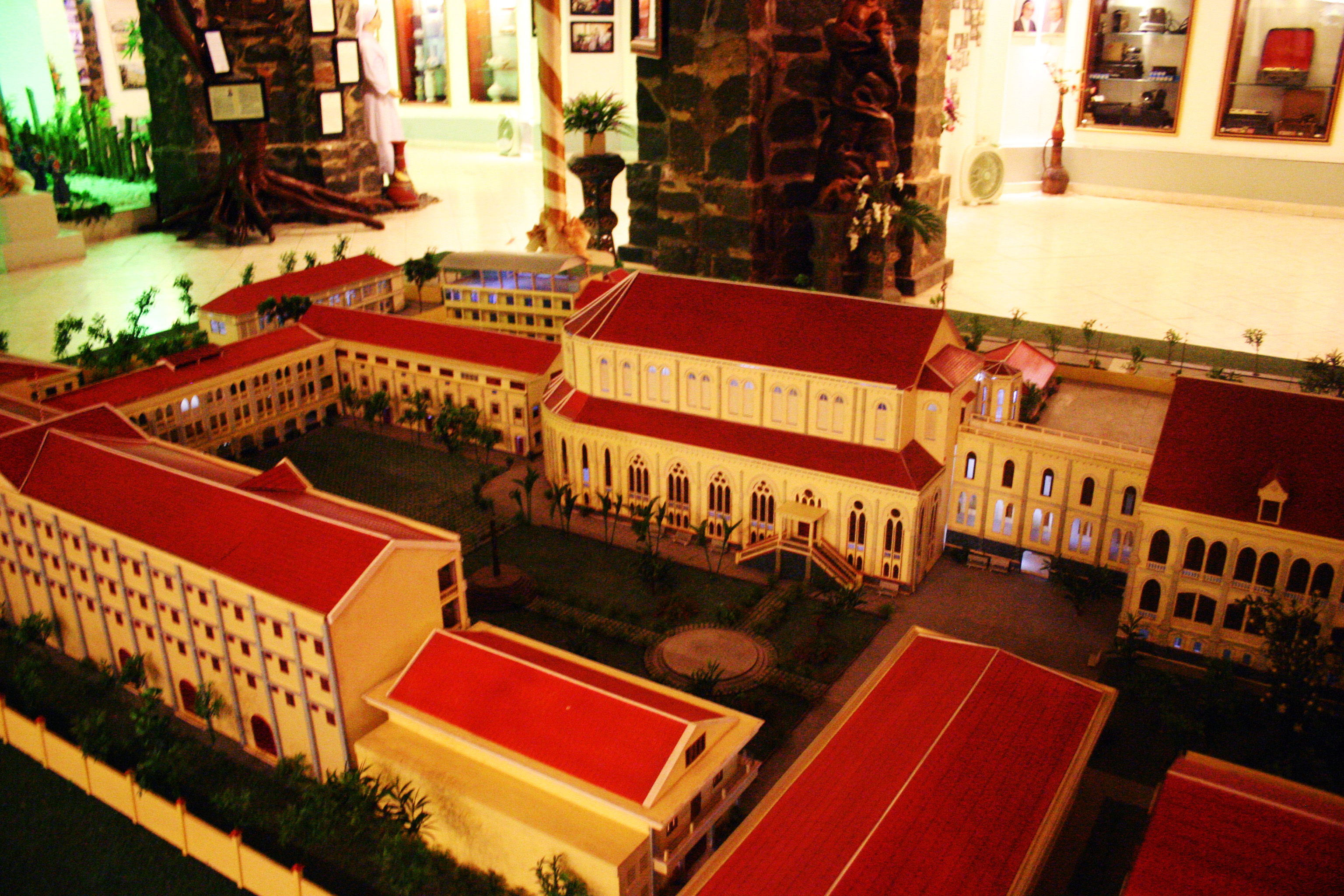
On the ground floor immediately behind the Convent Chapel is a Heritage House (Nhà Truyền thống), which may be visited on request. Set up like a small museum, it recounts the history of the Congregation of the Sisters of Saint-Paul de Chartres in their native France, and the establishment and development of St Paul’s Convent in Saigon, a large model of which dominates the display area. The Heritage House also introduces other aspects of the order’s charitable work throughout the region.

Getting there
Address: Tu viện Phaolô, 4 Bis Nguyễn Trung Ngạn, Phường Bến Nghé, Quận 1, Thành Phố Hồ Chí Minh
Telephone: 84 (0) 8 3822 3387, 84 (0) 8 3910 4454 (Vietnamese language only)
E-mail: [email protected]
Opening hours: On request 7am-12pm, 2pm-5pm daily

5841267596_8c1354eac3_o

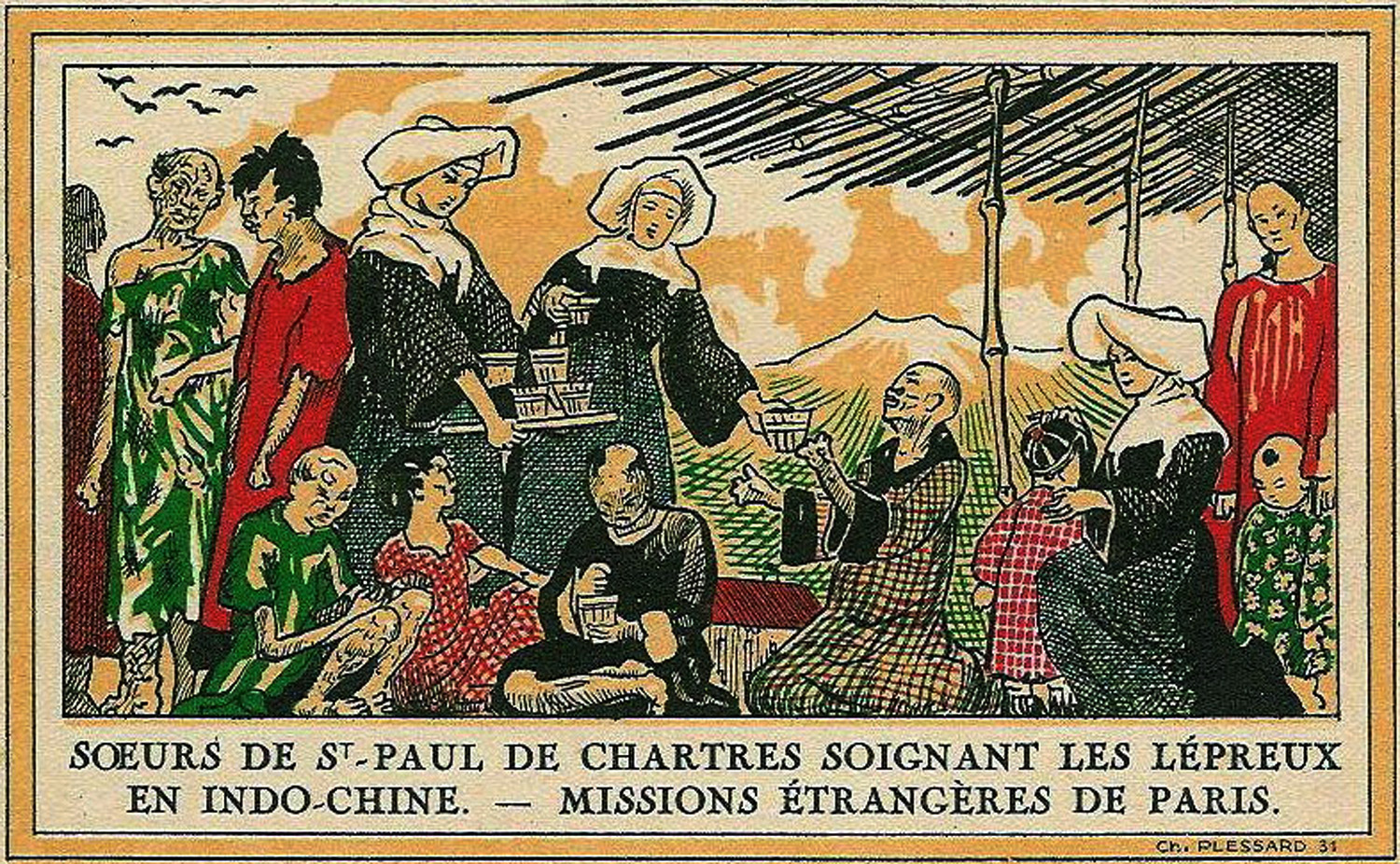
A cartoon depicting the charitable work of the Sisters

IMG_1682

Another view of the exterior of St Paul’s Convent Chapel

IMG_1670

The interior of St Paul’s Convent Chapel

IMG_1692

The interior of the St Paul’s Convent Heritage House

Tim Doling is the author of the guidebook Exploring Saigon-Chợ Lớn – Vanishing heritage of Hồ Chí Minh City (Nhà Xuất Bản Thế Giới, Hà Nội, 2019)

A full index of all Tim’s blog articles since November 2013 is now available here.

Join the Facebook group pages Saigon-Chợ Lớn Then & Now to see historic photographs juxtaposed with new ones taken in the same locations, and Đài Quan sát Di sản Sài Gòn – Saigon Heritage Observatory for up-to-date information on conservation issues in Saigon and Chợ Lớn.

Icons of Old Saigon – The Canal Bonard, 1893

COCHINCHINE - CHOLON - L'Arroyo

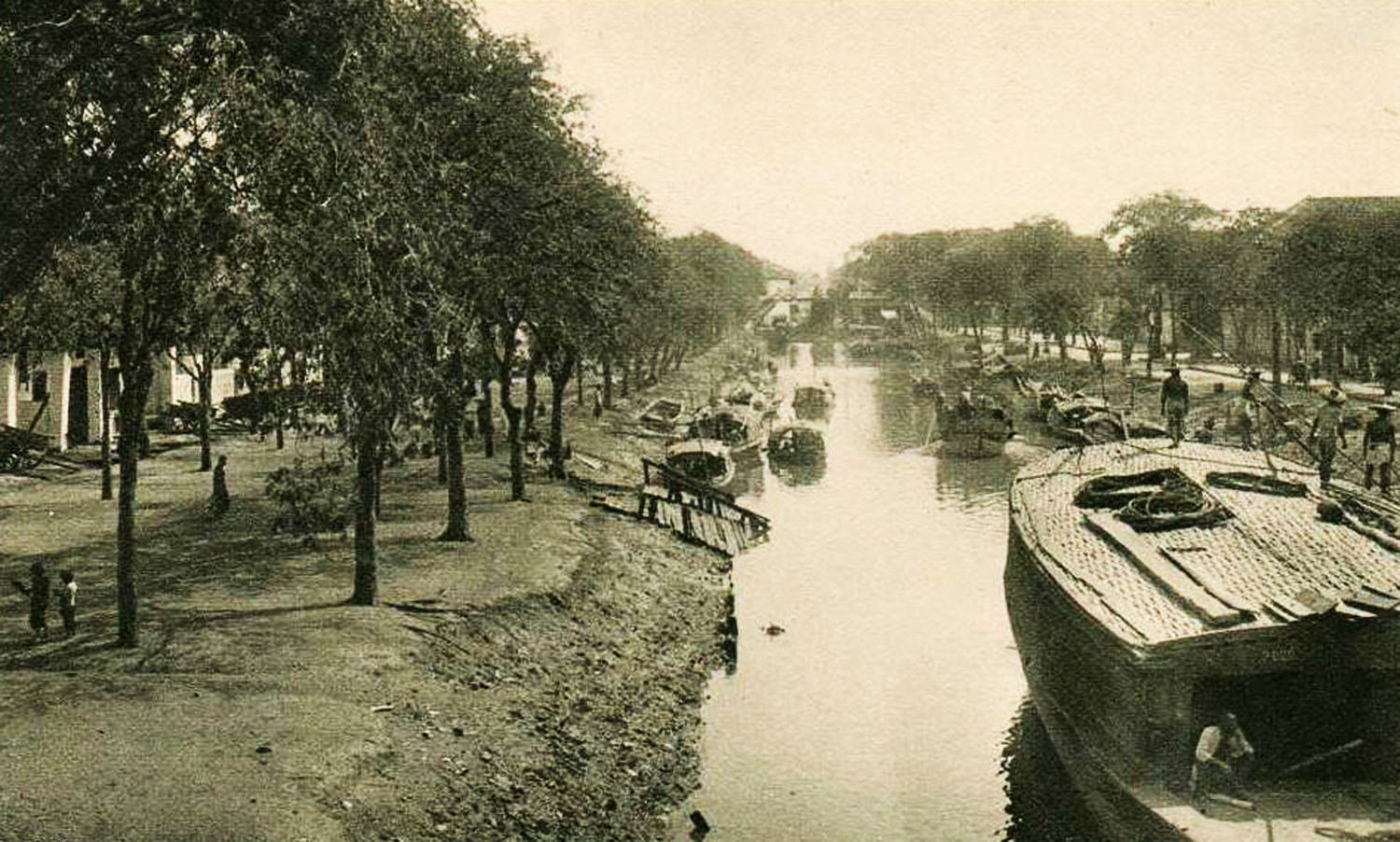
The canal Bonard, viewed from the Palikao Bridge in the late colonial period, with the Bình Tây market in the background

This article was published previously in Saigoneer http://saigoneer.com

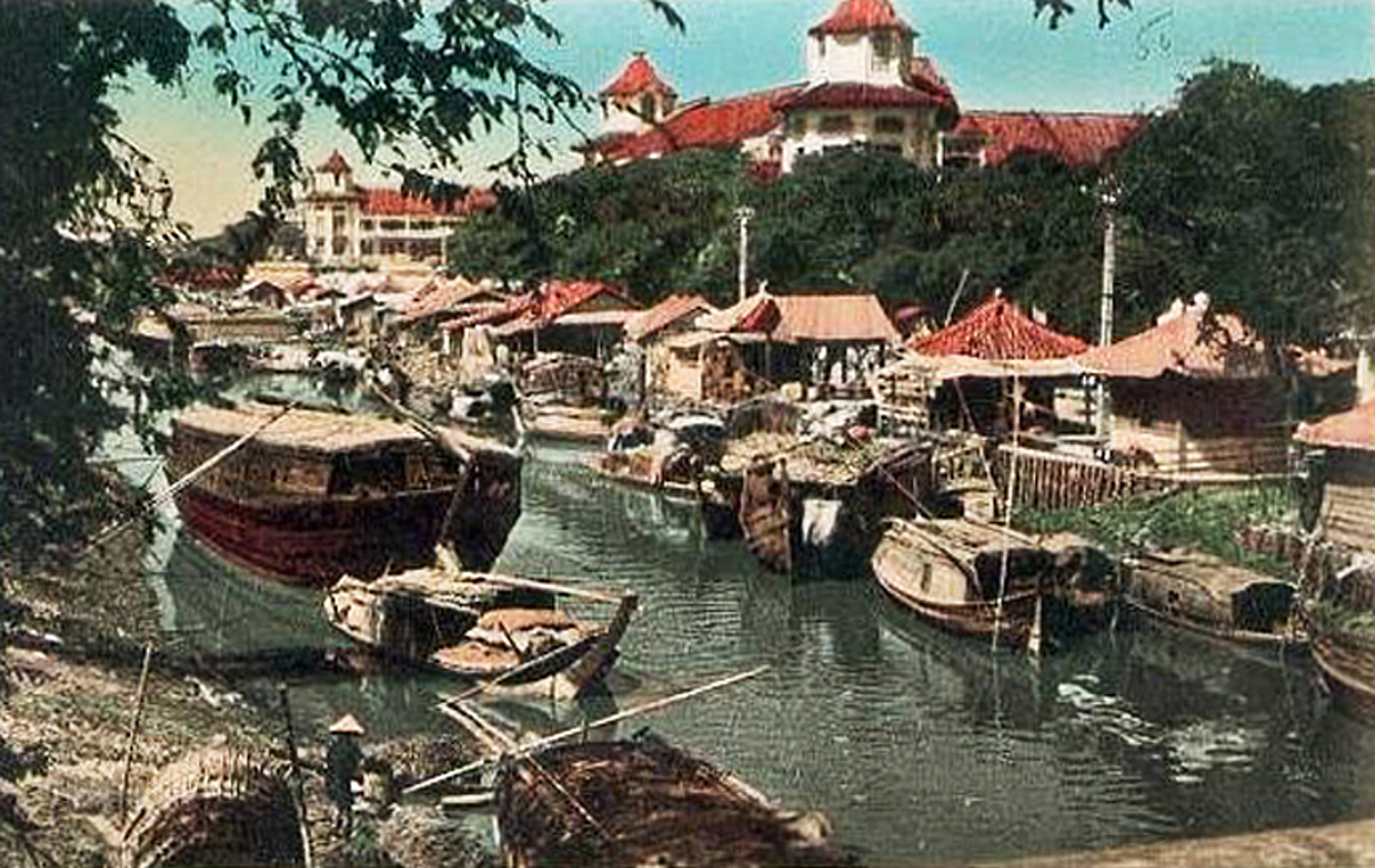
Though now little more than a rat-infested sewer, the former canal Bonard was once a busy waterway which made an immense contribution to the economic prosperity of Chợ Lớn. As work begins to restore this sole surviving inner-city canal to its former glory, we take a look at its history.

1874

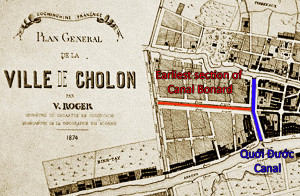
The easternmost section of the canal Bonard existed before 1874

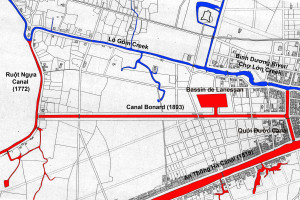
A map of Chợ Lớn dated 1874 suggests that the easternmost section of the canal Bonard was dug at an early date as a branch of the Quới Đước creek, perhaps by the French Navy as part of a network of military waterways in the west of the city.

However, by the 1880s, with water traffic on the increase and the upper reaches of the Lò Gốm creek becoming silted up, the authorities realised the need to extend the canal westward.

In November 1888, 17 hectares of land was granted to the Chợ Lớn Municipal Council to turn the existing waterway into a 1.5km canal connecting the Quới Đước and southern Lò Gốm creeks. This was followed in June 1889 by an Ordinance instructing the Council to commence work on the canal, the quays alongside it and the roads leading up to them. The project also included the construction of a 55,000m³ boat-building basin (the bassin de Lanessan) containing “dry docks for the repair and construction of junks.”

IMAGE 4

The completed canal Bonard and the bassin de Lanessan boat repair and construction yard are depicted on this 1893 map of western Chợ Lớn

However due to finance and land clearance issues, the project suffered significant delays and the canal was not completed until 1893.

Although the name canal Bonard was chosen at the outset of the project, it was decided in 1893 to change the name to canal Fourès, in honour of Lieutenant Governor Augustin Julien Fourès (21 May 1889–9 Aug 1889, 11 Sep 1892–25 Mar 1894), who championed the project and pushed it through to fruition.

However, it seems that his contribution was quickly forgotten, since by 1907 the canal had reverted to its original name, canal Bonard.

To add to the confusion, it also seems to have been known throughout the colonial period by the alternative name “canal de la Distillerie,” in reference to the Distillerie de Cholon, a large rice alcohol factory which opened next to the waterway in 1892.

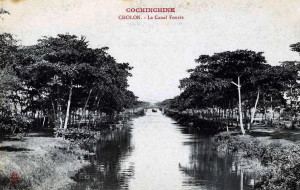
COCHINCHINE - CHOLON - Le Canal Fourès

The “canal Fourès” – the name by which the canal Bonard was known until the early 20th century

By the early 20th century, five large road bridges had been constructed over the canal Bonard, carrying the rue de Minh-Phung (modern Minh Phụng), the rue Danel (after 1928 a joint rail-tramway bridge, now Phạm Đình Hổ), the rue de Palikao (modern Ngô Nhân Tịnh) and the rue de Go-Cong (now Gò Công) respectively.

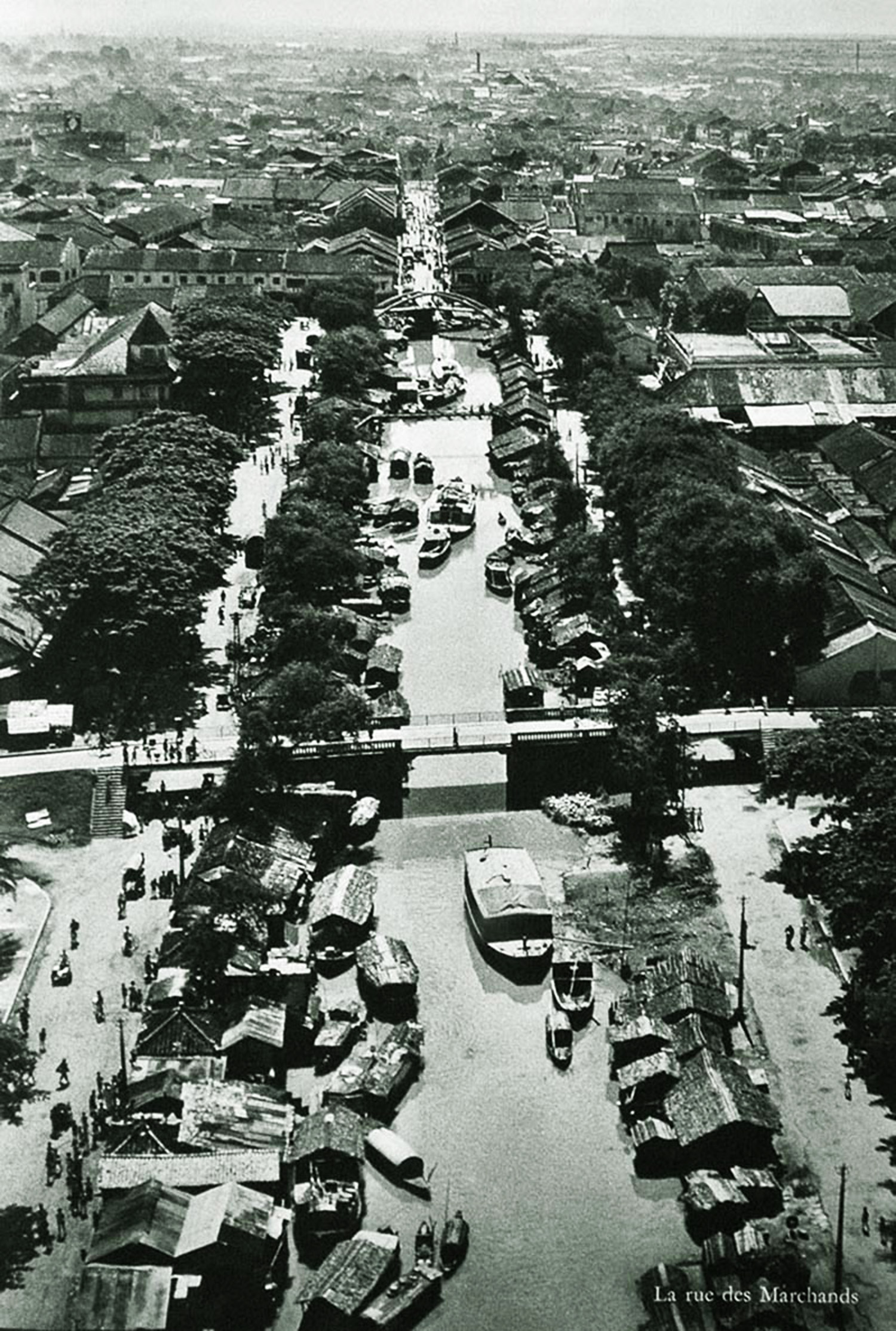
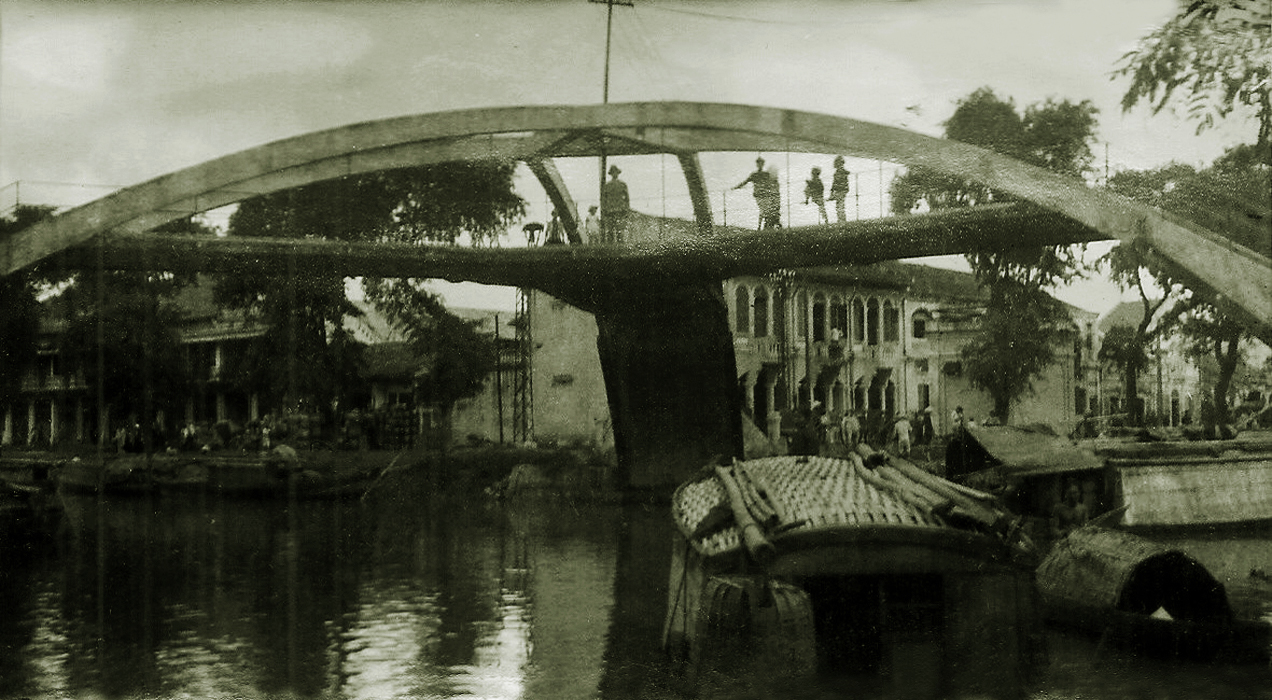
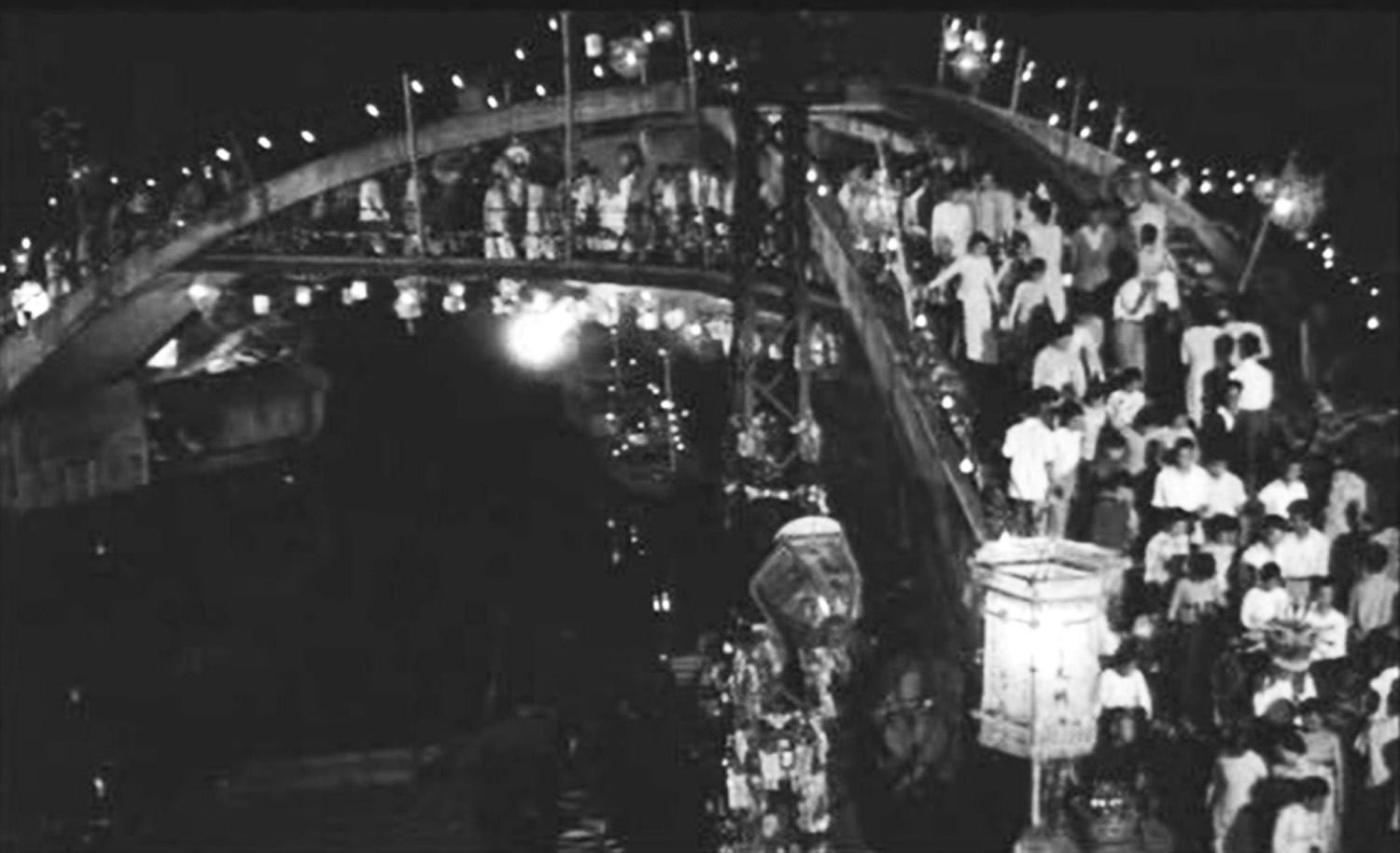
However, perhaps the canal’s best-known bridge was the one which spanned its easternmost end at the “T junction” with the Quới Đước creek. This was the famous Pont des trois arches (Three-arch bridge), a pedestrian structure built in the 1920s by the Société d’exploitation des établissements Brossard et Mopin, and reportedly funded by nationalist journalist Nguyễn Văn Sâm and his wife, the younger sister of Chợ Lớn businessman Trương Văn Bền. In 1958, this unusual bridge was used as the backdrop for the murder scene in Joseph L Mankiewicz’s 1958 film version of Graham Greene’s The Quiet American. It survived until the late 1990s.

IMAGE 1

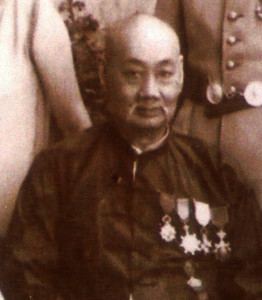
Quách Đàm (郭琰 Guō Yǎn), family photograph reproduced by courtesy of his great grandson, Mr Harrison W Lau

It was during the 1920s that the canal Bonard really came into its own. By that time, the old Chợ Lớn Central Market (located on the site of today’s Chợ Lớn Post Office) had become too small to cope with the number of traders. The filling of Chợ Lớn’s inner-city waterways in 1923-1926 hastened its demise by making it impossible for ship-owning merchants to access the market by boat.

Significantly, the canal Bonard and the lower section of the Quới Đước creek which connected it to the Bến Nghé creek were the only inner-city waterways to be excluded from the government’s 1923 waterway-filling scheme. Recognising how crucial it was to guarantee the merchants waterway access to the city market, wealthy businessman and philanthropist Quách Đàm (Guō Yǎn, 郭琰, 1863-1927) offered to pay for the construction of a brand new market on the north bank of the canal Bonard, where he owned large tracts of land.

The site he chose was the bassin de Lanessan, which had to be filled before construction began in 1926. The Bình Tây Market opened to the public in September 1928.

Saigon Slums 1963 - Rạch Bãi Sậy (kinh Hàng Bàng) phía sau Chợ Bình Tây

“Saigon slums 1963” (unknown photographer)

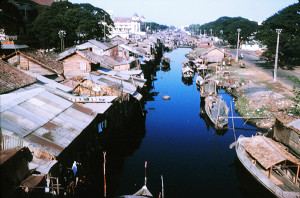
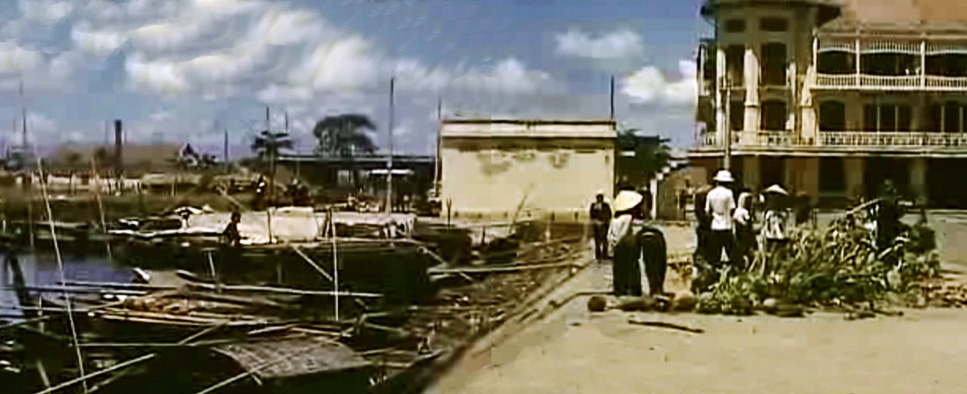
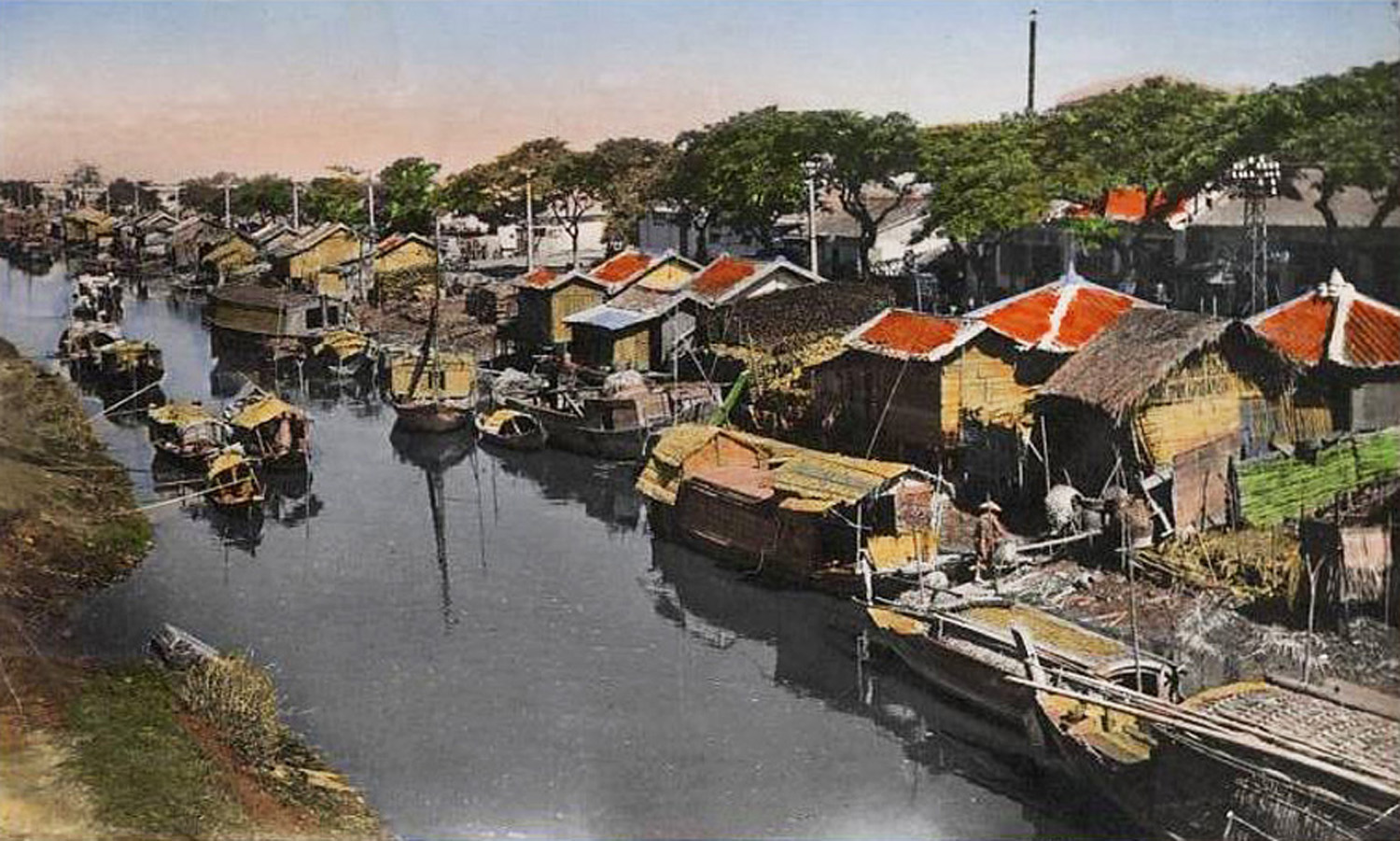
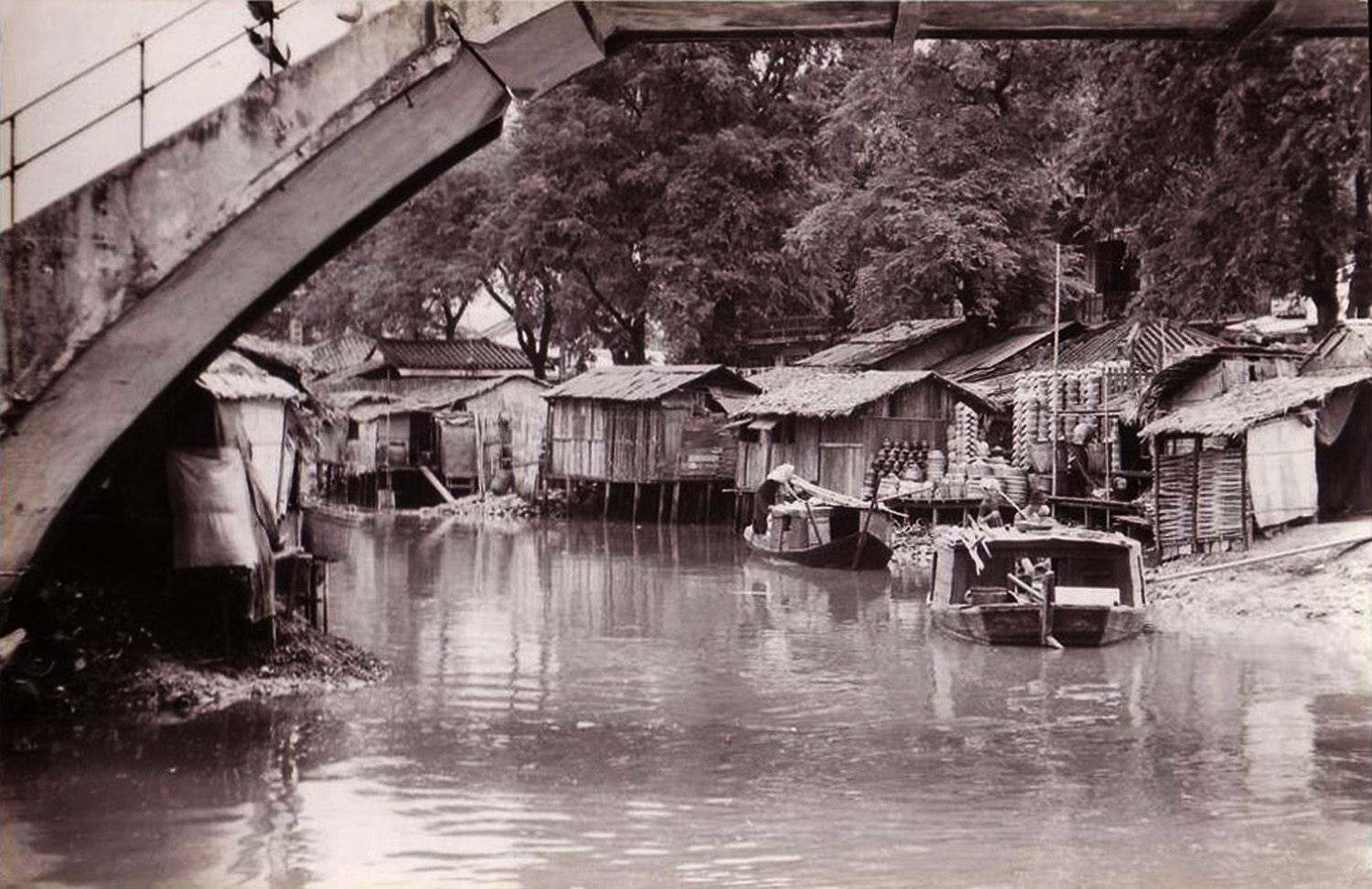
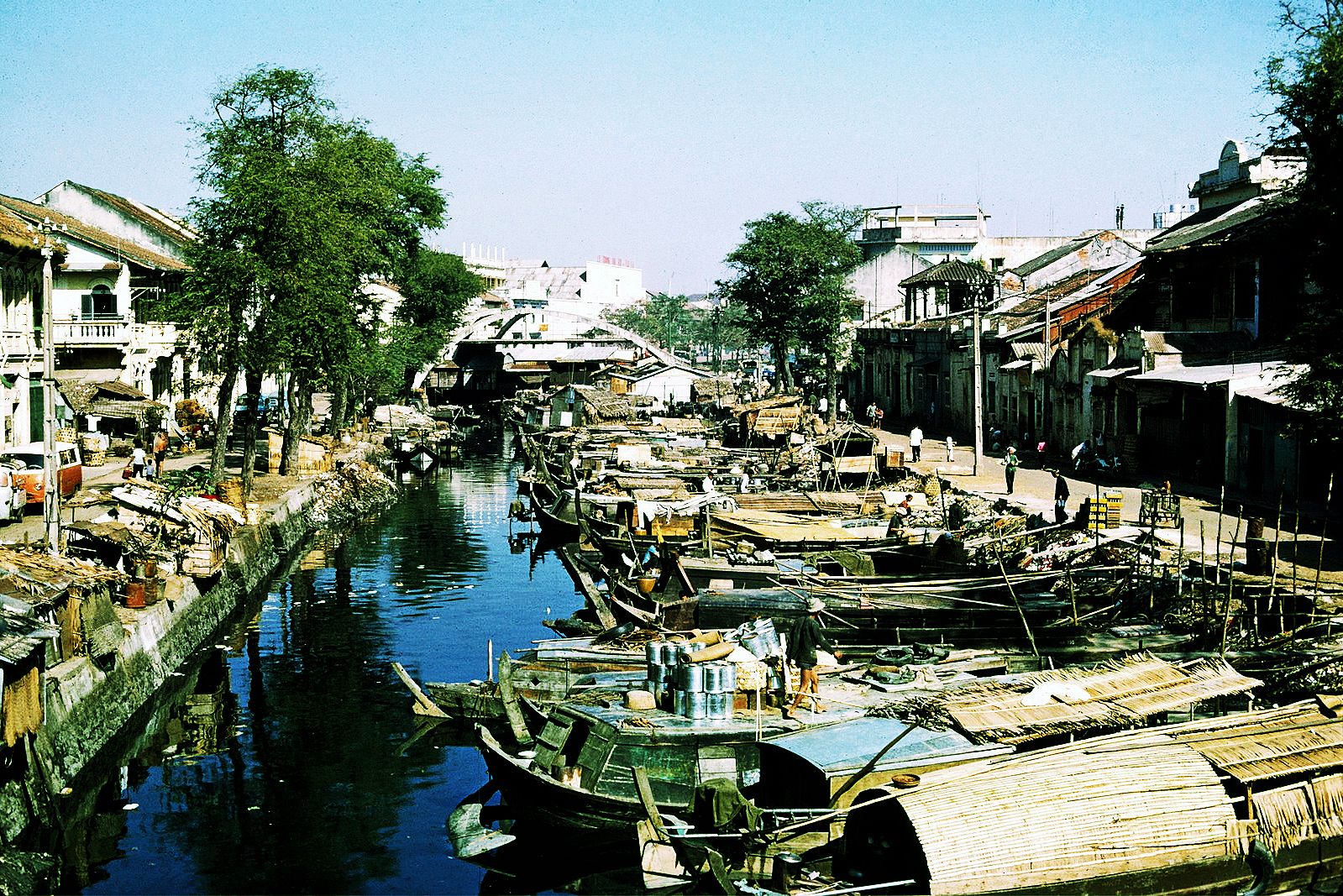
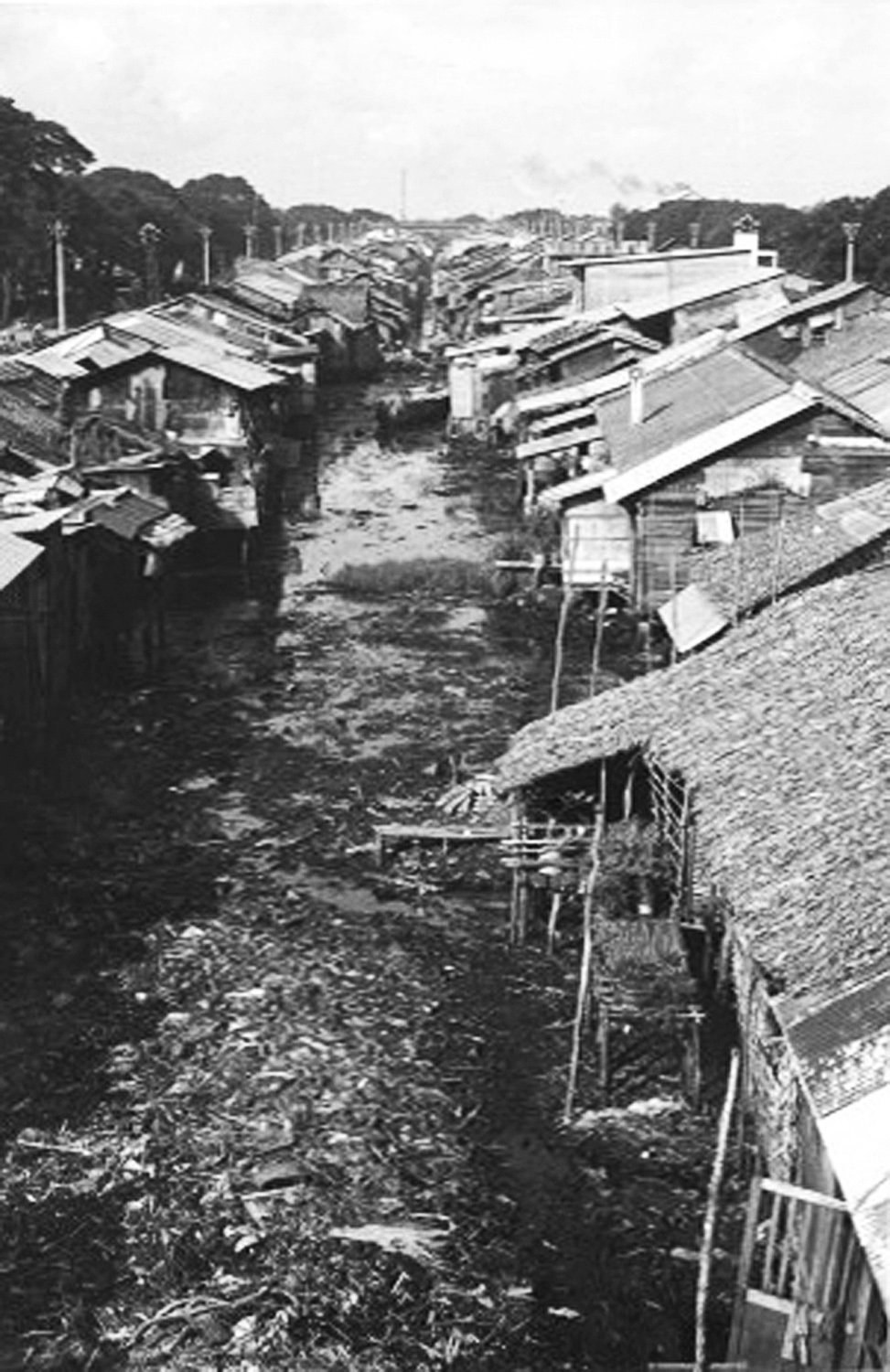
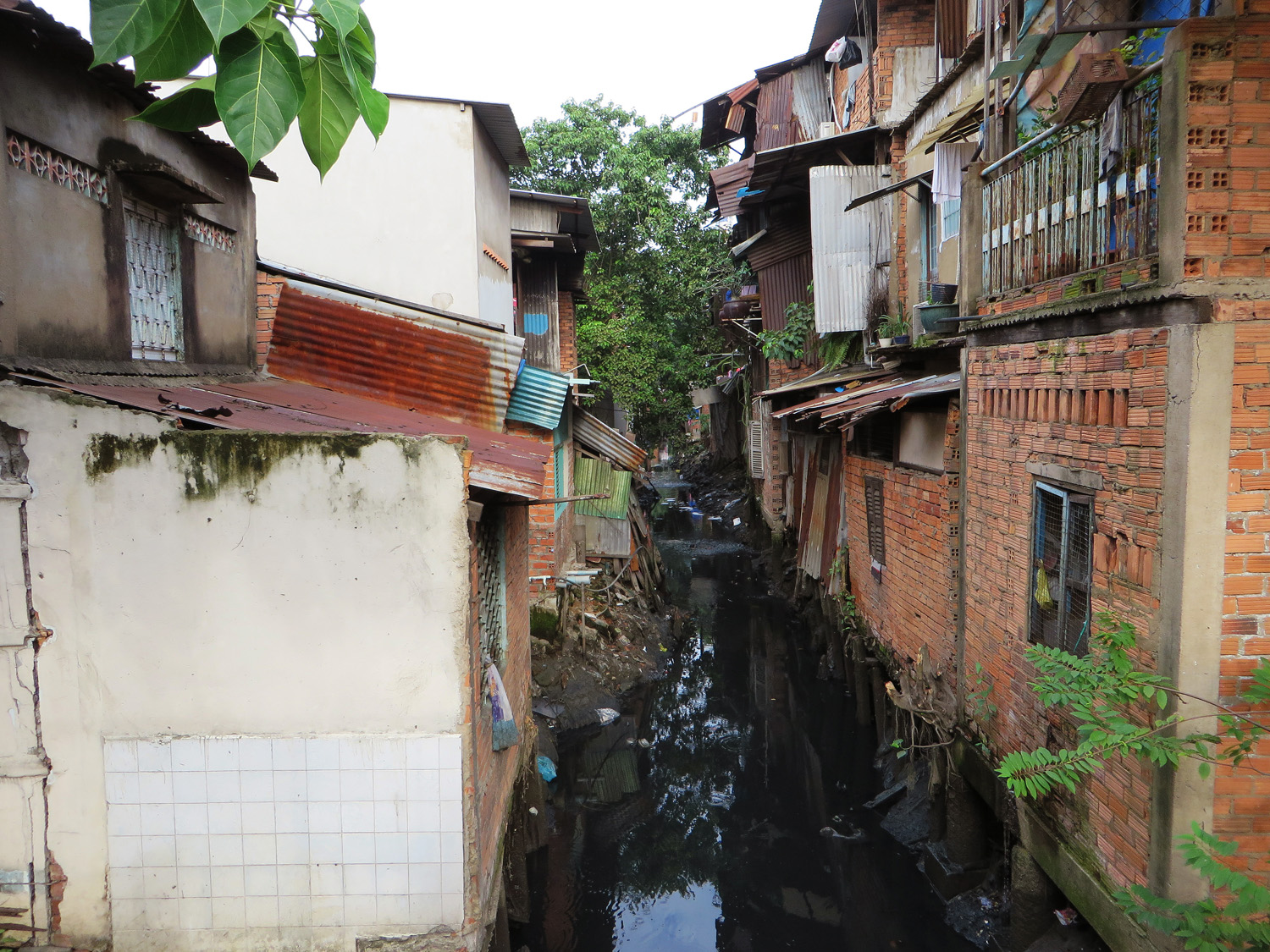
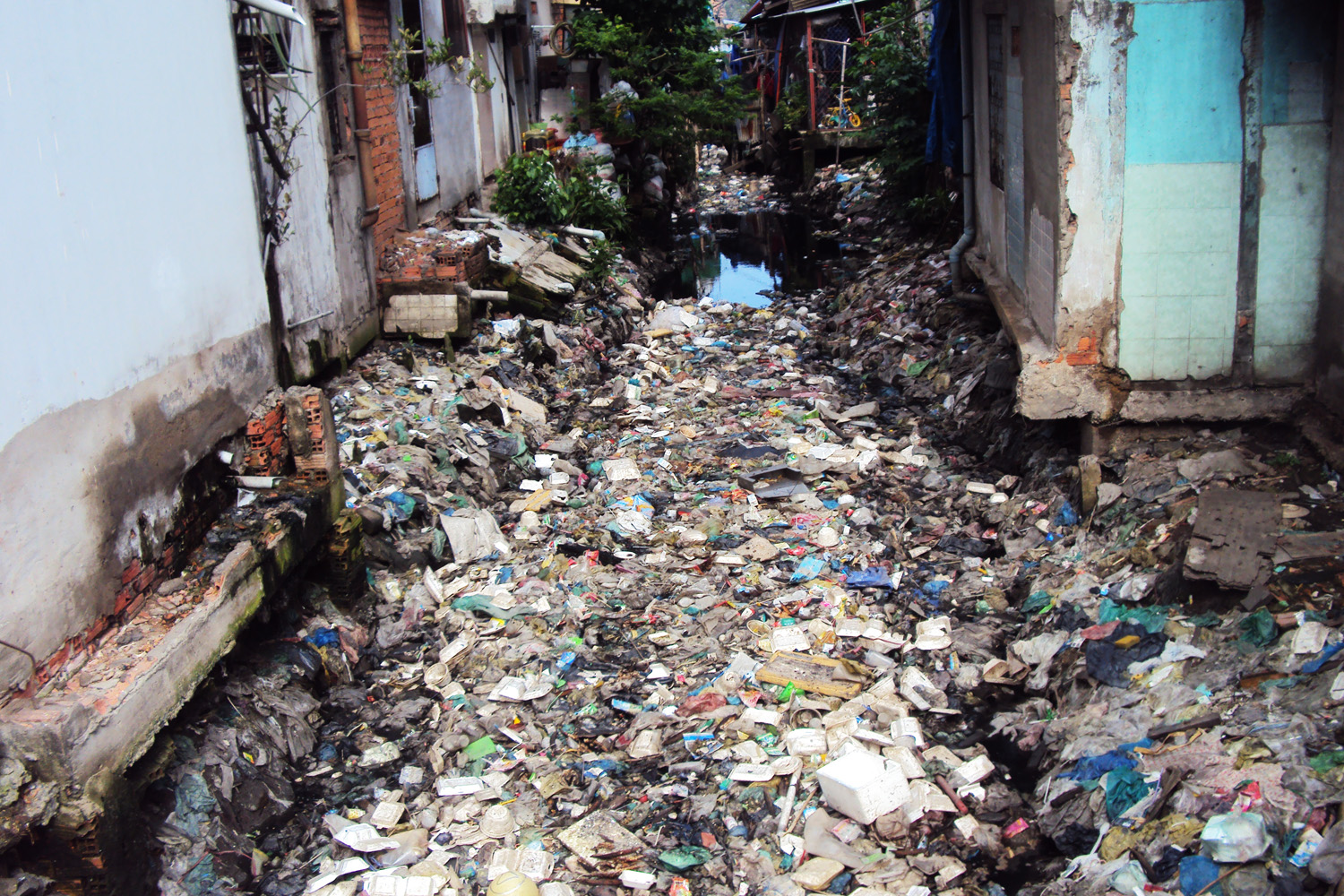
Known after 1955 as the Hàng Bàng (or Bãi Sậy) canal, the old canal Bonard remained one of the city’s busiest waterways until the mid 1960s, when war began to impact negatively on agricultural production in the Mekong Delta. By the end of that decade, the canal had fallen into disuse and temporary housing had been built along its banks, turning it into an open sewer.

In 2000, the western section of the canal from the Lò Gốm creek to Ngô Nhân Tịnh street was filled and houses were built over it. Today, all that remains is the severely-polluted eastern section, connected to the Bến Nghé creek by the Quới Đước creek.

In 2015, work began on a US$100 million project to reinstate this historic canal in its entirety, with the aims of reducing environmental pollution, improving public health and reducing chronic flooding. Temporary housing will be relocated and the quaysides – which still contain a number of important heritage buildings – will be landscaped for both visitors and residents to enjoy.

See also The lost inner-city waterways of Saigon and Cho Lon – Part 2: Cho Lon

7 Canal Bonard viewed from the Palikao bridge

The Canal Bonard viewed from the Gò Công Bridge in the 1930s

8 Binh Tay Market Rear i

The loading area at the rear of the Bình Tây Market in the 1940s

9 SAIGON VU DU CIEL - ANNEE 1940-50. Rạch Bãi Sậy

An aerial view of the canal Bonard in the 1940s

10

Another view of the Canal Bonard in the late colonial period

13 COCHINCHINE - Le pont à Cholon - Cầu Ba Cẳng, Rạch Bãi Sậy

The Pont des trois arches (Three-arch bridge), which spanned the junction of the canal Bonard with the Quới Đước creek

12 CHOLON - Un Arroyo - Rạch Bãi Sậy nơi cầu 3 Cẳng

A late colonial era view of the canal Bonard looking through the Pont des trois arches (Three-arch bridge)

16

The Pont des trois arches was used as a location for the murder scene in Joseph L Mankiewicz’s 1958 film version of Graham Greene’s The Quiet American

18 Saigon 1965-66 - Kinh Quới Đước

The Quới Đước creek, which connects the Hàng Bàng canal (formerly the canal Bonard) with the main Tàu Hú (Bến Nghé) creek, pictured in 1965 (unknown photographer)

20 SAIGON 1965-66 Rạch Bãi Sậy James Kidd Collection - Vietnam Center and Archive

The Hàng Bàng canal (formerly the canal Bonard) pictured in 1965 (James Kidd Collection, Vietnam Center and Archive)

21

The Hàng Bàng canal (formerly the canal Bonard) today

22

The Hàng Bàng canal (formerly the canal Bonard) today

Tim Doling is the author of the guidebook Exploring Saigon-Chợ Lớn – Vanishing heritage of Hồ Chí Minh City (Nhà Xuất Bản Thế Giới, Hà Nội, 2019)

A full index of all Tim’s blog articles since November 2013 is now available here.

Join the Facebook group pages Saigon-Chợ Lớn Then & Now to see historic photographs juxtaposed with new ones taken in the same locations, and Đài Quan sát Di sản Sài Gòn – Saigon Heritage Observatory for up-to-date information on conservation issues in Saigon and Chợ Lớn.

The Conquest and Settlement of Cochinchina in “Les Colonies Francaises,” 1889

Cochinchine Vers Cholon, le matin PLANTÉ N°10 ILL Fréquenez TB i

Planté, Cochinchine: Vers Cholon, le matin (undated)

Published in 1889 by the Colonies Administration of the French Naval Ministry, Les colonies françaises: notices illustrées by Louis Henrique contains detailed information on early colonial Saigon. This excerpt describes the historical background to the establishment of French Cochinchina.

CONQUEST BY ANNAM. Lower Cochinchina was once part of the Khmer kingdom known as Cambodia; it was annexed in 1658 by Annam, and its ancient history is so intertwined with that of the Annamite kingdom, that only from 1859, the epoque in which it fell into our possession, did it have its own particular history. Nevertheless, it is useful to say a few words about the policy followed by the court of Hue to establish its domination over these provinces.

It is interesting that, from the 17th century, Annam proceeded just as France would do two centuries later: the work of conquest was begun at the river mouths, and continued with the annexation of the tributaries of the Mekong.
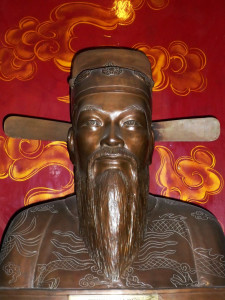
Trinh Hoai Duc

Nguyễn dynasty mandarin Trịnh Hoài Đức (1765-1825)

The mandarin Trinh-Hoai-Duc, writing in 1830, has left us the story of this conquest. Having little confidence in the submission of the Chinese colony and obedience of the Cambodian population, the Annamite government formed an administration recruited entirely from among the literati of Hue; then it ordered that vagrants and other vagabonds be picked up and transported to the new provinces.

Arable lands were carefully surveyed and registered, and properties were assigned to each settler; it was stated, moreover, that the Chinese would be fully assimilated with the Annamites.

This first wave of colonisation spread only through the three eastern provinces; it was only in 1720 that the Annamites seized the other three.

In 1800, new efforts were made to complete the colonisation, which had been halted by the revolt of the Tay-Son, the struggle for the establishment of the Nguyen dynasty, the uprisings in Cambodia and the war with Siam. The results that we have seen, and the resistance that we have had to overcome, are the best praise we can give the organising genius of the Annamite sovereign, Gia-Long.

In order to bring order to a population recruited from the slums and mixed with hostile elements, the following measures were decided: each settler was entitled to take as much land as he could cultivate; the mandarins then declared him the owner of the land which he fertilised; tax was proportionate to the products harvested and could be paid either in cash or in kind, at the choice of the settler; the Annamite Code [Vietnamese law] was applied in all its parts; and the calendar and the measures of the Chinese were also imposed. These institutions have so penetrated the usages of the people that they still exist today, alongside ours (see volumes on Annam and Tonkin).
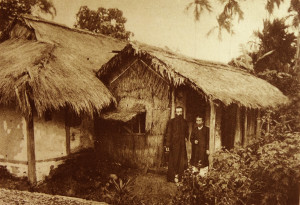
house of m in hue

A late 19th century French missionary’s residence near Huế

EARLY RELATIONS WITH FRANCE. If the conquest of Cochinchina by French arms dates back only 30 years, a great deal of time has passed since our missionaries first sought to bring European civilisation to these lands. According to M Louvet, the first French missionary to visit the Mekong Delta was Father Georges de La Mothe of the Order of St Dominic; he arrived in these regions in 1585, accompanied by Father Fonseca, a Portuguese national. They were very well received by the king of Cambodia, then ruler of the whole of Cochinchina; however, unfortunately for them, he conducted them to his capital. Soon after, the Siamese invaded the country. Father Fonseca was murdered in the church where he was celebrating mass; Father La Mothe, more happily, was able to flee aboard a Spanish ship, but he was covered with wounds and died before reaching Malacca.

Later, the missionaries had to struggle, not only against the persecution of pagans, but also against the jealousy of other missionaries, including the Portuguese, who, all too often forgetting the principles of Christian charity, staked everything to promote the political and commercial interests of their nation. It was this hostility which led to the creation of the Paris Foreign Missions Society, the history of which is both curious and interesting in all respects.

However, the efforts of the Portuguese were at first crowned with great success; in Lower Cochinchina, in Cambodia and throughout Annam, as in the islands of Malaya, Christianity was known only as the “religion of the Portuguese.” If this state of affairs has now changed, it is due to the energy and perseverance of a French prelate who holds a special place in the history of both Annam in general and French Cochinchina in particular.
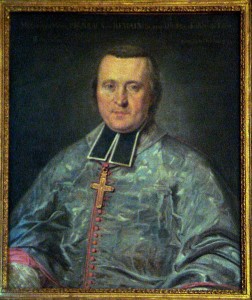
IMAGE 1

Portrait of Pierre Joseph Georges Pigneau de Béhaine (1741-1798) in France, 1787, by Maupérin (Paris Foreign Missions Society)

THE BISHOP OF ADRAN. Pigneau de Béhaine (for this is the name of the man that we must keep in our memory) was born in 1741 near Laon, into a rich family, influential, distinguished by its alliances. Although he could have aspired to the great offices of state, he had but one desire, one ambition – to impart the word of Christ and spread the Christian faith in the most remote regions of the Far East. Barely 24 years old, he arrived at Cam-Cao, now Ha-Tien, which then belonged to the kingdom of Siam. His mission was troubled by war and persecution; the Catholics of Ha-Tien had to take refuge in Pondicherry. As a reward for his apostolic zeal, he was consecrated in Madras as the Bishop of Adran, a title which he carried for a quarter of a century.

Returning to Cam-Cao at a time when the whole of Indo-China was ravaged by bloody wars, he went to establish his residence at the place where today the city of Saigon is located.

At this time, Nguyen-Anh, who later became emperor of Annam under the name Gia-Long, was still struggling with alternate successes and setbacks. Pigneau de Béhaine had occasion to render important services to this prince, who was very popular in Cochinchina and had the good fortune to avoid the pursuits of his enemies, at the moment when his star seemed to have abandoned him. As a result, Nguyen-Anh conceived a friendship for the prelate which was as profound as it was durable.

One day of trouble, he requested the bishop to go and ask for the help of France, entrusting him with the care of his son in order that he could take him to the court of King Louis XVI. Pigneau de Béhaine left Indo-China with a heavy heart, as the most serious events were taking place here. He believed, however, that it would be enough to go to Pondicherry, where the young prince could complete his education. After waiting in vain for several years for a response to the request he had made to Versailles, the valiant bishop decided to make the trip to France to plead in person the cause of the heroic monarch, with the help of whom French influence in Indo-China could be established in a sustainable manner.

IMAGE 2

Portrait of crown prince Nguyễn Phúc Cảnh in France, 1787, by Maupérin (Paris Foreign Missions Society)

It was only in 1787 that the Bishop of Adran arrived in Paris. The events of the revolution were already getting under way, and at first it seemed that no-one would pay any attention to what was happening in the Far East. But Prince Canh-Dzue was pretty boy; he spoke French with a great deal of charm, and it was with special grace that he wore his national costume, which, along with his hairstyle, resembled that of our women.

The ladies of the court went crazy about him; according to the custom of that time, they adopted a new fashion in honour of the hero of the day, and for a while we lived with nothing but hairstyles à la Chinoise.

THE TREATY OF 1787. Louis XVI could not remain indifferent to the pleas of this attractive young man of royal race, who gave him the assurances of absolute devotion. On 28 November 1787, at Versailles, de Vergenneset de Montmorin signed a treaty of alliance, offensive and defensive, in which “a squadron of 20 French warships, five European regiments and two regiments of colonial troops” would be placed under the command of the king of Cochinchina. Moreover King Louis XVI pledged “to provide, in a few months, the sum of one million dollars (sic) with 500,000 in cash, the rest in saltpetre, cannons, muskets and other military arms.”

For his part, the king of Cochinchina was committed, among other things, “to assign, in perpetuity, the harbour and the territory of Han-Lan (bay of Tourane and peninsula), and the islands adjacent to Fai-Fo [Hội An], in the south, and to Haï-Wen, in the north.” All religious views were declared free.

As in the previous expedition of the Count de Maudave to Madagascar (see the notice on Madagascar), the French government entrusted the governor of French India with responsibility for meeting the commitments it had made, and once again, these commitments were not met. The Bishop of Adran invoked the formal orders of the king, but the Governor, Count de Conway, opposed the demands.
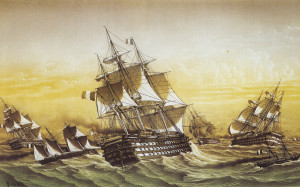
Lebreton_engraving-15

Rigault de Genouilly’s flagship the Ville de Paris in 1853 (engraving by Lebreton)

Unable to get anything from the governor, the bishop spoke directly to the settlers in Pondicherry, making them understand that it was in their interests to extend French influence in Indo-China and appealing to their patriotism so that the signature of the king of France was not ignored.

Pigneau was energetic and persevering, and his word was finally heard. In 1790, he arrived in Saigon with two ships loaded with weapons and ammunition, crewed by a team of active and dedicated officers, who proceeded to reorganise the Annamite army and fleet, and to fortify Hue, Saigon, My-Tho and several other places.

These officers were:
● J B Chaigneau, known to the Annamites under the names Nguyen-Van-Tang and Chu-Tau-Long (Commander Long); he commanded the Dragon volant.
● De Forçant, who was called Nguyen-Van-Chan and Chu-Tau-Phung (Commander Phung); he commanded the Aigle. He died in 1809.
● Philippe Vannier or Le-Van-Lang; he successively commanded the ships Bong-Thua and Dong-Nai, and then the Phénix.
These officers were successively joined by several other intrepid companions:
● Jean-Marie Dayot, head of a naval division of two Annamite ships, the Dong-Nai and the Prince de Cochinchine.
● Victor Ollivier (Ong-Tin), engineer officer in charge of the organisation of infantry, artillery and fortifications. He died on 22 March 1799 in Malacca, where he had been sent by Gia-Long for health reasons.
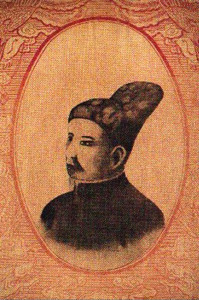
090602VuaGiaLong

King Gia Long (reigned 1802-1820), born Nguyễn Phúc Ánh

● Théodore Le Brun, fortifications engineer.
● Lauront Barizy, lieutenant-colonel.
● Julien Girard de l’Isle-Sellé, captain.
● J M Despiaux, physician to King Gia-Long.
● Louis Guillon, lieutenant.
● Jean Guilloux, lieutenant.
(from Pétrus Ký, Histoire Annamite)

The events which occurred in France at that time completely diverted attention away from Cochinchina, where Gia-Long definitively established his power. Indisputably displacing the Le dynasty, he became actively engaged in public works, changes in legislation and the administrative organisation of Annam; His work can be compared to that of the greatest European monarchs.

For the remainder of the bishop of Adran’s life, Gia-Long lavished on him evidence of a lively and sincere friendship. When the bishop died on 9 October 1798, the king sent a beautiful coffin and rich silk fabrics in which to wrap the body. For two whole months, the coffin remained exposed for public veneration in the episcopal residence, which was located not far from the spot where the gunpowder magazine now stands.

The king himself presided at the funeral ceremony, which took place amidst great pomp on 16 December 1798.

The coffin, wrapped in beautiful silk fabric, was placed on a stretcher carried by 80 men and covered with a canopy embroidered with gold. The guard of honour was provided by the entire king’s guard, comprising more than 12,000 men. Overall, the procession included 40,000 people and 120 elephants armed for war and decorated with lavish ornaments. When they arrived at the place which the bishop had chosen for his burial, the king himself delivered the funeral oration.

IMAGE 5

The Mausoleum of Pigneau de Béhaine, Bishop of Adran in Saigon (demolished in 1983)

A magnificent mausoleum was erected to his memory, entrusted to a royal guard of 30 men which was to be maintained in perpetuity.

The tomb of the bishop of Adran still exists today, and since we took possession of this land, it has been declared a historic monument.

VIOLATION OF THE PROVISIONS OF THE TREATY. During his reign, Gia-Long had been the protector and friend of Europeans. However, he was alarmed by the progress of the English in India, and before he died in 1820, he recommended actions against the Europeans to his son and successor Minh-Mang.

These actions were followed only too well. In 1824, the French, old friends of Gia-Long, were expelled. In the following year, Minh-Mang refused to receive the captain of the Bougainville. Then in 1847, during the reign of Thieu-Tri, the frigate Gloire captained by Lapierre, and the corvette Victorieuse under the command of Rigault de Genouilly, destroyed five Annamite ships in the Bay of Tourane, which had intended to attack them.

During the reign of Tu-Duc, persecution against the missionaries was intensified. In 1851, the French missionaries Schœffler and Bonnard were massacred on the king’s orders. In 1852, France lodged a formal complaint, but this was ignored, and in response, the corvette Catinat destroyed one of the forts of Tourane.

In 1857, following the arrest and execution of the Spanish bishop Diaz in Tonkin, France and Spain came to an agreement to obtain redress for the violence committed against their nationals and against the Christians of Annam, which at that time were estimated to number over 600,000.
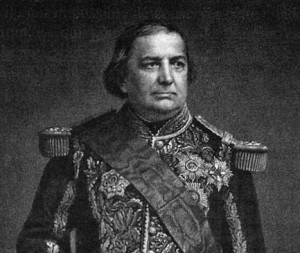
Rigault-de-genouilly

Admiral Pierre-Louis-Charles Rigault de Genouilly (1807-1873)

EXPEDITION OF 1858. On 31 August 1858, a Franco-Spanish expedition commanded by Admiral Rigault de Genouilly and the Spanish Colonel Langerote arrived in Tourane [Đà Nẵng], took the forts and settled on the peninsula which forms the boundary to the harbour entrance. They held it despite Annamite efforts to chase them away.

The bishop of Annam, Monsignor Pellerin, urged the admiral to march on Hue, but our ships could not enter the river because of the obstructions placed there by the Annamites, and the disease which was then wreaking havoc amongst the expeditionary force. For these reasons, the admiral decided to strike a blow elsewhere.

On 2 February 1859, leaving the captain of the Toyon in Tourane, Rigault de Genouilly left this port at the head of a naval division and headed for Saigon. On the morning of 10 February, the two forts which defended the inner anchorage of Cap Saint-Jacques [Vũng Tàu] were destroyed. On 11 February, the squadron sailed up the Dong-Nai river, setting Can-Gio Fort on fire.

From 11-15 February, they disabled and subsequently destroyed the forts of Ong-Gia, Cha-La, Tay-Ray and Tang-Ki. On the evening of 15 February, they arrived in Saigon.

CAPTURE OF SAIGON. Saigon was defended in the south by two forts built in the European style and in the north by a large citadel. Hardly had our squadron come into sight when the guns of the two southern forts opened fire. One fort was immediately silenced; the other, much better armed, could not be attacked until the following day. The one on the right bank was dismantled, while the one on the left bank (the Fort du Sud) was occupied to serve as a support installation for our transport and convoy ships.
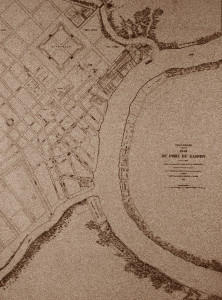
1863 plan du port

A Saigon port map of 1863, showing the location of the Citadel

All that remained was the Citadel, a square shaped structure situated 800m from the forts. Its walls, which had a combined length of 478m, were surrounded by a wide and deep moat. Four large bastions defended the corners, and in the centre of each of the four walls was a gate which opened onto a stone bridge. The citadel was surrounded on all sides by woods, gardens and houses. At 1700 hours, following a reconnaissance made by commander Jauréguiberry, the squadron commenced its bombardment. At first, the occupants of the Citadel responded vigorously, but their fire soon slowed as a result of the accuracy of our shooting. The assault columns landed and took up positions in the surrounding houses. The fire of our sharpshooters was successful; struck from all directions, the enemy abandoned its guns. Our troops, headed by marine infantry sergeant Henri de Pallières, rushed to the assault.

Capturing Saigon made us masters of considerable materiel: 200 guns of iron or bronze; a corvette; eight war junks still under construction; 20,000 swords, spears, rifles and pistols; 85,000kg of gunpowder; huge quantities of cartridges, rockets, projectiles, pig lead, and other military equipment; enough rice to feed 7,000-8,000 men for a year; and a box containing 130,000 francs.

CONQUEST OF THE PROVINCES. In April and May 1859, Admiral Rigault de Genouilly continued his offensive operations. Returning to Tourane, he defeated the Annamites, and, on 7-8 May, he took the entrenched camp of Kien-San, which commanded the road to Hue.

However, the war in Italy, and later the China expedition, obliged us momentarily to abandon the conquest of Lower Cochinchina. On 1 November 1859, Admiral Rigault de Genouilly, recalled to France at his own request, was replaced by Admiral Page.
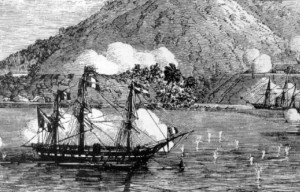
French_ships_at_Danang_1858

French ships in Tourane harbour, 1858

Our low numbers forced us to evacuate Tourane on 23 March 1860, so that we could concentrate on Saigon.

The court of Hue announced our evacuation of Tourane as a brilliant victory. The king issued a proclamation announcing to his people that he had driven out the barbarians. “They are gone,” he said, “these terrible, greedy creatures who have no inspiration other than doing evil, no purpose other than making filthy lucre. They have disappeared, these pirates who feed on human flesh and make clothes from the skin of the poor unfortunates they have eaten! Put to flight by our soldiers, they are shamefully saved from our retribution!”

Soon after this, Admiral Page was sent to China, leaving in Saigon a garrison of 800 men, including 200 Spaniards and a small fleet of two corvettes and four smaller sailing ships. The command was given to Captain d’Ariès, with the Spanish Colonel Palanca Guttierez as his deputy. During this period, Commander d’Ariès consolidated his control over Saigon and Cholon, connecting the two cities with a series of rural fortifications, each protected by 30 rifles and 80 howitzers.

Meanwhile, the enemy was not idle. Taking advantage of our numerical weakness, the Annamites built the defensive lines of Ky-Hoa, 4 kilometres north of Saigon. In this way, they dominated the roads to Cambodia, My-Tho, Hue and the upper reaches of the Dong-Nai river. They blocked our little garrison to the point where it remained for almost six months without news from outside. The Annamites even launched a direct attack on our garrison on the night of 3-4 July. They were driven back and did not dare to attack us again, but they repeatedly approached our positions.
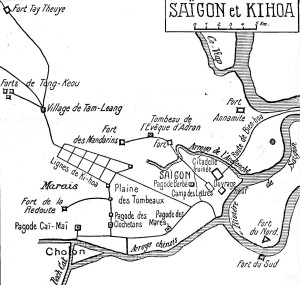
Map_of_Saigon_and_Ky_Hoa

A map of the Battle of Ky-Hoa, 1861

The end of the China campaign allowed us to resume the hostilities with vigour. On 6 February 1861, Admiral Charner arrived with a naval division and an expeditionary force of 3,000 to 4,000 men, including 230 Spaniards and an indigenous company formed in Tourane, composed of Christians who had embraced our cause.

The first objective of admiral Charner was the removal of the lines of Ky-Hoa, an operation that he undertook with great success on 25 February. The Annamites took flight; they had lost over 1,000 men, killed or wounded. Our losses were also severe; 225 of our men had been put out of action, including 12 killed. Among these were Commanders Foucault and Rodellec-Duporzic, Ensign Berger, and Midshipmen Noël and Frostin. Lieutenant-Colonel Testard of the Marine Infantry was hit in the head and shoulder. Ensign Johaneau-Lareynière and the Spaniards Jean Lavizeruz and Barnabé Fovella died as a result of their injuries.

When Lareynière fell, several friends came to offer him help. His response was heroic, worthy of that of Walhubert at Austerlitz: “Go back to your station,” he said to one of them, “and write to my family telling them that I died bravely.” In Sparta or Rome, these words would have been carved on a monument. France, oblivious of his glories, continues to ignore these words of its unknown hero.

The destruction of the lines of Ky-Hoa was followed by the conquest of Tong-Keou, Hoc-Mon, Brach-Tra and Trang-Bang. Meanwhile, Admiral Page ascended the Dong-Nai river, destroyed the forts and landing stages, and dispersed 15,000 men who were defending its course. Saigon was delivered, and the province of Gia-Dinh conquered. “The expeditionary army, in the space of a fortnight, had fought five battles, undertaken 12 reconnaissances, and marched under a brazen sky, despite the deadly climate and the fact that biscuit rations and water were often spoiled and our soldiers were kept awake every night by the poisonous bites of mosquitoes and fire ants.” (L Pallu)
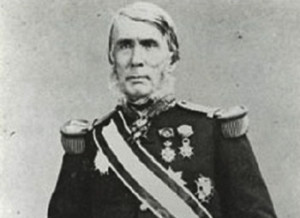
Louis_Adolphe_Bonard

Admiral Louis-Adolphe Bonard (1805-1867)

Taking the arroyo de la Poste, which leads from My-Tho into Cambodia, cost the life of Captain Bourdais. After the enemy had withdrawn, Admiral Page’s fleet arrived at My-Tho on 12 April. The rainy season started and our troops were sent to their quarters.

On 29 November, Admiral Charner left for France, leaving the command to Admiral Bonard. In the following month, the latter seized Bien-Hoa and Baria. With the northern regions of our new possession now quiet, Admiral Bonard turned southward against Vinh-Long, a fortress located on the Mekong. It was taken on 23 March by Lieutenant Colonel Reboul, supported by the fleet.

Despite their small numbers, our forces had to keep possession of a very large tract of country. Many isolated posts were attacked frequently by the rebels, whose audacity was great. On 6 April 1862, insurgents from Tan-Long launched a surprise attack on Saigon, between the arroyo and the fort of Cai Mai. Around 50 huts were burned, a French position compromised, and for a moment we feared for our artillery stores.

The river of Hue, which bore rice to the capital of Annam, was blocked; Emperor Tu Duc, who was fighting a revolt in Tonkin, sued for peace, and a treaty was signed on 5 June 1862 in Saigon. This treaty, concluded between France and Spain on the one hand and Annam on the other, contained the following major provisions:

(i) The subjects of the two nations of France and Spain may practice Christian worship in the kingdom of Annam, and the subjects of this realm, without distinction, who wish to embrace the Christian religion, may also do so freely and without coercion; but those who do not have the desire to become Christians will not be forced to do so.
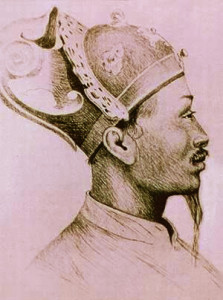
Vua_Tu_Duc

King Tự Đức (reigned 1847-1883)

(ii) The three complete provinces of Bien-Hoa, Gia-Dinh (Saigon) and Dinh-Tuong (My Tho) and the island of Poulo-Condore are ceded fully and in all sovereignty to France; in addition, French traders may trade freely and move their ships wherever they wish in the great river of Cambodia and in the arms of that river; it will be the same for the French warships sent to carry out surveillance in the same river and its tributaries.

(iii) The king of Annam shall pay as compensation, within a period of 10 years, the sum of four million dollars (the kingdom of Annam having no dollars, the latter was represented by 72 hundredths of a tael).

In addition, the Vinh-Long citadel was to be “rendered to the king of Annam as soon as he had ended the rebellion that exists, by his orders, in the provinces of Gia-Dinh and Dinh-Tuong.”

After this act had been signed, Tu-Duc sought to escape its terms by every manner: the persecution against Christians continued by devious means in Cochinchina; access to ports remained banned, and, by covert means, the subjects of provinces ceded to France were pushed into rebellion against us. By December 1863, an uprising led by the mandarin Quan-Dinh had become very widespread; but with reinforcements requested from Manila and our China Seas naval division, Admiral Bonard managed to suppress it. That done, the treaty of 5 June 1862 was ratified on 14 April 1863 in Hue.

It was at this juncture that Spanish troops left the colony, where they had remained with us for five years, showing great bravery and proving themselves to be worthy heirs of their country’s military glory. The descendants of Rocroi and Saragosse, this time fighting for the same cause, had learned to respect each other.
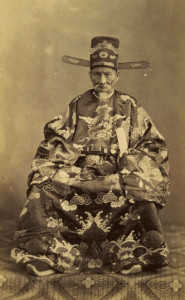
Phan_Thanh_Gian

Nguyễn dynasty mandarin Phan Thanh Giản (1796-1867)

Annam had not yet abandoned hope that we could be persuaded to give up our conquest. For this purpose, an embassy headed by Phan-Than-Gian was sent to Paris. Embarking on 16 July for France, the king’s plenipotentiary envoy requested the return of the three eastern provinces in exchange for financial compensation.

At this time, opinions in France were divided on the question of whether or not to keep our new colony. Public opinion, already excited by the case of Mexico, was increasingly concerned about the dangers of distant expeditions. Opponents of the Cochinchina project had sufficient influence to push for a new treaty to be signed, turning the occupation into a mere protectorate, and leaving us just a few places – Saigon, My Tho, Thu-Dau-Mot and Cholon – connected by military roads.

Fortunately, several competent characters – the Marquis of Chasseloup-Laubat, Minister of Marine, M Duruy, Minister of Public Education, Admiral Rigault de Genouilly, Senator Baron Brenier, and, in opposition, Thiers and Lambrecht – moved to save our nascent colony. A counter-order was sent and we kept Cochinchina.

Having failed in its attempt to obtain the surrender of the three conquered provinces, the court of Hue did everything possible to make our occupation difficult and costly. It hoped that, tired of the constant sacrifices, we would eventually give up and leave the country. The mandarins of the three western provinces, which remained under the rule of Tu-Duc, continually excited partial revolts on the left bank of the Mekong, and in Cambodia, which became our protectorate by the Treaty of 11 August 1863. Before 1867, our efforts to repress these revolts were ineffective, because the rebels dispersed by our troops immediately took refuge in the lands which were still ruled by Tu-Duc, the real instigator of all these troubles.

Eventually, the intrigues of the Annamite monarch were punished. The sedition he excited in Cambodia and the insurrection he fomented in the north of our possessions were repressed vigorously by Colonel Reboul, Lieutenant Colonel Marchaisse (killed during the uprising), Captain Savin de Larclauze, and Commanders Alleyron, Brière de l’Isle and Domange.
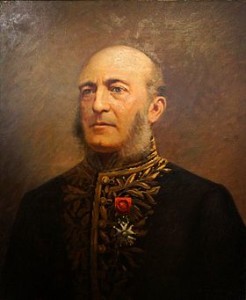
De_la_Grandière_amiral_05097

Admiral Pierre-Paul de La Grandière (1807-1876)

Admiral de la Grandière, Governor of Cochinchina, had frequently expressed concern that our colony lacked natural borders, and that the western provinces, which remained Annamite, were serious trouble spots. The most recent events proved that he was right, and as a result, the admiral was allowed to bring these provinces into our possession. An expedition was organised in the greatest secrecy, and from 20-24 June 1867, our troops occupied Vinh-Long, Sa-Dec, Chau-Doc and Ha-Tien, without encountering any resistance.

Phan-Than-Gian, the former envoy of Tu Duc in Paris who was the governor of these provinces, ordered the mandarins to submit, in order to avoid unnecessary bloodshed. Then, refusing the generous offers of Admiral de la Grandière, he poisoned himself, thus becoming a noble victim of the political cunning of the king that he was powerless to avert.

INSURRECTIONS. After the conquest of the three western provinces, the first insurrection which we had to overcome was that of the Plain of Reeds, fomented by an able leader named Tien-Bo. Entrenched in a position he believed to be impregnable, he was flushed out by a column of 400 men, composed largely of native sharpshooters. This failure did not discourage a Cambodian named Por-Kom-Bo, who escaped from Saigon where he had been interned and raised the standard of revolt in Tay-Ninh province.

He believed that all Cambodia would answer his call to protest against the subordinate position accepted by King Norodom; but no one moved, and it only took a little sortie by our Tay-Ninh garrison to put the insurgents to rout. Por-Kom-Bo took refuge in the mountains, where he found new strength among savage tribes and briefly captured the Cambodian ruler, who was only released by troops sent by the governor of Cochinchina.

The Annamite mandarins could not bring themselves to accept the fait accompli. The sons of Phan-Than-Gian, disregarding the wise advice given to them by their father on his death-bed, placed themselves at the head of an insurrectional movement centred on the city of Chau-Doc.
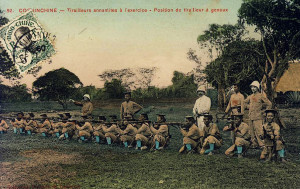
973_001

Vietnamese riflemen undergoing training in Saigon

On 30 November 1867, young soldiers of the Marine Infantry commanded by Sergeant Monnier, occupied a small bamboo blockhouse in My-Tho. Suddenly, 1,000 Annamites rushed upon them with loud cries.

The small garrison just had enough time to close the doors, and answered with heavy fire, which put the attackers to flight. However, they returned during the night and set fire to the blockhouse, rendering the position untenable; Sergeant Monnier formed his men into a small squad and rushed at the attackers with fixed bayonets, inflicting many casualties on their enemies.

On the night of 16 June 1868, the rebels attacked the post of Rach-Gia. Entering through a gate which was still under construction, they massacred our sleeping soldiers. The head of the post and a few of his men just had time to seize their arms and they fought like lions, but eventually succumbed to the enemy’s superior numbers. Just one of our soldiers escaped, and thanks to his directions, we were able to launch strong and swift reprisals.

Since that time, there have been only local insurgencies, occurring almost every year at around harvest time, and suppressed easily by our indigenous militias. Overall, Cochinchina has accepted our domination with good grace. Here we have not had to deal with revolts for independence like those of Algeria, which have been made even more formidable by explosions of religious fanaticism. The Buddhist does not, like the Muslim, live in horror of the Christian; neither does he give him offensive nicknames like giaour (dog), a word which the Arabs use so often.
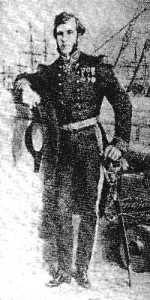
Ernest_Doudart_de_Lagree

Commander Ernest Doudart de Lagrée (1823-1868)

While we were struggling to consolidate our domination, we did not lose sight of our great economic and scientific interests. An expedition led by Commander Doudart de Lagrée, assisted by Lieutenants Francis Garnier and Delaporte, was charged with exploring the upper Mekong. The mission penetrated as far as Yunnan, where Lagrée died, exhausted by fatigue. Francis Garnier then took command and brought the mission back to Saigon, after a journey of nearly 10,000km, including 6,000km on water. They had the good fortune to observe the total eclipse of 18 August 1868, in a previously inaccessible and unknown region.

The war of 1870 [the Franco-Prussian War] was announced on 6 August to the governor, Admiral de Cornulier-Lucinière. Three days earlier, a German who had arrived on an English steamer warned the Prussian Consul, and several German ships withdrew hastily from Saigon. The admiral immediately fortified the entrance of the Soirap and armed the Juno in order to protect the approaches to Saigon against incursions by enemy ships. He also raised the alarm about a possible attack from the court of Hue and declared martial law in the colony.

The Third Republic was proclaimed in Saigon on 21 October 1870. Following our reverses, the court of Hue, always kept fully informed of our embarrassments, thought this the right moment to make new proposals for the redemption of the ceded provinces. However, they took no action and our colony followed its normal development.

It was Admiral de la Grandière who had the honour of consolidating our conquest in such a powerful way that subsequent insurgencies were, so to speak, no more than insignificant clashes.
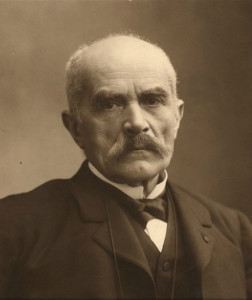
anom

Charles Le Myre de Vilers (1833-1918), photo by ANOM

CIVIL REGIME. The arrival of Governor Charles Le Myre de Vilers on 7 July 1879 marked a new era in Cochinchina, the era of civilian rule. It was under Le Myre de Vilers’ government that the first Deputy of Cochinchina, Saigon Mayor Jules Blancsubé, was elected. Charles Thomson succeeded Le Myre de Vilers.

On 17 June 1884, during the governorship of Charles Thomson, the Convention of Phnom Penh was concluded between the French government and King Norodom. This treaty placed the protectorate of Cambodia under more direct and effective French administrative supervision. The protectorate was controlled by a Resident General, under the control of the Governor of Cochinchina. More recently, a decree replaced the Resident General of Cambodia by a Resident Superior.

After a long interim under General Bégin, Charles Thomson was replaced in 1886 by Ange-Michel Filippini. Sadly, M Filippini died in Saigon in November 1887, in the exercise of his functions.

UNION OF INDOCHINA. The decrees of October 1887 established the Indo-Chinese Union, which brought the colony of Cochinchina and the protectorates of Cambodia, Tonkin and Annam together under the authority of a single official: the Governor General of Indo-China.

In November 1887, Ernest Constans, returning from his ambassadorship in China, during which he had negotiated a new treaty of commerce with the court of Peking, accepted the post of Governor General of Indo-China on a temporary basis. After visiting not only Cochinchina and Cambodia, but also Annam and Tonkin, M Constans returned to France. He was replaced as Governor General by Étienne Richaud, who was already Resident General of Annam and Tonkin. In May 1889, M Richaud in turn was replaced as Governor General by Jules Piquet, Governor of French India.

Tim Doling is the author of the guidebook Exploring Saigon-Chợ Lớn – Vanishing heritage of Hồ Chí Minh City (Nhà Xuất Bản Thế Giới, Hà Nội, 2019)

A full index of all Tim’s blog articles since November 2013 is now available here.

Join the Facebook group pages Saigon-Chợ Lớn Then & Now to see historic photographs juxtaposed with new ones taken in the same locations, and Đài Quan sát Di sản Sài Gòn – Saigon Heritage Observatory for up-to-date information on conservation issues in Saigon and Chợ Lớn.
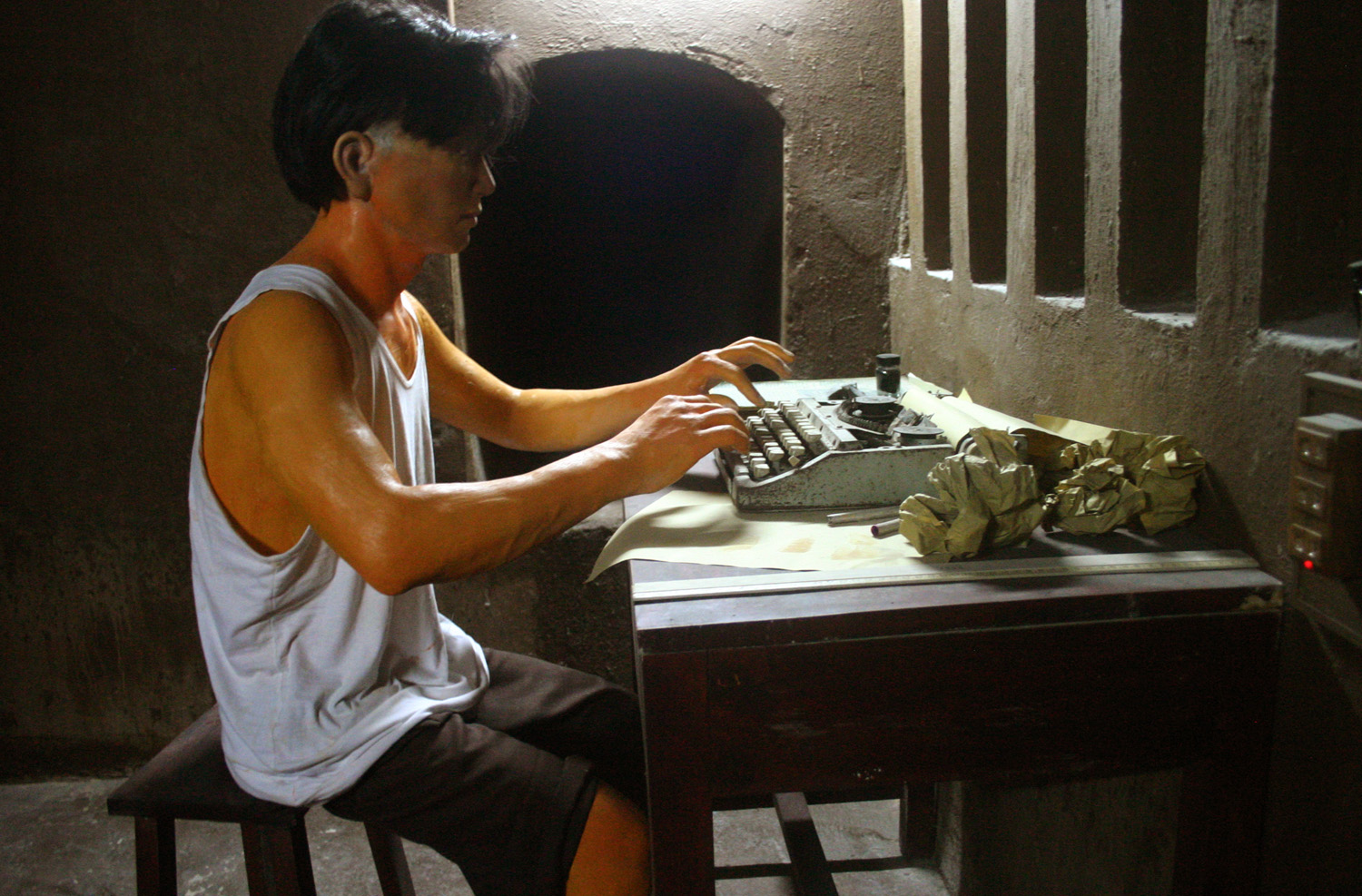
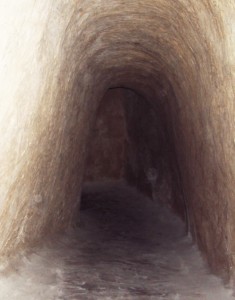
Dong Nai Forestry Tramway

img021i

Many thanks to Michael Pass and his colleagues Eric Fresné, Rob Dickinson, Iain Hutchinson, Helmut Dahlhaus, Claus Gaertner, Martin Murray, John Raby, Geoff Coward, Ray Schofield, Alan Brown and Chris Yapp for identifying this as one of the two CFTD Borsig 0-6-0T locomotives

Commercial exploitation of the forests was an economic priority for the Cochinchina government, and in the early 20th century, several private tramway lines were established to facilitate this work. Perhaps the best known was the Đồng Nai Forestry Tramway, set up in 1911 serve the Biên Hòa industrielle et forestière company (BIF).

Une exploitation forestière en Cochinchine

A forestry exploitation in Cochinchina

In October 1910, the Biên Hòa industrielle et forestière (BIF) company (established in 1908) signed a contract with the Cochinchina authorities to exploit 30,000 hectares of forest in Đồng Nai Province.

As part of the contract, they undertook to build a 21.9km branch line to transport wood and other forest products from its main logging camp at Bến Nôm to Trảng Bom on the Sài Gòn–Nha Trang line.

In the following year the company also opened a lime acetate factory at Tân Mai, connected to the main line by a 0.5km rail spur.

The Compagnie française des tramways du Donnaï (French Tramway Company of Đồng Nai, CFTD) was set up by BIF in 1911 to run both of these lines.

62. A 0.5km spur led

A 0.5km spur off the main line east of Biên Hòa Station led into BIF’s Tân Mai lime acetate factory

Conceived from the outset as a 1m-gauge line in order that its wagons could continue their journey from Trảng Bom to Sài Gòn on CFI metals, the Đồng Nai tramway incorporated four short forestry spurs with a combined length of 3.144km. Construction took two years and the branch opened in late 1913.

Three years later, in order to accommodate the construction of a larger and better-equipped interchange between the branch and the main line, the colonial authorities agreed to relocate Trảng Bom Station nearly 2km to the west of its original position.

The post-World War I economic recession hit both BIF and CFTD badly, and in 1922, the latter attempted unsuccessfully to persuade the authorities to buy back the tramway franchise.
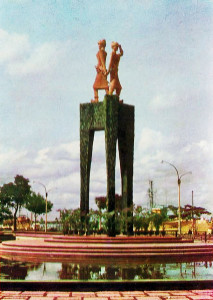
DSC02723

Plans for the relocated Trảng Bom Station (1916) where the tramway met the main line

An inventory of rolling stock undertaken at this time revealed that the company owned four locomotives. These were two Borsig 0-6-0Ts, “Bienhoa No. 1” and “Bienhoa No. 2,” each weighing 23 tons; a 14-ton Ateliers de Tubize (Belgium) locomotive; and a 5.3-ton Decauville locomotive named “Bébé,” which was used exclusively in the acetate factory at Tân Mai.

The Đồng Nai tramway underwent comprehensive refurbishment in 1925-1926, and although its later history is poorly documented, the line is known to have continued in operation for at least another four decades.

Never a profitable concern, BIF was hit badly by the Great Depression, and in 1939 it was split into two companies, Les Caoutchoucs du Donnaï (Đồng Nai Rubber) and Forêts et scieries de Biên Hòa (Forests and Sawmills of Biên Hòa). The tramway company was incorporated into the latter.

Both

Mishap on the CFTD line, c 1920, photos by Marcel Auguste Fermé, from “La mystérieuse locomotive de la BIF.” in Les carnets de Bái Lìdé http://bailide.blogspot.com/2009/03/la-mysterieuse-locomotive-de-la-bif.html

In 1958, both companies were purchased by the South Vietnamese authorities, and in subsequent years the Trảng Bom–Bến Nôm branch line was subsumed by the national rail operator, Hỏa xa Việt Nam (HXVN). It continued in operation until at least 1968.

Today no traces of the old line have survived. In the 1970s, most of its former trackbed was transformed into the Đường Trảng Bom.

Trang Bom

The route of the former tramway line superimposed onto a modern Google map

Tim Doling is the author of The Railways and Tramways of Việt Nam (White Lotus Press, Bangkok, 2012) and also gives talks on Việt Nam railway history to visiting groups.

A full index of all Tim’s blog articles since November 2013 is now available here.

Join the Facebook group Rail Thing – Railways and Tramways of Việt Nam for more information about Việt Nam’s railway and tramway history and all the latest news from Vietnam Railways.

You may also be interested in these articles on the railways and tramways of Việt Nam, Cambodia and Laos:

A Relic of the Steam Railway Age in Da Nang
By Tram to Hoi An
Date with the Wrecking Ball – Vietnam Railways Building
Derailing Saigon’s 1966 Monorail Dream
Full Steam Ahead on Cambodia’s Toll Royal Railway
Goodbye to Steam at Thai Nguyen Steel Works
Ha Noi Tramway Network
How Vietnam’s Railways Looked in 1927
Indochina Railways in 1928
“It Seems that One Network is being Stripped to Re-equip Another” – The Controversial CFI Locomotive Exchange of 1935-1936
Phu Ninh Giang-Cam Giang Tramway
Saigon Tramway Network
Saigon’s Rubber Line
The Changing Faces of Sai Gon Railway Station, 1885-1983
The Langbian Cog Railway
The Long Bien Bridge – “A Misshapen but Essential Component of Ha Noi’s Heritage”
The Lost Railway Works of Truong Thi
The Mysterious Khon Island Portage Railway
The Railway which Became an Aerial Tramway
The Saigon-My Tho Railway Line


Icons of Old Saigon – The Eglise Sainte-Marie-Immaculee, 1863

Image

Inauguration of the cathedral constructed in Saigon by the French government (after a sketch by Naval Lieutenant Dumont)

This article was published previously in Saigoneer http://saigoneer.com

The Sun Wah Tower at 115 Nguyễn Huệ stands on the site of Saigon’s first Roman Catholic cathedral.

33 Pagode et case dans la rue Catinat

In 1860 Bishop Lefèbvre set up his first “cathedral” in an abandoned pagoda in the ville basse (lower city)

The earliest French colonial settlers were obliged to celebrate mass in a makeshift church. According to Alfred Schreiner’s Abrégé de l’histoire d’Annam (Short History of Annam, 1906), in 1860 Monsignor Dominique Lefèbvre, Bishop of Isauropolis and Apostolic Vicar of Lower Cochinchina, set up his first “cathedral” in an abandoned pagoda in the ville basse (lower city).

This arrangement continued until 1863, when Admiral-Governor Louis Adolphe Bonard (30 November 1861-1 May 1863) commissioned the construction of the city’s first purpose-built cathedral, the Église Sainte-Marie-Immaculée (Church of Saint Mary of the Immaculate Conception).

The location chosen for the new cathedral was the mid point of rue Charner, right next to the Grand Canal [Nguyễn Huệ boulevard]. According to the journal Moniteur de l’Armée (Army Monitor), it was built to the plans and under the direction of Lieutenant Colonel Paul Coffyn of the Marine Engineering Corps Roads and Bridges Department. Lieutenant Colonel Coffyn was assisted by Captain Blazy. The first stone was laid on 28 March 1863 by Bishop Lefèbvre.

The cathedral took just four months to build and was inaugurated on 26 July 1863 in the presence of Bishop Lefèbvre and Bonard’s successor, Admiral Governor Pierre-Paul de La Grandière (1 May 1863-31 March 1865).

De_la_Grandière_amiral_05097

Admiral Governor Pierre-Paul de La Grandière (1 May 1863-31 March 1865)

The inauguration ceremony was described as follows in Le Monde illustré (Illustrated World) magazine of 19 September 1863:

“Admiral Governor de Lagrandière arranged to surround Bishop Lefèbvre with every imaginable pomp. The Admiral himself appeared at the head of his General Staff in the full uniform of the country, that is to say, with light clothing and pith helmet replacing the thick fabric uniform and leather headdress worn in Europe. Flags and banners marked the passage of the procession, cannon sounded and military music and religious songs were performed by the bands and choirs of our brave sailors.

There are currently few Europeans in Saigon; apart from our troops, they do not exceed 200 or 300; there are also about 8,000 Chinese and 10,000 Annamites, but we can say that not one was missing from this grand celebration.
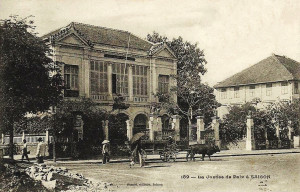
It created a profound impression, particularly on the local people who were attending for the first time one of the solemn ceremonies of their western allies.
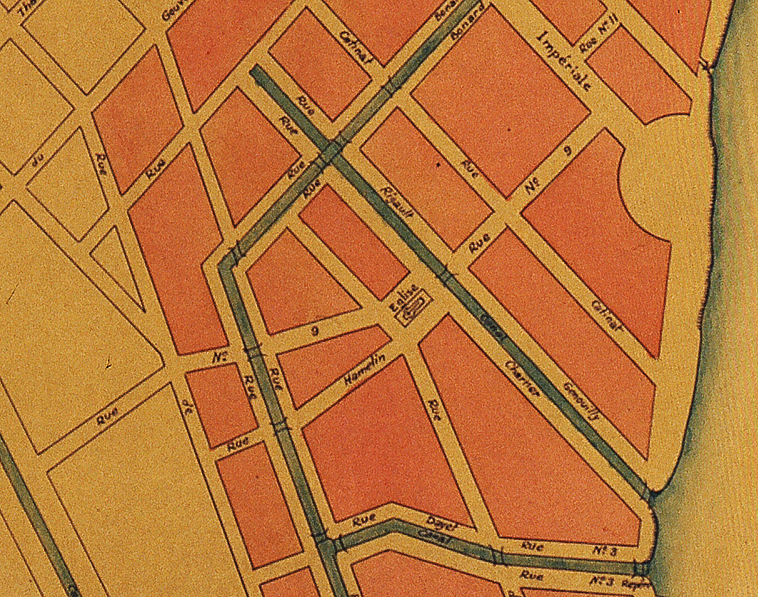
Back home in Paris, this cathedral (of which we have provided a very accurate drawing, see above) would only be regarded as a chapel. But it has a no less monumental aspect, which is even more remarkable as it was built with great intelligence to meet the needs of the hot climate. It is constructed from wood and brick. The windows, with which it is abundantly provided on two floors, are equipped with louvres to optimise air flow.

It was built by Chinese labourers, who as we know are very proficient in all types of manual and mechanical work, under the direction of French engineer officers.

Saigon - Revue des troupes - Boulevard Norodom

A review of colonial troops on boulevard Norodom

As for the interior, no attempt was made to provide unnecessary luxury; it is very simple. At the rear is a rose stained-glass window set in an iron frame, which creates a beautiful effect. The high altar is located in a vaulted niche painted in blue with gold stars.

The church can hold 400 people; thus, from what we have said of the French population in Saigon, it is very adequate.”

The magazine also comments:

“We had no intention of creating a lasting monument; that would have taken a lot of time and financial resources which are not yet available to us. But this church will last us 15 to 20 years and can then be replaced by a building which accords with plans for the ‘new Saigon’ [the Coffyn Plan “for a city of 500,000 souls,” drawn up in May 1862].”

It is perhaps just as well that the new cathedral was regarded only as a temporary one, because, according to Schreiner, “it was devoured in less than 10 years by termites…. in 1874 we were obliged to set up a temporary cathedral in the salle des fêtes (events hall) of the former governor’s palace.” This arrangement continued until the inauguration of the Notre-Dame Cathedral in 1880.

Following the demolition of the Église Sainte-Marie-Immaculée in the early 1870s, a new law court housing a Justice de paix (Justice of the Peace) was opened on the same site in May 1875.

6398241671_84e02f7991_o

The Justice de paix (Justice of the Peace), opened in 1875

Before the completion of the Palais de Justice de Saïgon in 1885, this served as the main judicial organ of the city, with jurisdiction in both criminal and civil cases, and the boulevard in front of it became a place of execution. Later, the Justice de paix dealt mainly with local administrative applications. After 1954 it became the District 1 court, in which capacity it survived until 1994.

Saigon 1863

A map showing the location of the Église Sainte-Marie-Immaculée in 1863. By 1864 the upper half of the Grand Canal, including the area in front of the cathedral, had been filled

Saïgon - La Justice de Paix

Another photograph of the Justice de paix (Justice of the Peace)

76 Execution

After 1875 the boulevard in front of the Justice de paix became a place of execution

Justice de Paix C ii

Today the Sun Wah Tower stands on the site of the Église Sainte-Marie-Immaculée, Saigon’s first cathedral

Tim Doling is the author of the guidebook Exploring Saigon-Chợ Lớn – Vanishing heritage of Hồ Chí Minh City (Nhà Xuất Bản Thế Giới, Hà Nội, 2019)

A full index of all Tim’s blog articles since November 2013 is now available here.

Join the Facebook group pages Saigon-Chợ Lớn Then & Now to see historic photographs juxtaposed with new ones taken in the same locations, and Đài Quan sát Di sản Sài Gòn – Saigon Heritage Observatory for up-to-date information on conservation issues in Saigon and Chợ Lớn.