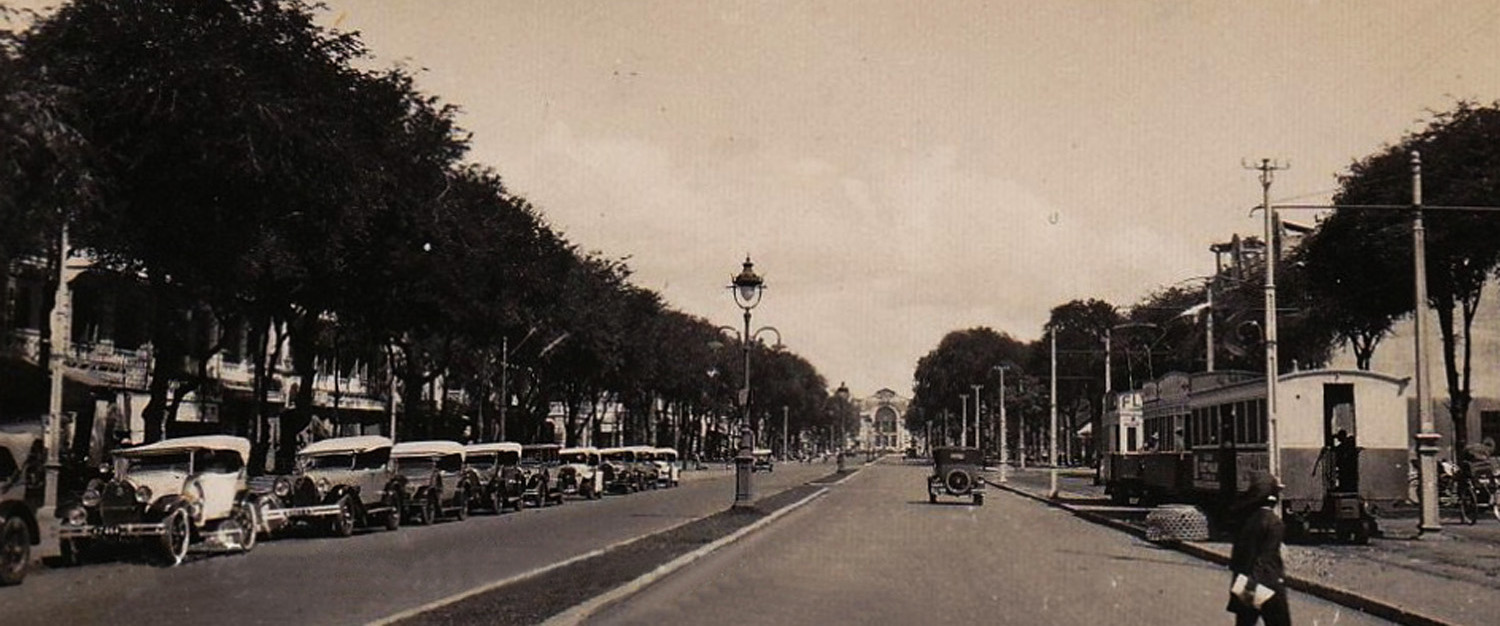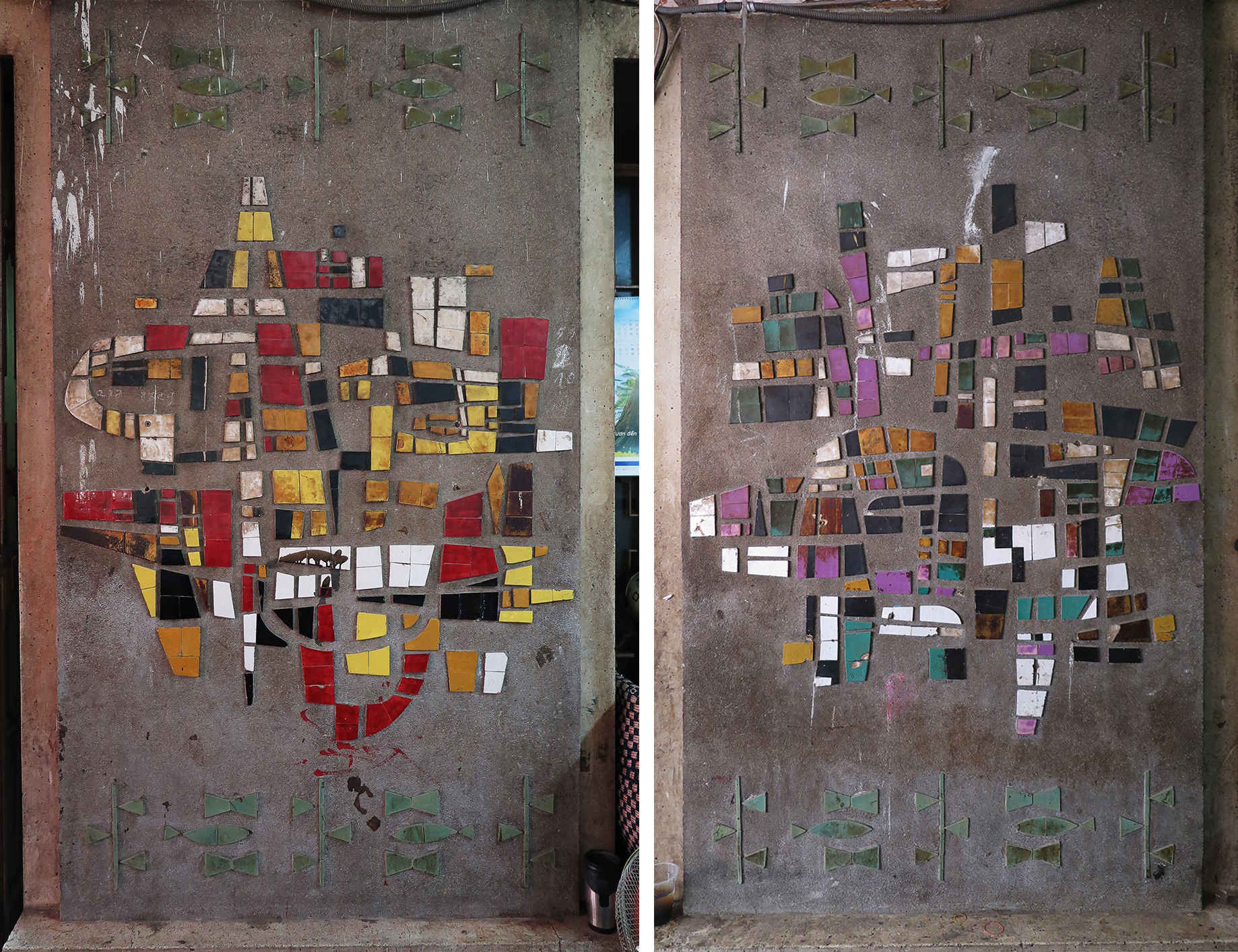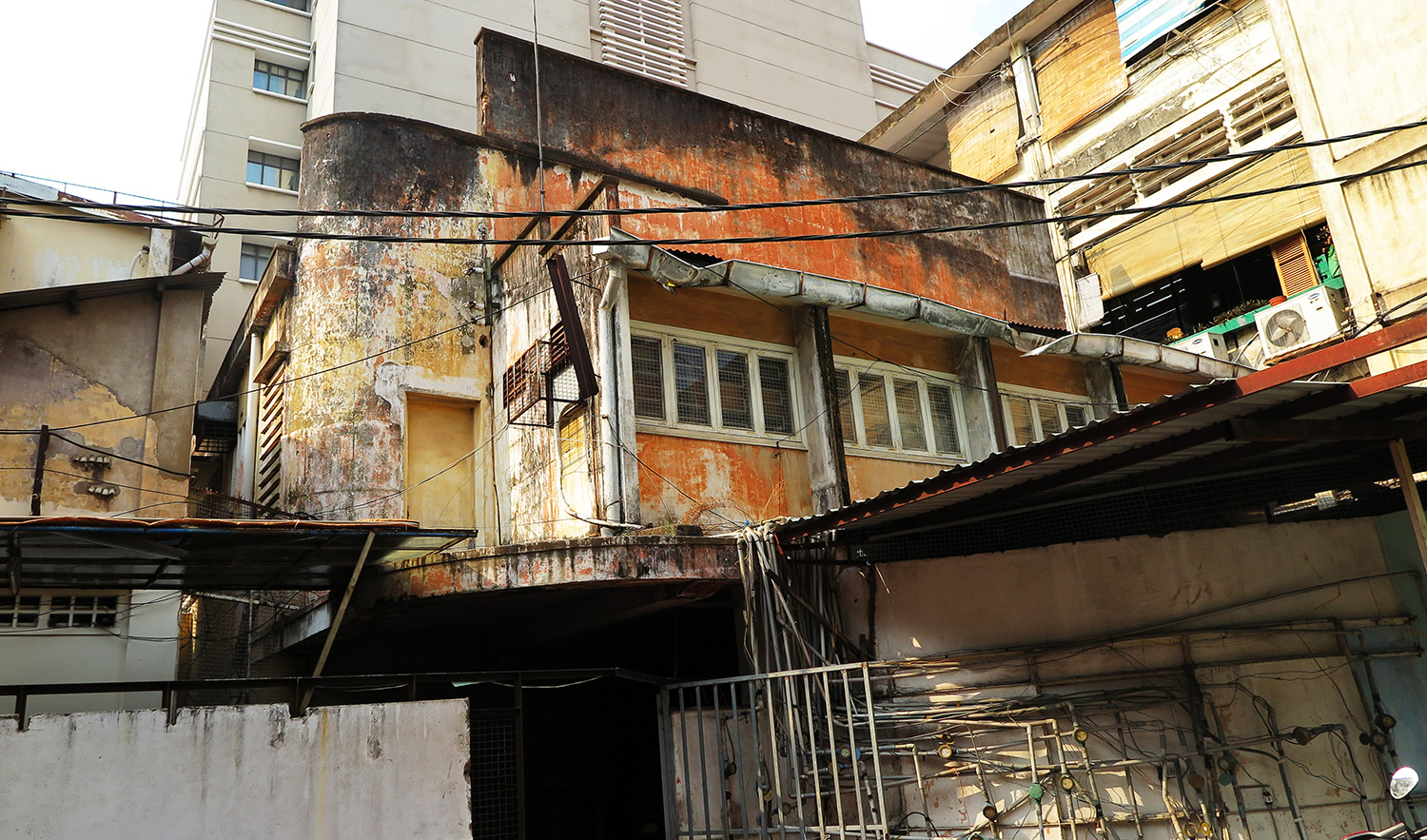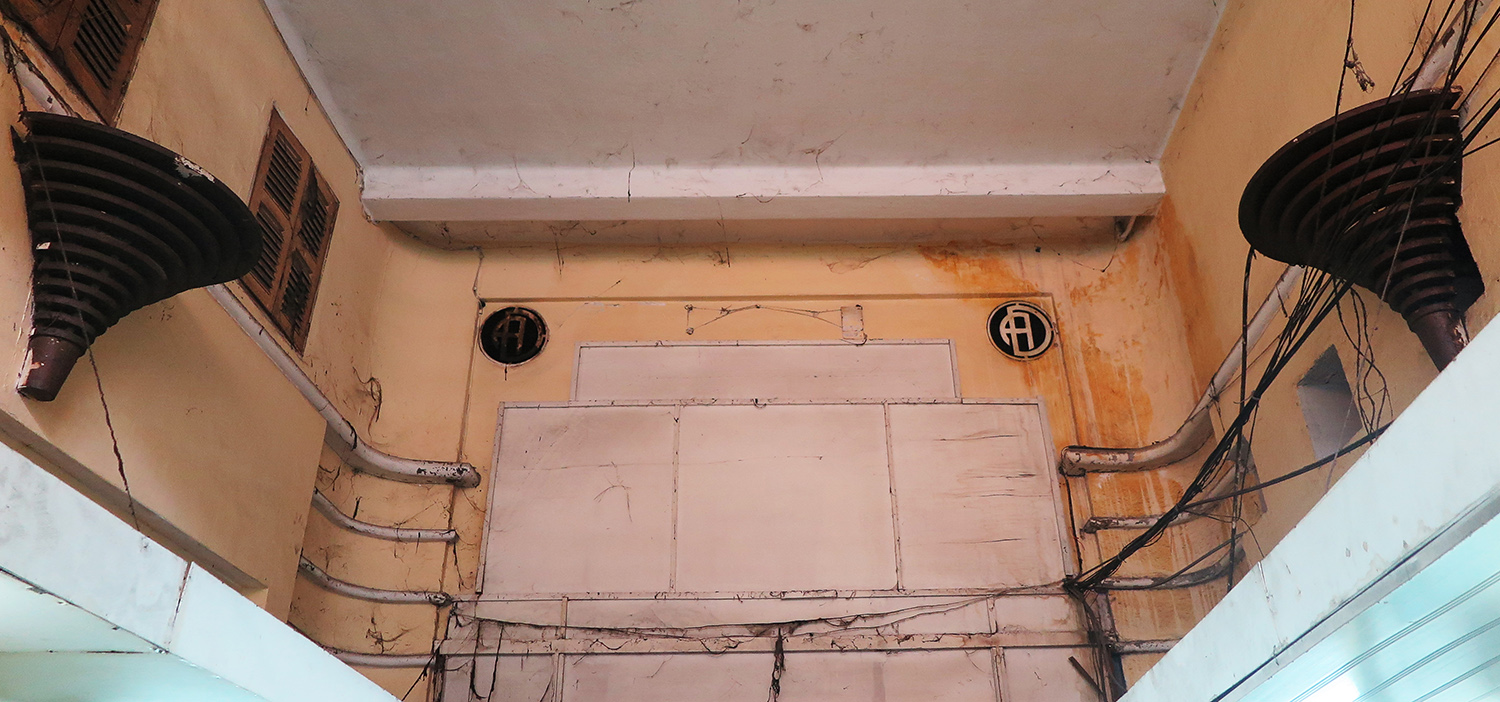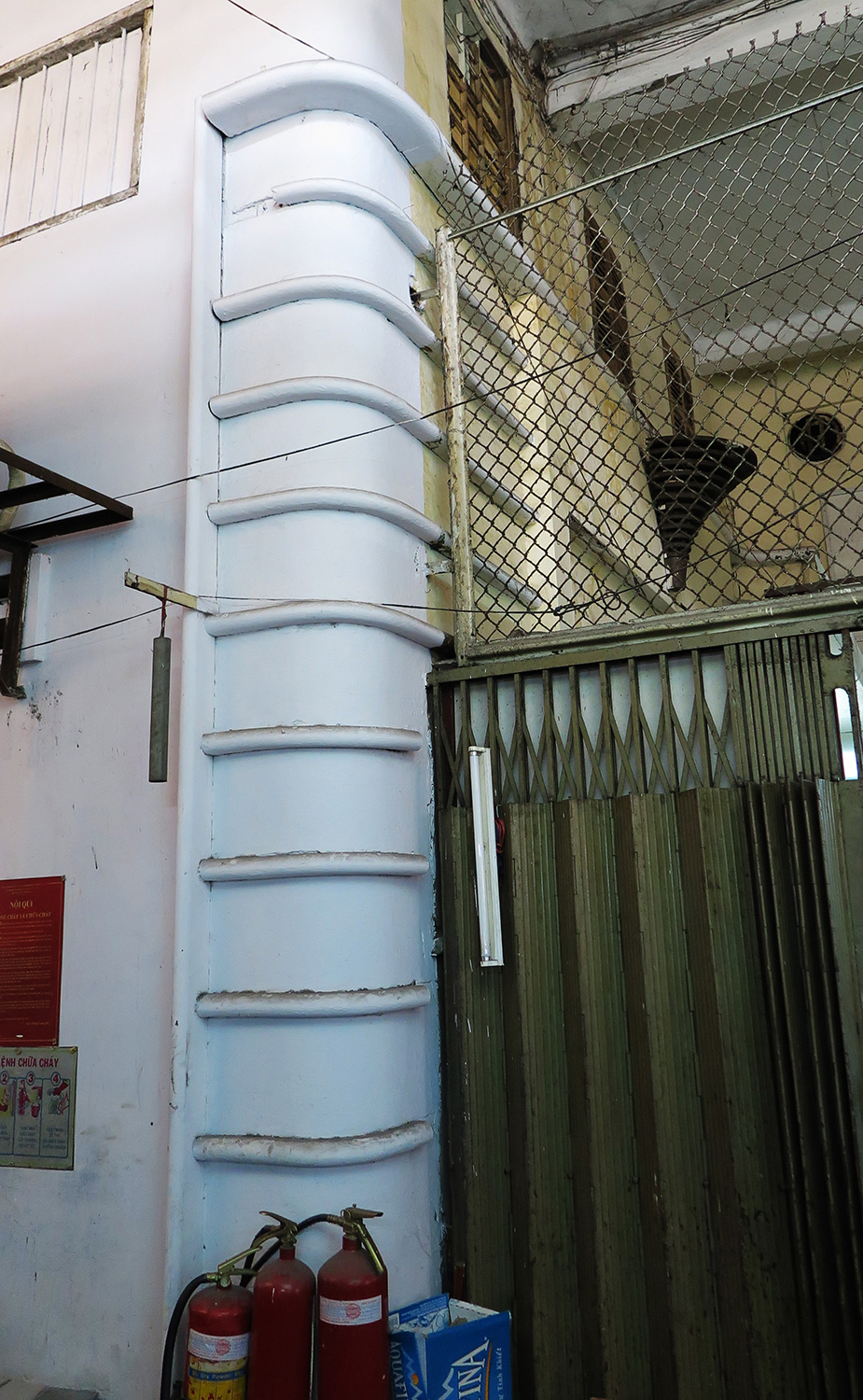
Date With the Wrecking Ball – Ernst Thälmann Secondary School, 1931

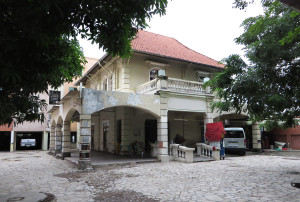
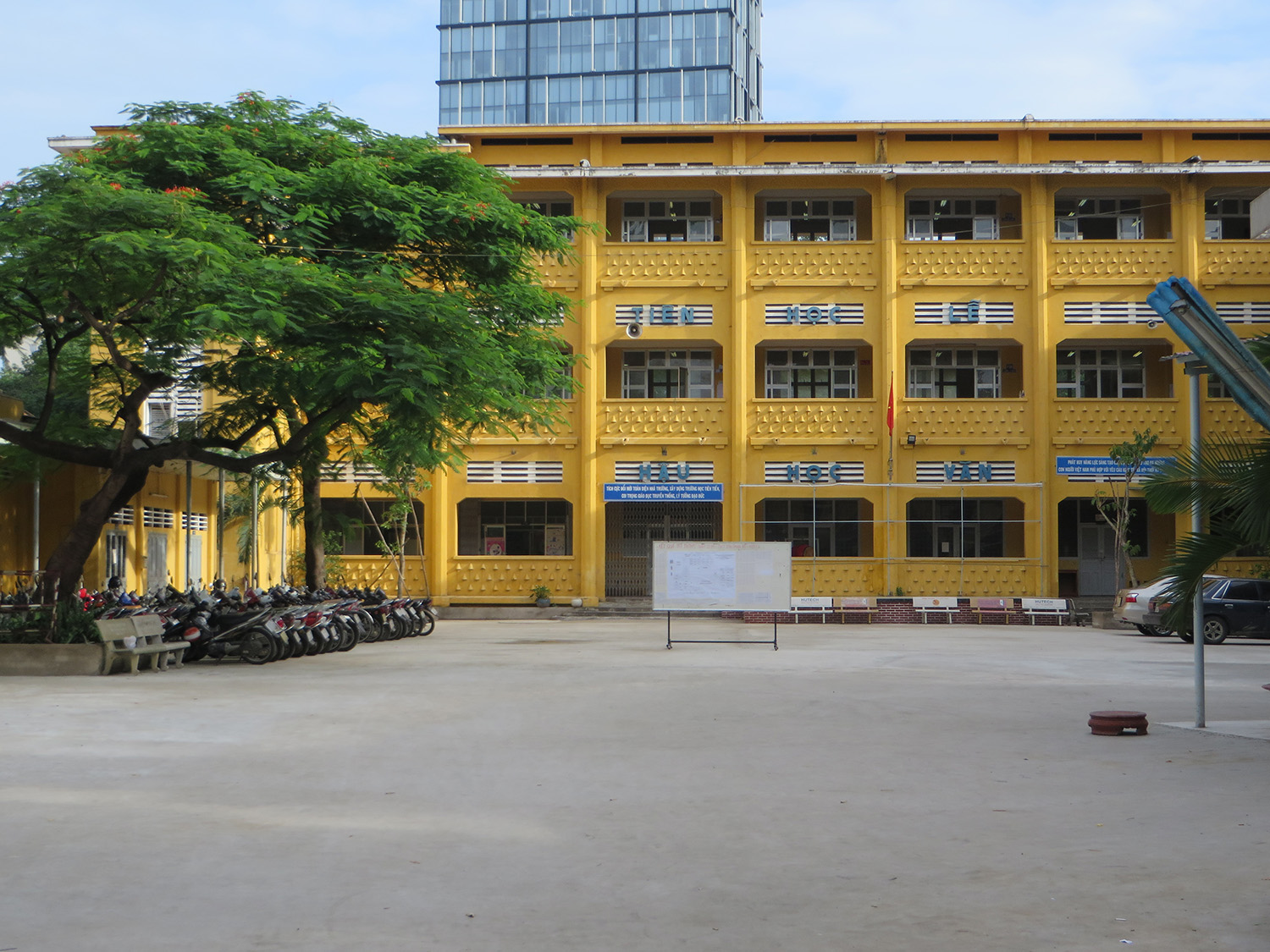
The Ernst Thälmann Secondary School at 8 Trần Hưng Đạo

This article was published previously in Saigoneer

In the wake of last week’s announcement in Thanh Niên newspaper that Korean construction company Jimiro will build three 55-storey office buildings, a 30-storey five-star hotel and a 10-storey commercial centre in the “Golden Triangle” enclosed by Trần Hưng Đạo, Phạm Ngũ Lão and Nguyễn Thái Học streets, one of the city’s most historic schools has been earmarked for demolition.

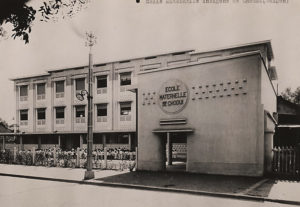
The Ernst Thälmann Secondary School at 8 Trần Hưng Đạo was originally built in 1931 as a kindergarten for local girls, known as the École maternelle de Chodui. The design by early modernist architect Leo Craste has been praised in the blog Saigon Modernist for its optimisation of natural ventilation through the addition of wall louvres and the use of staircases as wind towers.

The École Maternelle de Chodui in the early 1930s

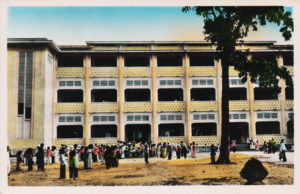
In the late colonial period, the École maternelle became a high school known as the École municipale Ton-Tho-Tuong, named after renowned Nguyễn dynasty scholar, Saigon-born Tôn Thọ Tường (孫壽詳; 1825-1877). During this period, the original entrance on Phạm Ngũ Lão street was bricked up and the former rear gate on Trần Hưng Đạo became the school’s main entrance.

It was in this capacity, in 1950, that the school became the site of the first anti-American demonstration in Việt Nam. Starting in the 1920s, Saigon had a long tradition of high schools being hotbeds of anti-colonial activity, and on 9 January 1950 police opened fire on a student protesters as they marched through the centre of the city, injuring 30 and killing 19-year-old Trần Văn Ơn, a student from the Lycée Pétrus Ký, now Lê Hồng Phong High School. Thereafter the authorities cracked down hard on any form of dissent.

The École municipale Ton-Tho-Tuong in the late colonial period

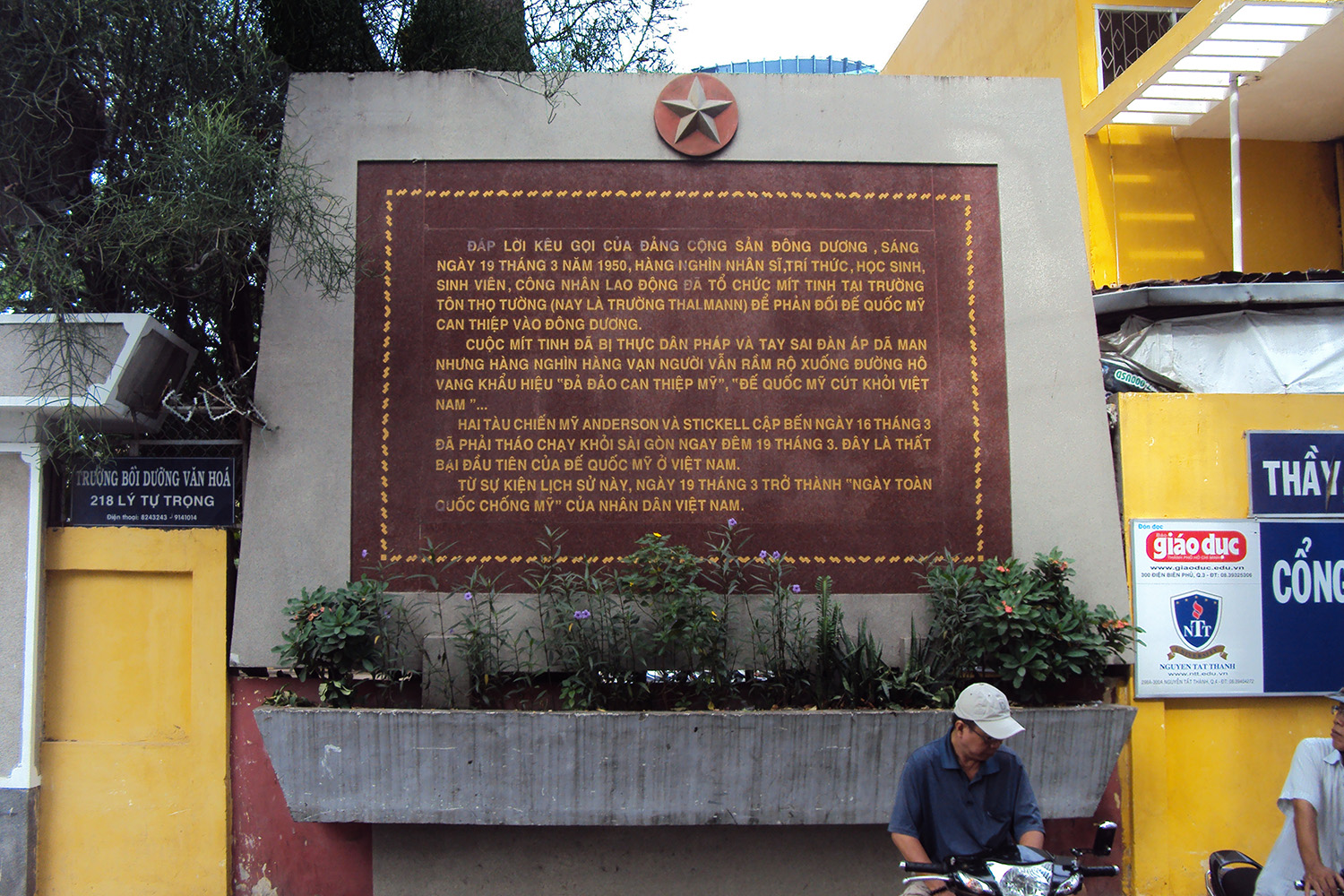
In March 1950, two destroyers from the US Seventh Fleet, USS Stickell and USS Richard B Anderson, docked at Thủ Thiêm in Sài Gòn, while aircraft from the carrier USS Boxer flew over the city. Foreseeing that this could be a prelude to American involvement in Việt Nam, communist activists under Nguyễn Hữu Thọ (later Acting President of Việt Nam) organised city-wide protests against US interference in March 1950. On 18 March, a grenade was thrown into the lobby of the Continental Hotel where a visiting American delegation was staying, and mortars were also fired at the two warships at Thủ Thiêm. Then at dawn on Sunday 19 March, rallies were held in various locations around the city. The main event was the rally held at the École municipale Ton-Tho-Tuong, which reportedly attracted over 250,000 people. Nguyễn Hữu Thọ addressed the crowd, and at around 9am on the third floor of the school, students hoisted a red flag. This event is commemorated by a plaque outside the main entrance of the school.

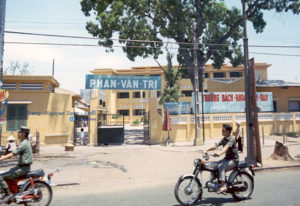
The Phan Văn Trị Girls’ Primary School (Trường Nữ Tiểu học Phan Văn Trị) in the early 1960s (photographer unknown)

In 1955, the school became the Phan Văn Trị Girls’ Primary School (Trường Nữ Tiểu học Phan Văn Trị), and from 1962 the Cô Giang Secondary School (Trường Trung học Cô Giang).

After Reunification, the school benefitted from educational links with East Germany, and in 1979 it was twinned with a school in Leipzig and named after Ernst Thälmann (1886-1944), who led the Communist Party of Germany (KPD) during the Weimar Republic years.

This is the third occasion over the past 10 years in which revolutionary monuments have been destroyed in favour of development – see The Curious Case of the Vanishing Revolutionary Monuments to learn about the fate of the room in which the Việt Nam Revolutionary Youth League’s Cochinchina Regional Committee was set up in June 1928 and the villa at 43 Lê Thị Hồng Gấm which once housed the offices of the revolutionary Dân Chúng newspaper.

image-4

Tim Doling is the author of the guidebook Exploring Saigon-Chợ Lớn – Vanishing heritage of Hồ Chí Minh City (Nhà Xuất Bản Thế Giới, Hà Nội, 2019)

A full index of all Tim’s blog articles since November 2013 is now available here.

Join the Facebook group pages Saigon-Chợ Lớn Then & Now to see historic photographs juxtaposed with new ones taken in the same locations, and Đài Quan sát Di sản Sài Gòn – Saigon Heritage Observatory for up-to-date information on conservation issues in Saigon and Chợ Lớn.

Saigon’s First Tourism Office Opens, 1911

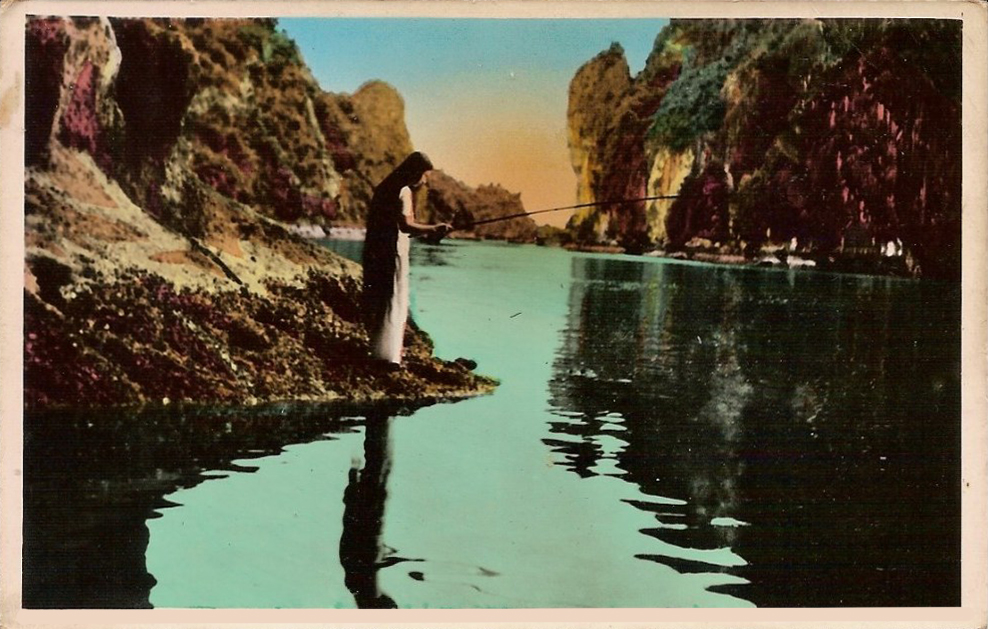
Baie d´Along, la pêche miraculeuse – Hạ Long Bay, the miraculous catch

“12 December 1911 saw the opening of the South Indochina Tourist Office, sponsored by Monsieur Ernest Outrey, Résident-supérieur in Cambodia and Delegate-general of the Touring Club of France in Indo-China.

Saigon, capital of Cochinchina, indeed promises in future to be an important centre of tourism. Thanks to propaganda activity which began four years ago (though as yet, unfortunately, does not have any worthy means of implementation), there is hope that, despite the distance, tourists will eventually come to prefer Indochina over Egypt.

Our ruins of Angkor, the beauty of which has been celebrated in the illustrations of Loti, are certainly not inferior to the Pyramids. No scenery along the Nile Valley may be compared to our Halong Bay, with its picturesque rocks seeming from a distance to be gigantic statues of sea gods. Our imperial tombs of Hue give an impression of melancholic grandeur at least equal to that of the sarcophagi and mummies of ancient Egypt. Our climate, from December to March, is inoffensive and sweet. And our big game hunts (tiger, elephant and wild buffalo) and our autoroute network, flat and smooth as a billiard table, are unique throughout the Far East.”

From Le Courrier Saigonnais, 1 March 1912

Tim Doling is the author of the guidebook Exploring Hồ Chí Minh City (Nhà Xuất Bản Thế Giới, Hà Nội, 2014).

A full index of all Tim’s blog articles since November 2013 is now available here.

Join the Facebook group pages Saigon-Chợ Lớn Then & Now to see historic photographs juxtaposed with new ones taken in the same locations, and Đài Quan sát Di sản Sài Gòn – Saigon Heritage Observatory for up-to-date information on conservation issues in Saigon and Chợ Lớn.

“Saigon and Cholon,” from Indo-Chine et Japon, journal de voyage, by Emile Jottrand

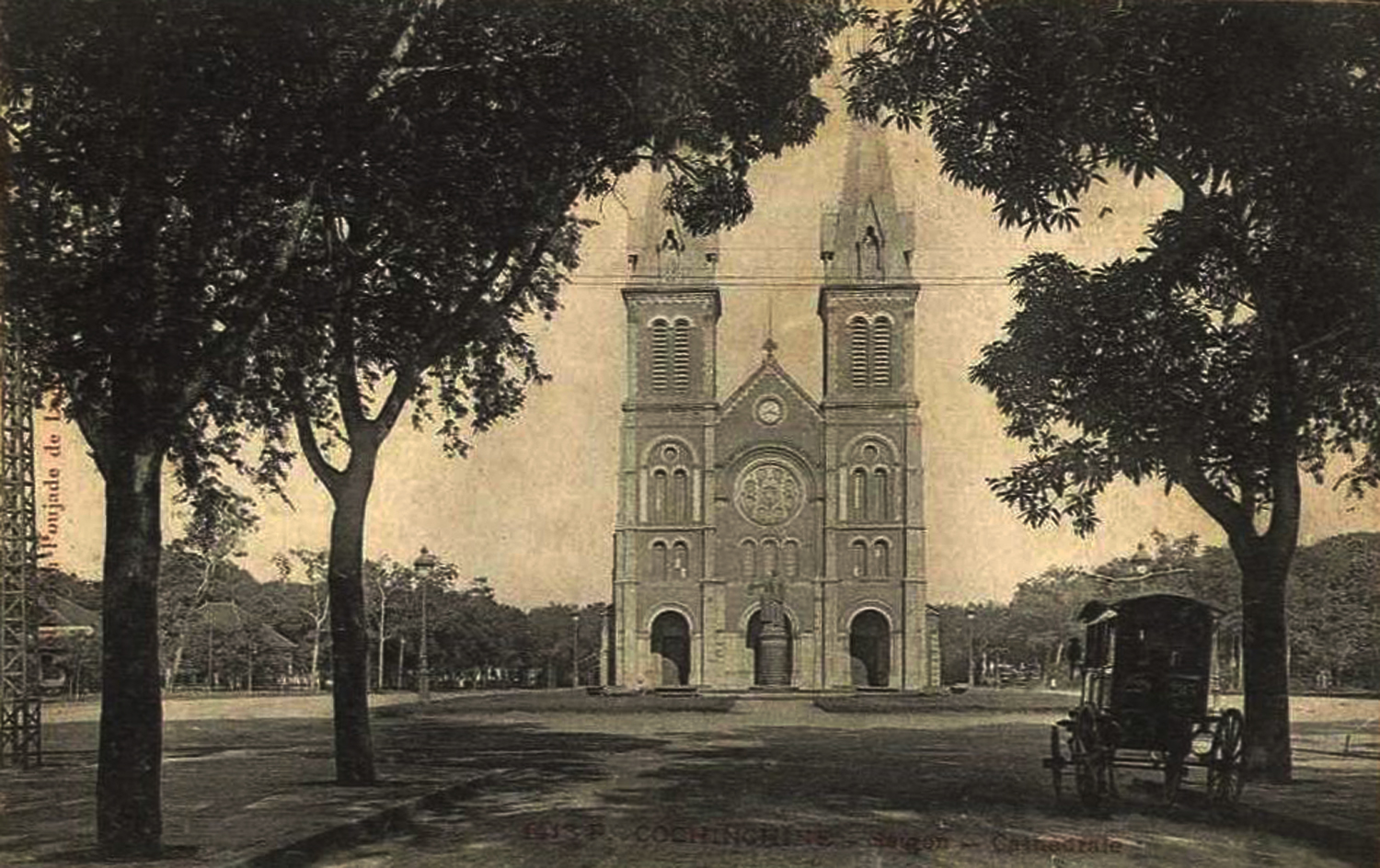
Saigon Cathedral in the early 1900s

Belgian travel writer Emile Jottrand clearly didn’t stay long enough to get a true picture of the city, but her account of Saigon and Chợ Lớn in 1900, published in the book Indo-Chine et Japon, journal de voyage (1909), contains a few interesting observations

15 October 1900

Thus passes our quiet stay at Cap Saint-Jacques. We have no extraordinary adventures to relate; neither are we obliged, like the guests in our neighbouring hotel, to defend ourselves against a one-metre-tall monkey.
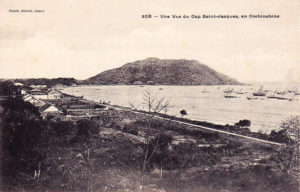
The baie des Cocotiers, Cap-Saint-Jacques (Vũng Tàu)

Nor against the Annamite gendarmes, who arrested an Austrian adventurer couple aboard a steamer when it passed the Cap. We don’t even have to protect ourselves from the rain, the rare showers graciously choosing to fall at siesta time, thus preparing for us a fresher and more pleasant journey. As for the temperature, it is always 25 to 28 degrees, that’s to say perfect, with plenty of fresh air and plenty of shade.

We leave at 9am. A carriage takes us with our luggage to Binh-Dinh, and for the last time we see the pretty road, lined with tranquil lotus ponds, cactus hedges, Annamite temples. Shall we ever return to this beautiful corner of the world?

Just as we reluctantly depart the baie des Cocotiers, we see a gunboat at anchor, the Styx, which has just arrived. It is newly built and carries state-of-the-art equipment. However, we learn that gross miscalculations were made in its construction, and that as a result, the gunboat has unstable equilibrium. For that reason, it cannot sail the high seas, and in fact hardly renders any service at all. The gunboat is currently being used to supply the Chasseloup-Laubat, which has been quarantined downstream from Saigon. What a waste! Several millions thrown into the water!
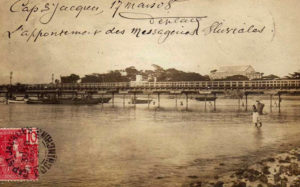
The Messageries maritimes wharf at Cap-Saint-Jacques (Vũng Tàu)

My colleagues cannot understand why I am surprised, citing all the other monumental gaffes – bridges we must remake, buildings whose plans get redrawn five times – which we hear about every week, gaffes which are surely only the tip of the iceberg!

Along the road we pass carriages with uniformed coachmen and see a dashing Annamite aide-de-camp waiting on Monsieur Paul Doumer, Governor General of lndo-China. And indeed, shortly after leaving the Cap, we see his ship, the Laos.

We reboard our excellent Chinese boat. On the pier, they are selling lobsters, which squirm in baskets.

The journey is uninspiring all the way to Saigon. By way of diversion, we are served an excellent tiffin, and are entertained by the boarding of local vendors arriving from villages on the nearby arroyos. Our boat slows down for them, but does not stop.

Our eyes follow the flight of some brightly-coloured birds, whose plumage contrasts with the universally muddy and dreary landscape.
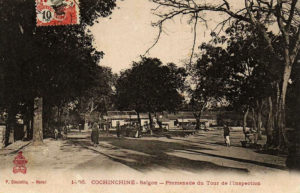
The “Tour de l’Inspection”

Finally we catch sight of the twin towers of Saigon Cathedral, which begin their annoying hide and seek game. After one last detour, we reach Saigon port.

Our hotel is very crowded and we are given poor rooms in which we find ourselves suffocating after the fresh air of the Cap. Fortunately we will not be here for long.

It’s 5pm when we set off for a sunset walk, Saigon’s traditional “Tour de l’Inspection.” Excellent roads, nice scenery. elegant ladies and their officer husbands in superb carriages driven with finely dressed teams of horsemen. We leave at dusk, and on the return journey Saigon dazzles us with its lights. The vast rue Catinat is lit with electric globes, its great cafés competing with each other to have the best illumination and attract the most customers.

Entering one of these cafés, sitting at a marble table and ordering a cherry-gobbler cocktail, one may believe oneself to be in Europe, and the illusion is complete when an urchin comes to sell his roses and a hawker his trinkets.
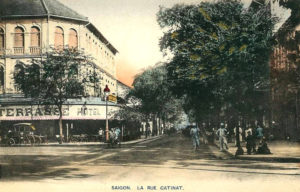
Rue Catinat, Saigon

We return on foot to our hotel, watching scenes much like those we would see in Paris.

Saigon is a city so European, so French, that we encounter relatively few local people in the streets. It seems a very quiet and pleasant place, with traffic on the streets extremely moderate, just like on the river. We are a long way from the New Road in Bangkok!

It should be noted, moreover, that out of some 2,500 Europeans in Saigon, officials and their families number about 2,000. Of the remainder, only around 150 are traders, and all of those are suppliers to the above officials. There is no trade or industry; heavy customs tariffs, according to what I am told, have killed Saigon and all Indochina. People speak to me of a golden age, long ago, when business boomed, but since the establishment of protective tariffs, bankruptcies have occurred in quick succession.

Such is the outcome of a policy devised by small-minded politicians who want to squeeze and drain the French colonies to please a small number of powerful voters – cloth merchants from Elbeuf and silk merchants from Lyon, people who are still unable, despite the excesses of the system created on their behalf, to counter the threat posed by imports from Germany and other foreign competitors.
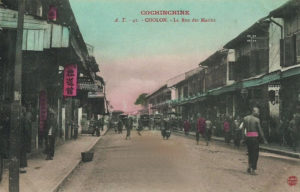
Rue des Marins, Chợ Lớn

In the evening we go to Cholon, the Chinese city located along an arroyo, 5 kilometres from Saigon. This is undoubtedly the most important commercial city in all of Indochina. While it is home to fewer than 100 Europeans, Cholon contains 60,000 Annamites, 40,000 Chinese, 150 Indians and 15 Cambodians. It is the place where immense Chinese fortunes have been made, through prodigious activity by the “Celestial Ones,” whose business methods always confound the European.

When we arrive in the city it is already late, and many shops are closed. We admire the wide streets, the spacious sidewalks, the air of ease that reigns everywhere. There are also cafés in the French style and everything which can please the European of Saigon; because, despite all the nonsense that is written about the Chinese, there is no race of people more eager for foreign invention, as long as commercial advantage is to be gained.

The elegance, the wealth, the order of the Chinese stores in Cholon is beautiful to see. Elaborately carved and gilded wooden signs and outdoor lanterns compete with each other to be the most brilliant and elegant, all for the cause of attracting the dollar! But the newcomer who believes Cholon to be a typical Chinese city would be a mistaken, judging by what we saw in Peking and Canton.
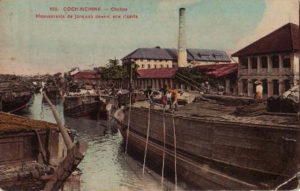
Barges on the arroyo Chinois in Chợ Lớn

Nothing is more curious than the history of this city; for it shows how persecution can help build a strong and powerful race.

In this country, less than a century ago, the Chinese were treated as outcasts; the Emperor of Annam forbade them to settle in his territory without the special permission of the court. Their number in villages was limited by regulation and they could not own property without a licence. They were forbidden to export products other than rice, and they paid high taxes on all things (see H L Jammes, Souvenirs du pays d’Annam, 1900).

Settling in Cholon, which was initially a ghetto, a place of outcasts, they grouped together their business interests. And thanks to their secret associations, the enormous unregulated power of which we cannot conceive of in our own country, they soon dug canals, deepened rivers, created docks, built industrial plants, opened schools and even higher education colleges, lit their streets, and built roads and bridges, without help of persons other than themselves. This is what the Chinese have done in a country where they were once banned by the Annamites, where they are still frowned upon today, where they are taxed heavily just because they are Chinese.
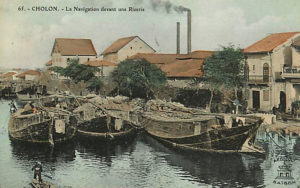
A rice husking factory in Chợ Lớn

They did all this without a penny of subsidy, welcoming the Annamites who had formerly proscribed them, and attracting foreign commercial benefits. However, in Saigon, just an hour away, the French colons are still very confident, and will be for a long time yet, in their belief that it is impossible to build a street or open a school without some paternal government support!

In the city of Cholon there are eight large rice husking plants. This is of course the biggest industry in the area. The factories are owned by the Chinese and they work day and night, using machinery which came from England. They make, it seems, huge profits. Together they can produce 7,000 tonnes of rice per day – note that in 1898, Siam exported 2,000 tonnes per day. A new factory will be built this year. The factories are fuelled by rice husks. Unhusked rice, which is also eaten here by animals, is called “paddy.” It enters the factory in that form and leaves as white rice, such that we find in the shops.

Cholon also has brick kilns, potteries, sawmills, dry docks and boat-builders. One also finds here every kind of trade, including jewelers, keymakers, cabinet makers, tanners, dyers and blacksmiths, along with importers of teas, silks, embroidery and other fabrics. All of these professions and all these trades are the preserve of Asians.

16 October 1900
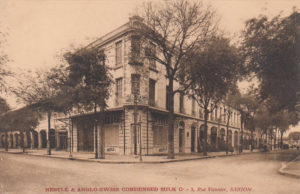
The Nestlé building at the lower end of the rue Catinat

This morning we start to explore the city of Saigon, the plan of which is simple: the streets generally intersect at right angles and the city is built in squares. We do not see in the urban area any market gardens or sugar cane fields as in Bangkok.

For us Europeans, a city is hardly worthy of the name without having a perfect road network, and that of Saigon is excellent.

But what is missing here, which we regret, are the glazed roofs of gold, green and purple palaces and temples; the disorder of native huts scattered in villages; the canals with their incessant traffic of various boats; the river with its junks and houseboats, and the locals cheerfully attired in light colours. Saigon presents, from the Asian point of view, no originality.

The most important street in the city is the rue Catinat, which divides the city in two. It is home to some fine shops, the Theatre, the Post Office and the Cathedral.
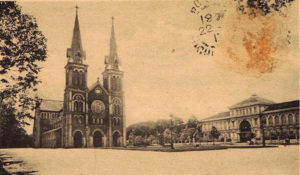
Cathedral square in the early 1900s

The Saigon Cathedral, which cost two million, is trivial at best. But all colonies pay royally for their civic buildings; through the incapacity of some, and the treachery of others, every public building costs two or three times its true value. They recruit architects who have never seen a plan, and entrust major projects to those who are unsuitable.

The Municipal Theatre, completed this year, cost about three million francs, though none of the 2,500 Europeans of Saigon seem worried about that! It is small and contains only 800 seats. However, it must be said that the building is graceful and successful in all respects, and the interior decoration is charming. The performing troupe has just arrived and we buy our tickets for the evening performance.

The Post and Telegraph Office occupies a nice, well laid-out and decorated building, but one which is copied from European models without any appreciation for the climate. I have already said in a previous chapter how the scarcity of wood here is a great obstacle to the construction of galleries, balconies and verandas. The chalet, so suitable in hot countries, is unfortunately absent from Saigon.

The Palais de justice

The streets are filled with public offices, we see nothing else! Such a large administration!! Yet how could it be otherwise, since according to official reports, Cochinchina has 66 civil servants for every 100 persons!

The Courthouse (Palais de justice) is rich and comfortable. I meet very few people here; in one chamber of the civil court, two lawyers are arguing a case before three judges, and all are in full robes! One of the lawyers pleads, with all the volubility of a Frenchman, a case concerning roads and public areas. None of the parties are present, and there are no curious spectators in the room. The hearings last from 7am to 11am.

To practise as a lawyer in Saigon, it is necessary to have a government permit. This is a monopoly; they are only 10 or 12 lawyers at the most and their positions are enviable. I am told that one of them earns 150,000 francs per annum.

If Saigon is in the doldrums, the lawyers are certainly not doing badly. The Saigon Courthouse has jurisdiction over appeals of the Consulate of France in Bangkok, and I understand that the Siamese government is afraid to become involved in any trials involving French subjects, because it would be too expensive!
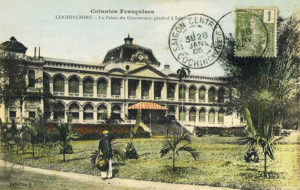
The Palace of the Government General

The Palace of the Government General is very grand. It is surrounded by a beautiful garden, where we see, growing and blooming with exuberance, all kinds of tropical plants and trees.

Apparently the reception rooms and apartments are very luxurious. It also appears that the looting of the buffet on the occasion of the 4 July Ball is truly a sight to behold!

Not far away is the Palace of the Lieutenant Governor of Cochinchina, also built with classical lines, but facing the street.

Suddenly, we see a surprising spectacle before our eyes, right in the middle of one of the city squares – a statue of a man in a fur coat, bareheaded, with a tanned complexion, haranguing the people. Fully occupied with his address, he recklessly exposes himself to the heat of the tropical sun, without appearing in the least bit troubled. Who is this crazy man?
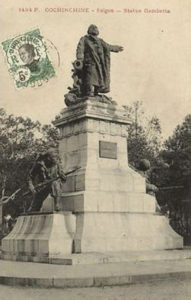
The Gambetta statue

We approach curiously: it’s Gambetta! What bizarre circumstances led the old tribune to Indochina? No one could tell us … maybe he was lost en route to Paris or some other French city and they accidentally shipped him here, forgetting to remove his coat first!

Thus dressed, he seems to have been subjected to the torture once invented by Petrus to shorten the duration of parliamentary debates in Belgium … five minutes more and he will fall exhausted, begging for mercy!

At other places in the city we see further monuments dedicated to the memory of Admiral Rigault de Genouilly, who conquered Saigon in 1858; to Doudard de Lagrée and Francis Garnier, who explored the little known banks of the Mekong and sought its origins in the period 1866-1869; and finally to the Bishop of Adran, who acted as advisor to the Emperor Gia Long at the beginning of this century.

We do the “Tour de l’Inspection” again. Half way through our promenade, we find in the middle of the forest a pleasant café, around which much of Saigon’s elegant high society is clustered. Carriages line both sides of the road. We join them, thinking of the Laiterie in the Bois de la Cambre.

Back at the hotel, we learn with great pleasure that Monsieur and Madame Mottet have decided to accompany us to Angkor Wat, which is the main purpose of our little trip. The departure will be early tomorrow morning; meanwhile we go to the Theatre to see Carmen.
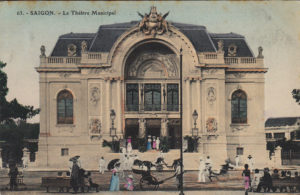
Saigon Municipal Theatre

The auditorium, full of men in dazzling white suits, presents an unexpected appearance. The ladies enhance and contrast that tonality with their low-necked dark, often black dresses.

Alone, absolutely alone, one man in a tuxedo may be seen: as he leaves, we see on the head of this social upstart a most extraordinary hairstyle, a true masterpiece. I thought this kind of perfection possible only in demonstrations by professional hairdressers.

During the intervals, as we walk to the foyer, we rediscover the joys of greeting in the French, or rather Latin, manner. Suddenly an English woman enters, swinging her arms, her chest trapped under a tight corset, her neckline timidly high, her hair bunched under an invisible hairnet. She greets while walking, sometimes almost running. How much prettier and elegant she would look in a simple tennis blouse!

In contrast, when the French woman is out on parade, she makes the most of her daring décolletage by arching her body and walking without fear. Back home she is relaxed, but when she goes out, the difference in her appearance is striking.

We are pleasantly surprised by the production of Carmen, which is performed very satisfactorily. All in all we are delighted with our evening and very jealous of the Saïgonnais, who can afford this pleasure three times a week!

During the first act there is a downpour so heavy that that we can hardly hear the choruses. Fortunately, these rains are usually as short as they are noisy; but it seems to me that a theatre season would be difficult to reconcile with a rainy season.

Tim Doling is the author of the guidebook Exploring Saigon-Chợ Lớn – Vanishing heritage of Hồ Chí Minh City (Nhà Xuất Bản Thế Giới, Hà Nội, 2019)

A full index of all Tim’s blog articles since November 2013 is now available here.

Join the Facebook group pages Saigon-Chợ Lớn Then & Now to see historic photographs juxtaposed with new ones taken in the same locations, and Đài Quan sát Di sản Sài Gòn – Saigon Heritage Observatory for up-to-date information on conservation issues in Saigon and Chợ Lớn.
Saigon’s Old French Planter Villas

The old Bec villa at 33 Lê Quý Đôn, pictured in December 2011

This article was published previously in Saigoneer

Despite the ongoing destruction of colonial buildings in Saigon, there’s still a small quarter of District 3 where it’s possible to identify villas which were once occupied by rich French rubber planters.

The area of District 3 bordered by Nam Kỳ Khởi Nghĩa, Nguyễn Đình Chiểu, Lê Quý Đôn and Võ Thị Sáu has long been known unofficially as Saigon’s “rubber plantation district.” In the early 20th century, many rich French rubber planters bought or rented homes in this area, close to the Saigon offices of companies like the Société plantations des terres rouges, the Compagnie des Caoutchoucs de Padang, the Compagnie des Caoutchoucs d’An Vieng and the Compagnie des Caoutchoucs de Cambodge.

17 Lê Quý Đôn

All of these offices were located at nearby 236 rue Mac-Mahon, now 236 Nam Kỳ Khởi Nghĩa, an address which even today is still home to the Rubber Research Institute of Việt Nam (Viện Nghiên Cứu Cao Su Việt Nam) and the Việt Nam Rubber Group (Tập Đoàn Công Nghiệp Cao Su Việt Nam).

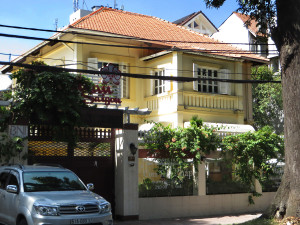
The French villa at 17 rue Barbé/Barbet, now 17 Lê Quý Đôn, first appears in colonial records in 1923 as the home of Monsieur J Pierret, proprietor of the Société des plantations de Route-haute in Tây Ninh. In 1923-1925, Pierret served as Treasurer of the Union of Indochina Rubber Planters (Syndicat des Planteurs de caoutchouc de l’Indochine). By 1928. he could be found renting another villa (now demolished) at nearby 167 rue Mayer, now Võ Thị Sáu.

The old Bec villa at 33 Lê Quý Đôn, pictured today, completely hidden by trees

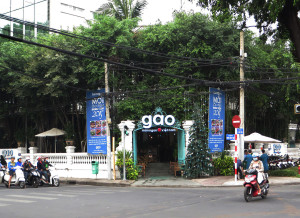
During the same period, the villa at 33 rue Barbé/Barbet, now Gạo restaurant at 33 Lê Quý Đôn, was the residence of Monsieur Bec, owner of the plantation An-Nhon. In contrast to number 17, this villa was actually owned by the Bec family, and their crest may still be seen today above the entrance door of the villa. In the early 1950s, the Becs sold the property to King Bảo Đại’s uncle Prince Nguyễn Phúc Bửu Lộc before returning to France.

Further along the same road is another heritage property at 45 rue Barbé/Barbet, now 45 Lê Quý Đôn. In 1924, this was the residence of Monsieur Perot, Director of the Société des plantations de Courtenay, but by 1927 it had become the residence of a senior government administrator named Blanchard.

45 Lê Quý Đôn

While serving as President of the Cochinchina Budget Commission, Monsieur Blanchard was the Director of no fewer than three large rubber plantation companies – the Compagnie des Caoutchoucs de Cambodge, the Compagnie du Caoutchouc Padang, and the Société des plantations des Terres Rouges.

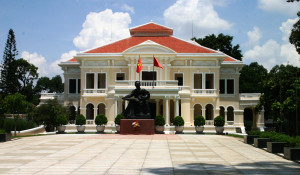
Perhaps the best-known relic of Saigon’s “rubber plantation district” is the grand mansion at 169 rue Mac-Mahon, now the Hồ Chí Minh City Children’s House at 169 Nam Kỳ Khởi Nghĩa. It was built in 1927 for millionaire plantation owner Madame de la Souchère, a larger-then-life character who is often cited as the model for the character of plantation owner Éliane Devries, played by Cathérine Deneuve in Régis Wargnier’s 1992 film Indochine.

The former Souchère mansion at 169 Nam Kỳ Khởi Nghĩa

She built this huge mansion in 1927, but lived there for only three years – in 1930, it was repossessed by the Bank of Indochina after she had lost her entire fortune in the economic crisis. The mansion later became the residence of General Philippe Leclerc (1945-1946), commander of French forces in Indochina after World War II, and in the late 1960s the residence of the Deputy President of the Republic of Việt Nam. In 2015 it underwent a sympathetic renovation.

Like so many other old structures of their kind, these few surviving colonial planter villas are not recognised as heritage buildings and as such their future remains uncertain.

Tim Doling is the author of the guidebook Exploring Saigon-Chợ Lớn – Vanishing heritage of Hồ Chí Minh City (Nhà Xuất Bản Thế Giới, Hà Nội, 2019)

A full index of all Tim’s blog articles since November 2013 is now available here.

Join the Facebook group pages Saigon-Chợ Lớn Then & Now to see historic photographs juxtaposed with new ones taken in the same locations, and Đài Quan sát Di sản Sài Gòn – Saigon Heritage Observatory for up-to-date information on conservation issues in Saigon and Chợ Lớn.
90 Years Ago This Week: “Annamite woman abused by tramway conductors”

An electric tram on Saigon’s boulevard Bonard (Lê Lợi) in the late 1920s

This article appeared in the Echo Annamite newspaper on 19 April 1926.

On the 6th April at 2:45 p.m., a young Annamite [Vietnamese] woman was abused by two tramway conductors – one an Indian, Mr Dayot, and the other a local, Mr Ngu – in the following circumstances:
Pressed by the departure of the train, our young traveller climbed on board and sat in first class, although she was only equipped with a second-class ticket.
Mr Ngu ordered her to move.
As the tram had already moved out of the station, the young woman begged him to leave her where she was for now, promising to relocate to second class as soon as they reached the next station.
Instead of showing the elementary gallantry and common decency due to this frail individual, who also happened to be one of his compatriots, Mr Ngu proceeded to pour shovel loads of insults on his interlocutor.
And that, in front of many other passengers.
“If you wish,” replied the young woman, “I’ll pay extra. But let please do not use these offensive words.”
The other refused to listen and was about to hit her, when Mr. Dayot arrived.
“Shut up or get off!” he yelled, making threatening gestures at the poor lady, on whom he bestowed, in turn, a string of curses.
For what must be the thirty-sixth time, we draw the attention of the Director of the Tramway Company to the total lack of education of his staff members of all nationalities.
We begin to tire of this situation.
Let him take tough sanctions against these officials, otherwise the trams risk being deserted by travellers who pay to be well served, and not to be insulted.

Tim Doling is the author of the guidebook Exploring Saigon-Chợ Lớn – Vanishing heritage of Hồ Chí Minh City (Nhà Xuất Bản Thế Giới, Hà Nội, 2019)

A full index of all Tim’s blog articles since November 2013 is now available here.

Join the Facebook group pages Saigon-Chợ Lớn Then & Now to see historic photographs juxtaposed with new ones taken in the same locations, and Đài Quan sát Di sản Sài Gòn – Saigon Heritage Observatory for up-to-date information on conservation issues in Saigon and Chợ Lớn.
Marshal Joffre’s visit to Saigon, 9-13 December 1921

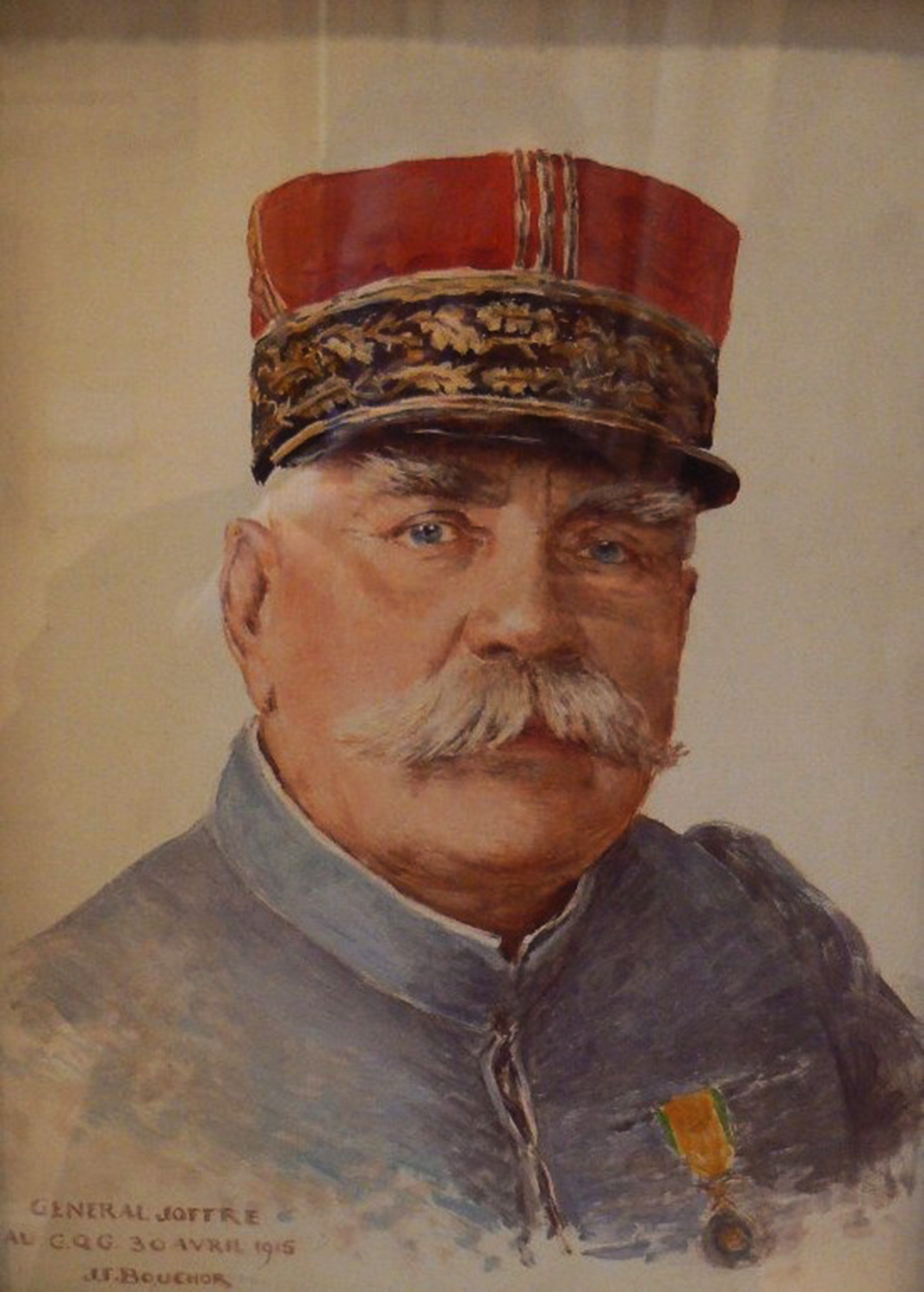
General Joseph Joffre in 1915, before he became a Marshal (Musée Carnavalet)

This article was published previously in Saigoneer

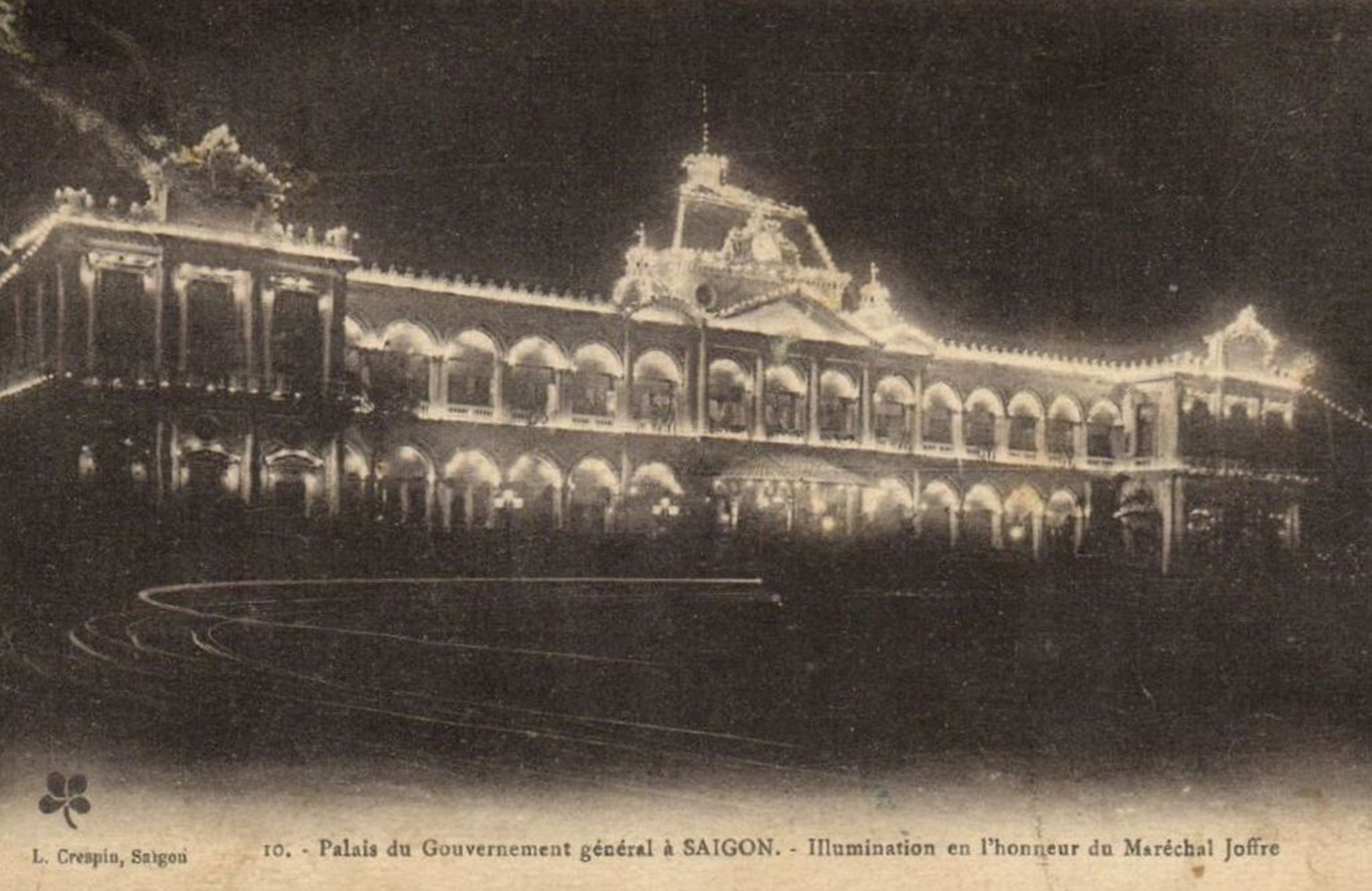
French government photographers have left us a detailed photographic record of Great War hero Marshal Joffre’s December 1921 visit to Saigon 

After distinguishing himself in World War I, former French Commander-in-Chief Joseph Joffre (1852-1931) became a Marshal of France and turned his attention to diplomatic affairs. It was in this capacity, in 1921-1922, that Joffre embarked on a grand goodwill tour taking in the United States, Indochina, Siam, Japan and China.

Marshal Joffre in Saigon

Altogether, Joffre spent nearly a month in Indochina, visiting Cochinchina, Cambodia, Annam and finally Tonkin, where he had served between 1885 and 1888 as an engineering officer. In advance of his visit, several streets and squares were named after him.

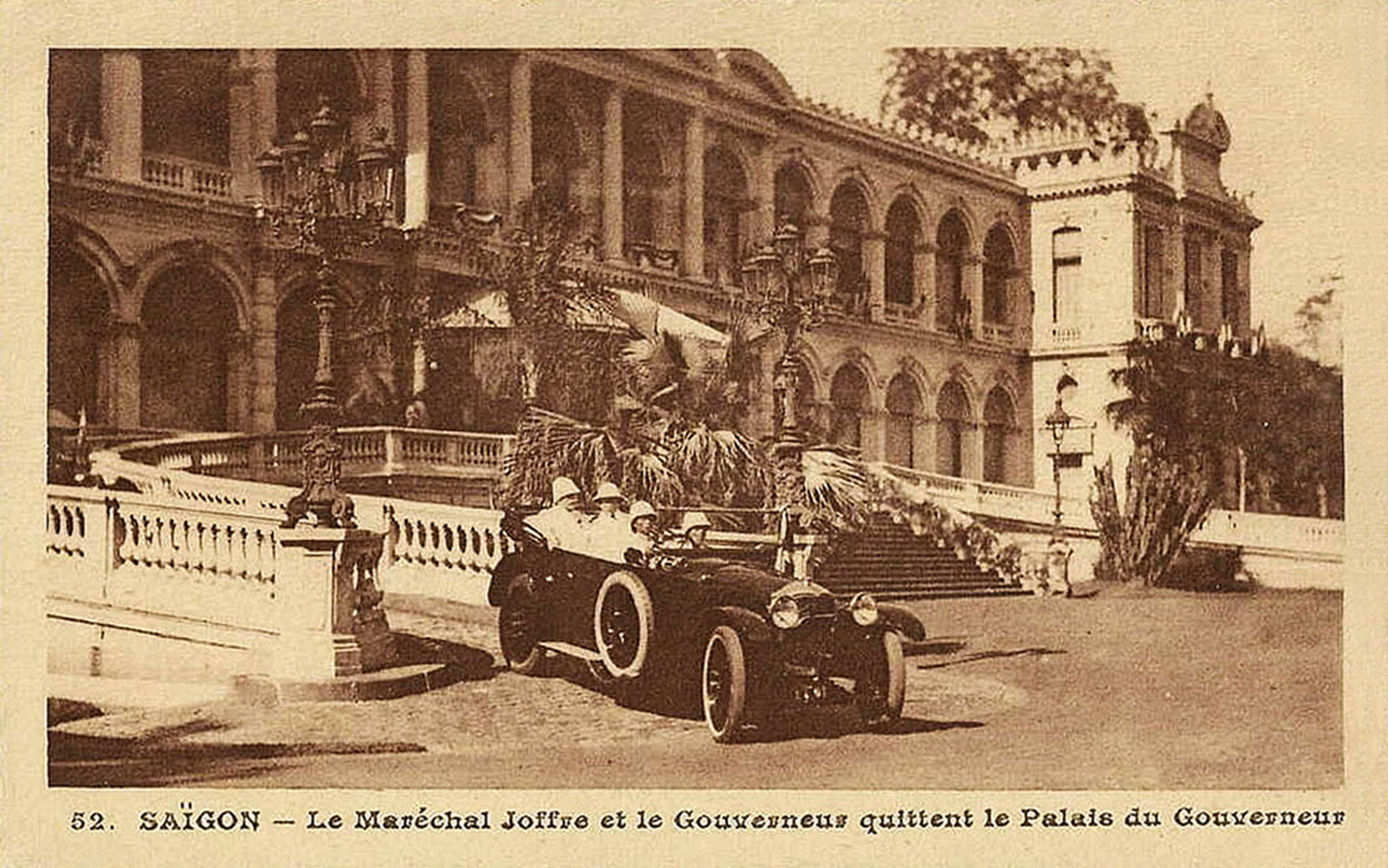
From the time of his arrival in Saigon on the morning of 9 December 1921 to his departure for Phnom Penh on 13 December 1921, Joffre’s visit was tightly choreographed and very thoroughly documented by government photographers.

Here is just a small selection from the many images taken during Joffre’s visit, along with his complete itinerary, which was published in the Écho annamite newspaper (22 November 1922) nearly two weeks before his visit!

\

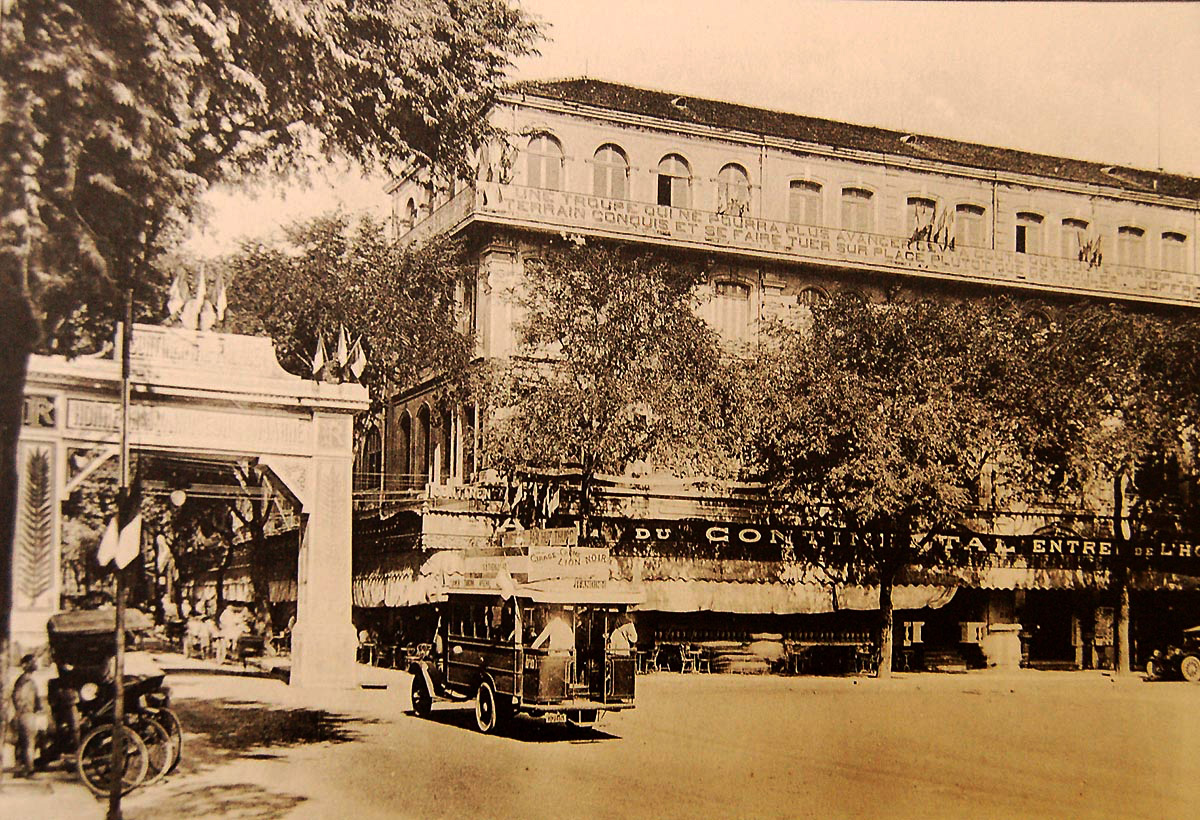
An “Arc de Triomphe” was installed in the rue Catinat in honour of Marshal Joffre

Marshal Joffre and the Governor-general leave the Palace

Day 1 – 9 December 1921

8am – Embarcation at the Rigault de Genouilly pier
9.30am – Presentation of government agencies and services at the Palace of the Government-general
11am – Reception at the Town Hall, address by the Mayor
12pm – Private lunch at the Palace of the Government-general
4pm-5pm – Visit to Saigon, passing through the place du Maréchal Joffre (former water tower square)
5.30pm – Visit to the Governor of Cochinchina
6pm – Reception for war veterans
7.30pm – Private Dinner at the Palace of the Government-general
8.30pm-9pm – Torchlight procession
9.30pm – Fireworks display

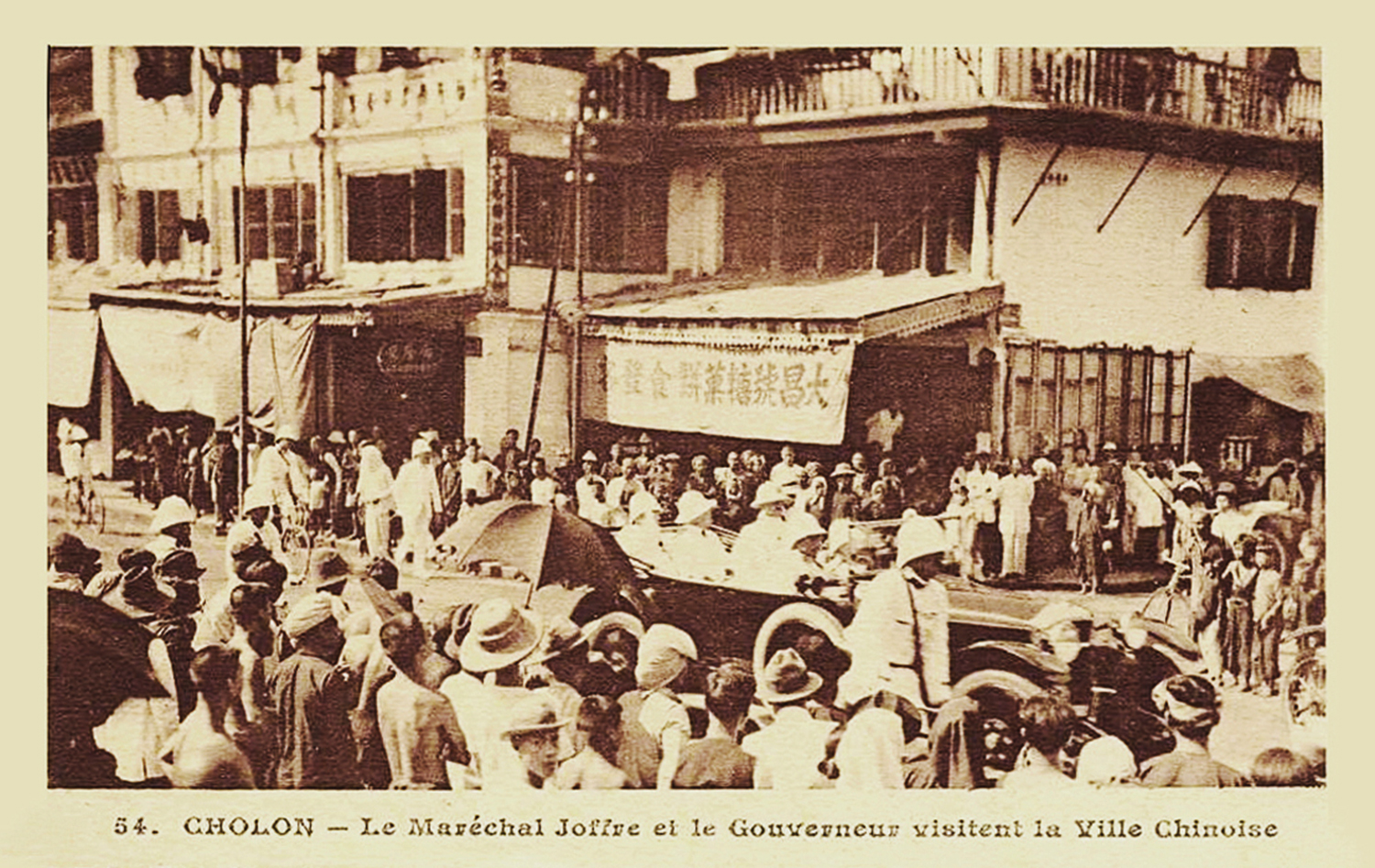
Marshal Joffre and the Governor-general visiting the Chinese city

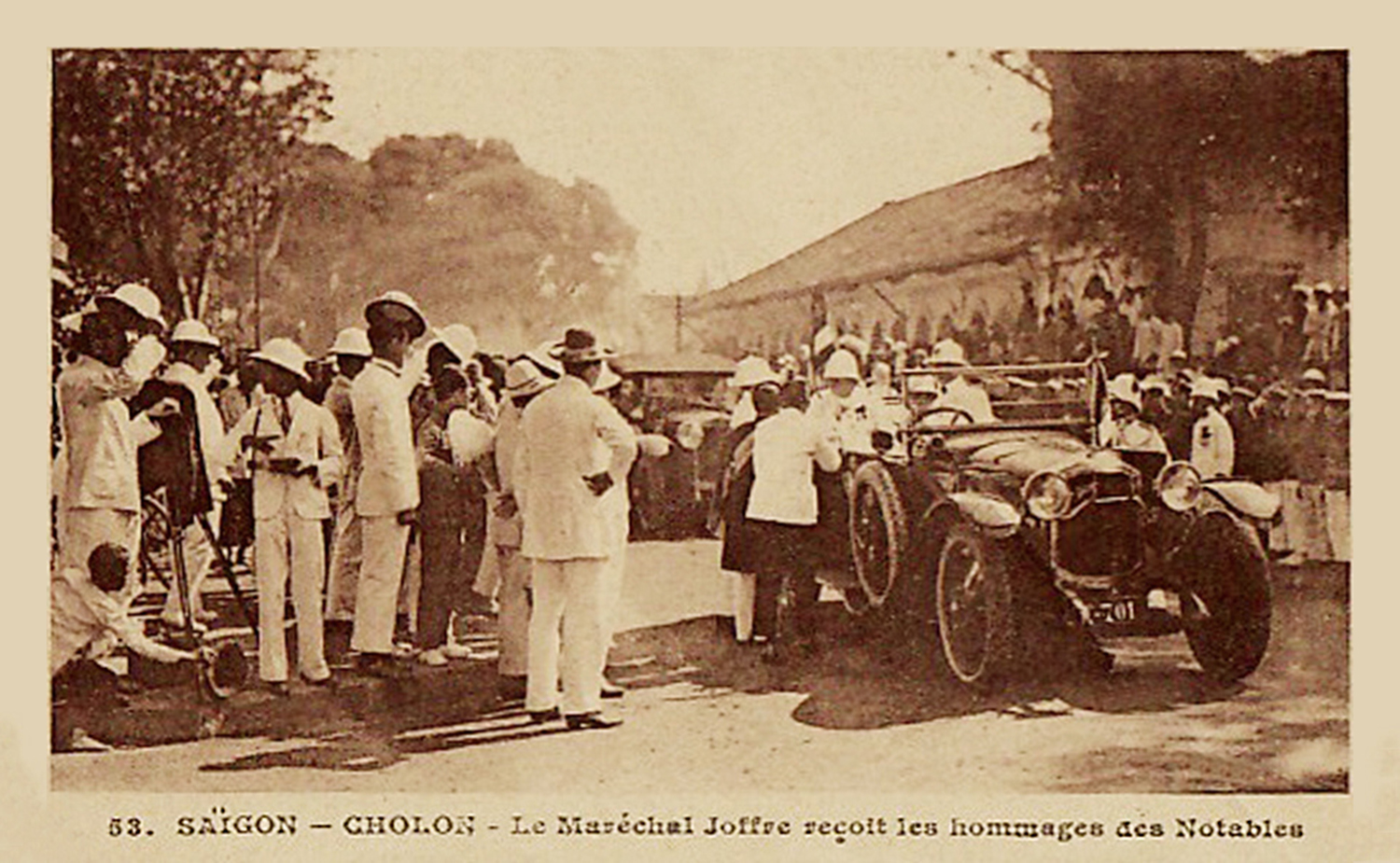
Marshal Joffre meeting notables in Cholon

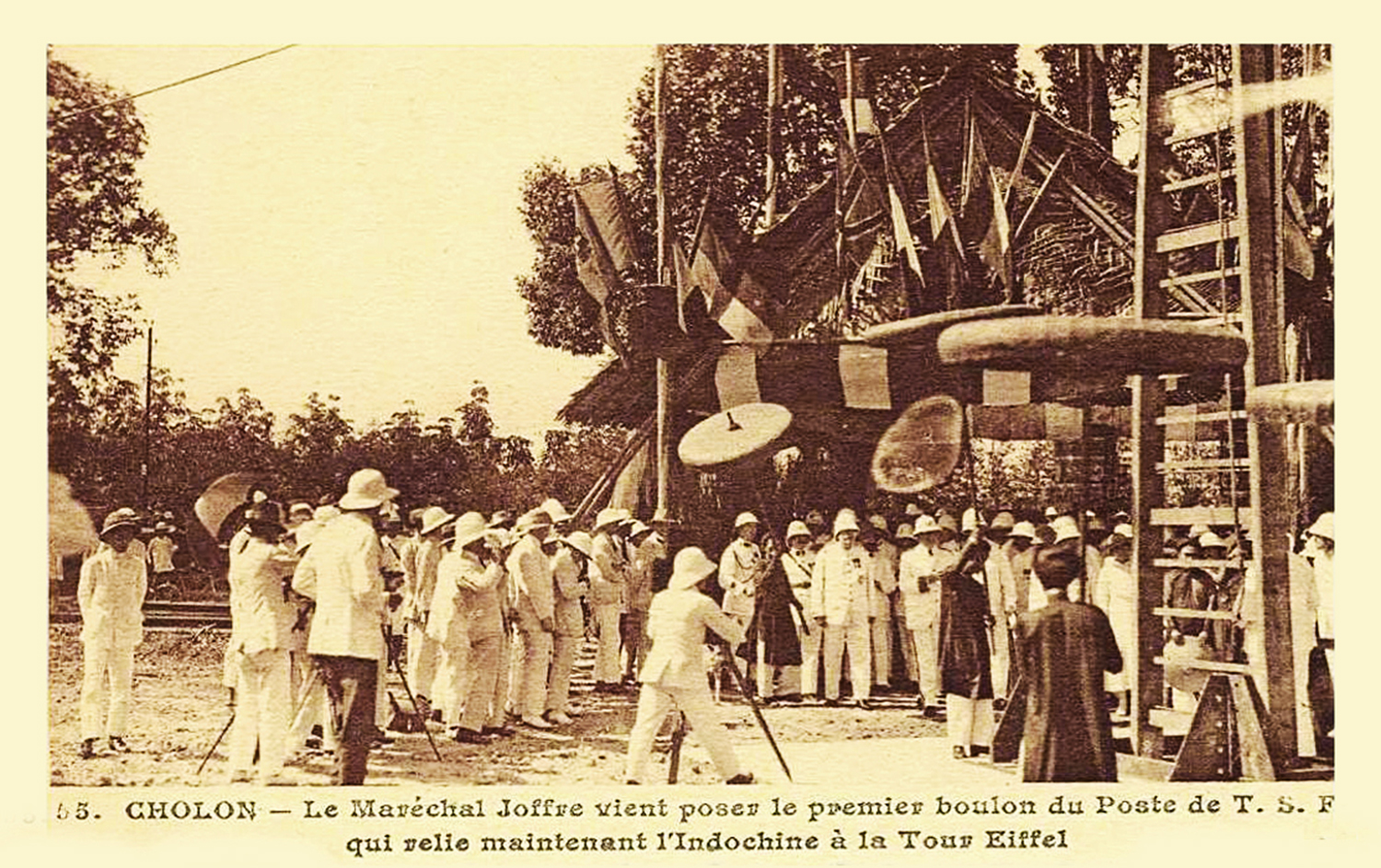
Marshal Joffre at the ceremony for laying the foundations of the TSF station in Cholon

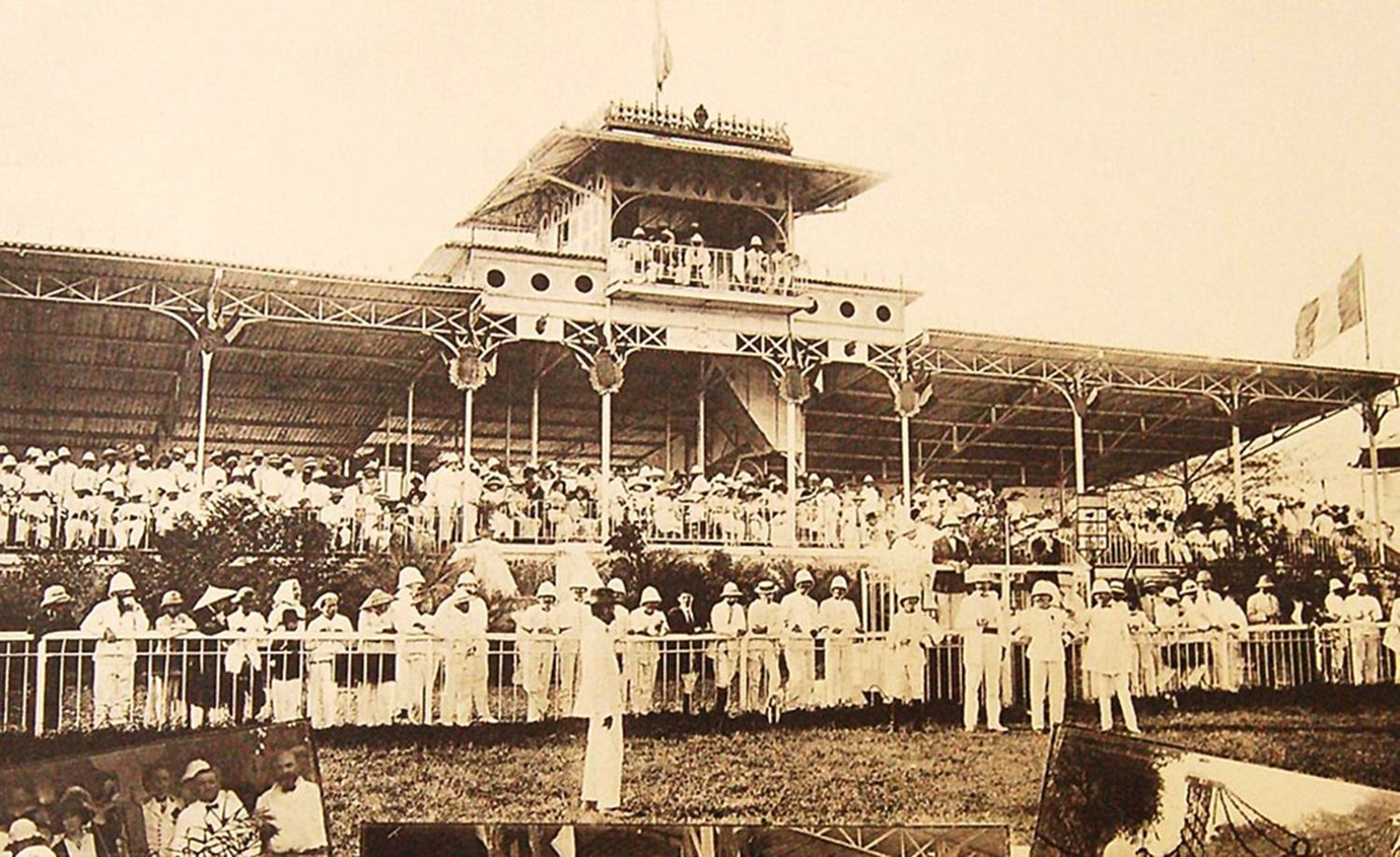
Marshal Joffre at the horse races

Day 2 – 10 December 1921

9am-10am – Visit to Cholon
10.15am – Laying the foundations at the new TSF (Wireless) Station, Cholon
12pm – Lunch at the Palace of the Government of Cochinchina
4pm – Horse Racing
5.30pm – Reception for indigenous notables of the Government of Cochinchina
6pm – Reception for Catalans at the Continental Hotel
8pm – Dinner at the Palace of the Government-general
9.45pm – Ball at the Palace of the Government-general

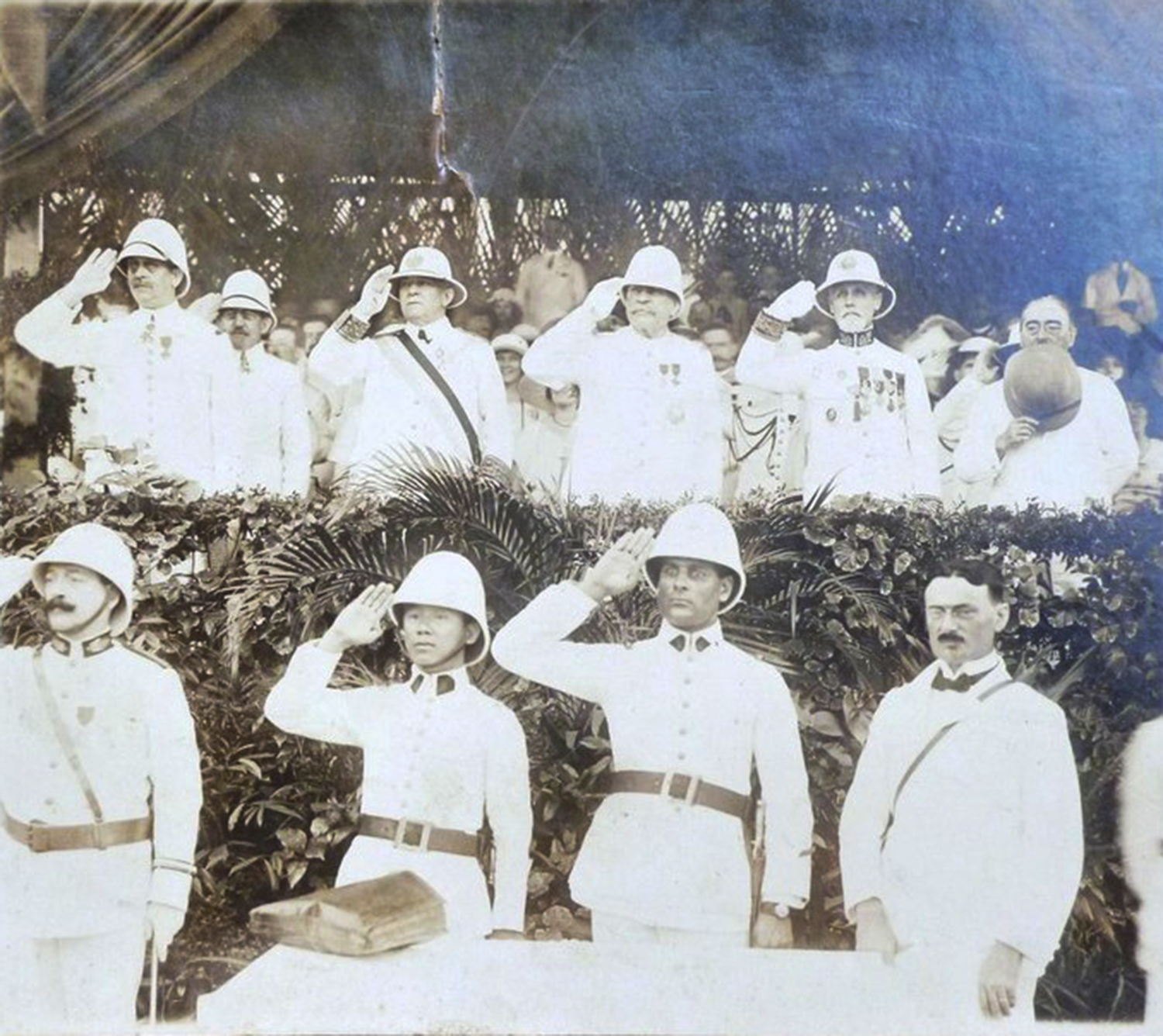
Officers stand to attention as Marshal Joffre reviews the troops in Saigon on 11 December 1921

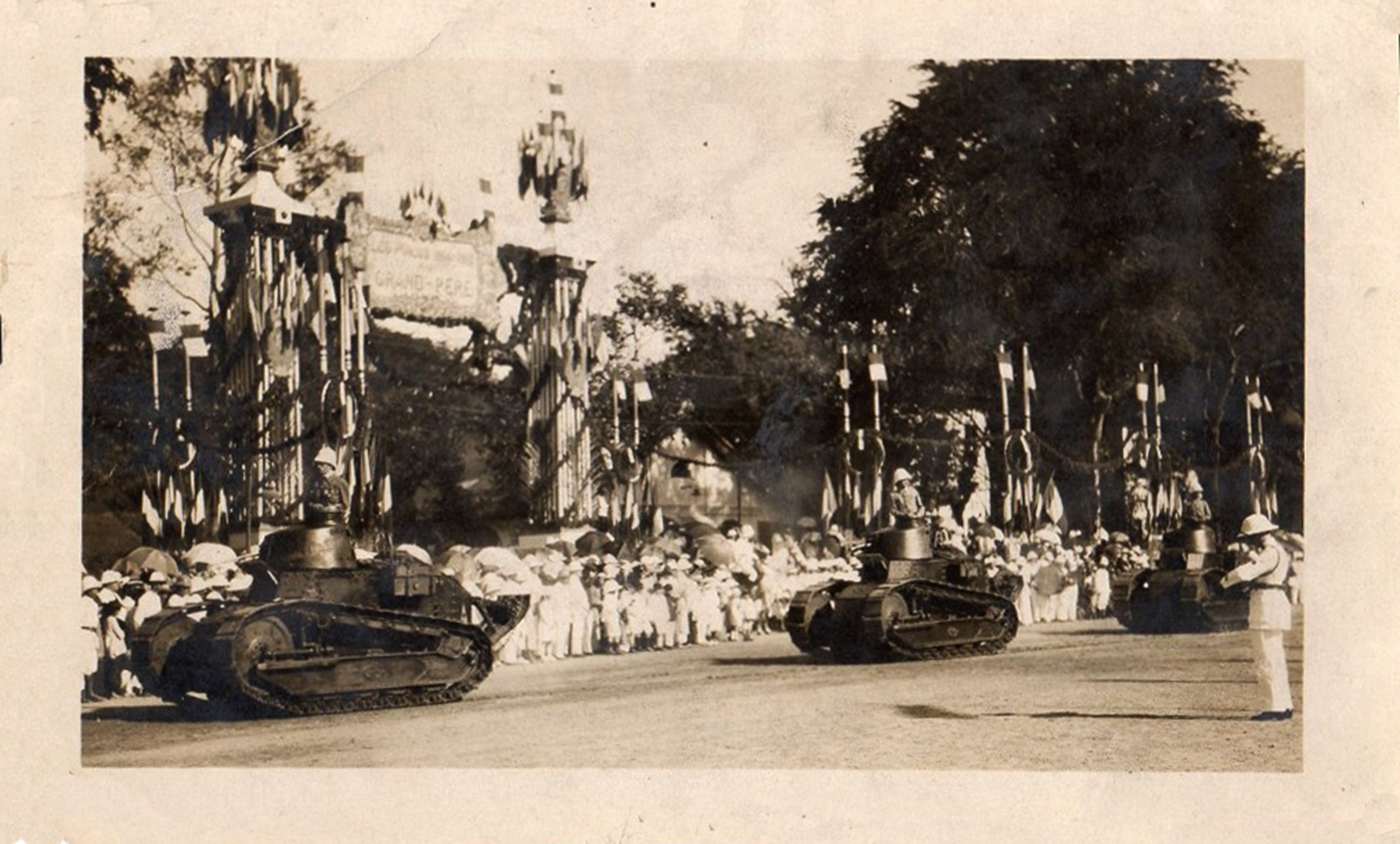
Tanks parade before Marshal Joffre in Saigon

Day 3 – 11 December 1921

7.30am – Grand review of garrison troops
12pm – Private lunch at the Palace of the Government-general
4.30pm – Flower parade
7.30pm – Dinner at the Palace of the Government-general
9pm – Reception at the Cercle militaire

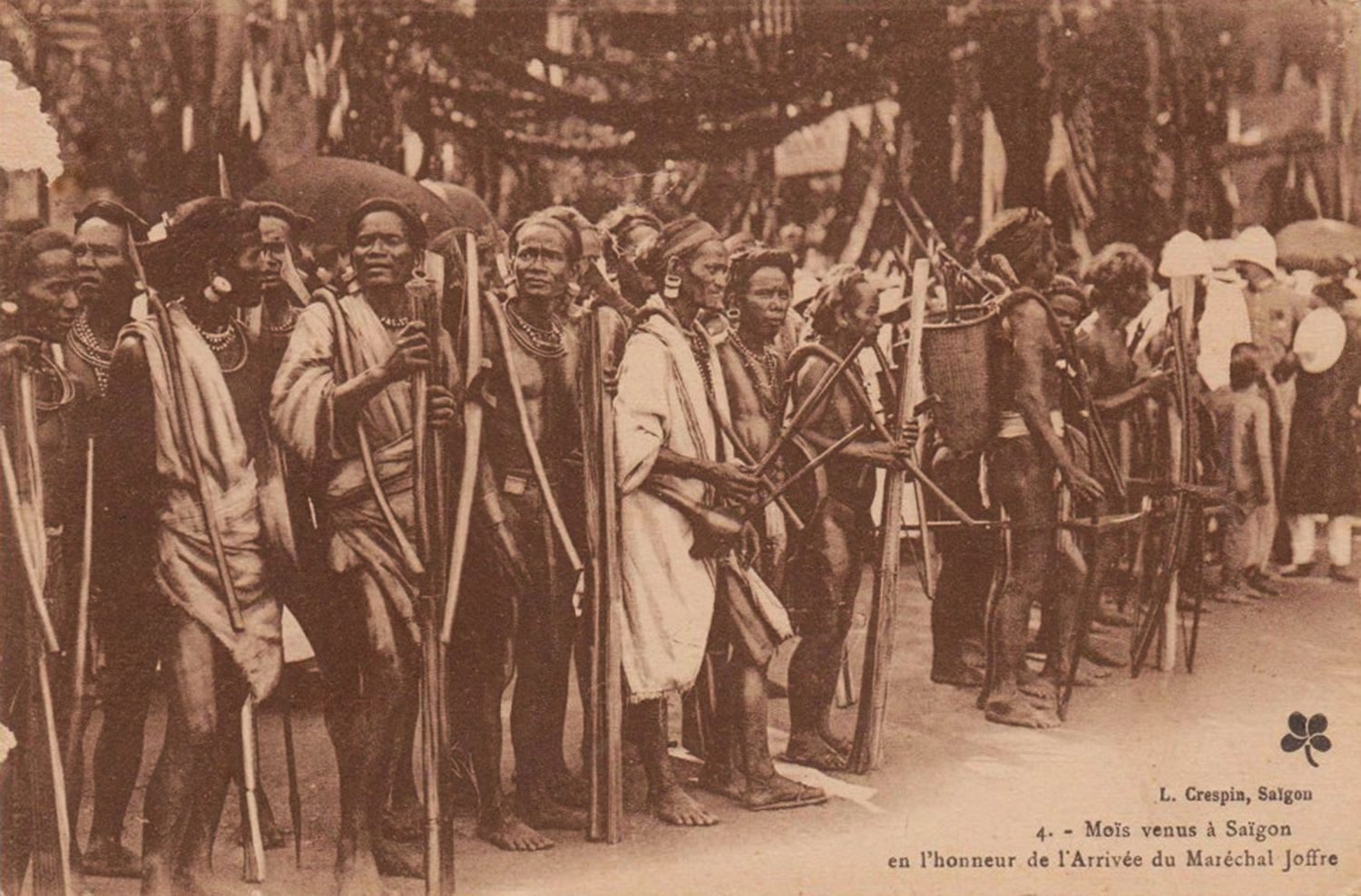
Ethnic minorities visiting Saigon in honour of the arrival of Marshal Joffre

The Palace of the Government-general in Saigon, illuminated in honour of Marshal Joffre

Day 4 – 12 December 1921

Morning – Excursion to Cap-Saint-Jacques, breakfast at the Cap
Afternoon – Return to Saigon, or trip to Thudaumot, Bienhoa
8pm – Private Dinner at the Palace of the Government-general
9pm – Public ball, boulevard Charner

Day 5 – 13 December 1921

8.30am – Departure from Saigon to Phnom Penh

Officers in charge of different parts of the programme

Torchlight procession: COMMANDANT GUILLERMEAU
Flags, Illuminations and Fireworks: Messrs. JOSSE & ROCHÉ
Horse races: M. BALLOUS
Flower parade: Messrs. BALLOUS, MESSMAECKER, FONTANA, JOSSE, ROCHÉ, LE VILLAIN, JACQUE
Public ball: Messrs. MARTIN & FONTANA

Tim Doling is the author of the guidebook Exploring Saigon-Chợ Lớn – Vanishing heritage of Hồ Chí Minh City (Nhà Xuất Bản Thế Giới, Hà Nội, 2019)

A full index of all Tim’s blog articles since November 2013 is now available here.

Join the Facebook group pages Saigon-Chợ Lớn Then & Now to see historic photographs juxtaposed with new ones taken in the same locations, and Đài Quan sát Di sản Sài Gòn – Saigon Heritage Observatory for up-to-date information on conservation issues in Saigon and Chợ Lớn.
The Railways of Viet Nam – an illustrated talk

A “Rafale” armoured train pictured in south-central Việt Nam during the late 1940s, image from the archives of ECPAD (Etablissement de Communication et de Production Audiovisuelle de la Défense)

The Railways of Việt Nam is a new one-hour illustrated talk by Tim Doling, author of The Railways and Tramways of Việt Nam (White Lotus Press, 2012).

Illustrated by over 140 historic maps and images, this one-hour talk recounts the fascinating story of Việt Nam’s rail network, most of which was built as a tool of colonial exploitation by the French between 1885 and 1936.

One of the Saigon-Mỹ Tho line’s five SACM Belfort 4-4-0T “locomotives à grande vitesse” stands at Saigon Depot in the early 1900s

Its turbulent history mirrors that of Việt Nam through more than 90 years of colonialism, 30 years of devastating war and 40 years of reconstruction.

The first half of the talk traces the growth of the Vietnamese rail network, starting with the very first railway lines from Saigon to Mỹ Tho (1885) and from Phủ Lạng Thương (Bắc Giang) to Lạng Sơn (1894), and continuing through the construction of the Transindochinois (North-South line), which was opened in five successive stages between 1905 and 1936.

It examines French attempts to build lines of exploitation into southern China via Lào Cai and Đồng Đăng, and also looks at the abortive 1920s scheme for an “Interior rail route” through the Mekong valley, of which only the extraordinary rail-and-cable-car connection from Tân Ấp to Xóm Cục and Ban Na Phao (see The Railway which Became an Aerial Tramway) and the so-called “Rubber Line” from Saigon to Lộc Ninh (see Saigon’s Rubber Line) were actually achieved.

One of over 960 sabotage incidents on the South Vietnamese railway network in 1965

It also considers the repeated failure of the French to connect Phnom Penh with Saigon, the “missing link” which, when eventually completed, will link Singapore, Kuala Lumpur and Bangkok directly with Beijing, Moscow and Europe.

The second half of the talk examines the devastating effect on the railway network of more than three decades of war, beginning with Allied bombing during the later years of Japanese occupation (1943-1944), and continuing with the catastrophic damage inflicted during the First and Second Indochina Wars (1945-1975).

The talk assesses the impact of war on the rail network both in the North (Democratic Republic of Việt Nam) and in the South (Republic of Việt Nam).

It brings the story up to date by looking at the gradual reconstruction and development of the rail network which took place after 1975.

66 TrainThe talk concludes with a brief overview of recent plans to develop a modern twin-track electrified standard gauge railway, linked not just to China but also to Laos, Cambodia, Malaysia and Thailand.

For more details please email [email protected].

Tim Doling is the author of The Railways and Tramways of Việt Nam (White Lotus Press, Bangkok, 2012) and also conducts 16-day and 13-day Việt Nam Rail Tours.

A full index of all Tim’s blog articles since November 2013 is now available here.

Join the Facebook group Rail Thing – Railways and Tramways of Việt Nam for more information about Việt Nam’s railway and tramway history and all the latest news from Vietnam Railways.

Date with the Wrecking Ball – The Catinat-Cine Mosaics

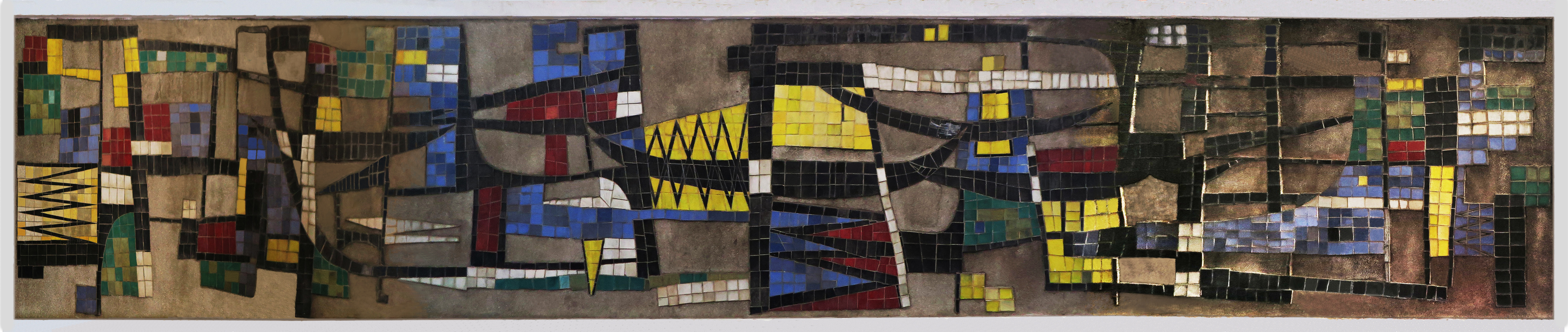
The main mosaic panel, located in the corridor alongside the former Catinat-Ciné building

This article was published previously in Saigoneer

Over the past 12 months, a great deal of attention has been paid to the fate of the 1924 Moroccan mosaic staircase in the lobby of the Tax Trade Centre. Yet that great work of art is not the only mosaic in Saigon which is currently under threat of destruction.

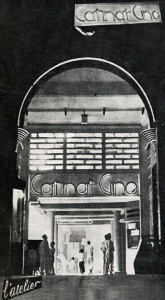
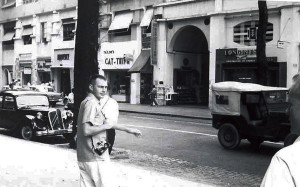
The 151 rue Catinat entrance to the Catinat-Ciné (now the Art Arcade at 151 Đồng Khởi), pictured in the late colonial period

The redevelopment of 151 Đồng Khởi, announced last year, will involve the demolition of a tiny former film theatre building, situated in an alleyway between Đồng Khởi and Nguyễn Huễ boulevard and still decorated with some of the most intriguing mosaics of the late colonial era.

Believed to date back to the mid 1930s, the Catinat-Ciné became popular in the late colonial and early VNCH periods for its cheap ticket prices and “non-stop cinema” – in reality, 1pm-to-midnight screenings of second-run films which had already done the rounds of the major cinemas.

According to one local historian, by the 1960s the Catinat-Ciné had become a “tea room” music venue, known later as Đêm Màu Hồng, where the group Phượng Hoàng performed in the days before singer Elvis Phương joined its ranks and transformed it into one of Saigon’s leading pop groups.

Since 1975, the old Catinat-Ciné building has been used as an office space, but the original building survives, and with it the unique mosaic panels which decorate it.

An early 1950s view of the 151 rue Catinat entrance to the Catinat-Ciné (now the Art Arcade at 151 Đồng Khởi)

These include small mosaics on either side of the front entrance, plus a large mosaic panel in the corridor alongside the building which will be familiar to regular patrons of l’Usine restaurant upstairs. Despite some minor damage, most of the mosaic tiles remain in place. Sadly, the name of the artisan who created the murals is not known.

There can be no doubt that these unique works of art will face the wrecking ball unless a conservation campaign is launched to remove, restore and reinstate them in whatever new building is constructed on this site.

The smaller mural panels, located either side of the front doors of the former Catinat-Ciné building

The exterior of the former Catinat-Ciné building

Decorative coving and light fittings in the 151 Đồng Khởi entrance to the former Catinat-Ciné, now the Art Arcade

Decorative work on the walls of the 151 Đồng Khởi entrance to the former Catinat-Ciné, now the Art Arcade

Tim Doling is the author of the guidebook Exploring Saigon-Chợ Lớn – Vanishing heritage of Hồ Chí Minh City (Nhà Xuất Bản Thế Giới, Hà Nội, 2019)

A full index of all Tim’s blog articles since November 2013 is now available here.

Join the Facebook group pages Saigon-Chợ Lớn Then & Now to see historic photographs juxtaposed with new ones taken in the same locations, and Đài Quan sát Di sản Sài Gòn – Saigon Heritage Observatory for up-to-date information on conservation issues in Saigon and Chợ Lớn.
Pierre Coupeaud and the Great Cyclo Trial of February 1936

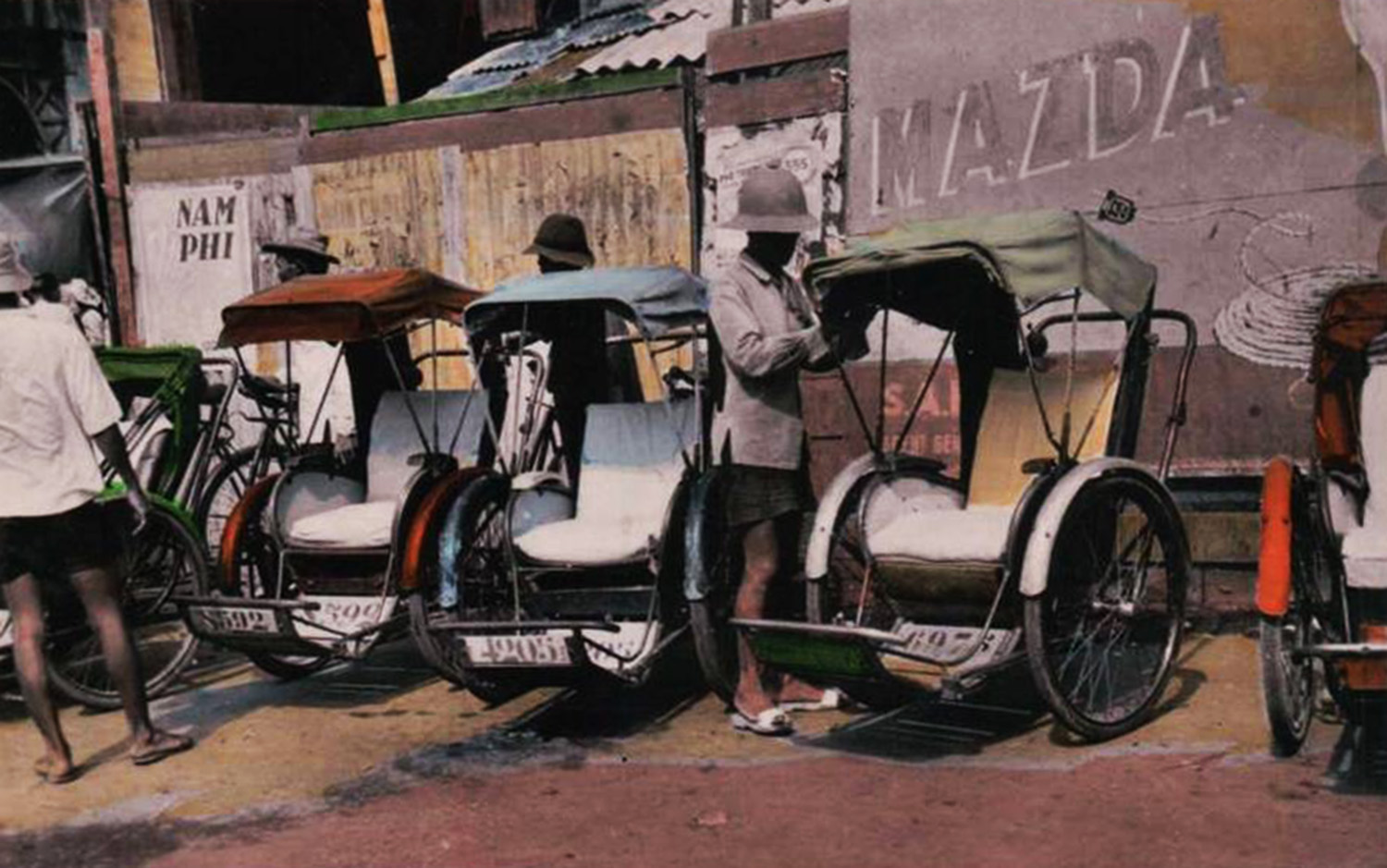
Cyclos outside the Halles centrales (Bến Thanh Market) in the late 1940s

This article was published previously in Saigoneer

Banned from an ever-increasing number of city streets, the cyclo is rapidly becoming an endangered species. But spare a moment to appreciate this much-maligned form of transport, invented by Phnom-Penh-based French industrialist Pierre Coupeaud and launched here exactly 80 years ago this month by means of a high-profile demonstration run from Phnom Penh to Saigon.

By the early 1930s, the use of human-powered rickshaws in many parts of Asia was increasingly viewed with concern on humanitarian grounds. In 1933, trials were held in Paris to test a number of pedal-powered alternatives. The French Public Works Ministry recruited two former Tour de France champions, Speicher and Le Grèves, to test a variety of different “tri-porteurs” (three-wheel pedal-driven passenger-carrying vehicles) along the wide paths of the Bois de Boulogne in Paris.

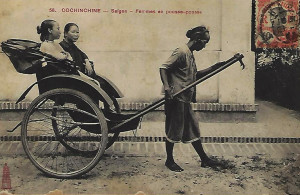
The human-powered “pousse-pousse” rickshaw

Two years later, a Phnom Penh-based industrialist named Pierre Coupeaud designed his own lightweight “vélo-pousse.”

A keen athlete from the Charente region of France, Coupeaud had moved to Indochina in the late 1920s, and by 1933 he managed one of Cambodia’s leading bicycle companies, Établissements Pierre Coupeaud et Cie at 147-151 rue Galliéni, Phnom Penh.

Coupeaud arranged for his “vélo-pousse” to be built in Paris and then brought it back to Phnom Penh where, in 1935, after securing a public service licence from the city government, he manufactured a small fleet of the vehicles for use on the streets of the Cambodian capital.

Flushed with this initial success, Coupeaud then tried to sell the idea of cyclo travel to the Saigon authorities, but they were not interested. Eventually, he devised a plan to prove publicly how good his new invention was.

An article published in Le Journal magazine of 11 April 1936 describes what happened:

The most curious race ever to be organised

Two Indochinese cyclists recently travelled from Phnom Penh to Saigon on a “vélo-pousse,” the cyclist and passenger swopping places to complete the journey in shifts.

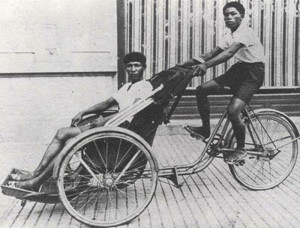
Coupeaud’s “crew” poses for photographs after the successful February 1936 demonstration run from Phnom Penh to Saigon

We thought we had exhausted every possible formula for the cycle race, but we were wrong! A French sportsman, who is also a businessman, has just invented, quite by accident, a new style of performance cycling competition. Once a cyclist and soccer player in France, this young man, Pierre Coupeaud, emigrated to the Far East and settled in Phnom Penh, capital of Cambodia, where he now sells bicycles and sporting goods.

Cambodia is home to a human-powered rickshaw known as the “pousse pousse.” Many of us will be familiar with this vehicle, which is used throughout the Far East. It comprises a large wicker chair mounted on lightweight wheels, which the Chinese and Indochinese pull by means of stretcher poles, taking the traveller at full speed through the cluttered cities of the Far East.

We have been trying for several years to find a more humane replacement for the “pousse pousse” by replacing arm and leg power with pedal power. Just a few years ago, while I was organising the first “tri-porteur” trials in Paris, I received a visit from a Russian colonel who owned several significant rickshaw concessions in China and was keen to demonstrate a new passenger-carrying “tri-porteur,” but he was unable to produce the intended machine.

Our friend Pierre Coupeaud had more perseverance. Coming to Paris last year, he left with a passenger “tri-porteur” which he had manufactured here. Unfortunately, setbacks awaited him in Indochina, where the Saigon administration, considering the invention to be revolutionary, refused him permission to put his “cyclo-pousse” into circulation. In vain, our friend argued that pedalling with a passenger in the front appeared less degrading to the driver and was certainly more humane than expecting him to run along the road pulling a rickshaw. However, knowing the strength of Eastern traditions, colonial officials would not yield.

Undaunted, M. Coupeaud trained up two local cyclists to demonstrate his machine. They were in fact two excellent riders who had participated in many cycling competitions, and by using them, Coupeaud determined to show the authorities what his new vehicle was capable of. He therefore organised a trial run from Phnom Penh to Saigon via Souairieng – a total of 240 km – to demonstrate the performance qualities of his “cyclo-pousse.”

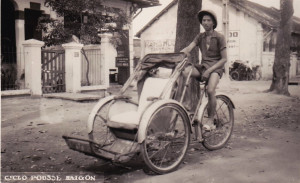
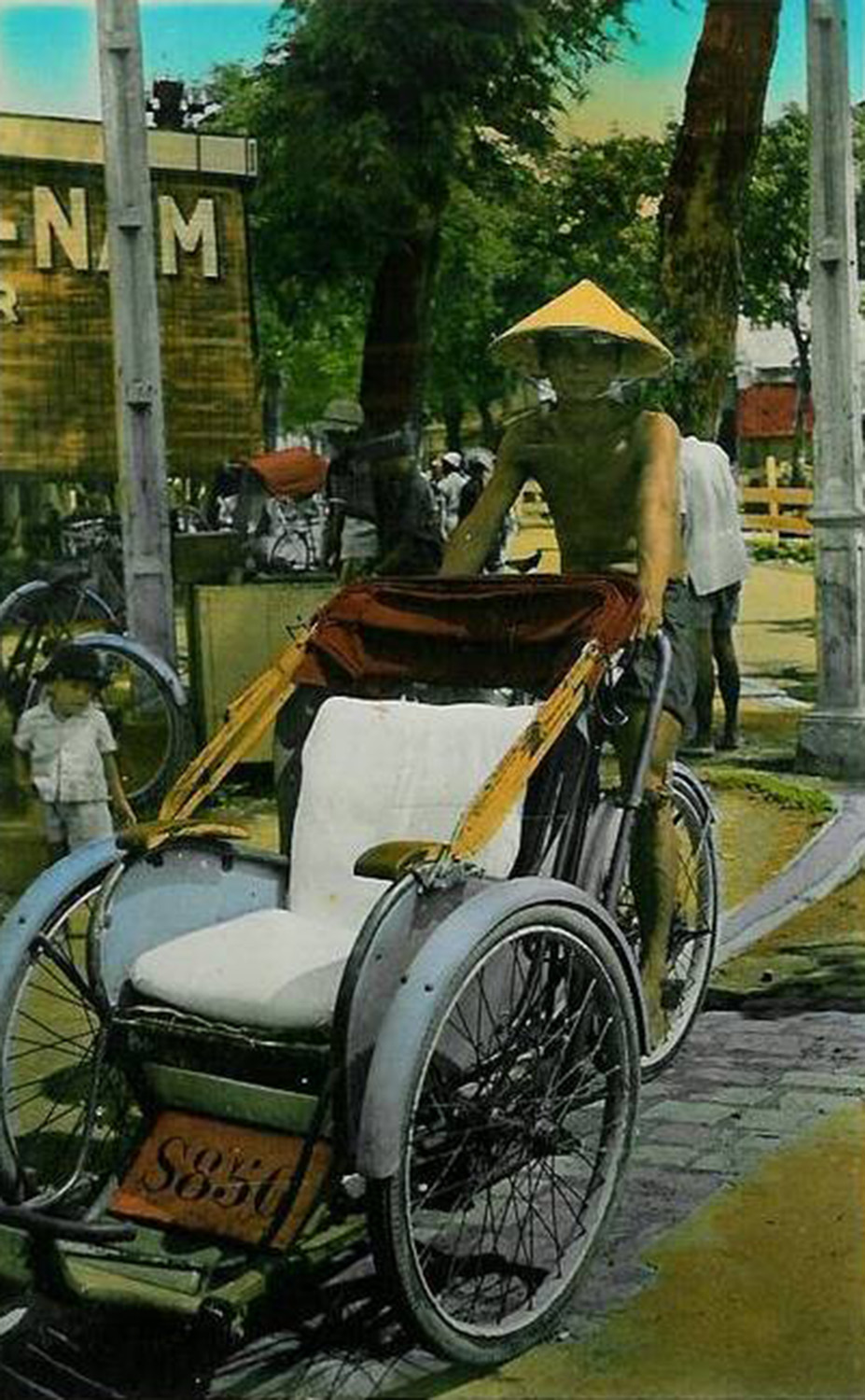
A cyclo driver in Saigon in the late 1930s

The event was scheduled for Saturday 9 February 1936, departing from the Chamber of Commerce in Phnom Penh. The “cyclo-pousse” was followed by a car carrying officials equipped with chronometers.

Coupeaud’s “crew” left at 4pm that afternoon and travelled all night, arriving in Saigon the following morning at 9.30am, having covered the entire distance in just 17 hours 20 minutes. Excluding a 50 minute ferry trip, an average speed of around 15 kilometers per hour was achieved.

The two cyclists took turns to pedal the vehicle, swopping places from time to time to permit some rest. They were both fed and watered regularly en route, so that they were able to arrive perfectly fresh in Saigon the next morning.

Will we introduce such races to France? Could we in future see Speicher-Archambaud and Guerra-Olmo “cyclo-pousse” race teams competing in the Tour de France?

L. A.

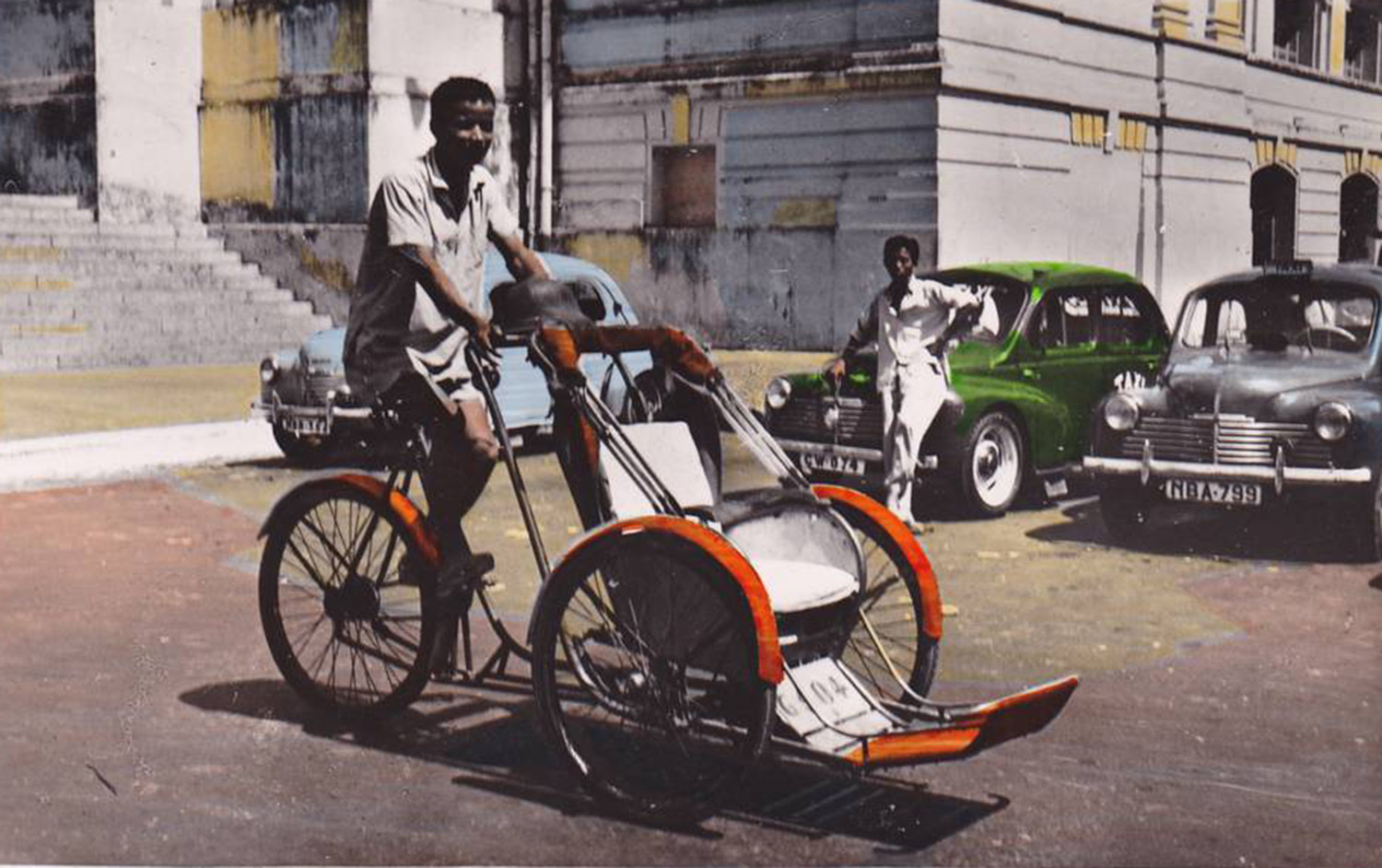
Following this successful and very high profile demonstration run from Phnom Penh to Saigon, the Mayor of Saigon authorised the commissioning of the first 20 cyclos for public use. By 1939, the Cochinchina capital had 200 cyclos, and this versatile vehicle had also been introduced to the streets of Hà Nội. By 1940, the Indochina “pousse-pousse” or human-powered rickshaw was no more.

A Saigon cyclo

A cyclo driver waits for passengers outside the Saigon Municipal Theatre in the late 1950s

Tim Doling is the author of the guidebook Exploring Saigon-Chợ Lớn – Vanishing heritage of Hồ Chí Minh City (Nhà Xuất Bản Thế Giới, Hà Nội, 2019)

A full index of all Tim’s blog articles since November 2013 is now available here.

Join the Facebook group pages Saigon-Chợ Lớn Then & Now to see historic photographs juxtaposed with new ones taken in the same locations, and Đài Quan sát Di sản Sài Gòn – Saigon Heritage Observatory for up-to-date information on conservation issues in Saigon and Chợ Lớn.
1915 Book Review: La Pagode de Dakao by A. E. Lelièvre and Ch. A. Clouqueur

 A review of La Pagode de Dakao by A. E. Lelièvre and Ch. A. Clouqueur, C. Ardin, Saïgon, 1914, 25pp., published in Le Journal des savants, Académie des inscriptions et belles-lettres (France), 1915
The Société des Études Indochinoises of Saïgon has, for a colonial society, rather a long history. Its creation dates back to 1883, when it took the place of the Comité agricole et industriel de la Cochinchine (Cochinchina Agricultural and Industrial Committee). Apart from its Bulletin, it has also issued a series of monographs about the various provinces which make up our colony, as well as a number of separate printed publications, some of which, like l’Astronomie Cambodgienne (Cambodian Astronomy) by F. G. Faraut, have considerable scientific value.

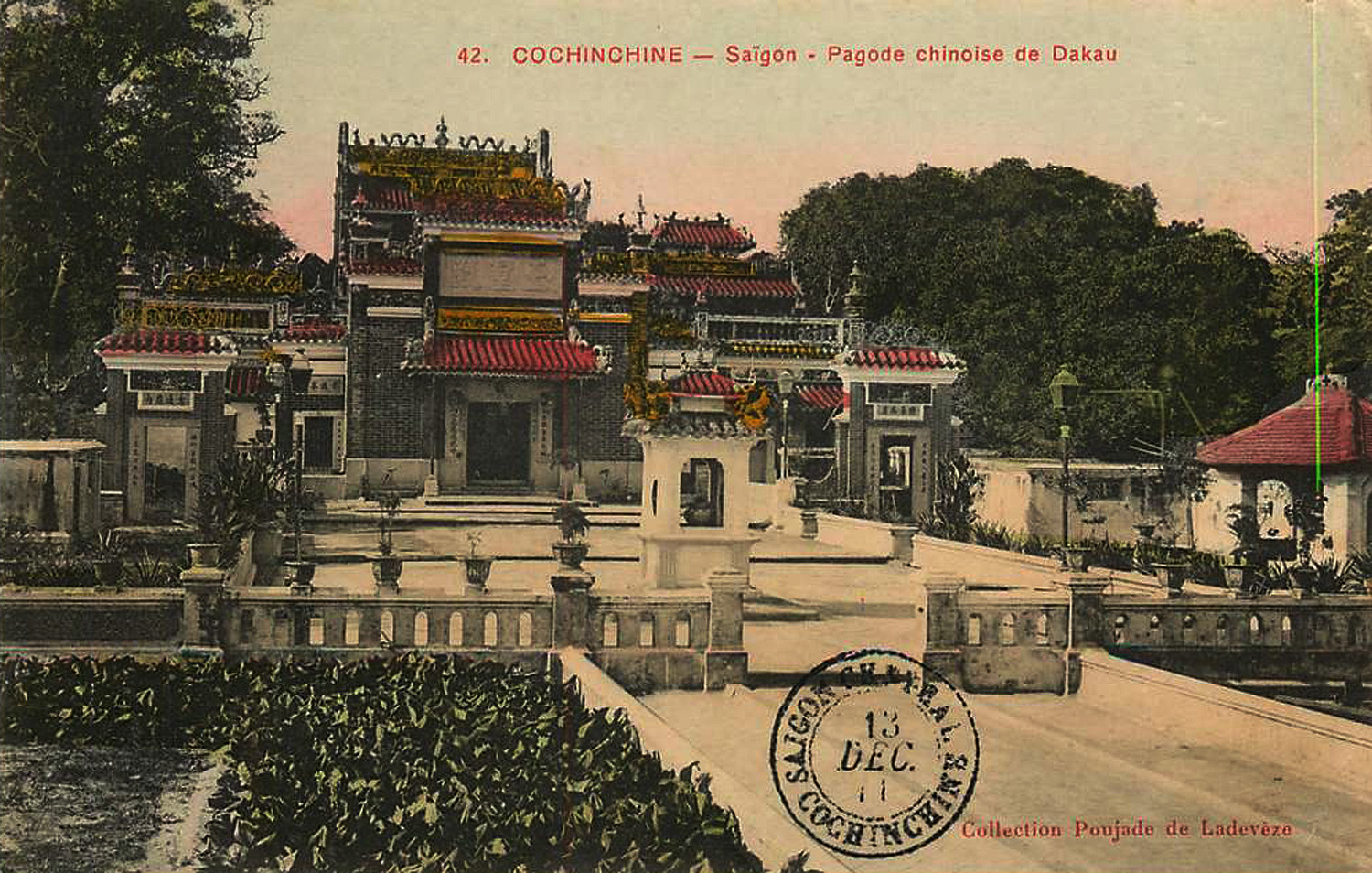
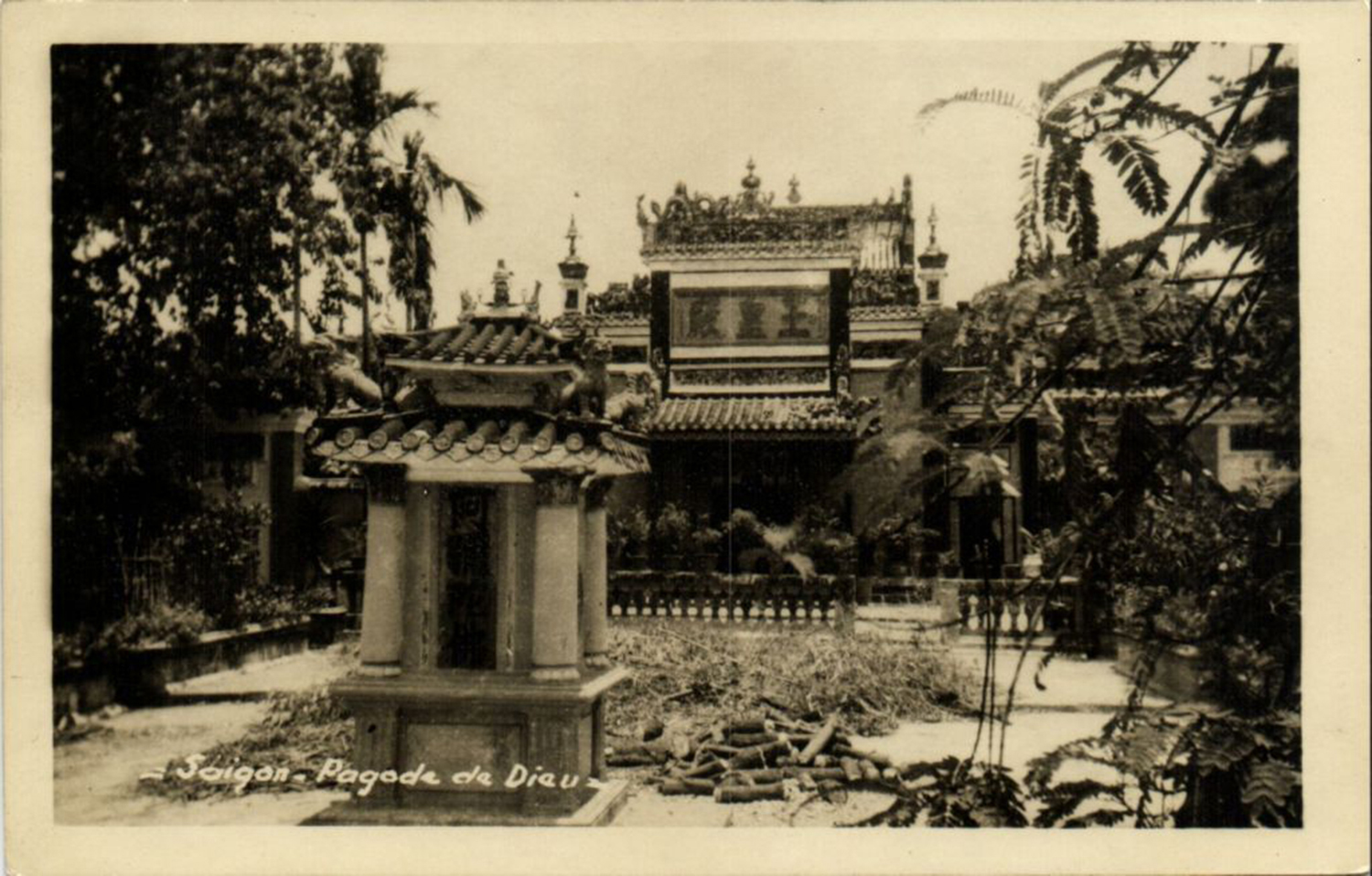
The booklet by Messrs Lelièvre et Clouqueur is dedicated to a monument of quite recent origin; Indeed, the Ngoc-Hoang Temple, better known in Saïgon as the pagode de Dakao, dates only from 1900, when the foundations were laid under the direction of Luu Minh, on the site of the former Mieu (temple) of Dakao, of which we can still see a wall, next to the stump of a large sacred tree of the banyan species “Cây da” or “Cây dung.” A legend, the first part of which seems rather contrived, reports that “the Chinese Luu Minh, sentenced to life imprisonment for murdering his brother, devoted his entire fortune to the genie benefactors who had delivered justice by helping him to escape, and built the current pagoda next to the remains of a sacred tree, which, when it was hit by lightning, saved many people who had sheltered under its foliage.”

The new temple, opened in 1906, is one of the most beautiful monuments in Cochinchina, and the modest objective of the study by Lelièvre and Clouqueur is to draw attention to this building, the architecture of which does not present any particular curiosity, and to excite the interest of visitors.

The authors provide us with a detailed description of the interior of the monument, which seems very richly decorated, but does not seem to me to be of special character, as it is a Taoist temple devoted to the Supreme Being, Chang Ti (Thuong De); there are many similar temples in China.

The publication of this booklet appears to me to have been a pretext for reproducing, in black and white and colour, the drawings by one of the authors, Mr. Clouqueur, which are very interesting to see because they have been reproduced with perfect fidelity by a local printing company.

Henri Cordier

Tim Doling is the author of the guidebook Exploring Saigon-Chợ Lớn – Vanishing heritage of Hồ Chí Minh City (Nhà Xuất Bản Thế Giới, Hà Nội, 2019)

A full index of all Tim’s blog articles since November 2013 is now available here.

Join the Facebook group pages Saigon-Chợ Lớn Then & Now to see historic photographs juxtaposed with new ones taken in the same locations, and Đài Quan sát Di sản Sài Gòn – Saigon Heritage Observatory for up-to-date information on conservation issues in Saigon and Chợ Lớn.