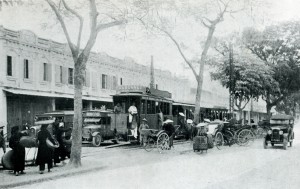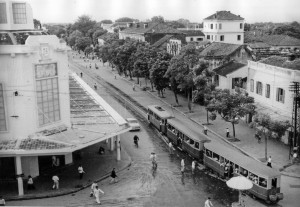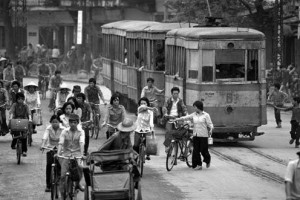
The Langbian Cog Railway

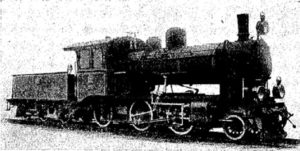
1. An SLM HG4

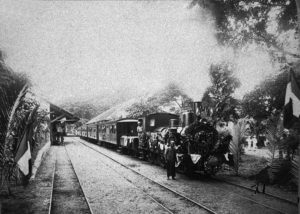
An SLM HG4/4 0-8-0T rack-and-pinion locomotive negotiates the Bellevue Pass in early 1927

For many people it comes as a surprise to learn that before 1975 Việt Nam had its own Swiss-built cog railway line, an 84km branch which connected Tháp Chàm in Ninh Thuận Province with the central highlands resort of Đà Lạt.
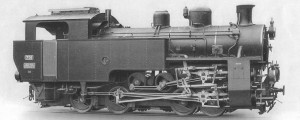
701

SLM HG4/4 0-8-0T rack-and-pinion locomotive No 707

The history of Đà Lạt may be traced back to the 1890s when it was founded by the French as a high-altitude health spa where colonial residents could escape from the heat of the Mekong Delta and coastal region.

Plans to connect the town by rail with the North-South line at Tourcham (Tháp Chàm) were drawn up before the end of the 19th century, but in the event the 84km branch line took almost 30 years to build.

Work on the first 40km from Tourcham to Krông Pha got under way in 1903, but although it involved only conventional adhesion rail technology, the project suffered numerous delays and the line was not inaugurated until 1919.
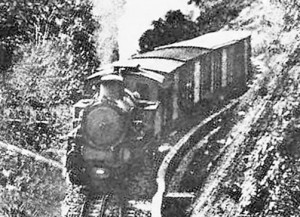
15 HG 4-4 Bellevue Pass

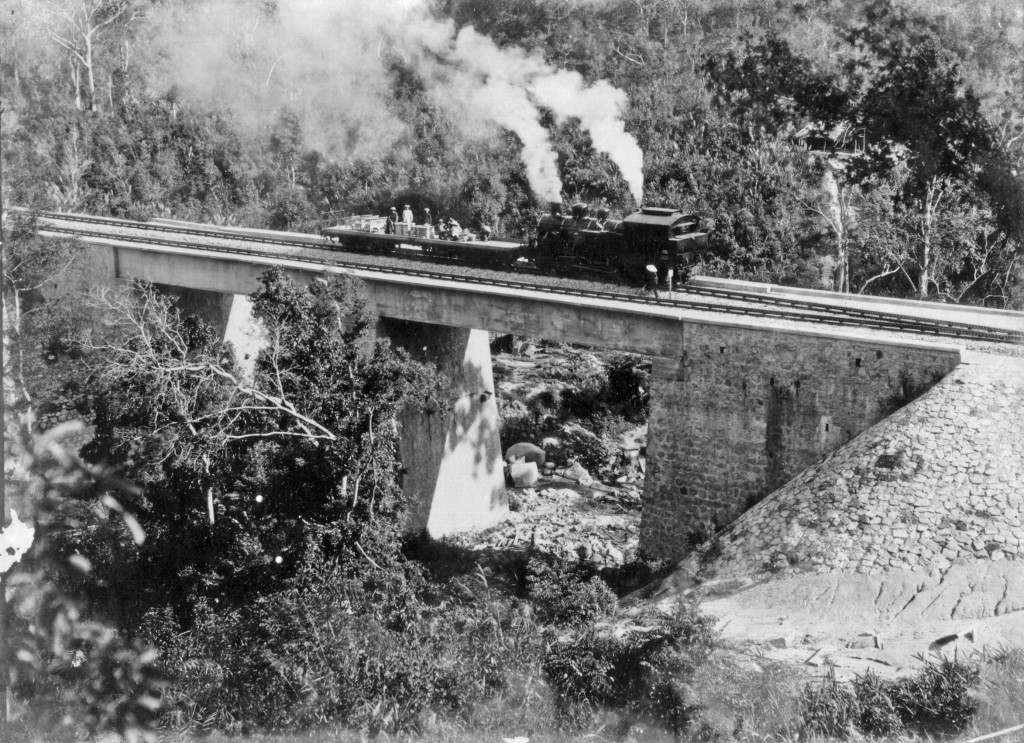
An SLM HG4/4 0-8-0T rack-and-pinion locomotive in the Bellevue Pass in the 1930s

The final 44km involved an ascent from 186m to 1,550m, with steep gradients of up to 120mm/m, so the Swiss cog railway company Schweizerische Lokomotiv- und Maschinenfabrik (SLM) of Winterthur, represented in Indochina by the Société d’entreprises asiatiques, was entrusted with the work. Construction began on 20 March 1923 and the line was completed in 1932.

At the outset, nine Schweizerische Lokomotiv- und Maschinenfabrik (SLM) superheated 46-tonne HG4/4 0-8-0T rack-and-pinion locomotives (originally numbered 701-709) were purchased to haul trains on this line. Seven of these (701-705, 708-709) were built at SLM’s Winterthur factory, while the remaining two (706-707) were built on their behalf by Maschinenfabrik Esslingen.

The new cog railway played a key role in the development of Indochina tourism, but the bulk of the line’s revenue was earned by transporting fresh fruit, vegetables and flowers from the market gardens of the Langbian plateau down to the lowlands.
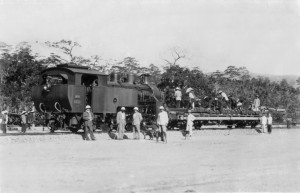
76. SLM HG4 4 0-8-0T cog locomotive

SLM HG4/4 0-8-0T rack-and-pinion locomotive no 704 between Bellevue and Dran in early 1927

At the start of the first Indochina War in 1945-1946, the Langbian Cog Railway suffered extensive damage at the hands of the Việt Minh, who destroyed four of the line’s original HG4/4 locomotives, leaving just 40-302 (702), 40-303 (703), 40-304 (704), 40-306 (706) and 40-308 (708) in operational condition.

The line was repaired and reopened to public service in 1947. In that year, to replace the locomotives lost during the conflict, the CFI purchased an additional four second-hand 42-tonne SLM HG3/4 2-6-0T rack-and-pinion locomotives (numbered 31-201-31-204) from the recently-electrified Furka-Oberalp Railway in Switzerland.

For financial reasons, proposals in the 1960s by the South Vietnamese railway operator Hỏa Xa Việt Nam (HXVN) to electrify the line were abandoned, and in the years which followed, lack of investment, coupled with deteriorating security, began to impact seriously on the operation of the line.
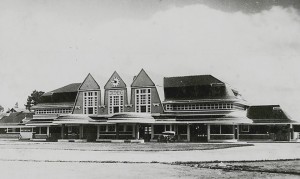
11 Dalat Station 1948

The stylish art deco Đà Lạt Station building pictured in 1948

The Langbian Cog Railway continued to offer a public service until September 1969, when HXVN announced that “because the operation of the line is unprofitable, the line is short of locomotives and safety cannot be guaranteed, the HXVN will suspend operations until the security situation has improved.” In the event, the security situation did not improve and the line remained closed. After 1975 the track was removed.

Considerable controversy was generated in Việt Nam by the sale in 1990 of the surviving cog locomotives which lay rusting in the station yard at Đà Lạt. HG 4/4 locomotives Nos. 40-304 and 40-308, along with the four HG3/4 locomotives 31-201-31-204, were purchased by the Furka Cogwheel Steam Railway (Dampfbahn Furka-Bergstrecke, DFB) as part of the project to reopen the mountainous section of the old Furka-Oberalp Railway, and then repatriated to Switzerland. Since that time, 40-304 and 40-308 have been restored to service under their original numbers 704 and 708.
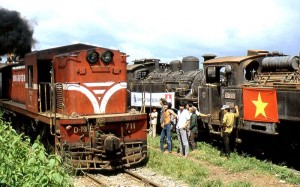
trip_deco2l

Rusting cog locomotives commencing their journey back to Switzerland in 1990….

However, the fate of the magnificent three-span iron railway bridge over the River Đa Nhim—broken up and sold for scrap in 2004 while the provincial authorities reportedly turned a blind eye —suggests that their return to Switzerland may have saved the old engines from an untimely end.

Since that time, the growth of tourism in Đà Lạt has fuelled a revival of interest in the abandoned cog railway. In 1992 the art deco Đà Lạt Station building was renovated as a national heritage site and a 7km adhesion rail section of the line from Đà Lạt to Trại Mát was reopened for tourists, using diesel traction. The Dalat Train Villa currently offers exploratory walks through abandoned tunnels and stations.

Since 1996, various plans have been advanced to rebuild the Langbian Cog Railway, but as yet it remains uncertain how and when this will be achieved.
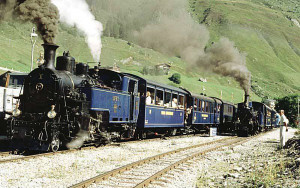
VNlocomotive3

…. now restored to their former glory on the Furka Cogwheel Steam Railway (image copyright Dampfbahn Furka-Bergstrecke)

Due to the specialist nature of cog railway technology, a complete reconstruction will be both complex and expensive, and success is likely to be contingent on the involvement of international technical expertise. At the time of writing a feasibility study has yet to be undertaken.

Had the original Tháp Chàm–Đà Lạt line survived intact, there can be little doubt that it would now be one of Asia’s most important tourist attractions and most probably also a UNESCO World Heritage Site like India’s famous Nilgiri Mountain Railway. If the plan to restore it is successful, Việt Nam could one day becoming one of Asia’s prime railway heritage tourism destinations. Understandably, the progress of the scheme to rebuild it has since been watched with great interest by the Vietnamese tourist sector.

Tim Doling is the author of The Railways and Tramways of Việt Nam (White Lotus Press, Bangkok, 2012) and also gives talks on Việt Nam railway history to visiting groups.

A full index of all Tim’s blog articles since November 2013 is now available here.

Join the Facebook group Rail Thing – Railways and Tramways of Việt Nam for more information about Việt Nam’s railway and tramway history and all the latest news from Vietnam Railways.

You may also be interested in these articles on the railways and tramways of Việt Nam, Cambodia and Laos:

A Relic of the Steam Railway Age in Da Nang
By Tram to Hoi An
Date with the Wrecking Ball – Vietnam Railways Building
Derailing Saigon’s 1966 Monorail Dream
Dong Nai Forestry Tramway
Full Steam Ahead on Cambodia’s Toll Royal Railway
Goodbye to Steam at Thai Nguyen Steel Works
Ha Noi Tramway Network
How Vietnam’s Railways Looked in 1927
Indochina Railways in 1928
“It Seems that One Network is being Stripped to Re-equip Another” – The Controversial CFI Locomotive Exchange of 1935-1936
Phu Ninh Giang-Cam Giang Tramway
Saigon Tramway Network
Saigon’s Rubber Line
The Changing Faces of Sai Gon Railway Station, 1885-1983
The Long Bien Bridge – “A Misshapen but Essential Component of Ha Noi’s Heritage”
The Lost Railway Works of Truong Thi
The Mysterious Khon Island Portage Railway
The Railway which Became an Aerial Tramway
The Saigon-My Tho Railway Line
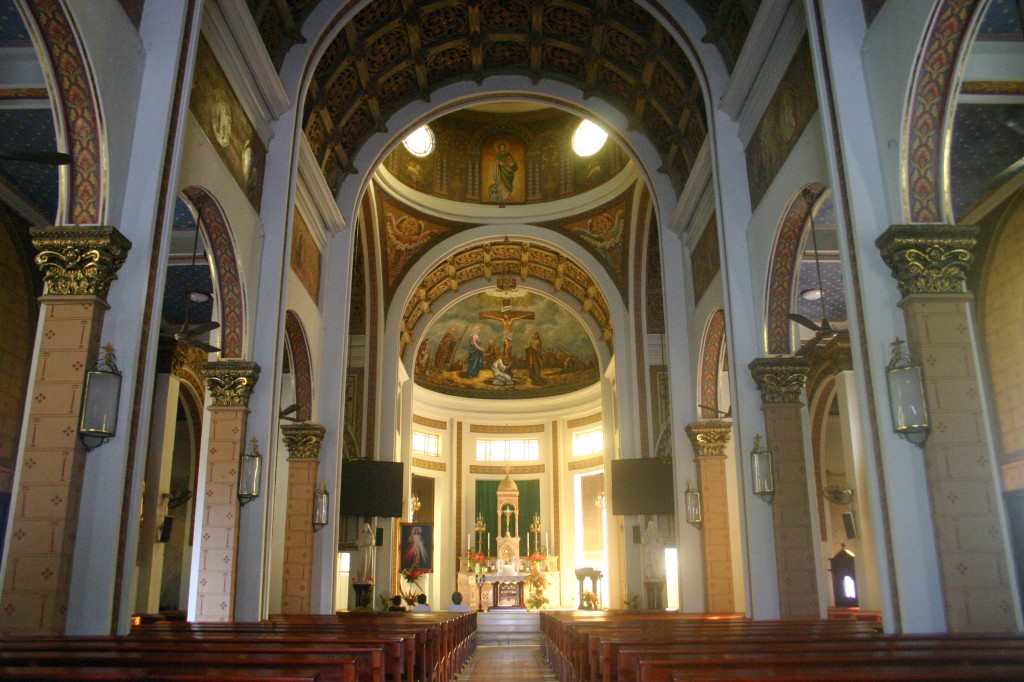

Saigon’s Favourite Churches – Hanh Thong Tay Church

BYZANTINE TREASURE IMAGE 1

The urban sprawl of Hạnh Thông Tây in the Gò Vấp district of Hồ Chí Minh City is the rather unlikely setting for what is believed to be Việt Nam’s only Byzantine style Roman Catholic church.

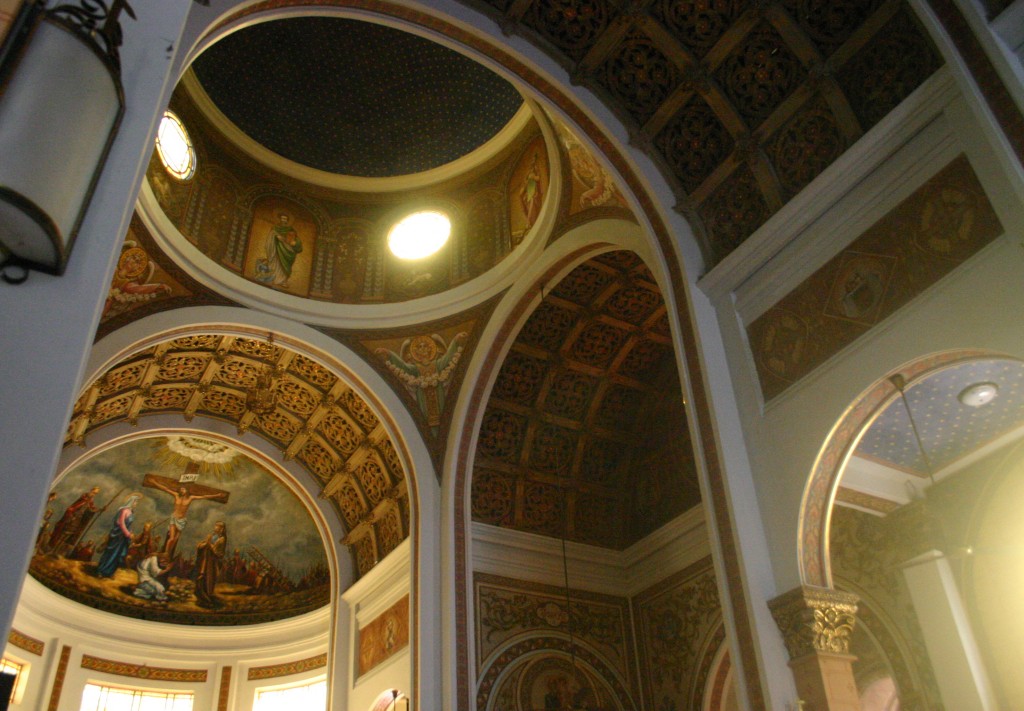
Hạnh Thông Tây Church was built under the auspices of the Société des Missions Étrangères de Paris (MEP) in 1921-1924. The land was provided by one of wealthy landowner Huyện Sỹ’s sons, Denis Lê Phát An (1868-1946) and his wife Anna Trần Thị Thơ, who also paid most of the construction costs, the remainder being met through donations. Lê Phát An and his wife lived in a large colonial villa in nearby Gò Vấp, called the Villa Montjoie, which today functions as the headquarters of the Gò Vấp People’s Committee.

BYZANTINE TREASURE IMAGE 2

Hạnh Thông Tây Church pictured from the rear

The work was initially entrusted to a French contractor named Baader. However, on one of his frequent visits to the site during the construction period, Denis Lê Phát An noticed many major technical errors, particularly on the façade, so he issued Baader with a warning and later sacked him altogether, bringing in a new contractor named Lamorte to finish the job.

Uniquely for a church built in Việt Nam, its architecture was influenced not by Gothic or Romanesque but by Byzantine style, reportedly taking as its model the Basilica of San Vitale in Ravenna, Italy. Italian bricks were used throughout the interior to give the impression of a traditional Italian sanctuary. The church underwent extensive but sympathetic restoration in 2011-2012.

BYZANTINE TREASURE IMAGE 3

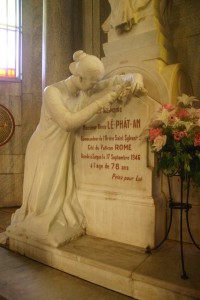
The tomb of Denis Lê Phát An

Hạnh Thông Tây Church has a traditional cruciform-shaped groundplan and the interior features a high vaulted nave flanked by flat-roofed side aisles, a transept and a raised sanctuary which terminates in an apse.

The hemispherical semi-dome above the apse features a large painting of Christ on the Cross. A 20m high dome is located immediately above the crossing and the ring at its base is similarly decorated with paintings of Christ’s Disciples. The high altar is made from white marble and features elaborate floral engraving. Shrines to Mary and Joseph stand in front of the transept walls, either side of the sanctuary. The 14 Stations of the Cross are situated between the windows along both church walls.

When Denis’s wife Anna Trần Thị Thơ died on 18 January 1932 at the Villa Monjoie in Gò Vấp, she was buried in an elaborate tomb in the east transept of Hạnh Thông Tây Church. Fourteen years later, when Denis himself died on 17 September 1946 in Sài Gòn, he was buried in a matching tomb in the west transept. The two tombs are elegantly realised in Renaissance style by unnamed French sculptors and depict effigies of the couple kneeling in prayer, each mourning the other.

BYZANTINE TREASURE IMAGE 4

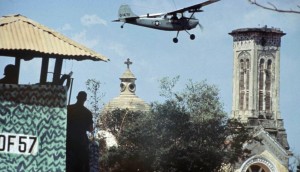
Hạnh Thông Tây Church during the 1968 Tết Offensive

The church originally incorporated a 30m high steeple, but in 1953 the spire was removed at the request of Indochina Airlines, reducing its height to 19.5m for reasons of aviation safety.

The shortened tower later suffered damage during the 1968 Tết Offensive, after NLF Special Forces famously used it to fire on American positions at the nearby Tân Sơn Nhất Air Base.

The church and its recently-built conference hall stand in a compound with large statues of Jesus and Mary located either side of the main entrance. The interior walls of the compound feature 15 elaborately carved sculptures depicting scenes from the New Testament.

Getting there
Address: Nhà thờ Hạnh Thông Tây, 53/7 Quang Trung, Phường 11, Quận Gò Vấp, Thành phố Hồ Chí Minh
Telephone: 84 (0) 8 3895 8069, 84 (0) 90 999 4688
Opening hours: By permission of Father Clêmentê Lê Minh (office behind the church), 8.15am-11am, 2pm-4pm Tue-Sat

You may also be interested to read these articles:

Saigon’s Favourite Churches – Huyen Sy Church
Saigon’s Favourite Churches – Tan Dinh Church
Saigon’s Lost Protestant Chapel

BYZANTINE TREASURE SPARE IMAGE

Tim Doling is the author of the guidebook Exploring Saigon-Chợ Lớn – Vanishing heritage of Hồ Chí Minh City (Nhà Xuất Bản Thế Giới, Hà Nội, 2019)

A full index of all Tim’s blog articles since November 2013 is now available here.

Join the Facebook group pages Saigon-Chợ Lớn Then & Now to see historic photographs juxtaposed with new ones taken in the same locations, and Đài Quan sát Di sản Sài Gòn – Saigon Heritage Observatory for up-to-date information on conservation issues in Saigon and Chợ Lớn.

Saigon’s Favourite Churches – Huyện Sỹ Church

HUYEN SY CHURCH IMAGE 1

Huyện Sỹ Church

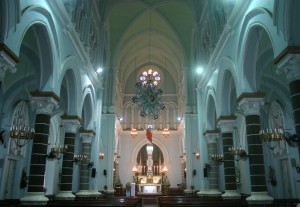
Widely regarded as one of the most beautiful churches in the city, the Église Huyện Sỹ in District 1 was constructed in 1902-1905 the corner of rue Frère Louis (now Nguyễn Trãi street) and rue Frère Guilleraut (now Tôn Thất Tùng street).

The church was designed by Father Charles Boutier (1845-1927), an architect of considerable merit who had previously designed the Thủ Đ   ức Church and redesigned the Sisters of Saint Paul de Chartres’ École de Sainte-Enfance complex after its original wooden buildings had been damaged by termites.

HUYEN SY CHURCH IMAGE 2

The nave of Huyện Sỹ Church

The church was built through the benificence of Huyện Sỹ (1841-1900, real name Philippe Lê Phát Ðạt) who, according to the popular 19th-century saying Nhất Sỹ, nhì Phương, tam Xường, tứ Hỏa – “First Sỹ, second Phương; third Xường and fourth Hỏa” – was once the richest man in the south.

Huyện Sỹ also funded the construction of the churches in Chí Hoà and Thủ Đức, while his son Denis Lê Phát An later built the extraordinary Byzantine church in Hạnh Thông Tây.

Born in Cầu Kho (Sài Gòn) to a Catholic family from Tân An (Long An), Huyện Sỹ was sent to Pinang (Malaysia) to study for the priesthood, where he learned Latin, French, Chinese and quốc ngữ (Romanised Vietnamese).

HUYEN SY CHURCH IMAGE 3

The high altar

After his return to Sài Gòn, the French authorities appointed him as a government interpreter and in 1880 he received the rare honour of being made a member of the Cochinchina Colonial Council, in which capacity he was able to acquire the large tracts of land from which he made his fortune.

So spectacular was Huyện Sỹ’s rise that his granddaughter, Marie-Thérèse Nguyễn Hữu Thị Lan, later became Queen Consort Nam Phương, first and primary wife of King Bảo Đại.

Together with his wife Huỳnh Thị Tài (1845-1920), Huyện Sỹ donated one seventh of his family inheritance to build the church and also contributed the land on which it sits. Sometimes known as Nhà thờ Chợ Đũi (Đũi Market Church) because it was located in Chợ Đũi parish, Huyện Sỹ Church is dedicated to St Philip the Apostle.

HUYEN SY CHURCH IMAGE 4

Detail on the front of the high altar.

Immediately in front of the church stands a statue of St Matthêu Lê Văn Gẫm (Lê Văn Bôi, 1813-1847), a Vietnamese priest and merchant from Biên Hòa Province who was captured and beheaded in the Chợ Đũi area on the orders of the Nguyễn-dynasty court for his Catholic missionary activities. He was beatified by Pope Leo XIII in 1900 and a festival of remembrance is held at the church every year on 11 May, the date of his execution. The grounds also contain numerous other shrines, including a statue to St Joseph and a Mountain of Our Lady, built in 1960. A Chapel of Rest has recently been added.

The church itself has been refurbished on numerous occasions, most recently in 2007-2009. It measures 40m long by 18m wide and was built from brick with pillars and decorative work in Biên Hòa granite. Above the front vestibule is a 57m bell tower. A statue of St Philip stands at the main entrance.

HUYEN SY CHURCH IMAGE 5

The Huyện Sỹ mausoleum.

The design of the church is Gothic with Romanesque decorative elements and comprises a vaulted nave flanked by vaulted aisles, decorated in pastel green and white. The windows are adorned with images of Bible stories in Italian stained glass. Along the walls are statues of Biblical and Vietnamese saints and the 14 Stations of the Cross. On either side of the transept are small chapels dedicated to the Virgin Mary and St Joseph.

The chancel features a richly-decorated marble high altar, which stands on an open platform and features ornate gilding work and exquisitely-carved bas-reliefs of biblical scenes, including the Last Supper and Mary being visited by the Angel Gabriel.

Huyện Sỹ passed away in 1900 before the church was complete. When his wife Huỳnh Thị Tài died in 1920, he was reburied alongside his wife in the axial memorial chapel immediately behind the chancel. Elaborately carved from the finest marble, the tombs feature full-length effigies of the couple. Busts of Huyện Sỹ and Huỳnh Thị Tài are also installed on the walls.

HUYEN SY CHURCH IMAGE 6

The effigy of Huyện Sỹ.

The bell tower contains four bells which were cast in France in 1905. The donor of the two smaller bells (diameter 0.95m) is not known.

However, the two largest bells (diameter 1.05m) were presented to the church by one of Huyện Sỹ’s sons, Jean Baptiste Lê Phát Thanh, and his wife Anna Đỗ Thị Thao. To honour their contribution to the Huyện Sỹ Church, their busts are also displayed in the Huyện Sỹ memorial chapel behind the chancel.

Getting there:
Address: Nhà thờ Huyện Sỹ, 1 Tôn Thất Tùng, Phường Phạm Ngũ Lão, Quận 1, Thành Phố Hồ Chí Minh
Telephone: 84 (0) 8 3833 0820, 84 (0) 8 3925 5806
Opening hours: By permission of the Priest, Father Ernest Nguyễn Văn Hưởng, 8am-11am, 2pm-4.30pm Tue-Sat

You may also be interested to read these articles:

Saigon’s Favourite Churches – Hanh Thong Tay Church
Saigon’s Favourite Churches – Tan Dinh Church
Saigon’s Lost Protestant Chapel

Tim Doling is the author of the guidebook Exploring Saigon-Chợ Lớn – Vanishing heritage of Hồ Chí Minh City (Nhà Xuất Bản Thế Giới, Hà Nội, 2019)

A full index of all Tim’s blog articles since November 2013 is now available here.

Join the Facebook group pages Saigon-Chợ Lớn Then & Now to see historic photographs juxtaposed with new ones taken in the same locations, and Đài Quan sát Di sản Sài Gòn – Saigon Heritage Observatory for up-to-date information on conservation issues in Saigon and Chợ Lớn.

Off the Tourist Trail in Saigon – The People’s Army Delegation HQ

PA DELEGATION HQ IMAGE

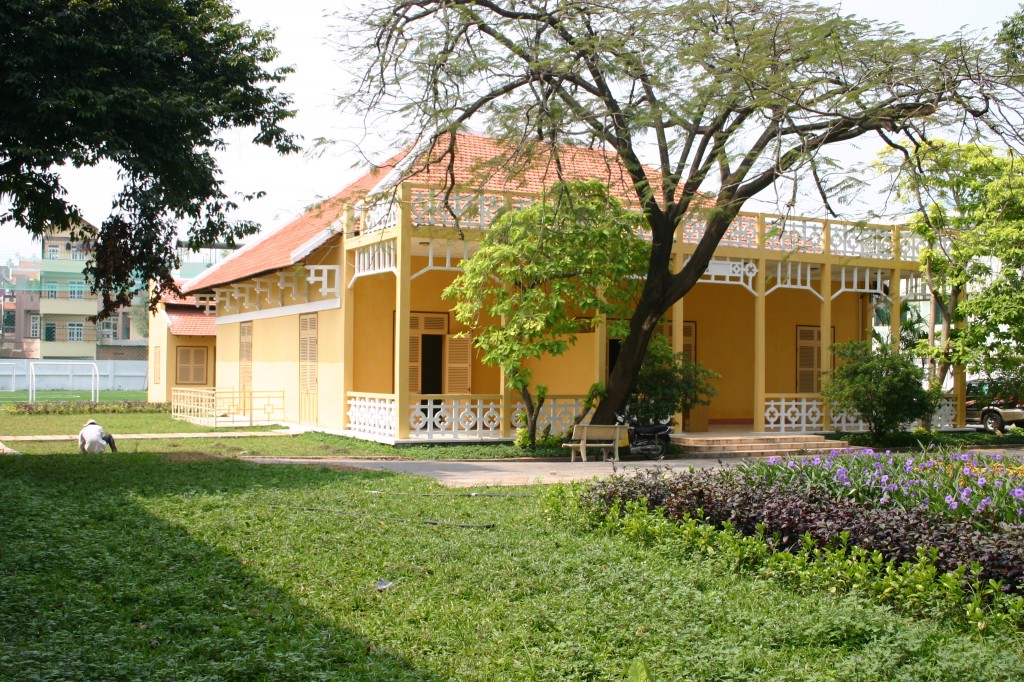
Located just a short walk from the Lê Văn Duyệt Mausoleum in the Phú Nhuận District of Hồ Chí Minh City, the rather grandly named “Headquarters of the Delegation Linking the Việt Nam People’s Army High Command with International Monitors of the Truce in Sài Gòn (1955-1958)” opened to the public in 2012 after a period of restoration and affords a fascinating glimpse into the dangerous world of 1950s Sài Gòn.

In the aftermath of the victory at Điện Biên Phủ in 1954, the Geneva Accords provided for the temporary division of Việt Nam along the 17th Parallel, pending national elections in 1956 to reunify the country. An International Control Commission (ICC), chaired by India with Poland and Canada as members, was set up to monitor the implementation of the Accords.

In April 1955, Phạm Hùng (1912-1988), former head of the People’s Army of Việt Nam delegation in the South and later Prime Minister of Việt Nam, was sent to Sài Gòn as head of the 16-strong Delegation with a brief to maintain a presence on behalf of the People’s Army and to monitor the situation in the south. On 17 May 1955 the Delegation set up operations in the former French district military headquarters at 61 Liên Tỉnh 2 street in Đông Ba village,  Phú Nhuận, Gia Định.

In the event those elections were never held, but the Delegation remained in Sài Gòn until May 1958. During this period it is said that South Vietnamese authorities posted guards outside the building, placing restrictions on their travel, tapping their telephones and routinely cutting off their electricity supply.

A National Historic Monument, the Delegation HQ has been restored with authentic 1950s fixtures and fittings and is now open to the public. Visitors can tour the Delegation’s offices, residential accommodation, secret cellar and attic and confidential files block at the rear (to which apparently only high-ranking cadres were admitted).

Vintage car enthusiasts will also be thrilled to hear that there’s even a vintage white Citroën in the garage….

Getting there
Address: Trụ sở Phái đoàn liện lạc Bộ Tổng Tư lệnh QĐND Việt Nam cạnh Phân ban quốc tế giám sát và kiểm soát đình chiến tại Sài Gòn (1955-1958), 87A Trần Kế Xương, Phường 7, Quận Phú Nhuận, Thành phố Hồ Chí Minh
Telephone: 84 (0) 982 847 7774 (Ms Nguyễn Viên Thi, Vietnamese language only)
Opening hours: 8am-11am, 2pm-4.30pm Tue-Sat

See also Off the Tourist Trail in HCMC – Tran Phu Memorial Museum

Tim Doling is the author of the  guidebook Exploring Saigon-Chợ Lớn – Vanishing heritage of Hồ Chí Minh City (Nhà Xuất Bản Thế Giới, Hà Nội, 2019)

A full index of all Tim’s blog articles since November 2013 is now available here.

Join the Facebook group pages Saigon-Chợ Lớn Then & Now to see historic photographs juxtaposed with new ones taken in the same locations, and Đài Quan sát Di sản Sài Gòn – Saigon Heritage Observatory for up-to-date information on conservation issues in Saigon and Chợ Lớn.

Sinister Goings-on by the River – The CIO Building

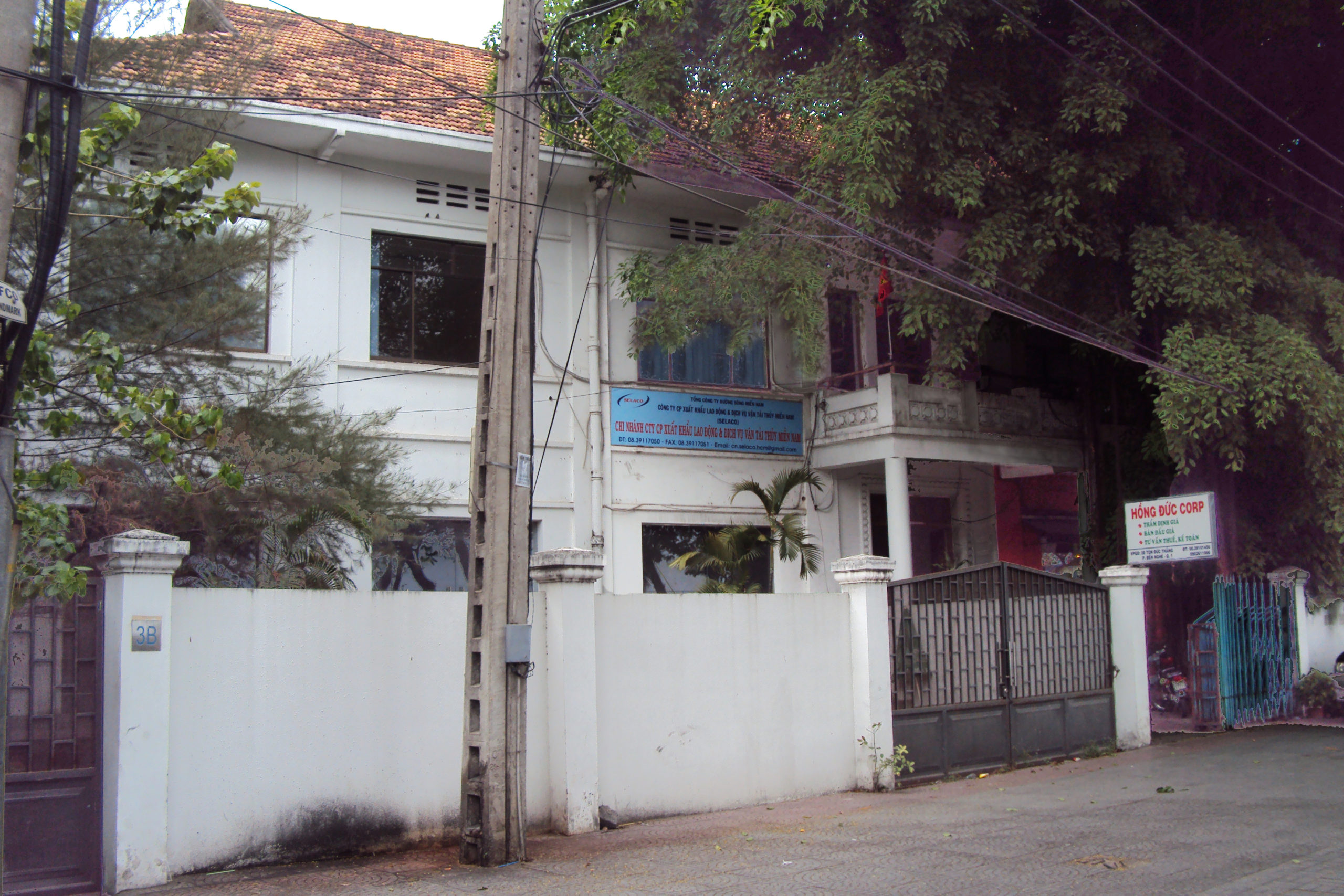
The white villa at 3 Tôn Đức Thắng in Hồ Chí Minh City’s District 1  has a rather sinister past.

From 1961 until 1975 this nondescript building was the headquarters of the notorious South Vietnamese Central Intelligence Organisation (CIO), the state espionage agency formed with American assistance to co-ordinate South Vietnamese foreign and domestic intelligence operations.

It has been claimed that the CIA, which was directly involved in setting up the organisation, also maintained its own interrogation facility within the building.

In his book Saigon 1975, Italian journalist Tiziano Terzani describes how when South Vietnamese authorities surrendered on 30 April 1975, four employees of this organisation whom no-one had suspected to be revolutionary activists suddenly took out guns, forced other employees to leave and barricaded themselves inside the building until North Vietnamese troops arrived.

In this way, they managed to save all the secret dossiers compiled over the years by South Vietnamese secret police in collaboration with the CIA.

UPDATE: Sadly this villa was demolished in 2016.

Tim Doling is the author of the guidebook Exploring Saigon-Chợ Lớn – Vanishing heritage of Hồ Chí Minh City (Nhà Xuất Bản Thế Giới, Hà Nội, 2019)

A full index of all Tim’s blog articles since November 2013 is now available here.

Join the Facebook group pages Saigon-Chợ Lớn Then & Now to see historic photographs juxtaposed with new ones taken in the same locations, and Đài Quan sát Di sản Sài Gòn – Saigon Heritage Observatory for up-to-date information on conservation issues in Saigon and Chợ Lớn.

Saigon Tramway Network

1 The grand opening of the SGTVC....

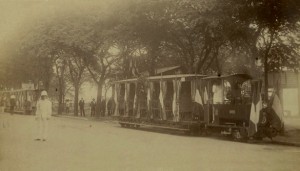
The grand opening of the Saigon–Chợ Lớn “high road” steam tramway line on 27 December 1881

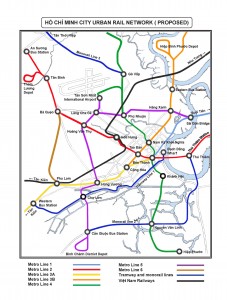
As ever-increasing levels of traffic congestion and air pollution turn many of Hồ Chí Minh City’s road junctions into choking bottlenecks, many hopes are pinned on plans to construct a new urban railway network in the southern metropolis. Yet urban railways are hardly a new concept in this city, which was once home to one of Southeast Asia’s largest urban tramway networks.

Indochina’s first mechanised rail-guided transportation system was the 1m-gauge Saigon–Chợ Lớn “high road” steam tramway, operated by the Société générale des tramways à vapeur de Cochinchine (SGTVC) and opened to the public on 27 December 1881.

8 CFTI Low Road tramway grand opening

CFTI’s original 0.6m gauge Decauville tramway pictured in 1891

Ten years later, the Compagnie française des tramways de l’Indochine (CFTI) established a rival steam-hauled tramway line from Saigon to Chợ Lớn, which followed the “low road” along the north bank of the Bến Nghé Creek.

In 1895, the CFTI extended its tramway northwards from Saigon to Gò Vấp, but the company soon discovered that its initial choice of 0.6m gauge Decauville equipment had been a costly mistake – beset by technical problems and obliged to replace all of its track and rolling stock, the company was declared bankrupt in 1896.

gare-de-saigon

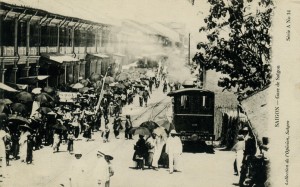
Saigon Tramway Station in the 1890s

However, the Colonial Council approved a generous refinancing arrangement and in subsequent years the company was transformed into a highly profitable operation which left SGTVC struggling to compete on the Saigon-Chợ Lớn route.

Indeed, so remarkable was the CFTI’s financial turnaround that between 1899 and 1906 it was able to afford a costly regauging of its entire network from 0.6m to 1m, and also to build an 800m slip road linking its Gò Vấp tramway station with the newly-built Saigon–Nha Trang railway line.

Other new lines followed, from Gò Vấp to Hóc Môn in 1904 and from Gò Vấp to Lái Thiêu in 1913. However, plans drawn up in 1912 to electrify the CFTI network and re-route tramway services through the city centre were delayed by war in Europe and not put into effect until 1923.

27 CFTI electric tram Cholon

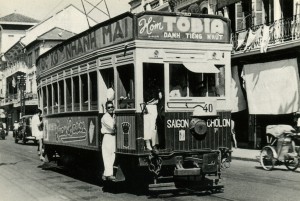
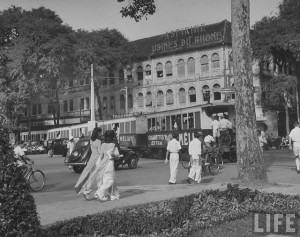
A Galliéni line tram in Chợ Lớn in the 1940s

The dynamic growth of CFTI during this period was in stark contrast to the declining fortunes of SGTVC, which lost its Saigon–Chợ Lớn “high road” steam tramway franchise in 1911. The line then reverted to government control, becoming a run-down and loss-making component of the main-line Réseaux non concédés, but in 1925 it was acquired by CFTI and rebuilt as an electric tramway connecting Saigon and Chợ Lớn via the newly opened boulevard Galliéni (Trần Hưng Đạo boulevard).

In 1927-1929 the CFTI extended its network further from Lái Thiêu to Thủ Dầu Một, electrified the Gò Vấp-Lái Thiêu-Thủ Dầu Một and Gò Vấp-Hóc Môn lines and extended the “low road” tramway line west to Chợ Lớn’s Bình Tây Market.

37 CFTI electric tram Cholon

Another Galliéni line tram in Chợ Lớn in the late colonial era

During the same period, the company also began work on a further extension from Thủ Dầu Một to Bến Đồng Sổ, entering into a lucrative partnership with the Compagnie des voies ferrées de Lộc Ninh et du centre Indochinois (CVFLNCI) whereby freight trains on their new rubber plantation line from Lộc Ninh to Bến Đồng Sổ could use CFTI metals to access Saigon port – for more details, see Saigon’s Rubber Line. When that new branch opened in 1933, CFTI also secured the concession to run passenger services on behalf of CVFLNCI, thereby adding a further 69km to its existing 87km operational network.

During the 1930s and 1940s, the CFTI shrewdly diversified its operations to ensure that it also controlled the greater part of the city’s bus services.

3174865397_c4f36b6099_z

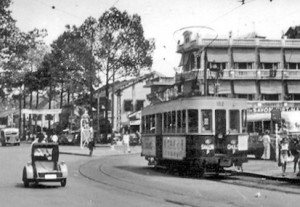
A CFTI electric tram circumnavigates the municipal theatre in the 1940s

However, both its tram and bus systems suffered serious damage during the Allied aerial bombing of 1943-1945 and the subsequent August Revolution of 1945. The events of the First Indochina War and the lawlessness occasioned by the Bình Xuyên organised crime syndicate in the early 1950s impacted heavily on CFTI revenue and in the period from 1950-1954 the company gradually closed its tramway lines and also threatened the withdrawal of bus services unless the government reviewed the terms of its contract.

In response, the Ministry of Public Works terminated CFTI’s franchise on 10 November 1956, at the same time announcing that the trams would be “abolished permanently and replaced by buses.” By 1957 the entire Saigon tramway system was no more.

338. Hồ Chí Minh City Urban Rail Network

The planned Hồ Chí Minh City Urban Rail Network

Unlike in Hà Nội, where electric trams soldiered on until as late as 1989 (see Hà Nội Tramway Network), it is now nearly 60 years since the Saigon tramway network was deemed surplus to requirements.

In some countries of the world, old tramway systems like that of Saigon have survived and still operate today much as they did when they were first built over a century ago. In others, new modern tramway systems have been created which run along public streets as well as on segregated sections of track.

However, in Việt Nam, with its more relaxed sense of road discipline, plans for new urban railway systems in both Hồ Chí Minh City and Hà Nội have thus far focused on a combination of underground and overhead light railway systems – which wisely keep running track at arm’s length from the chaos on the streets.

Tim Doling is the author of The Railways and Tramways of Việt Nam (White Lotus Press, Bangkok, 2012) and also gives talks on Việt Nam railway history to visiting groups.

A full index of all Tim’s blog articles since November 2013 is now available here.

Join the Facebook group Rail Thing – Railways and Tramways of Việt Nam for more information about Việt Nam’s railway and tramway history and all the latest news from Vietnam Railways.

You may also be interested in these articles on the railways and tramways of Việt Nam, Cambodia and Laos:

A Relic of the Steam Railway Age in Da Nang
By Tram to Hoi An
Date with the Wrecking Ball – Vietnam Railways Building
Derailing Saigon’s 1966 Monorail Dream
Dong Nai Forestry Tramway
Full Steam Ahead on Cambodia’s Toll Royal Railway
Goodbye to Steam at Thai Nguyen Steel Works
Ha Noi Tramway Network
How Vietnam’s Railways Looked in 1927
Indochina Railways in 1928
“It Seems that One Network is being Stripped to Re-equip Another” – The Controversial CFI Locomotive Exchange of 1935-1936
Phu Ninh Giang-Cam Giang Tramway
Saigon’s Rubber Line
The Changing Faces of Sai Gon Railway Station, 1885-1983
The Langbian Cog Railway
The Long Bien Bridge – “A Misshapen but Essential Component of Ha Noi’s Heritage”
The Lost Railway Works of Truong Thi
The Mysterious Khon Island Portage Railway
The Railway which Became an Aerial Tramway
The Saigon-My Tho Railway Line
A Relic of the Steam Railway Age in Da Nang

A RELIC OF THE STEAM AGE IMAGE 1

“Mikado” 2-8-2 number 141-521 hauls the first through train on the refurbished 1,100km “Transvietnamien” railway line ran from Đông Hà to Sài Gòn on 7 August 1959

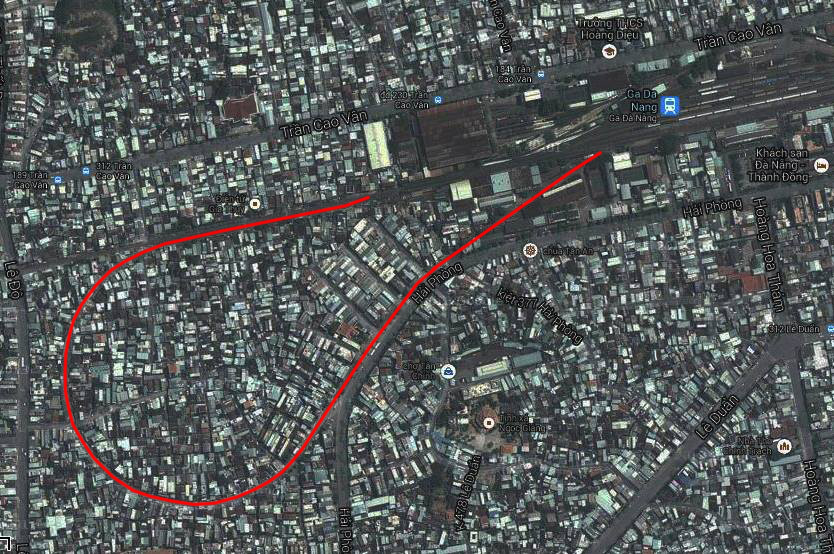
The Chính Gián and Tam Thuận wards of Thanh Khê district in Đà Nẵng are home to a fascinating relic of the age of steam railways – a disused loop line built to turn around steam locomotives following the transformation of Đà Nẵng Central Station from a through station into a terminus.

The original main line from Hà Nội to Sài Gòn passed straight through Đà Nẵng Central Station, heading south through busy suburban streets and creating a major traffic hazard.

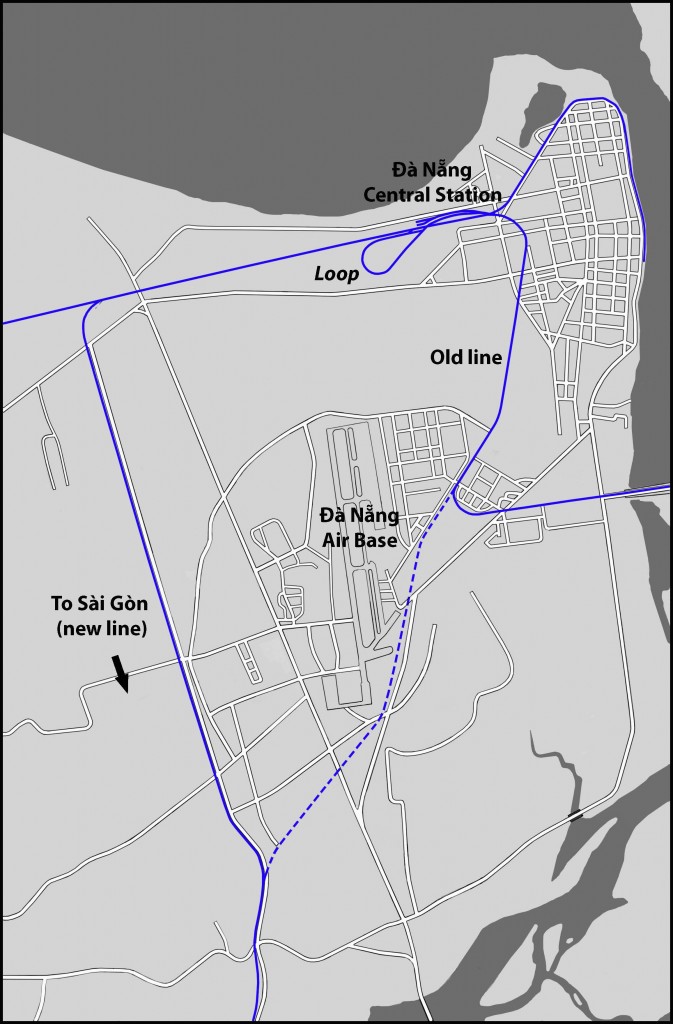
In 1955-1956, to solve this problem and also to permit the planned expansion of Đà Nẵng Air Base, the South Vietnamese railway company Hỏa Xa Việt Nam (HXVN) built the “déviation de Phông Lê” west of the city centre alongside National Highway 1.

Part of the old line was then repurposed as a freight branch across the Hàn River to the Tiên Sa Port area.

A RELIC OF THE STEAM AGE IMAGE 2

A map of the Đà Nẵng rail lines in the late 1950s, after the construction of the loop line

However, the building of the new line created a new problem – passenger trains now had to enter and leave Đà Nẵng Central Station via the same section of track, turning it into a terminus. In the absence of a turntable, a loop then had to be built to turn steam locomotives around before they could continue their journey.

The initial choice of lighter-grade rail in the construction of this loop proved to be something of a false economy; upgrading work was subsequently required under the Railway Reconstruction Program of 1957-1959 to permit its use by heavier express locomotives such as 141-500 “Mikados.”

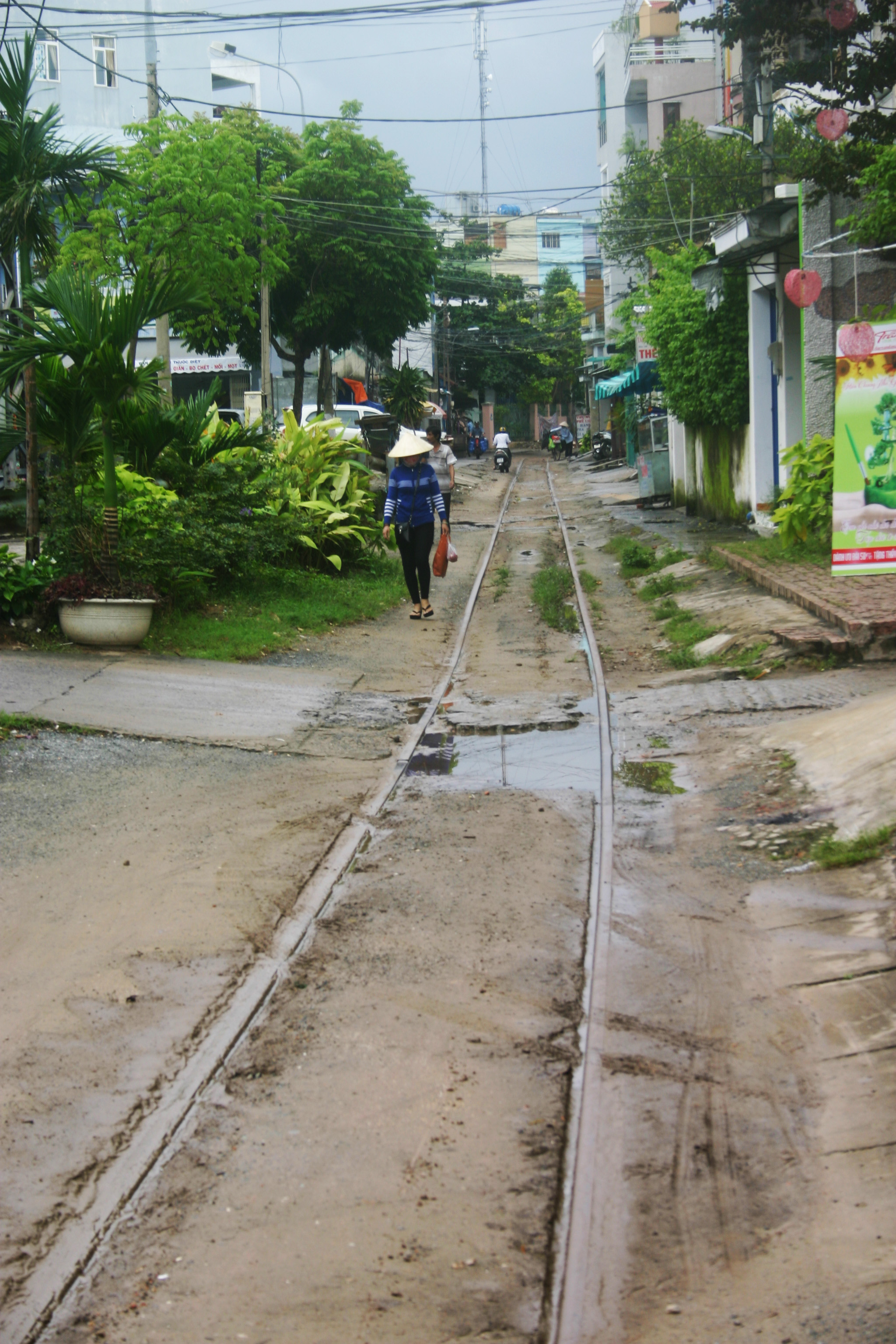
Today the loop line remains intact, although according to Vietnam Railway officials it has not been used since the early 1990s.

IMG_3489

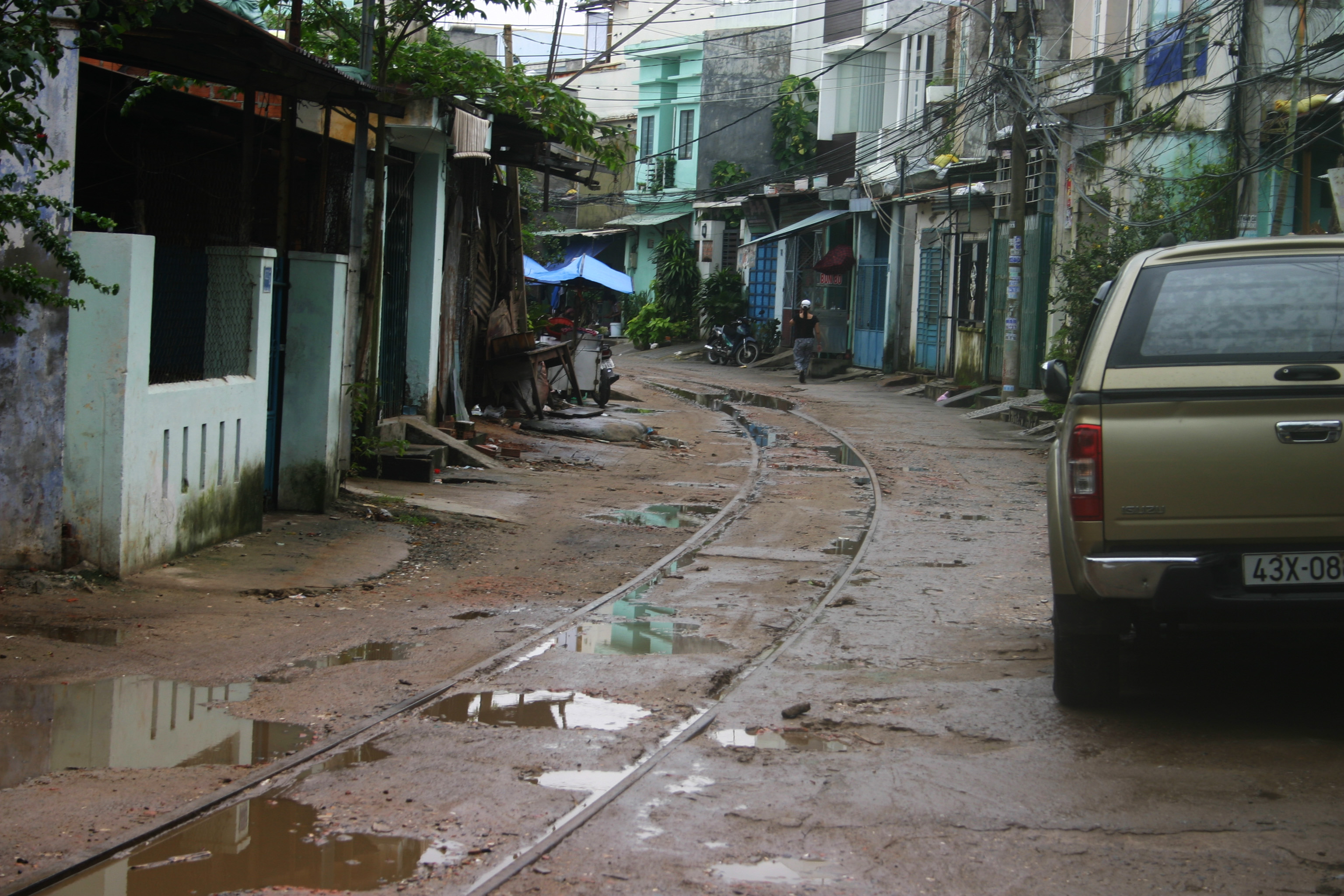
A view of the old loop line today with the rail track still in place

IMG_3497

Another view of the old loop line today with the rail track still in place

IMG_3501

Another view of the old loop line today with the rail track still in place

DA NANG LOOP LINE

The loop line as seen on Google Earth

Tim Doling is the author of The Railways and Tramways of Việt Nam (White Lotus Press, Bangkok, 2012) and gives talks on Việt Nam railway history to visiting groups.

Tim is also the author of Exploring Quảng Nam (Nhà Xuất Bản Thế Giới, Hà Nội, 2020)

A full index of all Tim’s blog articles since November 2013 is now available here.

Join the Facebook group Rail Thing – Railways and Tramways of Việt Nam for more information about Việt Nam’s railway and tramway history and all the latest news from Vietnam Railways.

You may also be interested in these articles on the railways and tramways of Việt Nam, Cambodia and Laos:

By Tram to Hoi An
Date with the Wrecking Ball – Vietnam Railways Building
Derailing Saigon’s 1966 Monorail Dream
Dong Nai Forestry Tramway
Full Steam Ahead on Cambodia’s Toll Royal Railway
Goodbye to Steam at Thai Nguyen Steel Works
Ha Noi Tramway Network
How Vietnam’s Railways Looked in 1927
Indochina Railways in 1928
“It Seems that One Network is being Stripped to Re-equip Another” – The Controversial CFI Locomotive Exchange of 1935-1936
Phu Ninh Giang-Cam Giang Tramway
Saigon Tramway Network
Saigon’s Rubber Line
The Changing Faces of Sai Gon Railway Station, 1885-1983
The Langbian Cog Railway
The Long Bien Bridge – “A Misshapen but Essential Component of Ha Noi’s Heritage”
The Lost Railway Works of Truong Thi
The Mysterious Khon Island Portage Railway
The Railway which Became an Aerial Tramway
The Saigon-My Tho Railway Line
Did Finn Mac Cumhaill visit Viet Nam?

Ghềnh Đá Dĩa 2

A stretch of extraordinarily shaped basalt columns in coastal Phú Yên province bears an uncanny resemblance to the world-famous Giant’s Causeway UNESCO World Heritage Site in Northern Ireland.

Ghềnh Đá Dĩa 1No visit to Northern Ireland is complete without a trip to the famous Giant’s Causeway in County Antrim, where the cooling and solidification of ancient volcanic lava created around 40,000 vertical or gently inclined polygonal columns of extraordinary beauty.

According to legend, the columns and their identical counterparts at at Fingal’s Cave on the Scottish island of Staffa (which inspired Felix Mendelssohn’s famous overture “The Hebrides”) are the remains of a causeway which was built by pugnacious Irish giant Fionn mac Cumhaill (Finn MacCool) to reach his Scottish rival Benandonner, who had challenged him.

Ghềnh Đá Dĩa 3While the Giant’s Causeway was declared a UNESCO World Heritage Site in 1986 and voted the fourth greatest natural wonder in the United Kingdom in a 2005 poll, a similar geological wonder right here in Việt Nam remains relatively unknown.

Accessed via a 14-kilometre dirt road leading west from Highway 1 at Ngân Sơn, 30 kilometres north of the Phú Yên provincial capital of Tuy Hòa, Ghềnh Đá Đĩa (“Plate Rock Cliff”) comprises a 200-metre stretch of mainly pentagonal and hexagonal basalt columns, uncannily similar to those at Giant’s Causeway.

Though recognised as a National Landscape Vestige in 1997, Ghềnh Đá Đĩa has yet to find its way onto international tourist itineraries.

Tim Doling is the author of the guidebooks Exploring Huế (2018), Exploring Saigon-Chợ Lớn – Vanishing heritage of Hồ Chí Minh City (2019) and Exploring Quảng Nam (2020), published by Nhà Xuất Bản Thế Giới, Hà Nội

A full index of all Tim’s blog articles since November 2013 is now available here.

Join the Facebook group pages Saigon-Chợ Lớn Then & Now to see historic photographs juxtaposed with new ones taken in the same locations, and Đài Quan sát Di sản Sài Gòn – Saigon Heritage Observatory for up-to-date information on conservation issues in Saigon and Chợ Lớn.

Ha Noi Tramway Network

A CTEH Line 1 tram at the place des Cocotiers terminus

When they first drew up plans for a citywide tramway network in 1894, it seemed as though the Hà Nội authorities would follow Sài Gòn’s example by opting for steam traction. Yet by the time government approval was forthcoming in 1899, advances in technology made it possible to construct the entire system as a state-of-the-art 1m gauge electric tramway.

In 1900, the Compagnie des tramways électriques d’Hanoï et extensions (CTEH) was to set up to build the first two tramway lines, which were jointly inaugurated in November 1901.

HANOI TRAMWAYS IMAGE 2

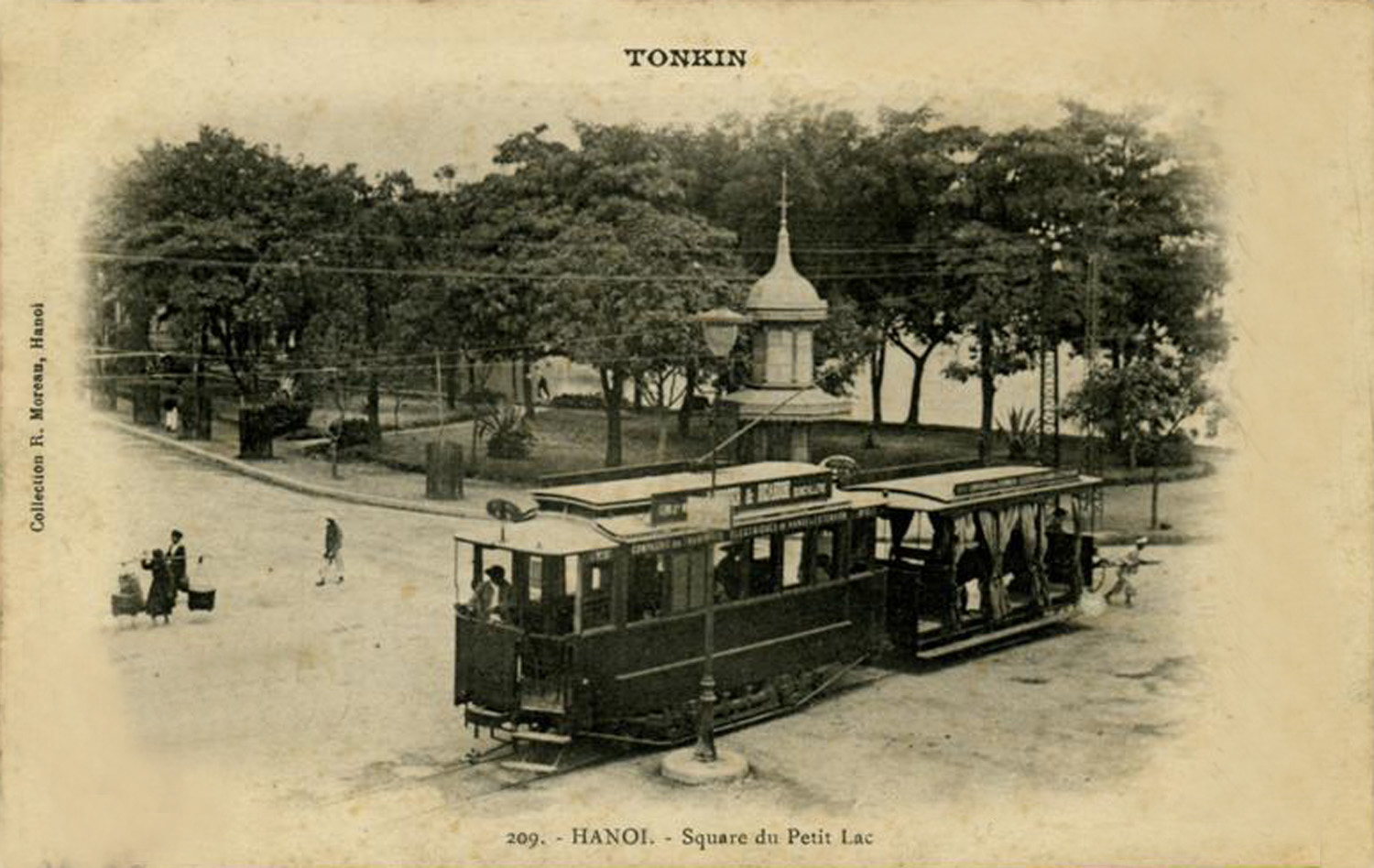
A CTEH Line 1 tram passes the “Petit Lac”

Setting out from the place des Cocotiers terminus next to the Petit lac (Hoàn Kiếm Lake), Line 1 led southward to Bạch Mai and Line 2 northeastward to Giấy village, near the today’s Bưởi Market. A subsequent decision of 20 July 1905 authorised the extension of Line 1 to Chợ Mơ.

In 1904, work began on Line 3, which led west from the Petit lac to the Pagode des Corbeaux (the Temple of Literature) and then headed southwest to Thái Hà Ấp. This line was extended to Hà Đông in 1914 and to Cầu Đơ market in 1938.

Construction of Line 4 got under way in 1907. Following the path of Line 3 from place des Cocotiers to the Pagode des Corbeaux, it then branched westward to the Pont du Papier (Cầu Giấy).

HANOI TRAMWAYS IMAGE 3

A CTEH Line 3 tram at Hà Đông

In its early years, despite its apparent popularity, the Hà Nội tramway network suffered continuous financial problems and until as late as 1913, CTEH remained a deficitary operation. Thereafter profits remained relatively modest, precluding adequate maintenance on its rolling stock, track, catenary and buildings. In 1927, the increasingly run-down network was taken over by a new group, which in 1929 constituted itself as the Compagnie des tramways du Tonkin (Tonkin Tramway Company, CTT). In that year, CTT embarked upon a major upgrade which involved the replacement of large stretches of track and catenary and the purchase of replacement second-generation tractor and trailer sets from France.

It was under the CTT that the final stage of network expansion was implemented. A decision of 14 November 1930 approved the creation of Line 5, which ran from Yên Phụ on the Red River Dyke in the north of the city to Kim Liên in the south of the city, the southernmost stretch of the line following the route Mandarine (now Lê Duẩn street). Line 5 briefly intersected Line 2 at Château d’eau (Bốt Nước Hàng Đậu) and Line 3 at place Neyret (now Cửa Nam). In 1943, Line 5 was extended further south as far as the route Circulaire, in order to serve the René Robin Hospital, the radio station and Bạch Mai airfield. With the completion of Line 5, the tramway network in Hà Nội had reached approximately 30km in length.

HANOI TRAMWAYS IMAGE 4

A Hà Nội Line 1 tram (1927 stock) heads south along Hàng Bài towards Bạch Mai in 1960

In 1952, at the height of the First Indochina War, the CTT was renamed the Société des transports en commun de la région de Hanoï. However, on 1 June 1955 this company ceased operations and all track, equipment and rolling stock was transferred to the new Democratic Republic of Việt Nam.

Unlike its Sài Gòn counterpart, the Hà Nội tramway system continued to function for nearly 30 years after independence, in fact in 1968 the Hà Nội People’s Committee even built an additional spur from the Cửa Nam junction along phố Cột Cờ (now đường Điện Biên Phủ) and đường Hùng Vương, rejoining Line 2 south of Trúc Bạch Lake. However by the early 1980s, track, catenary and rolling stock had deteriorated to the extent that the tramway was no longer fit for purpose. Line 1 (Bạch Mai Phong) was closed in 1982, followed in subsequent years by Line 4 (Cầu Giấy), Line 3 (Hà Đông), Line 5 (Yên Phụ) and finally in 1989 Line 2 (đường Bưởi).

HANOI TRAMWAYS IMAGE 5

A Hà Nội Line 2 tram (1927 stock) picture in the 1980s

Line 4 (Cầu Giấy) was offered a brief reprieve of sorts in 1986, when the route was taken over by a small donated fleet of old trolley buses from Eastern Europe. The Hà Nội-Cầu Giấy trolley bus fleet outlasted the trams, soldiering on until 1993, when it too fell victim to modernisation.

Tim Doling is the author of The Railways and Tramways of Việt Nam (White Lotus Press, Bangkok, 2012) and also gives talks on Việt Nam railway history to visiting groups.

A full index of all Tim’s blog articles since November 2013 is now available here.

Join the Facebook group Rail Thing – Railways and Tramways of Việt Nam for more information about Việt Nam’s railway and tramway history and all the latest news from Vietnam Railways.

You may also be interested in these articles on the railways and tramways of Việt Nam, Cambodia and Laos:

A Relic of the Steam Railway Age in Da Nang
By Tram to Hoi An
Date with the Wrecking Ball – Vietnam Railways Building
Derailing Saigon’s 1966 Monorail Dream
Dong Nai Forestry Tramway
Full Steam Ahead on Cambodia’s Toll Royal Railway
Goodbye to Steam at Thai Nguyen Steel Works
How Vietnam’s Railways Looked in 1927
Indochina Railways in 1928
“It Seems that One Network is being Stripped to Re-equip Another” – The Controversial CFI Locomotive Exchange of 1935-1936
Phu Ninh Giang-Cam Giang Tramway
Saigon Tramway Network
Saigon’s Rubber Line
The Changing Faces of Sai Gon Railway Station, 1885-1983
The Langbian Cog Railway
The Long Bien Bridge – “A Misshapen but Essential Component of Ha Noi’s Heritage”
The Lost Railway Works of Truong Thi
The Mysterious Khon Island Portage Railway
The Railway which Became an Aerial Tramway
The Saigon-My Tho Railway Line
 

The Saigon-My Tho Railway Line

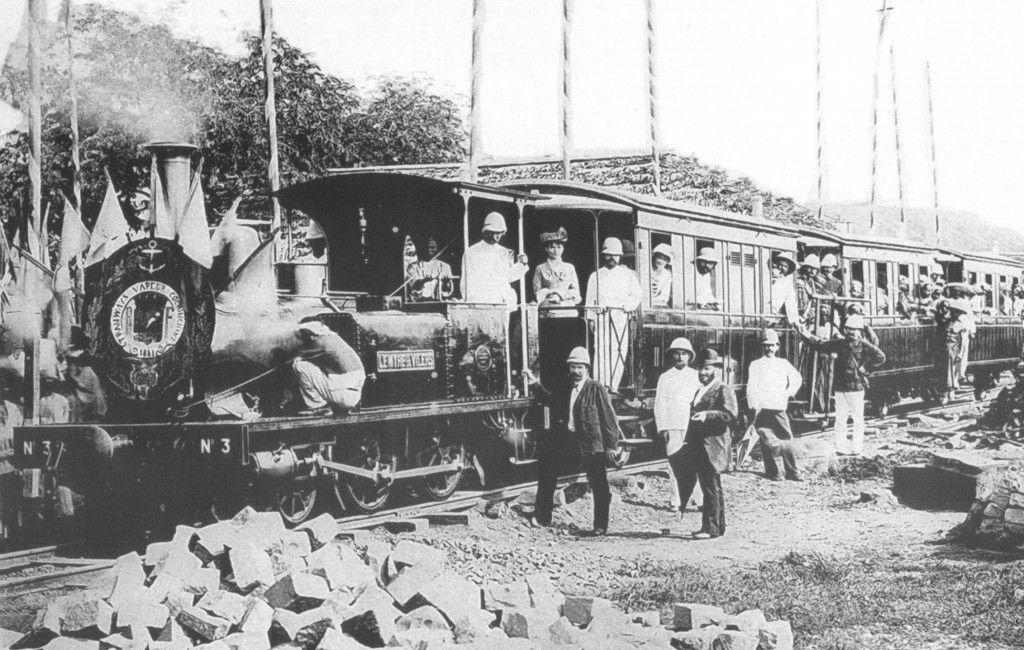
saigon mytho locomotive

SACM 4-4-0T No. 8 “Vaico” pictured at Sài Gòn Depot

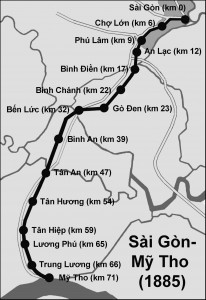
Inaugurated on 20 July 1885, the Sài Gòn-Mỹ Tho line was the first railway line in French Indochina.

SÀI GÒN-MỸ THO LINE IMAGE 2

Originally conceived as part of an abortive grand Mekong Delta railway network plan drawn up in 1874, the Saigon-Mỹ Tho line began construction in November 1882, but the project was marred by bitter disputes between the contractor and the colonial authorities – a major bone of contention was the failure of a sub-contractor, the Maison Eiffel, to compensate for track subsidence on marshy ground, leading to serious problems with the access ramps of its three metal viaducts at Bình Điền, Bến Lức and Tân An. Even after the official opening on 20 July 1885, unresolved technical issues with the Bến Lức Bridge meant that a steam ferry was required to convey passengers across the East Vàm Cỏ River for a further 10 months, so that through train services could not be achieved until 29 May 1886.

As with the contemporaneous Saigon-Chợ Lớn “high road” steam tramway, a 1m track gauge was adopted, on the grounds that it could generate significant savings in construction costs by reducing the width of track bed and sleepers and facilitating tighter curves. The line’s tramway-standard 20kg/m rails rendered it suitable only for lightweight rolling stock.

Having cost 11.6 million Francs to build, the line was operated initially as commercial concession involving an annual fee plus a percentage of operating profits. To haul trains on the line, the first concessionaire, Compagnie des chemins de fer garantis des colonies françaises (CCFGCF), acquired five original 0-6-0T locomotives of unknown provenance (Nos 1-5), but these performed badly, and train services were frequently beset by technical problems.

Saïgon-My Thô, le chemin de fer à l’intérieur de la gare (Maison Asie Pacific)

The company’s profits were also impacted negatively by its failure to secure adequate freight business – assumptions that Chinese merchants would switch from barge to rail to transport their rice proved unfounded, rendering the line almost wholly reliant on sporadic and mainly local passenger traffic for its income.

Dissatisfied with the company’s performance, the colonial authorities suspended the franchise in October 1888 and took direct control of the line, pending the identification of a new operator. Eventually on 15 July 1889, the Saigon-Mỹ Tho line was taken over by the Saigon steam tramway operator Société générale des tramways à vapeur de Cochinchine (SGTVC), but only after the colonial authorities had reluctantly agreed to retain responsibility for repairing and maintaining the line’s infrastructure.

SGTVC overhauled the original five 0-6-0T locomotives and equipped them with water tenders to improve their range. Then in 1898, they were supplemented by five new 20.1-tonne SACM Belfort 4-4-0T Locomotives à grande vitesse, capable of speeds of up to 55kph – these were No 7 “Ben-luc,” No 8 “Vaico” and No 11 “Binh-dinh,” delivered in 1896, and No 9 “Tan-an” and No 10 “Mekong,” delivered in 1898. A rail spur from the Saigon-Mỹ Tho line to the main Saigon port complex in Khánh Hội (now District 4) via a new swing bridge was also achieved in 1903.

In 1928, five new 22-tonne Orenstein & Koppel 2-6-0 “Moguls” (Nos 21-25) were acquired for the line

In 1911, realising that the annual cost to the government of track, bridge and signalling maintenance and upgrading far outweighed the income it obtained from the franchise holder, the authorities terminated the SGTVC franchise, so that with effect from 1912, the Saigon-Mỹ Tho line became an integral component of the Réseaux non concedes (Non-conceded networks), the network of railway lines operated directly by the Government General of Indochina later known as Chemins de fer de l’Indochine (CFI).

In 1928, five new 22-tonne Orenstein & Koppel 2-6-0 “Moguls” (Nos 21-25) were acquired in lieu of German war reparations. Although these locomotives were ordered exclusively for the Saigon-My Tho line, in practice they were also used on other CFI lines around Saigon.

During the 1930s, when competition from road transportation began to impact seriously on passenger numbers and revenue, the authorities responded by substituting lightweight Renault ABH-2 300hp diesel railcars for steam locomotive-hauled passenger trains.

Second-generation Renault ABH-7 300hp diesel railcars at Saigon Station in the mid 1950s

During the First Indochina War, the French military began using the branch to move men and equipment in their campaign against southern revolutionary bases. On several occasions, Việt Minh forces responded by inflicting serious damage on the line’s track and bridges, but on each occasion repairs were carried out swiftly and the line remained open for the duration of the conflict.

By the 1950s, the road network in the Mekong Delta had expanded significantly. Lacking investment, the dilapidated line was increasingly unable to compete with faster trucks and motor coaches. With losses mounting, the South Vietnamese Department of Railways (Sở Hỏa xa Việt Nam, HXVN) opted for closure. The last train from Sài Gòn to Mỹ Tho ran on 30 June 1958.

However, that wasn’t quite the end of the story. The railway track from Sài Gòn to Chợ Lớn (km 6) and Phú Lâm (km 8) remained in place after 1958 and continued to function intermittently as a local freight spur until at least 1970.

Tim Doling is the author of The Railways and Tramways of Việt Nam (White Lotus Press, Bangkok, 2012) and also gives talks on Việt Nam railway history to visiting groups.

A full index of all Tim’s blog articles since November 2013 is now available here.

Join the Facebook group Rail Thing – Railways and Tramways of Việt Nam for more information about Việt Nam’s railway and tramway history and all the latest news from Vietnam Railways.

You may also be interested in these articles on the railways and tramways of Việt Nam, Cambodia and Laos:

A Relic of the Steam Railway Age in Da Nang
By Tram to Hoi An
Date with the Wrecking Ball – Vietnam Railways Building
Derailing Saigon’s 1966 Monorail Dream
Dong Nai Forestry Tramway
Full Steam Ahead on Cambodia’s Toll Royal Railway
Goodbye to Steam at Thai Nguyen Steel Works
Ha Noi Tramway Network
How Vietnam’s Railways Looked in 1927
Indochina Railways in 1928
“It Seems that One Network is being Stripped to Re-equip Another” – The Controversial CFI Locomotive Exchange of 1935-1936
Phu Ninh Giang-Cam Giang Tramway
Saigon Tramway Network
Saigon’s Rubber Line
The Changing Faces of Sai Gon Railway Station, 1885-1983
The Langbian Cog Railway
The Long Bien Bridge – “A Misshapen but Essential Component of Ha Noi’s Heritage”
The Lost Railway Works of Truong Thi
The Mysterious Khon Island Portage Railway
The Railway which Became an Aerial Tramway