Graham Greene’s Saigon

1955 111

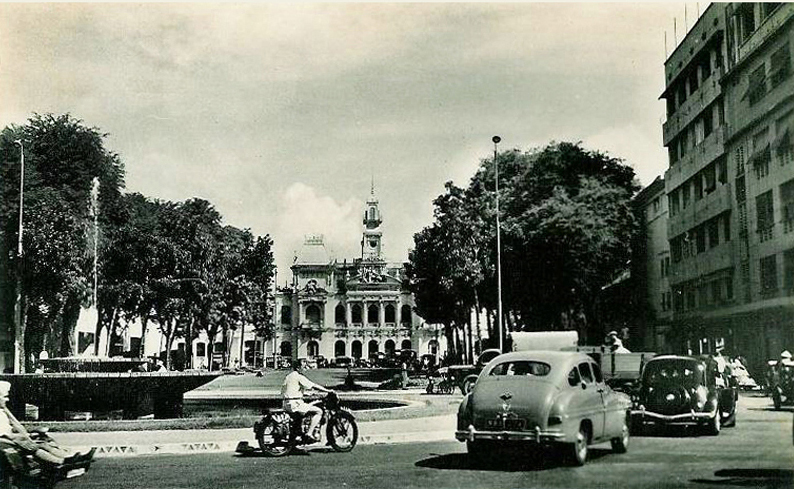
A view from the Bùng Binh Sài Gòn traffic circle in 1955

The Saigon locations used by British writer Graham Greene in his acclaimed anti-war novel The Quiet American have long been a favourite topic for travel writers. Here by request is a recap of the most significant landmarks.
Saigon 11955 by Raymond Cauchetier

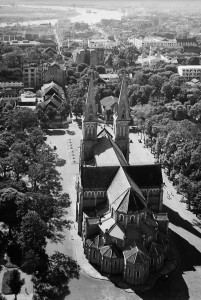
Looking down rue Catinat in 1955 with Greene’s “hideous pink cathedral” in the foreground (photo by Raymond Cauchetier)

During the period March 1952 to June 1955, Graham Greene made four trips to Sài Gòn as a foreign correspondent. While based here, he wrote The Quiet American, a prophetic tale of a naïve young American’s misguided efforts to bring democracy to the Far East.

While he was in Saigon, Greene’s life was focused almost exclusively on the privileged expat world of the city centre, and in particular on rue Catinat (modern Đồng Khởi street), still at that time the epitome of colonial chic.

Greene is known to have taken a daily constitutional up this street, “to where the hideous pink cathedral blocked the way.” The Notre Dame Cathedral end of Đồng Khởi street therefore makes a great starting point for a tour of some of the real-life places Greene used to flesh out The Quiet American.
120 164 Dong Khoi 1965

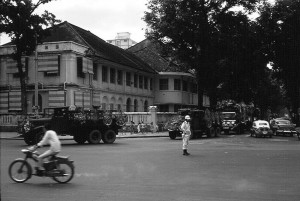
A 1960s shot of Bót Catinat

The large building opposite the Saigon Metropolitan Tower at 164 Đồng Khởi was once the Direction de la Police et de la Sûreté, workplace of Inspector Vigot, the French detective responsible for investigating the death of the title character, American agent Alden Pyle. Although it was set up in around 1917, the current building dates from 1933 when its facilities were expanded. It was known in Vietnamese as Bót Catinat (Catinat Police Station) and during the late colonial era it is said that many political prisoners were tortured in its basement cells. The plaque outside the main entrance commemorates the four weeks after the August Revolution when the Việt Minh flag flew over Bót Catinat. However, following the return of the French in late September 1945, Bót Catinat resumed its original function as the city’s colonial police headquarters. Passing it during his daily constitutional, Greene clearly took a disliking to the building, talking in The Quiet American of its “dreary walls” which “seemed to smell of urine and injustice.” After the departure of the French in 1954, the compound served as the Interior Ministry (Bộ Nội vụ) of South Việt Nam until Reunification in 1975. It currently houses the offices of the Hồ Chí Minh City Department of Culture, Sports and Tourism, although since it currently forms part of a redevelopment zone, it is earmarked for demolition.
DSC02935

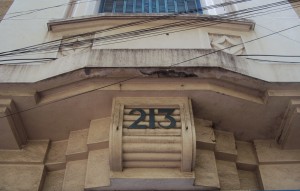
The main entrance to 213 Đồng Khởi, formerly 213 rue Catinat

One block south of the old Sûreté headquarters stands another location featured in The Quiet American – the art-deco-style 213 Đồng Khởi, once one of the most prestigious addresses in the city. After the departure of his girlfriend Phương, anti-hero Thomas Fowler briefly considers finding a new place to live and comes here to view “the pied-a-terre of a rubber planter who was going home.” During the late colonial era, 213 rue Catinat was home to diplomatic missions, international corporations, property companies, popular French magazines and beauty institutes. It was also a centre of French haute couture, with several up-market fashion outlets, including a branch of Galeries Lafayette! However, most of the building was occupied by luxury apartments. One of its best-known former residents was Saigon rubber baroness Madame Janie-Marie Marguerite Bertin Rivière de la Souchère, who rented an apartment here from 1932 to 1938 after losing her magnificent estate in the Great Depression. Greene clearly disliked this edifice too, since Fowler refers to it disparagingly as a “so-called modern building (Paris Exhibition 1934?) up at the other end of rue Catinat beyond the Continental Hotel.” It is currently earmarked for demolition. POSTSCRIPT: REGRETTABLY THIS BUILDING WAS DEMOLISHED IN MAY 2014.
24 Continental Terrace

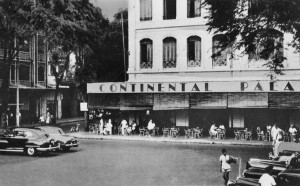
The Continental Palace Hotel Terrace in the late 1950s

Still known in Greene’s day as place Garnier, Lam Sơn square is home to Greene’s favourite hostelry, the Continental Hotel at 132-134 Đồng Khởi.

The history of this venerable old Saigon institution may be traced right back to the late 19th century, but by the early 1950s its central location made it popular with many foreign correspondents, including Lucien Bodard (1914-1998), Jean Lartéguy (1920-2011) and of course Graham Greene himself, who apparently insisted on staying in room 214 on the corner of the building, so that he could get the best view of all the goings-on in the square below.
s12

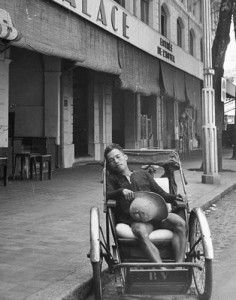
Siesta time outside the Continental Palace Hotel

The ground floor of the hotel once opened straight out onto the sidewalk to form the Continental Terrace, a focus for café culture in the city centre. In The Quiet American, Fowler’s nightly ritual is to start the evening with a 6pm beer at the Terrace, where the dice rattle as the French play Quatre cent vingt-et-un.

Back in 1955, just as Greene was putting the finishing touches to his novel, the Théâtre de Saïgon next door was converted into the Lower House of the South Vietnamese National Assembly and politicians began meeting regularly for drinks at the Continental Terrace. Inevitably the journalists followed, turning it into a centre of gossip and intrigue. Sadly the hotel is now a cocoon of air-conditioned luxury and the few forlorn tables outside on the hotel sidewalk fail to conjure up the atmosphere of the Greene era.

Here’s one for longer-term residents. When Graham Greene arrived in Sài Gòn in 1952, Givral Café had just opened its doors on the corner opposite the hotel, where Đồng Khởi street meets Lam Sơn square.
25 Givral

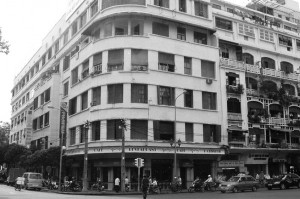
Givral café on the corner of the block which was demolished in 2009 to make way for the Union Square shopping mall

A much-loved Sài Gòn landmark, it was used by Greene as a model for the “milk bar” in which Phương meets her friends every day at 11.30am. Renovated and used as a location for Phillip Noyce’s 2002 film, Givral continued to function until as recently as 2009, when it was closed to permit the demolition of the entire block and the construction of the Union Square shopping mall.

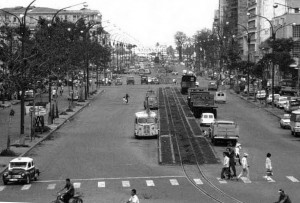
In The Quiet American, place Garnier/Lam Sơn square is the location where, with tacit support from the Americans, the sinister “Third Force” led by General Thế detonates a car bomb, killing many civilians. Greene based the character of General Thế on real-life warlord General Trình Minh Thế (1922-1955), who began his career in the army of the Cao Đài church, but left in 1951 to form the Liên Minh militia, a private force implicated in a series of bombings between 1951 and 1953.
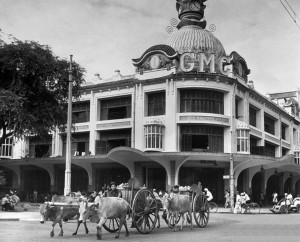
1948 cửa hàng bách hóa Grand Magazin Charner

The Grands Magasins Charner in 1948 (photo by Jack Birns)

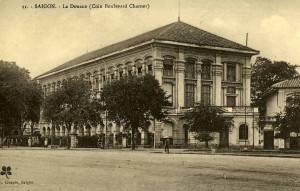
One block west of Lam Sơn square is the Bùng Binh Sài Gòn traffic circle, where Lê Lợi (formerly boulevard Bonard) meets Nguyễn Huệ (formerly boulevard Charner). The Sài Gòn Tax Trade Centre at 135 Nguyễn Huệ, originally built in 1924 as the up-market Grands Magasins Charner, was Greene’s “big store at the corner of the Boulevard Charner,” outside which Fowler stands to witness one of the citywide detonations of bicycle pump bombs, dubbed “Operation Bicyclette” by its perpetrators. POSTSCRIPT: REGRETTABLY THIS BUILDING WAS CLOSED IN AUGUST 2014 AND IS ALSO NOW AWAITING DEMOLITION TO MAKE WAY FOR A NEW 43-STOREY TOWER BLOCK – see Date with the Wrecker’s Ball (3): Saigon Tax Trade Centre.

Charner/Nguyễn Huệ boulevard briefly appears in The Quiet American as the location of Le Club, a restaurant frequented by members of the Sûreté, where Fowler runs into Vigot two weeks after Pyle’s death. However, since its real-life prototype remains a mystery, it’s more rewarding to head back to Đồng Khởi street, where the lower end of the former rue Catinat is home to a few more relics of the Greene era.
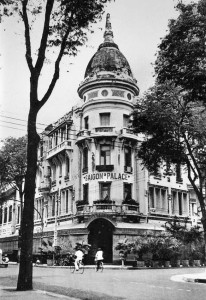
35 Grand Hotel

The Saigon Palace Hotel in the late colonial period

After Phương leaves him for Pyle, Fowler tries to forget her by making regular visits to an opium den he describes as “a good house on rue d’Ormay,” now Mạc Thị Bưởi street, which exits Đồng Khởi street on the left hand side.

Further down the street is another Greene landmark, the Grand Hotel at 8 Đồng Khởi. This building originated in the late 1920s as a café run by the Société du Grand Hôtel de Saigon, but was subsequently leased to Corsican entrepreneur Patrice Luciani, who oversaw the construction of a new 90-room hotel and became its first manager when it opened in 1933 as the Sài Gòn Palace Hotel. By the late 1940s it had been converted into rented apartments, and although Greene himself never stayed here, he is said to have chosen it as the model for Thomas Fowler’s “room over the rue Catinat,” where much of the action in the book takes place.
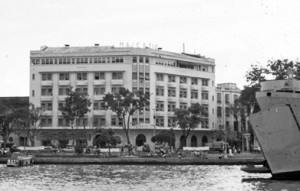
40 Majestic Hotel 1967

The Majestic Hotel as it appeared after its remodelling of 1951

The final stop on Graham Greene’s rue Catinat is the Majestic Hotel at 1 Đồng Khởi, another of the writer’s favourite haunts, which appears as one of Thomas Fowler’s regular watering holes in The Quiet American. Most evenings, after his 6pm drink at the Continental, Fowler heads down rue Catinat for “cocktail time” at 7pm in the Majestic’s Rooftop Bar, where he can relax and enjoy “the cool wind from the Sài Gòn River.” Though remodelled on several occasions since it first opened in 1925, the Majestic still has that Rooftop Bar with its excellent view of the river, which remains a popular spot for sunset cocktails.
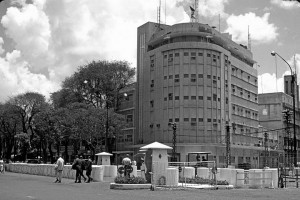
63 First US Embassy

The first US Embassy pictured in the 1960s

A brisk walk from the Majestic two blocks south along the quayside and then one block west on Hàm Nghi boulevard leads to Pyle’s place of work, the “American Legation” – better known as the first United States Embassy at 39 Hàm Nghi. This yellow building, to which Fowler angrily comes looking for Pyle after Phương’s departure, was the home of the American diplomatic mission from 1950 to 1967. However, following a car bomb attack in 1965, a decision was taken to build a new and more secure embassy compound on Thống Nhất (now Lê Duẩn) boulevard – the compound which in April 1975 would be the scene of the final US withdrawal from Việt Nam.
Đ?i Th? Gi?i - Rue Des Marins (Ngày X?a Ngày Xưa)

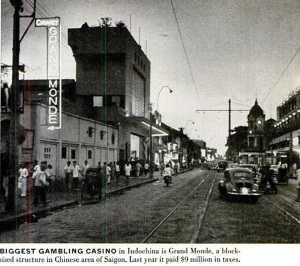
A 1950 shot of the Grande Monde, now the site of the District 5 Cultural Centre.

Although it doesn’t appear in the pages of The Quiet American, Greene himself is known to have made regular visits to the exclusive Cercle Sportif Saïgonnais on rue Chasseloup-Laubat, now the Labour Culture Palace at 55B Nguyễn Thị Minh Khai.

Interestingly, the book mentions that Pyle’s apartment is close to the Cercle Sportif on tree-lined rue Duranton, now Bùi Thị Xuân street.

Chợ Lớn is mentioned on several occasions in The Quiet American, as the location of Mr Chou’s godown, the Chalet restaurant and the Grande Monde where Fowler recalls first meeting Phương while she was working as a “taxi dancer.” The Grande Monde casino, originally known to the French as the “Parc au buffles,” was located on the site of the modern District 5 Cultural Centre.
Dakao Bridge

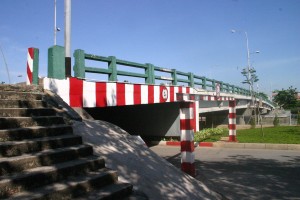
The modern “Đa Kao Bridge”

No tour of Graham Greene’s Sài Gòn would be complete without a visit to Đa Kao (“Dakow”), which the author depicts in The Quiet American as being under constant threat from attack by Việt Minh forces based on the north side of the Thị Nghè canal. Fowler comments to Inspector Vigot that every night, as soon as the police have withdrawn, Đa Kao reverts to being Việt Minh territory. The canal bridge which today connects Nguyễn Văn Giai street in Đa Kao with Bùi Hữu Nghĩa street in Bình Thạnh district is a modern replacement for the original iron road/tramway bridge which Greene calls the “Dakow Bridge.” It is underneath this bridge that Pyle’s body is eventually found, floating face down in muddy water. Right next to the bridge is the fictional Vieux Moulin restaurant, guarded by armed police “with an iron grille to keep out grenades,” where Fowler agrees to meet Pyle, thereby setting him up for assassination. Greene delights by telling us that the patron of the Vieux Moulin “had grown fat on his own rich Burgundian cooking” and that the restaurant “smelt of capons and melting butter in the heavy evening heat.”
IMG_9203

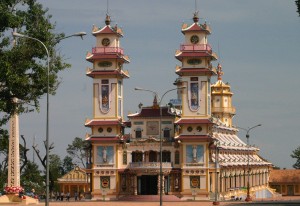
The Cao Đài Cathedral in Tây Ninh

One of the most gripping parts of The Quiet American is the chapter which describes Fowler and Pyle’s dangerous night journey back to Sài Gòn after attending a festival at the Cao Đài Holy See in “Tanyin” (Tây Ninh). Modern visitors to Hồ Chí Minh City still follow in their footsteps – albeit rather more safely – to tour the extraordinary Cao Đài Cathedral, situated around 90km northwest of the city and described by Greene as “a Walt Disney fantasia of the East, dragons and snakes in technicolour.” These days the trip is usually made as an adjunct to visiting the famous underground VC tunnel network at Củ Chi.

Sài Gòn has changed a great deal in the six decades since Graham Greene walked its streets and anyone looking for seedy opium dens, exotic taxi dancers and world-weary colons will be sorely disappointed. Yet for those in search of the faded colonial charm which Greene knew and loved, modern Hồ Chí Minh City still has a great deal to offer.

You may also be interested to read these articles:
Saigon on the Silver Screen – The Quiet American, 1958 and 2002
Saigon on the Silver Screen – The Lover, 1992

Tim Doling is the author of the guidebook Exploring Saigon-Chợ Lớn – Vanishing heritage of Hồ Chí Minh City (Nhà Xuất Bản Thế Giới, Hà Nội, 2019)

A full index of all Tim’s blog articles since November 2013 is now available here.

Join the Facebook group pages Saigon-Chợ Lớn Then & Now to see historic photographs juxtaposed with new ones taken in the same locations, and Đài Quan sát Di sản Sài Gòn – Saigon Heritage Observatory for up-to-date information on conservation issues in Saigon and Chợ Lớn.
Old Saigon Building of the Week – Eiffel’s Pont des Messageries Maritimes, 1882

IMG_1294

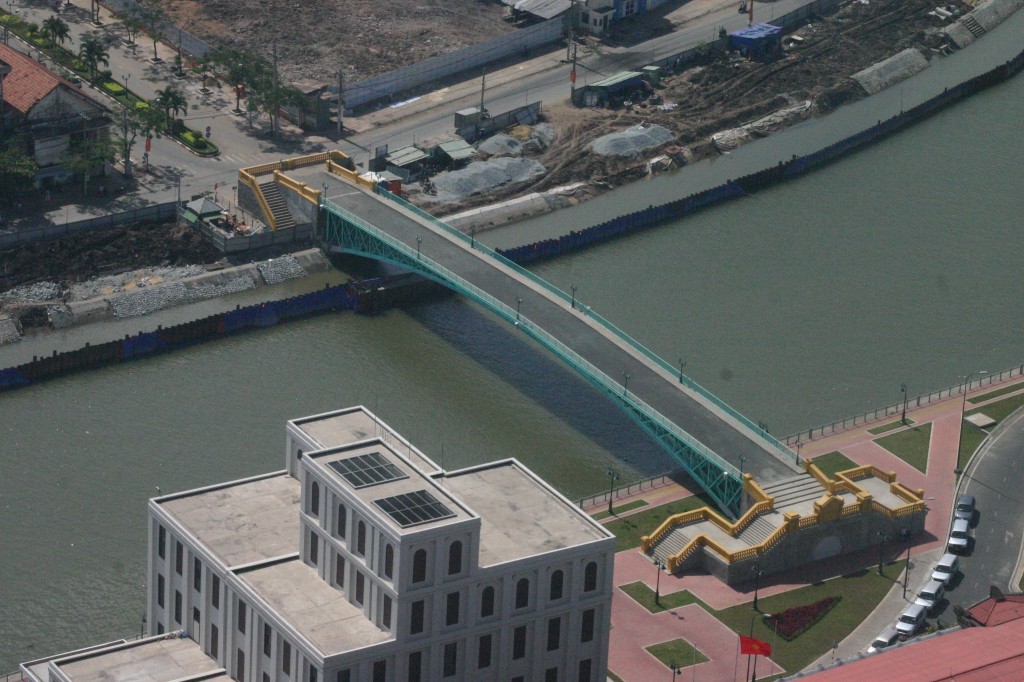
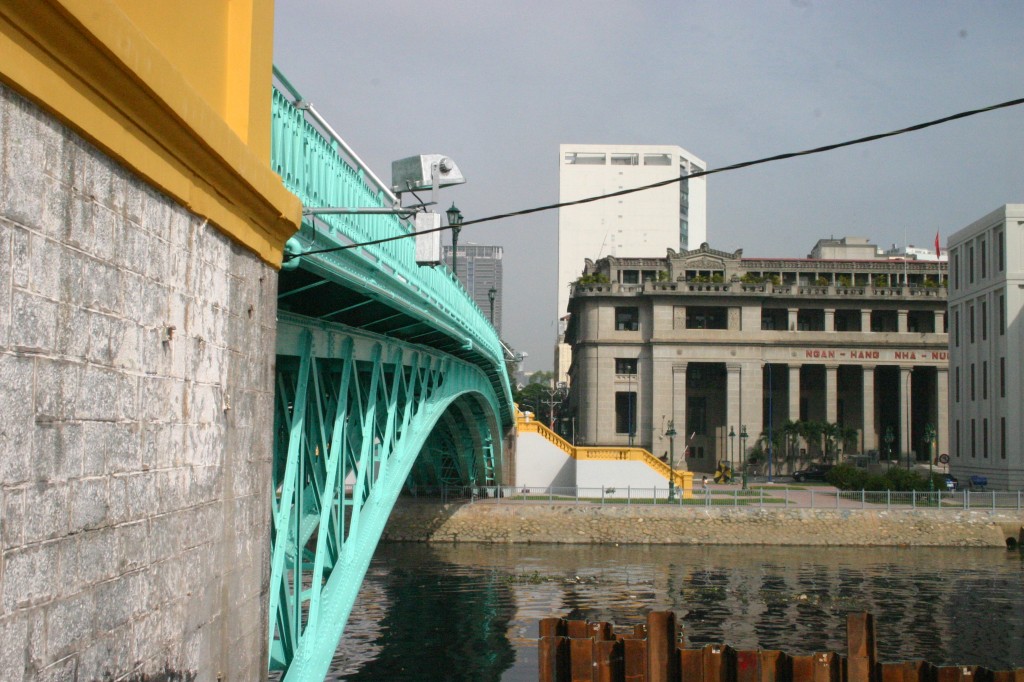
The restored “Rainbow Bridge” (formerly the Pont des Messageries maritimes) today

This article was previously published in Saigoneer http://saigoneer.com/

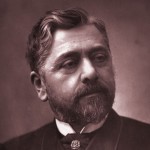
Many people will be familiar with the spurious claims that French civil engineer and architect Gustave Eiffel (1832-1923) was responsible for three of Việt Nam’s most iconic structures, the Long Biên Bridge (Pont Doumer) in Hà Nội , the Trường Tiền Bridge in Huế and the Saigon Post Office. The prevalence of such claims makes it all the more strange that so few visitors to Saigon are given the chance to visit the “Rainbow Bridge,” formerly the Pont des Messageries maritimes, which in truth is Eiffel’s only major surviving work in Việt Nam.

98t/30/vict/0213/53

Gustav Eiffel

In 1872, recognising that there was serious money to be made from the flurry of infrastructural projects then getting underway in the new French colony of Cochinchine, Gustave Eiffel opened an office on Saïgon’s rue Mac-Mahon, now Nam Kỳ Khởi Nghĩa street. In subsequent years his company made a name for itself by constructing canal bridges all over the Mekong Delta.

Starting in the early 1880s, the colonial authorities began to build railways and tramways in order to enhance lines of communication and provide investment opportunities for French capitalists. After a shaky start building the defective Bình Điền, Tân An and Bến Lức viaducts for the Sài Gòn–Mỹ Tho line (opened 1885), the newly-renamed Compagnie des Établissements Eiffel soon emerged as the leading manufacturer of metal-framed structures.

2

Eiffel’s Tân An viaduct on the former Sài Gòn–Mỹ Tho railway line

Most of the company’s work was focused on the south, where it was engaged to build a wide variety of structures, ranging from the markets at Cao Lãnh (1887), Ô Môn (1888), Tân Quy Đông (1889) and Tân An (1889) in the Mekong Delta to the imposing Halles des Messageries fluviales building on the Saïgon riverfront.

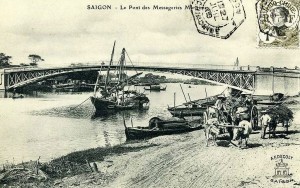
In 1881-1882, the Établissements Eiffel built the Pont des Messageries maritimes (also known as the Pont de Khanh-Hoi) over the Arroyo Chinois (Bến Nghé Creek) to connect the ville basse or lower town with the headquarters of the Compagnie des messageries maritimes in Khánh Hội. Two years later, they built an almost identical bridge named the Pont des Malabars in Chợ Lớn, to connect that city with what is now District 8.

3

The Pont des Messageries maritimes in the late 19th century

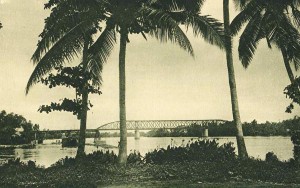
Unfortunately, the Pont des Malabars was demolished in the 1930s, but its sister bridge, the Pont des Messageries maritimes, has survived, and was sympathetically refurbished in 2010 as part of a landscaping project which transformed it from a road bridge into a footbridge. Known in Vietnamese as the Cầu Mống (“Rainbow Bridge”), the 371m structure with its single wrought-iron arch and colonial lamp fittings has recently been discovered by wedding photographers and is now a popular local beauty spot.

If few visitors have heard the Pont des Messageries maritimes, then even fewer people will be aware that until very recently, a second Eiffel work – the Halles des Messageries fluviales – also survived in Saigon. Built in 1899 as the headquarters of the Compagnie des messageries fluviales (River Shipping Company), it became the headquarters of the Saigon Bank for Industry and Trade (Sài Gòn Công Thương Ngân Hàng) at 18-20 Tôn Đức Thắng after 1975, but was converted into the Riverside Hotel in the late 1980s. Sadly, the hotel management was permitted to remodel its façade in the late 1990s, thereby destroying much of the original Eiffel building.

Saigon – The Riverside Hotel pictured in 1992 (photographer unknown) when it still occupied the original, unmodified Messageries fluviales headquarters building

Seven years after the Pont des Messageries maritimes opened to traffic, Eiffel built his world-famous Eiffel Tower for the 1889 Universal Exposition in Paris. However, in 1893 he was forced to retire in disgrace, implicated in the financial and political scandal which surrounded the failed French project to build a canal across the Panama Isthmus.

Nonetheless, working under the new name Société Constructions Levallois-Perret, Eiffel’s old company continued to play an important role in the development of the French colony, building much of Saïgon’s port infrastructure as well as a large number of the bridges on the North-South (Transindochinois) railway line. In 1937, confident that the Panama scandal could no longer dent its founder’s reputation, the company changed its name to Anciens Établissements Eiffel.

A few later Levallois-Perret relics, such as the remains of the newly-dismantled Bình Lợi Bridge, may still be seen today in Saigon, but those in search of an authentic pre-1893 Eiffel monument in Việt Nam need look no further than the Bến Nghé Creek to admire the great man’s handiwork.

7

The view today from District 4 where the “Rainbow Bridge” spans the Bến Nghé Creek

Tim Doling is the author of the guidebook Exploring Saigon-Chợ Lớn – Vanishing heritage of Hồ Chí Minh City (Nhà Xuất Bản Thế Giới, Hà Nội, 2019)

A full index of all Tim’s blog articles since November 2013 is now available here.

Join the Facebook group pages Saigon-Chợ Lớn Then & Now to see historic photographs juxtaposed with new ones taken in the same locations, and Đài Quan sát Di sản Sài Gòn – Saigon Heritage Observatory for up-to-date information on conservation issues in Saigon and Chợ Lớn.
Old Saigon Building of the Week – Former French Masonic Lodge, 110 Nguyen Du, 1900

110 Nguyễn Du

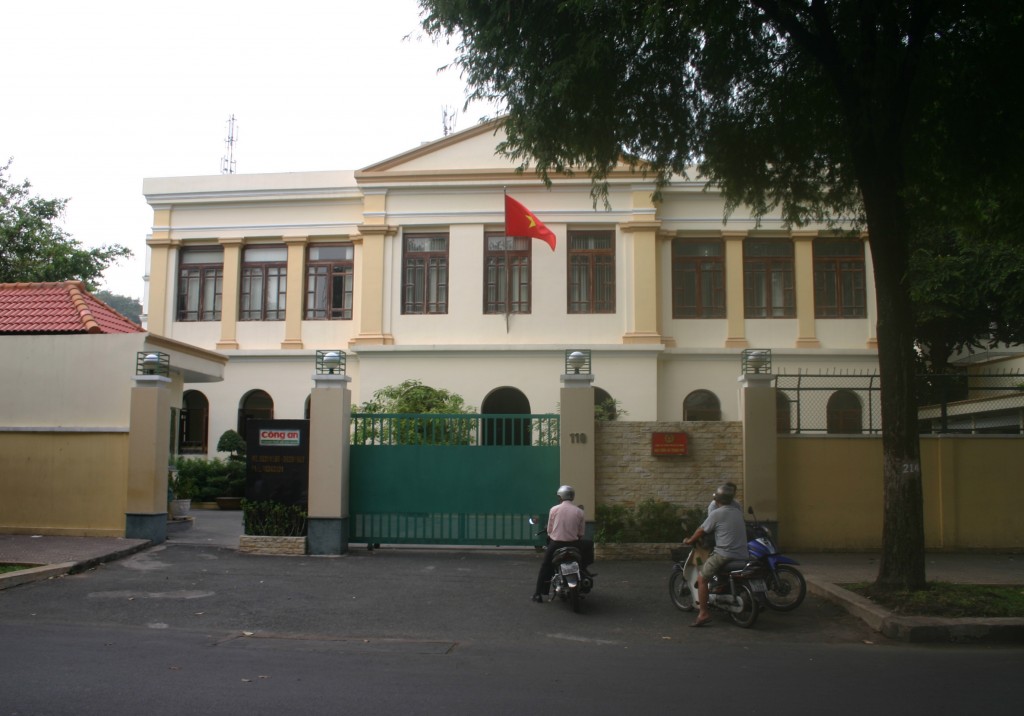
Today the former masonic lodge building at 110 Nguyễn Du serves as the Hồ Chí Minh City office of the Công An (Police) Newspaper.

This article was published previously in Saigoneer http://saigoneer.com/

Saigon got its first French masonic lodge in the 1870s, when the Société civile le Réveil de l’Orient set up the Hôtel de la Loge Maçonnique Le Réveil de l’orient (Awakening of the East) at 17 rue d’Espagne, now Lê Thánh Tôn.

That first lodge was founded under the jurisdiction of the Grand Orient de France, so in the wake of the schism of 1894 over whether belief in the “Supreme Being” should be a prequisite for membership of the freemasons, a rival masonic lodge known as the Les Fervents du progrès (Devotees of progress) was set up at 116 rue Mac-Mahon (Nam Kỳ Khởi Nghĩa), affiliated to the newly-established Grande Loge de France.

An early photo of the second Hôtel de la Loge Maçonnique Le Réveil de l’orient building which still stands today

The former masonic temple which stands today on Nguyễn Du street was built between 1898 and 1900 to replace the original Le Réveil de l’orient building on rue d’Espagne, following receipt of a large subvention from the Cochinchina authorities. The street on which it stands has been renumbered since the colonial period, so although its address was originally 32 rue Taberd, it is now located at 110 Nguyễn Du.

Perhaps due to lack of funding, the breakaway lodge Les Fervents du progrès continued in existence only until 1913, when it was merged with Le Réveil de l’Orient. Thereafter a single masonic lodge functioned at 32 rue Taberd until the departure of the French.

Today, the old lodge building houses the Hồ Chí Minh City office of the Công An (Police) Newspaper.

Tim Doling is the author of the guidebook Exploring Saigon-Chợ Lớn – Vanishing heritage of Hồ Chí Minh City (Nhà Xuất Bản Thế Giới, Hà Nội, 2019)

A full index of all Tim’s blog articles since November 2013 is now available here.

Join the Facebook group pages Saigon-Chợ Lớn Then & Now to see historic photographs juxtaposed with new ones taken in the same locations, and Đài Quan sát Di sản Sài Gòn – Saigon Heritage Observatory for up-to-date information on conservation issues in Saigon and Chợ Lớn.
Old Saigon Building of the Week – First Chambre de Commerce Building, 1867

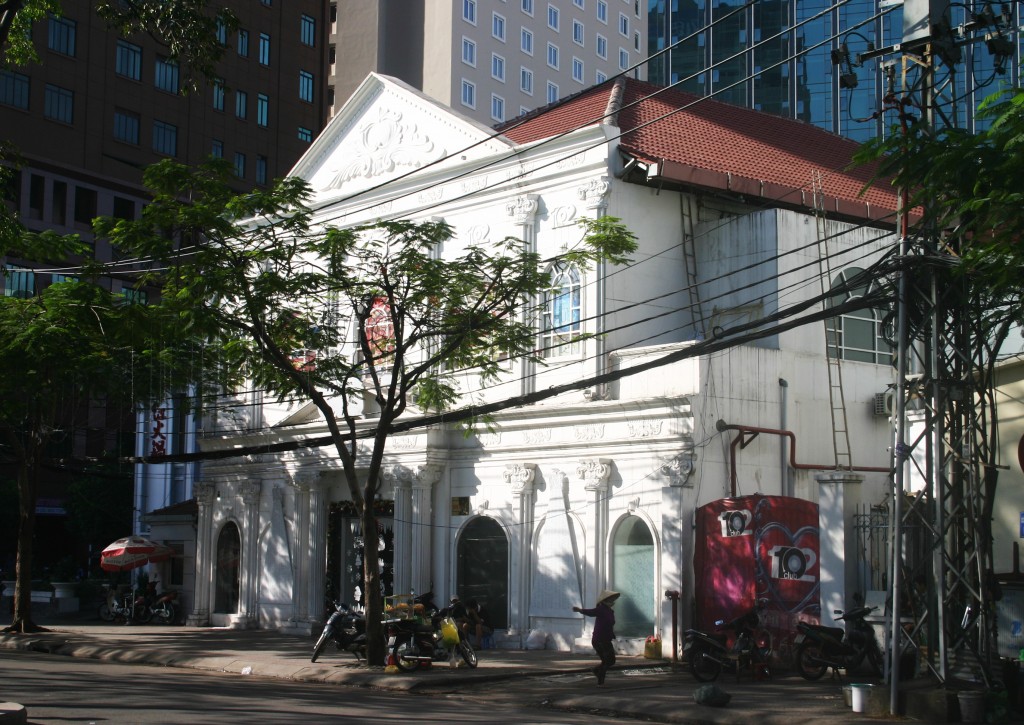
The heavily modified 1868 Chambre de commerce de Saïgon building today

This article was published previously in Saigoneer http://saigoneer.com/

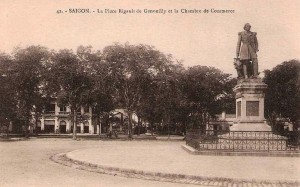
Over the years, Mê Linh square – known immediately after the French arrived as the Rond-point and later as place Rigault de Genouilly – has lost many of its old buildings, including the imposing Commissariat de Police for the 1st Arrondissement, which once stood on the site of today’s Renaissance Riverside Hotel Saigon.

Chambre de commerce building 1880s

The Chambre de commerce de Saïgon building on place Rigault de Genouilly in the 1880s

However, one important colonial edifice has survived to this day. The unassuming white villa at 11 Mê Linh, currently a restaurant, is one of the oldest surviving colonial buildings in the city, constructed in 1867-1868 to house the Chambre de commerce de Saïgon.

When it was first set up on 3 November 1867, the Chambre was found temporary accommodation in the compound of the Direction de l’Intérieur, now the Hồ Chí Minh City Department of Information and Communications at 59-61 Lý Tự Trọng, but on 30 September 1868 it moved into this building, where it would remain for 60 years.

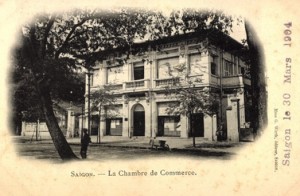
Chambre de commerce building 1904

The Chambre de commerce de Saïgon building in 1904

After March 1928, when the Chambre de commerce was given a larger and more imposing seat next to the Bến Nghé Creek in the heart of the city’s wealthy financial district (the building which later became the South Vietnamese Senate House and now serves as the Hồ Chí Minh City Stock Exchange, see Second Chambre de Commerce building), the old Chambre headquarters became home to a variety of companies, including the Plantations Indochinoises de Thé and the Société des Sucreries et Raffineries de l’Indochine.

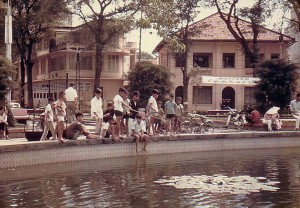
Chambre de commerce building 1960s

The former Chambre de commerce building in the 1960s

Since 1954 the building would appear to have been used mainly as a bank and until quite recently it was still the main Hồ Chí Minh City office of ANZ.

These days this old building seems to change hands all too frequently, and since it is not a listed monument, each change of ownership brings yet more modifications to the façade.

UPDATE: This building was demolished in late June 2016.

Tim Doling is the author of the guidebook Exploring Saigon-Chợ Lớn – Vanishing heritage of Hồ Chí Minh City (Nhà Xuất Bản Thế Giới, Hà Nội, 2019)

A full index of all Tim’s blog articles since November 2013 is now available here.

Join the Facebook group pages Saigon-Chợ Lớn Then & Now to see historic photographs juxtaposed with new ones taken in the same locations, and Đài Quan sát Di sản Sài Gòn – Saigon Heritage Observatory for up-to-date information on conservation issues in Saigon and Chợ Lớn.
Foulhoux’s Saigon

1

The windows of Foulhoux’s Customs House building, decorated with opium poppies

It has been said that few colonial officials made their mark on the urban fabric of Saïgon as distinctively as Cochinchina’s first chief architect, Marie-Alfred Foulhoux (1840-1892).

Born in Mauzun (Puy-de-Dôme) on 23 September 1840, Foulhoux studied architecture at the École des Beaux-Arts in Paris from 1862 to 1870 and subsequently became an Architect-Inspector with the Compagnie des Chemins de fer de Paris à Lyon et à la Méditerranée (PLM), one of the most important private railway companies in France.

In 1874 he left for Saïgon, where in the following year he succeeded Paulin Vial as Director of Civic Buildings. Then in 1879, following the establishment of the first civil regime in Cochinchina under Governor Charles Le Myre de Vilers, Foulhoux was appointed Architect-in-Chief, permitting him to focus exclusively on what he did best – designing civic buildings for the colony.

2

The Palais de Justice (1885)

It was while serving as Director of Civic Buildings that Foulhoux designed his first major work, the Secrétariat général du gouvernement, now the Department of Information and Communications and Department of Trade and Industry offices at 59-61 Lý Tự Trọng, constructed in 1875-1881.

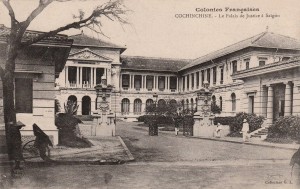
This was followed by the Palais de Justice, now the People’s Law Court at 131 Nam Kỳ Khởi Nghĩa. Built in 1881-1885 to replace and earlier building on a different site, this two-storey neo-classical edifice incorporated exterior verandas to enhance ventilation and featured decorative work and statuary by Notre Dame Cathedral architect Jules Bourard. In 1961, a rear extension was built to a clever design by Xá Lợi Pagoda architect Đỗ Bá Vinh which harmonised perfectly with the original.

Sadly, Foulhoux’s third major work in Saïgon, the headquarters of the Direction du Service local which once stood on the site of today’s Sheraton Saigon Hotel, was demolished in the 1950s. However, three other important Foulhoux works have survived for posterity.

3

The Hôtel des douanes (1887)

After the colonial authorities ended Cantonese trader Wang Tai’s monopoly on the supply and refining of opium in 1881 (see Wang Tai and the Cochinchina opium monopoly), the Customs and Excise Department purchased his former Saigon headquarters building on the Saïgon riverfront – the “Maison Wang Tai” – to use as their main office. However, it proved insufficient for their needs, so in 1885-1887 it was rebuilt to a design by Foulhoux as the Hôtel des douanes or Customs Department building. Writer, journalist and Indochina specialist Jules Boissière (1863-1897) pointed out that the badges separating its windows featured opium poppies, then one of the most important sources of revenue for the colonial government. In fact, the same floral motifs may be seen on several other former French government buildings in the city.

Arguably, Foulhoux’s best-known work is the Lieutenant Governor’s Palace, completed in 1890 and currently home to the Hồ Chí Minh City Museum. Having initially been instructed to design an exhibition hall for the display of trade products, Foulhoux was obliged to repurpose the building half way through construction, when it was announced in October 1887 that Hà Nội would be the new seat of the Governors General of Indochina. No longer deemed senior enough to occupy the stately 1873 Norodom Palace (see Saigon’s Palais Norodom – A Palace Without Purpose), the newly-downgraded Lieutenant Governors of Cochinchina were hastily found humbler accommodation in the exhibition hall, which was refurbished at considerable cost to serve as their official residence.

4

The Lieutenant Governor’s Palace (1890)

From 1890-1911 the Lieutenant Governor’s Palace was home to 13 Lieutenant Governors and from 1911-1945 to another 16 Governors of Cochinchina. It later variously accommodated the Japanese governor, the special envoy of former King Bảo Đại, the Việt Minh and the Head of the British Military Mission charged with overseeing the return of the French colonial authorities after World War II. Its last famous resident was South Vietnamese President Ngô Đình Diệm, who relocated here in February 1962 while his new Independence Palace was under construction and had a network of secret tunnels built beneath its floor so that he could take shelter and if necessary escape in the event of a further coup attempt. When a coup did take place in early November 1963, Diệm used that tunnel network to escape onto Lê Thánh Tôn street and flee to Chợ Lớn, but on the following day he and his brother were captured and assassinated.

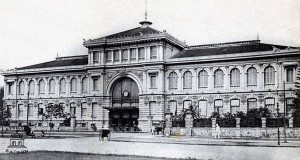
Foulhoux’s final work, the Hôtel des postes or Central Post Office, is widely regarded as his greatest, though unfortunately many local tour guides quote the Wikipedia article which erroneously credits the building to Gustave Eiffel. Built between 1886 and 1891 on the site of the former headquarters of the Commandant des troupes, it was constructed around a prefabricated cast iron frame, permitting the creation of a unique vaulted ceiling with wrought iron beams and columns reminiscent of industrial architecture.

5

The Hôtel des postes (1891)

It was later reported that Foulhoux’s intention was to capture the essence of human scientific and technical advancement, a theme which is continued on the Neo-Baroque façade with its window plaques bearing the names of leading scientists and philosophers like Descartes, Morse, Ampere, Volta, Ohm and Faraday.

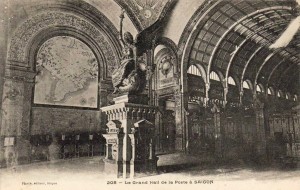
A statue of the Greek messenger goddess Iris once stood in the centre of the main lobby, but this was removed in the 1950s to create more space.

On 15 September 1891, the journal Architecte constructeur: Revue du monde architectural et artistique of 15 September 1891 commented: “The inauguration the new Saigon Post Office, which was held on July 14, had been postponed until the return of the Governor General. This monument, adorned with a most artistic façade, is particularly well laid out and well equipped for the different services to which it is intended; it does the greatest honour to the skill and talent of the distinguished Chief Architect of the Colony, M. Foulhoux.”

6

A statue of the Greek messenger goddess Iris once stood in the main lobby of the Hôtel de postes

While his contribution to city planning in Saigon received little coverage back home in France, Foulhoux was briefly fêted in Paris in 1889 for the beautiful red teak Palais Annamite which he created on the esplanade des Invalides for the Universal Exposition of that year.

In November 1890, Foulhoux stood unsuccessfully for the elected post of Mayor of Saigon, losing to Eugène Cuniac. In the following month he was made an Officier de la Légion d’honneur and Officier d’Académie.

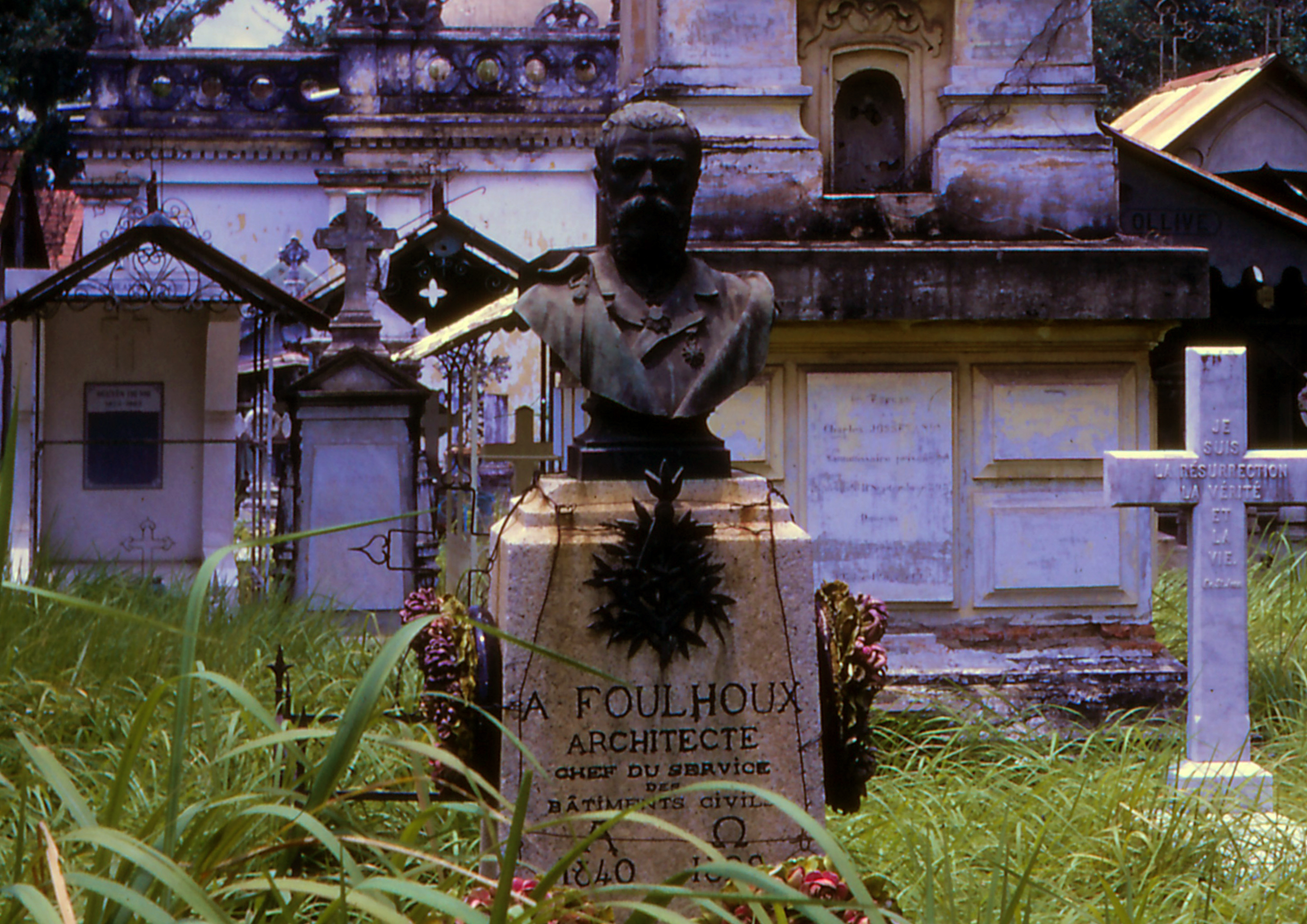
Marie-Alfred Foulhoux died in Saïgon after a brief illness on 20 January 1892, aged just 52. He was buried in the Cimetière de la rue Massiges, Saigon’s main European cemetery during the colonial era. The entire cemetery was cleared in 1983 to make way for the Lê Văn Tám Park – see Le Van Tam Park – Former Massiges Cemetery, 1859.

Foulhoux’s obituary, also published in the journal L’Architecte constructeur, described him as “a benevolent official with a gentle and conciliatory character, esteemed by all who knew him” ….adding that he was a passionate hunter.

Foulhoux

Alfred Foulhoux was buried in the Cimetière de la rue Massiges in Saigon. I am grateful to Frederick P. Fellers of Indianapolis, USA for making available this photograph of Foulhoux’s tombstone, which he took in 1970.

Tim Doling is the author of the guidebook Exploring Saigon-Chợ Lớn – Vanishing heritage of Hồ Chí Minh City (Nhà Xuất Bản Thế Giới, Hà Nội, 2019)

A full index of all Tim’s blog articles since November 2013 is now available here.

Join the Facebook group pages Saigon-Chợ Lớn Then & Now to see historic photographs juxtaposed with new ones taken in the same locations, and Đài Quan sát Di sản Sài Gòn – Saigon Heritage Observatory for up-to-date information on conservation issues in Saigon and Chợ Lớn.
The Changing Faces of Sai Gon Railway Station, 1885-1983

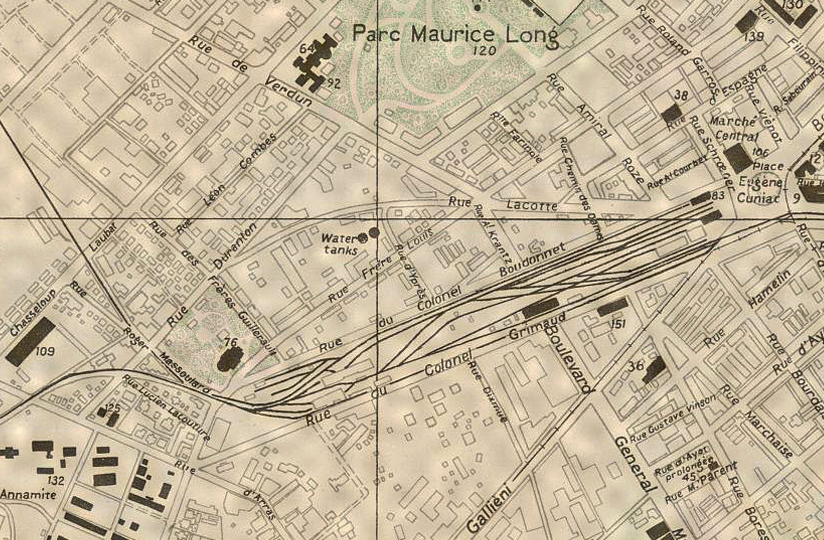
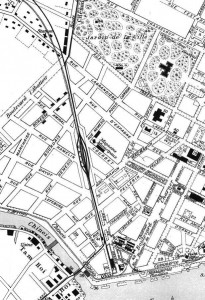
Saigon 1946

The second Saigon Railway Station (1915-1983) depicted on a 1946 map

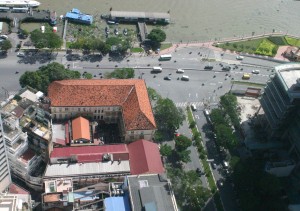
Travellers arriving by train in Hồ Chí Minh City sometimes express surprise that the main Sài Gòn Railway Station is located in Hòa Hưng, some distance from the Central Business District. In fact, this is the third railway terminus in a city where each successive station has been built further away from the river.

IMAGE 2 The site of the first Sài Gòn Railway Station

The location of the first Sài Gòn Railway Station

Opened in 1885 to serve Indochina’s earliest railway line from Sài Gòn to Mỹ Tho, the first Sài Gòn Railway Station was located at the riverside end of rue du Canton (modern Hàm Nghi boulevard). From there, the rail track ran west along the centre of the boulevard, cutting through what is now Quách Thị Trang square and following the path of modern Phạm Hồng Thái and Lê Thị Riêng streets en route for Chợ Lớn and Mỹ Tho.

The line’s first operator, the Compagnie des chemins de fer garantis des colonies françaises (CCFGCF), built a large dépôt-atelier next to the line, in the area now occupied by the west end of Hàm Nghi street and Quách Thị Trang square.

Saigon1900GSmR35Light

A map of 1900 showing the route of the Sài Gòn–Mỹ Tho and Sài Gòn–Nha Trang lines

After 1903, CCFGCF’s successor, the Société générale des tramways à vapeur de Cochinchine (SGTVC), added a freight spur which branched west from the station throat along rue d’Adran (now Hồ Tùng Mậu street) to connect with Sài Gòn docks via the pont tournant (Khánh Hội) swing bridge.

When construction of the Sài Gòn–Nha Trang line got underway in 1901, its route initially followed the existing Sài Gòn–Mỹ Tho line from rue du Canton – by then known as boulevard Krantz-Duperré – as far as the present-day Phù Đổng junction, where it branched northward along the route de Thuan-Kieu (now Cách mạng Tháng 8 street) to Hòa Hưng and onward to Biên Hòa.

Realising that the existing terminus was too small to serve two railway lines, the authorities drew up plans to build a larger station on the site of the existing dépôt-atelier at the western end of boulevard Krantz-Duperré. However, when this scheme fell through, a temporary terminus had to be set up next to the modern Hàm Nghi/Nam Kỳ Khởi Nghĩa intersection. Consequently, when the first 29km section of the Sài Gòn–Nha Trang line was inaugurated on 13 January 1904, trains on the new line departed from this temporary terminus, while Sài Gòn–Mỹ Tho line trains continued to use the old riverside station.

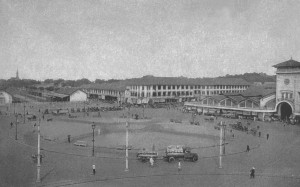
10 Sài Gòn Station in 1916

The second Sài Gòn Station (pictured left) in 1916

The redevelopment which accompanied the construction of the new Halles centrales (Bến Thành Market) from 1910 onwards gave the colonial authorities the chance to rectify this unsatisfactory state of affairs by rerouting both the Sài Gòn–Mỹ Tho and Sài Gòn–Nha Trang railway lines into a single terminus southwest of the new market.

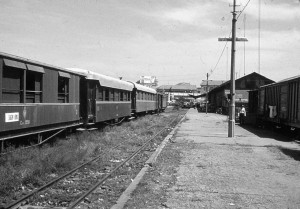
Construction of this second Sài Gòn Railway Station got under way in 1911 and it opened in September 1915. Its southwest-facing alignment — preserved to this day in the shape of 23-9 Park on Hồ Chí Minh City’s popular “backpacker street,” Phạm Ngũ Lão — necessitated only minor modifications to the route of the Sài Gòn–Mỹ Tho line, but the Sài Gòn–Nha Trang line had to be completely realigned southward from Hòa Hưng along what is now Nguyễn Thượng Hiền street.

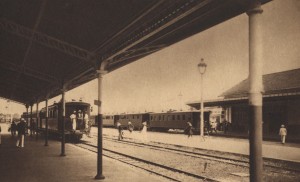
12 Second Saigon Station

A “platform’s eye view” of the second Sài Gòn Station

At the same time, the old dépôt-atelier was demolished, permitting boulevard Krantz-Duperré to be extended westward into a spacious new square named place Eugène Cuniac (now Quách Thị Trang square), where a grand southern headquarters for the Chemins de fer de l’Indochine (CFI) was built opposite the station entrance.

A single-track line was left in place along boulevard Krantz-Duperré to maintain freight access to the Saigon port and this was connected to the new station by a rail spur across place Cuniac.

Unfortunately in subsequent years the colonial authorities realised that the new railway station blocked several main traffic arteries and in the mid 1920s its location was deemed to be “the cause of deplorable circulation and atrophication” in the city centre.

27 Ham Nghi with rail track 1960s

The old freight track on Hàm Nghi boulevard pictured during the 1960s

By this time too, as the construction of the Transindochinois from Sài Gòn to Hà Nội neared completion, it was increasingly felt that the new station had insufficient capacity to deal with the anticipated increase in both passenger and freight traffic. Plans were therefore drawn up to relocate the terminus yet again – this time out of the city centre to Hòa Hưng.

North of Hòa Hưng, the original path of the Sài Gòn-Nha Trang line took it along rue Capitaine Faucon (modern Trần Quang Diệu and Trần Huy Liệu streets). However, a 3.6 million-piastre project of 1931 recommended that the line should be rerouted to the west of this alignment to terminate at Hòa Hưng, where a new Sài Gòn Railway Station would be built, along with a locomotive depot and a Gare de marchandises (freight depot). To access the new station, the final stretch of the Sài Gòn–Mỹ Tho line would also be diverted northward from Phú Lâm. In fact, the project ran into various difficulties and was only partially completed.

23 Saigon Station 3

Sài Gòn Railway Station pictured in 1968

By 1938 the Sài Gòn-Nha Trang line north of Hòa Hưng had been rerouted along its current path and new freight and locomotive depots had been built on the deviation. However, for the time being Sài Gòn Railway Station was left where it was.

Following the closure of the Sài Gòn–Mỹ Tho branch line in 1958, CFI’s successor, the South Vietnamese Department of Railways (Sở Hỏa xa Việt Nam, HXVN), drew up its own scheme to close the unloved city centre railway terminus and relocate it to Hòa Hưng. However, since it was unable to secure the necessary funds, the long-mooted northward relocation of the southern rail terminus would not be realised until after Reunification.

From 1967 onwards, National Liberation Front and North Vietnamese army attacks on the southern railway network intensified and in the wake of the Tết Offensive of 1968 the HXVN found it increasingly difficult to maintain train services. By 1971 scheduled services in and out of Sài Gòn had effectively ceased.

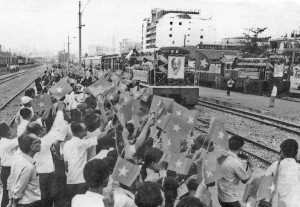
The first “Unification Express”arrives in Saigon from Hà Nội on 4 January 1977

After Reunification in 1975, the restoration of the entire North-South railway to operation became a political priority. In December 1976, the first through train services since 1945 was launched between Hà Nội and Sài Gòn, now known as Hồ Chí Minh City.

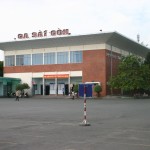
Construction of the current terminus – the third Sài Gòn Railway Station – began in 1978 on the site of the old French Gare de marchandises. It was completed in November 1983 and after its inauguration the old railway track into the city centre was removed. The site of the old city-centre terminus became “23-9 Park,” named in memory of those patriots killed while resisting the British Indian forces who helped the French to reoccupy Sài Gòn on 23 September 1945.

IMAGE 7 The third and current Sài Gòn Railway Station

The third and current Sài Gòn Railway Station

Interestingly, current plans for the future development of Hồ Chí Minh City as a rail hub call for the southernmost stretch of the North-South line from Bình Triệu into Hồ Chí Minh City to be rebuilt as an elevated fast line and extended through the city to a new terminus in the southwest suburb of Tân Kiên. Perhaps in future the sound of railway trains will one day be heard in the heart of the southern capital.

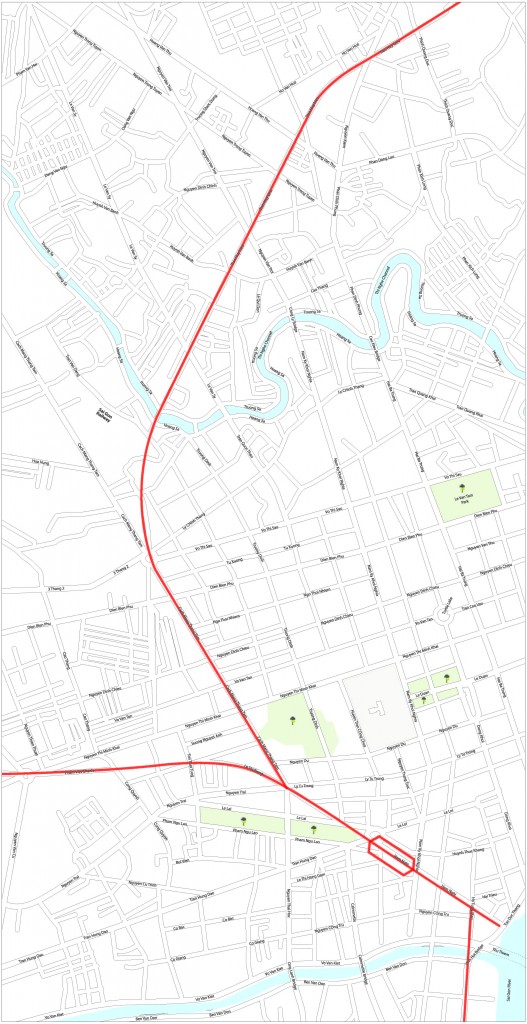
IMAGE 1 The original path

The paths of the Sài Gòn–Mỹ Tho and Sài Gòn–Nha Trang lines from 1904 until 1915, superimposed on the modern street map

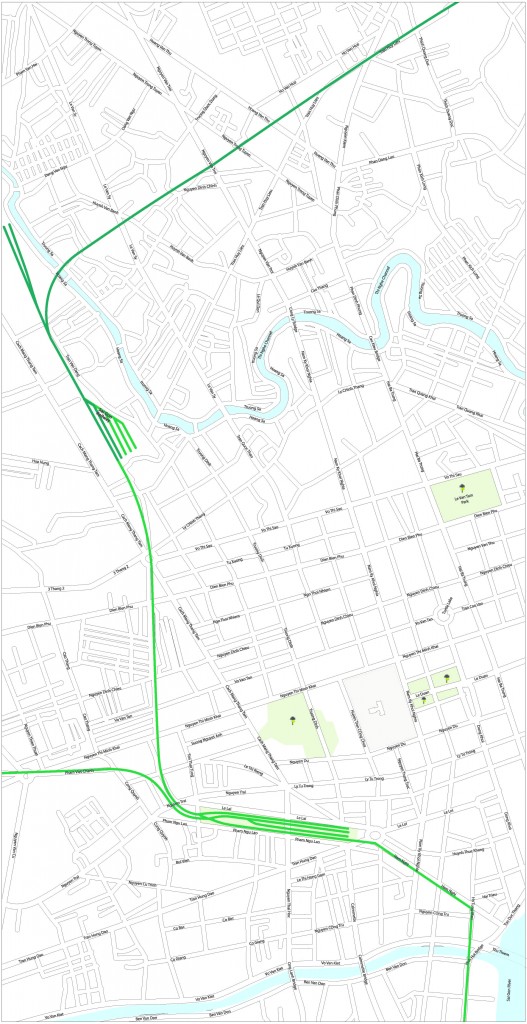
IMAGE 6 The final path

The paths of the Sài Gòn–Mỹ Tho and Sài Gòn–Nha Trang lines after 1938, superimposed on the modern street map

Tim Doling is the author of The Railways and Tramways of Việt Nam (White Lotus Press, Bangkok, 2012) and also gives talks on Việt Nam railway history to visiting groups.

Tim is also the author of the guidebook Exploring Saigon-Chợ Lớn – Vanishing heritage of Hồ Chí Minh City (Nhà Xuất Bản Thế Giới, Hà Nội, 2019)

A full index of all Tim’s blog articles since November 2013 is now available here.

Join the Facebook group Rail Thing – Railways and Tramways of Việt Nam for more information about Việt Nam’s railway and tramway history and all the latest news from Vietnam Railways.

You may also be interested in these articles on the railways and tramways of Việt Nam, Cambodia and Laos:

A Relic of the Steam Railway Age in Da Nang
By Tram to Hoi An
Date with the Wrecking Ball – Vietnam Railways Building
Derailing Saigon’s 1966 Monorail Dream
Dong Nai Forestry Tramway
Full Steam Ahead on Cambodia’s Toll Royal Railway
Goodbye to Steam at Thai Nguyen Steel Works
Ha Noi Tramway Network
How Vietnam’s Railways Looked in 1927
Indochina Railways in 1928
“It Seems that One Network is being Stripped to Re-equip Another” – The Controversial CFI Locomotive Exchange of 1935-1936
Phu Ninh Giang-Cam Giang Tramway
Saigon Tramway Network
Saigon’s Rubber Line
The Langbian Cog Railway
The Long Bien Bridge – “A Misshapen but Essential Component of Ha Noi’s Heritage”
The Lost Railway Works of Truong Thi
The Mysterious Khon Island Portage Railway
The Railway which Became an Aerial Tramway
The Saigon-My Tho Railway Line

Gateway to Nowhere – The “Gia Dinh Gate,” 1913

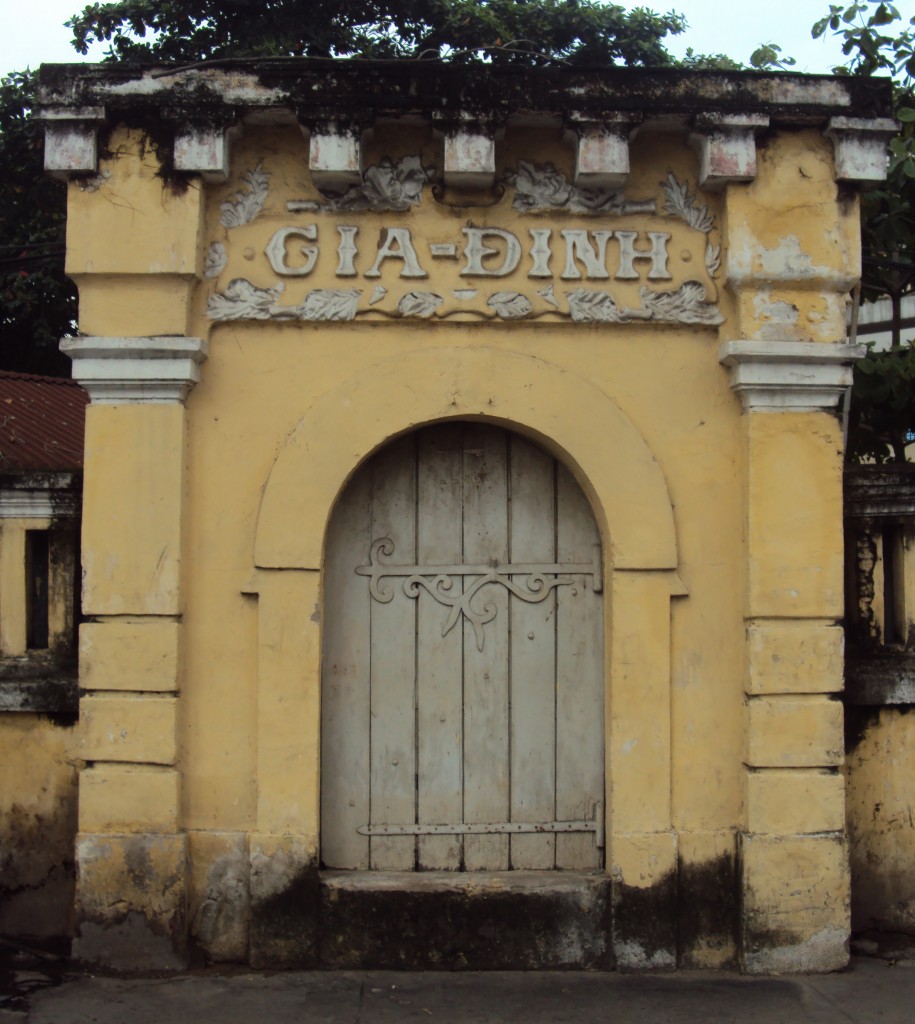
1. The so-called “Gia Định Citadel Gate”

The so-called “Gia Định Citadel Gate”

It’s claimed by several tourism websites that a gateway from one of the ancient Gia Định citadels has survived and may be viewed on the Đinh Tiên Hoàng/Phan Đăng Lưu street intersection in Bình Thạnh district, close to the Lê Văn Duyệt Mausoleum. However, a little research into the history of that area reveals that the gateway in question has more recent origins.

2. A 1966 map of what is now

A 1966 map of what is now the Đinh Tiên Hoàng/Phan Đăng Lưu junction

The gateway, popularly known as the Gia Định Citadel Gate (Cổng thành Gia Định), is built into the outer wall of the Trương Công Định Primary School and does bear a very superficial resemblance to the east gate of the 1837 Gia Định Citadel, as depicted in the famous drawing of the French attack of 1859, although clearly it was conceived on a significantly smaller scale.

However, since neither the Lũy Bán Bích city walls of 1772 nor the two citadels of 1790 and 1837 (see my earlier post, The Citadels of Gia Định) were located anywhere near this neighbourhood, the idea that it ever formed part of those structures may be ruled out.

Old maps reveal that the Trương Công Định Secondary School stands on the site formerly occupied by the historic Gia Định School of Drawing (École de Dessin Gia-Dinh), an applied arts school set up by the French in 1913 to provide continuing studies for graduates of the Thủ Dầu Một School of Indigenous Arts (École d’Art Indigène de Thu-Dau-Mot, teaching mainly woodwork and lacquerware) and the Biên Hòa School of Arts (École d’Art de Bien-Hoa, teaching mainly ceramics and bronzecasting).

3. The École de dessin Gia-Dinh

The École de dessin Gia-Dinh pictured in the 1920s

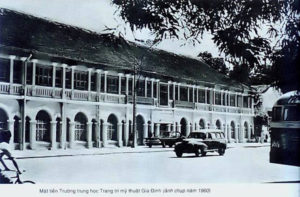
In the 1920s, a new two-storey headquarters was constructed for the Gia Dinh School on the west side of its original buildings (the location of the present-day University of Fine Art).

An important training ground for many pioneering southern painters and sculptors, the school was renamed the Gia Dinh School of Applied Arts (École des Arts Décoratifs de Gia-Dinh) in 1940, and after 1954 it became the Gia Dinh Secondary School of Decorative Arts (Trường Trung học Trang trí Mỹ thuật Gia Định, forerunner of today’s Hồ Chí Minh City University of Fine Art).

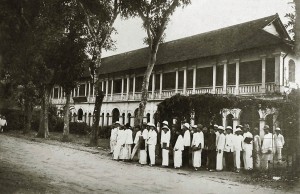
Gia Định Secondary School of Decorative Arts photographed in 1960

Thereafter, all of its operations were concentrated on the 1920s building, permitting the redevelopment of the original site on the modern Đinh Tiên Hoàng-Phan Đăng Lưu intersection. The latter is now home to the Trương Công Định Secondary School,

However, an original gateway inscribed with the words “Gia-Dinh,” dating back to the early years of the École de dessin Gia-Dinh, has survived on the junction to this day, and now forms part of the secondary school’s perimeter wall.

Tim Doling is the author of the guidebook Exploring Saigon-Chợ Lớn – Vanishing heritage of Hồ Chí Minh City (Nhà Xuất Bản Thế Giới, Hà Nội, 2019)

A full index of all Tim’s blog articles since November 2013 is now available here.

Join the Facebook group pages Saigon-Chợ Lớn Then & Now to see historic photographs juxtaposed with new ones taken in the same locations, and Đài Quan sát Di sản Sài Gòn – Saigon Heritage Observatory for up-to-date information on conservation issues in Saigon and Chợ Lớn.
The Citadels of Gia Dinh

The location of the first Gia Định Citadel of 1790, superimposed on the modern street map

Tourist guidebooks often remind us that Sài Gòn once had its own citadel. In fact, within the relatively short space of 70 years (1770-1840), this city saw the construction of three major fortifications by the ruling Nguyễn family.

The earliest of these was the Lũy Bán Bích (or Bán Bích Cổ Lũy), built in 1772 by one of Lord Nguyễn Phúc Thuần’s generals, Nguyễn Cửu Đàm, to protect the settlement from invading Siamese armies.

IMAGE 2

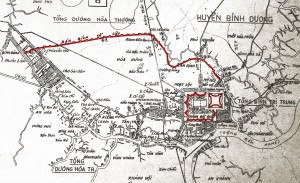
The location of the Lũy Bán Bích city walls of 1772

The Lũy Bán Bích was not a citadel but a fortified city wall, which stretched over 8.5km from the Bình Dương River in the Minh Hương settlement (Chợ Lớn) to the Thị Nghè creek in Bến Nghé (Sài Gòn). Though no traces of this structure have survived, it left a footprint in the configuration of several modern streets, including Lý Chính Thắng and Trần Quang Khải.

In his 30-year war against the Tây Sơn brothers, Nguyễn Phúc Thuần’s nephew Lord Nguyễn Phúc Ánh turned first to Siam and later to France for military assistance. Thanks to funds raised in the late 1780s by his French ally Pierre Pigneau de Béhaine (1741-1799), Bishop of Adran, he was able to modernise his armed forces and to engage the services of French military advisers to train them in the latest techniques of European warfare.

IMAGE 3

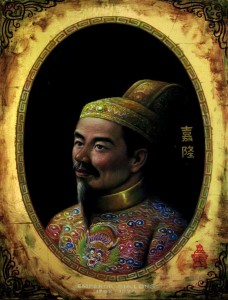
Nguyễn Phúc Ánh, later King Gia Long (1802-1820)

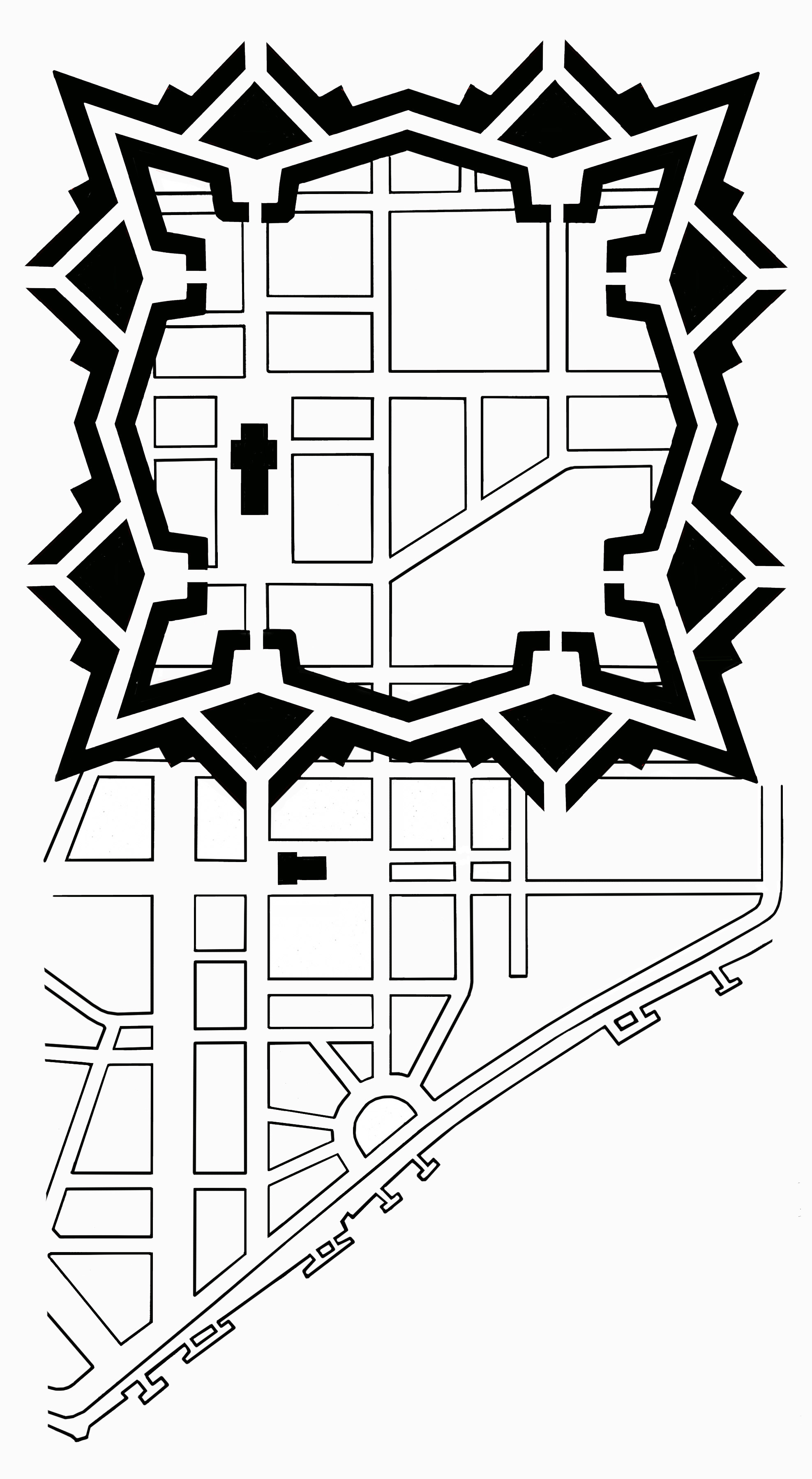
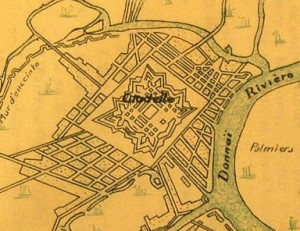
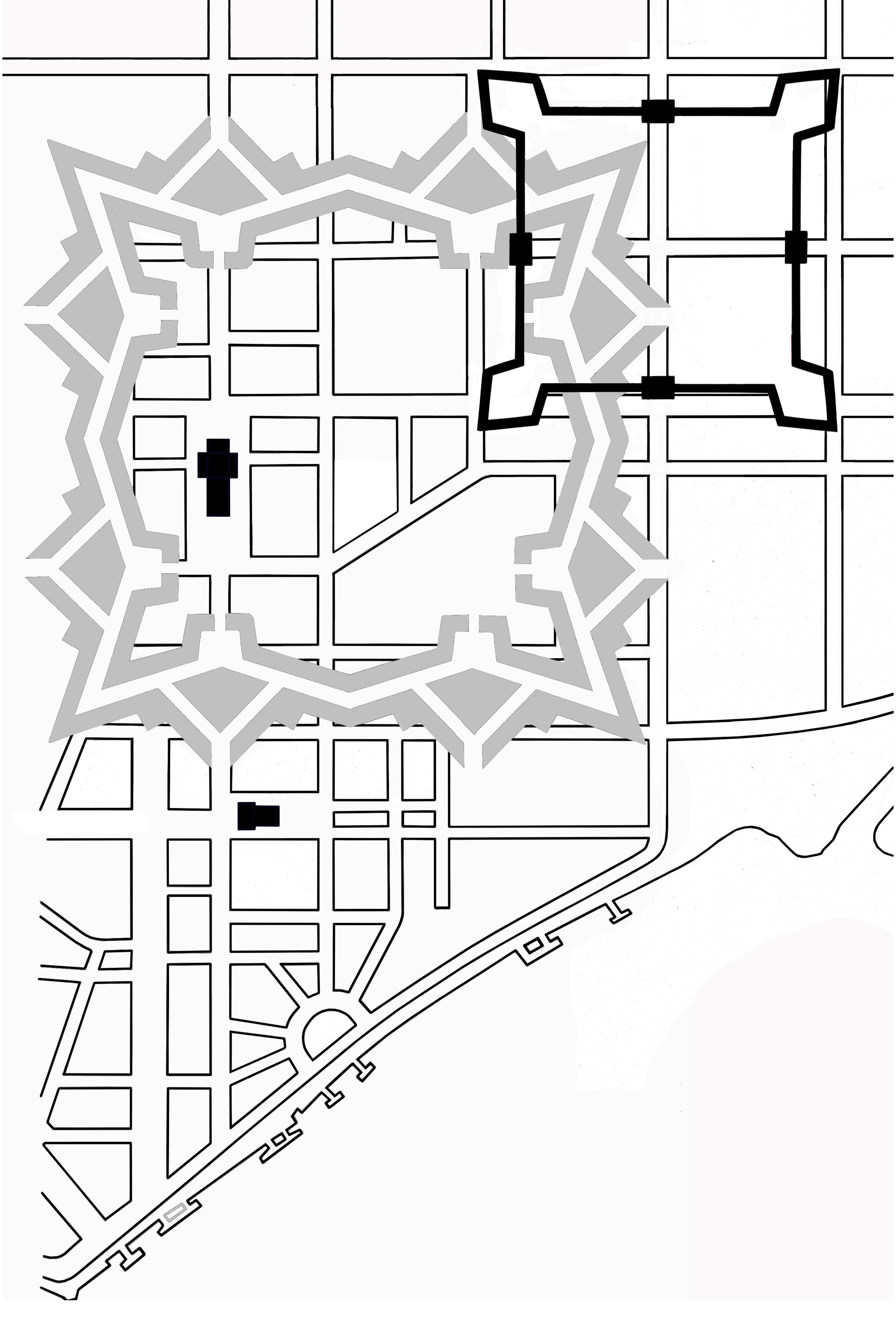
French military assistance also extended to the construction of several new fortifications. The largest of these was the first Gia Định Citadel, built in 1790 by a team of 30,000 labourers under the charge of French engineering corps mercenaries Olivier de Puymanel and Théodore Le Brun to serve as Nguyễn Phúc Ánh’s temporary royal capital (Gia Định Kinh). Although built in accordance with the principles of Vauban military architecture, the polyhedron-shaped citadel’s perceived similarity to an octagon and the fact that it had eight gates gained it the popular local name, Bát Quái (“Eight Trigrams”) Citadel.

Located on a 1.2km x 1.2km site corresponding to the area between the modern Lê Thánh Tôn, Nam Kỳ Khởi Nghĩa, Nguyễn Đình Chiểu and Đinh Tiên Hoàng streets, the citadel was constructed from Biên Hòa granite, with 5m high walls and bastions surrounded by a deep moat. It was dominated on its southern side by a large flag tower and the main Càn Nguyên southern gate stood in the vicinity of today’s Đồng Khởi/Lý Tự Trọng street junction, where surviving sections of bastion wall were unearthed during construction work in 1926. The citadel was connected with the royal wharf on the Sài Gòn river by what is now Đồng Khởi street.

IMAGE 4

This 1793 map depicts the first Gia Định Citadel (1790) and the eastern end of the earlier Lũy Bán Bích city walls (1772)

At its centre (close to the modern Lê Duẩn/Hai Bà Trưng street junction) was the King’s Palace, flanked on its left by the Prince’s Palace. Immediately behind it was the Queen’s Palace, and in front of it was a large parade ground and armoury. Other buildings included an army barracks, a hospital, a wagon workshop, an arsenal, a forge and three gunpowder stores. The citadel was the focal point of a highway network known as the Thiên Lý road, which led west to the Mekong Delta, north west to Cambodia and north east to Huế and Thăng Long (Hà Nội).

His newly-upgraded forces and fortifications gave Nguyễn Phúc Ánh a qualitative military edge, contributing in no small way to his final victory over the Tây Sơn and facilitating his accession to the throne in 1802 as the first Nguyễn dynasty king, Gia Long (1802-1820). He subsequently chose Huế as his royal capital, but Gia Định remained a settlement of great strategic importance and during the first three decades of Nguyễn dynasty rule it was afforded a significant measure of political and economic autonomy under a series of royal Viceroys, the best known being Marshal Lê Văn Duyệt (1763-1832). However, this autonomy subsequently attracted the wrath of Gia Long’s successor Minh Mạng (1820-1841), who after Duyệt’s death in 1832 set about restoring central government control, pointedly downgrading Gia Định to the status of a mere provincial capital.

Later, in a symbolic act designed to discourage any further separatist tendencies after the failed southern uprising of 1832-1835, Minh Mạng had his father’s great royal citadel of 1790 demolished and replaced by a considerably smaller one.

The location of the second Gia Định Citadel of 1837, superimposed on the modern street map

This “Phoenix Citadel” of 1837 stood in the area now bordered by Nguyễn Đình Chiểu, Nguyễn Du, Mạc Đĩnh Chi and Nguyễn Bỉnh Khiêm streets. It, too, was built in accordance with Vauban principles, though in the shape of a square with 5m high walls and four corner bastions, surrounded by a 3m deep moat.

Although no traces of this second Gia Định Citadel have survived, an almost identical structure – the Điện Hải Citadel (see later post Dien Hai – Da Nang’s forgotten Vauban citadel) – may still be seen today in Đà Nẵng.

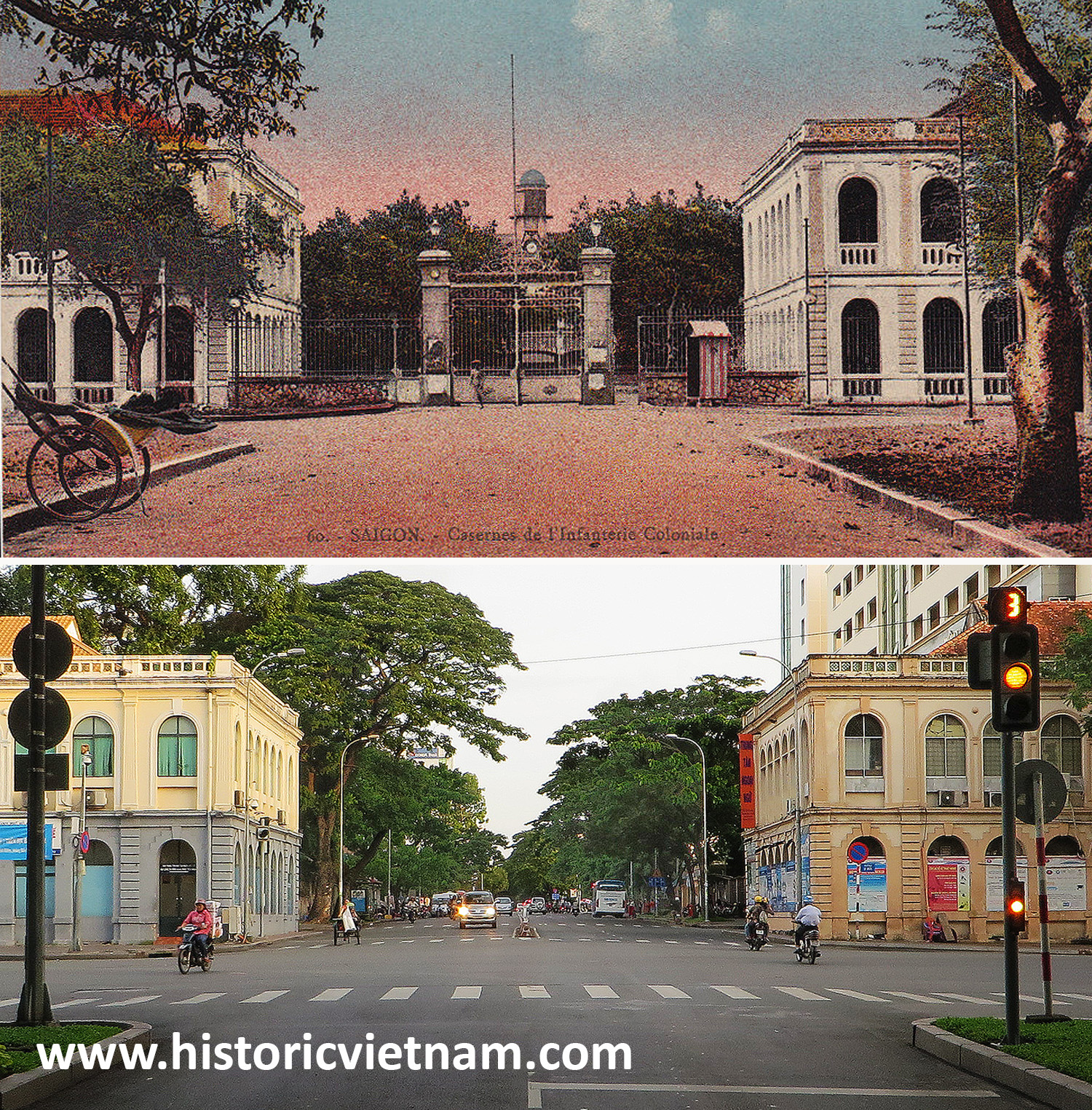
The French attacked the south gate of the 1837 Gia Định Citadel in February 1859 (top); the French demolished the Citadel and in 1872-1873 built their 11th Colonial Infantry Barracks on the site (middle); the gatehouses of the former 11th Colonial Infantry Barracks still stand today on the junction of Lê Duẩn and Đinh Tiên Hoàng (bottom)

The Phoenix Citadel survived for just 22 years; following the conquest of 1859, the French razed it to the ground and in 1870-1873 they built a Caserne de l’infanterie (infantry barracks) over its front section. Despite the demise of Minh Mạng’s citadel, the French continued to call the area “Citadelle” throughout the colonial period.

The Caserne de l’infanterie originally contained rows of handsome iron-framed colonial barracks buildings, identical to those which may still be seen today at the nearby Children’s Hospital 2 (the former Grall Hospital).

IMAGE 7

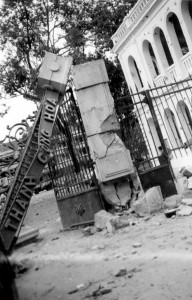
The front gate of the barracks in the aftermath of the November 1963 coup

Following the Japanese coup of March 1945, they were used briefly to intern French troops. Then in 1956, South Vietnamese President Ngô Đình Diệm renamed the Caserne de l’infanterie as the Thành Cộng Hòa (Republic Citadel) and turned it into the headquarters of his elite Presidential Guard. Consequently the compound suffered serious damage during the coup of November 1963 which deposed him.

After the coup, the remaining military installations were moved out of the old barracks compound and an extension to Đinh Tiên Hoàng street was driven right through the middle of it.

By 1967 Sài Gòn University had taken up residence in the southwest section, while the American Armed Forces Radio Television Service (AFRTS) and the locally-run Việt Nam Television (Truyền hình Việt Nam, forerunner of Hồ Chí Minh City Television, HTV) occupied much of the northeast section. Today the former barracks site is shared between the Hồ Chí Minh City University of Social Sciences and Humanities and HTV.

Despite all of this redevelopment, it’s still possible today to identify the buildings which frame the entrance to Đinh Tiên Hoàng street on the Lê Duẩn junction as those which originally stood either side of the main gate of the 1873 Caserne de l’infanterie – buildings which constitute our last link with the lost royal citadels of Gia Định.

A front view of the 11th Colonial Infantry Barracks in the early 1900s and the same view of the Lê Duẩn-Đinh Tiên Hoàng intersection today

Tim Doling is the author of the guidebook Exploring Saigon-Chợ Lớn – Vanishing heritage of Hồ Chí Minh City (Nhà Xuất Bản Thế Giới, Hà Nội, 2019)

A full index of all Tim’s blog articles since November 2013 is now available here.

Join the Facebook group pages Saigon-Chợ Lớn Then & Now to see historic photographs juxtaposed with new ones taken in the same locations, and Đài Quan sát Di sản Sài Gòn – Saigon Heritage Observatory for up-to-date information on conservation issues in Saigon and Chợ Lớn.

The Langbian Cog Railway

1. An SLM HG4

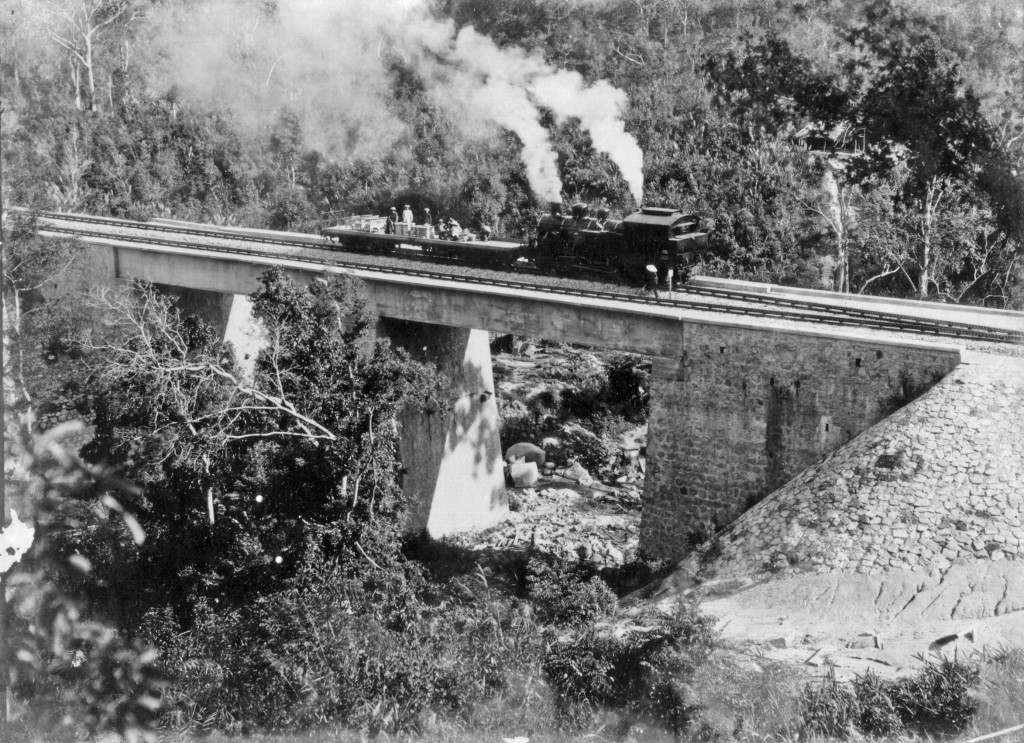
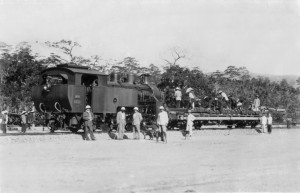
An SLM HG4/4 0-8-0T rack-and-pinion locomotive negotiates the Bellevue Pass in early 1927

For many people it comes as a surprise to learn that before 1975 Việt Nam had its own Swiss-built cog railway line, an 84km branch which connected Tháp Chàm in Ninh Thuận Province with the central highlands resort of Đà Lạt.

701

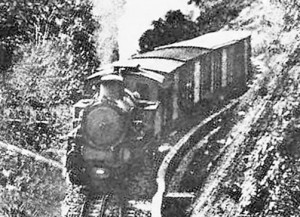
SLM HG4/4 0-8-0T rack-and-pinion locomotive No 707

The history of Đà Lạt may be traced back to the 1890s when it was founded by the French as a high-altitude health spa where colonial residents could escape from the heat of the Mekong Delta and coastal region.
Plans to connect the town by rail with the North-South line at Tourcham (Tháp Chàm) were drawn up before the end of the 19th century, but in the event the 84km branch line took almost 30 years to build.
Work on the first 40km from Tourcham to Krông Pha got under way in 1903, but although it involved only conventional adhesion rail technology, the project suffered numerous delays and the line was not inaugurated until 1919.

15 HG 4-4 Bellevue Pass

An SLM HG4/4 0-8-0T rack-and-pinion locomotive in the Bellevue Pass in the 1930s

The final 44km involved an ascent from 186m to 1,550m, with steep gradients of up to 120mm/m, so the Swiss cog railway company Schweizerische Lokomotiv- und Maschinenfabrik (SLM) of Winterthur, represented in Indochina by the Société d’entreprises asiatiques, was entrusted with the work. Construction began on 20 March 1923 and the line was completed in 1932.

At the outset, nine Schweizerische Lokomotiv- und Maschinenfabrik (SLM) superheated 46-tonne HG4/4 0-8-0T rack-and-pinion locomotives (originally numbered 701-709) were purchased to haul trains on this line. Seven of these (701-705, 708-709) were built at SLM’s Winterthur factory, while the remaining two (706-707) were built on their behalf by Maschinenfabrik Esslingen.

The new cog railway played a key role in the development of Indochina tourism, but the bulk of the line’s revenue was earned by transporting fresh fruit, vegetables and flowers from the market gardens of the Langbian plateau down to the lowlands.

76. SLM HG4 4 0-8-0T cog locomotive

SLM HG4/4 0-8-0T rack-and-pinion locomotive no 704 between Bellevue and Dran in early 1927

At the start of the first Indochina War in 1945-1946, the Langbian Cog Railway suffered extensive damage at the hands of the Việt Minh, who destroyed four of the line’s original HG4/4 locomotives, leaving just 40-302 (702), 40-303 (703), 40-304 (704), 40-306 (706) and 40-308 (708) in operational condition.

The line was repaired and reopened to public service in 1947. In that year, to replace the locomotives lost during the conflict, the CFI purchased an additional four second-hand 42-tonne SLM HG3/4 2-6-0T rack-and-pinion locomotives (numbered 31-201-31-204) from the recently-electrified Furka-Oberalp Railway in Switzerland.

For financial reasons, proposals in the 1960s by the South Vietnamese railway operator Hỏa Xa Việt Nam (HXVN) to electrify the line were abandoned, and in the years which followed, lack of investment, coupled with deteriorating security, began to impact seriously on the operation of the line.

11 Dalat Station 1948

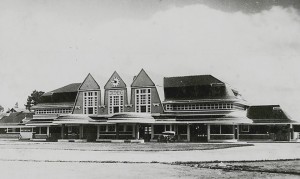
The stylish art deco Đà Lạt Station building pictured in 1948

The Langbian Cog Railway continued to offer a public service until September 1969, when HXVN announced that “because the operation of the line is unprofitable, the line is short of locomotives and safety cannot be guaranteed, the HXVN will suspend operations until the security situation has improved.” In the event, the security situation did not improve and the line remained closed. After 1975 the track was removed.

Considerable controversy was generated in Việt Nam by the sale in 1990 of the surviving cog locomotives which lay rusting in the station yard at Đà Lạt. HG 4/4 locomotives Nos. 40-304 and 40-308, along with the four HG3/4 locomotives 31-201-31-204, were purchased by the Furka Cogwheel Steam Railway (Dampfbahn Furka-Bergstrecke, DFB) as part of the project to reopen the mountainous section of the old Furka-Oberalp Railway, and then repatriated to Switzerland. Since that time, 40-304 and 40-308 have been restored to service under their original numbers 704 and 708.

trip_deco2l

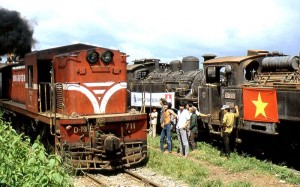
Rusting cog locomotives commencing their journey back to Switzerland in 1990….

However, the fate of the magnificent three-span iron railway bridge over the River Đa Nhim—broken up and sold for scrap in 2004 while the provincial authorities reportedly turned a blind eye —suggests that their return to Switzerland may have saved the old engines from an untimely end.

Since that time, the growth of tourism in Đà Lạt has fuelled a revival of interest in the abandoned cog railway. In 1992 the art deco Đà Lạt Station building was renovated as a national heritage site and a 7km adhesion rail section of the line from Đà Lạt to Trại Mát was reopened for tourists, using diesel traction. The Dalat Train Villa currently offers exploratory walks through abandoned tunnels and stations.

Since 1996, various plans have been advanced to rebuild the Langbian Cog Railway, but as yet it remains uncertain how and when this will be achieved.

VNlocomotive3

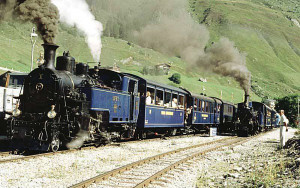
…. now restored to their former glory on the Furka Cogwheel Steam Railway (image copyright Dampfbahn Furka-Bergstrecke)

Due to the specialist nature of cog railway technology, a complete reconstruction will be both complex and expensive, and success is likely to be contingent on the involvement of international technical expertise. At the time of writing a feasibility study has yet to be undertaken.

Had the original Tháp Chàm–Đà Lạt line survived intact, there can be little doubt that it would now be one of Asia’s most important tourist attractions and most probably also a UNESCO World Heritage Site like India’s famous Nilgiri Mountain Railway. If the plan to restore it is successful, Việt Nam could one day becoming one of Asia’s prime railway heritage tourism destinations. Understandably, the progress of the scheme to rebuild it has since been watched with great interest by the Vietnamese tourist sector.

Tim Doling is the author of The Railways and Tramways of Việt Nam (White Lotus Press, Bangkok, 2012) and also gives talks on Việt Nam railway history to visiting groups.

A full index of all Tim’s blog articles since November 2013 is now available here.

Join the Facebook group Rail Thing – Railways and Tramways of Việt Nam for more information about Việt Nam’s railway and tramway history and all the latest news from Vietnam Railways.

You may also be interested in these articles on the railways and tramways of Việt Nam, Cambodia and Laos:

A Relic of the Steam Railway Age in Da Nang
By Tram to Hoi An
Date with the Wrecking Ball – Vietnam Railways Building
Derailing Saigon’s 1966 Monorail Dream
Dong Nai Forestry Tramway
Full Steam Ahead on Cambodia’s Toll Royal Railway
Goodbye to Steam at Thai Nguyen Steel Works
Ha Noi Tramway Network
How Vietnam’s Railways Looked in 1927
Indochina Railways in 1928
“It Seems that One Network is being Stripped to Re-equip Another” – The Controversial CFI Locomotive Exchange of 1935-1936
Phu Ninh Giang-Cam Giang Tramway
Saigon Tramway Network
Saigon’s Rubber Line
The Changing Faces of Sai Gon Railway Station, 1885-1983
The Long Bien Bridge – “A Misshapen but Essential Component of Ha Noi’s Heritage”
The Lost Railway Works of Truong Thi
The Mysterious Khon Island Portage Railway
The Railway which Became an Aerial Tramway
The Saigon-My Tho Railway Line

Saigon’s Favourite Churches – Hanh Thong Tay Church

BYZANTINE TREASURE IMAGE 1

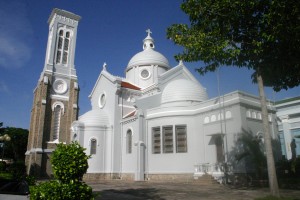
The urban sprawl of Hạnh Thông Tây in the Gò Vấp district of Hồ Chí Minh City is the rather unlikely setting for what is believed to be Việt Nam’s only Byzantine style Roman Catholic church.

Hạnh Thông Tây Church was built under the auspices of the Société des Missions Étrangères de Paris (MEP) in 1921-1924. The land was provided by one of wealthy landowner Huyện Sỹ’s sons, Denis Lê Phát An (1868-1946) and his wife Anna Trần Thị Thơ, who also paid most of the construction costs, the remainder being met through donations. Lê Phát An and his wife lived in a large colonial villa in nearby Gò Vấp, called the Villa Montjoie, which today functions as the headquarters of the Gò Vấp People’s Committee.

BYZANTINE TREASURE IMAGE 2

Hạnh Thông Tây Church pictured from the rear

The work was initially entrusted to a French contractor named Baader. However, on one of his frequent visits to the site during the construction period, Denis Lê Phát An noticed many major technical errors, particularly on the façade, so he issued Baader with a warning and later sacked him altogether, bringing in a new contractor named Lamorte to finish the job.

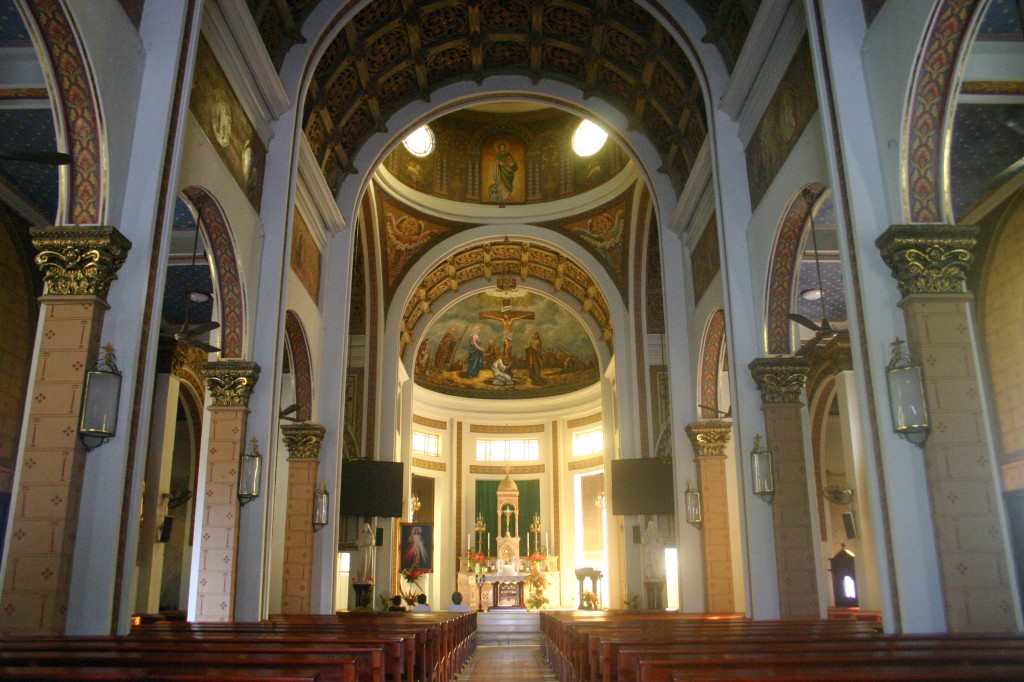
Uniquely for a church built in Việt Nam, its architecture was influenced not by Gothic or Romanesque but by Byzantine style, reportedly taking as its model the Basilica of San Vitale in Ravenna, Italy. Italian bricks were used throughout the interior to give the impression of a traditional Italian sanctuary. The church underwent extensive but sympathetic restoration in 2011-2012.

BYZANTINE TREASURE IMAGE 3

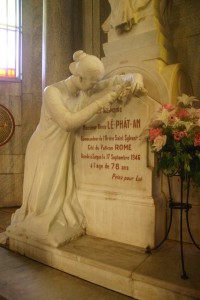
The tomb of Denis Lê Phát An

Hạnh Thông Tây Church has a traditional cruciform-shaped groundplan and the interior features a high vaulted nave flanked by flat-roofed side aisles, a transept and a raised sanctuary which terminates in an apse.

The hemispherical semi-dome above the apse features a large painting of Christ on the Cross. A 20m high dome is located immediately above the crossing and the ring at its base is similarly decorated with paintings of Christ’s Disciples. The high altar is made from white marble and features elaborate floral engraving. Shrines to Mary and Joseph stand in front of the transept walls, either side of the sanctuary. The 14 Stations of the Cross are situated between the windows along both church walls.

When Denis’s wife Anna Trần Thị Thơ died on 18 January 1932 at the Villa Monjoie in Gò Vấp, she was buried in an elaborate tomb in the east transept of Hạnh Thông Tây Church. Fourteen years later, when Denis himself died on 17 September 1946 in Sài Gòn, he was buried in a matching tomb in the west transept. The two tombs are elegantly realised in Renaissance style by unnamed French sculptors and depict effigies of the couple kneeling in prayer, each mourning the other.

BYZANTINE TREASURE IMAGE 4

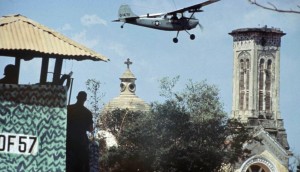
Hạnh Thông Tây Church during the 1968 Tết Offensive

The church originally incorporated a 30m high steeple, but in 1953 the spire was removed at the request of Indochina Airlines, reducing its height to 19.5m for reasons of aviation safety.

The shortened tower later suffered damage during the 1968 Tết Offensive, after NLF Special Forces famously used it to fire on American positions at the nearby Tân Sơn Nhất Air Base.

The church and its recently-built conference hall stand in a compound with large statues of Jesus and Mary located either side of the main entrance. The interior walls of the compound feature 15 elaborately carved sculptures depicting scenes from the New Testament.

Getting there
Address: Nhà thờ Hạnh Thông Tây, 53/7 Quang Trung, Phường 11, Quận Gò Vấp, Thành phố Hồ Chí Minh
Telephone: 84 (0) 8 3895 8069, 84 (0) 90 999 4688
Opening hours: By permission of Father Clêmentê Lê Minh (office behind the church), 8.15am-11am, 2pm-4pm Tue-Sat

You may also be interested to read these articles:

Saigon’s Favourite Churches – Huyen Sy Church
Saigon’s Favourite Churches – Tan Dinh Church
Saigon’s Lost Protestant Chapel

BYZANTINE TREASURE SPARE IMAGE

Tim Doling is the author of the guidebook Exploring Saigon-Chợ Lớn – Vanishing heritage of Hồ Chí Minh City (Nhà Xuất Bản Thế Giới, Hà Nội, 2019)

A full index of all Tim’s blog articles since November 2013 is now available here.

Join the Facebook group pages Saigon-Chợ Lớn Then & Now to see historic photographs juxtaposed with new ones taken in the same locations, and Đài Quan sát Di sản Sài Gòn – Saigon Heritage Observatory for up-to-date information on conservation issues in Saigon and Chợ Lớn.