“Cu Chi Lite” – The Secret Tunnels of Phu Tho Hoa

IMAGE 11.jpg

This article was published previously in Saigoneer http://saigoneer.com

Very few foreign tourists ever set foot there and it seems that only those living in the area know of their existence. But the pioneering Phú Thọ Hòa Tunnels in Hồ Chí Minh City’s Tân Phú District played an important role during the First Indochina War and served as the prototype for their more more famous counterpart at Củ Chi.

IMAGE 1.jpgConstructed by the Việt Minh in 1947 in an area which embraced Phú Thọ and Lộc Hòa hamlets, the Phú Thọ Hòa Tunnels (Địa đạo Phú Thọ Hòa) are said to have been Việt Nam’s very first revolutionary tunnel network, created to serve as a guerilla base and storage facility for attacks on French bases in Saigon. Packed with weapons, food and medical supplies, the tunnels played a crucial role in the First Indochina War.

In mid 1947, special teams were set up to dig the tunnels in conditions of utmost secrecy. The work was carried out at night time and excavated soil was carefully removed and spread onto nearby fields, where it was used to cultivate cassava plants. Each tunnel in the network was originally 0.8m wide x 0.8m high and was accessed by a concealed 0.4m x 0.2m entrance, covered by a lid.

IMAGE 2.jpgAlong each tunnel, the teams built breathing holes to improve air circulation and drains to prevent flooding. Over 1 linear kilometre of tunnels was dug, each tunnel connected to the next one by a short corridor. The complex also incorporated three large underground caverns which could be used either as meeting rooms accommodating four to five people or as provisions and weapon stores.

The Phú Thọ Hòa tunnels were completed in just a few months and at the height of the First Indochina War over 1,000 revolutionary soldiers and many leading party members are said to have operated from them. They were used as a base from which several major offensives were launched against French forces, including a 1947 attack on Tân Sơn Nhì, and a 1948 attack which destroyed a Cao Đài army post at Vĩnh Lộc junction.

IMAGE 4.jpgIt is said that, after the Vĩnh Lộc junction attack, a group of Việt Minh soldiers disguised as “puppet troops” followed a French detachment back to Phú Thọ Hòa Police Station and destroyed it, killing all of its occupants. Several other missions were also launched from the tunnels, including a 1949 attack on Gò Đậu (Ấp Bình Long) and a 1952 ambush at Tân Sơn Nhất Air Base.

Soon after the completion of the Phú Thọ Hòa Tunnels, work began on the tunnel complex at Củ Chi. Both sets of tunnels played an important role in the First Indochina War, but the close proximity of Phú Thọ Hòa to the French high command in Saigon proved something of a mixed blessing and revolutionary activity soon switched to the more remote Củ Chi underground base.

IMAGE 9.jpgThe development of the Củ Chi tunnels after 1962 and of residential tunnel networks at Vịnh Mốc, Vĩnh Linh, Mụ Giai and Kỳ Anh in the heavily-bombed “DMZ” after 1965 is, of course, the stuff of legend. It is said that the ingenious construction techniques applied in the creation of these later tunnel networks owed much to the pioneering work of the Phú Thọ Hòa tunnel builders.

Most of the original tunnels at Phú Thọ Hòa have long disappeared into the surrounding urban sprawl, but one “L”-shaped section measuring around 100m (30m plus 70m) has been restored and opened to the public. As at Củ Chi, visitors are invited to descend into the specially-enlarged tunnels to get some idea of how the revolutionary fighters would have lived.

IMAGE 5.jpgAfterwards, they can view the small exhibition room (Nhà Trưng bày Di tích Lịch sử Địa đạo Phú Thọ Hòa), which displays photographs of locations in the area where key battles of the First Indochina War took place, artefacts used by revolutionary fighters in the tunnels (tools for constructing them, utensils and medical equipment used by those living in them) and an illuminated model of the tunnels themselves.

The exhibition room also introduces a devastating attack on the nearby Phú Thọ Military Arsenal on 2 June 1954, which is said to have destroyed more than 10,000 tons of bombs, 10 million litres of petrol and other equipment. Signage is currently in Vietnamese only.

What’s left of the Phú Thọ Hòa Tunnels are located in a small compound at 139 Phú Thọ Hoà in Phú Thọ Hoà ward, Tân Phú district of Hồ Chí Minh City. They were recognised by the Ministry of Culture and Information as a national historic monument in 1996 and are open to the public from 7.30am-11.30am and 2pm-5pm daily, admission free.

Tim Doling is the author of the guidebook Exploring Saigon-Chợ Lớn – Vanishing heritage of Hồ Chí Minh City (Nhà Xuất Bản Thế Giới, Hà Nội, 2019)

A full index of all Tim’s blog articles since November 2013 is now available here.

Join the Facebook group pages Saigon-Chợ Lớn Then & Now to see historic photographs juxtaposed with new ones taken in the same locations, and Đài Quan sát Di sản Sài Gòn – Saigon Heritage Observatory for up-to-date information on conservation issues in Saigon and Chợ Lớn.
Phủ Ninh Giang-Cẩm Giàng tramway

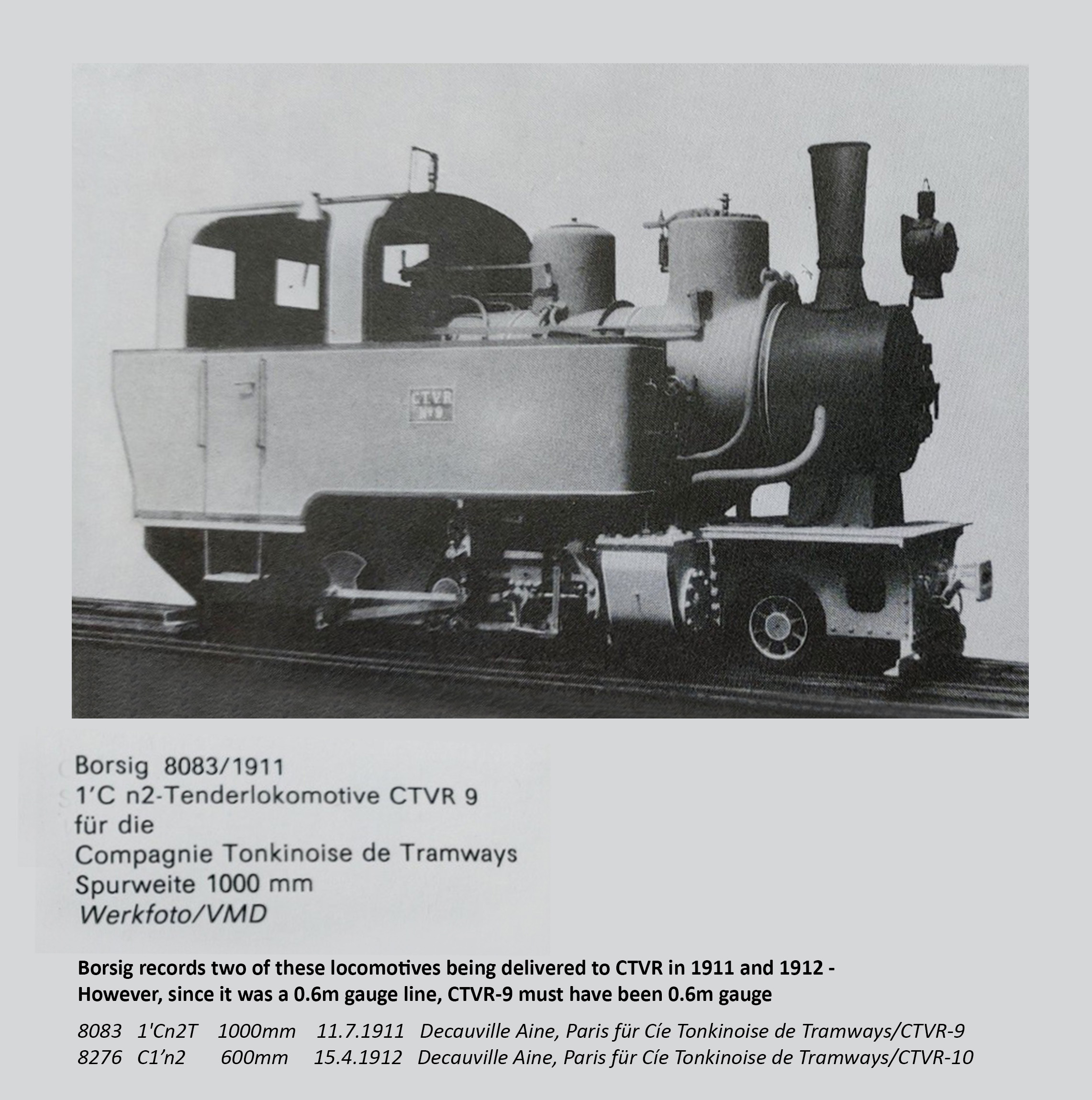
Borsig 2-6-0T (130T) locomotive, one of two such locos acquired in 1911-1912 by the Compagnie Tonkinoise de tramways à vapeur sur routes (Phủ Ninh Giang-Cẩm Giàng tramway)

One of French Indochina’s numerous short-lived steam tramways, the 42km line from Phủ Ninh Giang to Cẩm Giàng in the Red River Delta operated for just 12 years before it was decommissioned.

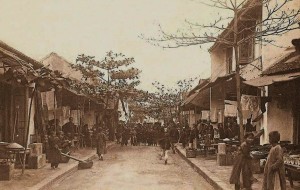
Phủ Ninh Giang Market

In early 1899, a Hà Nội-based French entrepreneur named Balliste submitted a request to the Tonkin authorities to establish a 35km, 0.6m-gauge steam tramway linking Phủ Ninh Giang (now Ninh Giang) with Kẻ Sặt in Hải Dương Province, the primary aim being to transport rice and tobacco from one of the north’s most fertile agricultural areas to the processing mills at Phủ Ninh Giang.

The project was subsequently taken over by Đáp Cầu–based businessman Eugène Le Roy, who was authorised by a convention of 7 July 1899 and subsequent decision of 10 August 1899 to proceed with the construction and exploitation of the line. On 18 November 1900, the concession was retroceded to Le Roy’s Compagnie Tonkinoise de tramways à vapeur sur routes (Tonkinese Steam Tramway Company, CTTVR).

Jan02695

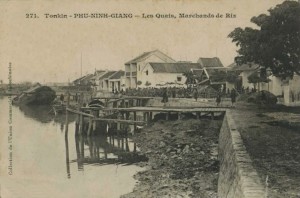
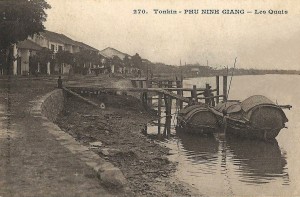
The quai du Canal des Bamboos at Phủ Ninh Giang

As the company’s name suggests, it was expressly agreed that in order to save money the tramway line should be built along existing public roads. Construction got under way in October 1900 and continued for more than two years.

Unwilling to grant the company a direct subsidy, the Tonkin authorities undertook instead to supply it free of charge with redundant rolling stock, track, signalling and other equipment from the original 0.6m-gauge Phủ Lạng Thương-Lạng Sơn railway line. A convention of 3 April 1903 promised the CTTVR four 9.5-ton Decauville 0-4-4-0 “Mallet” patent compound jointed locomotives – No 85 “Commandant-Riviere,” No 86 “Carnot,” No 126 “Comte-de-Lagrée” and No 188 “Kinh-Luoc” – plus three tenders, two mixed first-class and second-class carriages, three third-class carriages, four fourth-class carriages, eight flat bogie wagons, 44 gondola wagons, three bogie parcels wagons and one parcels van.

“Tonkin, November 1898 – Train longeant l’ancienne route de Langson,” depicting one of the 0.6m gauge Decauville 0-4-4-0 “Mallet” compound jointed locomotives on the original Phủ Lạng Thương-Lạng Sơn line a few years before it was sent to the Compagnie Tonkinoise de tramways à vapeur sur routes

Work got under way in October 1900 and continued for more than two years. However, by this time, construction of the Hải Phòng-Hà Nội section of the Yunnan Railway by the Compagnie française des chemins de fer de l’Indochine et du Yunnan (CIY) was also in progress. In 1902, as the tramway project neared completion, the CTTVR was authorised to extend its line a further 7km from Kẻ Sặt to connect with the CIY main line at Cẩm Giàng junction.

Unfortunately, due to unrest in the far north, delivery of the second-hand equipment promised by the government was delayed, and when it did arrive, most of it turned out to be in such a state of disrepair that it was unusable. Furthermore, the majority of the second-hand rails were supplied in curved sections, with insufficient straight sections for the new tramway’s alignment. For this reason, the company was obliged to incur significant additional expense purchasing new track and restoring the second hand rolling stock to operational condition.

021_001

Another view of the quai du Canal des Bamboos at Phủ Ninh Giang

As the project neared completion in 1902, the CTTVR was authorised to extend the line a further 7km from Kẻ Sặt to connect with the CIY main line at Cẩm Giàng.

After the “soft opening” of an initial 19km on 1 November 1902, the 35km Phủ Ninh Giang–Kẻ Sặt section opened to traffic on 3 May 1903, and the final 7km extension from Kẻ Sặt to Cẩm Giàng junction was put into operation on 25 January 1905. The total cost of construction was more than 860,000 francs.

Decauville records show that in 1905, CTTVR acquired two additional 9.5-tonne Decauville 0-4-0+0-4-0 (020+020) “Mallets,” numbered 9 and 10.

8 Passenger carriages 1890s

Open wagons from the Phủ Lạng Thương–Lạng Sơn railway line were used on the tramway

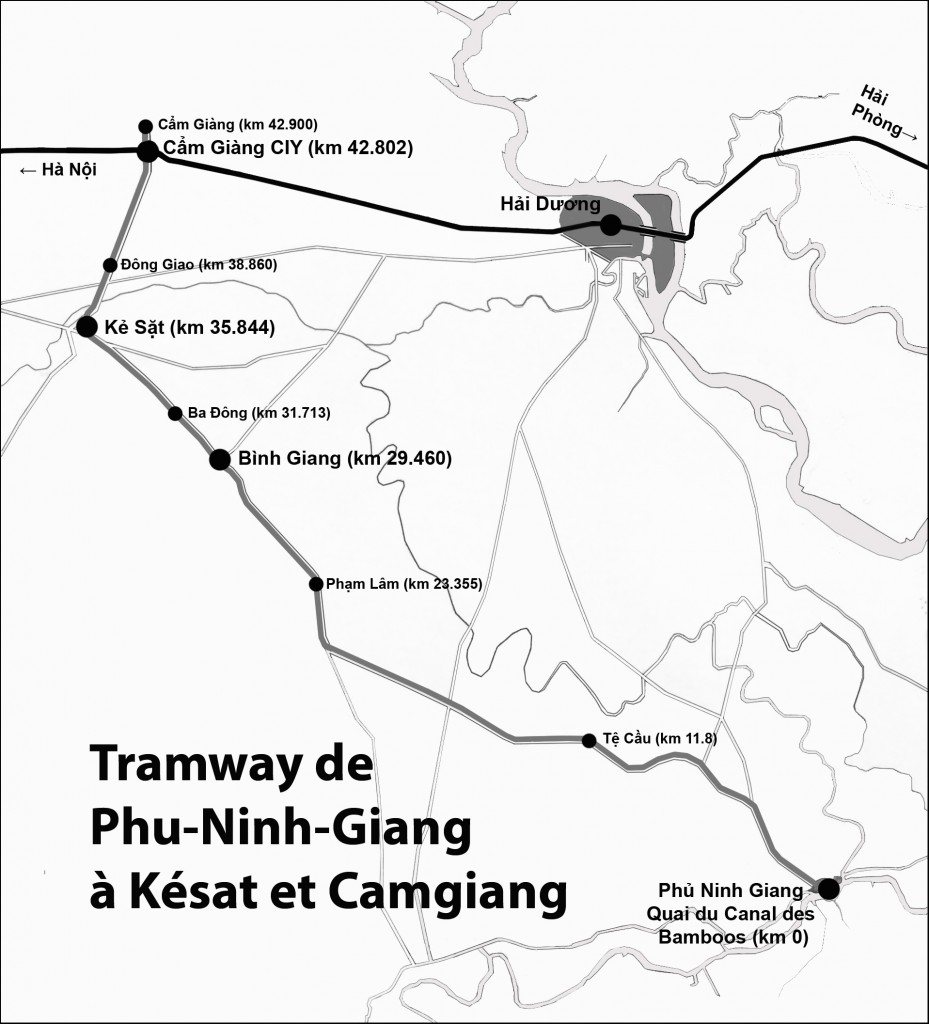
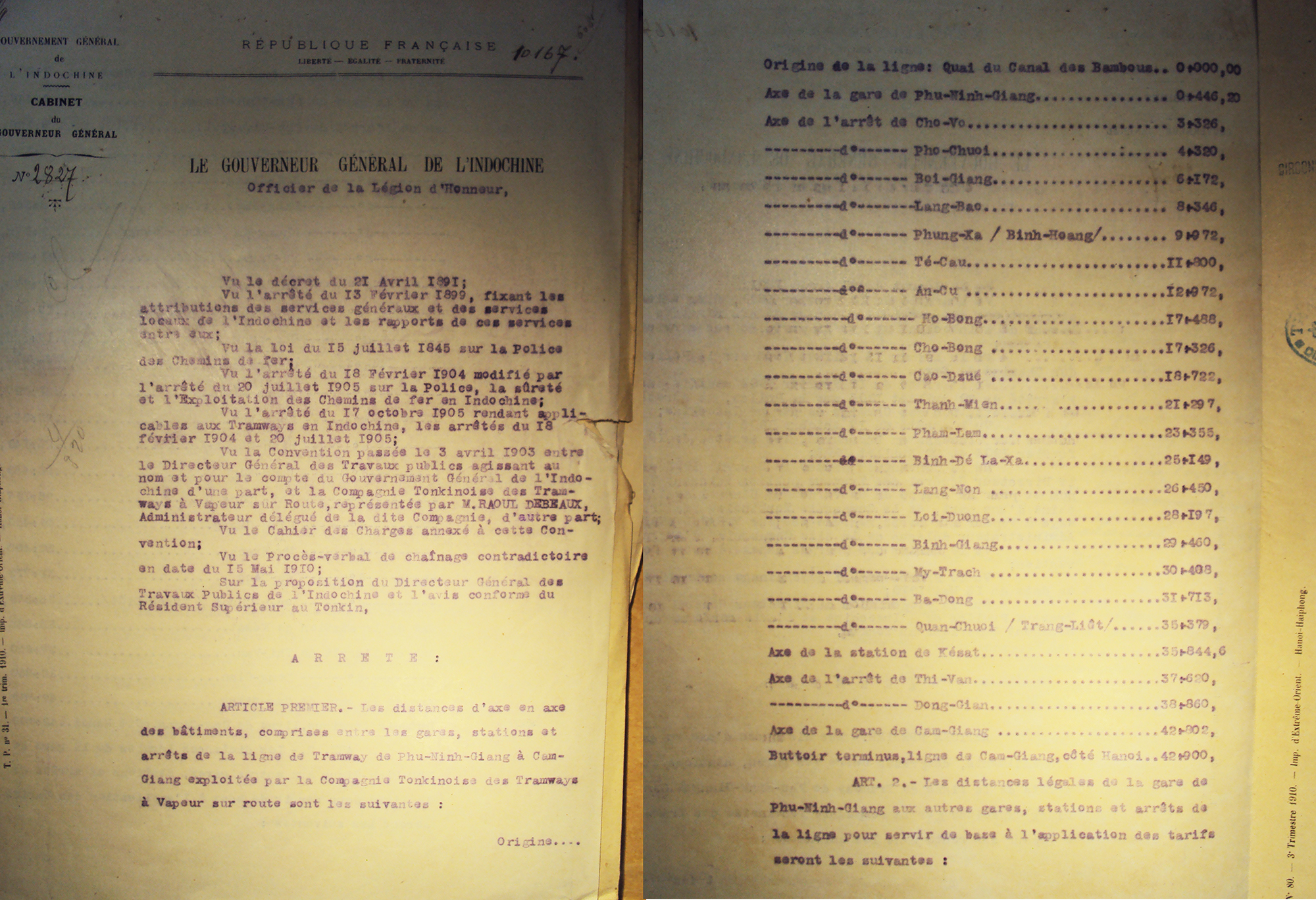
When it first opened, the 43km Tramway de Phu-Ninh-Giang à Késat et Camgiang had relatively few stops, but by 1910 there were 26 — Quai du Canal des Bamboos (Luộc River, km 0), Phủ Ninh Giang (km 0.446), Chợ Vẽ (km 3.326), Phố Chuối (km 4.320), Bói Giàng (km 6.172), Làng Bao (km 8.346), Phụng Xá/Bình Hoàng (km 9.972), Tệ Cầu (km 11.8), An Cư (km 12.972), Họ Bóng (km 17.488), Chợ Bóng (km 17.326), Cầu Duệ (km 18.722), Thanh Viên (km 21.297), Phạm Lâm (km 23.355), Binh Đê La Xá (km 25.149), Làng Nòn (km 26.450), Lồi Dượng (km 28.197), Bình Giang (km 29.460), Mý Trạch (km 30.408), Ba Đông (km 31.713), Tráng Liệt (km 35.379), Kẻ Sặt (km 35.844), Thi Văn (km 37.620), Đông Giao (km 38.860), Cẩm Giàng (km 42.802) and what was known as the “Buttoir terminus” in Cẩm Giàng (interchange with CIY trains, km 42.900). In order to save money, 32.5km (75 percent) of the tramway line was built alongside existing public roads.

According to the CTTVR, between 1906 and 1911 the tramway moved more than 300,000 passengers and 20,000 tons of merchandise, but revenue always fell short of expectations, largely because many local traders continued to ship their rice by river. As a result, the company ran at an annual loss, with occasional natural disasters such as broken dykes only adding to its woes.

IMG_0331

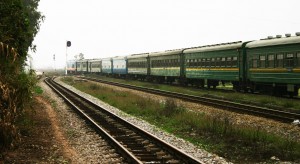
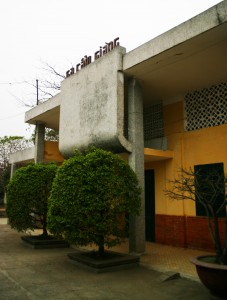
Cẩm Giàng station pictured in 2011

As early as 1908, the company requested the government either to buy back the franchise or to provide it with an annual grant plus additional funds for the purchase of two additional locomotives. The government opted for the latter, and in 1909 the company was offered an annual subvention of 50,000 francs plus a one-off grant of 50,000 francs to purchase new motive power.

Two Borsig 2-6-0T (130T) locomotives arrived in 1911 and 1912 (see large photo above) – again confusingly numbered 9 and 10!

Despite this injection of funds, the company’s financial problems persisted. In the Spring of 1910, the Governor General agreed in principle to buy back the franchise, but in the years that followed, the annual subvention continued to be paid and no action was taken to wind up the concession.

After 1912, the condition of track and rolling stock went into sharp decline due to lack of maintenance, and services on the line became increasingly sporadic. In September 1913, the authorities offered the CTTVR a 12,000-piastre grant to carry out essential repairs and maintenance, but this proved insufficient to keep the company afloat. Despite the best efforts of the Hải Phòng Chamber of Commerce to save it, the tramway ceased operations on 31 October 1914.

IMG_0330i

A Hải Phòng-bound train waits to depart from Cẩm Giàng in 2011

Following its closure, the Indochina authorities briefly studied the possibility of upgrading the tramway into a 1m-gauge railway line and offering it as a concession to the CIY, operator of the Yunnan Railway, with which it was already linked at Cẩm Giàng Junction. As an interim measure while this plan was under consideration, an agreement was reached with the CTTVR whereby the Department of Public Works kept the entire tramway in “cold storage” on behalf of the company, leaving the track in place and building additional depot facilities to protect the rolling stock from the elements.

The tramway finally passed into government ownership on 19 January 1922, but by that time the plan to upgrade the tramway line had been abandoned, and later the same year the track and rolling stock were removed. On 30 October 1925, 11 years after it had closed to traffic, the Tramway de Phu-Ninh-Giang à Késat et Camgiang was formally decommissioned.

Tramway de Phu-Ninh-Giang à Késat et Camgiang

The Tramway de Phu-Ninh-Giang à Késat et Camgiang

Arrêté du 7 September 1910: La ligne de Tramway de Phu-Ninh-Giang à Cam-giang exploitée par la Compagnie Tonkinoise des Tramways a vapeur sur routes – list of stations (Document Indochine GGI Indo //17865 CAOM)

Tim Doling is the author of The Railways and Tramways of Việt Nam (White Lotus Press, Bangkok, 2012) and also gives talks on Việt Nam railway history to visiting groups.

A full index of all Tim’s blog articles since November 2013 is now available here.

Join the Facebook group Rail Thing – Railways and Tramways of Việt Nam for more information about Việt Nam’s railway and tramway history and all the latest news from Vietnam Railways.

You may also be interested in these articles on the railways and tramways of Việt Nam, Cambodia and Laos:

A Relic of the Steam Railway Age in Da Nang
By Tram to Hoi An
Date with the Wrecking Ball – Vietnam Railways Building
Derailing Saigon’s 1966 Monorail Dream
Dong Nai Forestry Tramway
Full Steam Ahead on Cambodia’s Toll Royal Railway
Goodbye to Steam at Thai Nguyen Steel Works
Ha Noi Tramway Network
How Vietnam’s Railways Looked in 1927
Indochina Railways in 1928
“It Seems that One Network is being Stripped to Re-equip Another” – The Controversial CFI Locomotive Exchange of 1935-1936
Saigon Tramway Network
Saigon’s Rubber Line
The Changing Faces of Sai Gon Railway Station, 1885-1983
The Langbian Cog Railway
The Long Bien Bridge – “A Misshapen but Essential Component of Ha Noi’s Heritage”
The Lost Railway Works of Truong Thi
The Mysterious Khon Island Portage Railway
The Railway which Became an Aerial Tramway
The Saigon-My Tho Railway Line

Saigon’s Lost Protestant Chapel

IMG_4237

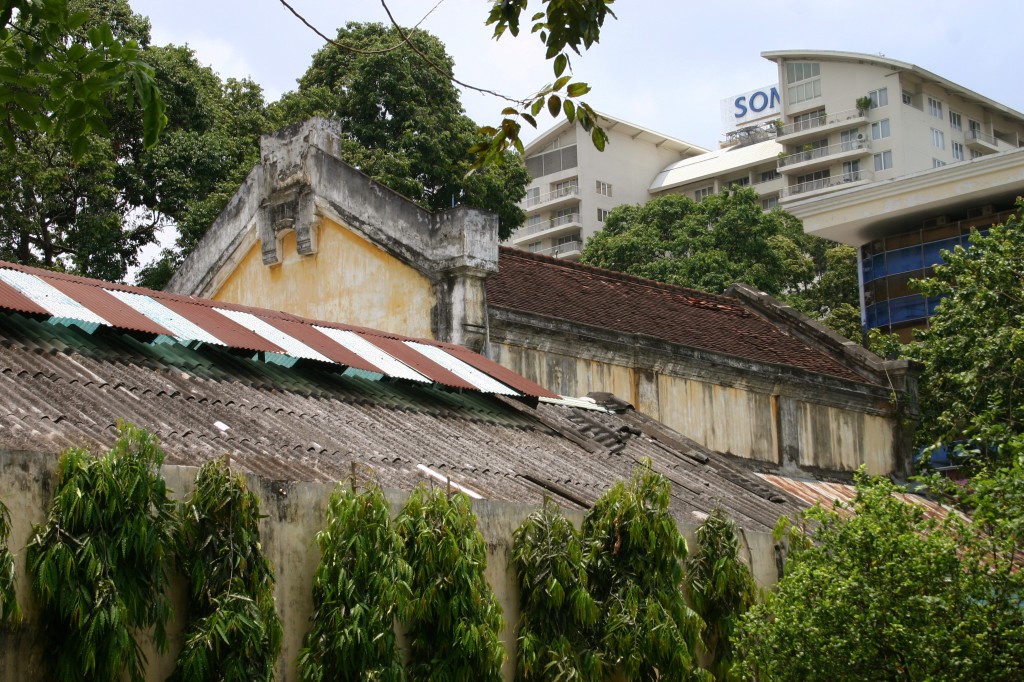
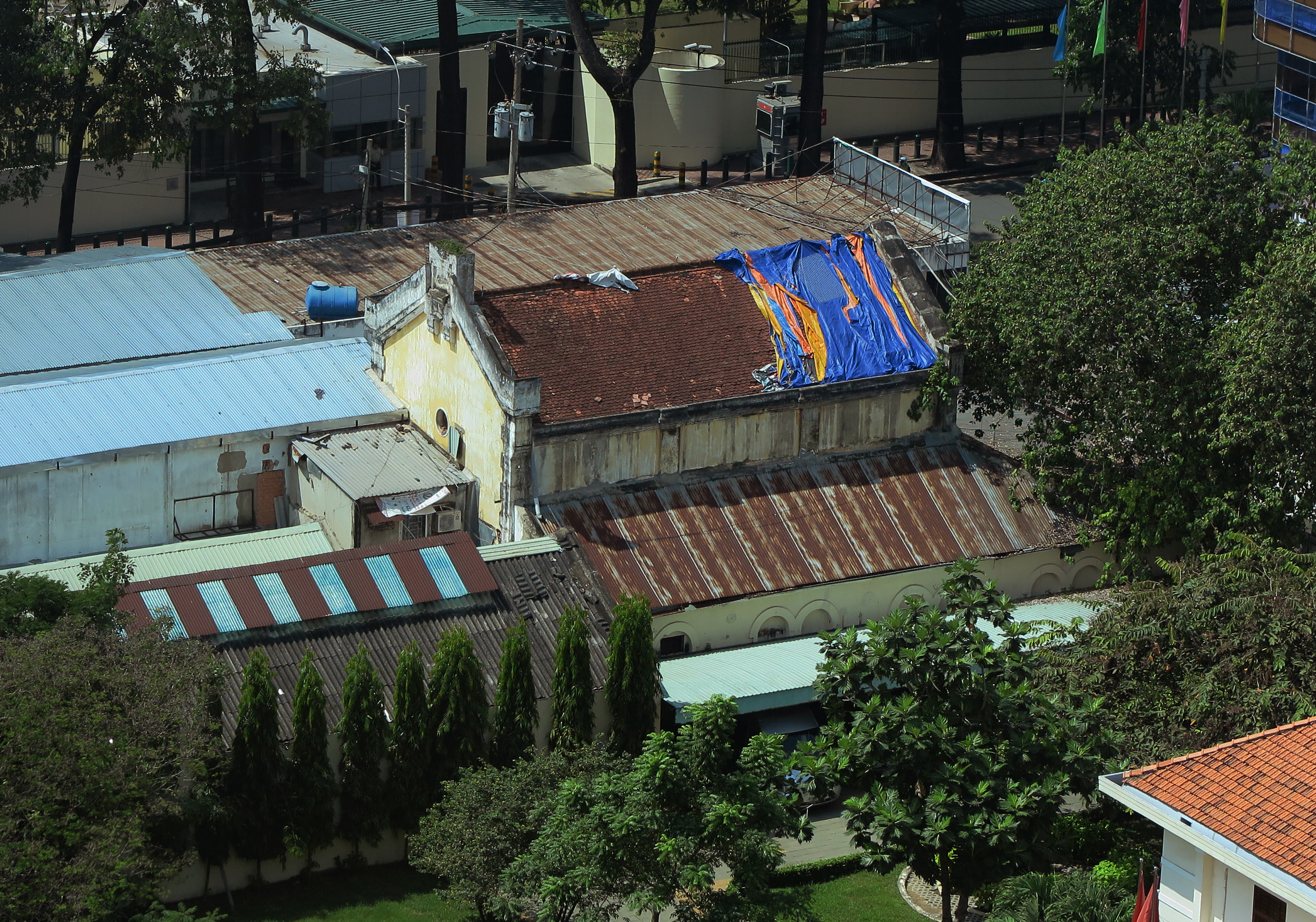
The roof of the former Temple protestant may be seen from Lê Duẩn boulevard

Directly opposite the British Consulate in Hồ Chí Minh City, amidst the clutter of buildings on the Lê Duẩn-Mạc Đỉnh Chi street intersection, you may be able to make out the roof of what was once the city’s only French protestant chapel

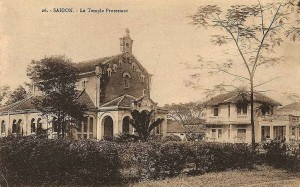
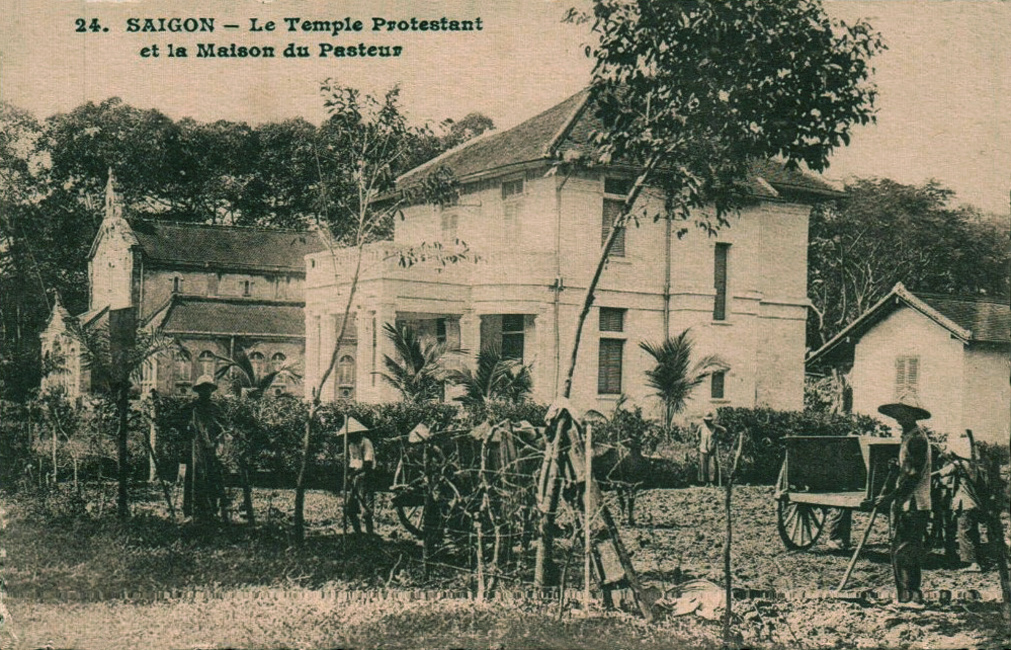
The Temple protestant and Presbytère pictured in the early 20th century

The Paris-based Église Réformée de France (Reformed Church of France) was active in Cochinchina from the late 1870s, and in 1882 its spiritual leader in Saigon, Pastor Métever, applied to the Colonial Council for land on which to build a permanent chapel.

However, this was not forthcoming until April 1904, when, for the nominal price of 1 Franc, the Société was given a plot of land measuring 82 ares 45 centiares [1 are = 100 square metres] in the grounds of the 1837 citadel – on the express condition that if, for whatever reason, the temple had to be decommissioned, the land granted would be returned to the authorities in its original state.

Temple protestant 2

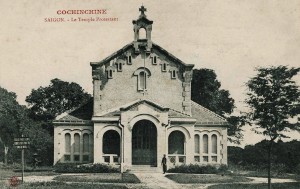
Another early 20th century view of the Temple protestant

Construction of the chapel got under way in 1904 and it was inaugurated in the following year. During the same period, a large house was built next door to the chapel, to serve as the presbytery, or residence of the pastor.

Being the only protestant chapel in the city, the “Temple protestant” was relatively well attended for much of the colonial era and also hosted the funeral services of several leading protestant colons.

After the departure of the French in 1954, the chapel continued to function for several years under the name Église réformée de langue française.

7066369809_f9018fd731_o

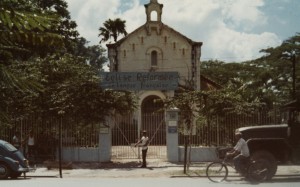
From the early 1960s, the Église réformée de langue française was used mainly by the Anglican Episcopal Church

During the 1950s, large numbers of American advisers arrived in Saigon, and in 1959-1960 the chapel’s owner, the Église Réformée de France, made the premises available for use by the US-based Anglican Episcopal Church, which renamed it “St Christopher’s.”

Thereafter until 1965, the American Community in Saigon held a regular service here at 11am every Sunday, preceded by Sunday School lessons for children attending the American Community School at the Norodom Compound (later the site of the US Embassy). During the same period, the British Embassy held Sunday evening services at St Christopher’s.

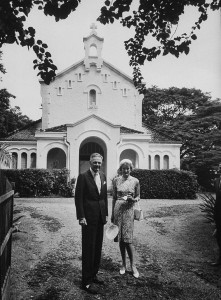
US Ambassador Henry Cabot Lodge Jr and his wife leaving St. Christopher's Anglican

US Ambassador Henry Cabot Lodge Jr and his wife leaving St Christopher’s Anglican Episcopal Church in 1964 (Life Magazine)

When the first US combat troops arrived in February 1965 and all dependents of US diplomatic, aid mission and military personnel were ordered to leave South Việt Nam, the chapel became much quieter.

However, it continued to be used by both US and British Embassy personnel right down to 1975.

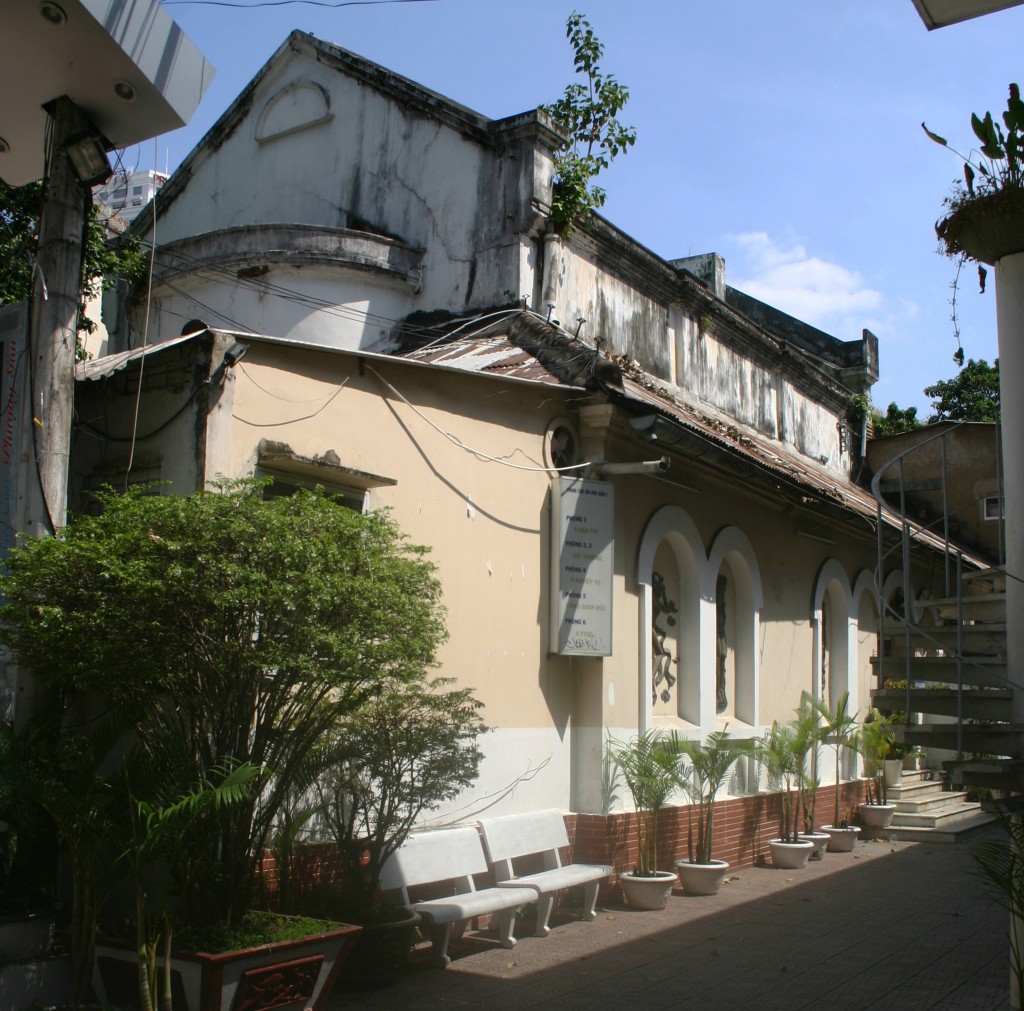
After Reunification, the chapel was closed and the building was divided up into smaller rooms. These are now leased to a range of different companies by its current owner, the District 1 Cultural Centre.

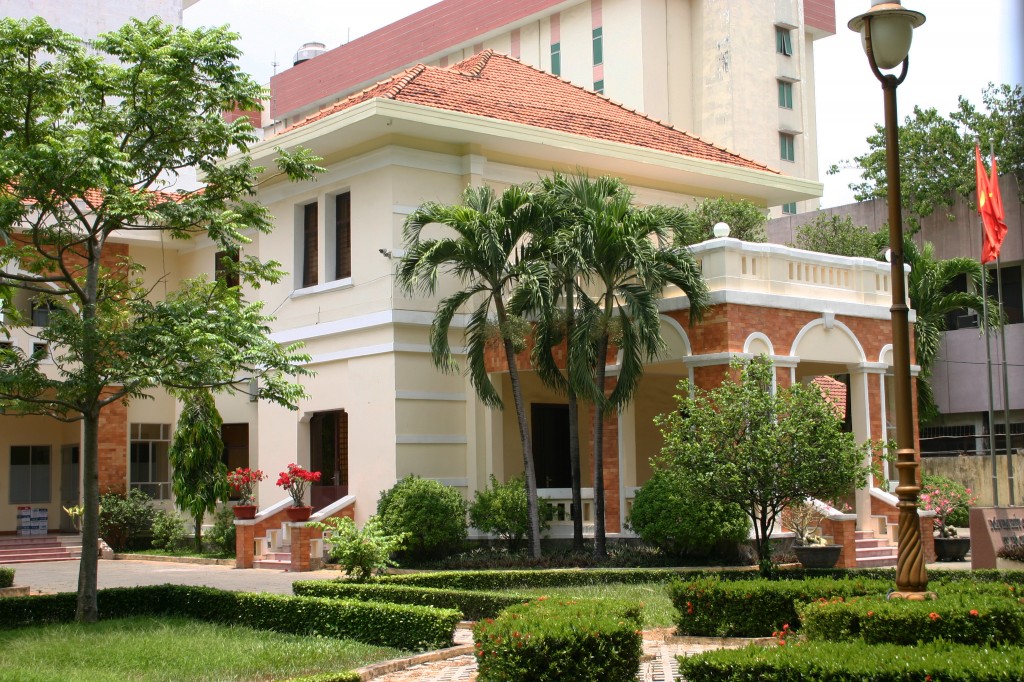
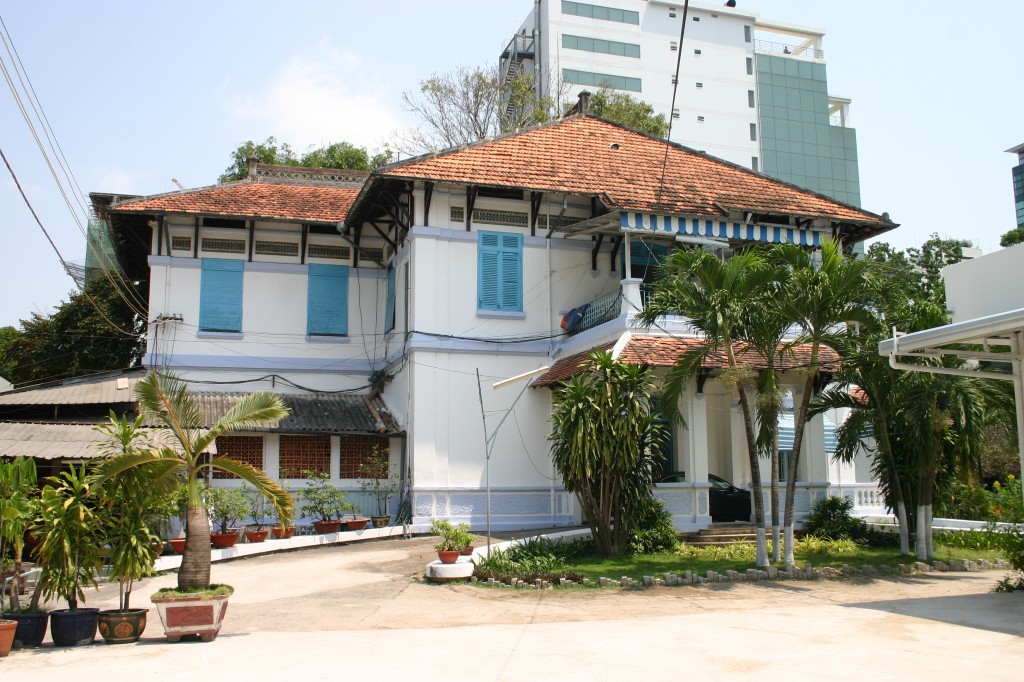
The old presbytery next door currently houses the Office of National Assembly Representatives (Văn Phòng Đại Biểu Quốc Hội).

Thanks to Pascal Bourdeaux of EFEO for providing additional information on the Protestant Chapel

Le Temple protestant et la Maison du pasteur

Another early 20th century view of the Temple protestant and Presbytère

IMG_4238

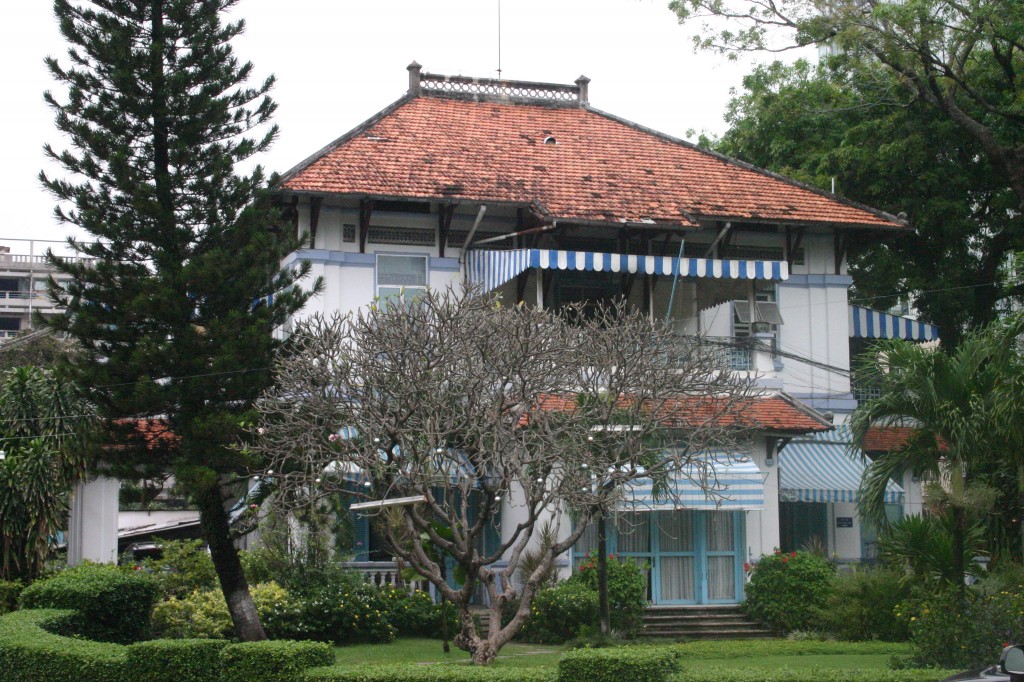
The former presbytery currently houses the Office of National Assembly Representatives

IMG_3725

A rear view of the old Temple protestant today

The old Temple protestant today, viewed from above

You may also be interested to read these articles:

Saigon’s Favourite Churches – Huyen Sy Church
Saigon’s Favourite Churches – Hanh Thong Tay Church
Saigon’s Favourite Churches – Tan Dinh Church

Tim Doling is the author of the guidebook Exploring Saigon-Chợ Lớn – Vanishing heritage of Hồ Chí Minh City (Nhà Xuất Bản Thế Giới, Hà Nội, 2019)

A full index of all Tim’s blog articles since November 2013 is now available here.

Join the Facebook group pages Saigon-Chợ Lớn Then & Now to see historic photographs juxtaposed with new ones taken in the same locations, and Đài Quan sát Di sản Sài Gòn – Saigon Heritage Observatory for up-to-date information on conservation issues in Saigon and Chợ Lớn.
Full Steam Ahead on Cambodia’s Toll Royal Railway

IMAGE 2

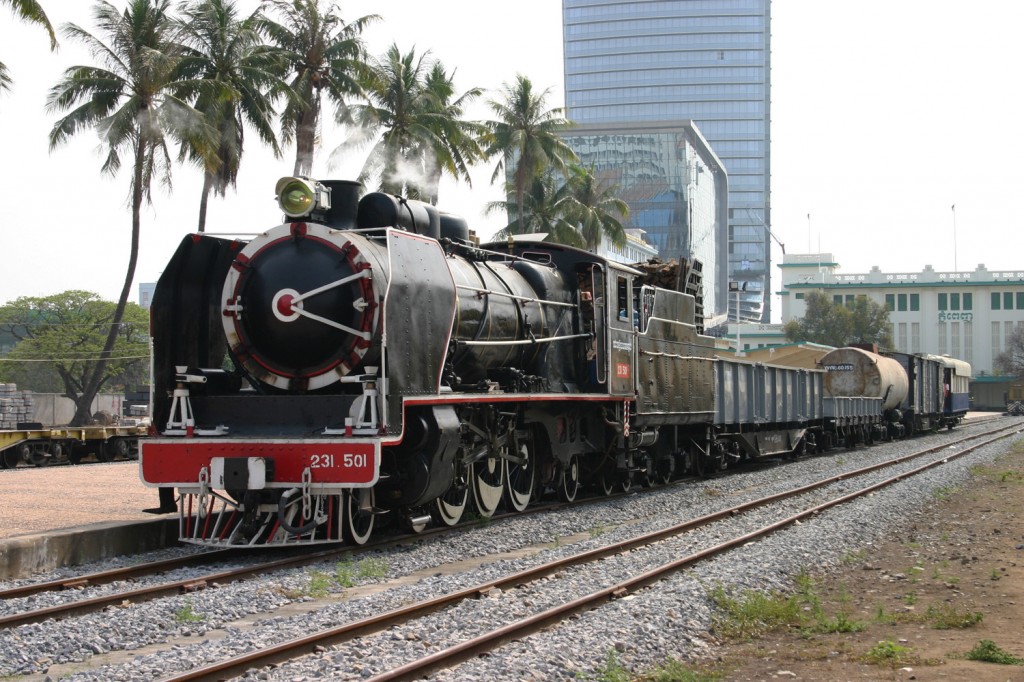
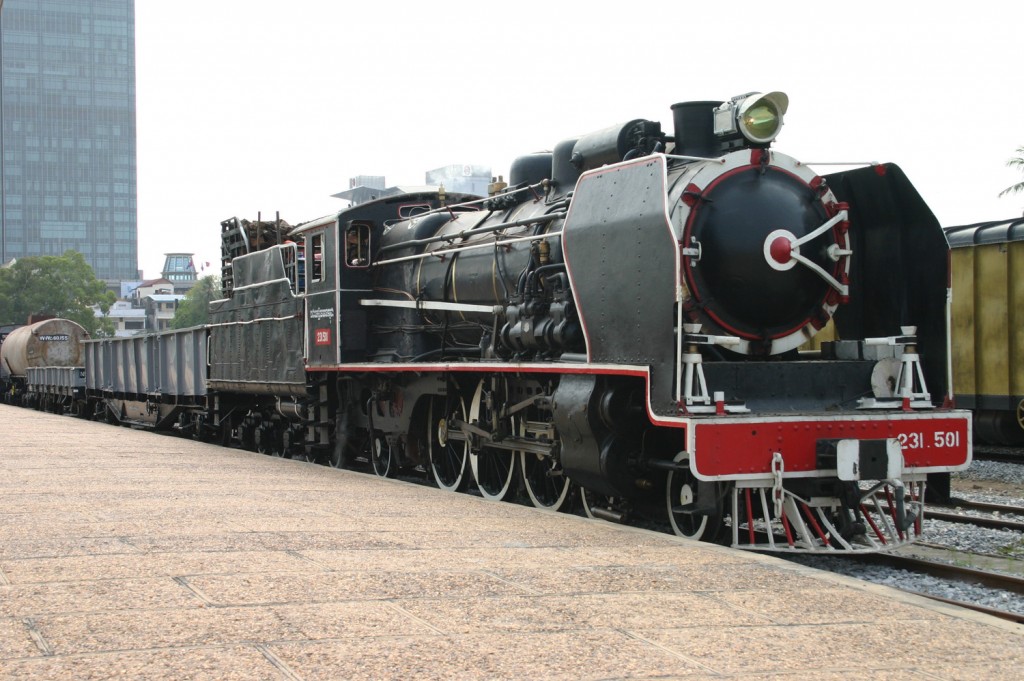
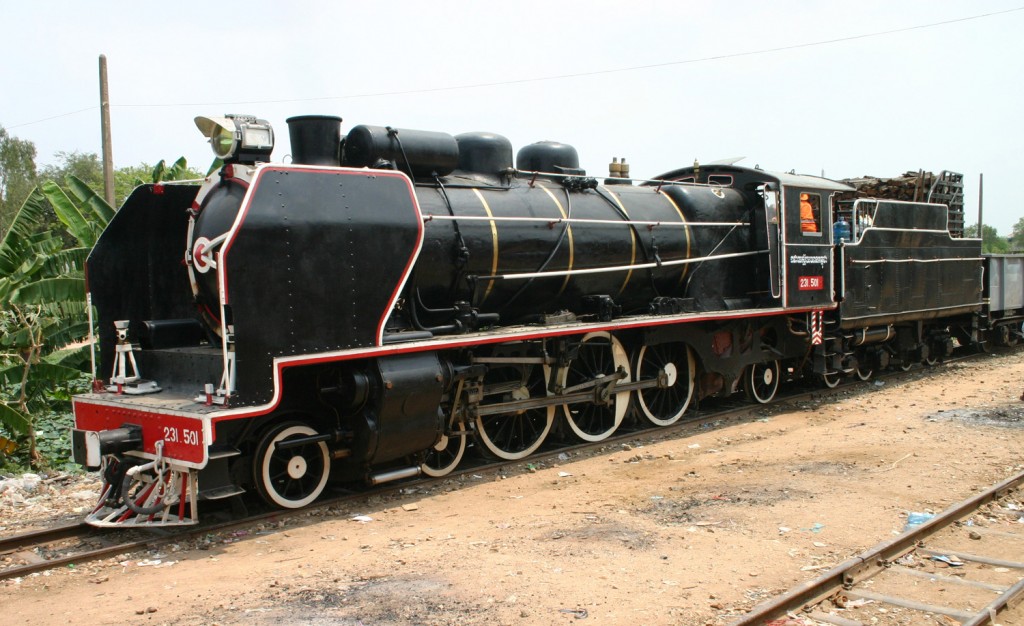
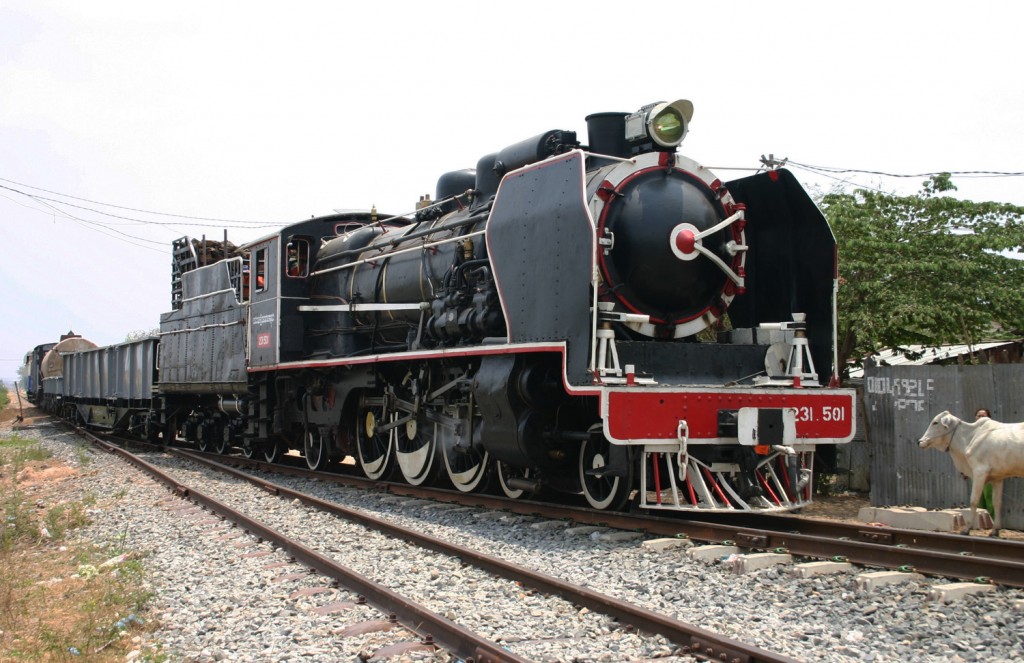
231-501 waits to depart from Phnom Penh station

This article was published previously in Saigoneer http://saigoneer.com

A brief digression from the usual Việt Nam-focused articles – joining a group of British steam enthusiasts visiting Phnom Penh as part of a PTG rail tour, travelling behind Toll Royal Railway’s preserved “Pacific” steam locomotive and catching up with developments on the Cambodian rail scene…..

IMAGE 7

A “photo run-past” at Pochentong

While Vietnam Railways currently has little to offer the steam train enthusiast, its Cambodian counterpart, Toll Royal Railway, has been offering special steam-hauled charter trains to foreign enthusiast groups for several years, as a sideline to its burgeoning freight business.

The involvement of Australian company Toll Holdings in the Cambodia railway sector dates from 2009, when the Royal Government of Cambodia outsourced its railway operations to that company under a 30-year exclusive concession. Since that time, operating under the name Toll Royal Railway and with funding from ADB and AusAID, Toll has embarked on an ambitious US$143 million project to rehabilitate the entire Cambodian rail network.

IMAGE 17

Refurbished Alsthom diesel locomotive BB-1053 shunting at Phnom Penh (photo courtesy Toll Royal Railways)

The 254km South Line from Phnom Penh to Kampong Som (Sihanoukville) was reopened in 2012 and work is currently under way to rehabilitate the 388km North Line from Phnom Penh to Poipet, as well as the 48km link from Poipet to Sisophon, which it is envisaged will eventually serve cross-border traffic to and from Thailand.

The railway in Cambodia was one of the last to be built in French Indochina. Paid for by German war reparations and originally operated as a franchise, the North Line opened in 1933 as a 330km route from Phnom Penh to Monkolborey. It was returned three years later to the colonial government and operated for the remainder of the colonial era as a branch of Chemins de fer de l’Indochine (CFI), managed from CFI’s Saigon headquarters – controversially permitting CFI to filch all of the Cambodian railway’s powerful German locomotives for use on Việt Nam’s newly-opened Transindochinois!

img70314-2

Powerful Hannoversche Maschinenbau AG (Hanomag) 2-10-0 “Decapods,” supplied through war reparations, ran the line until they were filched by CFI for the opening of Việt Nam’s Transindochinois (North-South line) in 1936

Plans to link the line with the Vietnamese rail network via Saigon were definitively abandoned in 1938, but in that same year, work began to connect Battambang with the Thai border town of Aranyaprathet, via Poipet. This was achieved by the Thai authorities in 1941, but in subsequent decades, due to the ever-volatile political and military situation, the cross-border link was exploited only intermittently. In the 1970s, the Khmer Rouge removed the track west of Sisophon.

Following independence in 1954, the port of Sihanoukville (Kampong Som) was developed to reduce reliance on Saigon and Khlong Toei (Bangkok), and in 1960 work began with French, West German and Chinese assistance to build the new South Line to connect Sihanoukville with the capital. This opened in November-December 1969, but ceased operations just a few years later as the country descended into war.

IMAGE 15

The “bamboo railway” (photo courtesy Toll Royal Railways)

Rail services on the North Line resumed in the early 1980s, but warfare and neglect had left the network in a delapidated state. With train services so few and far between, the line became known internationally as the “bamboo railway,” because local people used it to travel on makeshift motorised trollies topped with bamboo platforms.

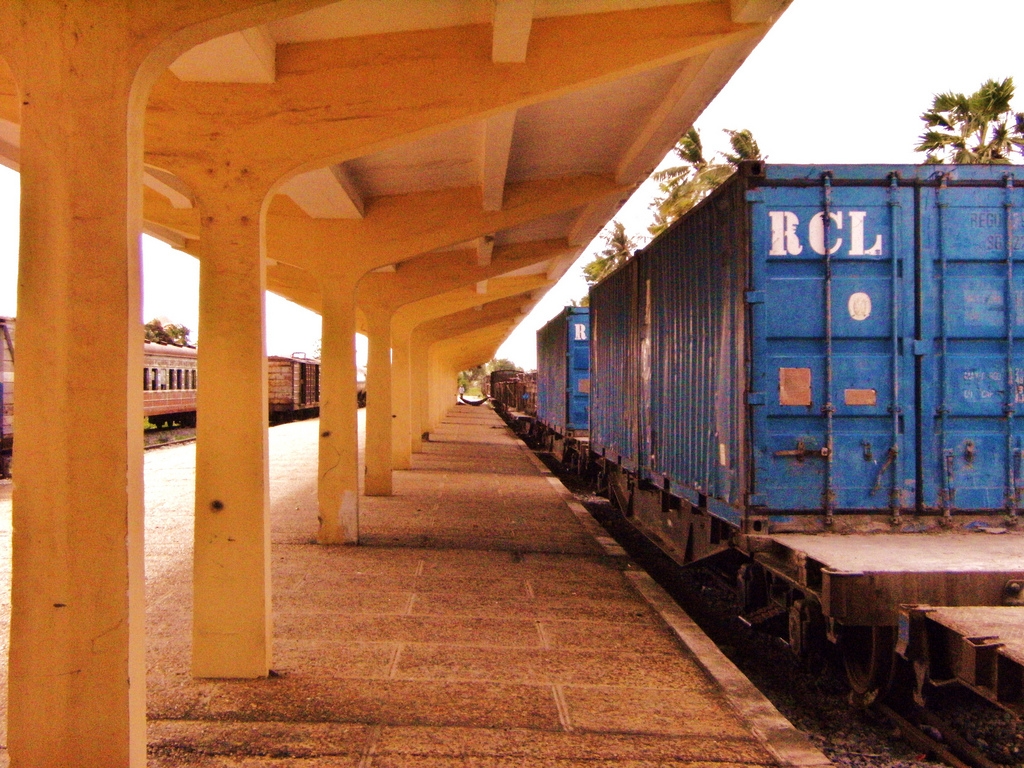
At present, the Toll Royal Railway is an exclusively freight-focused operation, with a daily quota of two container trains, one coal train and one fuel train travelling the newly-rehabilitated South Line, which reopened in December 2012.

The North Line is currently operational as far as Bat Doeung (km 31) and freight services will be inaugurated later this year.

IMAGE 16

Refurbished Waggonfabrik 2-car DEMU (photo courtesy Toll Royal Railways)

However, only 48km of the Bat Doeung-Sisophon (km 337) section has so far been rebuilt. Beyond Sisophon, the line to the Thai border has already been relaid and the State Railway of Thailand (SRT) is said to be reinstating the derelict/missing 6km of track from Aranyaprathet to the border.

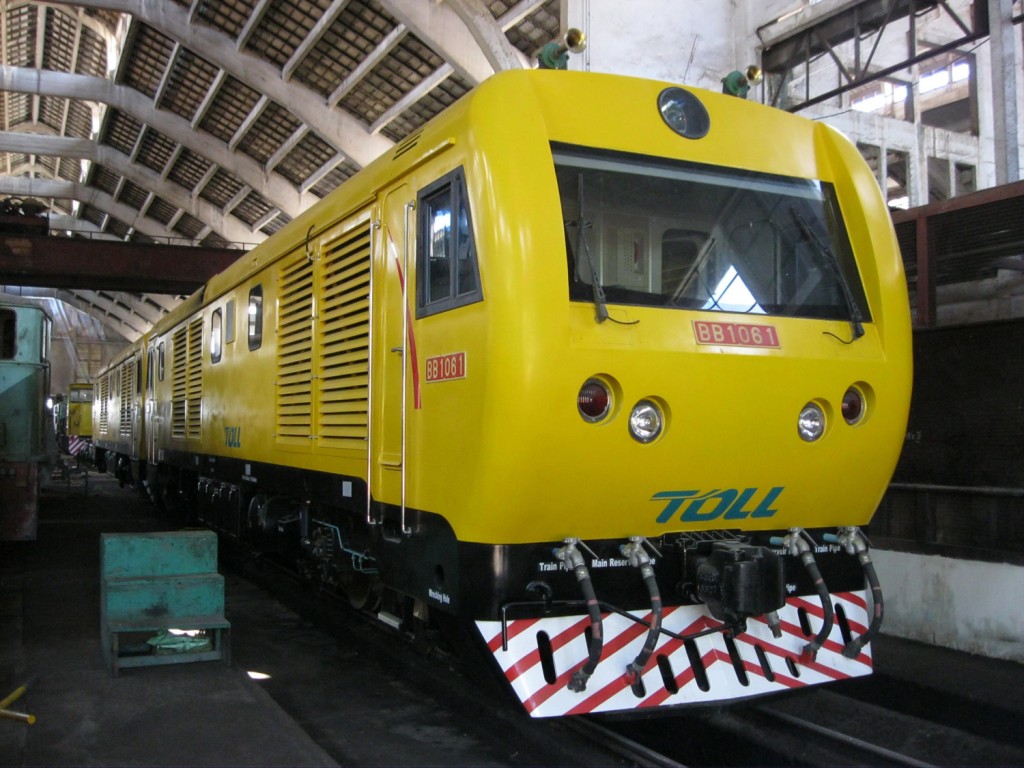
With its two new 1,300hp Chinese Qishuyan diesels and expanding fleet of refurbished locomotives, Toll has plans to develop its existing freight services and in the longer term also to reintroduce passenger trains on both lines. These plans will undoubtedly take on increased significance in the context of the proposed Trans-Asia Railway (TAR) and Singapore-Kunming Rail Link (SKRL) schemes to create continuous rail links between Singapore and China, reducing passenger and freight transit times and costs between countries in the region and opening up the possibility of a direct rail route from Asia to Europe and Africa.

IMAAGE 16

An entire section of Phnom Penh Depot is still occupied by rusting ex-CFI “Mikado,” “Pacific” and “Mogul” steam locomotives (photo courtesy Toll Royal Railways)

One interesting consequence of the decades of neglect is that, unlike their counterparts here in Việt Nam, the Cambodian rail authorities never got round to scrapping their old French steam locomotives.

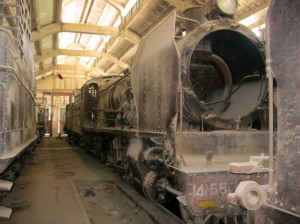
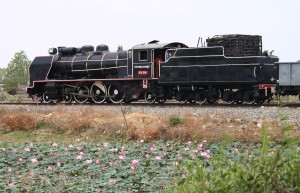
Today, an entire section of Phnom Penh Depot is occupied by rusting ex-CFI “Mikados,”  “Pacifics” and “Moguls” and the management at Toll has had the foresight to restore one of these – SACM Graffenstaden 4-6-2 “Super Pacific” No 231-501 – to full working order for steam charters. Sadly, the economics of running live steam means that these charters are currently available only to large pre-booked groups, but with heritage railways growing increasingly popular around the world (there are 108 privately-run steam railways in the UK alone), there can be little doubt that demand for the old engine’s services will continue to grow.

IMAGE 12

A “photo run-past” at Phlov Bambaek junction near Samrong, where the North and South Lines bifurcate

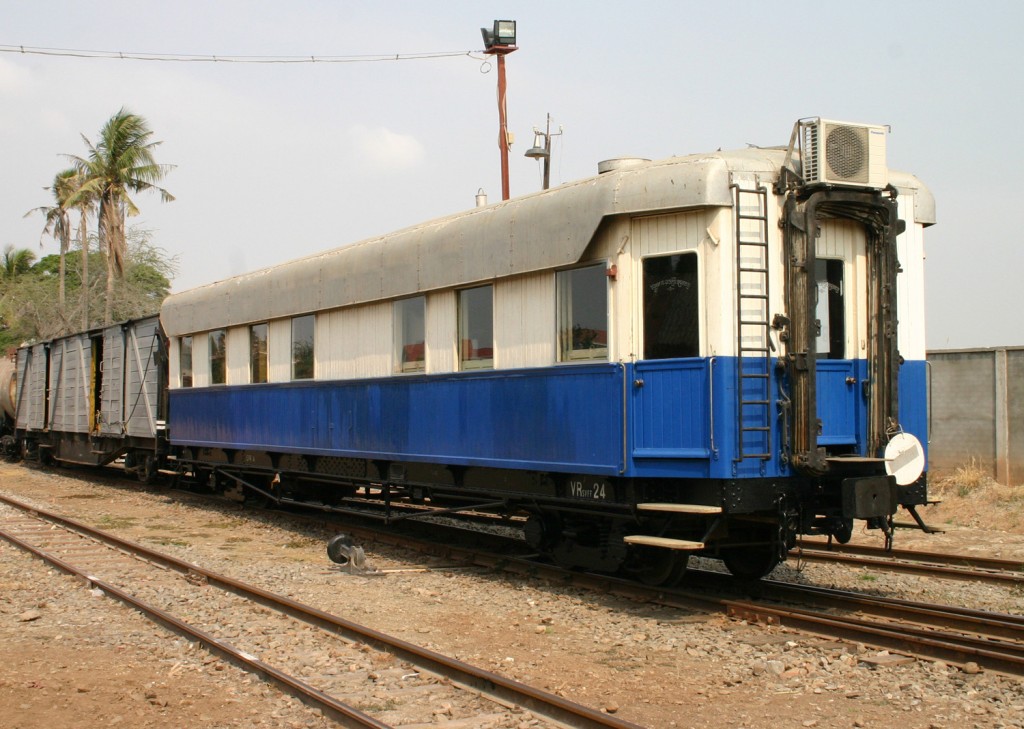
The seven-hour trip out of Phnom Penh Station behind 231-501 covers just 44km along the Kompong Som (Sihanoukville) port line and back, with accommodation provided in the 1932-built former royal coach of King Sisowath Monivong. The train runs at what can only be described as a stately pace, stopping obligingly for “photo run-pasts” at Phnom Penh Depot, Pochentong, Psah C-7, Oedom “Dry Port” container terminal, and Phlov Bambaek junction near Samrong, where the North and South Lines bifurcate. Reaching a loop line at Komar Reachea, the locomotive is transferred to the other end of the train for its return journey, tender first, to Phnom Penh.

As planners everywhere strive for faster and more modern forms of transportation, it seems that nothing can diminish the global appeal of the steam locomotive, that slow, old, yet gloriously nostalgic reminder of our industrial heritage.

IMAGE 1

231-501 waits to depart from Phnom Penh

IMAGE 3

Accommodation on steam charters is provided in the 1932-built former royal coach of King Sisowath Monivong

IMAGE 6

A “photo run-past” at Pochentong

IMAGE 14

Container wagons at Phnom Penh Station (photo courtesy Toll Royal Railways)

IMAGE 10

A “photo run-past” at Phlov Bambaek junction near Samrong, where the North and South Lines bifurcate

IMAGE 4

One of Toll Royal Railway’s new Qishuyan BB-1061 locomotives (photo courtesy Toll Royal Railways)

Tim Doling is the author of The Railways and Tramways of Việt Nam (White Lotus Press, Bangkok, 2012) and also gives talks on Việt Nam railway history to visiting groups.

A full index of all Tim’s blog articles since November 2013 is now available here.

Join the Facebook group Rail Thing – Railways and Tramways of Việt Nam for more information about Việt Nam’s railway and tramway history and all the latest news from Vietnam Railways.

You may also be interested in these articles on the railways and tramways of Việt Nam, Cambodia and Laos:

A Relic of the Steam Railway Age in Da Nang
By Tram to Hoi An
Date with the Wrecking Ball – Vietnam Railways Building
Derailing Saigon’s 1966 Monorail Dream
Dong Nai Forestry Tramway
Goodbye to Steam at Thai Nguyen Steel Works
Ha Noi Tramway Network
How Vietnam’s Railways Looked in 1927
Indochina Railways in 1928
“It Seems that One Network is being Stripped to Re-equip Another” – The Controversial CFI Locomotive Exchange of 1935-1936
Phu Ninh Giang-Cam Giang Tramway
Saigon Tramway Network
Saigon’s Rubber Line
The Changing Faces of Sai Gon Railway Station, 1885-1983
The Langbian Cog Railway
The Long Bien Bridge – “A Misshapen but Essential Component of Ha Noi’s Heritage”
The Lost Railway Works of Truong Thi
The Mysterious Khon Island Portage Railway
The Railway which Became an Aerial Tramway
The Saigon-My Tho Railway Line

Old Saigon Building of the Week – 48 Nguyen Dinh Chieu, 1920

DSC03535

The former Établissements Brossard et Mopin headquarters at 48 Nguyễn Đình Chiểu in Đa Kao, Hồ Chí Minh City

This article was published previously in Saigoneer http://saigoneer.com

To coincide with the sad demise of 213 Đồng Khởi, demolition of which is now well under way, here’s a short piece on the Đa Kao headquarters of the company which built it.

The dilapidated colonial mansion at 48 Nguyễn Đình Chiểu was once the Saigon headquarters of the engineering and construction company Établissements Brossard et Mopin, which was responsible for designing and constructing a number of Saigon’s most iconic civic buildings.

1 Chemin de fer de Hatou

Brossard’s company built the Société de charbonnages de Hon-gay mining tramway from Port-Courbet to Hà Tu

Company founder Jules Brossard arrived in Indochina in the late 1880s, building a profitable mining business in Hòn Gai and later setting up the Hải Phòng-based engineering company Brossard et Cie. In the 1890s it was this company which built two 1m-gauge industrial tram lines in Hạ Long Bay for the Société de charbonnages de Hon-gay, one of 12km linking Port-Courbet (Hòn Gai) with the Hà Tu mine and another of 6km (the first 3km shared with the Hà Tu line) linking Port-Courbet with the Nagotna mine.

In the early 1900s, Brossard’s company was also responsible for much of the infrastructure (station buildings, track bed, ballasting) on the Compagnie française des chemins de fer de l’Indochine et du Yunnan (French Indochina and Yunnan Railway Company, CIY) railway line.

IMAGE 81 The Halles centrales (Bến Thành Market)

The Halles centrales de Saigon (Bến Thành Market) of 1914, arguably Brossard et Mopin’s most iconic work

Brossard’s business partnership with former Department of Civic Buildings inspector Eugène Mopin began in 1906, and over the next two decades the Société d’Exploitation des Établissements Brossard et Mopin developed into one of East Asia’s most successful engineering and construction companies, with a head office in Paris and branches in Saigon, Phnom Penh, Singapore and Tianjin.

During this period it built banks, hospitals, factories, port infrastructure, reservoirs and swimming pools in many Asian cities, becoming recognised as the leading East Asian specialist in reinforced concrete buildings and competing regularly with Gustav Eiffel’s old company Société Levallois-Perret for contracts to build railway bridges and other infrastructure for the Chemins de fer de l’Indochine (CFI).

IMAGE 39 The Trésor général

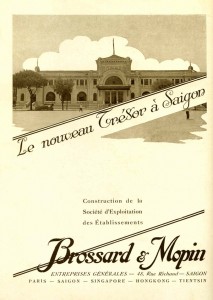
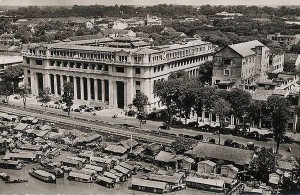
The Saigon Trésor général building of 1925

Here in Saigon, the work which really cemented the company’s reputation was the Halles Centrales of 1914, now the Bến Thành Market. This iconic building paved the way for numerous other high-profile commissions, including the famous Grand Hotel Beijing (1917).

Prior to 1920, Établissements Brossard et Mopin rented an office at 18 rue Lagrandière (Lý Tự Trọng) in Saigon, but in that year it relocated its East Asian managerial operations to a new purpose-built Saigon headquarters at 48 rue Richaud, now 48 Nguyễn Đình Chiểu.

In the same year, founder and senior partner Jules Brossard received the Chevalier de la Légion d’Honneur for his contribution to the development of Indochina.

IMAGE 94 The second Banque de l'Indochine building

The second Bank of Indochina building of 1928

Établissements Brossard et Mopin was forced into receivership in 1922 following the bankruptcy of the Shanghai-based Banque Industrielle de Chine (Industrial Bank of China), but in 1924 the company was reconstituted and subsequently made a name for itself with further major works, including the Trésor général in Saigon (1925), the second Bank of Indochina (1928), the Chartered Bank (1928) and 213 rue Catinat (1930), as well as many other lower-profile office and apartment blocks.

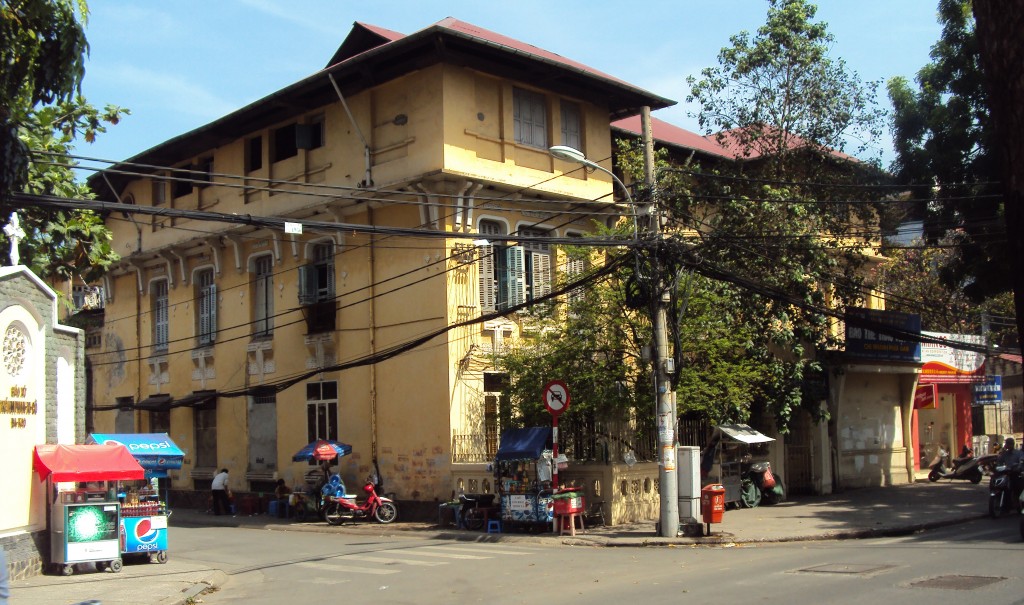
The company’s former Saigon headquarters at 48 Nguyễn Đình Chiểu currently provides office space for several culture, sports and tourism agencies, though like so many other historic buildings in Hồ Chí Minh City, its future is far from secure.

Tim Doling is the author of the guidebook Exploring Saigon-Chợ Lớn – Vanishing heritage of Hồ Chí Minh City (Nhà Xuất Bản Thế Giới, Hà Nội, 2019)

A full index of all Tim’s blog articles since November 2013 is now available here.

Join the Facebook group pages Saigon-Chợ Lớn Then & Now to see historic photographs juxtaposed with new ones taken in the same locations, and Đài Quan sát Di sản Sài Gòn – Saigon Heritage Observatory for up-to-date information on conservation issues in Saigon and Chợ Lớn.
.

Saigon on the Silver Screen – The Lover, 1992

Lover tiitle 1

The Lover (© Fox Pathé Europa, France)

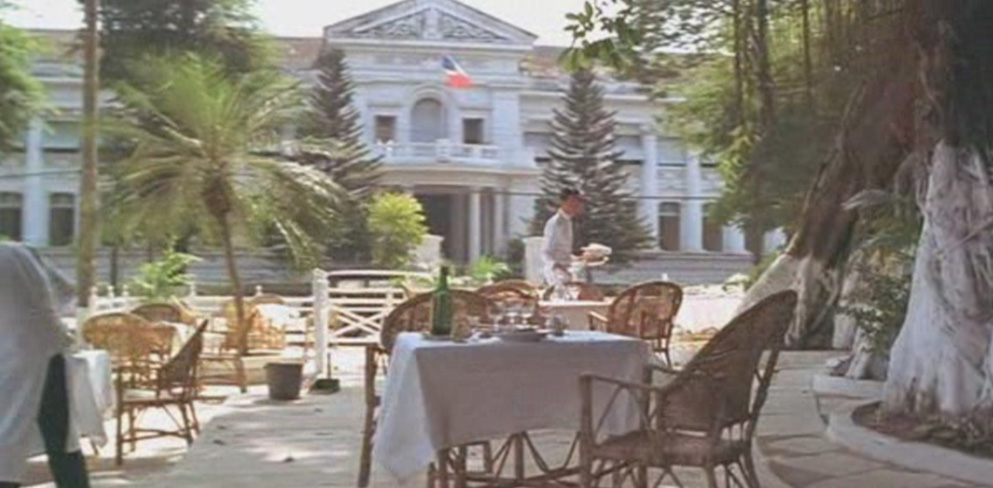
When filming Marguerite Duras’ 1984 autobiographical novel The Lover, French director Jean-Jacques Annaud made extensive use of Saigon-Chợ Lớn locations. Here’s a run-down of the local landmarks to watch out for when you view the movie.

2b5cc0c717348c0650136c226b61c5b4

The Lover film poster (© Fox Pathé Europa, France)

Jean-Jacques Annaud’s 1992 film of Marguerite Duras’ Prix Goncourt-winning novel l’Amant (The Lover) was one of the first western films to be shot in Việt Nam after Reunification.

Based on Duras’ own experiences as a teenager in French Cochinchina, it depicted a forbidden inter-racial romance between a 15-year-old French girl (played by British actress Jane March) and a 32-year-old Chinese businessman (played by Hong Kong actor Tony Leung). The film featured narration by Jeanne Moreau and a haunting César Award-winning score by Gabriel Yared, but despite its impressive performance at the box office, it garnered mixed reviews from the critics.

Unlike Régis Wargnier’s 1992 film Indochine, which used Butterworth in Malaysia as a substitute for Saigon, The Lover made extensive use of historic locations in and around Hồ Chí Minh City, Sa Đéc and Vĩnh Long. Studios were used to film most of the interior shots.

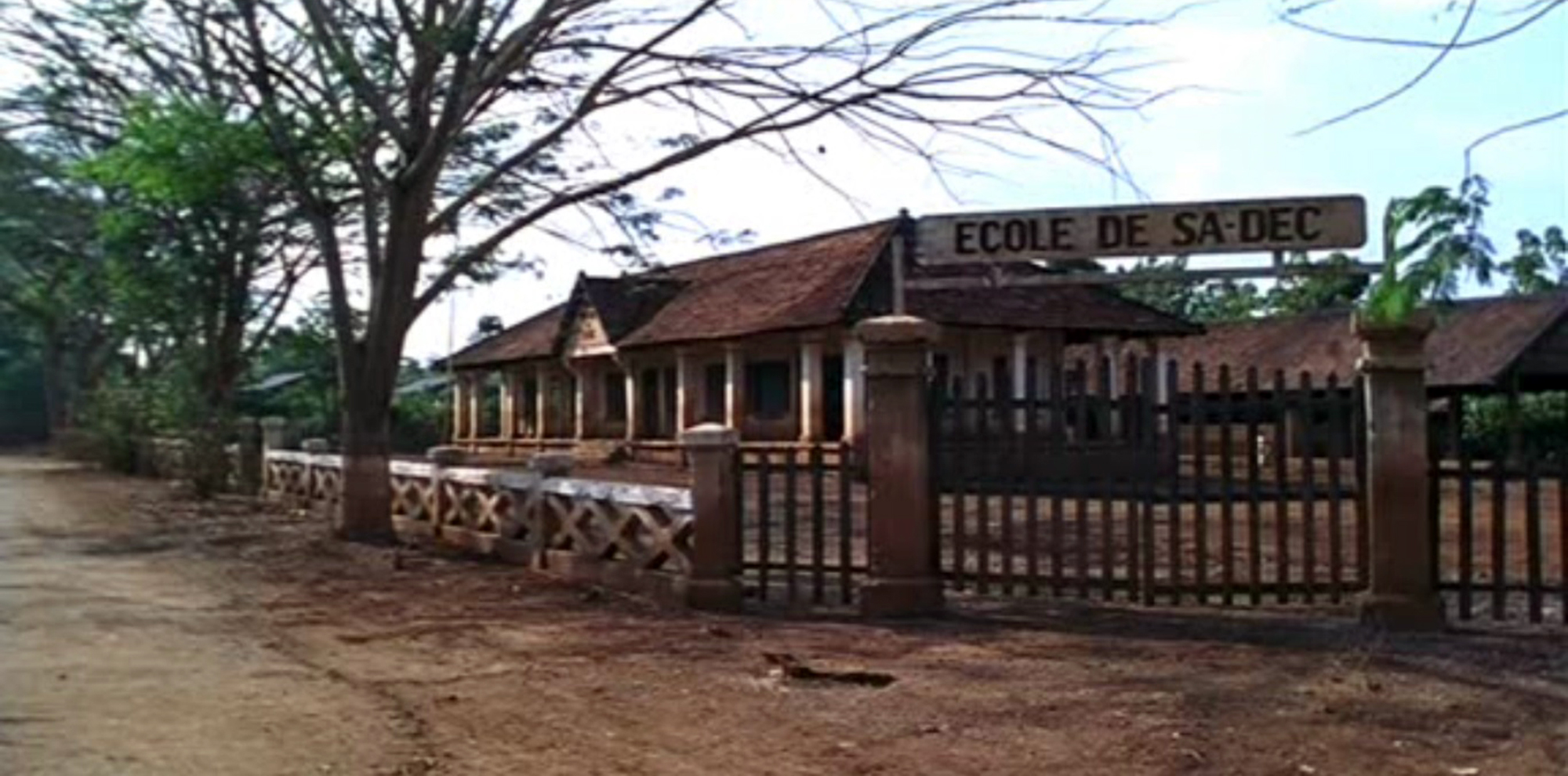
The École de Sa Đéc as featured in The Lover (© Fox Pathé Europa, France)

The Mekong Delta sequences – the opening scene in which the girl meets the “Chinaman” on a ferry, the École de Sa Đéc and “the horror of the Sa Đéc house” where she lives with her dysfunctional family – all used locations which, at the time of filming, had changed little since the colonial era.

The Pont de Bình-Tây as featured in The Lover (© Fox Pathé Europa, France)

Those sequences filmed in Hồ Chí Minh City also made extensive use of its then still relatively abundant colonial heritage, affording fascinating glimpses of parts of the city which have since been completely redeveloped.

One early sequence follows the Chinaman’s car as it makes its way towards Saigon, passing rows of old colonial shophouses near the Xóm Chỉ bridge over the arroyo Chinois (Tàu Hủ-Bến Nghé creek) in Chợ Lớn. The bridge and many of the shophouses in this area have long since disappeared.

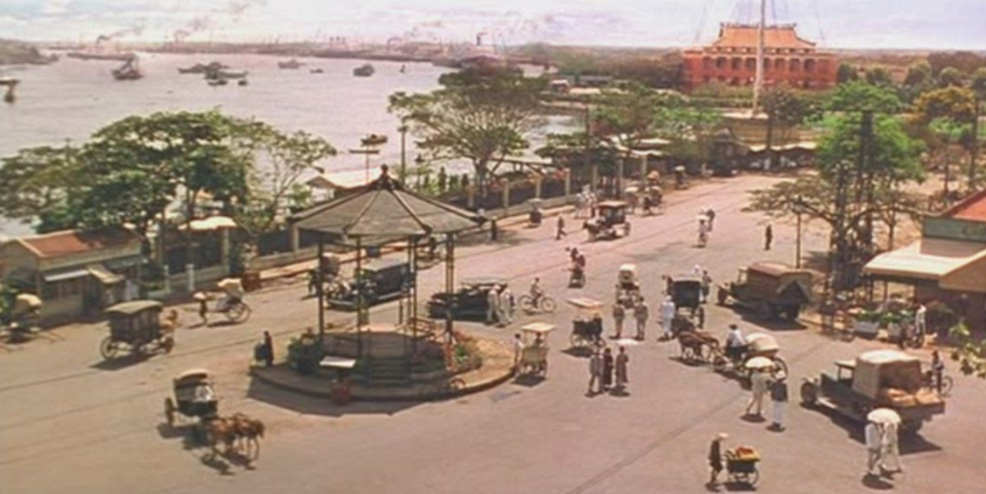
The bandstand installed at the Tôn Đức Thắng-Nguyễn Huệ junction (© Fox Pathé Europa, France)

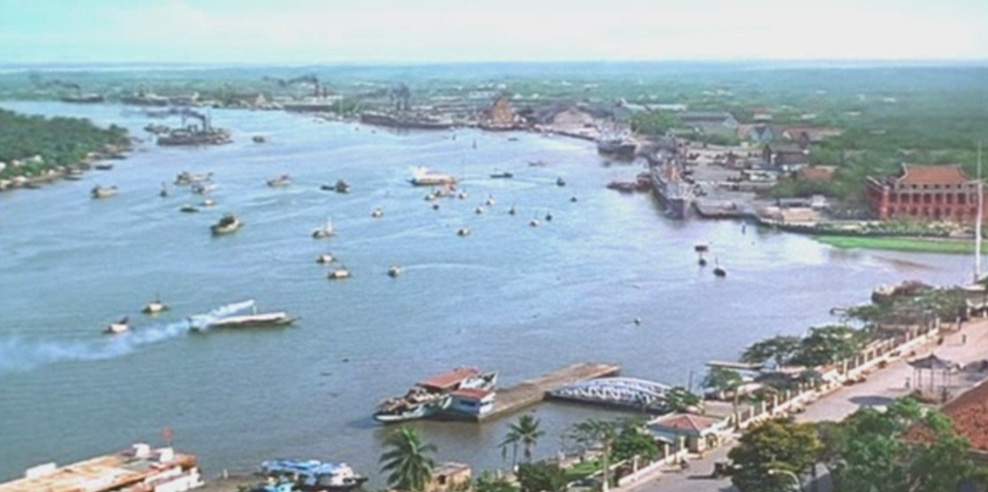
As the car enters Saigon, we’re treated to several views of the river port, where the filmmakers even went to the trouble of installing a bandstand in the middle of the junction where Nguyễn Huệ boulevard meets the waterfront.

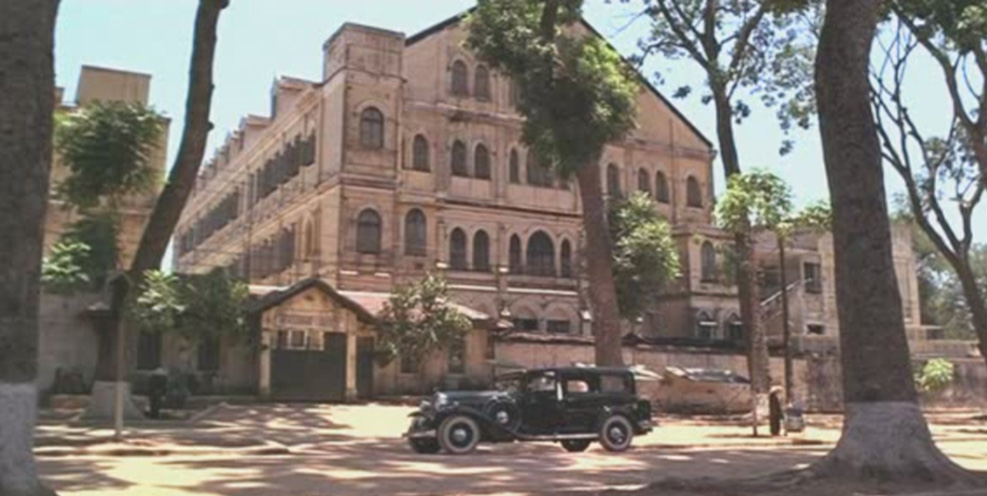
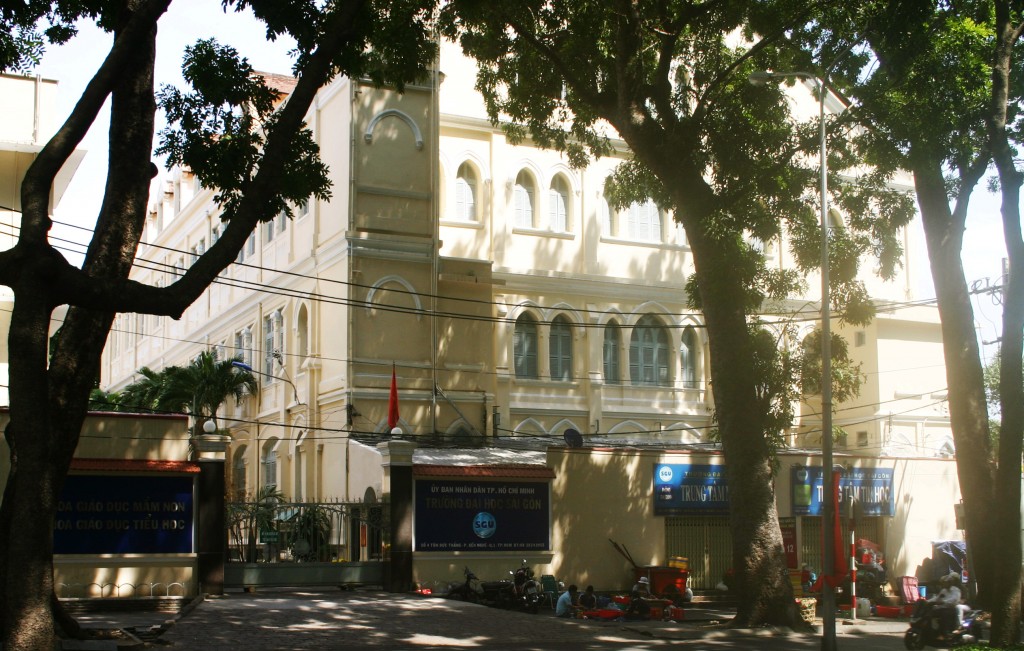
To represent the exterior of the “Pensionnat Lyautey,” the boarding house where the girl stays while studying in Saigon, Annaud chose the former St Paul’s Convent building on the corner of Tôn Đức Thắng and Nguyễn Hữu Cảnh streets.

The former St Paul’s Convent building on the corner of Tôn Đức Thắng and Nguyễn Hữu Cảnh streets was used as the “Pensionnat Lyautey” (© Fox Pathé Europa, France)

This particular building was taken over by the government after 1975 and has functioned ever since as the Nursery School Teacher Training Faculty of Sài Gòn University. The film also treats us to several shots of a leafy and peaceful Tôn Đức Thắng street outside the Pensionnat, then still lined with colonial buildings and a world away from the busy traffic artery of today

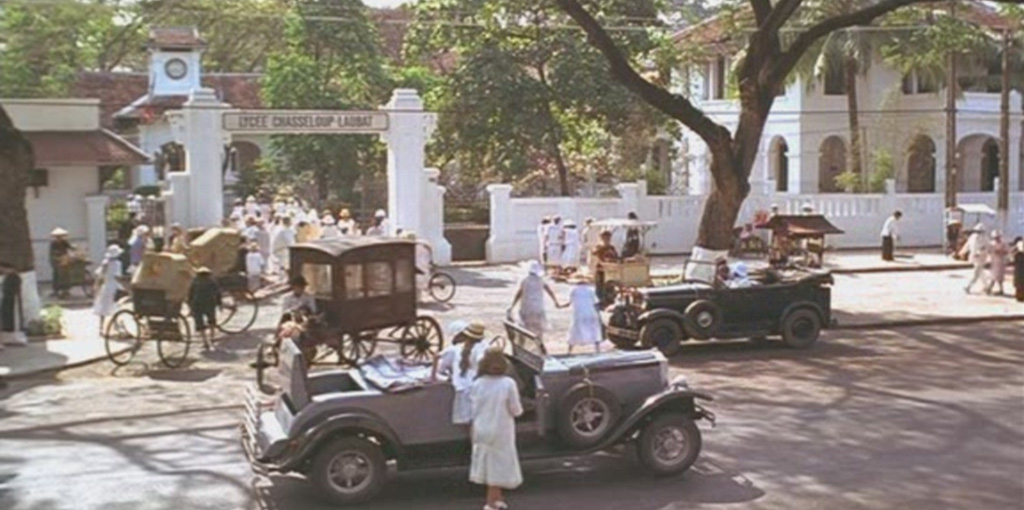
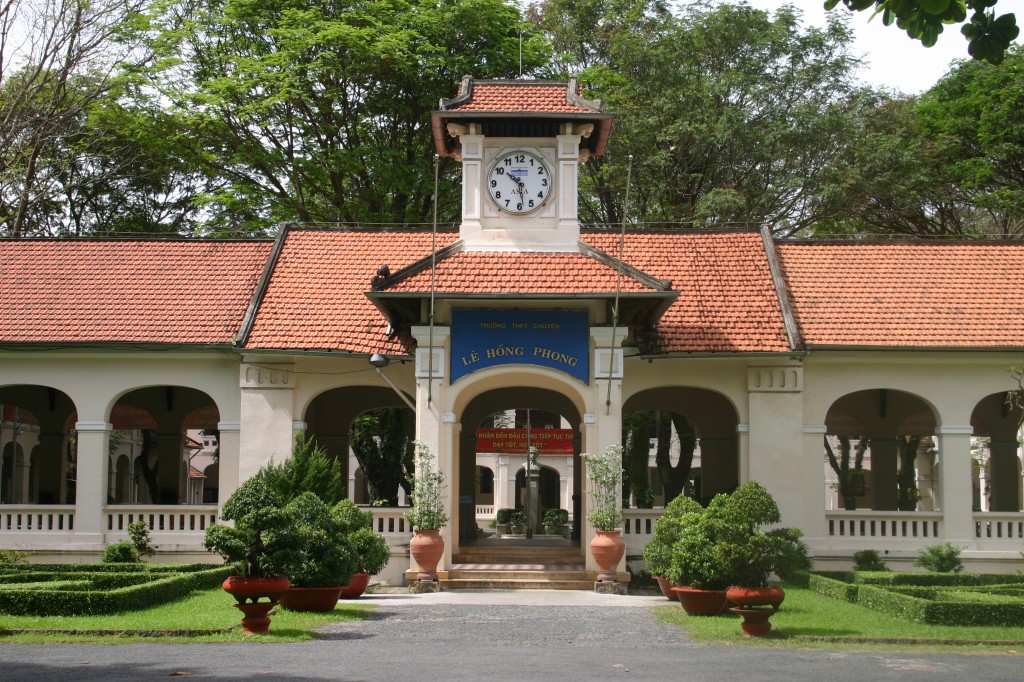
The former Lycée Pétrus Ký was used instead of the former Lycée Chasseloup-Laubat (© Fox Pathé Europa, France)

Marguerite Duras herself studied at the Lycée Chasseloup-Laubat (now the Lê Quý Đôn Secondary School at 110 Nguyễn Thị Minh Khai in District 1), and on several occasions the film shows the girl entering and leaving a colonial school compound marked “Lycée Chasseloup-Laubat.” However, if you look closely you’ll see that the compound filmed by Annaud was not the Lê Quý Đôn Secondary School, but rather the former Lycée Pétrus Ký, the only work in the city by urbanist Ernest Hébrard and now the Lê Hồng Phong Specialist Secondary School at 235 Nguyễn Văn Cừ in District 5.

For a subsequent shot in which the car heads out to Chợ Lớn, Annaud set up a café next to the great banyan tree in Lý Tự Trọng Park, opposite the former Lieutenant Governor’s Palace (now the Hồ Chí Minh City Museum).

A café was set up in Lý Tự Trọng Park, opposite the former Lieutenant Governor’s Palace (© Fox Pathé Europa, France)

On the way to Chợ Lớn, the car takes something of a detour, crossing one of the six bridges which once spanned the former Canal Bonard before depositing the couple at the Chinaman’s garçonnière (bachelor pad).

Phú Định in District 5 (© Fox Pathé Europa, France)

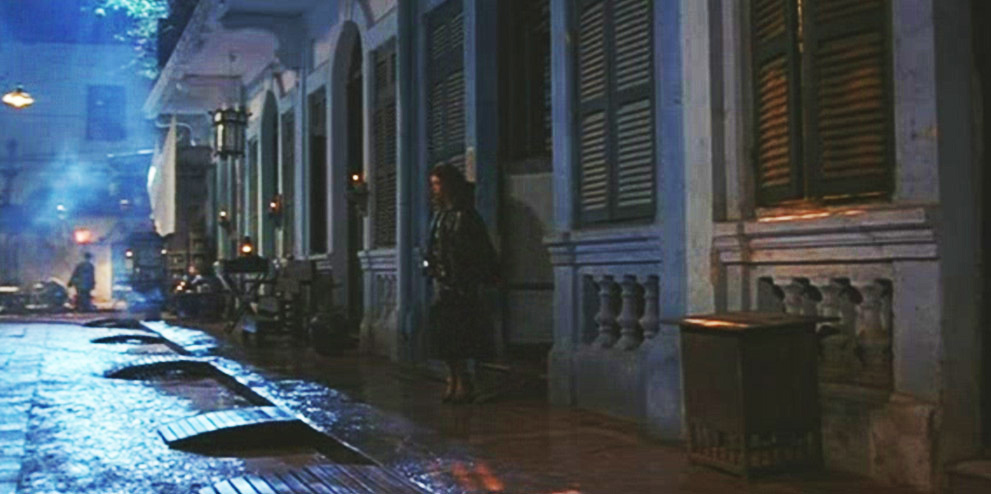
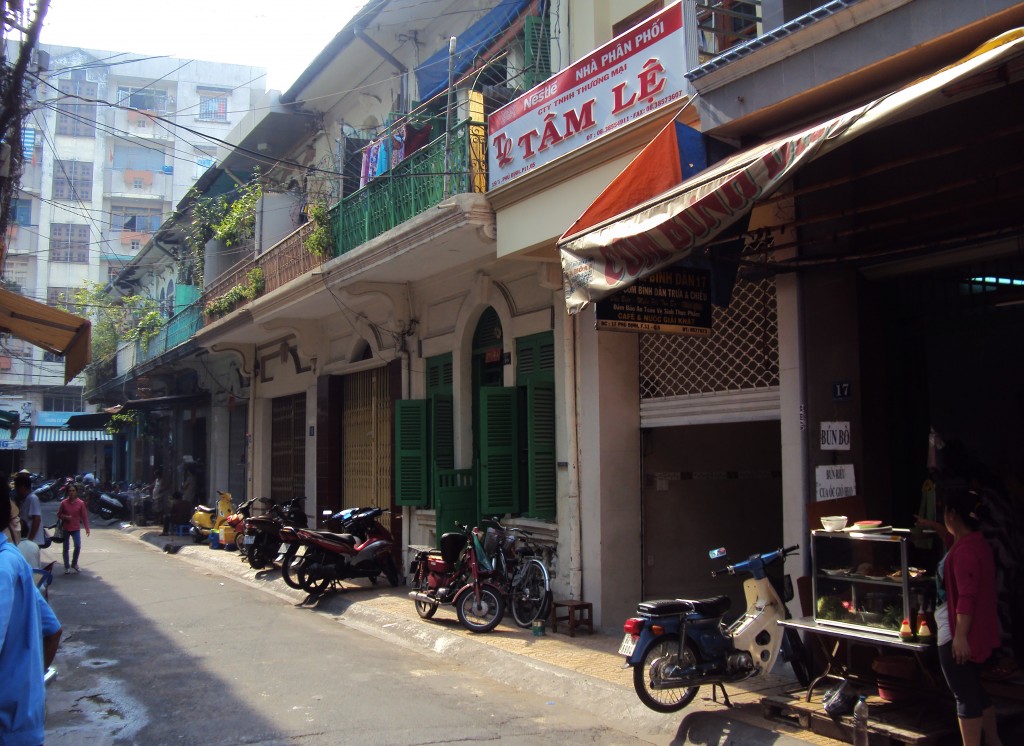
While Mai Xuân Thưởng street in District 6 was used for some street scenes, the exterior of the garçonnière itself was represented in the film by 7 Phú Định in District 5, while (needless to say) the X-rated interior shots were completed elsewhere.

The exterior of the Chinaman’s bachelor pad was represented in the film by 7 Phú Định in District 5 (© Fox Pathé Europa, France)

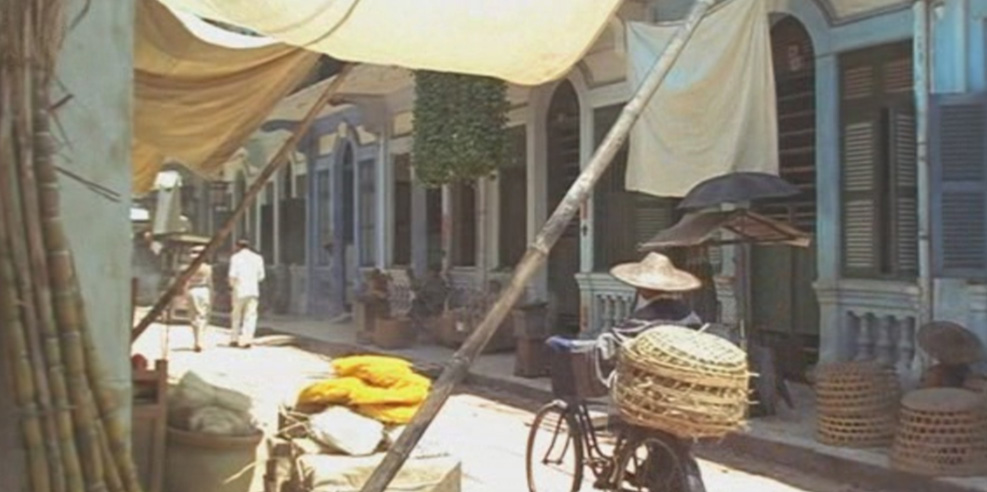
Annaud also filmed his restaurant exteriors in Chợ Lớn, selecting the two blocks between Phạm Đôn and Phan Phú Tiên streets which Joseph L Mankiewicz had used 34 years earlier for crowd sequences in his much-maligned 1958 version of Graham Greene’s The Quiet American.

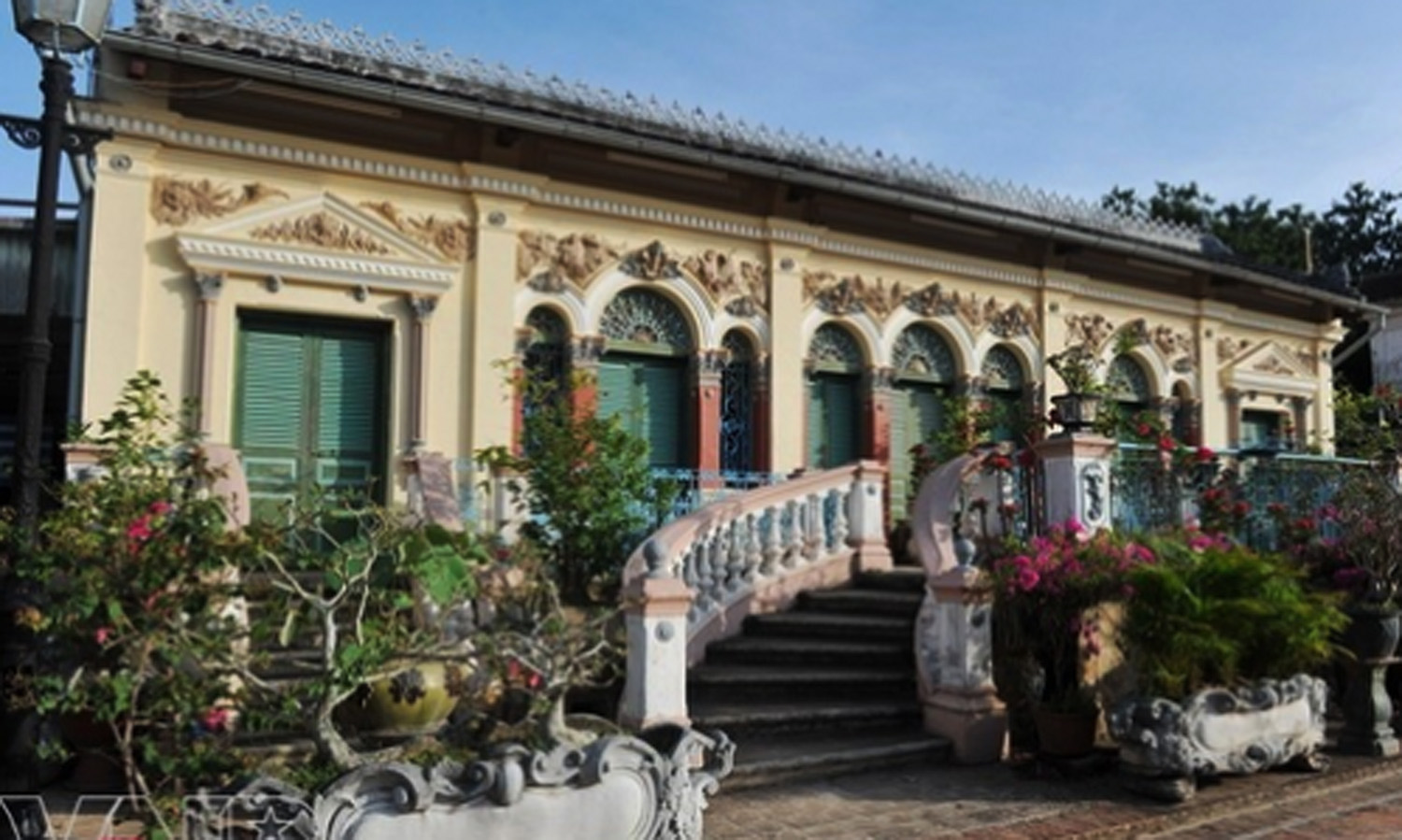
The Dương family residence in Cần Thơ stood in for the real family home of Duras’ “North China Lover” in Sa Đéc

The Chinaman later goes to see his father in an unsuccessful attempt to be released from his arranged marriage to a Chinese heiress, so that he can be with the girl.

At the time of filming, the former family house of Duras’ real “North China Lover” Léo Huỳnh Thủy Lê, located at 255A Nguyễn Huệ in Sa Đéc, had been transformed into a government office and could not be used for filming. After scouring the area for a suitable location, Annaud chose instead the old Dương family house at 26/1A Bùi Hữu Nghĩa in Cần Thơ city.

Saigon port area (© Fox Pathé Europa, France)

Towards the end of the film, we see the departure by ship of the girl’s troubled elder brother and subsequently of the girl herself. Annaud arranged for a 1920 ocean liner called the Alexandre Dumas to be brought from Cyprus to film these two key sequences, which both feature panoramic views of the old Messageries Maritimes (Nhà Rồng) port area.

Like the 1958 version of The Quiet American, Jean-Jacques Annaud’s 1992 film of The Lover affords us a fascinating glimpse of Saigon-Hồ Chí Minh City before its transformation in the 1990s.

You may also be interested to read these articles:
Saigon on the Silver Screen – The Quiet American, 1958 and 2002
Graham Greene’s Saigon

IMG_3707

The “Pensionnat Lyautey” building pictured today on the corner of Tôn Đức Thắng and Nguyễn Hữu Cảnh streets

11.13 Lycee Petrus Ky

The former Lycée Pétrus Ký, now the Lê Hồng Phong Specialist Secondary School, which stood in for the Lycée Chasseloup-Laubat in The Lover

DSC00963

Phú Định street in District 5, which Jean-Jacques Annaud used for the exterior shots of the Chinaman’s bachelor pad

Tim Doling is the author of the guidebook Exploring Saigon-Chợ Lớn – Vanishing heritage of Hồ Chí Minh City (Nhà Xuất Bản Thế Giới, Hà Nội, 2019)

A full index of all Tim’s blog articles since November 2013 is now available here.

Join the Facebook group pages Saigon-Chợ Lớn Then & Now to see historic photographs juxtaposed with new ones taken in the same locations, and Đài Quan sát Di sản Sài Gòn – Saigon Heritage Observatory for up-to-date information on conservation issues in Saigon and Chợ Lớn.
Old Saigon Building of the Week – Former Clinique Saint-Paul, 1938

DSC02851

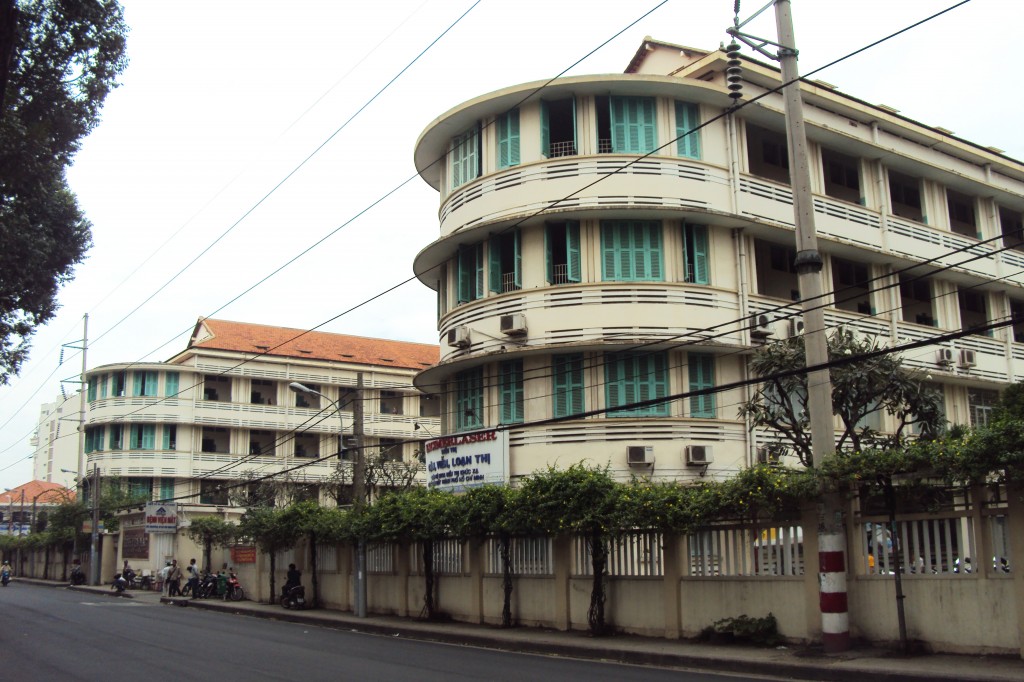
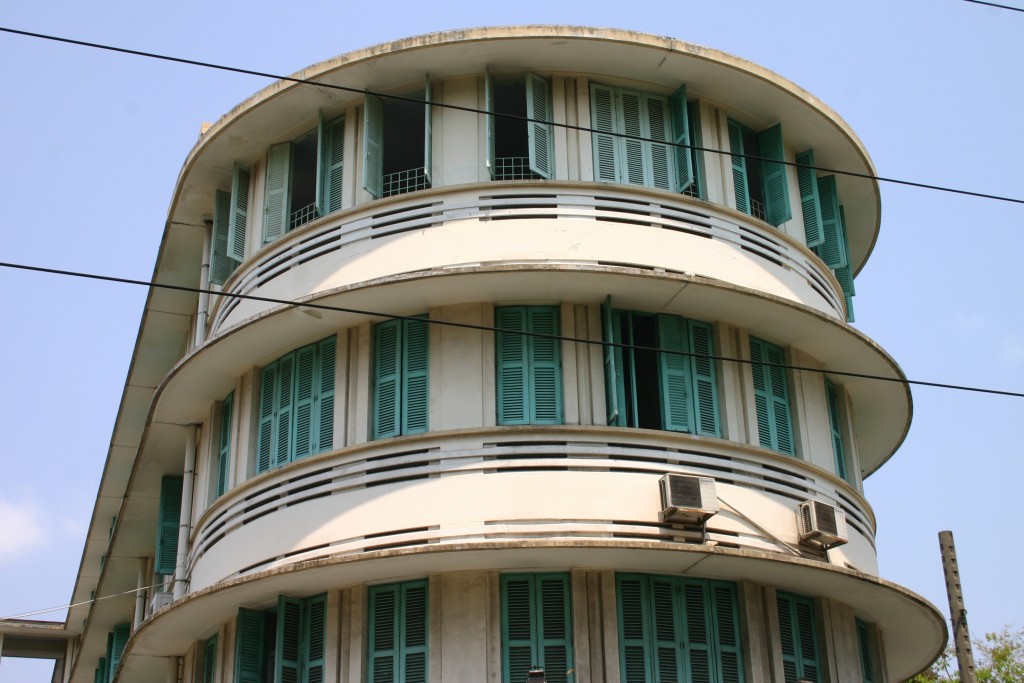
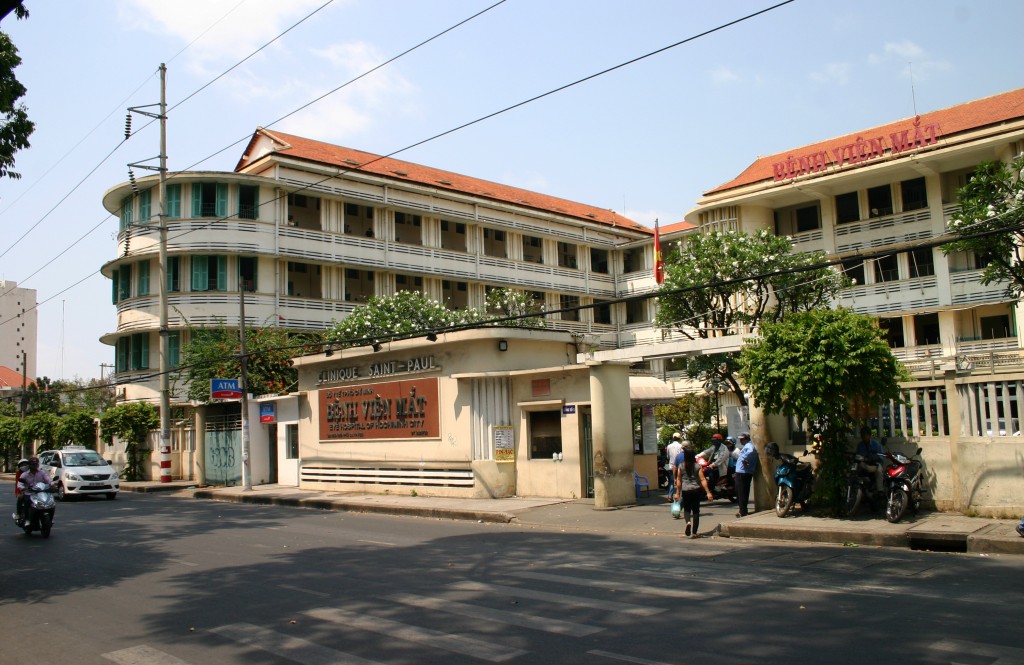
Hồ Chí Minh City Eye Hospital, the former Clinique Saint-Paul

This article was published previously in Saigoneer http://saigoneer.com

For those condemned to a long daily commute along that busiest of city arteries, Điện Biên Phủ street, the clean, elegant lines of the Hồ Chí Minh City Eye Hospital (Bệnh viện Mắt, Thành phố Hồ Chí Minh) – the former Clinique Saint-Paul – offer a refreshing contrast to the surrounding urban clutter.

18 Clinique Saint-Paul

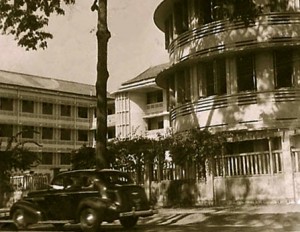
The Clinique Saint-Paul pictured in the early 1950s

Funded and operated by the Sisters of Saint-Paul de Chartres, the Clinique Saint-Paul was built in 1936-1937 near the junction of rue Legrand de la Liraye and rue Pierre Flandin (modern Điện Biên Phủ and Bà Huyện Thanh Quan streets) to replace their earlier Clinique du Docteur Angier (1908), which had stood at 1 rue Docteur Angier (now Nguyễn Bỉnh Khiêm street), immediately behind the St Paul’s Convent.

The new Clinique was built by the Société Indochinoise d’Études et de Constructions (SIDEC), one of the leading construction companies in the colony, which was also responsible for the Tân Định Market as well as numerous other civic works in Cambodia.

IMG_1133

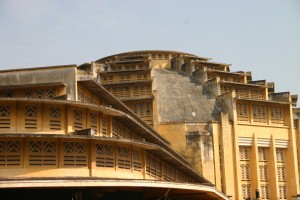
Architect Louis Chauchon also designed Phnom Penh’s Psah Thmey Central Market

The Clinique was designed by distinguished Saigon-based architect Louis Chauchon (1878-1945), whose other major works include the Foyer du Soldat et du Marin in Saigon, the Public Library (now the National Library of Cambodia, 1924), the Psah Thmey Central Market (1937) and the Palais du Commissariat de France (1938) in Phnom Penh and the Pavillon de la Cité Universitaire in Hà Nội (1942).

According to the Echo Annamite newspaper, the Clinique was inaugurated on 19 December 1938 in the presence of Cochinchina Governor André Georges Rivoal and several other local dignitaries.

IMG_3955

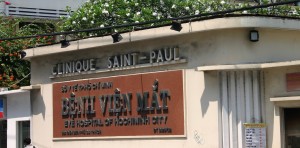
The Clinique’s original art deco sign remains in place today

Its Director, Dr Roton, treated them to a tour of the state-of-the art facilities which “made a great impression on the visitors.”

Functional yet elegant, the Clinique is noteworthy for its stylish fusion of art deco curves and traditional four-panel roofs. Truly a sight for sore eyes.

IMG_3954

The north wing of the former Clinique Saint-Paul

IMG_3951

The south and central wings of the former Clinique Saint-Paul

Tim Doling is the author of the guidebook Exploring Saigon-Chợ Lớn – Vanishing heritage of Hồ Chí Minh City (Nhà Xuất Bản Thế Giới, Hà Nội, 2019)

A full index of all Tim’s blog articles since November 2013 is now available here.

Join the Facebook group pages Saigon-Chợ Lớn Then & Now to see historic photographs juxtaposed with new ones taken in the same locations, and Đài Quan sát Di sản Sài Gòn – Saigon Heritage Observatory for up-to-date information on conservation issues in Saigon and Chợ Lớn.
American War Vestiges in Saigon – 60 Vo Van Tan

IMAGE 147 Several MACV commanders

The colonial villa at 60 Võ Văn Tần

The early history of the colonial villa at 60 Võ Văn Tần – originally 60 rue Testard – is shrouded with mystery, though it has been claimed that it was originally built for a wealthy French wine importer.

It later became the home of royal family member Nguyễn Phúc Ưng Thi (1913-2001) and his wife, founders of the Rex Hotel. In the late 1950s, they made the house available to the United States of America as a residence for their military commanders in chief.

It subsequently became the residence of two consecutive Military Assistance Advisory Group (MAAG) Chiefs – Lieutenant General Samuel T Williams (November 1955-September 1960) and Lieutenant General Lionel C McGarr (September 1960-July 1962).

76D General William C Westmoreland b

General William C Westmoreland, one of the villa’s former residents

In 1962, when MAAG was integrated into the Military Assistance Command Việt Nam (MACV), the head of MAAG was found new lodgings at 121 Trương Định (today a kindergarten), while 60 Trần Quý Cáp became home to successive MACV Chiefs, including General Paul D Harkins (February 1962-June 1964), General William C Westmoreland (June 1964-July 1968), General Creighton Abrams (July 1968-June 1972) and latterly General Frederick C Weyand (June 1972-March 1973).

Today 60 Võ Văn Tần is home to a tourist company.

IMG_3965

A side view of 60 Võ Văn Tần

You may also be interested to read these articles:

In Search of Saigon’s American War Vestiges
American War Vestiges in Saigon – 606 Tran Hung Dao
American War Vestiges in Saigon – 137 Pasteur
American War Vestiges in Saigon – Former “Free World” HQ
American War Vestiges in Saigon – Former USIS Headquarters

Tim Doling is the author of the guidebook Exploring Saigon-Chợ Lớn – Vanishing heritage of Hồ Chí Minh City (Nhà Xuất Bản Thế Giới, Hà Nội, 2019)

A full index of all Tim’s blog articles since November 2013 is now available here.

Join the Facebook group pages Saigon-Chợ Lớn Then & Now to see historic photographs juxtaposed with new ones taken in the same locations, and Đài Quan sát Di sản Sài Gòn – Saigon Heritage Observatory for up-to-date information on conservation issues in Saigon and Chợ Lớn.
The Long Bien Bridge – “A Misshapen but Essential Component of Ha Noi’s Heritage”

1985

An aerial view of the Long Biên Bridge in 1985

This article was published previously in Saigoneer http://saigoneer.com

Described by one writer as “a misshapen but essential component of Hà Nội’s heritage,” the Long Biên Bridge has clearly seen better days, but still commands such affection that recent government proposals to relocate or rebuild it have now been abandoned. What better time to revisit the long and turbulent history of this Hà Nội icon.
Hanoi Station new 2

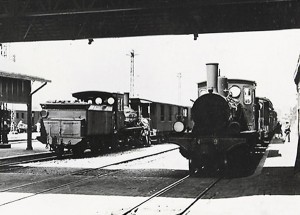
Steam locomotives at Hà Nội Station in the early 1900s

The Long Biên Bridge was conceived primarily as part of the government-run (Chemins de fer de l’Indochine, CFI) railway line from Hà Nội to Đồng Đăng (built 1899-1902), but from the outset it was also intended as a means of connecting the capital with a second railway line then under construction. The line from Hải Phòng to Lào Cai and Yunnan (built 1901-1910), operated as a franchise by the Compagnie française des Chemins de fer de l’Indochine et du Yunnan (CIY), did not enter the capital, so a connecting service had to be provided across the river from Hà Nội to Gia Lâm. Because of its dual function, the bridge became part of a “communal” railway line administered jointly by both CFI and CIY.

21. Paul Doumer, Governor General

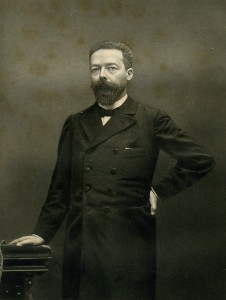
Paul Doumer, Governor General of Indochina from 13 February 1897 to October 1902

The bridge was originally named after Paul Doumer, the French Governor General who championed the cause of railway construction and whose ambitious “1898 Programme” laid the groundwork for the construction of over 1,300km of railway line in Việt Nam between 1898 and 1914, followed by over 1,100km more during the period 1918–1936.

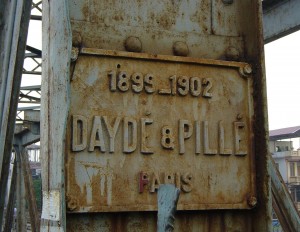
Costing just over 6 million Francs, it was built between 1899 and 1902 to an in-house design by Daydé et Pillé, following a competition which involved all of the major construction houses. The bridge was inaugurated on 2 February 1902 in the presence of Doumer himself, his successor Paul Beau and the young King Thành Thái, and the first train crossed the bridge on 28 February 1902.

25. The Doumer (Long Biên) Bridge

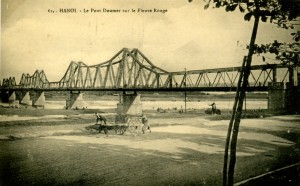
The Doumer Bridge soon after completion

The bridge’s complex 19-span, 20-column cantilever design was immediately fêted as a technological masterpiece. Arriving in Hà Nội soon after it opened, awestruck British travel writer Alfred Cunningham noted:

“It is one of the longest bridges in the world, its total length being 1,680 metres (5,505 feet). According to Doumer’s memoirs, the engineers who constructed it were Messrs Daydé et Pillé, Creil (Oise) and the superintendent engineer in charge of its erection informed us that his task had been very difficult owing to the subsidence of the soil and the bed of the river. The earthwork leading up to the bridge had sunk three times, to a total depth of three metres, but he thought that was final. The stone columns, 14 metres high, are built up on metal cylindrical piles, 30 metres deep, which are filled with cement. There are 20 stone columns and some idea of its dimensions may be gathered from the fact that it absorbed 80 tons of paint, and the total weight of the steel is 5,000 tons. It is a magnificent work of which the French colonial government may well be proud, as a feat of modern engineering skill, and as a colossal monument to their desire to improve the communications between the provinces and the capital.”

26. The builders’ plate of the Doumer

The original builders’ plate of the Doumer Bridge (photo: Tim Doling)

In fact, at the outset this massive structure carried just a single-track railway line bordered by pedestrian walkways, obliging those wishing to cross the Red River by motor vehicle or rickshaw to take a ferry. This has prompted some historians to suggest that the bridge, like many other French colonial structures, was conceived more for its symbolic value than as a key transport hub.

Ironically, the bridge is remembered today not as a symbol of colonial power and prestige, but rather as an icon of defiance against the Americans during the second Indochina War.

The bridge’s links with revolutionary history began in the period immediately after the First Indochina War, when the French used the Hà Nội-Hải Phòng line to evacuate their civilians and troops. It was across the Doumer Bridge that the final contingent of French soldiers walked on the afternoon of 9 October 1954, after withdrawing from the Hà Nội Citadel. The Việt Minh then took possession of the bridge, officially renaming it Cầu Long Biên. On the morning of 10 October 1954, Việt Minh troops entered the city, declaring the capital liberated.

210. Hà Nội's Long Biên (Doumer) Bridge

US bomb damage in August 1967

Its strategic function later made the bridge a key target for US bombers. In March 1965, as the Americans unleashed their sustained aerial bombardment known as “Operation Rolling Thunder,” anti-aircraft guns were installed on the central bridge towers. However, in 1966-1967 the bridge was hit on no fewer than 10 occasions. At first, running repairs succeeded in keeping it open to rail traffic, but in August 1967 the central span was destroyed, severing the vital rail link across the Red River.

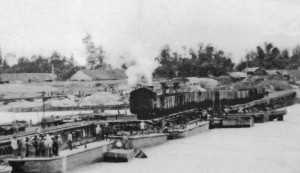
During the ensuing eight-month reconstruction period, an extraordinary floating bridge known as SH1 (Sông Hồng 1) was installed to maintain rail transport between Hà Nội and Gia Lâm – barges were used to move the pontoons into place at night and then float them away again before first light.

232. Temporary bridge-ferry “SH2”

Temporary pontoon bridge “SH2”

Nixon’s “Operation Linebacker” of May–October 1972 inflicted further damage on the Long Biên Bridge by hitting it on four occasions, demolishing three more spans and once more severing the vital rail link between the capital and the north. As before, a pontoon bridge system – this time known as SH2 – was hastily installed across the Red River to reconnect Hà Nội with Gia Lâm.

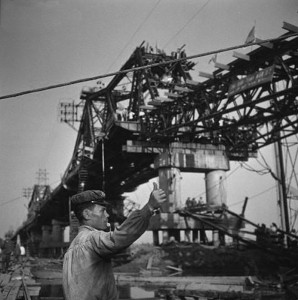
Altogether, seven spans and four support columns were destroyed during the American War. After the Paris Peace Accords, work began to rebuild the bridge using steel supplied by the USSR, and by March 1973 trains were once more running through from Hà Nội to Gia Lâm junction. Since the need to ensure architectural integrity was not high on the agenda, those wartime reconstructions left only half of the bridge with its original shape.

1973

Rebuilding the Long Biên Bridge in 1973

The current debate over the bridge’s future stems from proposals elaborated nearly a decade ago to establish a fully integrated public transport system in Hà Nội, incorporating outer and central suburban railway lines run by ĐSVN, citywide bus services and a five-line Metro network. This ambitious scheme demands the provision of a multi-track railway bridge to carry the main line, Metro Line 1 and the proposed central suburban line across the Red River.

Now that the scheme to relocate or rebuild the Long Biên Bridge has been abandoned, it is likely that a new railway bridge will be built further upstream, as originally proposed. Meanwhile, the Ministry of Transport has reportedly agreed to keep the structure of the Long Biên Bridge intact, renovating parts of it “to improve its transport capability.”

Back in 2007, the French government pledged financial support to “restore the bridge to its original appearance.” But perhaps the last word should go to William Logan who, in his 2000 book Hanoi: Biography of a City, argues that while the Long Biên Bridge was a remarkable French engineering and architectural achievement, it is the bridge’s misshapen, unrestored spans which make it such a special symbol of the indomitable Hà Nội wartime spirit.

Tim Doling is the author of The Railways and Tramways of Việt Nam (White Lotus Press, Bangkok, 2012) and also gives talks on Việt Nam railway history to visiting groups.

A full index of all Tim’s blog articles since November 2013 is now available here.

Join the Facebook group Rail Thing – Railways and Tramways of Việt Nam for more information about Việt Nam’s railway and tramway history and all the latest news from Vietnam Railways.

You may also be interested in these articles on the railways and tramways of Việt Nam, Cambodia and Laos:

A Relic of the Steam Railway Age in Da Nang
By Tram to Hoi An
Date with the Wrecking Ball – Vietnam Railways Building
Derailing Saigon’s 1966 Monorail Dream
Dong Nai Forestry Tramway
Full Steam Ahead on Cambodia’s Toll Royal Railway
Goodbye to Steam at Thai Nguyen Steel Works
Ha Noi Tramway Network
How Vietnam’s Railways Looked in 1927
Indochina Railways in 1928
“It Seems that One Network is being Stripped to Re-equip Another” – The Controversial CFI Locomotive Exchange of 1935-1936
Phu Ninh Giang-Cam Giang Tramway
Saigon Tramway Network
Saigon’s Rubber Line
The Changing Faces of Sai Gon Railway Station, 1885-1983
The Langbian Cog Railway
The Lost Railway Works of Truong Thi
The Mysterious Khon Island Portage Railway
The Railway which Became an Aerial Tramway
The Saigon-My Tho Railway Line

Saigon’s Rubber Line

2 Lộc Ninh Station in 1932

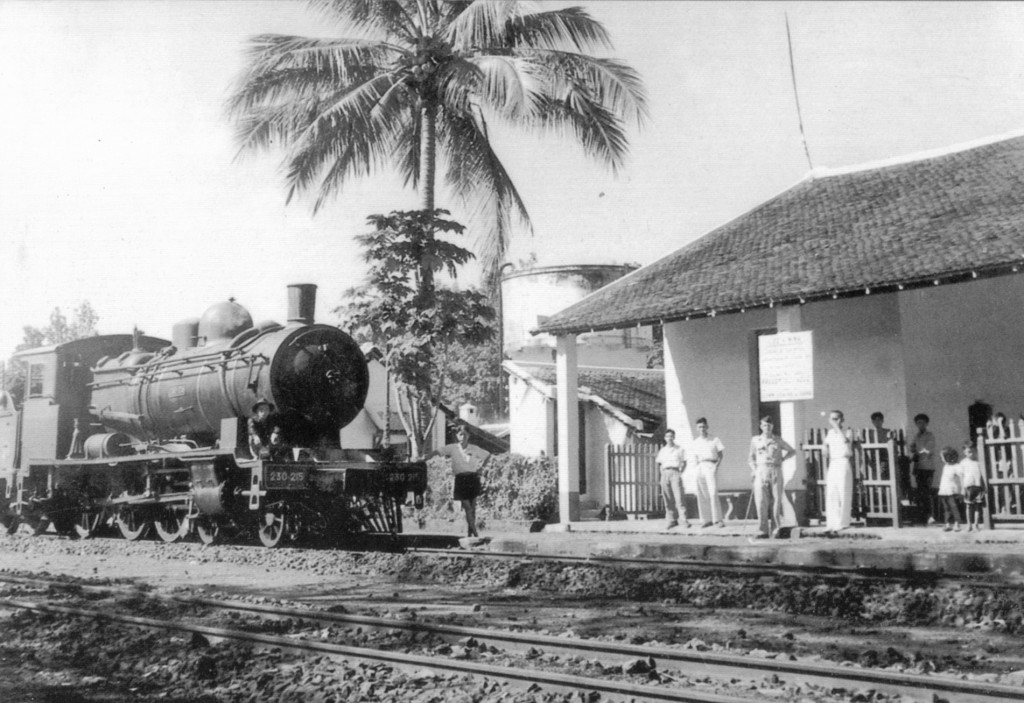
J F Cail 4-6-0 “Ten Wheel” No 230-215 pictured at Lộc Ninh Station in the early 1940s.

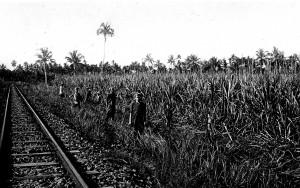
Many people have heard of the former Mỹ Tho railway line, but relatively few are aware that a second branch line once ran out of Saigon. This so-called “rubber line” was opened in 1933 to convey bales of rubber and treated latex from the plantations of Thủ Dầu Một province to Saigon port. 

1 CFTI Thu Dau Mot line

The tramway line north of Thủ Dầu Một

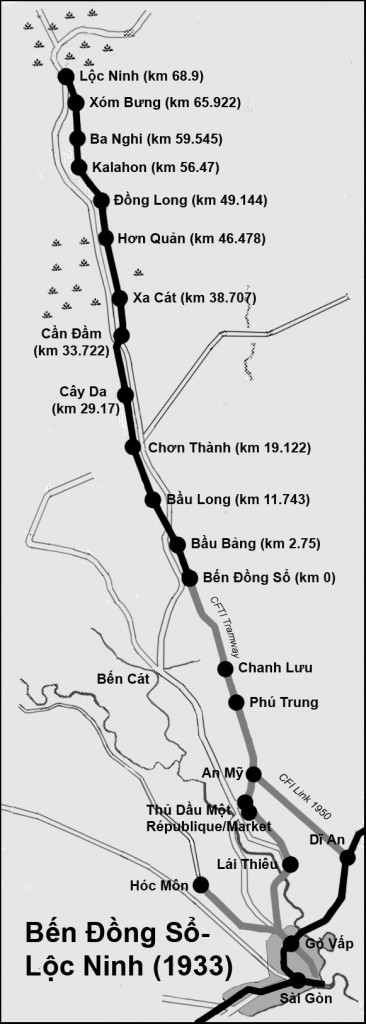
In early 1927, the planters of Thủ Dầu Một province proposed the construction of a new railway line to transport bales of rubber and treated latex from Lộc Ninh and Hơn Quản to the river port of Bến Cát, where it would be transferred by boat to Saigon docks for export. The colonial administration gave the scheme its full support, believing that this new “line of colonisation” might one day form part of a second, inland North-South rail route, linked to the Tân Ấp-Thakhek line (see my earlier post The Railway Which Became an Aerial Tramway), which at that time was already under construction in the north.

The planters set up the Compagnie des voies ferrées de Lộc Ninh et du centre Indochinois (CVFLNCI) to build the line, but later that year the Sài Gòn tramway operator, the Compagnie française des tramways de l’Indochine (CFTI), put forward its own rival plans to link its tramway network with Lộc Ninh and Bù Đốp on the Cambodian border.

The Bến Đồng Sổ-Lộc Ninh line and its connection to Saigon via the CFTI tramway network

By throwing its hat into the ring, CFTI was able to negotiate a lucrative compromise settlement with CVFLNCI. Instead of linking its new line to Sài Gòn by river at Bến Cát, the CVFLNCI agreed to reroute it to Bến Đồng Sổ, while the CFTI undertook to extend its tramway network northward from Thủ Dầu Một to Bến Đồng Sổ to connect with it. In this way, the new branch line became wholly dependent upon the tramway network to connect it (at Gò Vấp) with the main North-South line run by Chemins de fer de l’Indochine (CFI).

This, of course, left CVFLNCI in a very weak bargaining position. When the Lộc Ninh line opened in 1933, the company was obliged to pay CFTI a substantial access fee equivalent to 50 percent of receipts from all CVFLNCI freight services using CFTI tramway lines, and also to grant CFTI the concession to run all passenger services between Sài Gòn and Lộc Ninh on CVFLNCI’s behalf.

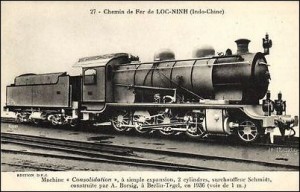
To work the line, the CVFLNCI acquired three 2-8-0 “Consolidation” locomotives (numbered 300-302) built in 1930–1931 by Borsig of Berlin.  However, when it was discovered that at 90 tons they were too heavy for the CFTI tramway lines south of Thủ Dầu Một, lighter locomotives had to be shipped in from the réseaux non concédés to haul freight trains onwards from Bến Đồng Sổ to Sài Gòn docks.  A repairs and maintenance depot was built at Lộc Ninh.

The completion of the line coincided with the opening of several new plantations, and the encouraging passenger numbers of 1935 (80,905) and 1936 (109,557) reflected the subsequent influx of workers recruited by the rubber companies during that period. However, for most of those workers it was a one-way trip, and in subsequent years this sparsely populated region saw few train passengers other than French plantation personnel.

102_001

One of the three Borsig 2-8-0 “Consolidation” locomotives (numbered 300-302) purchased by CVFLNCI to work the line

In contrast, the amount of rubber transported on the line rose dramatically from 25,459 tons in 1935 to 42,337 tons in 1936. However, during the three years it ran the line, its disadvantageous line access agreement with CFTI left the CVFLNCI continuously in the red. In 1936 the colonial authorities ran out of patience and terminated the CVFLNCI franchise, placing the line under the direct control of CFI. The line access agreement with CFTI was immediately renegotiated in favour of CFI, but with no funds then available to link the branch directly with the rest of the CFI network, the tramway operator continued to run passenger services from Sài Gòn to Lộc Ninh via Thủ Dầu Một until 1948.

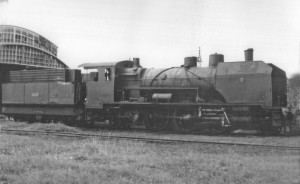
After the CFI took over the running of the branch in 1936, the 2-8-0 Borsig “Consolidations” were transferred to other parts of the CFI network and lighter locomotives were deployed on the line, obviating the need for time-consuming locomotive changes at Bến Đồng Sổ. By the 1940s, daily CFTI passenger services on this line were being handled by Corpet Louvet & Compagnie 2-6-0T locomotives reportedly acquired from the Ardennes, while freight services were hauled by J F Cail 4-6-0 “Ten wheels” and Franco-Belge 2-6-2 “Prairies.”

copie_10

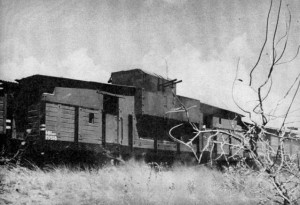
A French armoured train of the type deployed on the line

As the First Indochina War got under way in earnest, Việt Minh attacks on the tramway line north of Gò Vấp increased, “making it impossible for CFTI to continue running trains or repairing the damage” and leading to the closure of the tramway line for security reasons. However, at this time Cochinchina was still exporting well over 60,000 tons of rubber each year and the need to ensure its continued conveyance to the docks overrode all other considerations.

The French authorities therefore responded by taking over the Gò Vấp-Bến Đồng Sổ tramway line, placing it under CFI control and building armoured trains to guarantee the safe passage of rubber from the plantations to Saigon docks.

This situation continued until 6 November 1949, when Việt Minh guerillas blew up the Lái Thiêu bridge, severing the tramway link completely. Realising that even if they repaired the bridge it would always be vulnerable to attack, the French authorities voted special funds to build a new 5.5km railway line connecting An Mỹ (north of Thủ Dầu Một) directly with Dĩ An on the North-South line. This opened on 7 August 1950, restoring the vital freight connection between Lộc Ninh and Sài Gòn docks.

163. Société Franco-Belge 2-6-2 “Prairie”

Société Franco-Belge 2-6-2 “Prairie” locomotives were commonly used on the line in the late 1950s. No 131-112 is pictured here at Sài Gòn’s Chi Hoa Depot.

The Dĩ An–Lộc Ninh line suffered considerable damage during the period 1950-1953, but was repaired and reopened in 1954. However, by this time rubber production had been seriously retarded by warfare and in the interim those plantations which remained open had entrusted much of their rubber freight to the road haulage sector.

With its income diminishing year on year, the Dĩ An–Lộc Ninh line was pointedly excluded from the HXVN’s Railway Reconstruction Program of 1957–1959. Denied military protection, the line subsequently became a prime target for sabotage by National Liberation Front (NLF) operatives.

In 1961, train services to and from Lộc Ninh were “provisionally suspended” by the HXVN, bringing to an end all passenger services on the branch. Thereafter, the southernmost section from Dĩ An to Thủ Dầu Một remained in intermittent use by freight traffic until the late 1960s, when the line was definitively abandoned.

Tim Doling is the author of The Railways and Tramways of Việt Nam (White Lotus Press, Bangkok, 2012) and also gives talks on Việt Nam railway history to visiting groups.

A full index of all Tim’s blog articles since November 2013 is now available here.

Join the Facebook group Rail Thing – Railways and Tramways of Việt Nam for more information about Việt Nam’s railway and tramway history and all the latest news from Vietnam Railways.

You may also be interested in these articles on the railways and tramways of Việt Nam, Cambodia and Laos:

The Saigon-Mỹ Tho Railway line
The changing faces of Saigon railway station
The Việt Nam Railways Building in Saigon
Saigon tramway network
Derailing Saigon’s 1966 monorail dream
Đồng Nai Forestry Tramway
The Langbian Cog Railway
A relic of the steam railway age in Đà Nẵng
By Tram to Hội An
The railway which became an aerial tramway
The lost railway works of Trường Thi
The Long Biên Bridge – “a misshapen but essential component of Hà Nội’s heritage”
Hà Nội tramway network
Phủ Ninh Giang-Cẩm Giàng tramway
Goodbye to Steam at Thái Nguyên Steel Works
Full steam ahead on Cambodia’s Toll Royal Railway
The mysterious Khon island portage railway