Quach Dam – Cho Lon’s “King of Commerce”

New Image

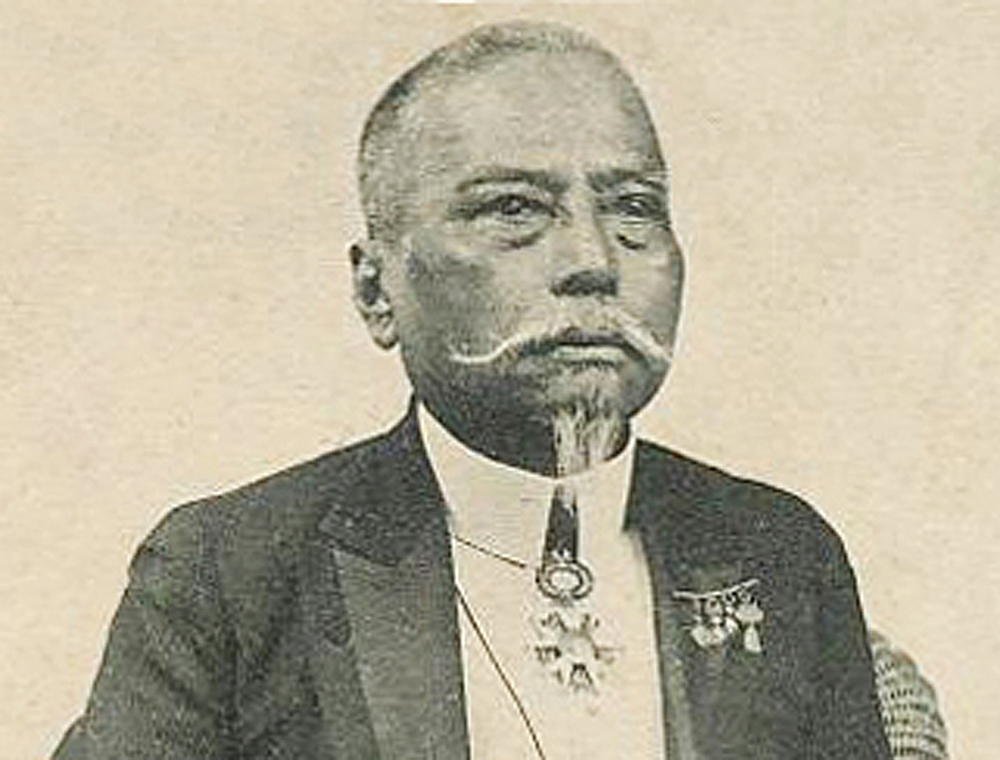
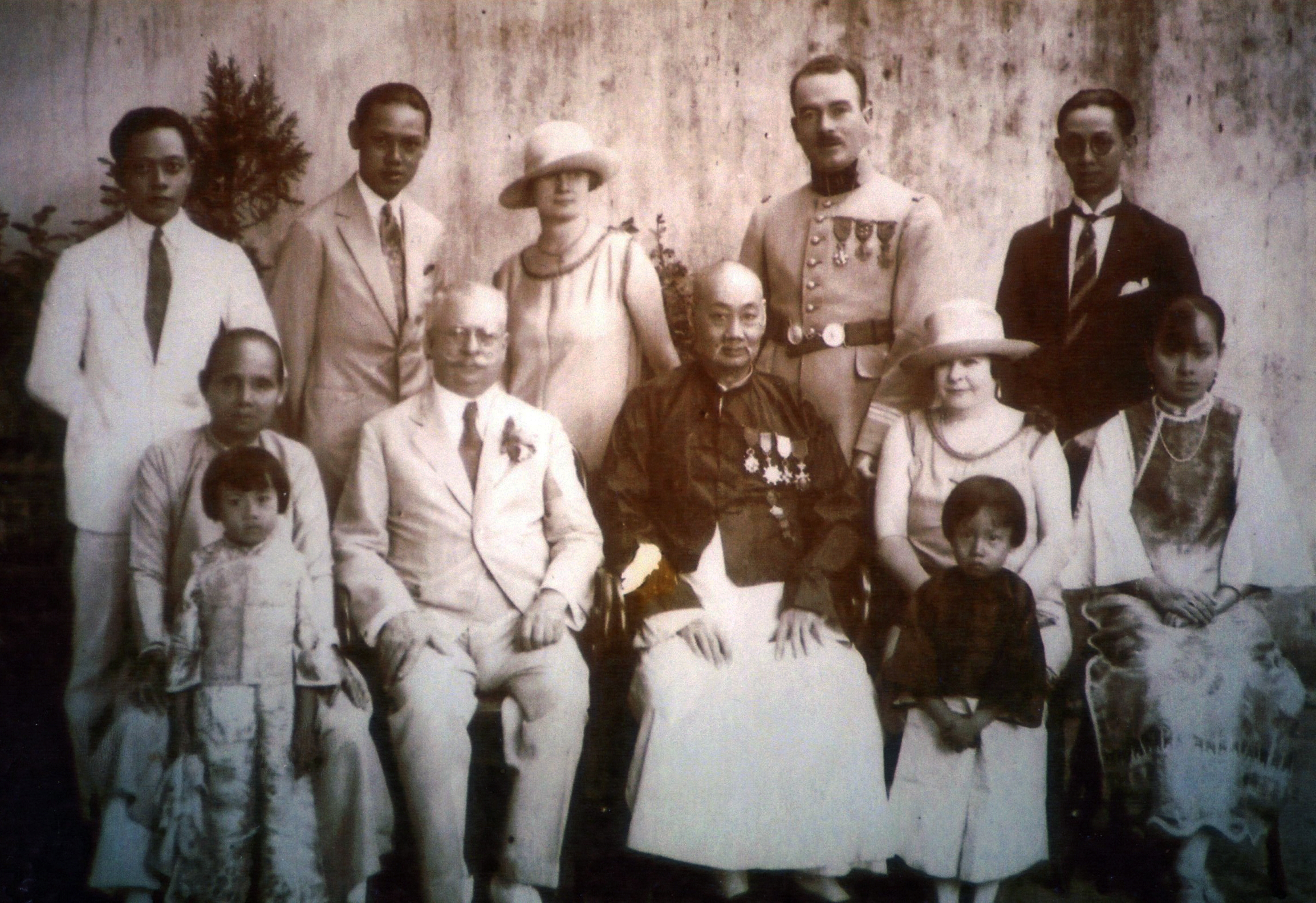
This rare family photograph of Quách Đàm, taken on the day he received a medal from the French government, was kindly provided by his great grandson, Mr Harrison W Lau.

This article was published previously in Saigoneer http://saigoneer.com

Hải Thượng Lãn Ông boulevard (the former quai Gaudot) in central Chợ Lớn preserves several elegant old colonial shophouse buildings, but perhaps the most interesting of all is number 45, once the modest headquarters of Cantonese millionaire and philanthropist Quách Đàm.

Born in 1863 in Longkeng village, Chao’an district, Chaozhou prefecture of Guangdong province, Quách Đàm (郭琰 Guō Yǎn) left home in the mid 1880s to make his fortune in French Cochinchina.
Depots de paddy sur les quais

A paddy depot on the quayside

Starting out by buying and selling bottles, he later progressed to the trading of buffalo hides and fish bladders. By the 1890s, having ploughed the money he made from these early ventures back into business, he had acquired his own steamship and set himself up in Cần Thơ as a prosperous rice merchant.

In around 1906-1907, Quách Đàm relocated to Chợ Lớn, founding a new company known as Thông Hiệp, its name a quốc ngữ romanisation of two auspicious characters from a Chinese poem. The company initially rented a magasin de dépôt at 55 quai Gaudot, a two-storey shophouse directly overlooking the Chợ Lớn creek which then ran right through the centre of the town.

However, a geomancer is said to have convinced Quách Đàm that the most auspicious shophouse on the wharf was in fact a few doors east at number 45, at a three-storey building which at that time housed the offices of soap makers Nam-Thai and Truong-Thanh. Beneath that building was said to be the head of a dragon whose body stretched out to sea, promising to whoever worked there that the money would keep flowing in.
IMG_3980

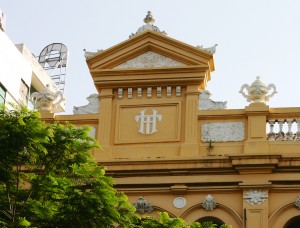
The parapet of 45 Hải Thượng Lãn Ông (the former 45 quai Gaudot) still carries the “TH” (Thông Hiệp) logo

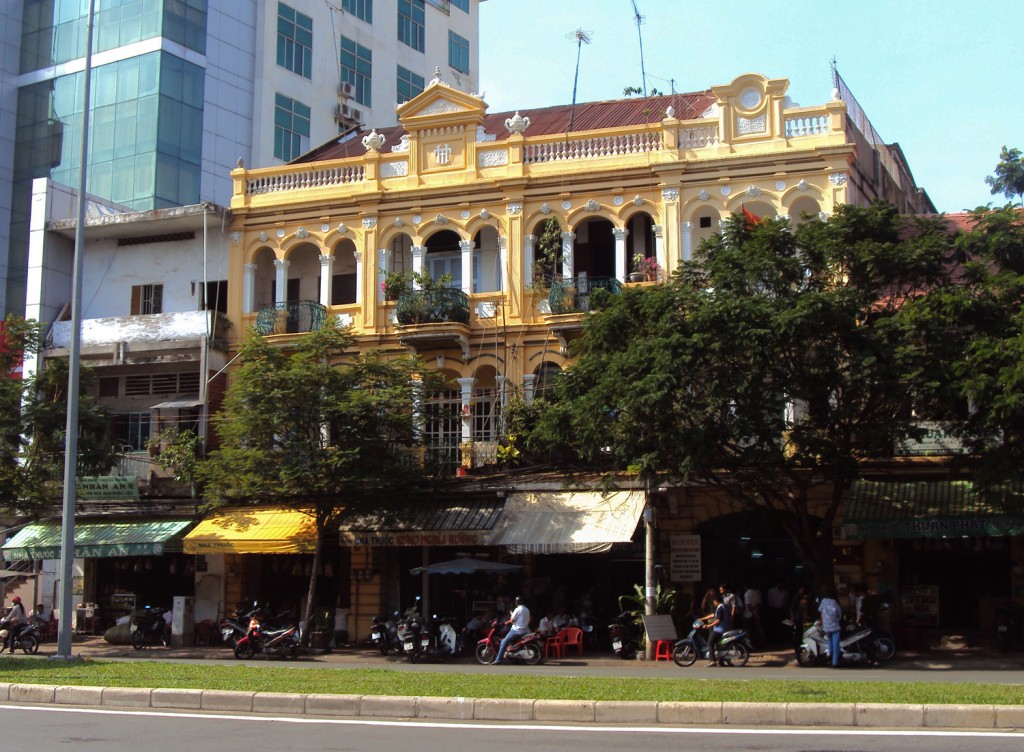
By 1910, Quách Đàm had relocated his headquarters to 45 quai Gaudot. However, despite his repeated attempts to purchase the building, the owner refused to sell. Quách Đàm was thus obliged to continue renting this modest shophouse as his company headquarters. Over a century later, it still bears the “TH” (Thông Hiệp) logo which Quách Đàm had inscribed on its parapet.

In subsequent years, in addition to his factory in Cần Thơ, Quách Đàm built two large rice husking mills at Chánh Hưng (now District 8) and Lò Gốm (now District 6). He also registered the Quach-Dam et Cie shipping company in Phnom Penh to manage his burgeoning fleet of four steamships. However, the business venture which really cemented his fortune was the acquisition in around 1915 of the Yi-Cheong Rice Factory, the largest and most profitable rice mill in Chợ Lớn.

By 1923, statistics published by the Revue de la Pacifique showed that every 24 hours, the amount of paddy processed in Quách Đàm’s mills amounted to 230 tonnes at Chánh Hưng, 250 tonnes at Lò Gốm and a massive 1,000 tonnes at Yi-Cheong, confirming his status as the most successful rice merchant in Cochinchina.
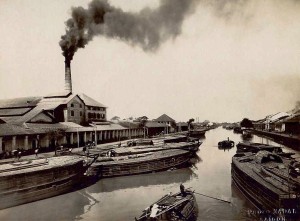
CholonRizerieNadal

One of the numerous rice mills in colonial Chợ Lớn

With money came prestige and power. As early as 1908, Quách Đàm was one of the few Chinese businessmen to become a member of the Chợ Lớn Municipal Council, and in this capacity he served for many years as 3rd Deputy Mayor of Chợ Lớn, taking an active role in city affairs. He built a spacious family residence at 114 quai Gaudot, on the north bank of the creek, and is said to have enjoyed being chauffeured around town in what the French newspapers called his “beautiful automobile.”

It was during this period that Quách Đàm began to make a name for himself as a prominent philanthropist, “royally subsidising many hospitals, schools and workers’ associations and never remaining indifferent to poverty.” (obituary in the Echo Annamite, 1927). He was particularly active in funding local nurseries and schools for the blind. Quách Đàm’s great grandson Mr Harrison W Lau also reports that he was told by his grandmother Quách Điêu (Quách Đàm’s youngest daughter) that after the 1923 Great Kanto Earthquake, Quách Đàm donated and shipped to Japan in his own boats around 4,000 tonnes of rice.

For much of the last decade of his life, despite being beset by ill health and also suffering partial paralysis, Quách Đàm continued to play an active role in Chợ Lớn’s business and community affairs. Today he remains best known for the crucial role he played in the establishment of the Bình Tây Market.
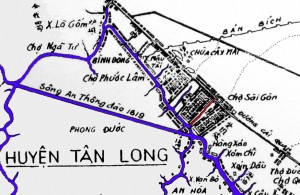
Cholon 1815

This 19th century map shows the Phố Xếp canal (marked in red) which connected the Chợ Lớn creek with the original Tai Ngon market (Chợ Sài Gòn)

Before the arrival of the French, the main market in the Chinese settlement went by the name of Dī Àn (堤岸) or Tai Ngon, literally meaning “embankment,” a name which is believed to reference the extensive reconstruction which followed the destruction of the Tây Sơn attack of 1782. In the 19th century, that market appears on several maps, not as Tai Ngon but as “Sài Gòn,” the name the French appropriated after 1859 to rechristen the former Bến Nghé as their new colonial capital, Saigon.

Located in the vicinity of the modern Chỗ Rẫy hospital, the old Tai Ngon market was originally connected to the Chợ Lớn creek by a waterway known as the Phố Xếp canal (now Châu Văn Liêm street).

After the conquest, the French established a new main market right in the centre of Chợ Lớn, on the site occupied today by the city post office, leading eventually to the abandonment of the old market and the gradual disappearance of the Phố Xếp canal.
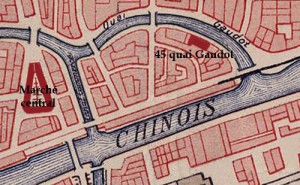
1923 i copy

This 1923 map indicates the location of the Marché central de Cholon and Quách Đàm’s Thông Hiệp headquarters before the Chợ Lớn creek was filled

By the early 20th century, as Chợ Lớn grew in economic importance, French newspapers complained frequently that the Marché central de Cholon “had become too small for the ever-increasing number of its users.”

However, what really sealed the fate of the Marché central de Cholon was the 1923 scheme (completed in 1926) to fill the Chợ Lớn creek and its connecting waterways and replace them with roads. After that project was completed, merchants could no longer access the central market by boat.

In fact, for several decades before the filling of the Chợ Lớn creek, an ever-increasing number of merchants had preferred to do business at the original Bình Tây Market, which stood right next to the arroyo Chinois on the junction of quai de My-tho and rue de Binh-Tay (modern Võ Văn Kiệt-Bình Tây).

In 1893 a new waterway known as the Canal Bonard (originally named the Canal Fourès and known to the Vietnamese as the Bãi Sậy canal) was dug to connect central Chợ Lớn with the lower reaches of the Lò Gốm Creek. Located just a few blocks north of the arroyo Chinois and running parallel to it, this new waterway incorporated a large shipyard for the repair and construction of junks known as the Bassin de Lanessan.
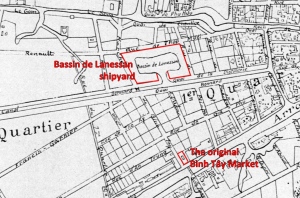
cholon1907

A 1907 map showing the locations of the original Bình Tây Market and of the Bassin de Lanessan shipyard on the Canal Bonard which was filled to build the second Bình Tây Market

In subsequent years, as the Canal Bonard became increasingly busy with merchant shipping, Quách Đàm bought large plots of land along its banks, including the Bassin de Lanessan shipyard. In 1923, seeing an opportunity to relocate the central market to a larger and more accessible location, he proposed to the colonial authorities the construction of a new and much larger Bình Tây Market on the 9,000 square metre shipyard site, to serve as the new central market of Chợ Lớn.

The Colonial Council gave its approval, the Bassin de Lanessan shipyard site was filled, and in 1925 Quách Đàm donated the land to the city and also contributed 58,000 Francs towards the construction costs of the new market.

The new Bình Tây Market was Quách Đàm’s crowning achievement and garnered much praise and admiration in both local and colonial circles. Over the next two years, Quách Đàm, already a naturalised French citizen, received a succession of awards, including the Chevalier de la Légion d’Honneur, the Chevalier de l’Étoilè Noire and the Chevalier de l’Ordre royal du Cambodge, as well as the Order of the Precious Brilliant Golden Grain (Order of Chia-Ho) from the Republic of China.
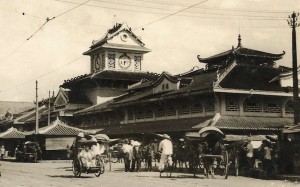
4722765305_11f2acba51_o

The new Bình Tây Market, pictured in the 1930s

Construction of the new Bình Tây Market began in February 1926 and was completed in September 1928. However, Quách Đàm never saw the finished market; he died on 14 May 1927, aged 65.

The Echo Annamite newspaper carried a long article describing Quách Đàm’s funeral on Sunday 29 May 1927. Special trams and trains were laid on to convey the great and the good to Chợ Lớn to join the funeral procession from 45 boulevard Gaudot to the family plot at Phú Thọ cemetery.

Those in attendance included: the Mayors of Chợ Lớn and Saigon and their senior staff; the heads of the Chinese congregations and the Chinese Chamber of Commerce; and the Directors of (amongst others) the Banque de l’Indochine, Banque Franco-Chinoise, Distilleries de Binh-Tay, Société Commerciale française d’Indochine, Maison Courtinat, Maison Denis-Frères, Usines de la Compagnie des Eaux et Electricité, the Services du Port, the Hôpital Drouhet, the Lycée Franco-Chinois and the Ecoles de filles de Cholon.
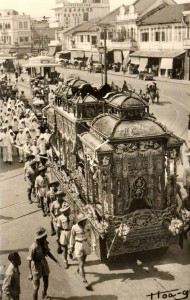
21

A Chinese funeral procession in Chợ Lớn

Two large huts had been built on the boulevard immediately outside the Thông Hiệp headquarters – one to accommodate the guests and the other to house the coffin and more than 1,500 commemorative banners and wreaths which had been sent from all parts of Cochinchina, Tonkin, Cambodia and even China.

A camera crew from Indochine Films was on hand as the procession set off, led by family mourners, to the accompaniment of Chopin’s Funeral March performed by “several Annamite and Chinese orchestras.” Behind the hearse, family members held aloft a dais which displayed all of Quách Đàm’s honours on a large gold and blue silk cushion. They were followed by a guard of honour comprising riflemen from the Compagnie de Cholon du 1er Tirailleurs.

In order that as many people as possible could offer their respects, the procession did a complete circuit of the city, starting with eastern Chợ Lớn – rue Lareynière [Lương Nhữ Học], rue des Marins [Trần Hưng Đạo B], rue Jaccaréo [Tản Đà], quai Mytho [Võ Văn Kiệt] and back to boulevard Gaudot [Hải Thượng Lãn Ông] – and then returning to quai Mytho and heading along the Arroyo Chinois [Bến Nghé creek] into the west of the city. There it turned up rue de Paris [Phùng Hưng] and made its way north along rue Boulevard Tong-Doc-Phuong [Châu Văn Liêm] and rue Thuan-Kieu [Thuận Kiều] towards the cemetery at Phú Thọ. “As they processed,” added the Echo Annamite reporter reverently, “the banners shimmered and the usually noisy city descended into respectful silence.”
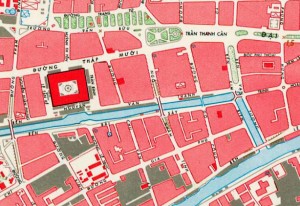
1966

This 1966 map shows the Bình Tây Market at a time when deliveries were still made by boat

Fourteen months later, the Annales coloniales reported that on 28 September 1928 the new market was inaugurated in the presence of the Governor of Cochinchina, amidst a host of festivities which included a cavalcade and a fireworks display.

After Quách Đàm’s death, his eldest son Quách Khôi took over as director of the Thông Hiêp company, but in May 1929 tragedy struck when Quách Khôi himself died suddenly and Chợ Lớn was treated to another grand public funeral.

Later that year, with the authorisation of Chợ Lớn Municipality, Quách Đàm’s family commissioned an elaborate marble fountain in the central courtyard of the Bình Tây Market, surrounded by bronze lions and dragons and topped with a bronze statue of Quách Đàm by Paul Ducuing (1867-1949), the French sculptor who in 1925 had created the gilded bronze statue of Emperor Khải Định seated on his throne in the Ứng Lăng Mausoleum of Emperor Khải Định in Huế.
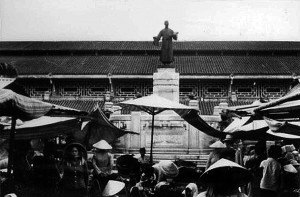
Quách Đàm statue

Ducuing’s statue of Quách Đàm on the plinth at Bình Tây Market before 1975

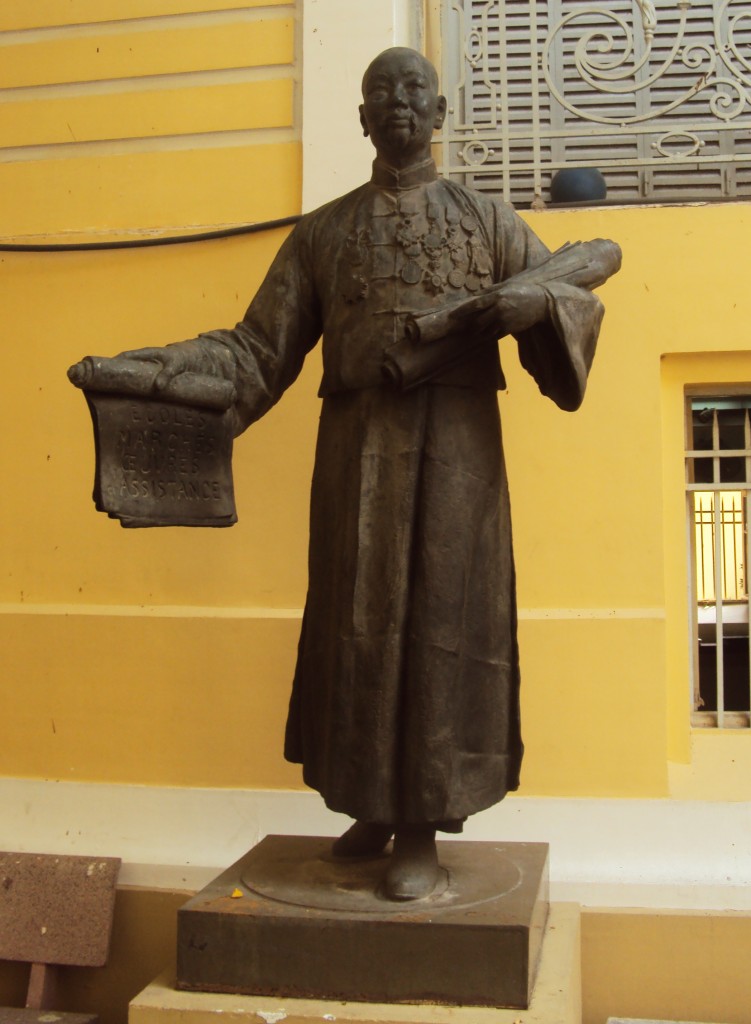
Inaugurated on 14 March 1930, it depicts the man French newspapers dubbed the “king of commerce,” holding in his left hand the act by which he had donated to the city of Chợ Lớn the land on which the market was built. In his right hand is a scroll which lists the philanthropic works for which he was known – Écoles, marchés, oeuvres, assistance (“Schools, markets, works, assistance”). The opening ceremony for the fountain “was presided over by M. Eutrope representing the Governor of Cochinchina (absent from Saigon), M Renault, resident-mayor of Cholon and a large audience of European, Annamite and Chinese personalities.” A friend of the family delivered “a remarkable speech recalling the beautiful life of the deceased.”

After 1975, the Ducuing statue was removed from its plinth and placed in store. However, in 1992 it was returned to public view in the rear courtyard of the Hồ Chí Minh City Fine Arts Museum, where it can still be seen to this day.

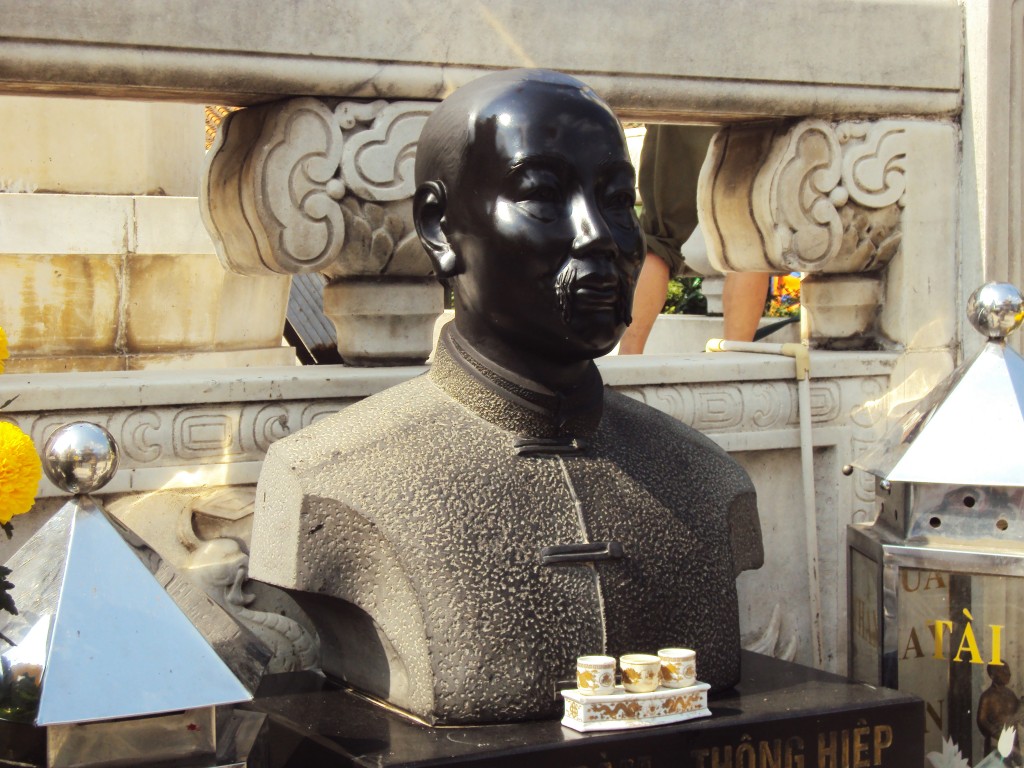
In recent years, a bust of Quách Đàm has been installed in front of the statueless plinth. Behind it, the Chinese inscription of 1930 reads: Mr Guō Yǎn was from Longkeng, Chao’an, Chaozhou, Guangdong province and came to Việt Nam when he was young to build a family while working in the rice business; he became very wealthy and generous, and as a good and righteous person, he resolved to build a new market for Dī Àn [Chợ Lớn]. Through great effort, he finally realised this and the government awarded him with this bronze statue to remember him. Guō Yǎn was born in 1863 and died in 1927 (translation by Damian Harper).
5466637353_567b6ccc7a_o

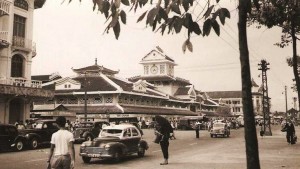
Bình Tây Market pictured in the 1950s

Following the death of Quách Khôi, his younger brother Quách Tiên took over the reins of power at Thông Hiệp, but according to historian Vương Hồng Sển, his willingness to act as guarantor for the debts of insolvent traders during the years of economic crisis eventually dragged Thông Hiệp into debt.

After 1933, the Thông Hiệp company name disappears from the records, though in 1937 and 1939, Quách Tiên reappears as proprietor of the “Plantation Quach-Dam,” a rubber plantation in Biên Hoà province – with its registered office still at 45 boulevard Gaudot in Chợ Lớn.
New Image 2

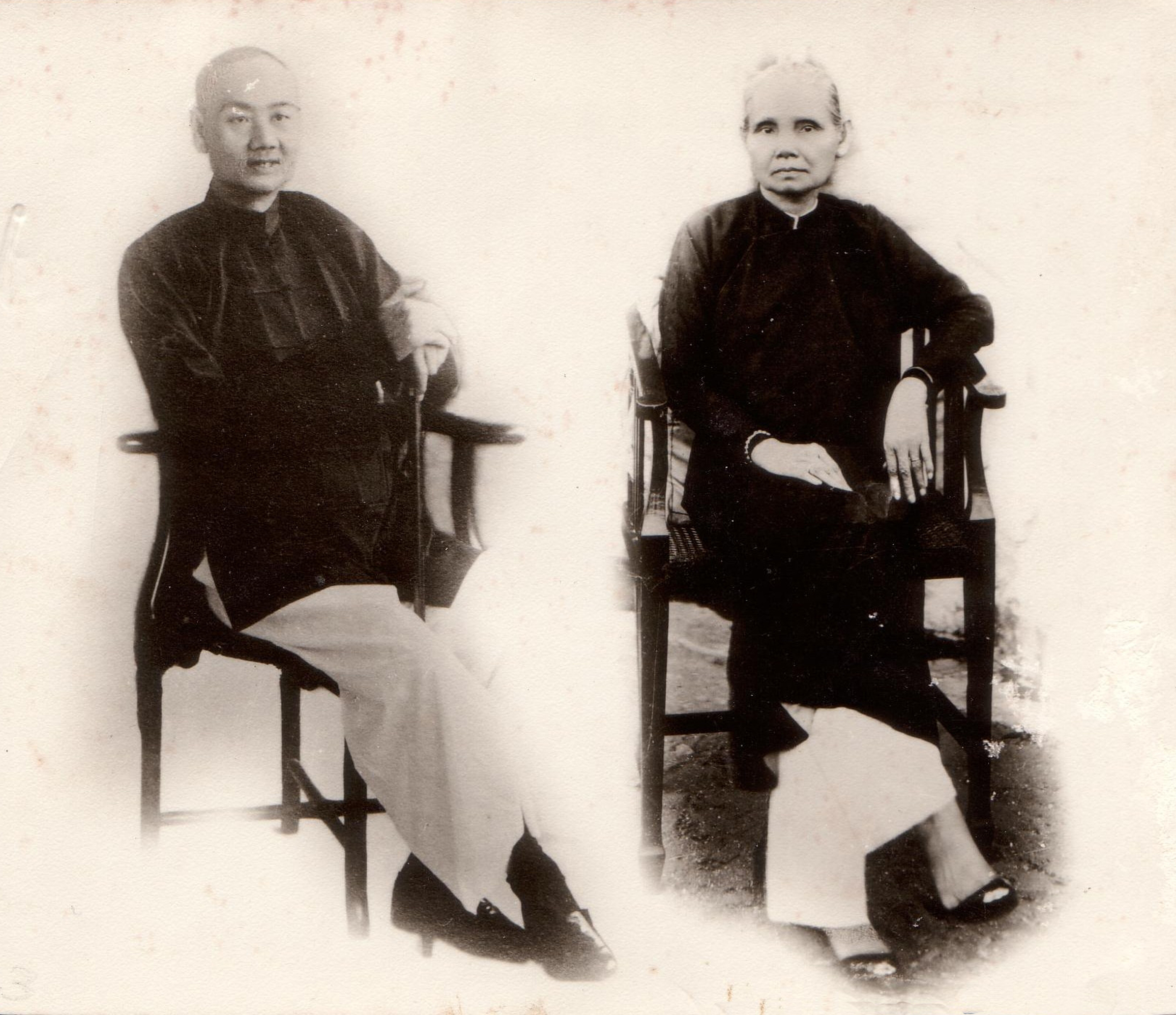
Another rare photograph of Quách Đàm and his wife from the family collection of his great grandson, Mr Harrison W Lau
DSC03885

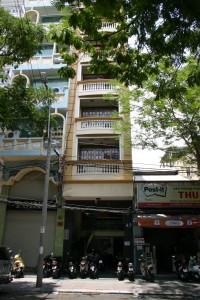
45 Hải Thượng Lãn Ông (the former 45 quai Gaudot) in Chợ Lớn was once Quách Đàm’s Thông Hiệp company headquarters
4940307026_3b9799b18c_o

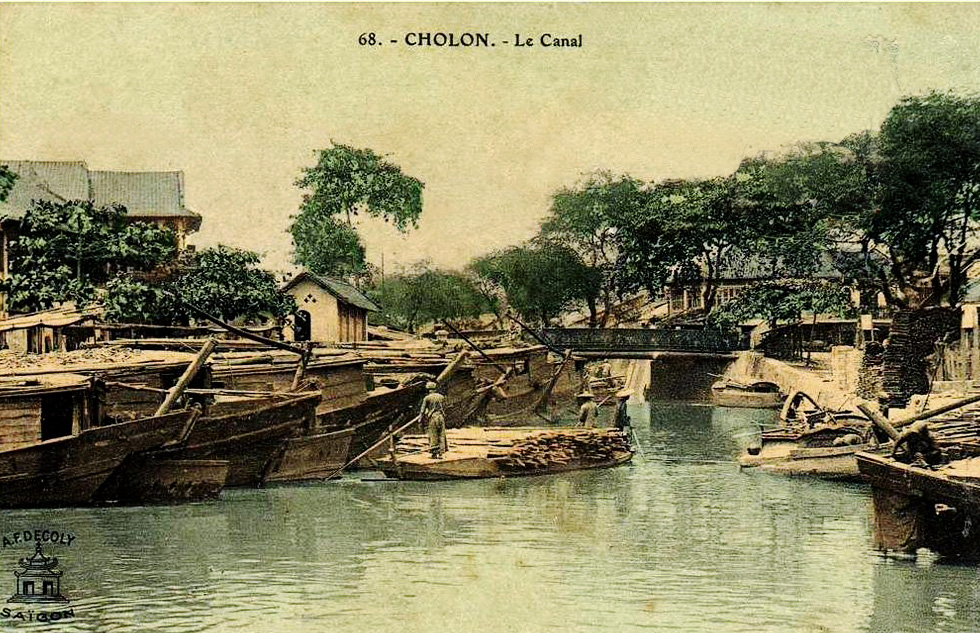
Before 1925 a creek ran through the centre of Chợ Lớn – today the roundabout in front of the Chợ Lớn post office has replaced the bridge
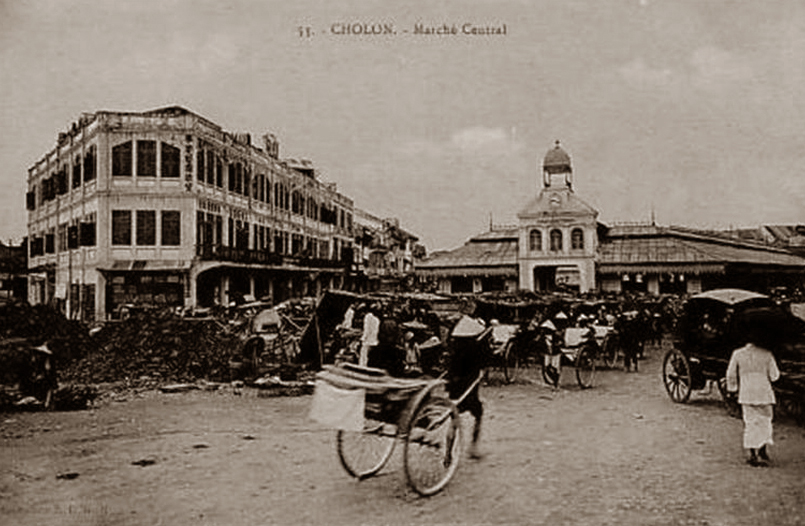
Construction

Filling of the Chợ Lớn creek was still in progress when this photograph of the Marché central de Cholon was taken in 1925
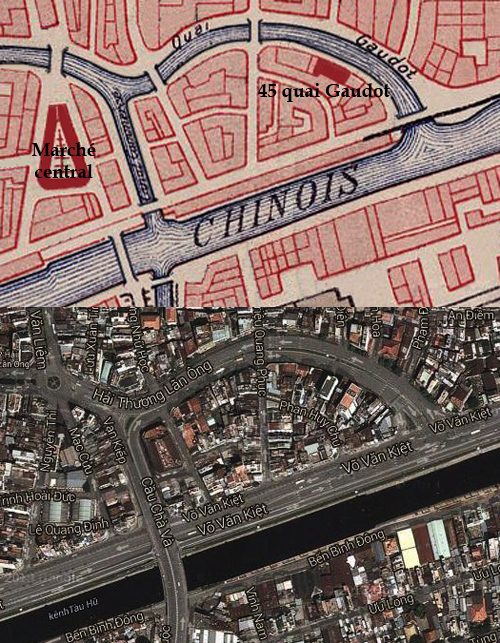
1923 and today

Then and now: central Chợ Lớn in 1923 before the creeks and canals were filled and the current Google Maps view of the same location
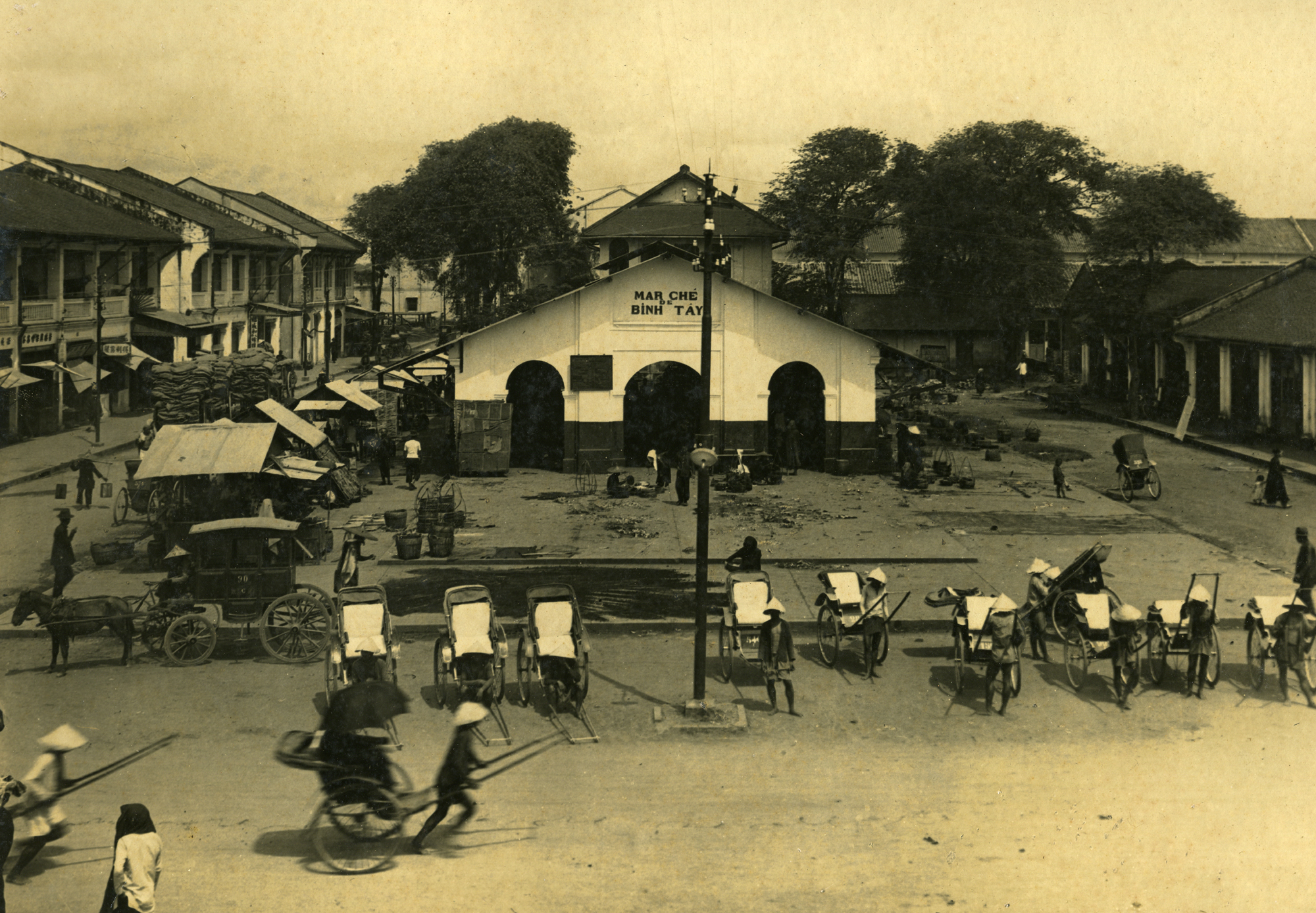
IMAGE 6

The original Bình Tây Market, which stood right next to the arroyo Chinois on the junction of quai de My-tho and rue de Binh-Tay (modern Võ Văn Kiệt-Bình Tây).
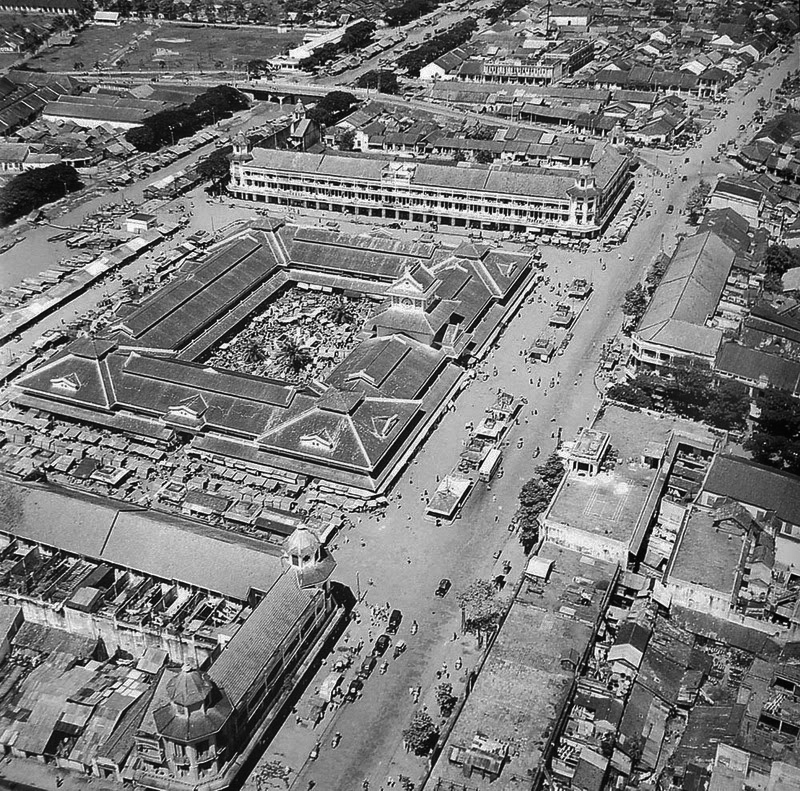
Binh Tay Market 2

An aerial shot of the Bình Tây Market taken in the early 1950s
8446065243_d9da0aef8f_o

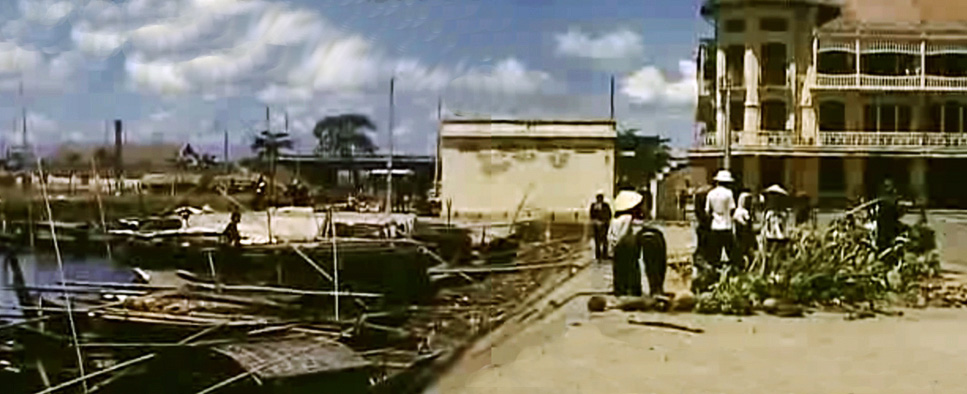
The rear yard of the Bình Tây Market was originally a wharf on the canal Bonard (known to the Vietnamese as the Bãi Sậy canal)
DSC05478

The Paul Ducuing statue of Quách Đàm is now kept in the rear courtyard of the Hồ Chí Minh City Fine Arts Museum
DSC00908

The bust of Quách Đàm, located in front of the fountain at Chợ Lớn’s Bình Tây Market

Tim Doling is the author of the guidebook Exploring Saigon-Chợ Lớn – Vanishing heritage of Hồ Chí Minh City (Nhà Xuất Bản Thế Giới, Hà Nội, 2019)

A full index of all Tim’s blog articles since November 2013 is now available here.

Join the Facebook group pages Saigon-Chợ Lớn Then & Now to see historic photographs juxtaposed with new ones taken in the same locations, and Đài Quan sát Di sản Sài Gòn – Saigon Heritage Observatory for up-to-date information on conservation issues in Saigon and Chợ Lớn.
Saigon’s Oil Buildings

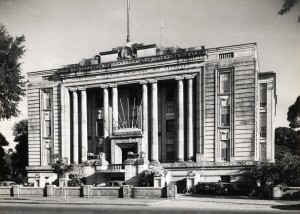
4.15.1 Shell Building 1955

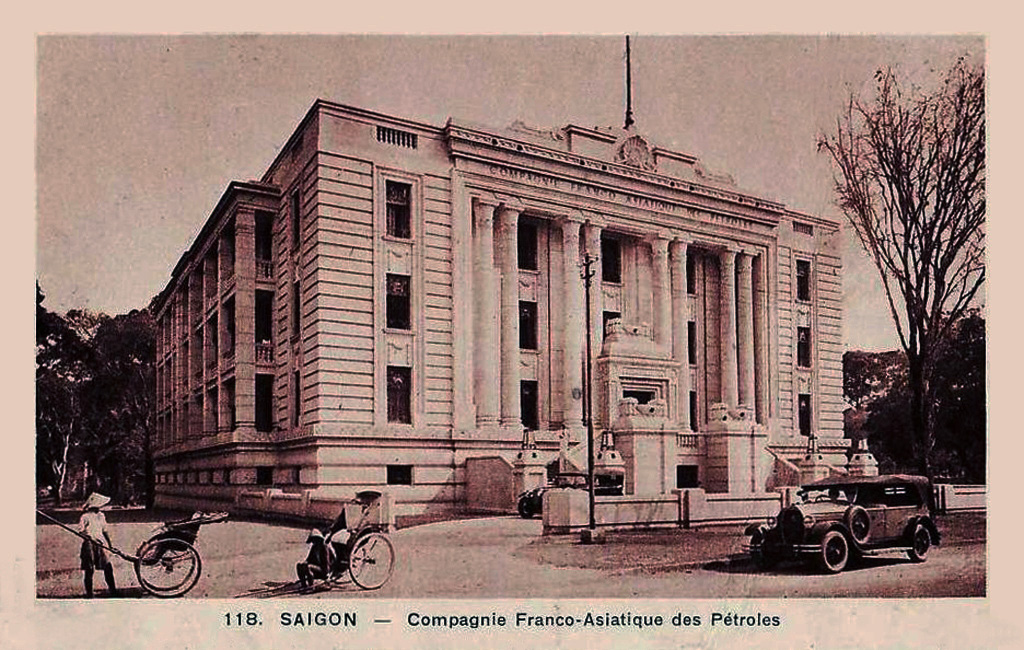
Operating in Saigon from 1911, the Paris-based Compagnie Franco-Asiatique des Pétroles was based initially at 4 rue d’Adran (Hồ Tùng Mậu), moving in 1923 to 100 boulevard de la Somme (Hàm Nghi). During this period, branch offices were also established in Hải Phòng and Tourane (Đà Nẵng).

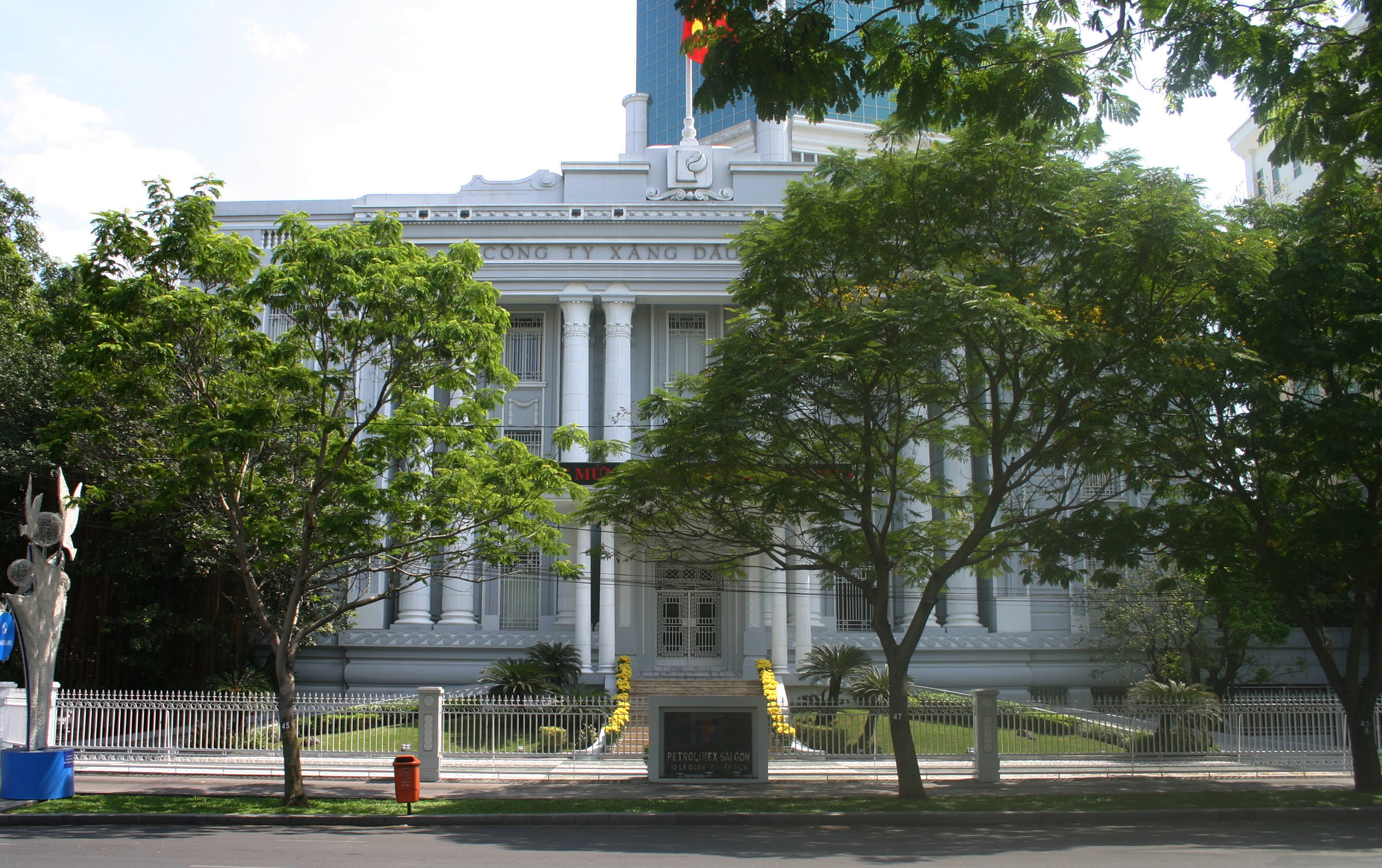
However, in the early 1930s, the company commissioned the construction of a more grandiose headquarters at 15 boulevard Norodom – the building which still stands today at the junction of Lê Duẩn and Tôn Đức Thắng in Hồ Chí Minh City.

In 1952, the Compagnie Franco-Asiatique des Pétroles withdrew from Indochina and its former headquarters building became the main office of Shell Vietnam, the local operating company of the Shell Group.

8594583280_eb6b9f6ebf_o

The Shell Vietnam headquarters pictured in 1955

Described in 1960s publicity material as the “doyenne of petrol companies in Việt Nam, providing for 60% of the country’s consumption,” Shell Vietnam was later revealed by its former president Louis Wesseling to have failed to control its oil shipments, permitting 7% of the fuel refined by the company to find its way to Hà Nội.

Shell had a long history of association with the British film industry – in the UK it sponsored many films in the 1920s and in 1934 it set up its own in-house documentary film unit which produced a wide range of films on subjects often unrelated to the company’s products and services. During the late 1950s, Shell Vietnam opened a tiny 48-seat cinema known as the “Shell Theatre” at its Saigon headquarters building, where these and other British films were screened to the Saigon public.

After 1975 Shell’s assets in Việt Nam were transferred to the Vietnam National Petroleum Corporation (Petrolimex), the current occupant of 15 Lê Duẩn.

In 1952-1953, Shell also took over the former Bâtiment de la Marine nationale building at nearby 7 Thống Nhất (the name by which boulevard Norodom was known in the period 1955-1975).

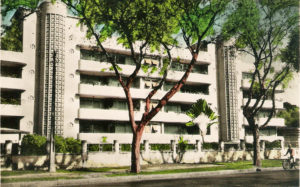
Paul Veysseyre’s former Bâtiment de la Marine nationale building at 7 Thống Nhất, later the Shell Vietnam apartments, the South Vietnamese Prime Minister’s Office and now the Office of the Government at 7 Lê Duẩn

The building had been designed by prolific Paul Veysseyre of the Shanghai-based Agence Léonard-Veysseyre-Kruze, who also designed the Brasseries et Glacières d’Indochine (BGI) buildings in both Saigon and Chợ Lớn, the former Cité Hui-Bon-Hoa, now the Government Guest House at 1B Lý Thái Tổ, the former Cité Laréynière, now the FOSCO Building at 40 Bà Huyện Thanh Quan, and the apartment building at 73 Cao Thắng.

It accommodated many of Shell’s managerial staff until 1955, when it was acquired by the government and converted into the office of the Prime Minister of the Republic of Việt Nam. From that time onwards, the easternmost section of Nguyễn Du street immediately behind it (which originally connected Nguyễn Bỉnh Khiêm with Cường Để, now Tôn Đức Thắng boulevard) was closed off for security reasons, and it has remained closed ever since. After 1975, the former Bâtiment de la Marine nationale building at 7 Lê Duẩn became the Office of the Government.

The T78 Army Guest House (Nhà Khách T78) at 145 Lý Chính Thắng in District 3 was also built in the late 1950s for the Shell Oil company. It contains numerous residential buildings from that era; one apartment block is very similar in design to the former Bâtiment de la Marine nationale building, and may have been designed by former associates of Paul Veysseyre; another was designed by modernist architect Nguyễn Văn Hoa of the Văn Phòng Kiến Trúc Hoa-Thâng-Nhạc architectural partnership.

Intriguingly, it was also Shell which originally commissioned the construction of the 10-storey SUFO apartment building at 22 Gia Long (Lý Tự Trọng), yet another late 1950s modernist work by Nguyễn Văn Hoa. However, by the mid 1960s that building was occupied mainly by personnel from USAID and the CIA, who named it the Pittman Apartments. On 29 April 1975, its rooftop famously served as one of several helicopter evacuation points in Saigon.

IMG_3721

15 Lê Duẩn today

20140605_133649

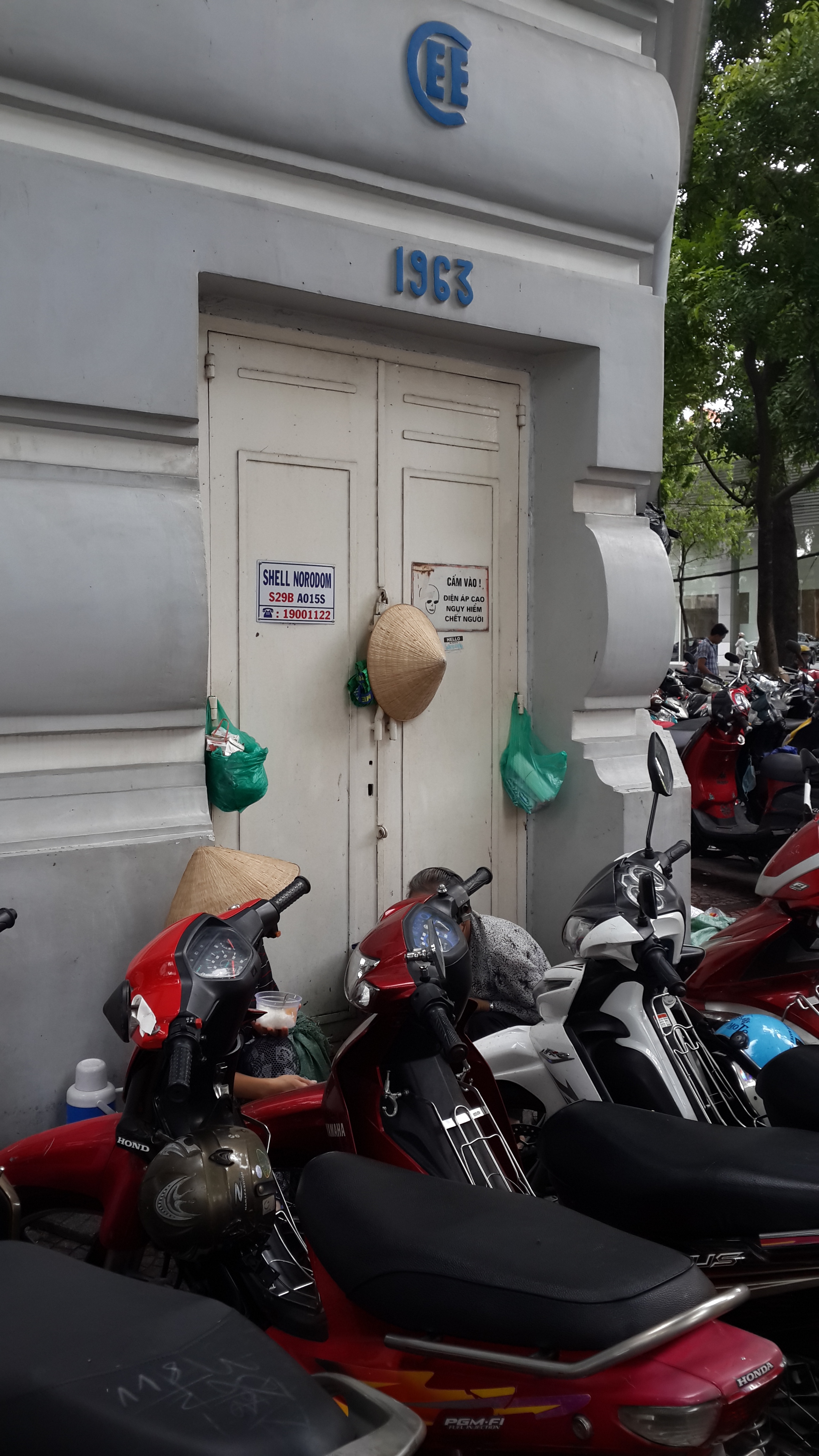
Thanks to Alex Slingeland for providing this image of the 1963 electricity station at the rear of 15 Lê Duẩn and its sign which reads “Shell Norodom”

Tim Doling is the author of the guidebook Exploring Saigon-Chợ Lớn – Vanishing heritage of Hồ Chí Minh City (Nhà Xuất Bản Thế Giới, Hà Nội, 2019)

A full index of all Tim’s blog articles since November 2013 is now available here.

Join the Facebook group pages Saigon-Chợ Lớn Then & Now to see historic photographs juxtaposed with new ones taken in the same locations, and Đài Quan sát Di sản Sài Gòn – Saigon Heritage Observatory for up-to-date information on conservation issues in Saigon and Chợ Lớn.
Mapping the French “Line of Pagodas”

Map_of_Saigon_and_Ky_Hoa

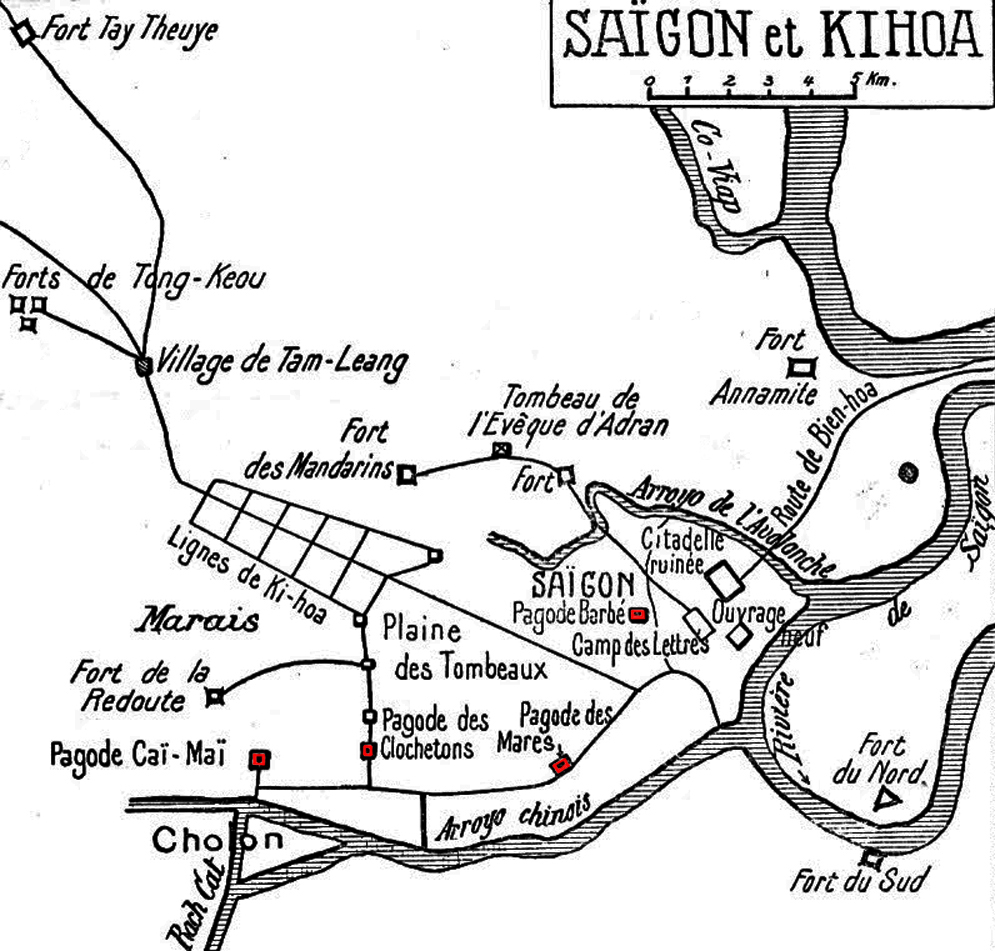
This map shows the location of the line of pagodas in the years 1859-1861

At the start of the French conquest in 1859-1860, colonial forces converted four ancient temples into fortresses with the aim of protecting Saigon and Chợ Lớn from attack by Vietnamese royal troops. All equipped with heavy artillery, these temples became crucial front line fortifications during the seige of Gia Định (1859-1861), but today traces of just one survive.

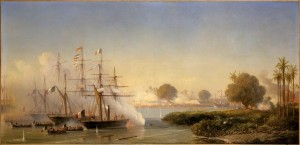
After capturing Gia Định Citadel and securing control of Chợ Lớn in February 1859, the French and their Spanish allies found themselves under seige by a 32,000-strong Vietnamese army under the command of General Nguyễn Tri Phương (1800-1873), Governor of Gia Định Military District. To guard against attack from Vietnamese troops to the north, they established a 7km east-west defensive line from Sài Gòn to Chợ Lớn.

Prise_de_Saigon_18_Fevrier_1859_Antoine_Morel-Fatio

The capture of Saigon by Frenco-Spanish expeditionary forces, by Antoine Léon Morel-Fatio

Four large fortresses were established along its length, but instead of constructing these fortresses from scratch, the French occupied four ancient temples and rebuilt them as military installations. As a result, the defensive line became known as the ligne des pagodes (line of pagodas).

At the easternmost end of the ligne des pagodes was the Khải Tường Pagoda, known to the French as the pagode de l’Aurore des presages and later as the pagode Barbé, which stood on the site of today’s War Remnants Museum at the junction of modern Võ Văn Tần and Lê Quý Đôn streets (district 1).

Gia Định changed hands several times during the Tây Sơn War, and Lord Nguyễn Phúc Ánh (the future Emperor Gia Long) is known to have taken refuge in this pagoda with his family on several occasions. It was here on 25 May 1791 that his second wife Trần Thị Đang, later Queen Thuận Thiên (1769-1846), gave birth to Nguyễn Phúc Đảm, later Emperor Minh Mạng. In 1804, the Emperor Gia Long presented to the pagoda a Buddha statue – described by historian Vương Hồng Sển as a “gigantic, gold plated masterpiece” – and also installed a stone stele more than two metres high, commemorating his family’s links with the pagoda.

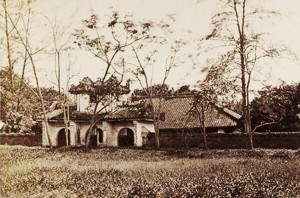
Pagode Barbe

An 1861 image of the pagode Barbé, which once stood on the site of the War Remnants Museum

In 1833, Gia Long’s son and successor Minh Mạng funded a major restoration and granted the pagoda in which he had been born the honorific name Quốc Ân Khải Tường tự (Khải Tường Pagoda, Benefactor of the Nation). Although the giant Buddha image has not survived, a smaller Amitabha Buddha (Phật A Di Đà) presented to the pagoda by the Emperor Gia Long may still be seen today in the Việt Nam History Museum.

On 25 May 1860, French forces occupied the Khải Tường Pagoda and transformed it into a military post under the charge of Captain Nicolas Barbé. However, on 7 December 1860, Barbé was ambushed and beheaded during a devastating attack by General Phương’s Vietnamese troops. Angry French soldiers subsequently destroyed many of the remaining pagoda buildings and buried Captain Barbé in the grounds, erasing the inscription on Gia Long’s royal stele and using it as Barbé’s tombstone. Henceforth, the site became known to the French as the “pagode Barbé” and the street next to it (now Lê Quý Đôn street) as rue Barbé (sometimes spelled Barbet).

For a while after the conquest, the surviving pagode Barbé buildings functioned as the first campus of the École normale, but by the 1870s that institution had been found a permanent home near the Naval Arsenal.

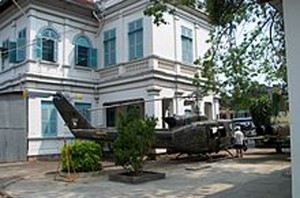
220px-War_remnants_museum_6

A colonial building which originally housed part of the War Remnants Museum

In the 1880s the old pagode Barbé was demolished, permitting the site to be redeveloped. By the mid 20th century it belonged to nationalist politician Bùi Quang Chiêu, who had a colonial-style villa built here.

Chiêu’s daughter, Dr Henriette Bùi, later established an obstetrics and gynaecology clinic on the site, and in 1947 this became the Medical and Pharmaceutical Faculty of Saigon University. When the Faculty relocated elsewhere in the mid 1960s, the compound found its way into American hands and eventually became the US-ARV Office of Civilian Personnel and USAID Mission Warden’s Office (though it never served as a USIS Office as commonly suggested by tourist literature). A war museum was established here on 4 September 1975 and this has since been rebuilt on several occasions.

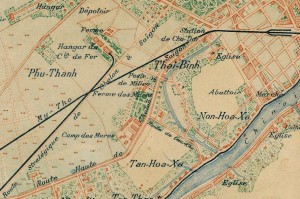
The second fortress in the ligne des pagodes was located in the area bounded by modern Phạm Viết Chánh, Cống Quỳnh, Nguyễn Trãi and Nguyễn Văn Cừ streets (district 1). According to Trịnh Hoài Đức’s Gia Định thành thông chí (early 19th century), it was originally known as the Hiển Trung tự (Temple of Brilliant Loyalty) or the Miếu Công thần (Temple of Meritorious Officials) and was constructed in 1795 on the site of an earlier Khmer sanctuary by Lord Nguyễn Phúc Ánh to honour the cult of 1,015 heroic royal mandarins. After being taken over by the French, the complex was turned into a military installation known as the pagode des Mares (Pagoda of the ponds), apparently because it incorporated two large ponds.

Tirailleurs Annamites à l'exercice Camp des Mares

“Annamese riflemen” training at the camp des Mares

In 1875, part of the pagode des Mares compound became an experimental farm (the Ferme expérimentale des Mares) belonging to the Jardin botanique et zoologique de Saïgon, and was used to grow new varieties of coffee, mango, pandanus, jute, indigo and sugar cane (see Jean-Baptiste Louis-Pierre, father of Saigon’s greenbelt).

By the turn of the century, the fortress-temple itself had been rebuilt as the Camp des mares, a large military barracks occupied by “troupes indigènes” (local troops) of the “Régiment Annamite.”

After the departure of the French in 1954, part of the compound was completely redeveloped, while the Camp des Mares barracks was extended southwards into neighbouring land and transformed into the RVN’s Directorate General of National Police, today the southern branch headquarters of the Ministry of Police.

Little is known about the early history of the third ligne des pagodes fortress, the Kiểng Phước Pagoda, which was known to the French as the Pagode des Clochetons. Believed to have stood on the site of today’s Hùng Vương Hospital, at the junction of modern Hồng Bàng and Lý Thường Kiệt streets in Chợ Lớn (district 5), it was occupied in early 1860 and became the site of several fierce battles as the French sought to extend their control over the northern perimeter of that city.

Pagode des Clochetons 1861

The pagode des Clochetons in 1861

Like the pagode Barbé, the Pagode des Clochetons was abandoned soon after the conquest and the site was then completely redeveloped. However, modern Phù Đổng Thiên Vương street, which once led south from the pagoda, was known right down until 1955 as rue des Clochetons.

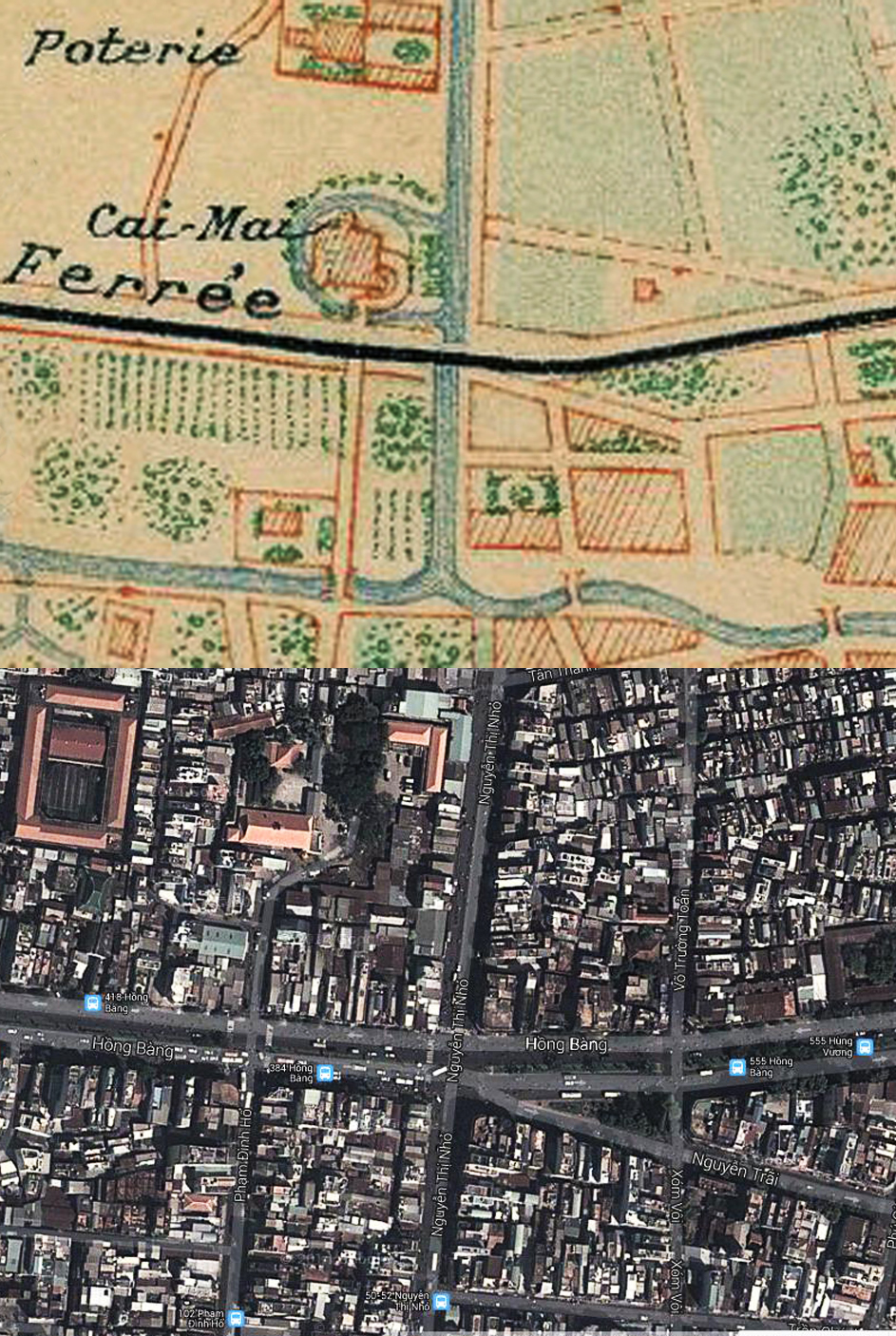
Perhaps the most famous fortification in the ligne des pagodes was the Mai Sơn tự or Cây Mai Pagoda (Plum Tree Pagoda), known to the French as the pagode Cai-Mai or the pagode des Pruniers. It was originally a Khmer pagoda, and it got its name from the fine white-blossomed plum trees which grew in its grounds. Restored in 1816, the Cây Mai Pagoda was known in the pre-colonial era as a centre of artistic creativity frequented by leading southern poets such as Phan Văn Trị, Bùi Hữu Nghĩa, Nguyễn Thông, Trần Thiện Chánh, Tôn Thọ Tường, Hồ Huân Nghiệp and Trương Hảo Hiệp. By this period too, the name Cây Mai was also being used to describe the fine blue-glazed ceramics produced by several nearby Minh Hương kilns.

Occupied by the French on 23 April 1859, the Cây Mai Pagoda was perhaps the most important of all of the fortresses in the lignes des pagodes because of its strategic location on the northwest outskirts of Chợ Lớn, centre of the rice trade and chief source of supplies for the Franco-Spanish expeditionary force. Uniquely amongst the four tenple-fortresses, it was located on a waterway, which made it possible to supply its garrison by boat via the Bến Nghé and Lò Gốm creeks. In the mid 1860s, the Chợ Lớn street known today as Tản Đà was christened avenue Jaccaréo, after the gunboat Jaccaréo which was tasked with keeping the Cây Mai Pagoda garrison supplied in the period 1859-1861.

Mai_GoCayMai

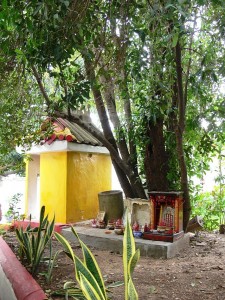
A small shrine is still maintained on the site of the original Cây Mai Pagoda sanctuary

In 1872 the remaining Cây Mai Pagoda buildings were destroyed and the compound was rebuilt as a military barracks, a function which it has retained ever since. However, in 1909 a Buddhist monk took cuttings from the ancient plum trees in the barracks compound and transplanted them in the grounds of the nearby Phụng Sơn Pagoda, where they thrive to this day.

In 1940 the Cây Mai barracks complex was used briefly as a detention centre and in the 1960s it became a training school for intelligence officers. Today it is a People’s Army barracks and is thus off limits to visitors. However, a small shrine is still maintained on the site of the original sanctuary.

The lignes des pagodes played an important role in the French war of conquest, enabling the French to retain control of the two ports of Saigon and Chợ Lớn, despite the threat from overwhelmingly superior royal forces to the north. The military stalemate continued until October 1860, when the arrival of massive reinforcements from the French expeditionary corps in China made it possible for the French to break the seige of Gia Định by capturing the Lignes de Ky-Hoa (Chí Hòa). Within months of that key battle, the French were able to extend their control over most of the six provinces of Cochinchina.

double copy

The Cây Mai Pagoda barracks in 1895 (above) and a google map (below) showing the same location today

Tim Doling is the author of the guidebook Exploring Saigon-Chợ Lớn – Vanishing heritage of Hồ Chí Minh City (Nhà Xuất Bản Thế Giới, Hà Nội, 2019)

A full index of all Tim’s blog articles since November 2013 is now available here.

Join the Facebook group pages Saigon-Chợ Lớn Then & Now to see historic photographs juxtaposed with new ones taken in the same locations, and Đài Quan sát Di sản Sài Gòn – Saigon Heritage Observatory for up-to-date information on conservation issues in Saigon and Chợ Lớn.
Jean-Baptiste Louis-Pierre – Father of Saigon’s Greenbelt

Dinh Thong nhat TPHCM 6

This article was published previously in Saigoneer http://saigoneer.com

As traffic congestion and air pollution intensifies, Hồ Chí Minh City’s urban greenbelt has assumed increased significance as the “green lung” which helps to disperse pollutants, check the flow of dust and reduce noise levels. What better time to pay tribute to Jean-Baptiste Louis-Pierre, the Frenchman who was responsible not only for the city’s famous Botanical and Zoological Gardens, but also for many of its parks and tree-lined boulevards.

Jean-Baptiste Louis-Pierre

Jean-Baptiste Louis-Pierre (1833-1905)

Born on 23 October 1833 into a rich sugar planter family in Saint André on the island of La Réunion, Pierre went on to study medicine in Paris and then specialised in botany in Strasbourg. But when his family lost everything in the early 1850s “from the combined effects of a devastating hurricane and losses incurred as a result of the enfranchisement of their slaves,” Pierre cut short his research to take up a post with the British Imperial Forestry Service in Calcutta under Sir Dietrich Brandis, the “father of tropical forestry.” Rising quickly through the ranks of the British colonial service, he subsequently became Head of the Calcutta Botanical Gardens.

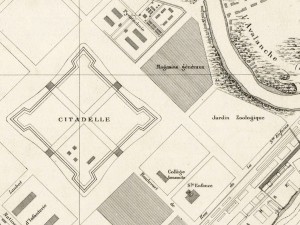
It was Pierre’s reputation as a skilled botanist which in 1865 brought him to the attention of French Naval Ministry officers in Saigon. In the previous year, Rear Admiral Pierre-Paul de La Grandière, Governor of Cochinchina, had commissioned a French army veterinarian named Rodolphe Alphonse Germain to set up the Jardin botanique et zoologique de Saïgon, on 12 hectares of land close to the arroyo de l’Avalanche (Thị Nghè Creek).

Jardin botanique et zoologique 1864

The Jardin botanique et zoologique de Saïgon pictured on an 1864 map of Saigon

The function of the new institution was primarily to research and develop plant and animal species for economic purposes, and to this end the Jardin incorporated several animal breeding pens, as well as greenhouses to cultivate seedlings for research. However, the Colonial Council quickly realised that its further development would be contingent on professional input, so on 28 March 1865 they appointed Pierre as its first Director. Later that year, he was also named as a member of the Cochinchina Agricultural and Industrial Committee.

A botanist who dedicated his life to the cause of science, Pierre held the post of Director of the Jardin botanique et zoologique until 1877, developing its infrastructure and shipping in many rare animal, plant and tree species from India and nearby Laos, Cambodia and Siam.

893818

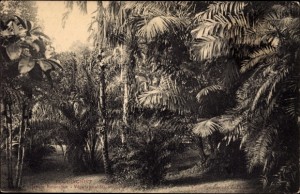
A corner of the Jardin botanique et zoologique de Saïgon

Many of these he sourced personally – during his 12 years in the post, Pierre is said to have spent much of his time combing the region’s forests and savannahs, gathering what became one of the largest and richest tropical plant collections ever amassed by a single individual.

Today, Pierre is probably best remembered for the major contribution he made to the beautification of Saigon’s public spaces. In his large nurseries at the Jardin botanique and in the gardens of the Norodom Palace, he cultivated many of the trees and shrubs which were later transplanted to provide shade along Saigon’s major boulevards and in newly established public squares and parks. Pierre devoted particular attention to the Jardin de la ville, now Tao Đàn Park, where he planted several rare and unusual species, gaining for it the reputation as the “bois de Boulogne of Saigon.”

Ferme expérimentale des Mares in 1895

The Ferme expérimentale des Mares pictured on an 1895 map of Saigon

Under Pierre, the Jardin botanique et zoologique also made an important contribution to the development of agriculture in Cochinchina, by supplying colonial settlers with large quantities of fruit trees and industrial crops.

Within just a decade, Pierre transformed the Saigon Botanical and Zoological Gardens into one of the leading institutions of its kind in East Asia. However, by 1875 it had outgrown its facilities and Pierre was therefore instructed to set up an experimental farm on a 120ha site within the compound of the former Pagode des Mares, which then stood near the junction of modern Phạm Viết Chánh and Cống Quỳnh streets in District 1. In subsequent years, this Ferme expérimentale des Mares carried out important research work and succeeded in developing more efficient varieties of coffee, mango, pandanus, jute, indigo and sugar cane.

During his 12 years in Saigon, Pierre also taught botany at the Collège des Stagiaires, where he is said to have acquired the nickname “Pétrus Botanico.”

148373

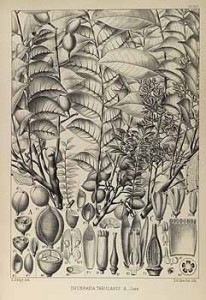
An illustration by E Delpy from volume 4 of Pierre’s Flore forestière de la Cochinchine

Pierre returned to Paris in 1877 to devote more time to his research, and it was during this period that he worked on his magnum opus Flore forestière de la Cochinchine, which was published in multiple volumes from 1881 to 1894. Said to be one of the most important books on tropical forest flora ever written, it was described by Pierre’s contemporaries as “a veritable monument of science and erudition” and a “bible for all botanists who are curious about the secrets of colonial flora.” In his later years, Pierre also wrote many scientific articles for various learned journals, including the Bulletin du Jardin colonial, the Bulletin de la Société Linéenne de Paris and the Bulletin du Muséum de Paris.

Several plant genera were named after Pierre, including the pierreodendron of the sapotaceae family and the pierrea of the flacourtiaceae family.

Jean-Baptiste Louis-Pierre died on 30 October 1905 at Saint-Mandé in the eastern suburbs of Paris, where he was buried. In February 1933, to commemorate his work and academic research, the French Scientific Council installed a marble bust of Pierre in the Jardin botanique et zoologique de Saïgon. This was renovated during the Zoo’s 130th anniversary celebrations of 1994.

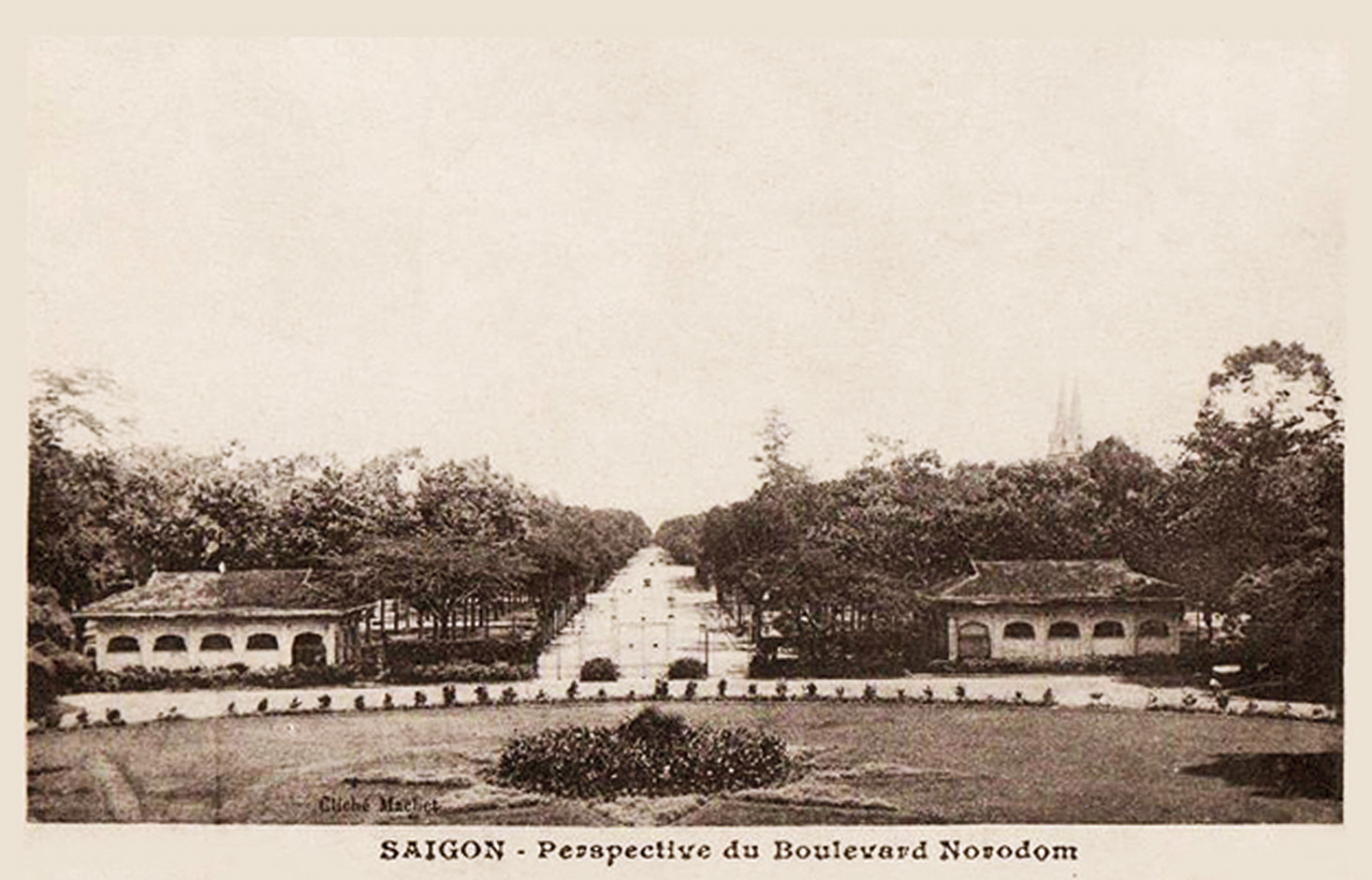
SAIGON - Perspective du boulevard Norodom

Tim Doling is the author of the guidebook Exploring Saigon-Chợ Lớn – Vanishing heritage of Hồ Chí Minh City (Nhà Xuất Bản Thế Giới, Hà Nội, 2019)

A full index of all Tim’s blog articles since November 2013 is now available here.

Join the Facebook group pages Saigon-Chợ Lớn Then & Now to see historic photographs juxtaposed with new ones taken in the same locations, and Đài Quan sát Di sản Sài Gòn – Saigon Heritage Observatory for up-to-date information on conservation issues in Saigon and Chợ Lớn.
Dinner with “Tong Doc” Do Huu Phuong

59 Tổng Đốc Phương i

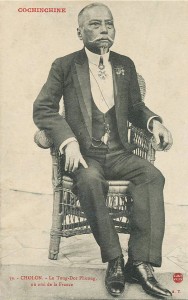
Đỗ Hữu Phương (1841-1914) pictured in the late 1890s after his retirement

One of the most famous mandarins of the early French period, Đỗ Hữu Phương (1841-1914) became the second richest man in Cochinchina…. and dinner at his palatial residence in Chợ Lớn was once one of the most sought-after invites of the day.

Đỗ Hữu Phương (1841-1914) pictured in the early 1880s (from Charles Lemire, l’Indochine, Paris, 1884)

Born in 1841 at Chợ Đũi (Saigon), Đỗ Hữu Phương was the eldest son of a regional government mandarin from the mixed-race (Vietnamese-Chinese) Minh Hương community and grew up speaking fluent Vietnamese and Chinese. His early education at a French mission school also gave him a grounding in French which served him well in his later career.

When French forces attacked Saigon in 1859, Phương initially participated in the resistance, but following the decisive 1861 French victory at the “Lignes de Khi-Hoa” (Chí Hòa), he “rallied to the French cause” and became a colonial militia leader.

In subsequent years, Phương took part in a number of key engagements as the French extended their control over the six provinces of the south, including the retaking of Rạch Giá from Nguyễn Trung Trực in June 1868.

Phương’s career as a colonial mandarin began in earnest in 1865, when he was rewarded for his loyalty with the post of Hộ trưởng and made responsible for law and order in Chợ Lớn. In 1872 he became a member of the Chợ Lớn Municipal Council and later that year he was appointed Đốc phủ (governor). Promotion to Đốc phủ sử (provincial governor) followed.

Maison du Tong Doc 1

The palatial residence of “Tổng đốc” Đỗ Hữu Phương, pictured at the turn of the century

It was during this period, according to the popular late 19th-century saying Nhất Sỹ, nhì Phương, tam Xường, tứ Hỏa – “First Sỹ, second Phương; third Xường and fourth Hỏa” – that Phương became the second richest man in the south. His wealth was accumulated, not from trade and commerce, but by skilfully exploiting his close links with senior colonial administrators to function as an intermediary between Chợ Lớn’s leading Chinese merchant houses and the French civil service.

During this period he is said to have amassed large tracts of land in what is now District 8 – the Ông (Mr) in the names rạch Ông Lớn, cầu Rạch Ông and chợ Rạch Ông is believed to refer deferentially to Đỗ Hữu Phương, the former landlord of that area.

In subsequent years, Phương eagerly adopted a quasi-French lifestyle, assiduously cultivating the image of a man who “moved at ease and confidence through a life that was half Vietnamese and half French.”

4784910463_1bfa1f1189_oWhen the colonial authorities issued a decree in 1881 permitting the naturalisation of Vietnamese citizens, Phương was one of the first to apply. In 1883, following the establishment of the Société des études indochinoises in Saigon, Phương was elected as its first president and for several years acted as the editor of its French-language journal.

Phương made extended visits to France on no less than four occasions (1878, 1884, 1889 and 1894), prompting the scholar Trương Minh Ký (1855-1900) to write a satirical poem in Vietnamese which described Phương sitting in the Café de la paix in Paris, chatting with leading colonial personages such as Bonnet, Blanchy and Morin.

Today, Đỗ Hữu Phương is remembered above all as the genial host who invited many high-ranking French colonial settlers into his home and introduced them to the joys of Vietnamese cuisine.

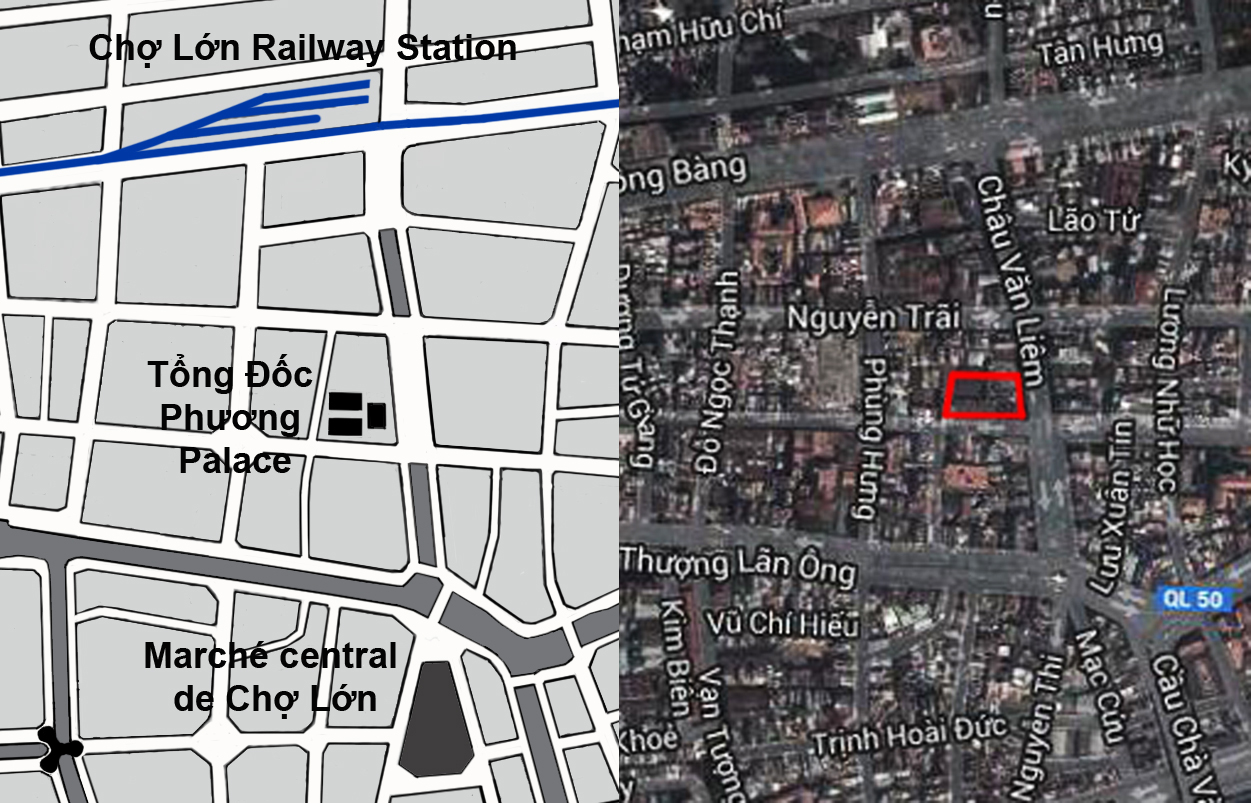
In the late 1870s or early 1880s, Phương built himself a palatial home on quai Testard (the former Phố Xếp canal, now Châu Văn Liêm street). Comprising buildings of both colonial and traditional design surrounding a central courtyard, this subsequently became a must-see destination for many French visitors and expatriates.

Maison du Tong Doc 3

The family temple of “Tổng đốc” Đỗ Hữu Phương’s residence

Several French writers of the period wax lyrical about the beauty of Phương’s “princely residence,” in particular the family temple, an “incomparable work” which “surpasses the imagination” with its intricately carved and inlaid wooden panels and “beautifully decorated roof supported by columns of hard black wood, each formed from a single tree trunk and carved with scenes featuring characters of the greatest fineness.” Apart from the family shrine, the temple building is said to have housed “a real museum of antiques,” including large quantities of “old and very beautiful inlaid furniture.”

By the 1890s, however, the real attraction here was not the residence itself, but the lavish Vietnamese banquets hosted in it. After 1893, an invitation to dine with Phương seems to have become one of the hottest tickets in colonial Saigon-Chợ Lớn – his dinner guests included all the great and the good of colonial society, including Governor General Paul Doumer (1897-1902), who became a close family friend. Phương’s banquets became the stuff of legend and were described in numerous French travel books and journals of the period, including the review Tour du Monde (1893), Alfred Coussot’s Douze mois chez les sauvages du Laos (1898) and George Dürrwell’s Ma chère Cochinchine, trente années d’impressions et de souvenirs, 1881-1910.

In her Appetites and Aspirations in Vietnam: Food and Drink in the Long Nineteenth Century (2012), Erica Peters argues that by introducing his high-ranking guests to Vietnamese cuisine, Đỗ Hữu Phương “shook up colonial assumptions, pushing his French guests to reconsider their obsession with eating French food in the colony.”

59 Tổng Đốc Phương

Đỗ Hữu Phương (1841-1914) pictured in the late 1890s after his retirement

Writing in 1897, Alfred Coussot describes in slightly shocked tones how he and his fellow diners were encouraged to eat their “first ever exclusively Annamite [Vietnamese] meal” with “ no cutlery and no bread,” but with “traditional chopsticks and rice bowls” – something hitherto regarded as unthinkable for most colonial settlers. Contemporary French accounts of the cuisine offered at Phương’s table not surprisingly focus on the more exotic dishes offered, such as “grilled palm tree grubs” and “still-born pig,” noting, nonetheless, that Phương would take pity on those with a less adventurous palate by serving them huge steaks cooked in the western style, thereby ensuring that everyone left his home satisfied.

Đỗ Hữu Phương was made a Chevalier de la Légion d’honneur in 1872, an Officier de la Légion d’honneur in 1881 and a Commandeur de la Légion d’honneur in 1890. However, perhaps the apotheosis of his career as a colonial mandarin was the honorific post of Tổng đốc (general governor), bestowed on him by the French authorities to mark his retirement in 1897. At this time, the boulevard on which his residence was located was named rue Tong-Doc-Phuong, a name it retained right down to 1955.

Throughout his life, “Tổng đốc” Phương spent much of his time engaged in charitable work. One of his particular interests was the establishment of a school for Vietnamese girls in Saigon, and it was largely thanks to Phương’s influence and philanthropy that the Collège de jeunes filles indigènes (later the Lycée Gia Long, now the Nguyễn Thị Minh Khai Secondary School on Điện Biên Phủ street) was founded in 1915.

Đỗ Hữu Phương also funded the 1879 construction work which transformed an old communal house into the Nghĩa Nhuận Assembly Hall, one of Chợ Lớn’s most elegant Minh Hương temples at 27 quai de la Distillerie (now 27 Phan Văn Khỏe). His sons would later continue to make regular donations towards its upkeep throughout the colonial period.

IMG_2785

Nguyễn Thị Minh Khai Secondary School owes its existence to Đỗ Hữu Phương

Đỗ Hữu Phương died of pleurisy on 3 April 1914. His grand public funeral on 19 April was attended by “almost the entire European settlement and a huge Asian crowd”…. “all Annamite dignitaries and notables were present” and an address was given by Joost van Vollenhoven, Secretary general of the Cochinchina government.

Đỗ Hữu Phương and his wife Trần Thị Điều (1842-1921) had four sons and two daughters.

Two of his sons remained in Cochinchina – Đỗ Hữu Trí became a magistrate, while Đỗ Hữu Tỉnh worked in the colonial Treasury. Meanwhile, Phương’s two daughters, who were both well educated and spoke fluent French, are said to have mixed widely in colonial society. One, Đỗ Thị Nhàn, later married the Hà Đông governor Hoàng Trọng Phu (1872-1946).

However, his other two sons, Đỗ Hữu Chẩn (1872-1955) and Đỗ Hữu Vị (1883-1916), are best remembered today. Both were educated at private schools in France and both graduated from the famous Saint-Cyr military academy.

Đỗ Hữu Chẩn became a colonel in the French colonial infantry, serving in Tonkin and Algeria before being sent to the front in World War I. A Commandeur de la Légion d’honneur who received the Croix de guerre for bravery, Chẩn served after the war as a military chief of staff in Rouen.

dohuuvilam

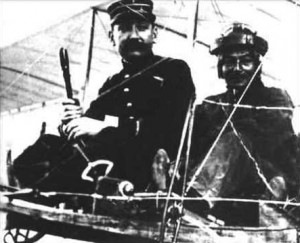
Đỗ Hữu Phương’s famous aviator son Đỗ Hữu Vị (right), pictured in France in early 1915

Đỗ Hữu Phương’s most famous offspring was Đỗ Hữu Vị, still celebrated today as Việt Nam’s first pilot. After an early military career with the French Foreign Legion in Morocco, he retrained as an aviator in 1910 and became one of the pioneers of military aviation in Morocco – to this day, a street in Casablanca still bears his name. On the outbreak of World War I, Vị was posted to France, where he flew several missions before a crash in 1915 left him severely crippled and no longer able to fly. Rejoining the French Foreign Legion, he served briefly in the trenches of the Somme as commander of the 7th Company, but was killed on 9 July 1916 while leading his troops into battle. Initially buried in France, his remains were returned to Cochinchina in 1921 and reburied with great ceremony in the family plot on the Plaine des tombeaux (Plain of tombs), modern District 10.

After the death of Đỗ Hữu Phương’s wife in 1921, the family decided to sell the palatial mansion on rue Tong-Doc-Phuong in Chợ Lớn and in subsequent years it was demolished so that the whole block could be redeveloped. Today there is little to suggest that this extraordinary complex ever existed, apart from one of the former out-houses which may still be seen in an alley off Trần Hưng Đạo B street.

Cholon twin maps copy

A map (left) showing the location of Đỗ Hữu Phương’s residence on quai Testard in the 1890s and a Google map (right) showing the same location today

Tim Doling is the author of the guidebook Exploring Saigon-Chợ Lớn – Vanishing heritage of Hồ Chí Minh City (Nhà Xuất Bản Thế Giới, Hà Nội, 2019)

A full index of all Tim’s blog articles since November 2013 is now available here.

Join the Facebook group pages Saigon-Chợ Lớn Then & Now to see historic photographs juxtaposed with new ones taken in the same locations, and Đài Quan sát Di sản Sài Gòn – Saigon Heritage Observatory for up-to-date information on conservation issues in Saigon and Chợ Lớn.
The Curious Case of the Vanishing Revolutionary Monuments

IMG_2149

The former hotel at 1 Nguyễn Trung Trực (rue Filippini) where the Annam Communist Party was set up in October 1929

This article was published previously in Saigoneer http://saigoneer.com

It’s often assumed that it’s only Hồ Chí Minh City’s colonial-era heritage buildings which are under threat. But in recent years, several important revolutionary monuments have also been lost.

According to the 1998 book Historic and Cultural Vestiges of Hồ Chí Minh City (Di Tích Lịch Sử-Văn Hóa Thành Phố Hồ Chí Minh, Nhà Xuất Bản Trẻ), in June 1928, members of the Việt Nam Revolutionary Youth League (Việt Nam Thanh niên Cách mạng Đồng chí hội) met in room 5 on the second floor of the Tân Hòa Hotel at 88 boulevard Bonard (Lê Lợi), Saigon, to establish the League’s Cochinchina regional committee.

IMG_4317

The entrance to the second floor room at 88 Lê Lợi (boulevard Bonard), now a private apartment, where the Việt Nam Revolutionary Youth League’s Cochinchina regional committee was set up in June 1928

Founded in Guangzhou by Hồ Chí Minh in 1925, the League subsequently embarked on a vigorous propaganda drive, recruiting many new members throughout the country. The establishment of three regional committees (Cochinchina, Annam, Tonkin) enabled it to further expand its activities. Phan Trọng Bình served as secretary of the Cochinchina regional committee until March 1929, when he was succeeded by Phạm Văn Đồng, who in the 1960s would become Prime Minister of Việt Nam.

Because of its historical significance, the former hotel room at 88 Lê Lợi was declared a historic monument by the Ministry of Culture and Information on 16 November 1988 (decision 1288-VH/QĐ). However, the second floor of 88 Lê Lợi is currently rented out as private apartments and there is nothing to suggest that any historic events took place here.

The same book also lists another revolutionary monument, situated less than 100m from 88 Lê Lợi. Following the May 1929 congress in Hong Kong, Việt Nam Revolutionary Youth League delegates from Tonkin (northern Việt Nam) returned to Hà Nội to found the Indochina Communist Party (Đông Dương Cộng sản Đảng). Delegates from Cochinchina subsequently followed suit – in late July or early August 1929, Châu Văn Liêm, Hồ Tùng Mậu, Lê Hồng Sơn, Lê Duy Điếm and several other members of the League met at Liêm’s house on rue Hamelin (Lê Thị Hồng Gấm) in Saigon and resolved to set up the Annam Communist Party (An Nam Cộng Sản Ðảng). This organisation was formally established in October 1929 at a meeting in room 1 on the second floor of a hotel (believed to have been known in French as the Hôtel de l’Ouest) at 1 rue Filippini (Nguyễn Trung Trực). Attended by around 30 delegates, the meeting set up a provisional party executive committee and appointed Châu Văn Liêm as secretary.

IMG_4306

Room 1 at 1 Nguyễn Trung Trực (rue Filippini), where the Annam Communist Party was founded in October 1929, is now also a private apartment

While the Annam Communist Party was a short-lived organisation – in February 1930 it was merged with the Indochina Communist Party to form the Communist Party of Việt Nam – it is said to have played an important role in the Vietnamese revolution and for that reason, the place where it was founded – room 1 at 1 Nguyễn Trung Trực – was also declared a historic monument by the Ministry of Culture and Information on 16 November 1988. However, as with 88 Lê Lợi, the site is now an unmarked private apartment.

Where 88 Lê Lợi and 1 Nguyễn Trung Trực are concerned, it can at least be said that the original buildings still exist. But another registered historic site in Hồ Chí Minh City’s District 1, the former headquarters of the Dân Chúng newspaper at 43 rue Hamelin (Lê Thị Hồng Gấm), has been completely lost to redevelopment.

The 1998 book explains how the Vietnamese-language revolutionary newspaper Dân Chúng and its French-language counterpart Le Peuple were founded on 22 July 1938 and 7 September 1939 respectively, during the brief period of relatively liberal colonial policy which followed the accession to power of Léon Blum’s left-wing Popular Front party in France.

IMG_4336

A modern six-storey building now stands on the site of the former Dân Chúng newspaper office at 43 Lê Thị Hồng Gấm (rue Hamelin)

The office at 43 rue Hamelin (Lê Thị Hồng Gấm) where these newspapers were produced is described in Historic and Cultural Vestiges of Hồ Chí Minh City as “a single-storey brick building, 8m wide by 23.6m deep, with a traditional yin-yang tiled roof and a tiled floor.” It, too, was registered as a historic monument by the Ministry of Culture and Information on 16 November 1988. However, soon after the book was published, the building found its way into private hands. Despite its heritage status, it was demolished in 2010 to make way for a new six-storey structure.

The demise of these revolutionary monuments has not gone unnoticed in the local press. In 2011, the Sài Gòn Giải Phóng newspaper ran an article entitled “City relics of historical importance in dismal conditions,” which highlighted the plight of these and several other registered historic monuments in Hồ Chí Minh City.

Tim Doling is the author of the guidebook Exploring Saigon-Chợ Lớn – Vanishing heritage of Hồ Chí Minh City (Nhà Xuất Bản Thế Giới, Hà Nội, 2019)

A full index of all Tim’s blog articles since November 2013 is now available here.

Join the Facebook group pages Saigon-Chợ Lớn Then & Now to see historic photographs juxtaposed with new ones taken in the same locations, and Đài Quan sát Di sản Sài Gòn – Saigon Heritage Observatory for up-to-date information on conservation issues in Saigon and Chợ Lớn.
Old Saigon Building of the Week – Trinh Khanh Tan Mausoleum, 1914

DSC04645

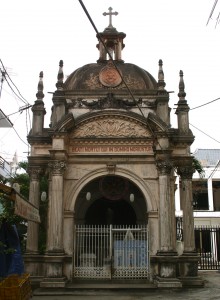
The facade of the Trịnh Khánh Tấn Mausoleum

Visitors to the Pétrus Ký Mausoleum and Memorial House in Chợ Quán may notice another ornate mausoleum located just 100m east along Trần Hưng Đạo boulevard in Hẻm (Alley) 472.

This was built in 1914 to house the tomb of Dominique-Thomas Trịnh Khánh Tấn (died 1913), Honorary District Chief (Tri huyện Honoraire) of Chợ Quán.

IMG_1501

The Trịnh Khánh Tấn Mausoleum

Little is known of Tấn, other than the fact that he was a trusted official of the colonial administration who lived on the nearby avenue de l’église de Choquan (modern Trần Bình Trọng street). Today he is remembered principally for his book Học Tập Qui Chánh (SLND, Chợ Quán, 1906), which he wrote to help Vietnamese Roman Catholic children live an upright and useful life.

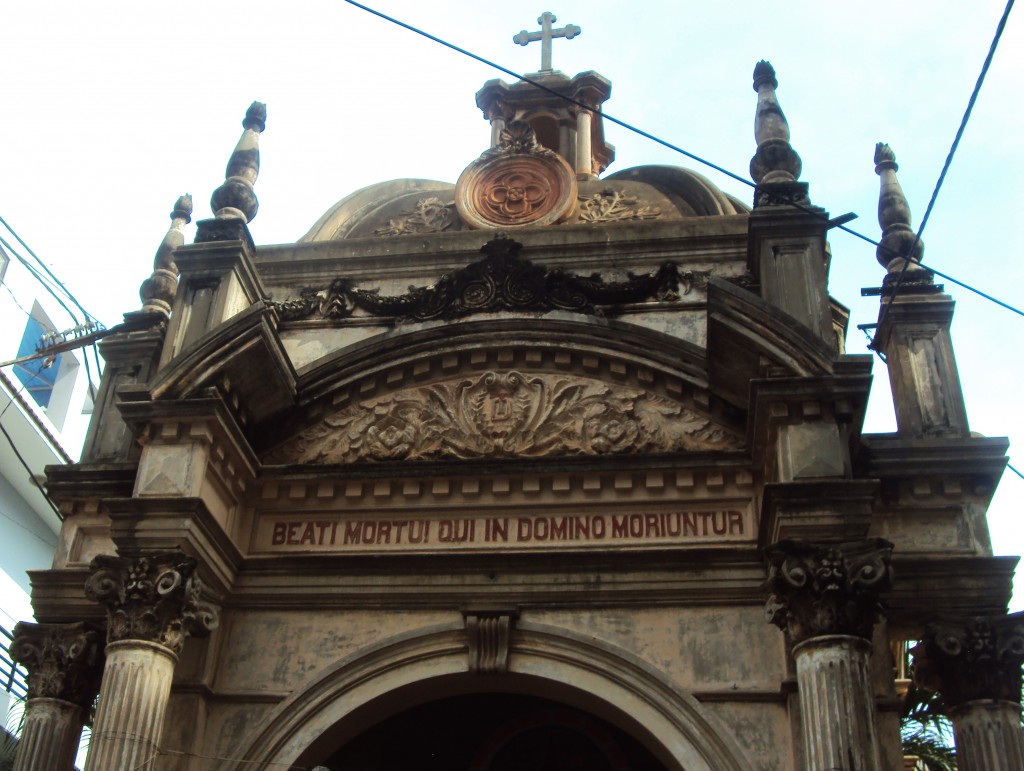
Buried either side of Tấn are his wife Lê Thị Gương (died 1922) and their daughter Trịnh Thị Thiết (died 1948). An altar is located behind the three tombs. Outside, above the entrance, is a Latin inscription from the Vulgate Bible, which reads: Beati mortui qui in Domino moriuntur, meaning “Blessed are the dead who die in [the grace of] the Lord.”

If the gate is locked, those wishing to enter the mausoleum should make their way round to the left of the mausoleum until they reach the Quỳnh Café at 474/9 and ask the owner, who is a descendant of Trịnh Khánh Tấn.

Tim Doling is the author of the guidebook Exploring Saigon-Chợ Lớn – Vanishing heritage of Hồ Chí Minh City (Nhà Xuất Bản Thế Giới, Hà Nội, 2019)

A full index of all Tim’s blog articles since November 2013 is now available here.

Join the Facebook group pages Saigon-Chợ Lớn Then & Now to see historic photographs juxtaposed with new ones taken in the same locations, and Đài Quan sát Di sản Sài Gòn – Saigon Heritage Observatory for up-to-date information on conservation issues in Saigon and Chợ Lớn.
Old Saigon Building of the Week – The Signal Mast, 1865

IMG_2135

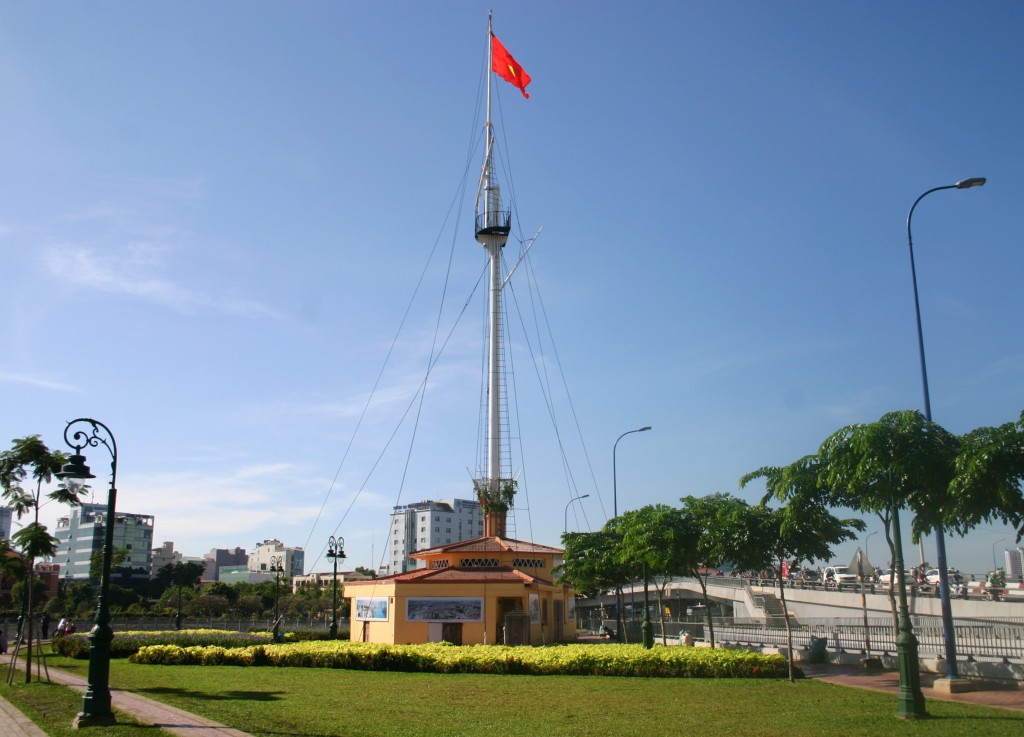
The Signal Mast today

This article was published previously in Saigoneer http://saigoneer.com

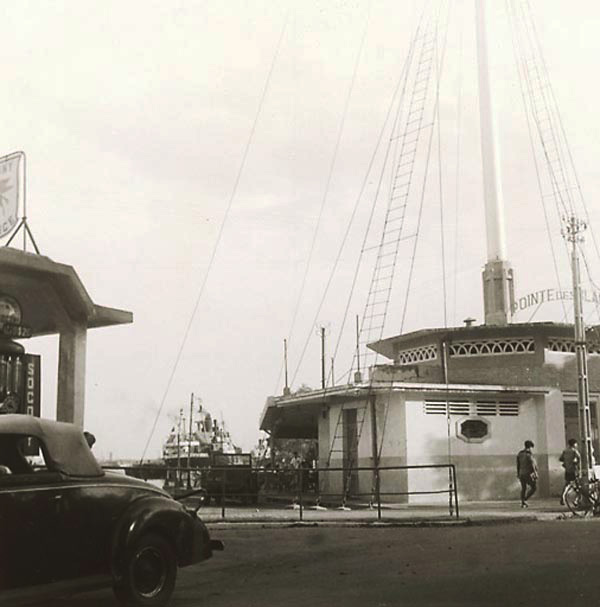
A time-honoured landmark on the Saigon riverfront, the Signal Mast (mât des signaux in French, Cột cờ thủ ngữ in Vietnamese) was recently refurbished as the centrepiece of the Saigon riverside park.

Signal Mast

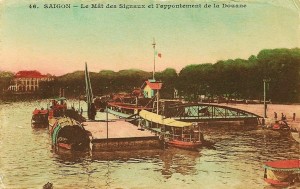
A “colorised” image of the mât des signaux in the late 19th century

In his 1869 book Cochinchine française et royaume de Cambodge, Charles Lemire tells us that the headland where the Saigon river met the Arroyo Chinois (Bến Nghé creek) was originally known as pointe Lejeune, after Captain (later Rear Admiral) Laurent-Joseph Lejeune (1817-1895), Commander in chief of the French Navy in Cochinchina during the 1860s. Lejeune built many of Saigon’s port facilities and is credited with the construction of the original Signal Mast, which opened in October 1865.

Originally a simple flagpole, its main function was to communicate with vessels on the river using signal flags, but according to Lemire, it was also avidly watched by the city’s colonial population, to whom it “signalled the impending arrival of war, commerce and mail ships, which had been announced by telegraph from cap Saint-Jacques [Vũng Tàu].”

1896i

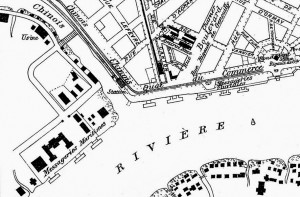
This 1896 city map shows the route of the “Low Road” steam tramway past the mât des signaux

However, from an early date the Signal Mast also became a popular recreational spot for colonial settlers. Lemire remarked that at 5pm every Monday and Friday, the entire beau monde of Saigon would come here to listen to music performances by military bands.

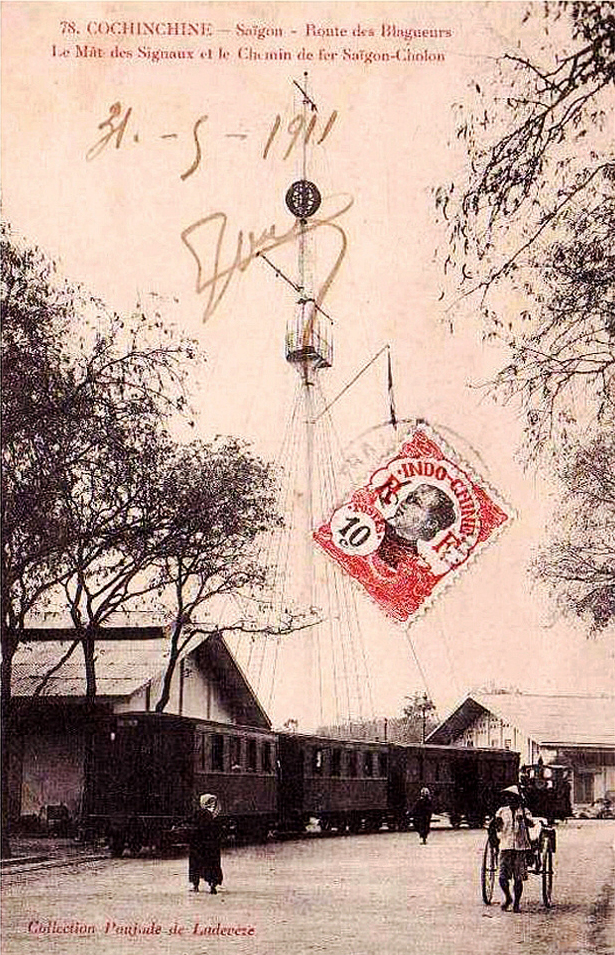
In 1891, the Signal Mast became the first stop on the new “Low Road” steam tramway, which ran from place Rigault de Genouilly [Mê Linh square] in Saigon to the confluence of the Saigon river and the arroyo Chinois, before taking the north bank of the arroyo all the way to Chợ Lớn. The tramway line ran past the Signal Mast until the mid 1920s, when it was electrified and rerouted through the city centre.

Signal Mast 2

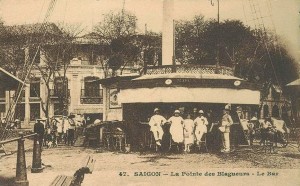
A bar was opened at the mât des signaux during the 1920s

By 1894, the flagpole needed replacement and in that year authorisation was given to proceed with the construction of a new one, complete with an office/storage facility and a floating dock. However, for budgetary and administrative reasons, this work was not completed until 1900.

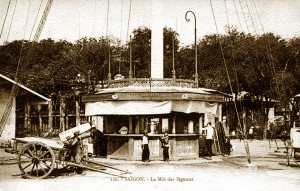
By that time, the headland next to the Signal Mast had acquired the popular name Pointe des blagueurs (“Jokers’ Point”) and in the evenings many French expatriates would come here after dinner to watch the boats go by. From the 1920s onwards, the building at the foot of the flagpole was rented out to local entrepreneurs, who ran it as a bar.

Signal Mast 3

Another view of the bar which opened at the mât des signaux during the 1920s

By the 1940s the Signal Mast had become home to the famous “Restaurant de la Pointe des Blagueurs,” run by Madame Durand.

However, according to the plaque on the wall outside, the Signal Mast is best remembered locally for a fierce battle which took place here on 23 September 1945 between resistance forces armed with makeshift weapons and British Indian troops, who at that time were facilitating the return of the French.

IMG_1292

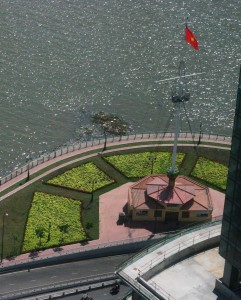
The Signal Mast today viewed from above

In 2010, as part of the landscaping of the quayside, the Signal Mast was refurbished and signs appeared outside announcing that it was to open as an exhibition centre. This plan seems to have since been shelved and the building has been closed ever since.

However, since its regeneration, the headland park has become one of the most pleasant outdoor spaces in the city, enjoyed by an ever-increasing number of visitors and locals. Perhaps we should expect a 20th century version of the former Restaurant de la Pointe des Blagueurs to be opened in the old Signal Mast in the near future….

Signal Mast 4

After 1891, “Low Road” tramway services from Saigon to Chợ Lớn stopped at the mât des signaux

DAFANCAOM01_30FI106N044_P

The Signal Mast in the 1950s

Tim Doling is the author of the guidebook Exploring Saigon-Chợ Lớn – Vanishing heritage of Hồ Chí Minh City (Nhà Xuất Bản Thế Giới, Hà Nội, 2019)

A full index of all Tim’s blog articles since November 2013 is now available here.

Join the Facebook group pages Saigon-Chợ Lớn Then & Now to see historic photographs juxtaposed with new ones taken in the same locations, and Đài Quan sát Di sản Sài Gòn – Saigon Heritage Observatory for up-to-date information on conservation issues in Saigon and Chợ Lớn.
Lang Cha Ca – From Mausoleum…. To Roundabout!

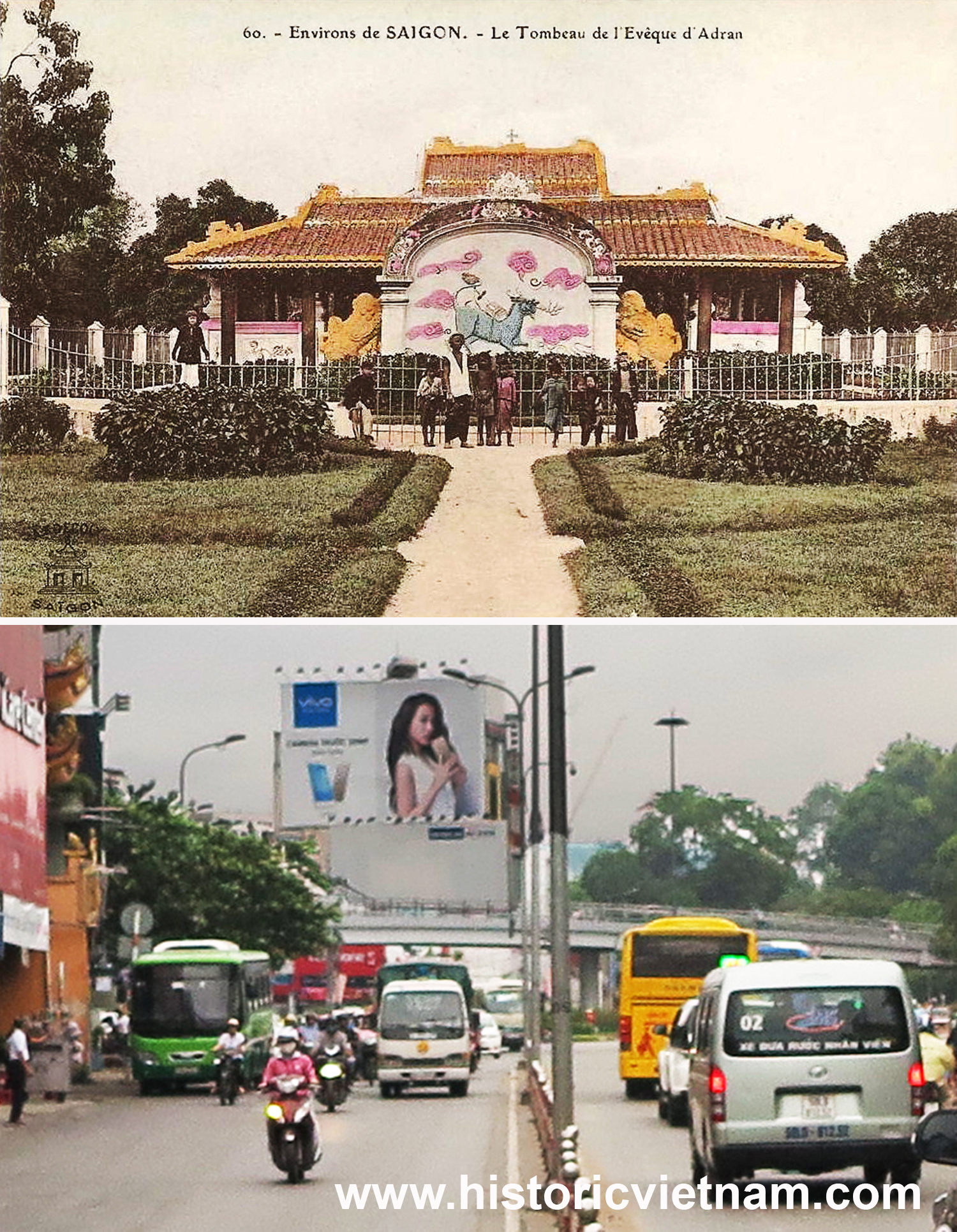
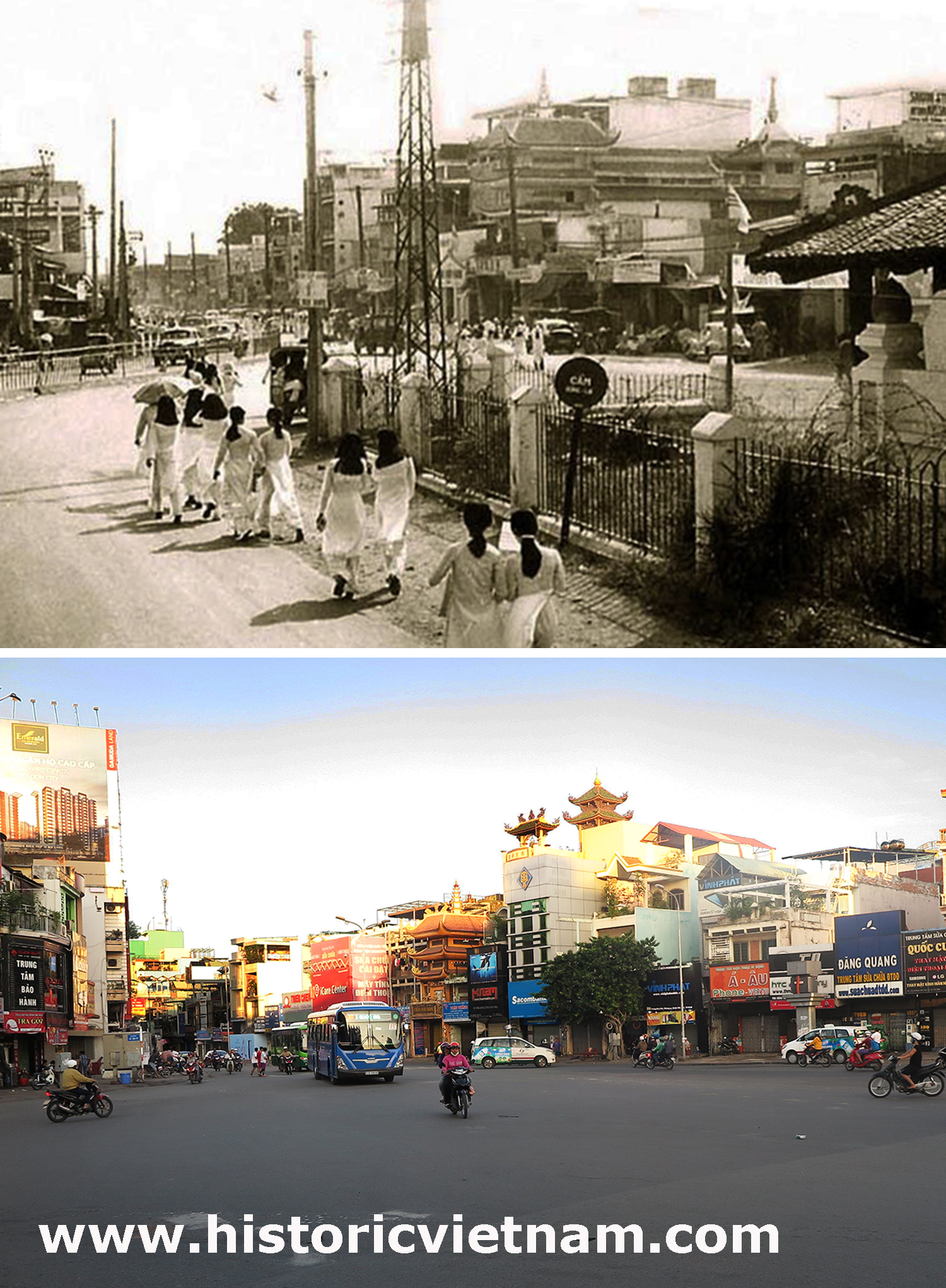
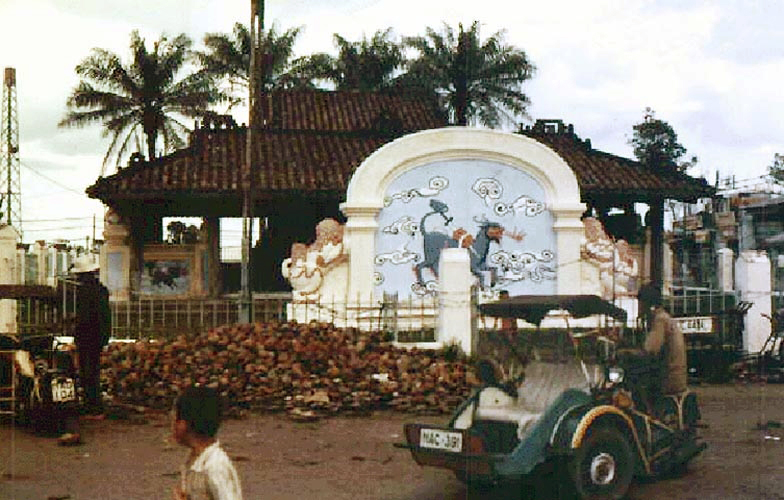
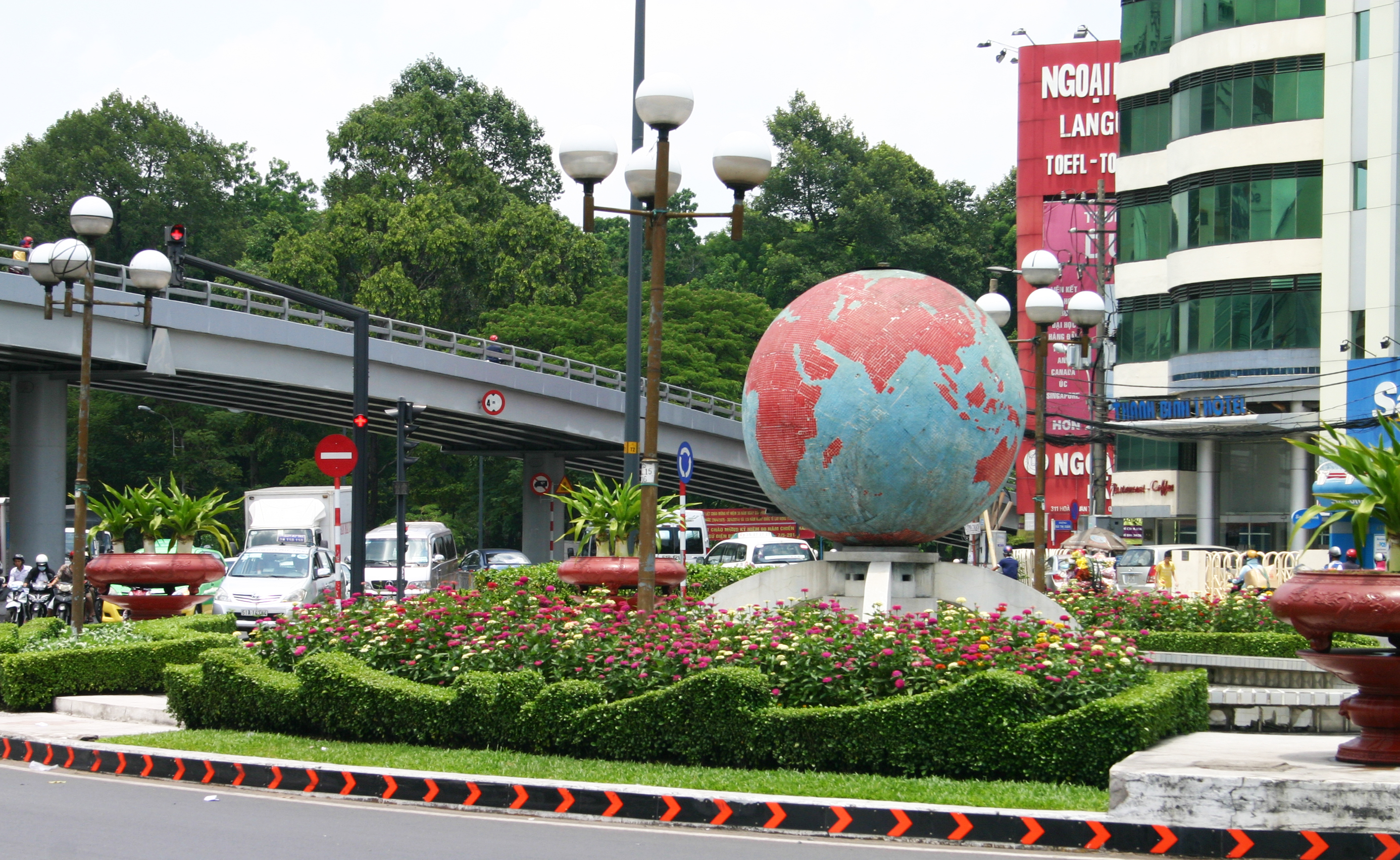
Saigon – A 1960s shot of the Bishop Pigneau de Behaine Mausoleum (photographer unknown), which was bulldozed by the city authorities in 1983 to make way for the Lăng Cha Cả intersection, and the same view today (14 August 2017)

If you’re just off the plane and heading west into the city, it’s hard to avoid the busy six-way Lăng Cha Cả intersection south of Hồ Chí Minh City’s Tân Sơn Nhất International Airport. But it’s even harder to believe that this was once the site of a national monument – the grand mausoleum of Bishop Pigneau de Béhaine.

503px-Pigneau_de_Behaine_MEP_portrait

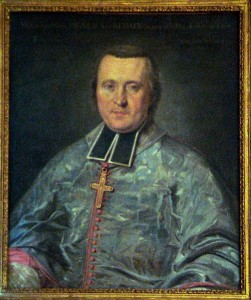
Pigneau de Béhaine, painted by Maupérin during his 1787 trip to Paris with Crown Prince Cảnh, on display at the Paris Foreign Missions Society

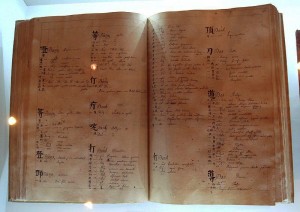
Monsignor Pierre Joseph Georges Pigneau de Béhaine (1741-1799) first came to Việt Nam as a missionary with the Paris Foreign Missions Society in the late 1760s. In around 1775 he set up a seminary on the island of Phú Quốc, off the coast of Hà Tiên in the Mekong Delta. It was there that he mastered both Chinese and Vietnamese and worked with Vietnamese colleagues to compile the Dictionarium Anamitico-Latinum (Vietnamese-Latin dictionary, 1772) before his elevation to the post of Bishop of Adran and Apostolic Vicar of Cochinchina in 1774.

In 1777, Lord Nguyễn Phúc Ánh (later King Gia Long) arrived on the island and sought protection at Pigneau’s seminary. The sole survivor of the Đàng Trong (Huế) royal family which had been massacred by the Tây Sơn, he was offered shelter by Pigneau and the two men quickly became close friends.

Pigneau subsequently pledged his support for the Nguyễn cause and over the next 15 years he became Ánh’s close confidant and indefatigable champion in the war against the Tây Sơn, procuring munitions and other military supplies for his armed forces.

423px-Prince_Canh_portrait_MEP

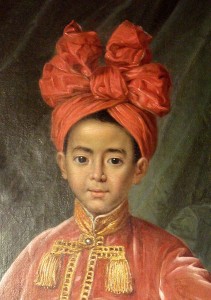
Seven-year-old Crown Prince Nguyễn Phúc Cảnh, painted by Maupérin during the prince’s 1787 trip to Paris with Pigneau, on display at the Paris Foreign Missions Society

In February 1787, Pigneau left for France, taking with him Nguyễn Phúc Ánh’s young son and heir, Prince Nguyễn Phúc Cảnh. By the terms of the subsequent Treaty of Versailles, signed on 21 November 1787, the court of Louis XVI promised military support for Nguyễn Phúc Ánh in exchange for economic and territorial concessions in Việt Nam. However, due to the subsequent political situation in France, the Treaty was never implemented and Pigneau was obliged instead to use funds he had raised in France to recruit a force of mercenaries.

By the time Pigneau arrived back in Việt Nam in 1789, Nguyễn Phúc Ánh had retaken his old base at Gia Định. The team of French officers Pigneau had enlisted brought with them state-of-the-art weaponry and helped to train Ánh’s troops in modern infantry tactics and the use of heavy artillery. A naval workshop was set up in Bến Nghé (Saigon) to assemble a fleet of modern warships and a series of major fortifications was built, including the massive 1790 Gia Định Citadel, which became the temporary Nguyễn royal capital. In the 1790s, these military reforms enabled Ánh to launch a series of successful campaigns against Tây Sơn bases in the south-central region, paving the way for his final victory in 1801.

800px-Pigneau_Dictionarium_Anamitico_Latinum

Pigneau’s 1772 Dictionarium Anamitico-Latinum, on display at the Paris Foreign Missions Society.

During the 1790s, as Nguyễn Phúc Ánh took the fight back to the Tây Sơn, Pigneau de Béhaine served as adviser at his court in Gia Định and tutor to his son Prince Cảnh.

Writing in the 1880s, Pétrus Ký gave a fascinating account of the life and death of Pigneau de Béhaine: “Following his return from France, the bishop of Adran lived in Saigon, in a house called the Dinh Tân Xá which Nguyễn Phúc Ánh had built for him at the outer corner of the citadel, at the spot where the gunpowder magazine is now situated [now the site of the Hồ Chí Minh City History Museum]. The Christians of Thị Nghè also had their church close by, on the edge of the arroyo de l’Avalanche [Thị Nghè creek], in the parish of Tân Sơn, now the location of the bishop’s tomb.”

During this period, in addition to tutoring the young Crown Prince Cảnh, Pigneau also accompanied him on several military campaigns against the Tây Sơn, including the defence of Diên Khánh in 1794.

800px-Dien_Khanh_front_gate

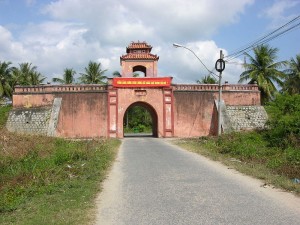
The main gate of Diên Khánh citadel in Khánh Hòa Province where Pigneau died

And it was on one of these campaigns, the seige of Quy Nhơn of 1799, that “after thirty-three years of a very rough and laborious life,” the bishop succumbed to acute dysentery.

“Lord Nguyễn Phúc Ánh, driven by a genuine affection for the prelate who had rendered to him ​​such eminent services, sent his best doctors and employed every possible means to conserve his life. Prince Cảnh came every day to visit his master, and Ánh himself came several times to see his benefactor, despite his concerns about the ongoing siege of Quy Nhơn, from which he tore himself away out of a sense of gratitude.”

Pierre Pigneau de Béhaine died on 9 October 1799, “in the arms of M Lelabousse, a missionary who had accompanied him.” Having received the sad news, Nguyễn Phúc Ánh sent “a beautiful coffin, together with silk for wrapping the body.”

In 1925, one scholar cited an inscription at the Lăng Ngọc Hội, 8km from Nha Trang, which suggested that Pigneau was actually laid to rest there rather than in Gia Định. However, other French sources make no mention of this. According to Pétrus Ký, on 10 October 1799, Crown Prince Cảnh accompanied the corpse as it was placed on one of the Nguyễn ships and returned to Gia Định for burial.

5.14 Dinh Tan Xa 3

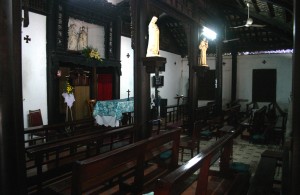
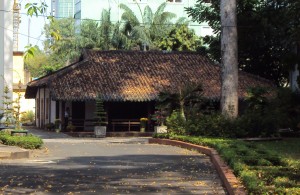
The interior of Pigneau’s Dinh Tân Xá in the grounds of the Archbishop’s Palace at 180 Nguyễn Đình Chiểu

Arriving in Gia Định on 16 October, Pigneau’s body was placed in the Dinh Tân Xá, where it lay in state for a month. Crown Prince Cảnh “considered himself as a disciple and eldest son of his master the prelate, for whom he was in deep mourning.” Cảnh had a special temporary palace built opposite the bishop’s house and stayed there day and night, receiving many mandarins who came from all parts of the kingdom “to render illustrious funeral honours to the deceased.”

A French architect named Barthélemy was commissioned to build a Nguyễn dynasty style mausoleum in Tân Sơn village, while Crown Prince Cảnh was entrusted with the detailed arrangements for the funeral ceremony. Despite the ongoing campaign in Quy Nhơn, Lord Nguyễn Phúc Ánh himself made time to sail south to Gia Định to attend Pigneau’s funeral on 16 December 1799.

Pétrus Ký describes how the procession from the Dinh Tân Xá to the newly-built mausoleum set off at around 2am on 16 December 1799, led by Prince Cảnh.

11907036753_241219d040_o

The decorative screen in front of the Pigneau de Béhaine mausoleum

“A large cross, formed from artfully-arranged lanterns, was carried at the head of the procession, followed by a series of elaborately carved red and gold portable shrines, each held aloft on an ornate dais and carried by four men.” The first housed a stele bearing the characters 皇天主宰 (Huáng tiān zhǔ zǎi or Hoàng thiên chúa tể, meaning “Sovereign Lord of Heaven”) in gold lettering. The second contained an image of St Paul and the third an image of St Peter, patron of the bishop of Adran. The fourth contained an image of the guardian angel and the fifth an image of the Blessed Virgin.

Then came a great standard measuring some 15 feet in length and made from damask, on which were embroidered in gold letters the titles conferred on the bishop of Adran by the King of France and the Lord of Đàng Trong [Nguyễn Phúc Ánh], as well as those of his episcopal office.

After this came a litter housing the insignia of the prelate, his cross and his mitre, which was carried directly in front of the hearse.

301416_480055318683408_544218516_n

Another colonial-era image of the Pigneau de Béhaine mausoleum

On either side of these shrines and litters walked “a large number of Christian young people and clergy from every church in Cochinchina.”

The hearse carrying the body of the bishop was “a beautiful litter of about 20 feet in length, carried by 80 picked men, and covered by an embroidered gold canopy.” On it was placed “the magnificent coffin….. covered with beautiful damask, set in a frame and surrounded by 25 large lit candles.”

Nguyễn Phúc Ánh’s royal guard, comprising more than 12,000 men, was arranged in two lines, with field guns at the head of each line. “One hundred and twenty war elephants with their escorts and mahouts walked on both sides. Drums, trumpets and both Annamite and Cambodian military music accompanied the mournful march, which was lit by a prodigious number of candles and torches and more than 2,000 lanterns of different shapes. At least 40,000 men, both Christians and pagans, followed the convoy.”

Lang Cha Ca 3

An image of the mausoleum from Charles Lemire’s 1884 book L’Indo-Chine, Cochinchine française, royaume de Cambodge, royaume d’Annam et Tonkin

Lord Nguyễn Phúc Ánh was present, along with his ​​mother, his sister, his queen, his children, all the ladies of the court and the mandarins of different government departments. “All wanted to express their regret at the eminent and distinguished prelate who was no more, following his remains to the grave which had been prepared to receive him.”

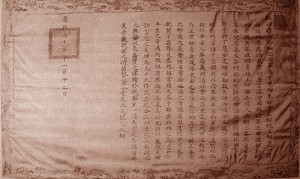
Arriving at the grave, a missionary named Father Liot performed the ceremonies of the Catholic liturgy. Once the Christian burial ceremony was finished, Lord Nguyễn Phúc Ánh stepped forward and gave a tearful funeral elegy which he is said to have composed himself. This elegy had been transcribed onto embroidered silk and was “presented to the late bishop in the form of a posthumous diploma.”

Lord Nguyễn Phúc Ánh’s elegy recounted Pigneau’s efforts to obtain official French military assistance from Louis XVI and explained how, despite being “met with adverse conditions midway through his endeavours,” he had gone on to “marvelously save the situation with his extraordinary plans.”

800px-Funeral_Oration_of_Gia_Long_to_Pigneau_de_Behaine_8_Dec_1799

Nguyễn Phúc Ánh’s funeral elegy was transcribed onto embroidered silk

It described Pigneau as “a precious friend, whose character fitted so well with mine… the intimate confidant of my most secret thoughts… who came to my kingdom and never left me, even when fortune eluded me”… “We were such friends and so familiar together that when my business called me out of my palace, our two horses walked abreast. We never had anything but the same heart.”

“After the funeral oration, the clergy and the Christians withdrew, Lord Nguyễn Phúc Ánh, alone with his mandarins, offered the sacrifices they were accustomed to make for souls of the deceased. Then Prince Cảnh and royal ministers each read out their own eulogies.”

Writing in 1884, Charles Lemire also mentioned the “curious details” of Pigneau’s funeral as recounted by an eye witness named Father Bouillevaux, who gives us a detailed description of the mausoleum constructed over the tomb.

Lang Cha Ca 2i

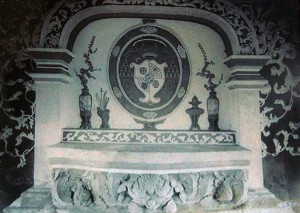
A 1960s photograph of the mausoleum shrine with its embossed coat of arms of the bishop

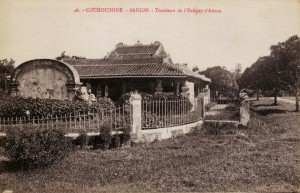
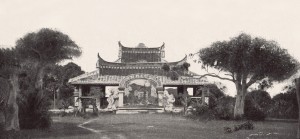
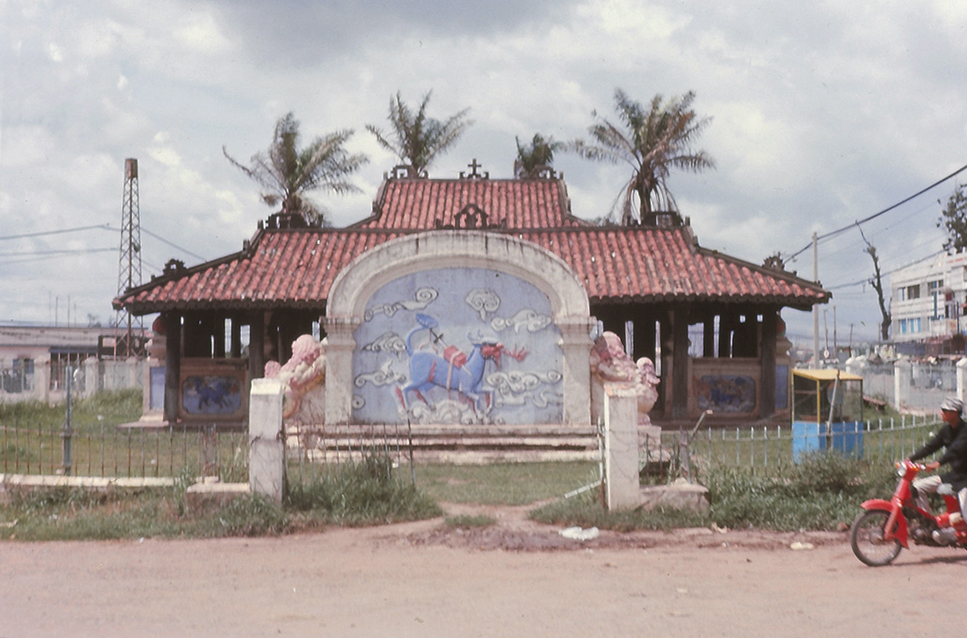
Known locally as Lăng Cha Cả, the mausoleum in which Pigneau de Béhaine was buried was located in a large rural clearing near Tân Sơn village. Designed in the Nguyễn dynasty style, it was supported by a frame of precious wood and topped by a traditional yin-yang tiled roof. In front of the building stood a large screen (bình phong).

Inside the mausoleum, behind a kowtowing hall (bái đường), was the tomb of Pigneau de Béhaine, positioned in the centre of the building and featuring a stele inscribed with Chinese characters describing the prelate’s life and work. At the rear of the building was a shrine decorated with “the embossed double coat of arms of the bishop, on whom King Louis XVI had conferred the title of count.”

At the time of the funeral, Nguyễn Phúc Ánh ordered “a guard of honour of 50 men to be posted outside the mausoleum in perpetuity.” While that order may not have been carried out for long, it is said that the mausoleum remained an important place of pilgrimage throughout the pre-colonial era.

5474753819_f3b17abaae_b


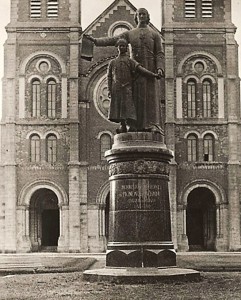
The Pigneau de Béhaine statue which stood in front of the Notre Dame Cathedral from 1902 to 1945

After the arrival of the French, Pigneau continued to be honoured as a great statesman, thanks to the pivotal role he had played in Franco-Vietnamese relations and the fact that the terms of the abortive Treaty of Versailles had been used in the 1850s as a basis for French claims on Vietnamese territory.

As early as 1861, Admiral-Governor Léonard Charner declared the Lăng Cha Cả a national heritage site and in 1902 a statue of Pigneau de Béhaine was installed in front of the Notre Dame Cathedral. The statue depicted Pigneau holding in his right hand the 1787 Treaty of Versailles and with the other hand guiding his student, Crown Prince Cảnh. At that time, the square, previously known simply as place de la Cathédrale, was renamed place Pigneau de Béhaine.

The Pigneau de Béhaine statue was removed during the August Revolution of 1945. The present statue of the Virgin Mary, made of Italian granite and created by sculptor G Ciocchetti, was installed in February 1959.

During the colonial period, a cemetery for French Roman Catholic priests was established immediately behind the Lăng Cha Cả.

1968

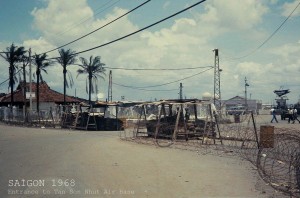
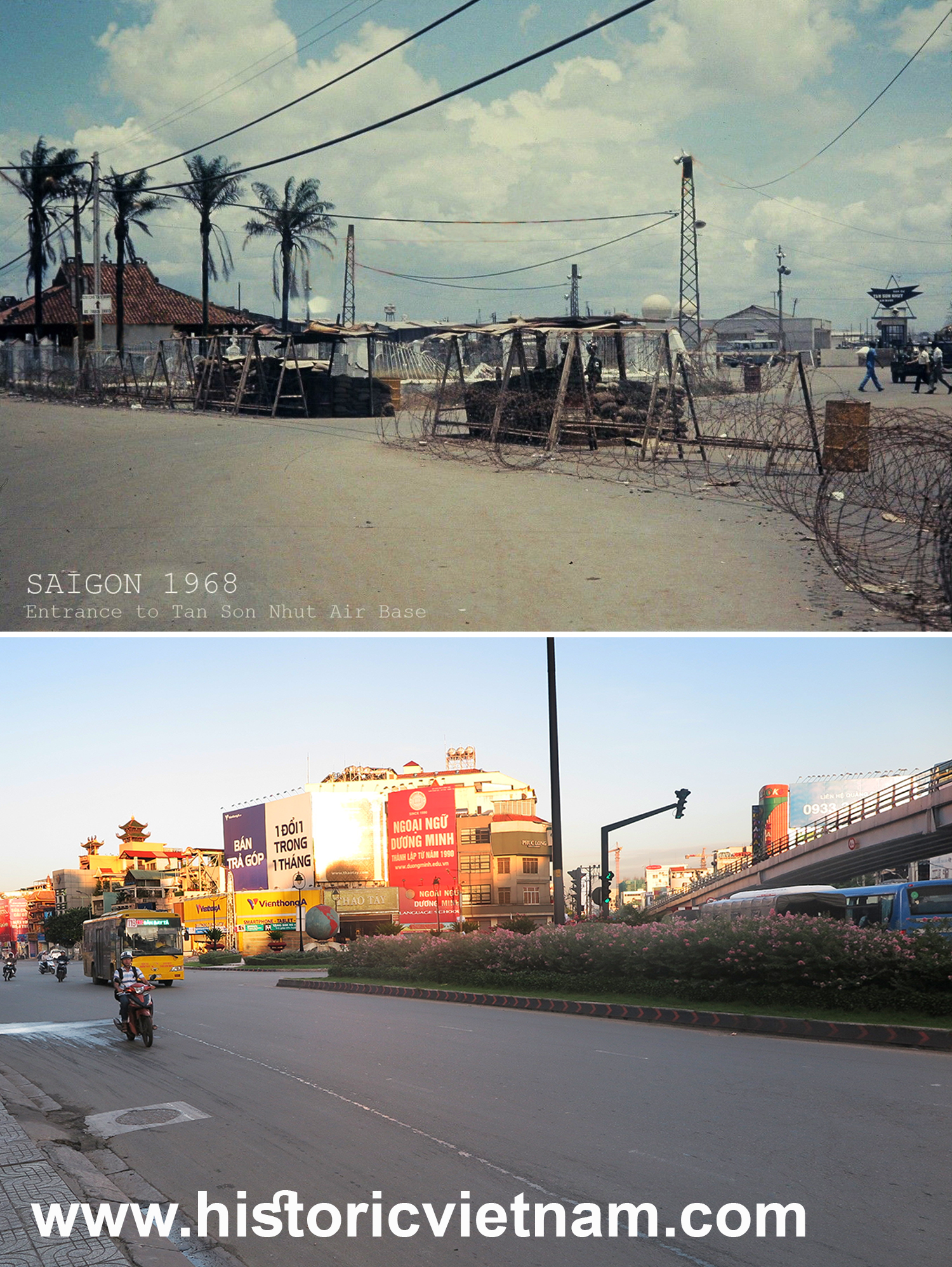
This 1968 photograph shows the mausoleum and next to it the main gate of Tân Sơn Nhất Airbase

Towards the end of the French era, urban development began to encroach upon the land surrounding the mausoleum. By the 1960s, as the first American troops arrived, the Lăng Cha Cả was a small compound in the middle of a busy traffic roundabout, right next to the main gate of Tân Sơn Nhất Airbase. However, the South Vietnamese authorities continued to maintain the mausoleum as a national monument right down to 1975.

After reunification, discussions began regarding the repatriation of foreign graves, and in 1983 the mausoleum was earmarked for clearance, along with the old rue de Massiges cemetery (now Lê Văn Tám Park) and several other French military graveyards.

Pigneau’s remains were exhumed, cremated and then delivered to the French Consul General for repatriation, along with the remains of several other priests who had been buried in the adjacent cemetery. Other graves at the site were cleared away. The mausoleum was then demolished to create a large roundabout. Today this roundabout – still known as Lăng Cha Cả – is one of the city’s busiest intersections. A flyover was installed in 2013.

5.13 Dinh Tan Xa 1

The Dinh Tân Xá at the Archbishop’s Palace

While the Lăng Cha Cả and the statue of Pigneau de Béhaine have long been consigned to history, the Dinh Tân Xá house which Nguyễn Phúc Ánh built for his friend still stands today in the grounds of the Archbishop’s Palace at 180 Nguyễn Đình Chiểu in Hồ Chí Minh City’s District 3. It was dismantled and rebuilt twice, firstly in 1870 in the grounds of the previous bishop’s palace at 6 rue de l’Évêché [6 Alexandre de Rhodes] and 30 years later at its current location. Still used regularly as a private chapel by the Archbishop and his staff, this historic building was dismantled again in 2013-2014 and reassembled on a raised platform to provide further protection against damp and insects.

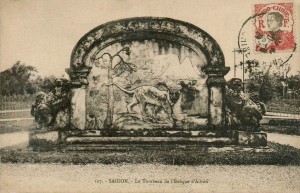
Saigon – The Bishop Pigneau de Behaine Mausoleum, photographed in 1867 by John Thomson (Wellcome Library, London), which was bulldozed by the city authorities in 1983 to make way for the Lăng Cha Cả intersection (11 June 2017)

Saigon – A 1960s shot of the Bishop Pigneau de Behaine Mausoleum (photographer unknown), which was bulldozed by the city authorities in 1983 to make way for the Lăng Cha Cả intersection, and the same view today (14 August 2017)

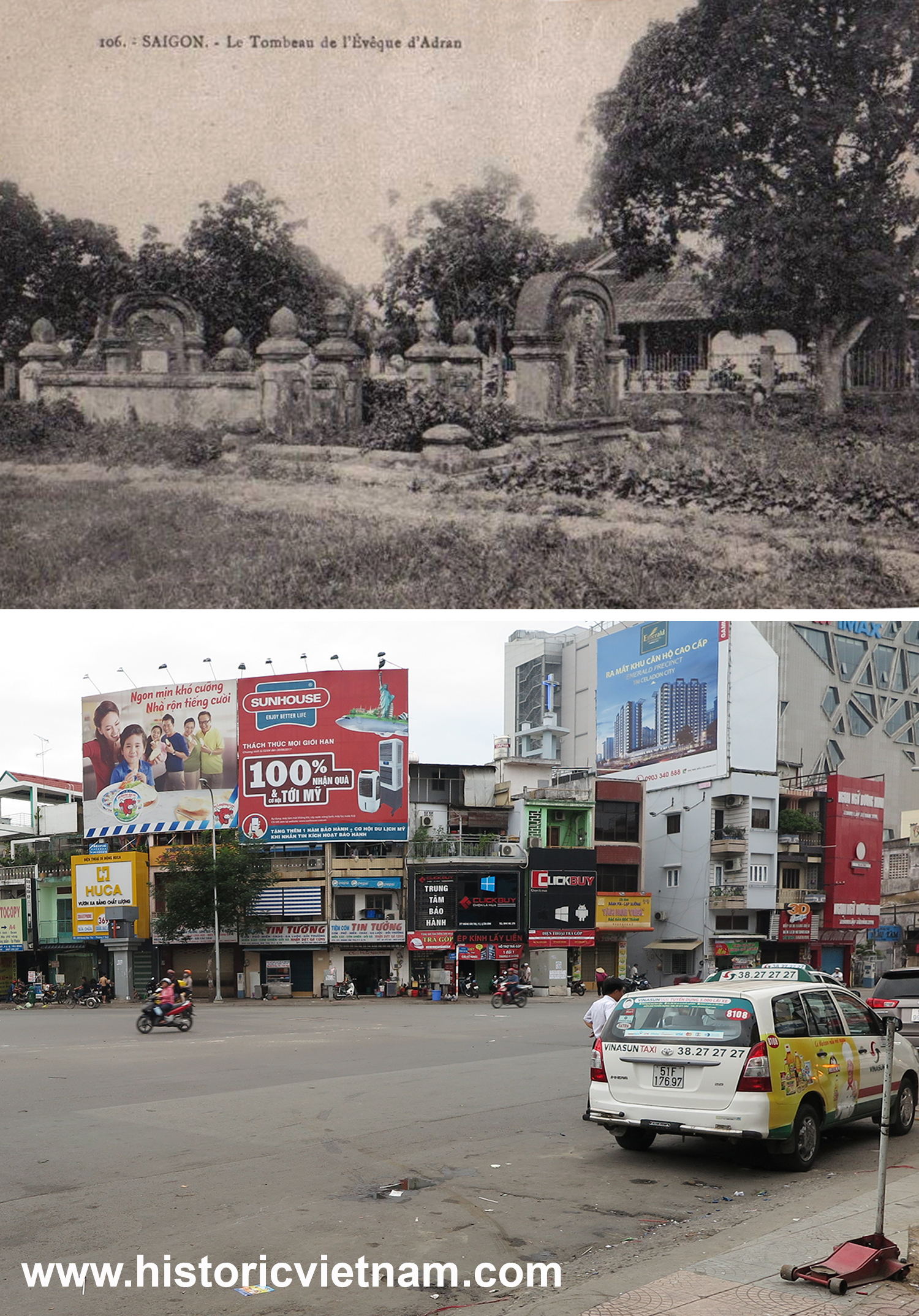
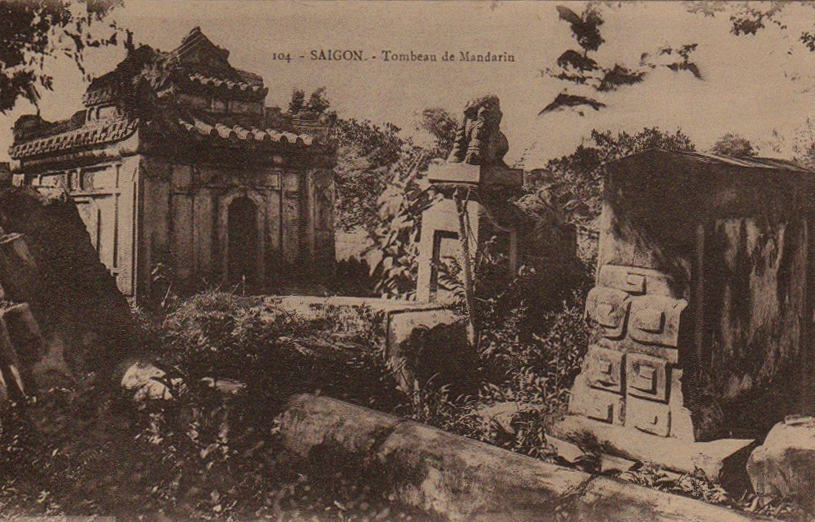
Saigon – Colonial era postcard of the Bishop Pigneau de Behaine Mausoleum, which was bulldozed by the city authorities in 1983 to make way for the Lăng Cha Cả intersection, and the same view today (1 July 2017)

“Saigon 1968: Entrance to Tân Sơn Nhứt Air Base” (photographer unknown) showing the Pigneau de Behaine Mausoleum, which was bulldozed by the city authorities in 1983 to make way for the “Lăng Cha Cả” intersection, and the same view today (1 August 2017)

Lang Cha Ca outside TSN entrance

A 1960s image of the Pigneau de Béhaine mausoleum

Tomb of Bishop of Adran (Pigneau de Béhaine) by William Price

Another 1960s image of the Pigneau de Béhaine mausoleum (William Price)

Lang Cha Ca 1966 ii

A 1966 aerial shot of the Pigneau de Béhaine mausoleum and behind it the French cemetery; the pre-1975 Tân Sơn Nhất Airbase main gate may be seen on the lower right of the picture

17 3 Ashes_of_Pigneau_de_Behaine_MEP

The urn containing the ashes of Pigneau de Béhaine after they were returned to the Paris Foreign Missions Society in 1983

IMG_4288

The busy roundabout which occupies the site today

Tim Doling is the author of the guidebook Exploring Saigon-Chợ Lớn – Vanishing heritage of Hồ Chí Minh City (Nhà Xuất Bản Thế Giới, Hà Nội, 2019)

A full index of all Tim’s blog articles since November 2013 is now available here.

Join the Facebook group pages Saigon-Chợ Lớn Then & Now to see historic photographs juxtaposed with new ones taken in the same locations, and Đài Quan sát Di sản Sài Gòn – Saigon Heritage Observatory for up-to-date information on conservation issues in Saigon and Chợ Lớn.
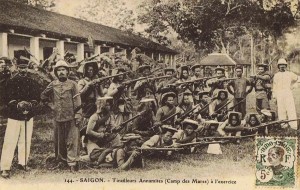
Forgotten Nguyen Dynasty Tombs of Phu Nhuan

480_001 (1)

Surviving documents from the French colonial era suggest that there were once numerous Nguyễn dynasty mandarin mausoleums in Phú Nhuận

Now a bustling urban district of Hồ Chí Minh City, Phú Nhuận is said to have once been the preferred place of residence for court mandarins working at the 1790 Gia Định Citadel. Today the adventurous traveller can still find relics of that royal past hidden amidst the urban sprawl.

page

A page from Trịnh Hoài Đức’s Gia Định Chronicle

Phú Nhuận is one of several ancient villages listed in Trịnh Hoài Đức’s Gia Định Chronicle (Gia Định thành thông chí, 嘉定城通志), which was written some time before 1820. It acquired greater significance after the construction of the first Gia Định citadel in 1790, when it seems to have become home to many royal mandarins.

Many visitors and residents are familiar with the grand mausoleum of Marshal Lê Văn Duyệt (1763-1832) in Bình Thạnh district. One of the leading military strategists and commanders of Lord Nguyễn Phúc Ánh (the future King Gia Long) in the war against the Tây Sơn, Duyệt later famously served as Viceroy of Gia Định, ruling with full power on behalf of the king over southern Việt Nam. But few people ever visit the mausoleums and tombs of other leading mandarins of that period, which may still be found scattered around the streets and back-alleys of Phú Nhuận district.

Le Van Duyet Tomb 12

The Lê Văn Duyệt Mausoleum in Bình Thạnh district

In his long war (1774-1801) against the Tây Sơn brothers, Nguyễn Phúc Ánh turned first to Siam and later to France for military aid. Funds raised by his French ally Bishop Pigneau de Béhaine in the 1780s enabled him to purchase modern weaponry and enlist the services of French military advisers to train his troops in modern infantry tactics and the use of heavy artillery. A naval workshop was also set up in Bến Nghé (Saigon) to assemble a fleet of modern warships. In the 1790s, these military reforms enabled Ánh to launch a series of successful campaigns against Tây Sơn bases in the south-central region, paving the way for his final victory in 1801.

Yet it wasn’t all about the military hardware. A great deal of credit for the military successes of the 1790s was down to Nguyễn Phúc Ánh’s military commanders, men of courage whose leadership qualities and selfless service had marked them out from an early date as trusted lieutenants. After their deaths, these men were honoured by the construction of mausoleums in Phú Nhuận district

DSC00784

A tiger stele guards the tomb at the Võ Tánh Mausoleum

A native of Biên Hòa who was later celebrated as one of the “Three Gia Dinh Heroes,” Võ Tánh or Võ Tính 武性  (?-1801) – whose mausoleum is at 19 Hồ Văn Huê – was rewarded in 1788 for his staunch military support with the post of Royal Envoy (Khâm sai chưởng cơ) and the hand in marriage of Nguyễn Phúc Ánh’s sister, Princess Ngọc Du. In 1790, Võ Tánh led an attack on Diên Khánh in central Khánh Hòa, defeating the Tây Sơn general Đào Văn Hồ and capturing the citadel. In 1793 he was promoted to Envoy of the Palace Rear Guard, “Victory over the Tây Sơn” General and Royal Escort (Khâm sai Quán suất Hậu quân Dinh Bình Tây Tham thắng Tướng quân Hộ giá) and in 1794 he was elevated to Duke and Great General (Quận công Kiêm lãnh chức Đại Tướng quân).

DSC00781

The main hall of the temple at the Võ Tánh Mausoleum

In subsequent years, Võ Tánh’s military leadership contributed to a series of Nguyễn victories over the Tây Sơn, culminating in 1799 with the capture of the old Chàm citadel of Đồ Bàn near Quy Nhơn, which the Tây Sơn had occupied in 1778 and renamed the Hoàng Đế citadel. Nguyễn Phúc Ánh changed its name again, calling it the Bình Định citadel. Võ Tánh and his fellow general Ngô Tùng Châu were then placed in charge of it, while the Nguyễn army returned south to Gia Định. However, shortly afterwards a large Tây Sơn army led by generals Trần Quang Diệu and Võ Văn Dũng laid seige to the citadel for 14 months. In 1801 Nguyễn Phúc Ánh, along with commanders Lê Văn Duyệt and Võ Di Nguy, came north with a large army and won a decisive victory over the Tây Sơn fleet in the nearby Thị Nại estuary, but they failed to raise the seige of Bình Định.

DSC00789

An exterior shot of the temple building at the Võ Tánh Mausoleum

With the garrison facing starvation, one of Tánh’s deputies suggested that it might be a good idea to surrender or escape. “We have our orders and we’ve sworn to live or die together here,” Tánh is said to have replied defiantly. “If we abandon the citadel and flee like cowards, how can we ever face our [Nguyễn] Lord again?” After securing a promise from Tây Sơn general Trần Quang Diệu that his soldiers would be safely released, Tánh packed straw, firewood and gunpowder beneath a wooden platform, strapped himself on top and ignited it, committing suicide. Ngô Tùng Châu also killed himself by taking poison. When Trần Quang Diệu finally entered Bình Định citadel, he was said to have been so touched by the courage of the two Nguyễn generals that he spared the lives of the remaining members of the Nguyễn garrison, just as Võ Tánh had requested. Less than a year later, the Tây Sơn armies were routed and Trần Quang Diệu and Võ Văn Dũng in turn were forced to abandon the citadel.

IMG_2306

A model ship in the temple at the Võ Di Nguy Mausoleum references the important role he played in the development of the Vietnamese navy

Some historians believe that it was the superior firepower of Nguyễn Phúc Ánh’s navy which played the most decisive role in the war, and Võ Di Nguy or Vũ Di Nguy 武彝巍 (1745-1801) – whose mausoleum is at 19 Cô Giang – was the man who presided over its development.

In September 1788, after Nguyễn Phúc Ánh had recaptured Gia Định, Võ Di Nguy was placed in charge of the Chu Sư (now Ba Son) naval workshop, where he oversaw the construction of a fleet of modern warships. He went on to become one of Nguyễn Phúc Ánh’s greatest admirals – in 1793, along with Nguyễn Văn Trương and Võ Tánh, Võ Di Nguy led a successful attack on Quy Nhơn and recaptured Bình Khang (now Ninh Hoà district in northern Khanh Hoa). Two years later, he and Phạm Văn Nhơn co-led a naval attack along the Cái River to Diên Khánh Citadel in central Khánh Hòa.

IMG_9228

A decorative screen in the tomb area of the Võ Di Nguy Mausoleum

However, like his British contemporary Horatio Nelson, Nguy’s most famous naval battle – the 1801 victory over the Tây Sơn fleet in the Thị Nại Estuary – was also his last. He was killed by cannon fire on 27 February 1801.

One of Nguyễn Phúc Ánh’s first acts after reunifying the country as King Gia Long was to honour both Võ Tánh and Võ Di Nguy.

Võ Tánh was initially laid to rest in a joint mausoleum with his fellow commander Ngô Tùng Châu within the grounds of the citadel they had defended so valiantly. However, they were later reburied, Ngô Tùng Châu in Phù Cát and Võ Tánh in Phú Nhuận.

DSC00788

The tomb at the Võ Tánh Mausoleum

According to historian Vương Hồng Sển, King Gia Long had to commission a wax effigy of Võ Tánh for the reburial ceremony, because his body had been so badly burned. Võ Tánh was posthumously honoured as a Meritorious High-Ranking Duke (Dực vận công Thần thái úy Quốc công) and in 1832 King Minh Mạng conferred on him the posthumous title Perpetual Duke (Hoài Quốc công). Together with Đỗ Thanh Nhơn and Châu Văn Tiếp, Võ Tánh is ranked as one of the Gia Định Tam Hùng (“Three Heroes of Gia Định”).

Võ Di Nguy’s body was also brought ceremoniously south to Gia Định, where he was posthumously named Hầu tước (“Marquis”) and treated to a grand state funeral before his burial in Phú Nhuận. In 1824, King Minh Mạng had a temple established in Võ Di Nguy’s honour and upgraded his posthumous title to Bình Giang Quận công (Duke of Bình Giang).

DSC00795

The temple viewed from the tomb area at the Trương Tấn Bửu Mausoleum

Trương Tấn Bửu 張進寶 (1752-1827) is another of the Nguyễn dynasty military commanders honoured in Phú Nhuận, whose mausoleum is at 41 Nguyễn Thị Huỳnh. A native of Vĩnh Long (now Bến Tre) province, he became Lieutenant General of the Vanguard (Tiền quân Phó tướng) in 1797 and played an important role in the final military campaigns of the 1790s. However, unlike Võ Di Nguy and Võ Tánh, he survived the Tây Sơn war to serve the new Nguyễn king.

In 1802 Bửu was appointed Lieutenant General and Head of the Palace Vanguard responsible for the Northern Citadel Army (Chưởng dinh, Quản lĩnh đạo quân Bắc Thành), in effect commander of all Nguyễn forces in northern Việt Nam. In his later years, he twice occupied the post of Deputy Governor of Gia Định Citadel as second-in-command to Marshal Lê Văn Duyệt, in 1812-1816 and again from 1821-1822.

IMG_9716

The facade of the temple at the Trương Tấn Bửu Mausoleum

When Trương Tấn Bửu died in 1827, King Minh Mạng contributed 2,000 coins towards the cost of his funeral. Marshal Lê Văn Duyệt himself purchased the land for Bửu’s tomb and temple and personally took charge of the funeral ceremony. In 1852, King Tự Đức also installed a shrine to Trương Tấn Bửu in the Hiền Lương Temple, which had been set up in the Huế Citadel to honour heroic and meritorious royal officials. Today, Trương Tấn Bửu is still remembered as one of the “Five Tiger Generals” (Ngũ hổ tướng), along with Nguyễn Văn Trường, Nguyễn Văn Nhơn, Nguyễn Huỳnh Đức and Lê Văn Duyệt.

The mausoleums of Võ Di Nguy, Võ Tánh and Trương Tấn Bửu were built in the architectural style of the Nguyễn dynasty, with a temple in front and the tomb at the rear. All three have survived, in differing states of preservation.

The Võ Tánh Mausoleum (Lăng Võ Tánh) may be found at the end of Hẻm 19, Hồ Văn Huê street in Phú Nhuận district and comprises a temple and a tomb area set amidst well-kept gardens. In 2010-2011 the complex was extensively rebuilt using a mixture of traditional and modern construction materials, but following the original design. The front hall of the temple currently functions as a recreation space and club room for the local martial arts club. Although not yet recognised as a historic monument, it is open daily from 7am-8pm.

IMG_9237ii

The use of otters in the decoration at the Võ Di Nguy Mausoleum references the legend that once, while on the run from the Tây Sơn, Nguyễn Phúc Ánh got lost in the forest and found his way back by following the footprints of an otter

The Võ Di Nguy Mausoleum (Lăng Võ Di Nguy) is located at 19 Cô Giang in Phú Nhuận district. The temple has been restored many times over the years, most recently in 1990, when it was unsympathetically rebuilt using modern construction materials. Nonetheless it still preserves its original architectural composition. The tomb section at the rear of the compound retains its original form, but is now seriously degraded and in urgent need of conservation work. Recognised as a national architectural and artistic monument in January 1993, the mausoleum is looked after by a resident family who open the doors on request from 7am-11.30am and 1.30pm-4.30pm daily.

The Trương Tấn Bửu Mausoleum (Lăng Trương Tấn Bửu) is situated at 41 Nguyễn Thị Huỳnh street in Phú Nhuận district and also functions as the home of the caretaker. During the First Indochina War, the temple became a district headquarters for anti-colonial forces and is said to have suffered serious damage during an attack by French soldiers. It was rebuilt in 1959 along with a new assembly hall which nowadays serves as the caretaker’s residence. Like that of Võ Di Nguy, the tomb area is in a very poor state of preservation, although the mausoleum was recognised as a national architectural and artistic monument in December 2004.

Surviving documents from the French colonial era suggest that there were once several other Nguyễn dynasty mandarin mausoleums in Phú Nhuận, though sadly they have long been lost to urban development. However, one other tomb has survived.

IMG_1731

The rear face of the stele which guards the Phan Tấn Huỳnh Tomb

Though never honoured by the construction of a temple or mausoleum, Phan Tấn Huỳnh 潘晉黃  (1752-1824) distinguished himself in the service of Nguyễn Phúc Ánh during the Tây Sơn war and became a high-ranking mandarin at Gia Định Citadel after Ánh took the throne in 1802.

During the Tây Sơn war, Huỳnh is said to have fought courageously in the armies of Nguyễn Phúc Ánh under leading generals such as Lê Văn Duyệt, Ngô Tùng Châu, Võ Tánh and Trương Tấn Bửu. In 1807 he himself became a General and High-ranking Special Envoy and was charged with assisting Marshal Lê Văn Duyệt in his duties as Governor of Gia Định. According to the text written in Chinese on his tombstone, he was responsible for writing all of Lê Văn Duyệt’s official reports to the king.

IMG_1729

This small stele is inscribed with Phan Tấn Huỳnh’s names and titles

Phan Tấn Huỳnh distinguished himself in battle again between 1809 and 1816, when he was sent north to Quảng Ngãi province to put down a major ethnic minority uprising. In 1820 he became Deputy Divisional Commander and in 1822 Divisional Commander of Phiên An (Bến Nghé). During this period he is said to have promoted the colonisation of much new land, gainng a reputation for kindness by providing free food and clothing for settlers. After 1822 Phan Tấn Huỳnh’s health began to deteriorate due to old age. By 1824 he was very infirm, so in order to avoid becoming an encumbrance to his family, he took his own life.

The Phan Tấn Huỳnh Tomb (Mộ Phan Tấn Huỳnh) may be found in Hẻm 120, Huỳnh Văn Bánh street in Phú Nhuận district, and is accessible at all hours. The small tomb compound comprises an altar in front of the tomb, backed by a small stele inscribed with Phan Tấn Huỳnh’s names and titles. Behind the tomb is a large screen inscribed with Chinese characters which tell of his distinguished career. Not yet recognised as a historic monument, the tomb is in poor condition.

You may also be interested to read these articles:

Ancient Tombs of Saigon – Phan Tan Huynh Tomb, 1824
Ancient Tombs of Saigon – Lam Tam Lang Tomb, 1841
Ta Duong Minh – Thu Duc’s Founding Father 1860s

Tim Doling is the author of the guidebook Exploring Saigon-Chợ Lớn – Vanishing heritage of Hồ Chí Minh City (Nhà Xuất Bản Thế Giới, Hà Nội, 2019)

A full index of all Tim’s blog articles since November 2013 is now available here.

Join the Facebook group pages Saigon-Chợ Lớn Then & Now to see historic photographs juxtaposed with new ones taken in the same locations, and Đài Quan sát Di sản Sài Gòn – Saigon Heritage Observatory for up-to-date information on conservation issues in Saigon and Chợ Lớn.
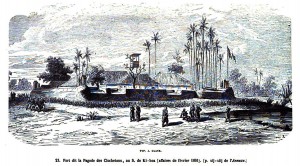
IMG_2413

The tomb at the Võ Tánh Mausoleum

IMG_9224

The tomb at the Võ Di Nguy Mausoleum

DSC00796

The tomb at the Trương Tấn Bửu Mausoleum

IMG_2740

The Phan Tấn Huỳnh Tomb