Old Saigon Building of the Week – 39 Tran Quoc Thao, 1900-1910

Descours et Cabaud TWO

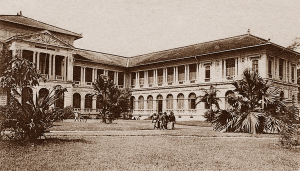
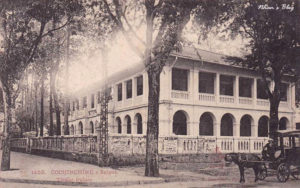
A 2003 photograph of the former managerial residence of Lyon-based metallurgical products company Descours et Cabaud, now the Quận ủy (District council) building at 39 Trần Quốc Thảo (the former rue Eyriaud-des-Vergnes) in District 3.

This article was published previously in Saigoneer http://saigoneer.com

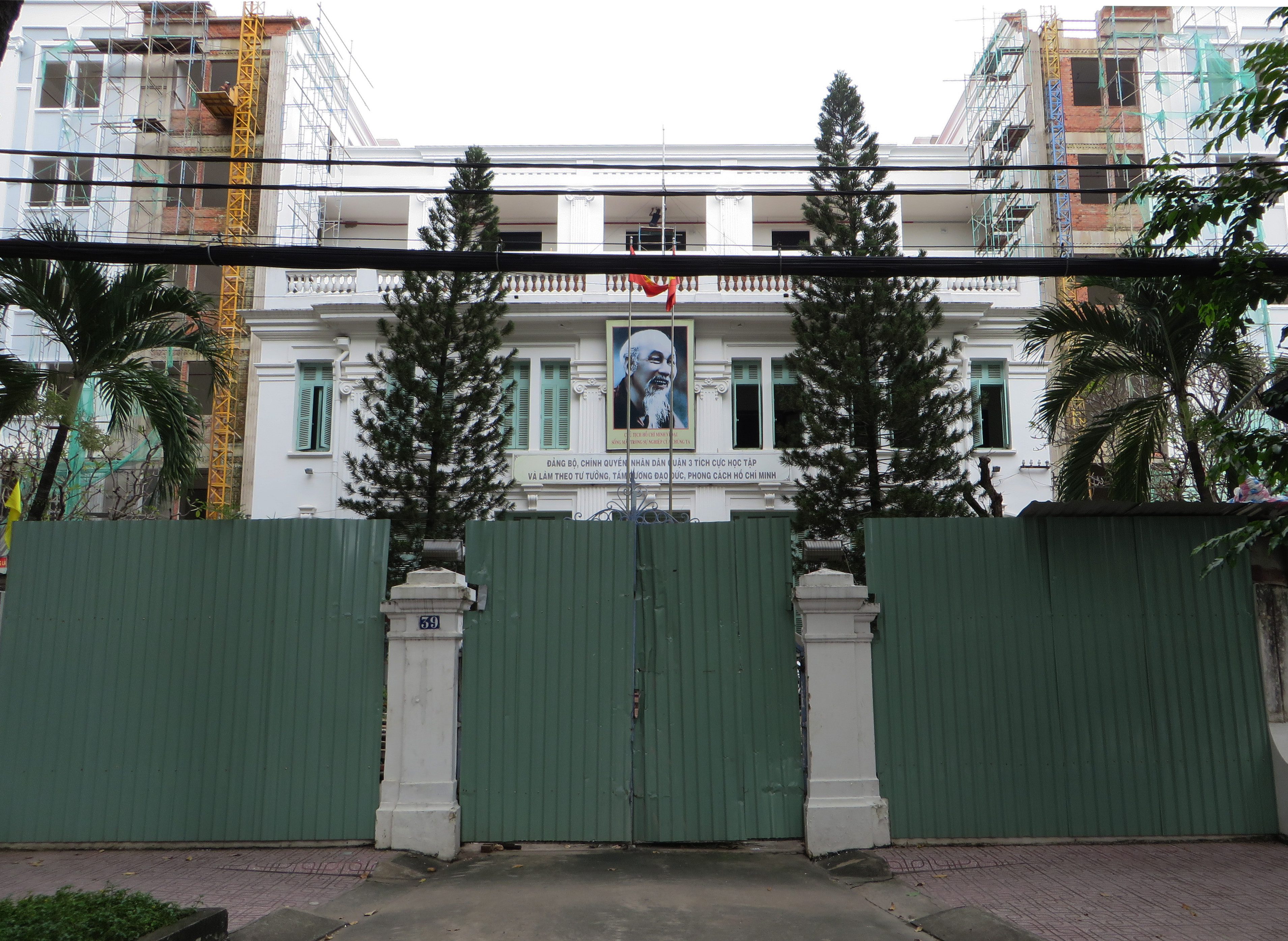
One of District 3’s grandest old colonial mansions, the Quận ủy (District council) building at 39 Trần Quốc Thảo (the former rue Eyriaud-des-Vergnes) was once the plush managerial residence of the Lyon-based metallurgical products company, Descours et Cabaud.

Founded in 1780, the Maison Descours et Cabaud was the first major French company to trade internationally in “iron, steel, cast iron and other metallurgical products, and all that is related directly or indirectly to the trade in raw or manufactured materials used in industries or enterprises.”

descours-cabaud-saigon

Descours et Cabaud’s Indochina head office building at 1 quai de Belgique in Saigon during the colonial period.

The company opened its first Far East office in Hà Nội in 1898, but in the following year, larger premises were acquired at 1 quai de Belgique in Saigon, which subsequently became the Maison Descours et Cabaud’s regional head office. By 1915, the company also had representative offices in Tourane (Đà Nẵng), Hải Phòng, Qui Nhơn and Bến Thủy (Vinh), as well as in Phnom Penh (Cambodia), Vientiane (Laos) and Mongtze (China).

In 1927, in addition to its core business in metallurgical products, this “limited company with capital of 50 million francs” was acting as the Indochina agent for a wide range of international companies, including the Établissements Decauville (railway rolling stock and equipment), Portland Cement, Worthington Pumps, the Société d’Explosifs et de Produits Chimiques (dynamite), the Société Française “Le Métal Déployé” (metal fences) and “Le Gaulois” tamper-proof safes.

516pubdescours 1927

A 1927 poster advertising the services of Descours et Cabaud.

The mansion at 39 Trần Quốc Thảo was built in the early 20th century as an executive residence for one of the company’s best-known Directors-General, Maurice Bergier (1907-1922), who also owned a large plantation (the Plantation Bergier) in Xuân Vinh village, Gia Định Province. In the period 1914-1922, Bergier served as president of the Chambre de Commerce de Cochinchine and of the Saigon Port Council of Administration, and was also appointed to the Cochinchina Colonial Council. After Bergier’s retirement, the mansion was occupied by his successors right down to 1954, when the company left Indochina.

While the Maison Descours et Cabaud office building at 1 quai de Belgique (now Võ Văn Kiệt) was demolished many years ago, the company’s executive residence at 39 rue Eyriaud-des-Vergnes (Trần Quốc Thảo) still stands today.

After the departure of the French in 1954, the villa became the home of a Vietnamese family. It was appropriated by the government in 1975 and has since been used as a local government office.

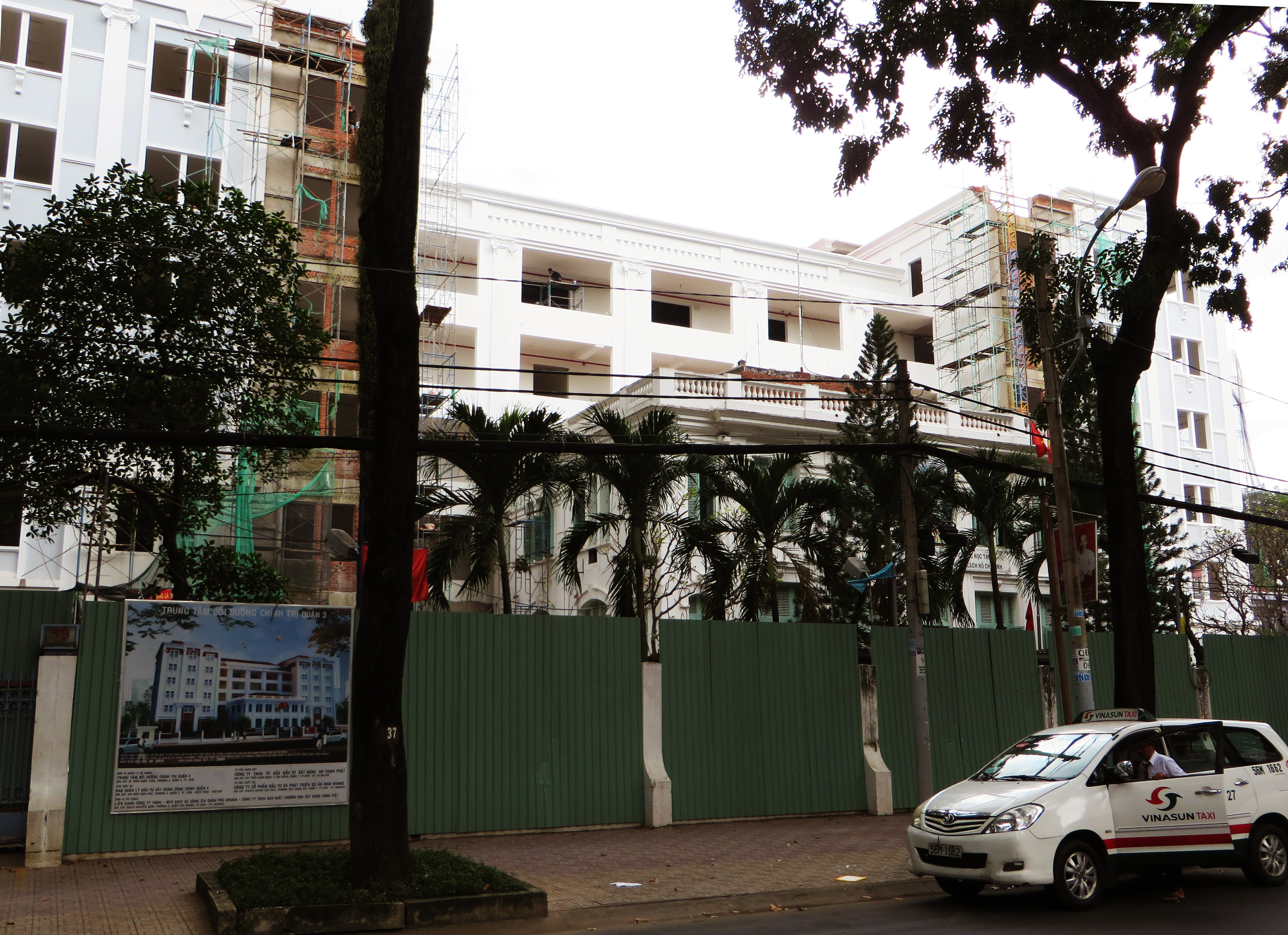
At the time of writing, a new office block is under construction immediately behind the old mansion. While it is perhaps not one of the most attractive or sympathetic examples of a historic building being retained and incorporated into a new development, this scheme has at least preserved the original building intact.

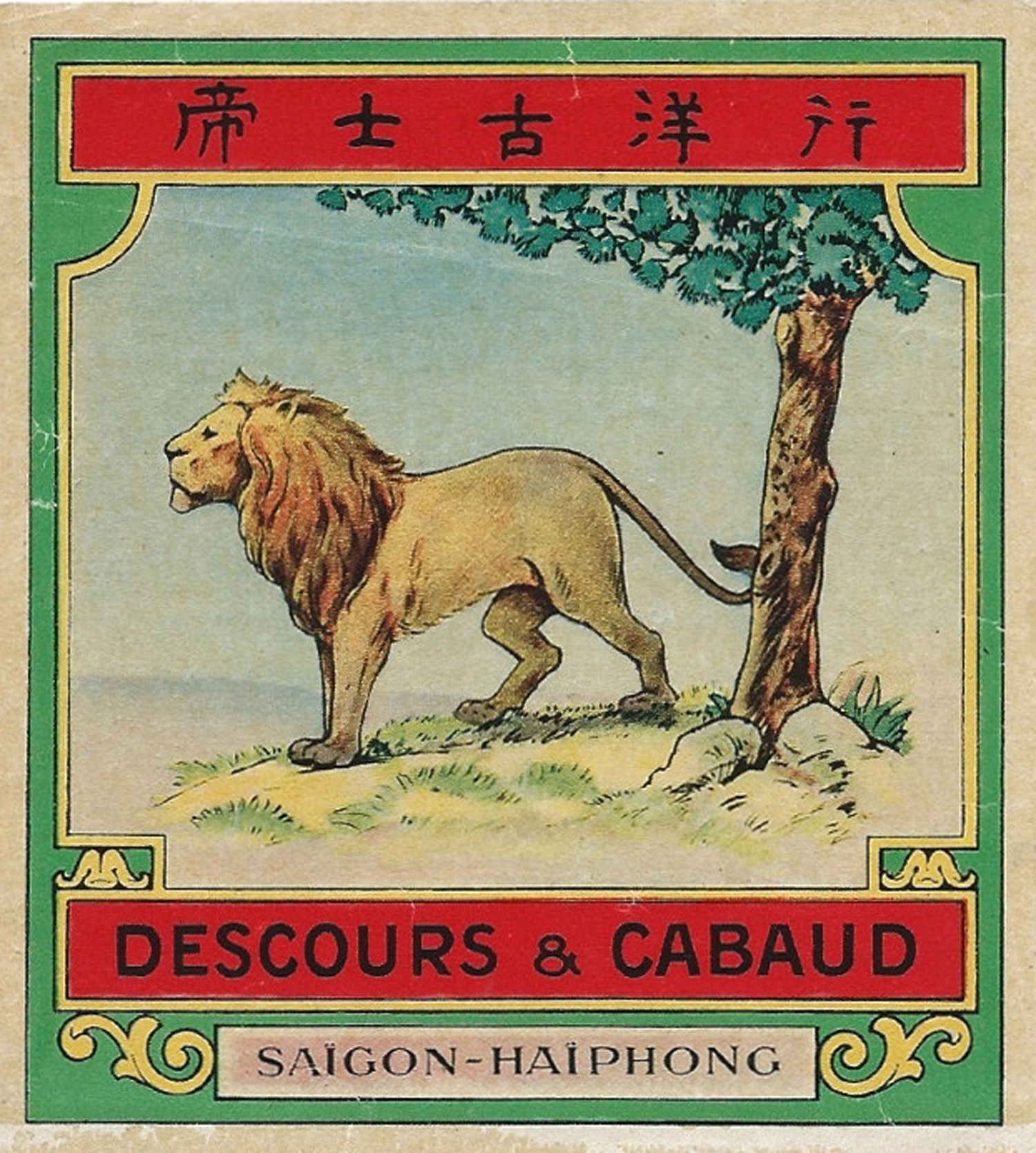
Descours et Cabaut ad

A Chinese advertisement for Descours et Cabaud.

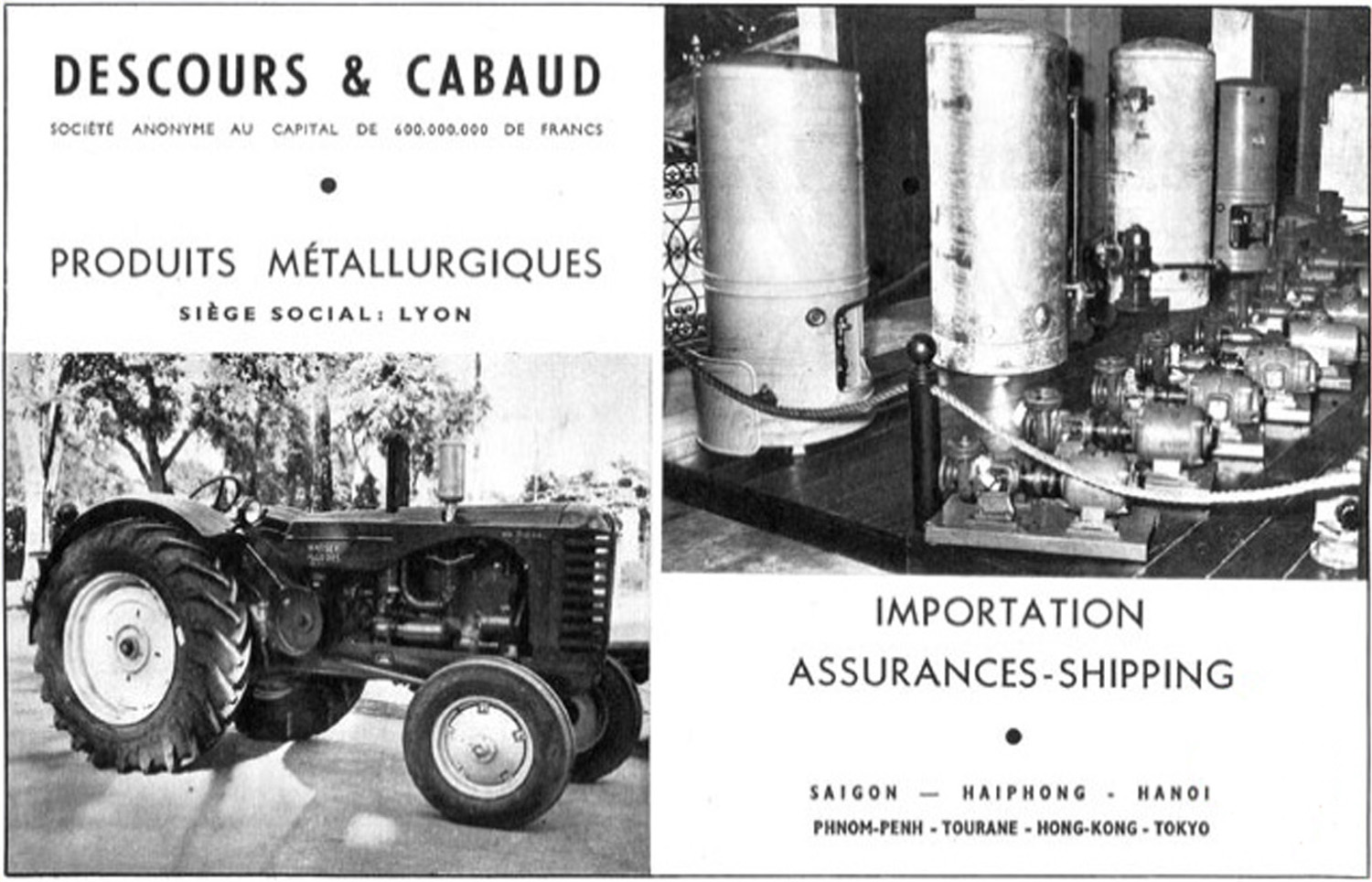
Descours-cabaud

More Descours et Cabaud promotional materials.

IMG_4717

An office building is currently being constructed behind the former Descours et Cabaud executive residence.

IMG_4721

Another view of the office building currently being constructed behind the former Descours et Cabaud executive residence.

Tim Doling is the author of the guidebook Exploring Saigon-Chợ Lớn – Vanishing heritage of Hồ Chí Minh City (Nhà Xuất Bản Thế Giới, Hà Nội, 2019)

A full index of all Tim’s blog articles since November 2013 is now available here.

Join the Facebook group pages Saigon-Chợ Lớn Then & Now to see historic photographs juxtaposed with new ones taken in the same locations, and Đài Quan sát Di sản Sài Gòn – Saigon Heritage Observatory for up-to-date information on conservation issues in Saigon and Chợ Lớn.

Saigon Through the Eyes of Early Travellers – Leon Caubert in 1887

218_001

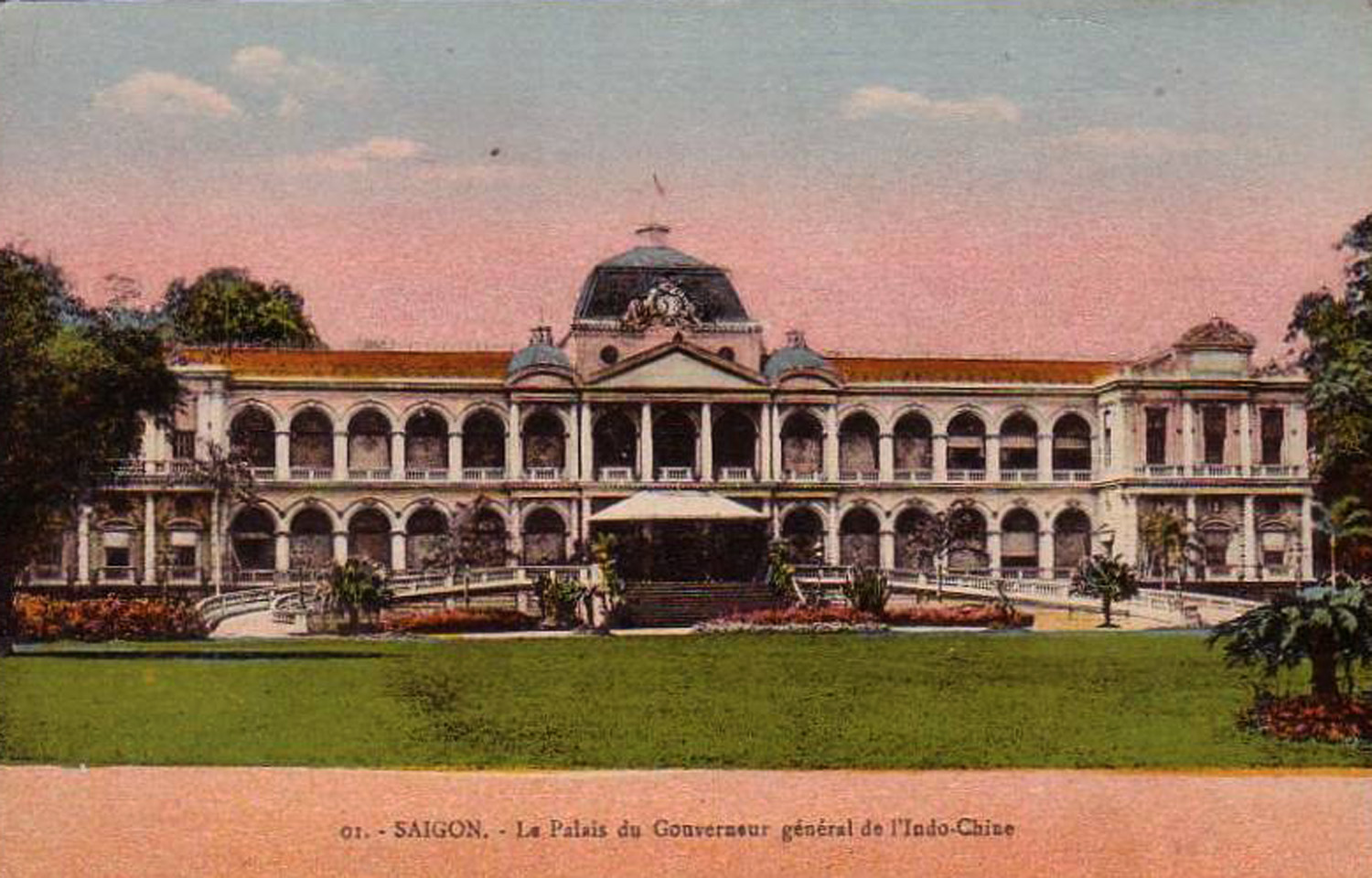
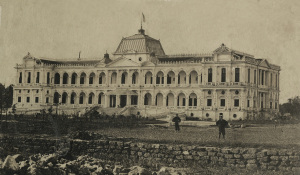
The Palace of the Government, built from 1868 to 1873

In August 1887, Léon Caubert, a member of an official French delegation to China, made an overnight stop in Saigon to attend a grand ball hosted by the Governor General of Indochina. This translated excerpt from his 1891 book Souvenirs chinois (“Chinese Memories”)  describes his very brief stay in the Cochinchina capital.

On 12 and 13 August 1887, we were lucky to cross the Gulf of Siam without heavy seas. Just a few months later, the unfortunate Japanese battleship Unebi was lost here, body and soul.

Phare de Cap Saint Jacques

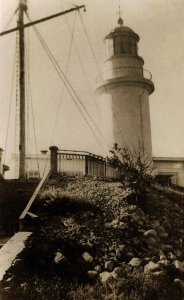
The Cap St-Jacques lighthouse

The heat had now become much more tolerable, and on the evening of 13 August, when at about 7pm we saw the lighthouse at Cap St-Jacques [Vũng Tàu], we were almost ready to accuse those geographers who describe Cochinchina as a hot country of exaggeration.

Following a brief report from the Cap St-Jacques semaphore office, which shares with an English telegraph company a hut on a wooded and tiger-infested outcrop, we saw a small steam boat arriving alongside the Natal. It was a launch belonging to a senior official from Saigon, who greeted the Deputy Special Envoy and welcomed him on behalf of Governor-General Filippini (20 June 1886-22 October 1887, died in office).

The Natal had to stop completely and was moored off the coast of Cap St-Jacques to await the high tide. The main thing I remember from that night was the violent discussion which ensued among my companions about the special breed of dog which inhabited the island of Phú Quốc. It concerned whether or not the hair of these animals grew in reverse, that is to say, whether their hair was not planted in the direction of their heads, instead of in the direction of the tail! This important question raised waves of bile and provoked such fury that it took nothing less than all-powerful intervention to restore calm!

Plage du Cap St-Jacques - pêcheurs

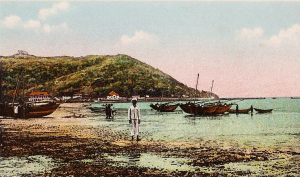
Fishermen on the beach of Coconut Bay, Cap St-Jacques

The peak overlooking the lighthouse at Cap St-Jacques is separated from the mainland by a depression whose edges form a cove called the Baie des Cocotiers (Coconut Bay). This is the favourite seaside resort of Saigon, and one of our river pilots, M Arduzer, ran a little hotel there. If one stays at this resort, the sound of tigers may be heard all night, and of course, these animals won’t be afraid to pay you a nocturnal visit! But never fear, because at the Cap, one of the main occupations of the post of Annamese riflemen is to guard against these striped creatures.

Finally, at just the right time in the middle of the night, we began our journey up river towards Saigon. On the way, we passed two small gunboats descending the river with reinforcements for our troops, who had been sent to suppress an insurrection on the borders of Annam. Aboard one of these gunboats was a Phu (a type of native prefect) who, judging by the reputation he has earned carrying out various repressions, did not have a tender heart.

Une Vue Sur La Riviere De Saigon, Saigon, Vietnam, Asia, 1900-1910s

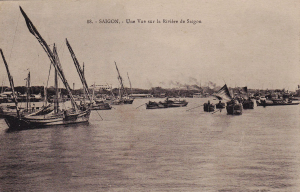
A view of the Saigon river

The next day we were awoken by a cannon shot, the only salute we received during our entire journey, signalling that we had arrived in Saigon.

Turning my head to the window without leaving my bed, I looked out at the banks of the river. It was very flat alongside the water, with mangroves and some bamboo. Nothing particularly exotic, except for some small Cochinchina oxen and some rather cranky wild buffalo.

I made my way quickly up onto the deck. The scene awaiting us was much more interesting than that which one sees on arrival in France, with large clumps of trees and tall buildings, mills and rice warehouses. We went ashore, walking slowly but agreeably; even for those people who had not suffered seasickness on the journey, it was a great physical rest not having to fight against the constant movement of the ship.

A steamer similar to ours, but smaller, was moored nearby. It belonged to the Tonkin and Annam authorities. As we walked a few hundred metres further, past the quai des Messageries, we made out two smart Landaus with four horses, a Daumont and a Victoria; the presence of these carriage crews indicated to us that the Governor General himself had come to meet the head of our mission.

Saigon - Le pont des Messageries Maritimes

The Maison Eiffel’s pont des Messageries maritimes (1882)

Then indeed we saw M Filippini himself, along with his aide and his secretaries. After the usual exchange of pleasantries, we boarded our carriages, which took us at a trot to the Palace of the Government.

We crossed a magnificent single-arch iron bridge [the Maison Eiffel’s pont des Messageries maritimes], which was built over the arroyo Chinois [Bến Nghé creek] at the time when M Le Myre de Villers was Governor. We travelled along the quai du Commerce [Tôn Đức Thắng street], rue Catinat [Đồng Khởi street] and into the place de la Cathédrale, then took the wide boulevard Norodom [Lê Duẩn street] to the Palace. As we passed through the front gate, the Annamite sharpshooters on duty there presented arms in salute.

In all, our first impression was very favourable. In fact, it would have been excellent, had it not been for the heavy and humid atmosphere. But it’s precisely because of this difficult climate that we must admire all the more the enormous efforts which have been made and the results which have been obtained here.

10 Cathedral square

Cathedral square at the top end of rue Catinat

Let’s not forget that our city is less than 30 years old; in another 30 years, if the improvements continue, if wise and timely administrative measures are taken, Saigon will be a great and beautiful city which will form a whole with its suburb of Chợ Lớn and may be home to more than one million people.

As in Singapore, the Chinese issue is very important here in Saigon, especially since most of the Chinese who have settled here in recent years are Cantonese, that is to say active and industrious traders. Certainly, we cannot afford to hand the reins of commerce to that population, as they would eventually reign as masters in our country; but we must hold them in respect and always treat them with fairness and scrupulous integrity. This is the safest way to ensure that these hard-working communities are harnessed to our ideas, and to make them, if not love, then at least appreciate, our domination.

Like all official buildings, the Palace of the Government is an imposing building, with a central pavilion, two wings and side pavilions. The central pavilion extends quite far back and forms the front of the great hall, which measures around 15m W x 50m L x 9-10m H. The other salons – the dining room, the atrium, the vestibules and the private apartments – are in keeping with the grandness of the building, but the number and dimensions of rooms is actually smaller than one first imagines, because on each floor of the Palace, the rooms are surrounded by a 4m wide verandah. The interior decor is modern, but not too heavy and quite tasteful.

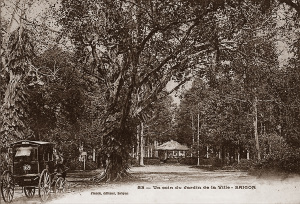
Saigon - Un coin du Jardin de la Ville

A cormer of the Jardin de ville in Saigon

Lawns extend all around the palace and merge partially with those of the largest municipal park in Saigon, which bears the modest name Jardin de la ville (City Park) – although this does not prevent it from being a very nice place to walk, rich in high trees and intersected by wide avenues. We must not confuse the Jardin de la ville with the Botanical and Zoological Gardens, which is located at the other end of the city and is also well designed, well maintained and stocked with many interesting wild animals.

They were very busy at the Palace, making preparations for the ball to be held that evening in honour of the Governor. Gardeners pottered around bearing plants to adorn the rooms, stairs and verandahs; upholsterers removed covers from the furniture and nailed up bunting and strings of flags.

M Filippini had invited us to join him for dinner before the ball. Some of our party decided to return to the Natal first, in order to take an afternoon nap, but I preferred to make the most of my visit by taking a trip to Chơ Lớn on the steam tramway which operates a half-hourly service between Saigon and its Chinese suburb. The price of the trip was 12 cents per person (approximately 45 centimes, the piastre is thus worth 3.80 Francs).

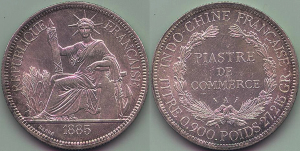
French_Indochina_Piastre_1885

French Indochina piastre de commerce coins, 1885

The Paris Mint manufactures, especially for French Indochina, silver coins in denominations of 1 piastre, 40 cents, 20 cents and 10 cents, and bronze coins in denominations of 1 and 2 cents. The effigy on these coins is that of the Great Seal of France [featuring Liberty personified as a seated Juno wearing a crown with seven arches], holding in his right hand a fasces, but with a relatively simple background.

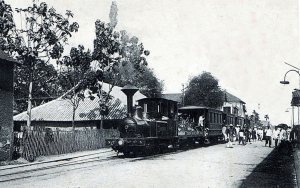
It took 35 minutes to make the tram journey across a barren plain from Saigon to Chợ Lớn. The pace was fast enough, and I was told that in the evenings, many Saïgonnais take the tram in order to enjoy the cool breeze sitting next to the open carriage windows.

The price of horse-drawn carriages in Saigon is very moderate indeed: 30 cents for a single journey, 40 cents for an hour, 2 piastres for a day; they can also take you to Chợ Lớn, but on this day there was no question of making the journey by horse-drawn carriage, because nearly all of them had already been hired for the Governor General’s ball.

5 SGTVC No 3 'Le Myre de Vilers' pictured on a Sài Gòn-Chợ Lớn 'High Road' tramway service in 1905

A Sài Gòn-Chợ Lớn ‘High Road’ tramway service arriving in Chợ Lớn

The city of Chợ Lớn has more than 80,000 inhabitants, most of them Chinese. It is clean, with wide and well surfaced streets and sidewalks where Annamite and Chinese shops mingle fraternally. They are open 24 hours a day and their counters, which contain no displays of goods, open directly onto the street; products for sale are stacked behind in semicircular rows.

Here we can see many weavers and manufacturers of cabinets made from camphor wood. Merchants also sell fabrics and items of hardware from all over the world, including England, Germany and America as well France.

In Chợ Lớn, I was taken to visit the residence of the native prefect, the Phu of Cholon [“Tổng Đốc” Đỗ Hữu Phương, see Dinner with the “Tong Doc”] a well known personage in Cochinchina who is entirely familiar with our customs.

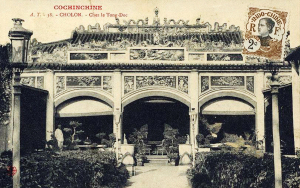
IMAGE 6

The family temple and “antiques museum” of the “Tổng Đốc” Đỗ Hữu Phương’s residence in Chợ Lớn

The interior of his residence is furnished partly in European and partly in Annamite style; his indigenous furniture, made from precious wood inlaid with mother of pearl, is very beautiful. I was told that some pieces had been sent to France and placed on display in our 1878 Exposition.

During my return journey to Saigon, I was struck by the colossal and imposing dimensions of the new Palais de justice (Central law court), which resembled a Greek temple.

The administrative services of the colony are centralised under the Direction of the Interior, which occupies several well-constructed buildings on rue Catinat, all of them perfectly adapted to the climate.

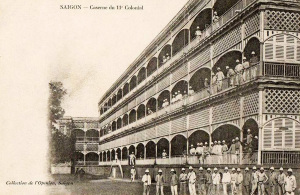
The Marine Infantry Barracks, located in the Citadel (though it is now only a citadel by name), are also very well ventilated; the walls of the barracks are open, allowing fresh air to circulate freely throughout their extent.

Casernes

Part of the Marine Infantry Barracks in the former Citadel compound

Like most residences, all of Saigon’s public buildings have only one or two storeys, always surrounded by verandahs.

In recent years, a Château d’eau (water tower) with steam pumping apparatus was built to guarantee residents a plentiful supply of fresh water.

However two things are still lacking in Saigon – the first is adequate lighting and the second is a dry dock.

In 1887, Saigon was still lit by oil lamps, since attempts to install gas lighting had proved unsuccessful and the technology then available made it impossible to provide electric lighting. It seems that dynamos suffer almost as much as men from the humidity which prevails almost constantly here in Cochinchina, inducing oxidisation with surprising speed. However, it must be said that, although the city is still lit by oil, the quantity of Saigon’s street lights makes up for their quality.

As for the dry dock, this kind of installation is still rare everywhere, even in Europe. You may think, therefore, that it is even more rare in East Asia and Australasia. However, ships of more than 100m in length may already be refitted at dry dock facilities in Sydney, Australia, and at Kowloon docks in Hong Kong.

8282243881_eb2da2668f_o

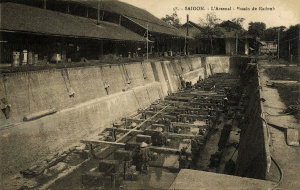
The dry dock which was eventually built in the Saigon Naval Arsenal

At the present time, our authorities in New Caledonia are lobbying to build a dry dock facility in Nouméa for the French fleet in the Pacific.

Here in Saigon, in 1881, instead of a dry dock, we installed a floating dock made from iron. However, this installation was short-lived: inaugurated during the course of August, it sank on 1 September 1881!

Yet, with an expenditure of about one million (not including machinery, pumps and sluices, of course), using modern methods of construction (the Monier reinforced concrete system, for example), we could very easily construct a large and perfectly waterproof basin. Surely it would be much more useful to build it here in Cochinchina, rather than in New Caledonia!

I had intended to head straight back to the Natal to get ready for the ball, but I suddenly remembered the recommendation made to me by a fellow traveller to change my French money to piastres during my visit in Cochinchina.

59 Banque de l'Indochine 1

The original Banque de l’Indochine building on quai Belqique (now Võ Văn Kiệt)

Arriving in Saigon, travellers coming from Europe and continuing to China will certainly benefit by changing gold or European banknotes for piastres; but it’s important to demand Mexican piastres [the Indochina piastre was initially equivalent to the Mexican peso]. This is because the Mexican piastre is always worth less in Cochinchina than in the Chinese ports, and the difference in rate increases gradually as one moves northward. So, by changing French money for Mexican piastres in Saigon, you will get a better return later. An exception must be made, however, for Japan, where the piastre exchange rate is usually very low.

At 7.15pm we were sitting on the first floor verandah of the Palace of the Government. The street lights illuminating Norodom Boulevard stretched into the distance in four long lines and their perspective was very reminiscent of the Champs Élysées.

The dinner, served in French style, was as good as one could expect in Cochinchina, where fresh vegetables, in particular, still leave much be desired.

Norodom Palace i

Another early view of the Palace of the Government

Since the advent of the civil governors, the tone of the Palace has declined significantly, but one cannot blame this decline of representation on the officials who have succeeded to this high office. Both Army and Navy officers benefit from a wide range of facilities and can subsist easily on a salary of 100,000 Francs, but such facilities are completely lacking for the civil servant, who costs us twice as much. From this point of view, many regret the replacement of admiral governors by civilian governors.

As we returned to the verandah for coffee, the guests began to arrive for the ball, the thousand lanterns of their carriages descending at full trot along boulevard de Norodom. It was just like the Place de la Concorde on summer nights, when carriage crews bring day trippers back from the Bois de Boulogne.

All the verandahs and all the rooms of the palace were illuminated. Through the bay windows of the atrium, we saw the great hall sparkling in understated detail, as bright as the grand ballroom of the Foreign Office in London, to which it also approximates in dimensions.

10421605_10152104682832191_943833589807650162_n

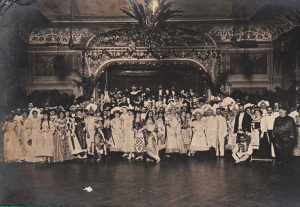
Guests attending a ball at the Palace of the Government

The official procession advanced into the great hall, and on the entrance of the Governor, the marine infantry band, located on a platform near the door, struck up the opening bars of the Marseillaise.

All around we saw many military uniforms and a plethora of pretty female costumes, and by the time the ball was in full swing, some 700 or 800 people were milling around the various salons of the palace.

Among them we saw the Phu of Chợ Lớn, very correctly dressed in a long black coat with an almost imperceptible red rosette, and wearing his badge of office, a white silk sash embroidered with gold. He was accompanied by his wife, Madame Prefect of Chợ Lớn, and his daughters; these ladies were surrounded by Europeans and natives who commented enthusiastically on the richness of their national costumes.

Gaming tables had been set up in several salons, and the card game Écarté was all the rage, with guests pitting piastres against Bank of Indochina notes in a frenzied dance.

5219617603_e00ef8981d SAIGON - palais de justice_O

The Palais de justice

Under the verandahs roamed groups of Annamite scholars and indigenous performers; they stopped occasionally to roll cigarettes at tables loaded with mountains of tobacco and piles of cigars, or to sample the food from the well-stocked buffet tables.

It was past 2am when we finally returned to the Natal in a carriage which a councillor had kindly placed at our disposal.

On the way back, the deep blue of the night sky was of unparalleled transparency; the moonlight reflected off the dusty roads and illuminated the colonnades of the Palais de Justice so vividly that the building appeared to be made of marble – a true Parthenon, which contrasted sharply with the surrounding clutter of dilapidated huts and pagodas with fantastic roofs.

As we approached the quayside, we heard the familiar drone of the mosquitoes, and so we went without lights into our cabins, so as not to attract those nasty insects. With this precaution, they left us almost alone.

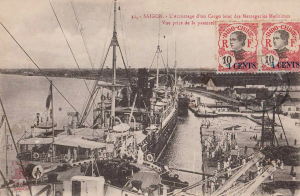
Saigon - L'accostage d'un cargo boat des Messageries Maritimes

Unloading cargo from a ship at the quai des Messageries maritimes

A few hours later we were awoken by the last unloading of luggage from the Natal.

As I ascended onto the deck, the first person I met was our friend de Clamart, who was leaving us to go to Hà Nội.

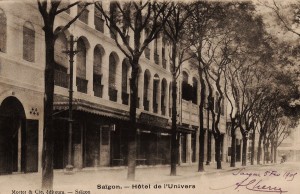
“Did you find a good hotel last night?” I asked him. “Yes,” he replied, “They advised me that I should choose ‘the Hôtel Laval for sleeping, the Hôtel de l’Univers (Ollivier) for eating.’ But I must leave you now, because I have to go and make sure they transfer my furniture carefully.”

Just at that moment, a huge crate was hoisted precariously into the air by crane. “That crate contains my wardrobe,” said my companion, “I must go down to the quayside to receive it!”

De Clamart had hardly completed that sentence, when the crate became detached from the crane and fell heavily onto the deck of the ship with a terrible crash of breaking glass and splintering wood. It was painful to see the desperation of its owner, who had turned around just in time to witness this disaster. “I had a premonition that this might happen,” he muttered with a sorry air. “Bah!” replied one phlegmatic witness, “There’s no need to complain – the company will pay! Console yourself!” And indeed, this comment seemed to comfort my stricken friend.

Shortly before high tide, the Natal raised anchor and began its journey back down the Saigon River.

Tim Doling is the author of the guidebook Exploring Saigon-Chợ Lớn – Vanishing heritage of Hồ Chí Minh City (Nhà Xuất Bản Thế Giới, Hà Nội, 2019)

A full index of all Tim’s blog articles since November 2013 is now available here.

Join the Facebook group pages Saigon-Chợ Lớn Then & Now to see historic photographs juxtaposed with new ones taken in the same locations, and Đài Quan sát Di sản Sài Gòn – Saigon Heritage Observatory for up-to-date information on conservation issues in Saigon and Chợ Lớn.

Life in Saigon, 1868-1870, by M A Petiton

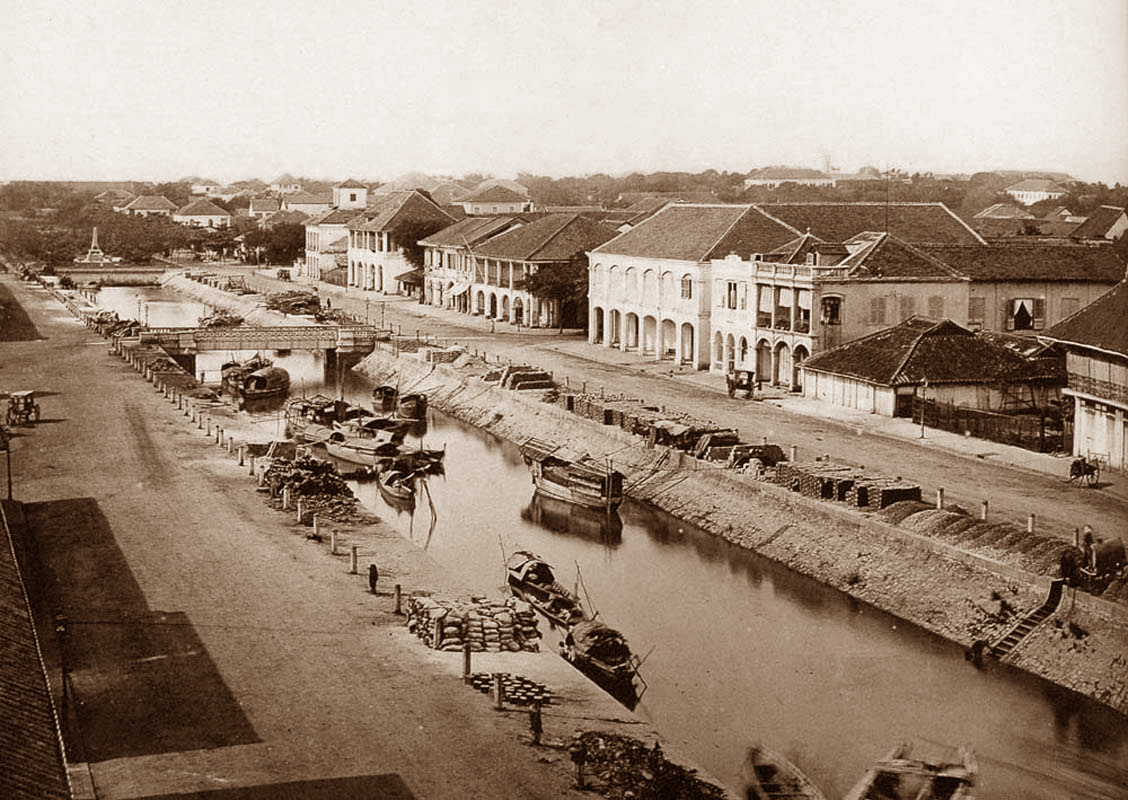
44 Boulevard Charner 1882

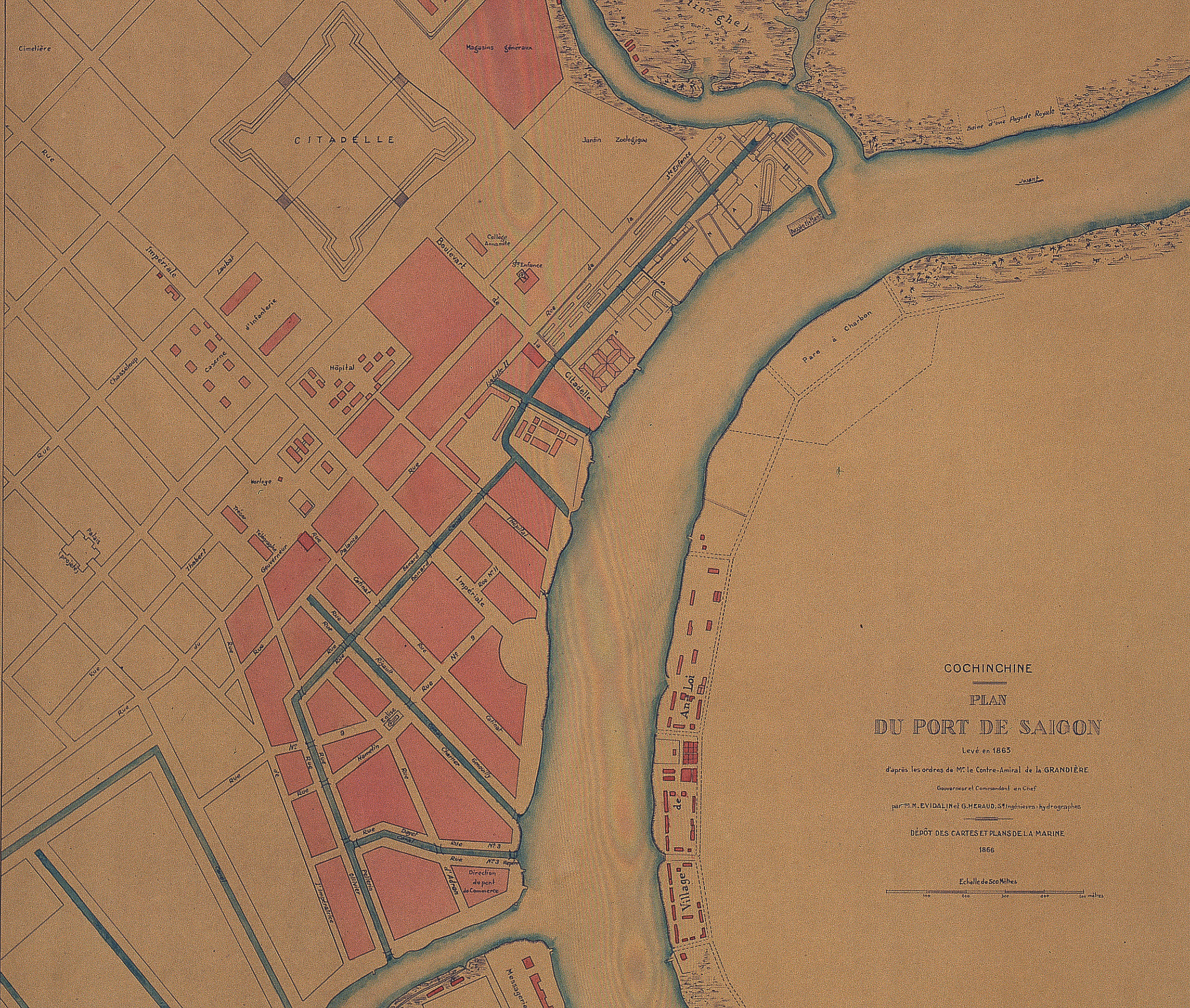
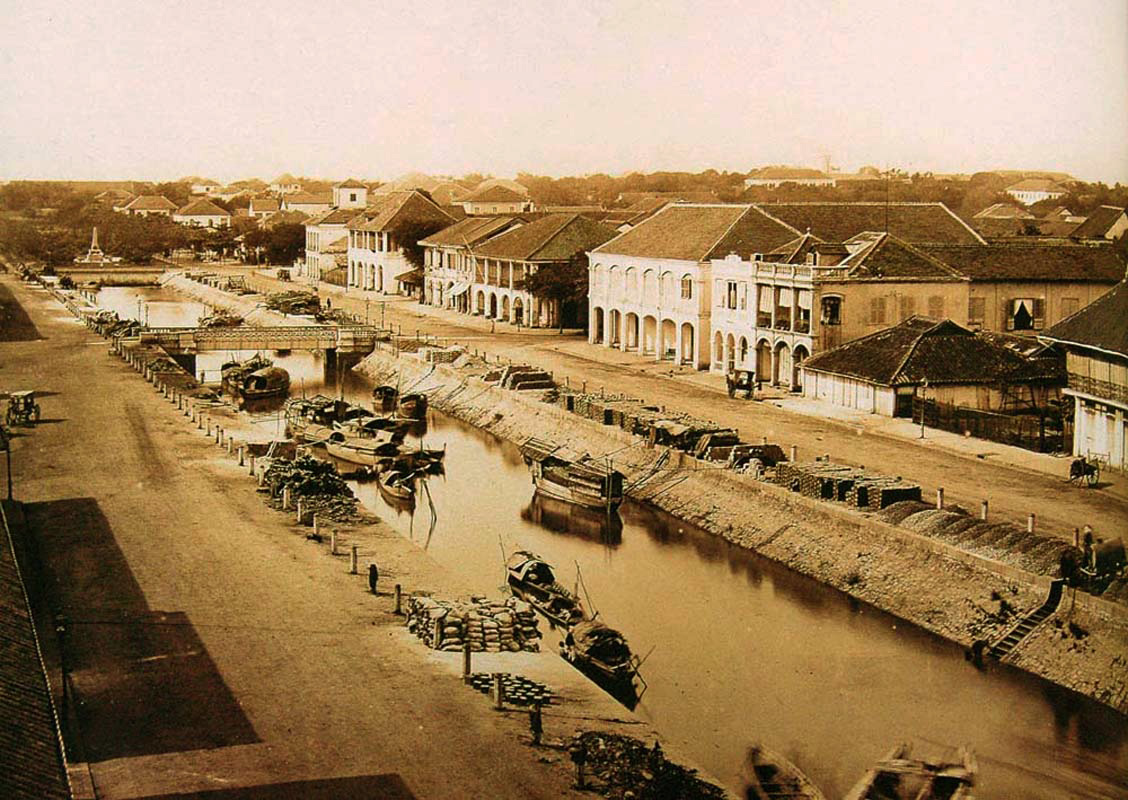
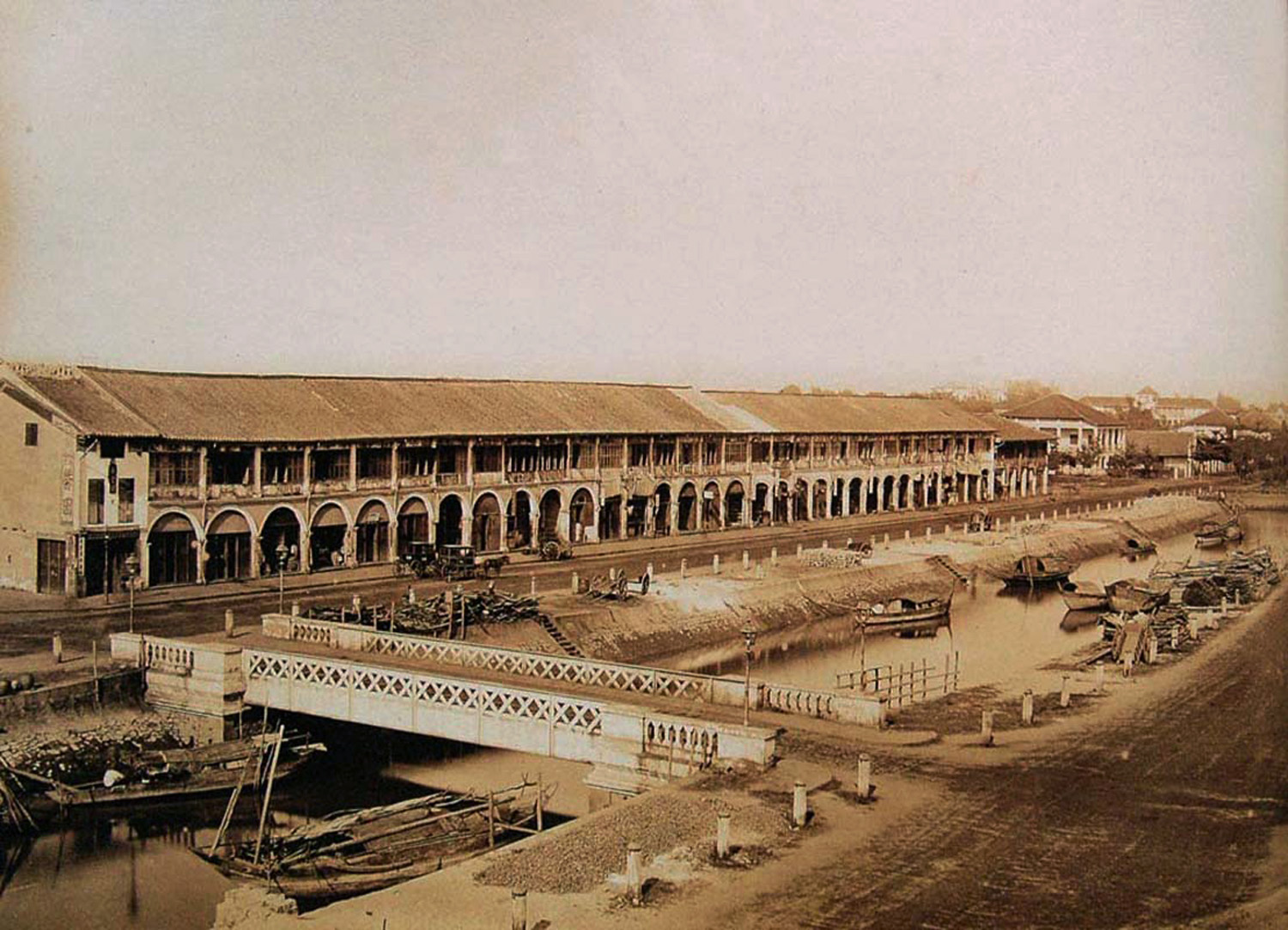
By the time Emile Gsell took this photograph of the Grand Canal or Canal Rigault de Genouilly in 1882, all except its lower section leading to the city market had been filled

This is an excerpt from a lecture delivered before the Geographical Society of Lille on 3 March 1883 by M A Petiton, a mining engineer from La Grand-Combe in Gard (Languedoc-Roussillon) who was recruited by the administration of Rear Admiral de la Grandière as Chief Engineer of the Cochinchina Mines Service to carry out geological and mining studies throughout Indochina. In the event, by the time of his arrival in October 1868, de la Grandière had died and funding for geological exploration had been cut drastically by the new administration of his successor, Rear Admiral Ohier (5 April 1868-11 December 1869). Rather than being sent back to France, Petiton was forced to remain in Saïgon until 1870 “with only the financial means for insufficient actions,” continuing his geological studies largely at his own expense. His disillusionment with the colonial authorities in Saïgon is evident in much of his writing.

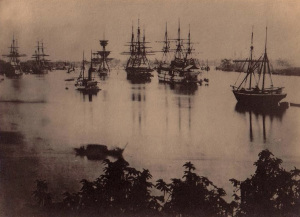
1868

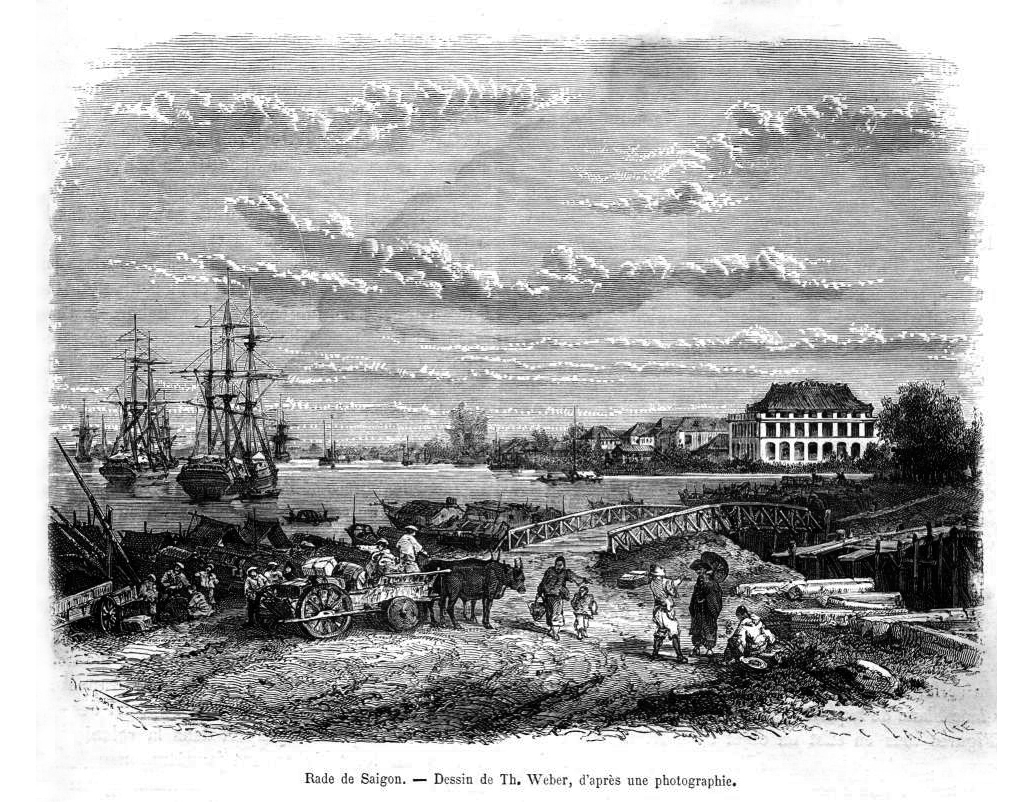
Saigon harbour in the late 1860s

The general appearance of Cochinchina, when you arrive by sea off the coast of Cap St-Jacques [Vũng Tàu], fills one with sadness. This is due to several different features of the country itself; however, I think that this first impression has a lot to do with the very low elevation of the coastline; as he arrives, exhausted after a long journey, the earth seems to flee in front of the passenger’s eyes. With the exception of the small mountains around Cap St-Jacques and the general massif of Baria on the right, you can see only low, marshy land, hardly distinguishable from the sea.

The journey up river to Saïgon hardly does much to reduce this feeling of sadness, with its monotony of river banks covered with mangroves. It seems almost as if there is no land in this country, that its entire surface is swampland!

When arriving in Saïgon, the first question one asks is: where is the city? When I first arrived, I asked seriously which side of the river it was on. I must say, and I was not the only one who had this impression, that at first sight Saïgon seemed a dismal place. Apart from a few large buildings – the Messageries nationales, the famous Maison Wang-taï, and four or five cafés along the waterfront – there was not a lot to see.

Plan Coffyn 1862

The Projet de ville de 500.000 âmes à Saïgon of 30 April 1862 by Lieutenant Colonel Paul Coffyn

We anchored in front of the Arsenal, that’s to say beyond the city.

I came ashore in light rain, under the cover of a grey sky. I walked past the general stores of the Navy, making my way from the dock to the place du Rond-point [now Mê Linh square].

Saïgon felt to me not like a city, but rather like a sketch of a city.

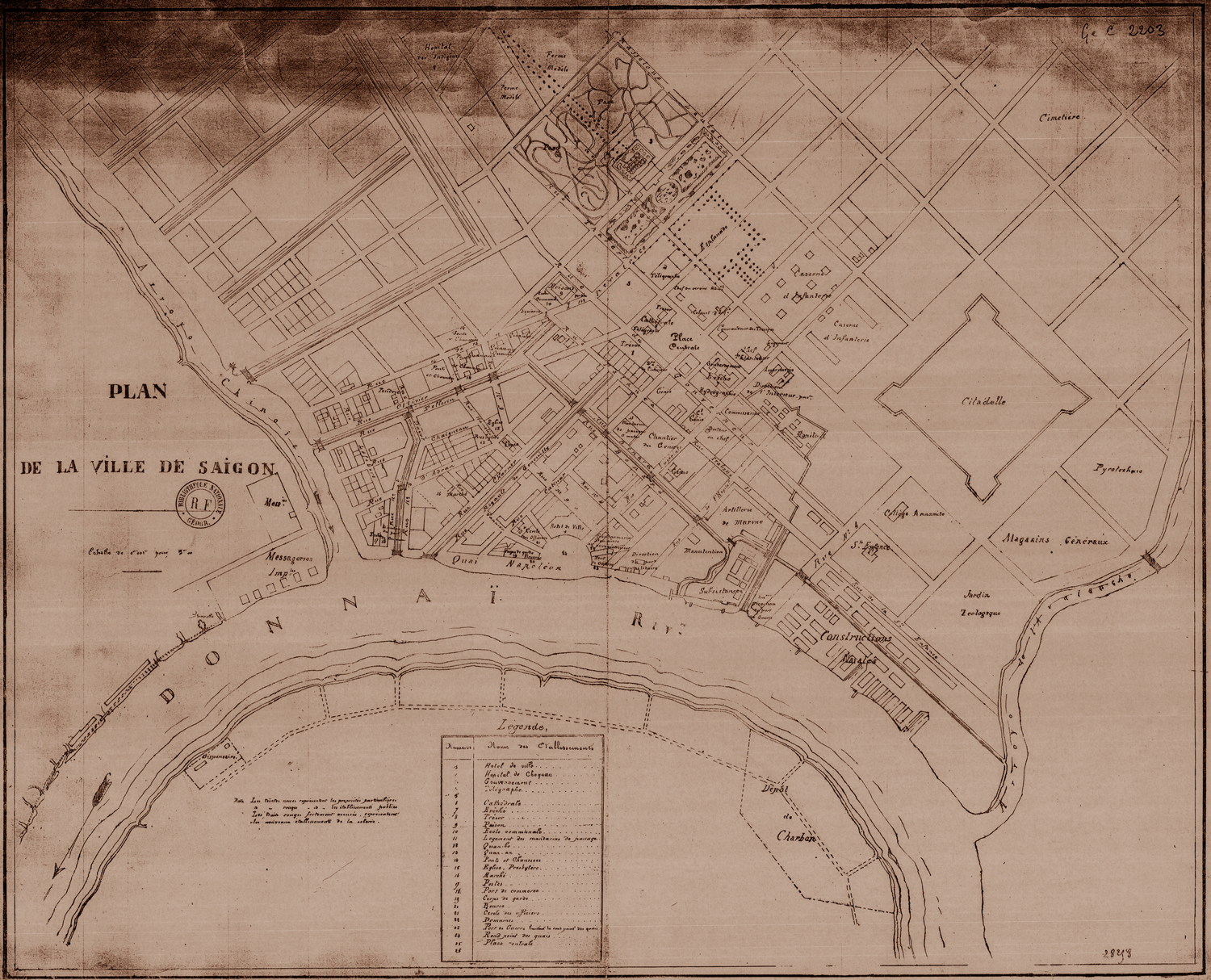
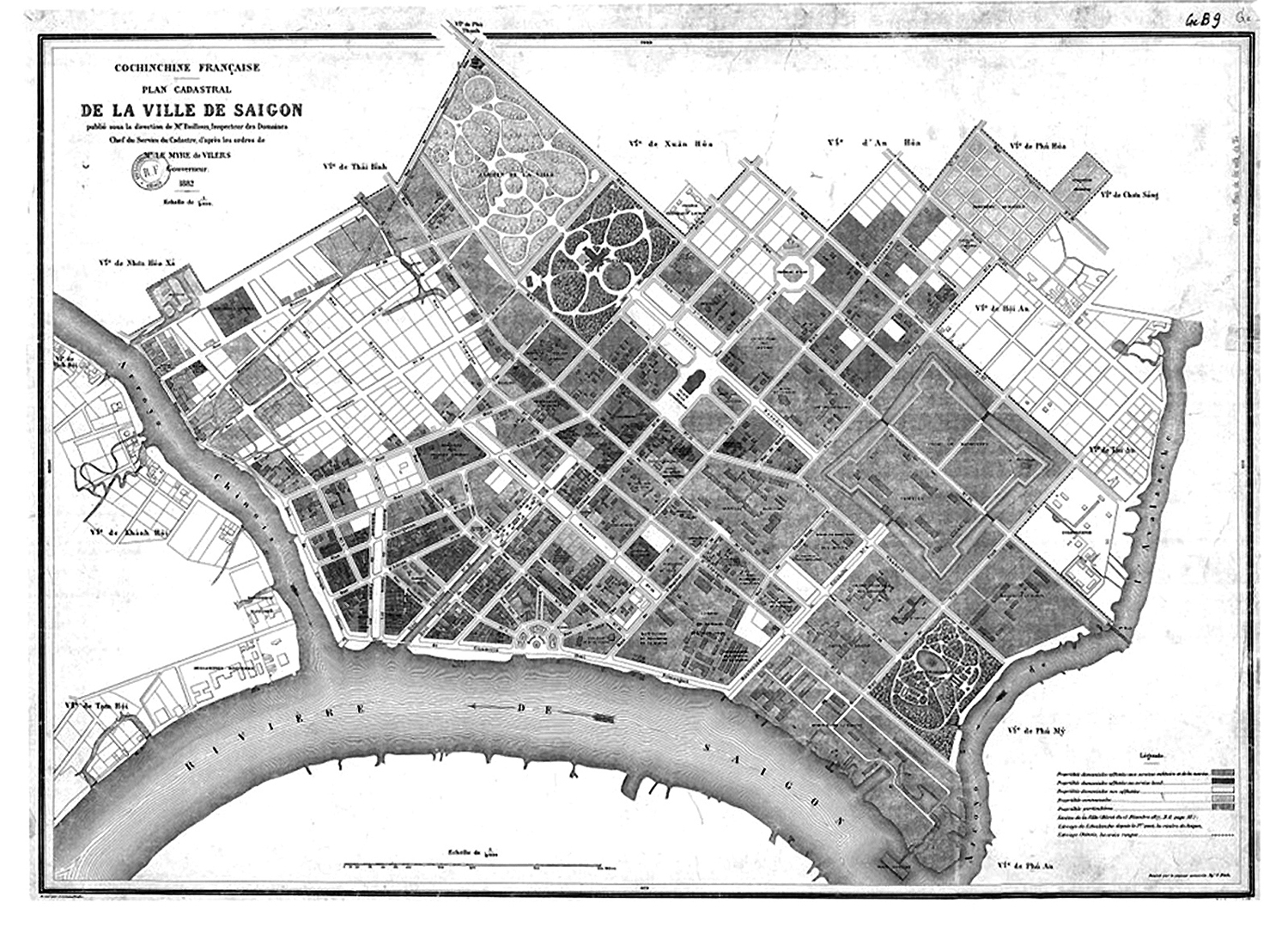
Indeed, I was not wrong to say this, because some years earlier, a French officer with unlimited confidence in the future of the colony drew up a plan of the layout of the capital of Cochinchina for a future population of 500,000 souls [the Projet de ville de 500.000 âmes à Saïgon of 30 April 1862 by Lieutenant Colonel Paul Coffyn of the Marine Engineering Corps Roads and Bridges Department]. In this plan, Saïgon stretches out for several kilometres over marshy land. The officer drew long lines at an angle of about 45° from the river, along with a series of other perpendicular lines which met the others; thus was the city drawn.

As I walked, I saw a number of caïnhas [the word used by the French for a local house, from the Vietnamese cái nhà] looming out of the mud. The caïnha is a horrible construction built by the Annamites, with a low roof and burning tiles that reflect heat from the sun by focusing it on your heads.

111 La premiere residence des Gouverneurs a Saigon 1

A drawing of the first governor’s palace from the 1931 book Iconographie historique de l’Indochine française (1931)

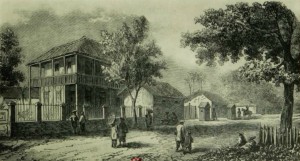
It was right in the midst of these caïnhas that we built our first Governor’s palace, a temporary wooden building with a large reception room in the shape of a barn. At that time I felt that the building was perfectly adequate for our colony.

Since then, at enormous expense, we have built the Messageries building, which is separated from Saïgon by the arroyo Chinois [Bến Nghé creek]. A Chinese known throughout Saïgon, named Wang-Taï, also built a large colonnaded house on the quayside between the arroyo Chinois and the Grand arroyo [modern Nguyễn Huệ boulevard]. The location of this “Maison Wang-Taï” [the structure rebuilt in 1887 to a design by Alfred Foulhoux as the Customs House] is regarded as the centre of Saïgon. It has two floors with verandahs and contains the Town Hall, the residence of the Mayor, who is truly the best accommodated official in Saïgon, a post of the Central Police Station and the office of the Secret Police (a new institution created in Saïgon).

Another organisation based here is the Grand cercle, which counts among its members almost all of the officials and naval officers in Saïgon and a small number of marine infantry officers, but very few traders. This is because the traders have their own Cercle du commerce, which is less important than the Grand cercle.

47 Maison Wang-Tai

The Maison Wang-Taï

Almost the entire first floor of the Maison Wang-Taï facing the arroyo is occupied by the Grand cercle. In the evening one can see light gleaming from the windows as the regulars play cards or walk along the veranda, smoking; this is about the only thing to do in the city when night falls, and many Europeans may be found here.

Next to the maison Wang-Taï, there is a canal several hundred metres long, which runs perpendicular to the river [the lower end of modern Nguyễn Huệ boulevard].

The construction of new masonry walls alongside this canal cost a great deal of money. It seems that we attach great importance to the completion of this canal for the unloading of cargo brought by different Annamite ships. However, I would be very happy to hear the considerations that led to the execution of this expensive work, as I fear that because of constant silting, the upgraded canal will not serve us as well as we would be entitled to expect.

SAIGON - Rue Charner

Another view of the Grand Canal or Canal Rigault de Genouilly

This canal is called the Canal Rigault de Genouilly (after the Navy Minister, Admiral Rigault Genouilly, who was one of our first Cochinchinois); it is bordered on the right by European and some Chinese and Malabar houses, and on the left by Chinese houses, the main city market [1870-1914] and a number of Chinese shops.

The canal once continued further, but it now ends near the church. However, the filling of the upper end of the canal was carried out imperfectly, and it currently forms a swampy rectangular square, lined with houses!

On the left side of this rectangular square is a bowling centre. So that I don’t have to mention it again, I will briefly describe this game of bowling, which is played mainly in the English colonies, usually in the evenings.

The bowling centre is a large rectangular hangar, about 4 metres in width, which contains two parallel polished bowling alleys, separated by a channel. The servant boys place skittles at the far end of each alley and the players stand at the other end, using just one hand to roll a huge ball along the alley with the aim of knocking down the skittles. The balls roll quickly and can cause havoc with the skittles.

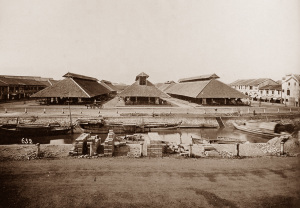
66 Boulevard Charner market

The second central market (1870-1914) on the Grand Canal

However, if the player is unlucky, or has no skill, the ball will simply roll down a slope into the central channel. The servant boys return the balls to the players and also keep their scores using a kind of large polygonal glass lantern with numbers, illuminated by coconut oil. This scene takes place amidst the noise of rolling balls, scattered skittles and the general hilarity of the young German and English regulars, who greatly enjoy this entertainment.

What shall I say of the church? Nothing. This building [the Église Sainte-Marie-Immaculée, inaugurated on 8 June 1865 on the site of the modern Sun Wah Tower at 115 Nguyễn Huệ] is just a temporary church; part of the central nave closest to the chancel is reserved for Europeans and is equipped with chairs. The rest of the building has wooden benches. The church bell is mounted on a frame. Outside the building, not far from the church, is the presbytery, which I believe is the special property of the priest.

At the moment they are building a new cathedral near the government palace, along with a palace for the Bishop, an old cleric who has already lived in Indochina for nearly 30 years.

74A Old Cathedral

The inauguration of the Église Sainte-Marie-Immaculée on 8 June 1865

We can only hope that he will still be alive to profit from this good administrative intent, because, as he himself has said, he does not have the time to wait.

Leaving the filled upper section of the canal and walking up towards the Governor’s Palace, we pass two or three large European houses, the office of the Directorate of the Interior and the residence of its Director, the Treasury, the Post Office, the General’s residence, and finally the Governor’s Palace itself.

Nearby are the Marine Infantry Barracks, located in the former Camp des lettrés [the Trường thi or royal mandarinate examination yard, which once stood outside the citadel], the Military Hospital and the Artillery Barracks. I have little to say about these places, other than that conditions for patients in the hospital are as bad as those for the soldiers in the barracks. It is deplorable that the first money we have to spend is not used to improve this state of affairs. We should not have to tell the public that our colony has three main institutions in continuous operation: a barracks, a hospital and a cemetery.

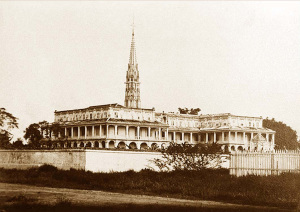
l'Église Sainte Enfance par Emile Gsell c 1866

An 1866 photograph of the original building of the Sainte-Enfance (Holy Childhood), run by the Sisters of the Order of St-Paul de Chartres

Continuing my journey along rue Isabelle [modern Lê Thánh Tôn street] as far as the Botanical Gardens, I come to the building of the Sainte-Enfance (Holy Childhood), run by the Sisters of the Order of St-Paul de Chartres, which takes care of the education of a number of little orphans. The Chapel of the Sainte-Enfance is surmounted by a remarkable steeple, the spire of which can be seen from the Saïgon River, long before you arrive in Saïgon.

We must not forget to point out that there is also a convent of five Carmelite nuns, right next to the Sainte-Enfance.

Further down towards the arroyo are the Arsenal buildings, which are currently under construction.

Above the Sainte-Enfance is the Seminary, and a little further, near the Botanical Gardens, a Christian Brothers school known as the College d’Adran. Finally, we arrive at the Botanical Gardens, located between the Arsenal and general stores of the Navy, close to which is the gunpowder magazine.

Building rue MacMahon i

Road construction outside the new Governor’s Palace in the early 1870s

At the opposite end of town, beside the route de Cholon, are the home of the Attorney General, the Prison and the Central Police Station. The latter is a true monument which cost a great deal of money.

Just a stone’s throw from the Central Police Station, on the same plateau, we get a glimpse of the new Governor’s Palace [built from 1868-1873 and later known as the Norodom Palace], under construction in the middle of a very beautiful park; the structural work of this palace has already been completed. This location is one of the least unhealthy places in Saïgon, being a high plateau about 8 metres above sea level.

Saïgon has two Islamic temples and one Hindu temple. These temples are not very remarkable, but in any case, the Indians do not let us visit them. I think, however, that the argument of the piastre would be taken into high consideration, and would probably permit Christians to tread the sacred ground.

977_001

A scene alongside the arroyo Chinois

To complete this brief review, I will say that there are still some European houses of just one storey; all the rest of the city is composed of miserable caïnhas, which may have killed more people than all of the other numerous natural causes of ill health in this country.

The streets of Saïgon are wide and the ground is muddy or dusty: for tarmac, we substituted a red clay-iron-silicon based material which was certainly a most unhappy choice. In 1869, the authorities introduced watering trucks pulled by buffaloes to reduce dust; trees planted in the streets for the shade are also watered regularly.

In 1869, there was some momentum to build new houses; at least 40 new homes were built in that year, although it’s true to say that many of those houses only replaced crumbling caïnhas. However, this construction fever did not bring any reduction in rents, which are excessive given the poor conditions of comfort of many of the city’s apartment buildings. Small rooms lacking in breadth and height are rented out for upwards of 6 piastres per month. It seems that we build here without worrying about comfort or hygiene, with the aim of making the most money possible, instead of constructing the large and airy residences which are one of the first needs of the country.

La premiere maison de commerce europienne

The first European merchant trader’s office in Saigon

Singapore has much better hygienic conditions than Saïgon. I only spent a day or two there, but everywhere I saw houses with ceiling heights of at least 4 or 5 metres, and huge stairways leading to spacious first floor offices. It is true that such buildings must also be rented out at a high price, but they are safe and designed to facilitate the through flow of fresh air. In Saïgon, the government conceded a great deal of land almost free – just 0.75 francs per square metre – to encourage the agents to build. However, out of 20 concessionnaires, I think that just two have built, while the others have mostly engaged in speculation. That is a game they love here in Saïgon.

Saigon 1864

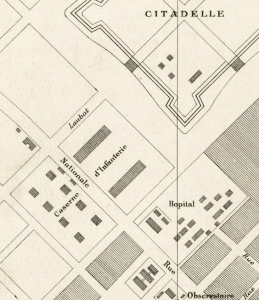
The location of the first Marine Infantry Barracks either side of the rue National (modern Hai Bà Trưng street) is shown clearly on this 1864 map

I spoke very briefly of the Marine Infantry Barracks; this is a depot of 1,000 to 1,500 men who radiate out from this centre to occupy various posts in the colony. However, I have nothing to add to what I said about the barracks, which are completely insufficient in terms of welfare; moreover, they will be demolished soon. If I am correctly informed, the troops will be installed in new buildings which are being constructed in the old Fort du Nord [in 1870-1873, a larger Marine Infantry Barracks was built over the front section of the ruined 1837 Citadel]. The current barracks are located on either side of the road leading to the village of Gò Vấp [modern Hai Bà Trưng street]. A few hundred metres further north along this road is the cemetery, a vast enclosure surrounded by a bamboo hedge. When you live Saïgon, you quickly learn the way to the cemetery.

There also exists in Saïgon a modest but very useful institution: the Municipal Interpreters’ School, the name of which sufficiently indicates its goal.

One other institution which can be considered as a “building” of Saïgon is the stationary vessel Duperré, which houses all those sailors who do not have any specific purpose. The Duperré is a large floating barracks, a most fantastic ship, the history of which is difficult to understand for those who are not initiated into its mysteries.

In front of the Arsenal is the floating dock, a vast sheet metal structure of incontestable utility; however, you cannot but question the exorbitant price it cost to build, as they say back in France. The Arsenal, which is still under construction, is perhaps the most important establishment from the point of view of material. Its director is an assistant engineer first-class who specialises in shipbuilding; he currently has a large staff of many thousands of men. Every night, you can see a procession of Annamites coming out of the gates of the Arsenal and heading in the direction of Gò Vấp. Since the current Arsenal buildings are temporary, it is unnecessary for me to give a description which will be inaccurate tomorrow.

Arsenal de la Marine 1895

The main gate of the Marine Arsenal in 1895

The Navy attaches great importance to the Arsenal of Saïgon, in fact I heard more than one person say that we only keep the colony of Cochinchina in order to provide an Arsenal for our national Navy, a place of repairs for the ships of the state. When it is completed, the Arsenal will include various docks and canals, the establishment of which will cost a great deal of money.

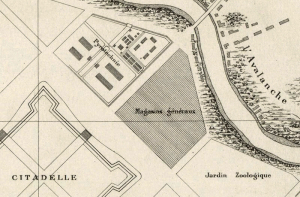
I have one sober criticism to make about the way in which we build our institutions in climatic conditions as difficult as those of Cochinchina. I noticed that all of the wood required in the Arsenal has to be brought from a depot on the other side of the arroyo de l’Avalanche [Thị Nghè creek], and that this takes very considerable manpower. Wouldn’t it have been preferable to build a depot on this side of the arroyo, near the Botanical Gardens?

The general stores of the Navy, whose biggest customer is the Arsenal, are, if I am not mistaken, also separated from it by the Botanical Gardens. Is not this a mistake?

And as I have said, these stores are dangerously close to the gunpowder magazine, Is this not another error?

Saigon 1864 2

The location of the Botanical Gardens, the general stores of the Navy and the gunpowder magazine are indicated on this 1864 map

I think that the Botanical Gardens would be perfectly able to give up some of its land to make way for a new general stores. If one took away part of their land to build a wood depot, they could easily be compensated with other land a few hundred metres away, further along the arroyo.

The Arsenal employs both Chinese and Annamite workers; the Annamites are pretty good blacksmiths; Annamite boys are strong sail makers, while the Chinese are good modellers for the foundry. In the Arsenal there are less than 20 French employees. I am able to appreciate the efforts of the Director in such conditions and I applaud the difficulties he has managed to overcome.

The governor’s yacht, the Ondine, is currently moored at a fixed station nearby, in the port of Saïgon.

Many steam ships work in and around the naval port in the service of the port authority; sampan owners unfortunate enough to find themselves in the path of these vessels would be sunk quickly. This is a serious problem in the Saïgon River.

Les quais à Saigon

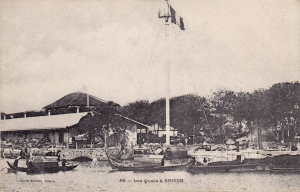
A late 19th century view of the Signal Mast

Several steam gunboats for the arroyos and two or three other vessels of a slightly larger tonnage for the sea complete the naval port.

Two courier ships are usually anchored in the harbour – one in front of the Arsenal and the other a little further down the quayside, awaiting the return of the third. The latter is making a return journey to and from Marseille which usually takes around three months, including a three-week stopover in Suez.

In front of the Maison Wang-Taï is the commercial port. There are some 30 ships in the harbour, including French, German and English vessels.

The Director of the Commercial Port has his residence and offices between the Maison Wang-Taï and the arroyo Chinois. In front of this house is a very interesting Signal Mast, which heralds the arrival of the mailboat from France, by means of a complicated system of flag signals. At the foot of the Signal Mast is a pier with a stairway, around which is grouped a swarm of sampans. For a nominal fee, the boatmen will take you to a ship, or to the buildings of the Messageries nationales located on the other side of the arroyo Chinois. Like their colleagues in other countries, they are all cheeky, loud and arrogant.

Saigon 1863

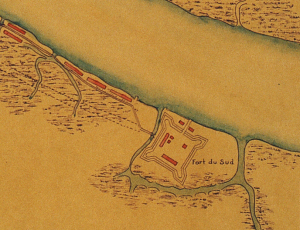
This map from 1863 shows the Fort du Sud, located next to the river in what is now District 4.

The limit of the harbour of Saïgon downstream is the Fort du Sud. This fort is located about two kilometres from the Maison Wang-Taï, on the right bank of the Saïgon River. It was and still is a place of punishment for badly behaved soldiers and sailors; however, nowadays we use it very little. It is this fort which protects the maritime entrance to the Saïgon harbour.

I did not mention, I think, the administration of justice in Saïgon.

In Saïgon there is a legal service, led by an Attorney General; a Court of Appeal consisting of two Counsellors, a President and a Hearings Officer; and a Court of First Instance composed of a President (Judge) and an Investigating Judge. There is also an Indigenous Justice Appeals Tribunal, run by Inspectors of Indigenous Affairs.

All of these people work at the Palais de Justice, a caïnha as miserable as the rest. Moreover, there is something particularly curious about the judicial staff, which is that rarely does the holder of a particular office fulfil the functions of that office. So in practice, we see the following in Saïgon, where judicial staff are cheap:

Personnel of the Director of the Arsenal, 1875

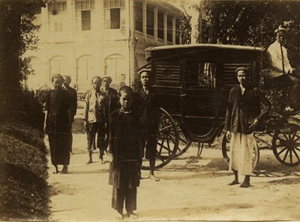
Legal personnel pictured in 1875.

The President of the Court is Attorney General; a Counsellor is President, the Hearings Officer is Prosecutor; the Prosecutor is Hearings Officer; and a humble secretary in the Directorate is the Advocate General to the Court. For all we know, he could soon be President of the Court – no-one in Saïgon would be surprised.

I laugh a little, but it saddens me deeply to see French law being applied to a country and people for which it was not designed. Sometimes this results in monstrous absurdities which can lead dedicated people who are keenly interested in Cochinchina’s different races to despair.

As to the Indigenous Justice Appeals Tribunal, I am anxious to see it work properly, because a lot of bad judgments must be reviewed. Suffice it to say that the Inspectors of Indigenous Affairs who are responsible for administering justice in this area are mostly inexperienced young officers.

Tim Doling is the author of the guidebook Exploring Saigon-Chợ Lớn – Vanishing heritage of Hồ Chí Minh City (Nhà Xuất Bản Thế Giới, Hà Nội, 2019)

A full index of all Tim’s blog articles since November 2013 is now available here.

Join the Facebook group pages Saigon-Chợ Lớn Then & Now to see historic photographs juxtaposed with new ones taken in the same locations, and Đài Quan sát Di sản Sài Gòn – Saigon Heritage Observatory for up-to-date information on conservation issues in Saigon and Chợ Lớn.

Goodbye to Steam at Thai Nguyen Steel Works

IMG_4580i

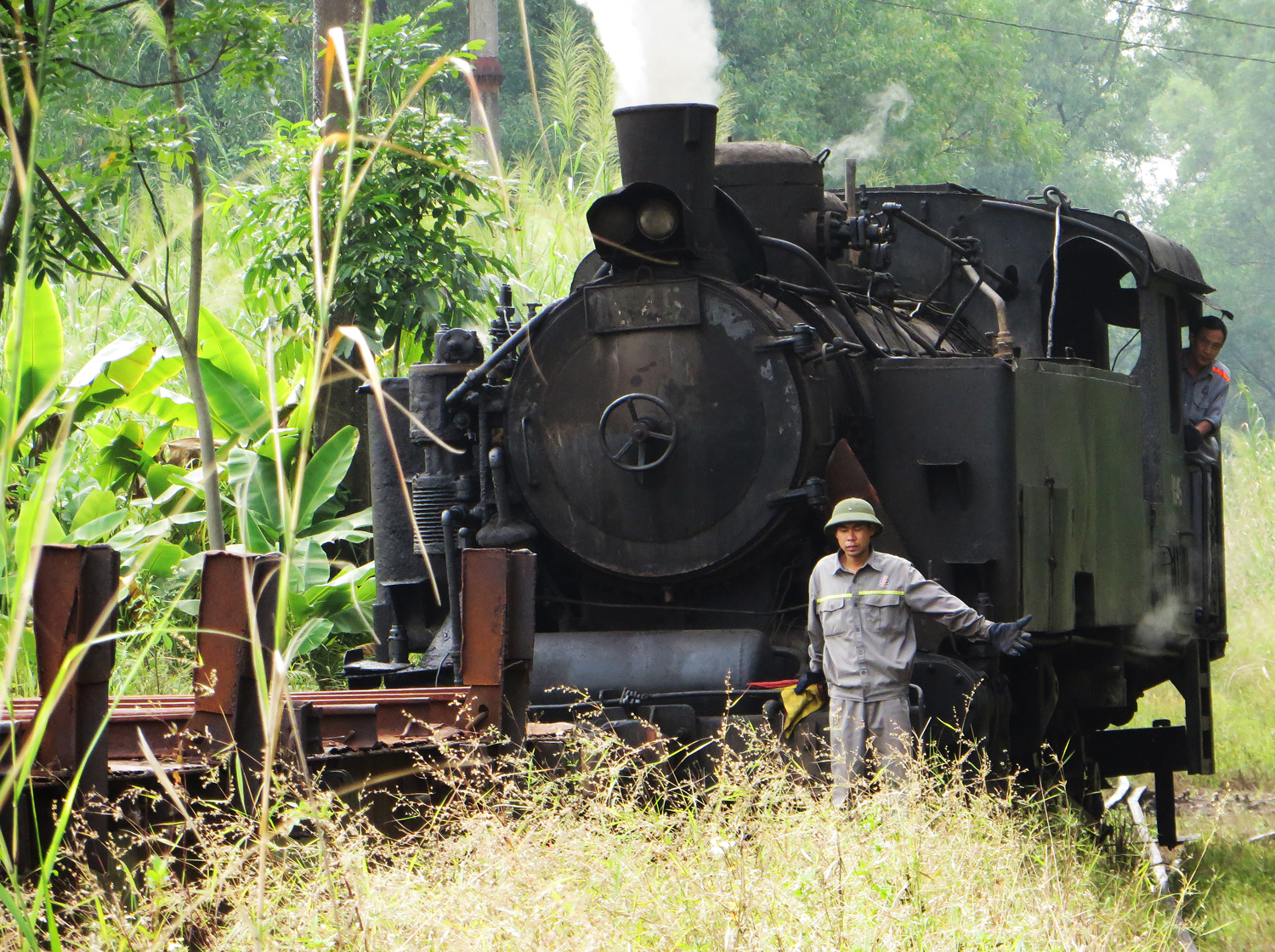
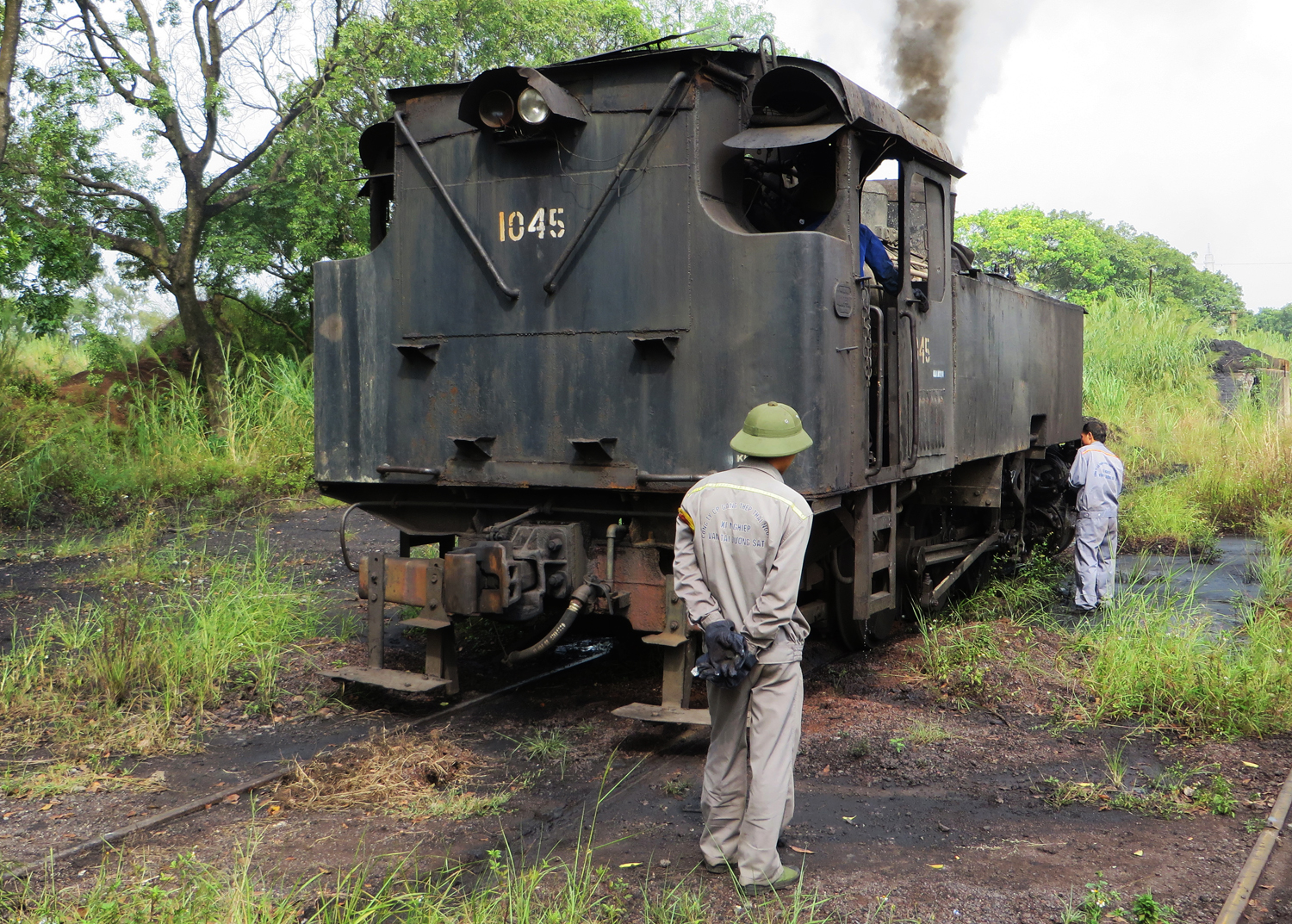
Gongjian 1.435m gauge 0-6-0T steam locomotive No 030-1045 arrives to collect passengers at the Thái Nguyên Iron and Steel Works event on 22 October 2014

This article was published previously in Saigoneer http://saigoneer.com

Wednesday 22 October 2014 was officially the last day of steam locomotive operations at Thái Nguyên Steel Works. Tim Doling takes a look at the history of this extraordinary industrial plant, which owes so much to the railway for its development.

The Thái Nguyên Iron and Steel Joint Stock Corporation (Công ty cổ phần Gang thép Thái Nguyên) was originally set up in 1959 by the Democratic Republic of Việt Nam as the Thái Nguyên Iron and Steel Company (Công ty Gang thép Thái Nguyên), with the aim of exploiting the region’s abundant iron resources. Construction of the plant got under way in the Spring of 1959 and it began operations in November 1963.

IMG_4542

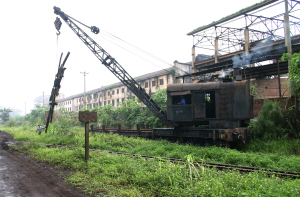
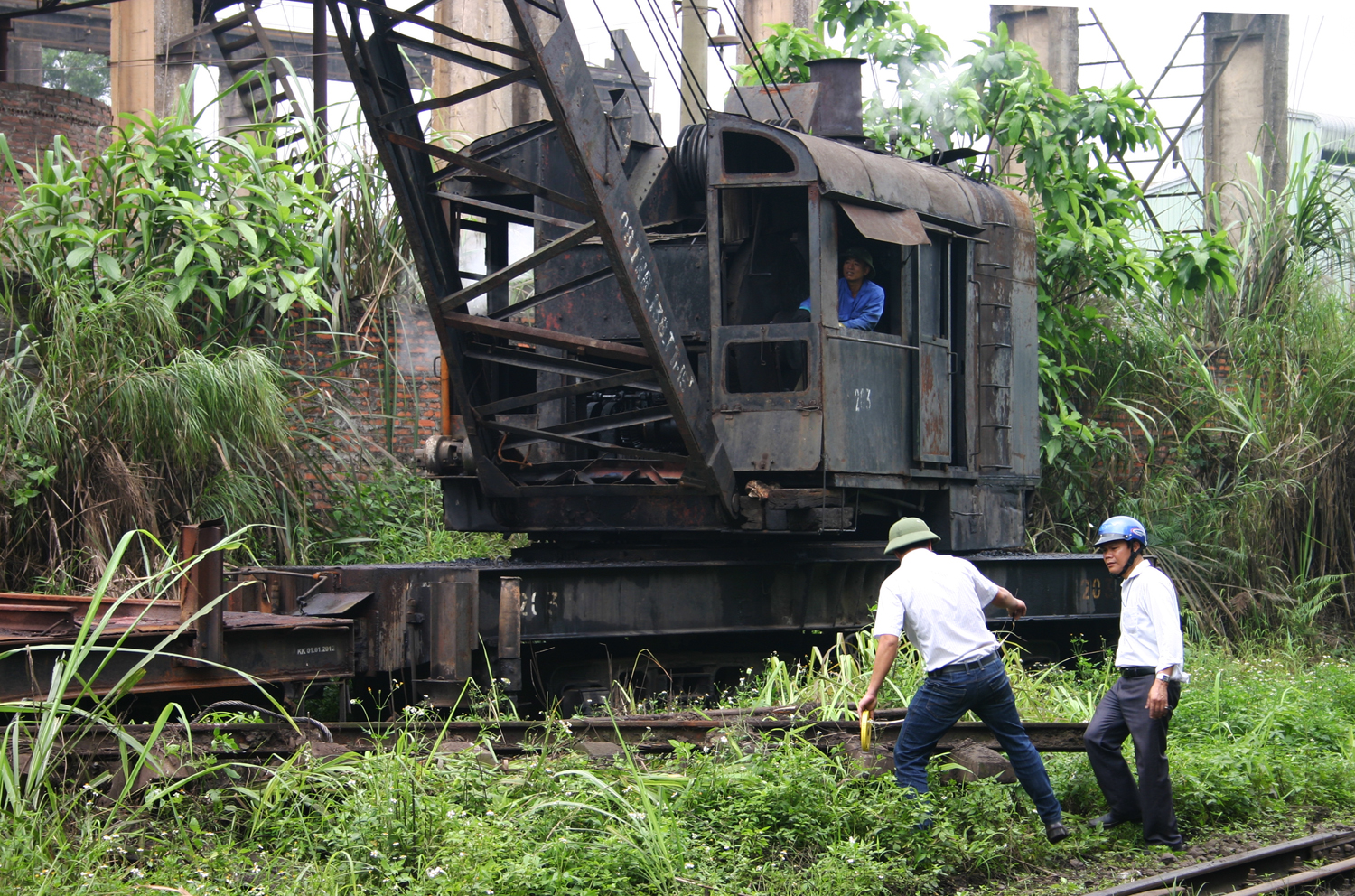
One of Thái Nguyên Iron and Steel Works’ steam cranes in action

From the outset, the railway played a crucially important role in the plant’s activities. Rail tracks were laid throughout the compound, and the Chinese government donated 11 Gongjian 1.435m gauge 0-6-0T steam locomotives (Nos. 030-1035 to 030-1045), four steam cranes, and a large fleet of flat, open-top and ore wagons.

Equal importance was given to the task of linking the steel works by rail with the main line, in order to ensure the direct passage of coal, iron ore and other raw materials into the factory and the shipping of the finished product to the Red River Delta.

In 1959-1960, a brand new railway line was built from Đông Anh (on the Hà Nội–Lào Cai line) to Thái Nguyên and Quán Triều. Then in late 1965, following the outbreak of war, the entire railway line from the Chinese border at Đồng Đăng to Yên Viên, Đông Anh, Thái Nguyên and Quán Triều was converted to dual gauge (both 1m and 1.435m), in order that supply trains could run directly from the standard-gauge (1.435m) Chinese network into Việt Nam.

IMG_4576

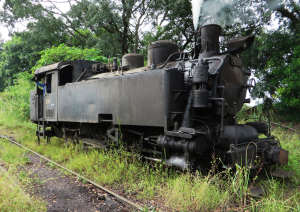
Another view of Gongjian 1.435m gauge 0-6-0T steam locomotive No 030-1045 on 22 October 2014

The operation of the steel works was deemed so important to the North Vietnamese war effort that in October 1965-December 1966, in response to repeated US bombing of the railway line from Yên Viên and Đông Anh, a second new strategic rail corridor to the steel works was built, this time of only 1.435m, linking Kép (on the Hà Nội–Đồng Đăng line) directly with Lưu Xá, south of Thái Nguyên.

After 1975, freight transportation to and from the Thái Nguyên Steel Works was gradually switched from rail to road. The standard-gauge Kép-Lưu Xá line was abandoned in the 1990s, and while the dual-gauge Hà Nội-Đông Anh-Thái Nguyên line remains operational, it now sees little traffic other than a daily market train.

However, the network of railway lines within the Thái Nguyên Steel Works has not only survived, but is still the primary means of moving ore, steel and other materials around the factory compound.

IMG_0398

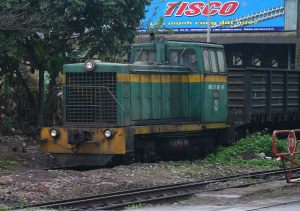
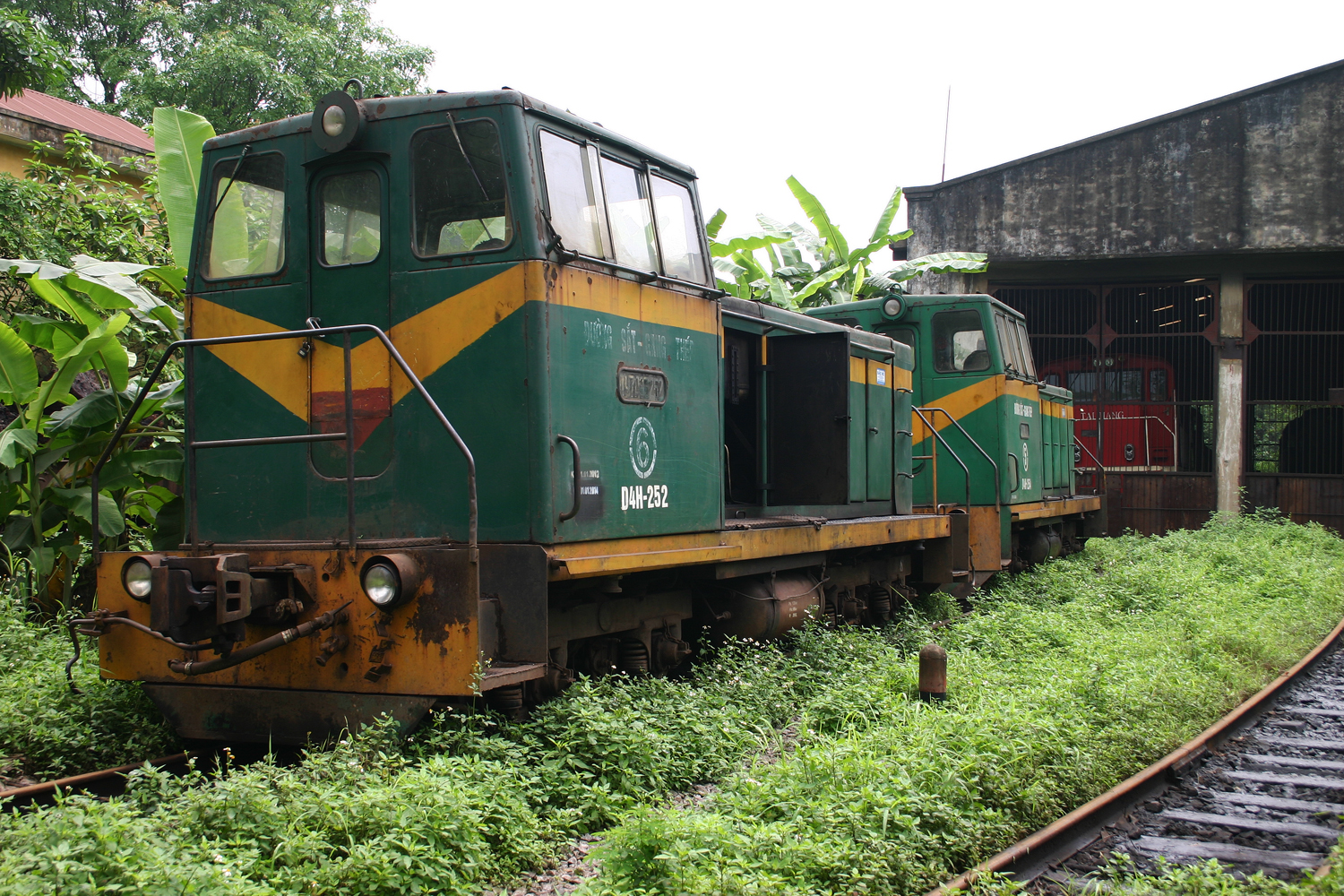
One of the factory’s second-hand Russian TU7E diesel hydraulic locomotives purchased from Vietnam Railways in the 1990s

In the 1990s, a fleet of second-hand Russian TU7E diesel hydraulic locomotives was purchased from Vietnam Railways, and in recent years, these have gradually replaced the original steam locomotives as the works’ main source of traction. Recently, a fleet of higher-powered diesels has been acquired to replace the ageing TU7Es.

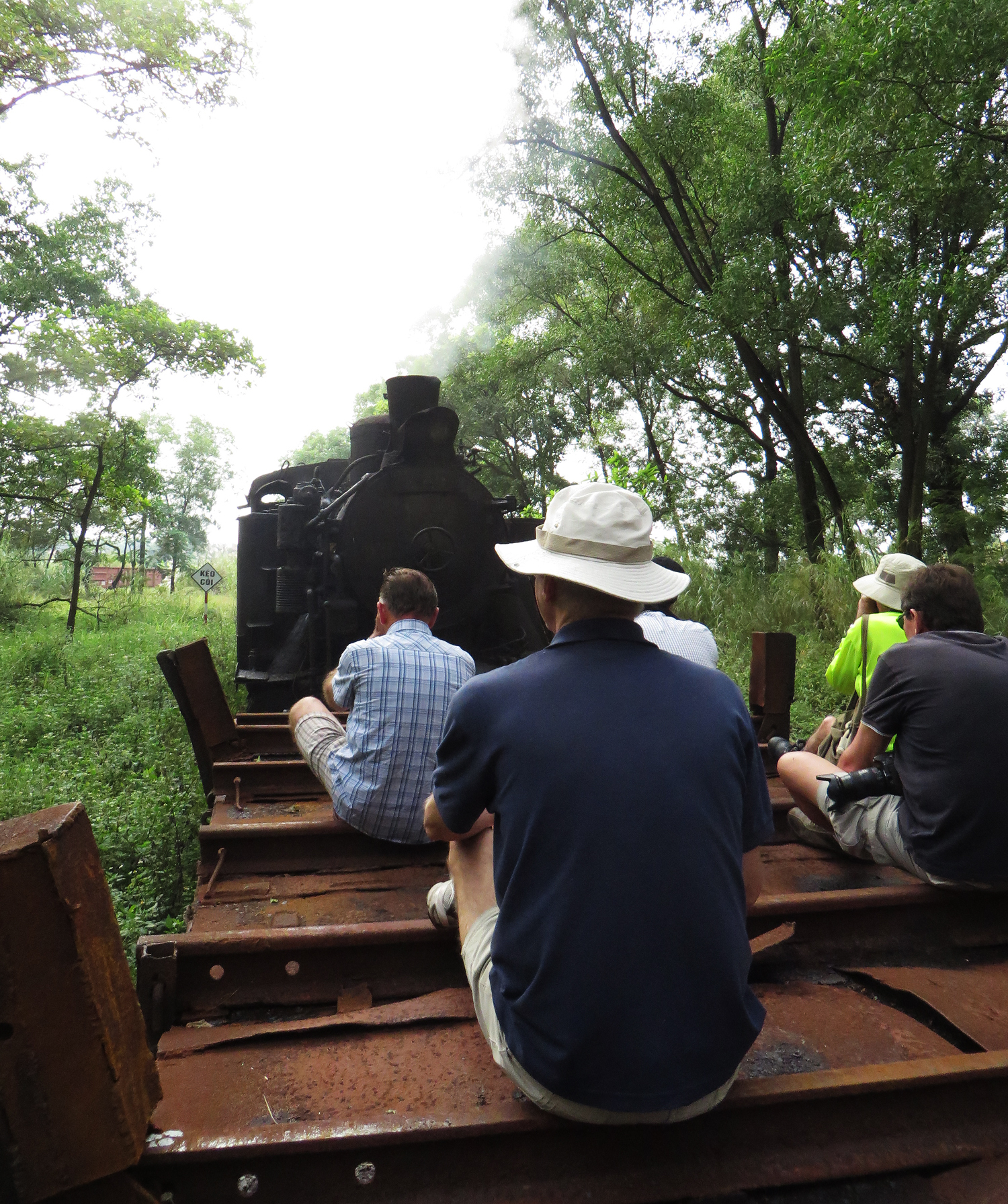
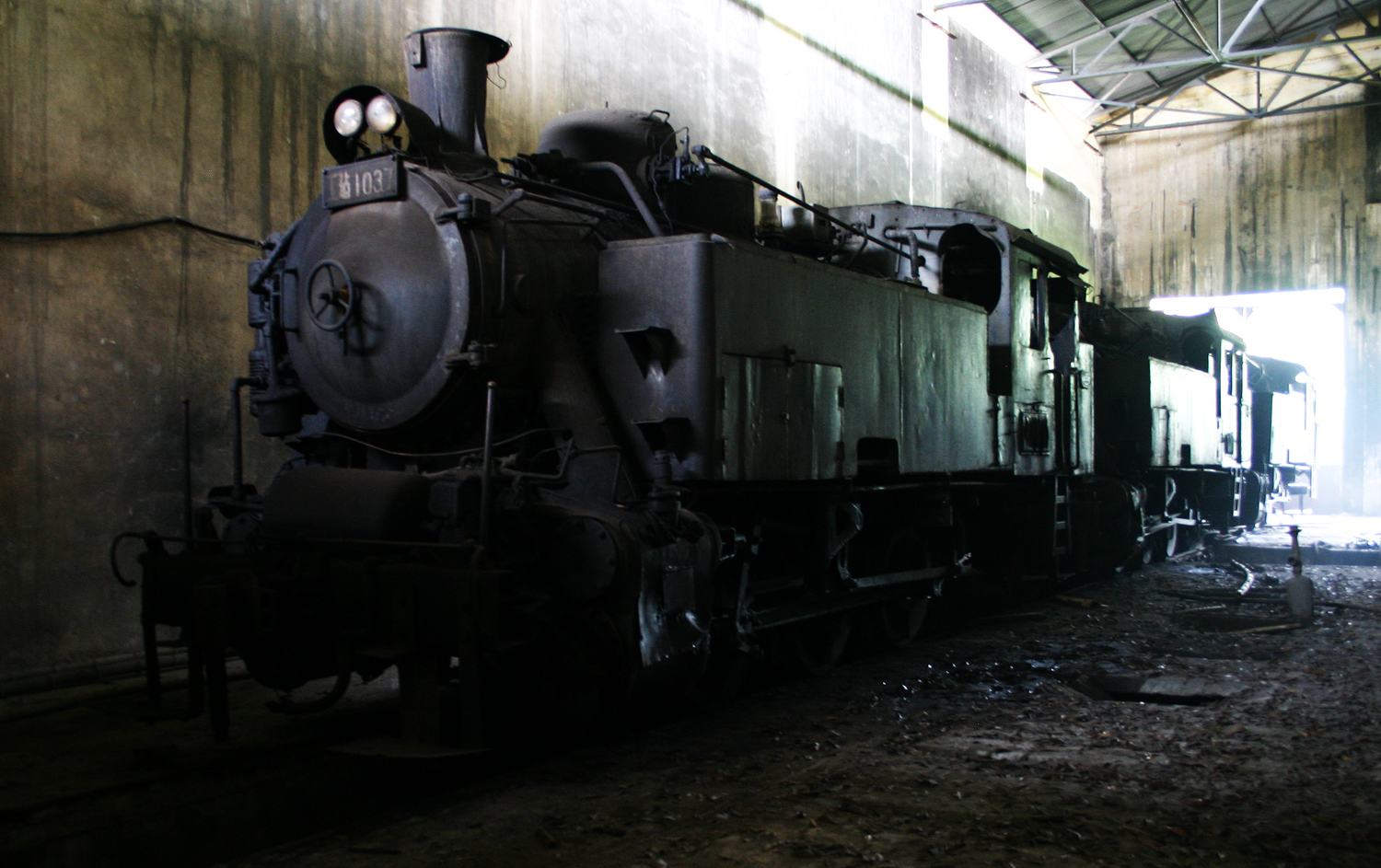
Four of the works’ original Gongjian steam locomotives have survived, and on 22 October, one of their number – 030-1045 – made its last scheduled working appearance inside the compound. The locomotive participated in some light shunting activities and then toured the compound with its passengers (including a large group of Australian rail enthusiasts visiting Việt Nam with Scott McGregor’s Railway Adventures) perched behind it on a flat wagon – something which would definitely not be possible in the health-and-safety-obsessed west!

Happily, since No 030-1045 has recently been purchased by a private individual, the old steam engine’s appearance at Thái Nguyên Iron and Steel Works on 22 October 2014 will not be its last public outing. The new owner has plans to run future steam-hauled events in the north for rail enthusiasts. All enquiries regarding future steamings of locomotive 030-1045 should be directed to Mr Lưu at [email protected].

DSC05686

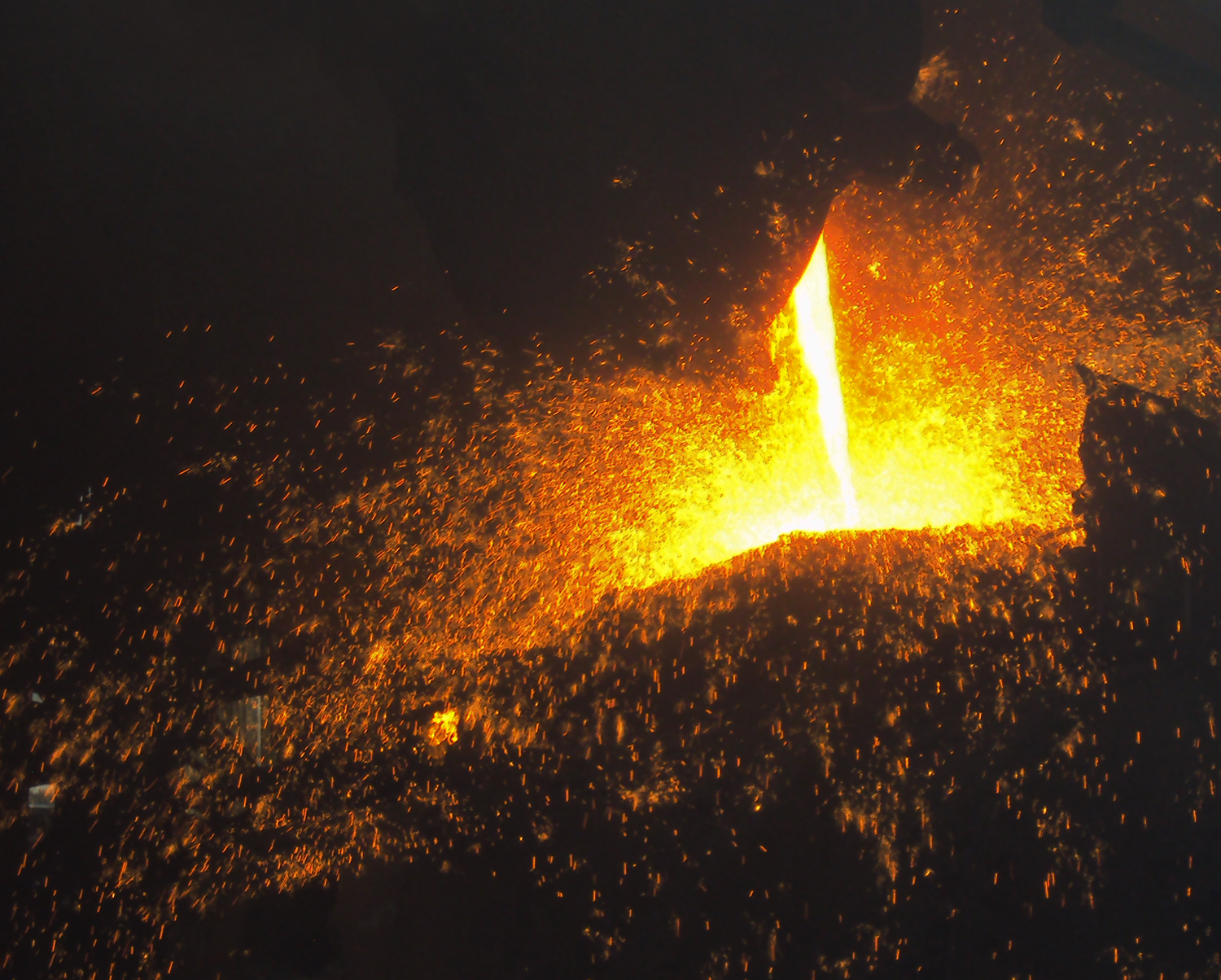
Iron ore being smelted with coke and limestone in a blast furnace, producing molten iron

IMG_4589

Australian rail enthusiasts travelling on a flat truck behind Gongjian 1.435m gauge 0-6-0T steam locomotive No 030-1045 on 22 October 2014

IMG_4607

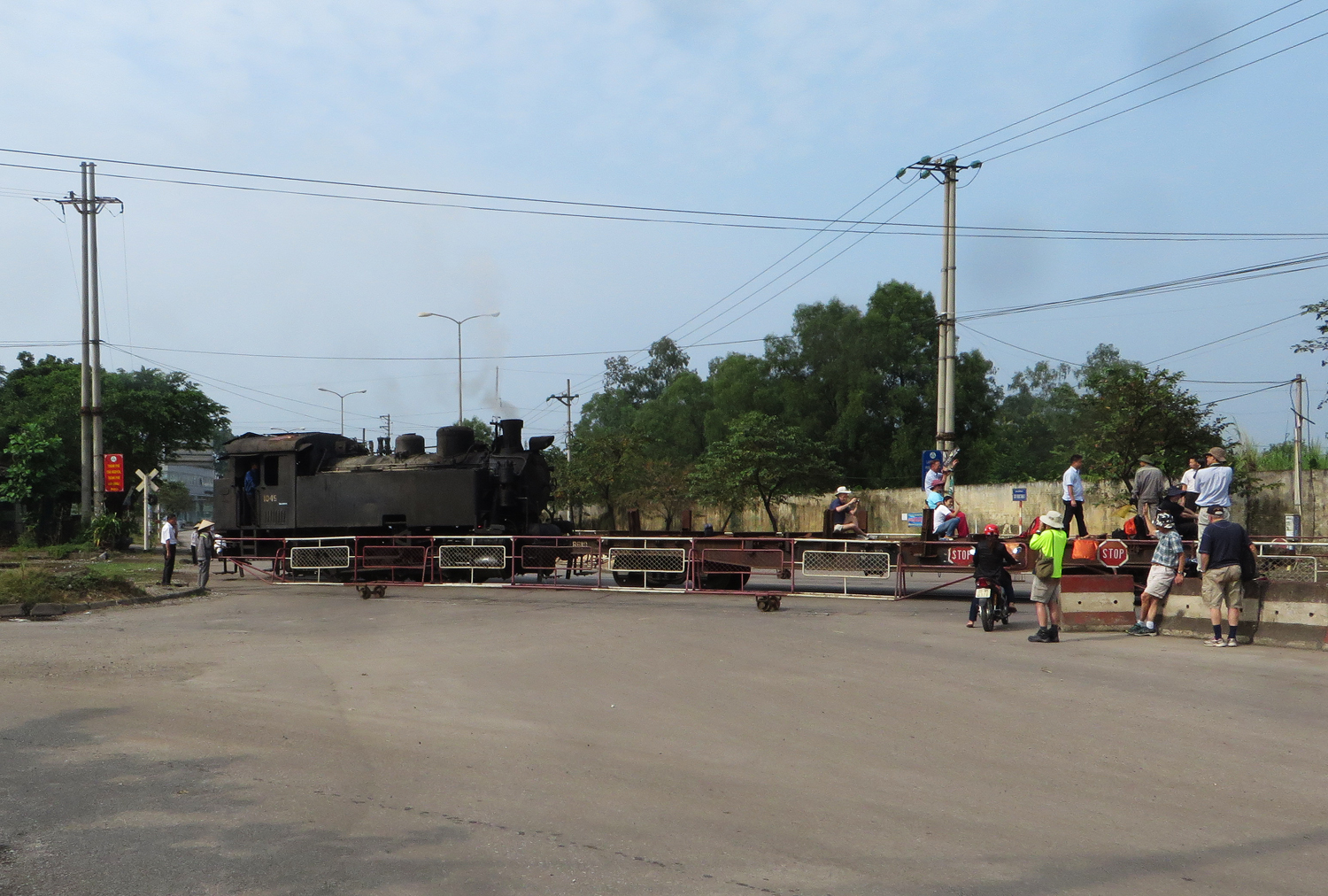
Gongjian 1.435m gauge 0-6-0T steam locomotive No 030-1045 conveys its passengers across a public road outside the compound on 22 October 2014

IMG_4570

Another view of Gongjian 1.435m gauge 0-6-0T steam locomotive No 030-1045 on 22 October 2014

IMG_4562

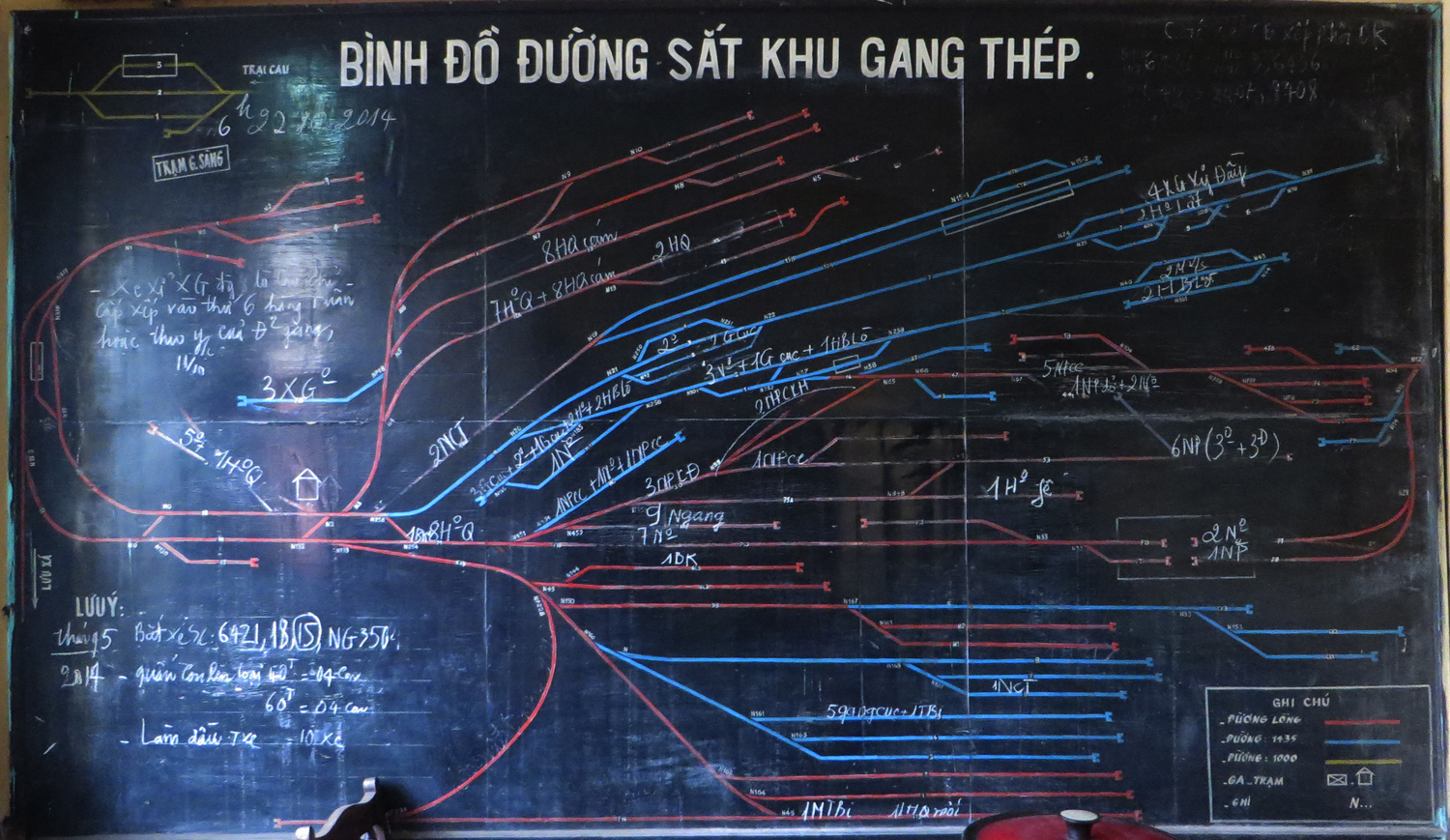
A diagram of the complex rail track layout at Thái Nguyên Iron and Steel Works

IMG_4560

Another view of one of Thái Nguyên Iron and Steel Works’ steam cranes in action

IMG_4580

Russian TU7E diesel hydraulic locomotives outside the factory’s engine shed

IMG_4602

Three of the surviving four Gongjian 1.435m gauge 0-6-0T steam locomotives await their fate in the factory’s engine shed.

Tim Doling is the author of The Railways and Tramways of Việt Nam (White Lotus Press, Bangkok, 2012) and also gives talks on Việt Nam railway history to visiting groups.

A full index of all Tim’s blog articles since November 2013 is now available here.

Join the Facebook group Rail Thing – Railways and Tramways of Việt Nam for more information about Việt Nam’s railway and tramway history and all the latest news from Vietnam Railways.

You may also be interested in these articles on the railways and tramways of Việt Nam, Cambodia and Laos:

A Relic of the Steam Railway Age in Da Nang
By Tram to Hoi An
Date with the Wrecking Ball – Vietnam Railways Building
Derailing Saigon’s 1966 Monorail Dream
Dong Nai Forestry Tramway
Full Steam Ahead on Cambodia’s Toll Royal Railway
Ha Noi Tramway Network
How Vietnam’s Railways Looked in 1927
Indochina Railways in 1928
“It Seems that One Network is being Stripped to Re-equip Another” – The Controversial CFI Locomotive Exchange of 1935-1936
Phu Ninh Giang-Cam Giang Tramway
Saigon Tramway Network
Saigon’s Rubber Line
The Changing Faces of Sai Gon Railway Station, 1885-1983
The Langbian Cog Railway
The Long Bien Bridge – “A Misshapen but Essential Component of Ha Noi’s Heritage”
The Lost Railway Works of Truong Thi
The Mysterious Khon Island Portage Railway
The Railway which Became an Aerial Tramway
The Saigon-My Tho Railway Line


Saigon Through the Eyes of Early Travellers – Dr Albert Morice in 1872, Part 2

gravure 1875-2-373

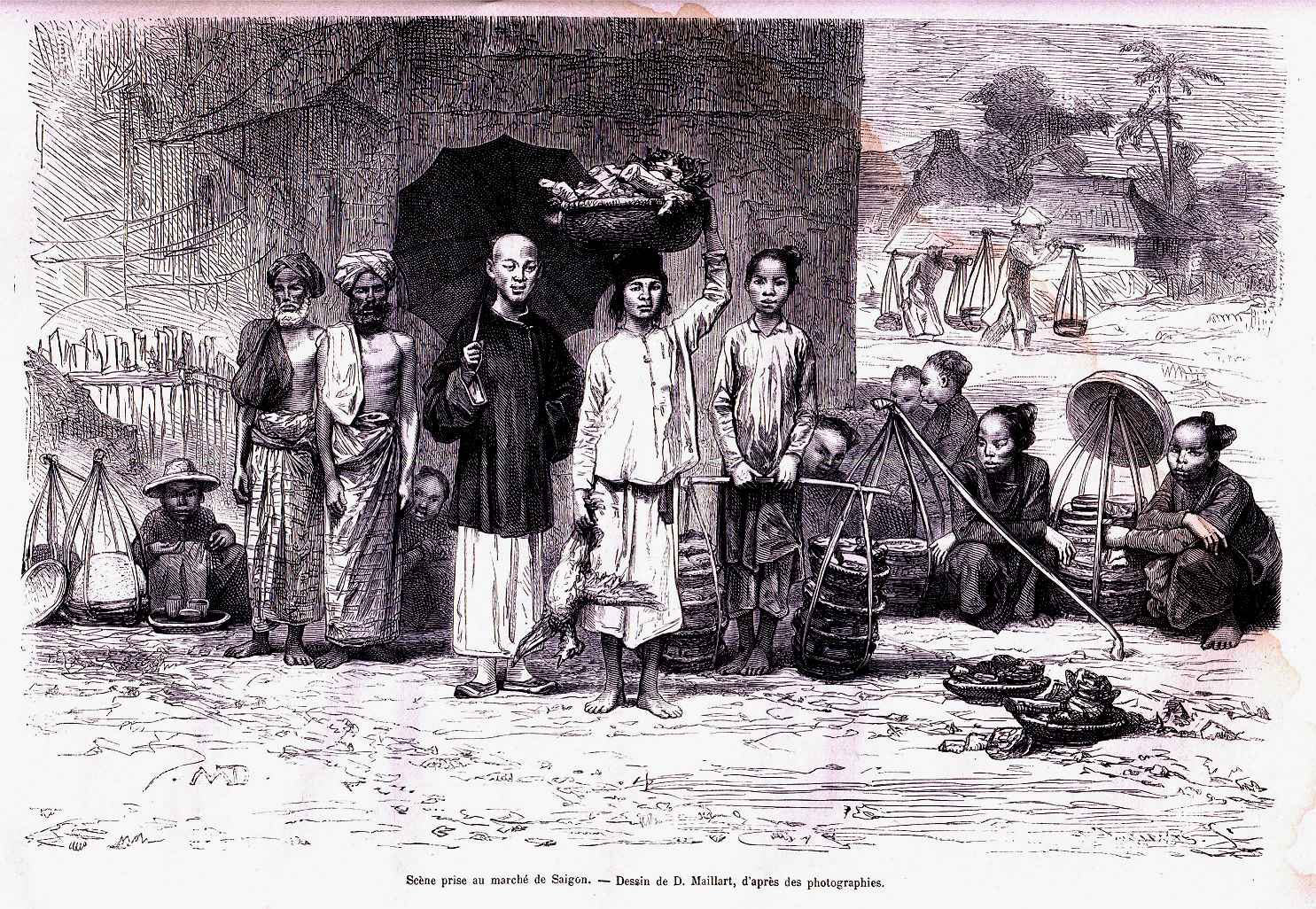
A Saigon market scene in 1875 drawn by D Maillart from a photograph

Voyage en Cochinchine, an account of naturalist Dr Albert Morice’s 1872 visit to Saigon, Chọ Lớn and the Mekong Delta, was first published in the geographical adventure magazine Tour du Monde. This is the second and final extract, translated into English.

To read Part 1 of this serialisation, click here.

Despite the hot sun and the onset of prickly heat, I still walked around the city to satisfy my curiosity, and that’s how I became acquainted with some curious specimens of Saigon fauna.

135ruesaigon

A street scene in late 19th century Saigon

In the bush, and especially in the grasslands of the city near the Carmelite Convent, I often met the Asian grass lizard (Takydromus sexlineatus), which has a tapered tail three or four times the length of its body. Its skin is dry and rough, but the scales on the tail are very sensitive to touch. Its general colour is rather difficult to define; it is a dull brown, on which run darker longitudinal bands, which in males have a tint of metallic green. It weaves its way through the tall grass with astonishing rapidity. Its character is sweet; once caught, it doesn’t try to bite, but tosses and turns between one’s fingers, waving its tail in an attempt to whip the unjust hand which holds it prisoner.

On the tamarind trees of the streets of Saigon, and often also in the middle of flowerbeds where it watches the insects, we meet the Oriental Garden Lizard (Calotes versicolor) the “Bloodsucker” of British India. This is a lizard similar in size to our green lizard, but perhaps shorter. Its tail is thin, its body rough and scaly, and its hind legs are long, allowing it to jump. Its fingers, five in number, are long with hooked nails. It has a dorsal crest and its throat is adorned with a goiter. When the animal is excited, this goiter, along with the front legs, the head, the neck and the crest, turn a beautiful green or azure colour. Behind the eye, there is a yellow or black spot. The head is large, flat and heart-shaped, covered with very small scales; the jaws are armed with very sharp and evenly-sized teeth, apart from two upper and lower canines which are powerful enough to pinch painfully, but not draw blood. When one catches this lizard by the tail, it will not foolishly leave this important appendage in the hands of its attacker, but instead will await its fate, motionless, with its mouth ready to bite. Its manner of climbing trees is curious: if it sees you, it flattens itself against the bark and crawls slowly round to the opposite side; if you approach, it quickly climbs higher by spiralling around the trunk, stopping occasionally to tilt its head towards you.

I nimbly placed my left arm above the animal and tried to catch hold of it with my right hand. But it jumped over my arm and escaped. When I tried again, it jumped onto my shoulder and then leapt back onto the tree. It is, so to speak, the familiar spirit of all the tamarind trees of Saigon; this lizard has for enemies most types of tree snake, which value it as food, despite the thorns of its crest.

Annamite soldiers

tirailleurs_annamites_saigon

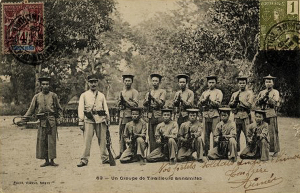
A troupe of Annamite riflemen in Saigon

A number of Annamites have been conscripted by our government as soldiers; some, the “Linhtaps,” wear the same costume as our own marine infantrymen and are armed with chassepots [a type of bolt-action breech-loading rifle used by the French army in the late 19th century].

They are commanded by French officers and form what is called “indigenous companies.” It is interesting to see both the pride and the embarrassment with which they wear a costume that bothers them terribly. The shoes seem to be their real torture, and they take them off whenever they can. However, as they have a great deal of self respect, they are keen not to be dominated too much by Europeans and are in fact quite good soldiers, if a little difficult. What upsets them most is being forced to cut off their luxuriant hair.

The second body of Annamite soldiers we have organised is that of the Matas. These are the soldiers of the administrators. White calico pants, bare feet, a wide red belt with tobacco and betel pouches, a blue jacket with yellow trimmings and lettering indicating the Inspection to which they belong, and a small salaco with copper studs holding in place the traditional bun – this is the costume of these soldiers, among which may be found some very good individuals, but also some real rogues. They are armed with native spears and muskets.

They stand guard at the Inspections, distorting as much as possible the usual cry of warning: “Stand to attention!” We choose from among them the local NCOs: the corporals (cais), the sergeants (dois), and the quartermasters (tholaïs).

Finally, other Annamites serve on the gunboats of the state, where they often become good sailors.

Betel and tobacco

gravure 1875-2-375

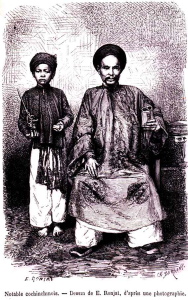
A “Cochinchinois notable” in 1875 drawn by E Ronjai from a photograph

Among the vices of the Annamite race, there are two which deserve special mention: I am referring to betel and tobacco. Two thirds, perhaps, of the population of Asia and Oceania chew betel. Throughout India, all of Indo-China, and the Sunda Islands, whether they are worshippers of Brahma, Buddha, Allah or Jesus, whether they are the Caucasian or Mongolian, and regardless of age or sex, all make daily use of this complicated preparation.

The betel quid consists of the following ingredients: a betel leaf, a piece of areca nut (or the fruit of the areca palm for some wild populations), and finally a little slaked lime – white for the poor, pink for the rich. The lime is spread onto the leaf that wraps the nut; one only has to chew. The pink lime is subject to significant trade between Siam and Cochin-China, which is conducted mainly from Ha-Tien; it seems that the manufacturers use turmeric to give the lime its beautiful colour. To these three quite refined ingredients, some – especially the Hindus – add a little tobacco.

This habit, which may have some useful consequences like reducing thirst and cleansing the breath of these fish-eating populations, has the great disadvantage of rotting and decaying the teeth, colouring the saliva bright red, and condemning the user to the constant spitting of quite disgusting brick-coloured phlegm. It’s above all to the lime that these adverse effects must be attributed.

Annamites of a certain rank, especially those of the younger generation, are a little less fanatical about this perpetual rumination. As for tobacco, while the Chinese almost exclusively smoke a cigar and pipe, the Annamites prefer cigarettes. The paper is too thick, and the tobacco itself has a special smell that is immediately recognisable. The best local brand is Long-Tanh, but it’s claimed that one of the modes of preparation used by this company involves the sprinkling of buffalo urine. I give this information with all possible reserve; however, one thing’s for certain – few Europeans smoke it.

The Annamite language

IMAGE 4

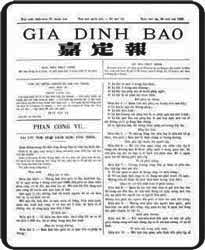
The Gia Định Báo

The language of the Annamite people, monosyllabic, is enriched with many words borrowed from the Chinese language, but the basic vocabulary is absolutely different. Its mechanism is very simple, but the main difficulty is pronunciation. One understands quickly why it’s important to know the correct intonation when one realises that most words can have five or six different tones. If one’s not careful, one can make frequent gaffs which cause merciless laughter from the Annamite, who is always ready to see the humorous side of things.

A long time ago, Portuguese priests accomplished a revolution which may yet have the happiest consequences for Annamite civilisation and progress. They substituted the writing of Roman characters for Chinese characters; and thanks to the care of our administration, there are, in all centres of some importance, free schools where children are forced to come to learn to read and write in Roman characters.

In Saigon, an Annamite language newspaper known as the Gia-Dinh-Bao is printed in these characters, and there is perhaps not one 10-year-old Annamite child who does not know how to read it correctly. If one could carry out a similar revolution in China, it would be the best way to pull that huge empire out of its lethargic admiration of the past. Chinese characters, modified somewhat due to the necessities of the Annamite language, are still used for many commercial transactions, for litigation and for diplomatic documents. But their use is increasingly restricted, and that’s progress we can note with satisfaction.

The Botanical Gardens, the Plain of Tombs and the Pigneau de Béhaine Mausoleum

Among the city’s newest and most interesting creations, we must mention the beautiful Botanical Gardens, located on the east side of Saigon. One reaches it by a street in which may be found, right next to the Sainte-Enfance [Convent of Saint-Paul de Chartres], a huge banyan tree. Thanks to the care of its director, Monsieur Jean-Baptiste Louis Pierre, the Botanical Gardens is an institution which would be worthy of adorning any of our greatest cities in Europe. This is one of the walking areas most beloved of the Saigonnais; our officers and traders come here every evening to enjoy the fresh breeze.

Plaine des tombeaux

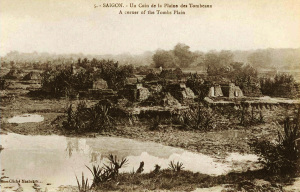
A corner of the Plain of Tombs

An immense plain, dotted with many rice fields and called the Plain of Tombs, extends nearly as far as the Botanical Gardens. It was there, long ago, that the battles were fought which gave lower Cochinchina first to the Annamites, and later to the French. The name of the plain derives from the numerous tombs which may be found scattered there, breaking the uniformity of its immense extent. Modest or rich, these tombs are very interesting to study. Built of clay or brick, they are covered with a kind of plaster or concrete, on which are painted fantastic animals and plants in bright colours, along with the names and titles of the deceased.

One day, while crossing this plain, I witnessed an Annamite funeral; these burials are always made with a certain luxury, and on this day the deceased was accompanied by a large retinue. The coffin was placed in the centre of a small and brightly-painted portable house, carved with strange shapes. Twenty porters carried this miniature temple, pressing their shoulders against the bamboo frame which supported it. Bearers of torches and gold and silver paper threw prayers to Buddha onto the road and set light to them. Behind the corpse walked a procession of relatives and friends.

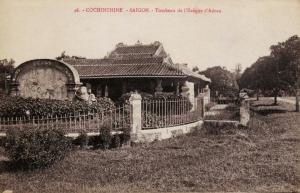
A tomb of a style similar to those of the Plain of Tombs, but much more interesting to visit, is that of the Bishop of Adran, Pigneau de Béhaine, who left lasting memories in Cochin-China. It is not far from Saigon, near the road to Go-Vap. This monument (because it deserves that name) is located within an enclosure and looked after by an attendant who opens the gate on request to visitors. The strangest frescoes by Annamite artists decorate the walls of the temple; I still remember a huge tiger with a bright yellow body and black stripes, looking menacingly at me with two large glass eyes. A large inscription in Chinese characters gives the titles and deeds of the bishop, who sleeps beneath this land which owes him so much.

IMAGE 5

The tomb of Pigneau de Béhaine, Bishop of Adran

I saw a few geckos there, which seemed to be the guardian spirits of the tomb. Living in forest and rubble, as well in the houses of both the Annamites and the French, this lizard – very common in Cochinchina – is one of the animals which give the fauna of this country its unique character. Just imagine a gigantic terrestrial salamander; on its bluish-gray skin, a number of small tubers protrude from the middle of an orange spot; its big wide eyes have a golden yellow iris, and thanks to the adhesive pads on the underside of its feet, which act like suction cups, it can walk on the smoothest surfaces, seemingly contrary to the laws of gravity. Its call, which has given the animal its name in all languages, is a very strange sound; the first time one hears it, one is almost scared. The gecko is a home-lover by nature, and never deviates much from the house it has chosen. Despite its ugliness and its call, which can be noisy when one has 10 or more of the creatures in the house talking to each other, it can be an involuntary ally of man, and as such deserves to be respected.

Another animal of the same group – though much smaller and very reminiscent of the tarente of which the Toulonnais are so afraid – is the margouillat (con-tan-lan in Annamite). These lizards live in trees and houses. Every night, by the light of the candle, we see them walking on the ceiling, where they lie in wait for insects, uttering from time to time their little cry of satisfaction, which translates as the syllable “toc” repeated 10 times. They also love sugar, and when I lie on my chaise longue after dinner, I quite often see margouillats licking the edge of a spoon or the bottom of a cup. Bitter enemies of mosquitoes, these animals are respected by all.

The Chinese theatre

Now a word about the Chinese theatre, the popular distraction of Europeans in Cochin-China. There are two kinds: one known across the world, and the other, far more interesting in my opinion, which has been less discussed; this is the puppet theatre.

13885771390_48df4f33f9_o

The arroyo Chinois (Bến Nghé creek)

How often, in Saigon, did I mingle with the crowd of Chinese workers who went every night to laugh at the heroic-comic scenes of these incomparable actors! The tiny puppet theatre, just four feet square, is located at a crossroads behind the Arroyo chinois [Bến Nghé creek]. Bamboo torches light the front of the small stage, and everywhere one smells coconut oil and the special odour of Chinese tobacco. No matter, I braved the disgusting smell! These puppets are much better and more finely made than ours; everything moves in them – legs, hands, head – and the fingers on the back of the hands even reverse, a feature which surprised me. It seems that many Chinese women can actually dislocate their fingers in this way.

The most common scenes in the repertoire were those of cheating spouses, battles and judgments, all presented in the alternately guttural and shrill voices of the Chinese players. The music accompanying the play, performed on flutes and squeaky stringed guitars, continuously repeated the same air, and when the action unravelled, vigorous drum strokes punctuated the insolent triumph of vice or the reward of virtue.

It was the day of a religious festival when I visited the other theatre, the one in which men (because the woman does not perform on the Chinese stage) usurp the place that should be taken by the puppets. Since representatives of the French authorities were present, along with many of the ladies of the colony, they toned down the usual crudity of the performance.

Behind the actors sat the musicians, while on both sides on the stage, resembling the marquises in the plays of Molière, strutted the rich Chinese traders who had paid for and hosted this entertainment. These gentlemen had carefully prepared beer, liquor and cigars, which were distributed profusely to all members of the audience.

cholon_acteurs

Chinese opera performers

I took care not to attend the whole performance: it lasted about 10 hours! I only remember some episodes, including a very beautiful scene of spousal jealousy, and in particular a very well simulated fight between a troop of amazons and a genie armed with a short sword and a huge shield, under which it sometimes hid like a shell.

A hunting trip

From time to time, I went on hunting trips around Saigon, of which the most interesting took place in Pointat, game territory familiar to the Saigonnais. That day, at about 10am, as the sun got too hot, we went a pagoda surrounded by vast fields of pineapples, where our boy had prepared lunch. We were resting when two or three old men, with their white beards and emaciated cheeks, came in to worship the Buddha. At the sight of our liquor, their wrinkled old faces lit up with soft smiles and they stood behind us with envious admiration.

One of them offered me a cigarette, having previously smoked it a little in order to light it; I accepted, despite its betel-tinted end. In return, we offered them absinthe and vermouth; that’s what they had been waiting for, and they didn’t waste any more time praying before swallowing several glasses of liquor in quantities which would have left a European dead drunk. They, however, only became more expansive, and we held close company.

As we got up to leave, we heard the creaking of the wheels of a buffalo cart and we soon saw a huge vehicle advancing. It had large solid wheels, each made from a single piece of wood, and one of the old Annamite men told us that the noise made by these wheels had the effect of scaring tigers and other wild animals away. In many parts of the interior, this is the only means of transportation.

Cho-Quan Hospital

On another day, we went to visit the very handsome Cho-Quan Hospital; here they treat leprosy, one of the most dreadful diseases which is all too common in Indo-China. An interesting feature which can be noted is that leprosy never seems to strike Europeans; however, among the natives, it seems particularly tough on the Annamites, an essentially ichthyophage [fish-eating] people.

Hôpital de Cholon. Pavillon des prisonniers et bureaux 1931 i

Chợ Quán Hospital

I saw one of these unfortunate people who had lost all the fingers of each hand, except his thumbs; his legs were swollen and bleeding, and his face was a mixture of deep grooves and hideous blisters. Another, a former temple guardian in Cholon who we named Quasimodo, suffered from a form of leprosy which had resulted in abnormal growth of the face, known as leontiasis; others had legs covered with so many ulcers that they were unable to walk. Besides leprosy, the Navy doctors of this hospital treat many skin diseases, which are very common in Cochin-China.

We lunched at Cho-Quan with colleagues, and after the obligatory nap in comfortable armchairs on the huge veranda of the hospital, we went to visit Cholon, from which we were about 3 kilometres distant. After Saigon, it is the largest town in the colony. Its population is about 80,000.

Cholon

Cholon is separated from Saigon by a distance of 5½ kilometres, but linked to the European city by an uninterrupted row of villages, country houses owned by rich merchants of the “Celestial Empire,” and pagodas that serve as places of rest. Cholon is the centre of all Chinese trade in the colony. The amount of rice, fabrics and other Chinese products sold here exceeds the imagination; furthermore, the hustle and bustle in the streets, and the amount of Chinese and Annamite junks and sampans that fill the arroyo, are truly remarkable.

Among the features of Cholon which warrant particular mention are its crocodile parks. Along the banks of the arroyo, one finds a series of muddy enclosures, each measuring up to 20m² and flooded regularly by the high tide. Each of these enclosures is home to anything from 100 to 200 swarming crocodiles.

Les quais

The quays in Chợ Lớn

When it becomes necessary to sacrifice one of these monsters for its meat, two stakes are raised, a noose is placed around the neck of the largest of the pack and it is pulled outside. The animal’s tail is held down, its legs are constrained and finally it is turned onto its back and tied with rattan. Another piece of rattan holds the jaws closed, and such is the strength of this plant that, despite the huge saurian’s prodigious strength, it cannot struggle and is killed without incident.

As for the flesh, though it is a little tough, it seems it has its value and is not impregnated with the smell of musk that so many travellers complain about. This meat is a very well received on the Annamite table.

After a three-month stay in Saigon, I must begin my wanderings through Indo-China.

Tim Doling is the author of the guidebook Exploring Saigon-Chợ Lớn – Vanishing heritage of Hồ Chí Minh City (Nhà Xuất Bản Thế Giới, Hà Nội, 2019)

A full index of all Tim’s blog articles since November 2013 is now available here.

Join the Facebook group pages Saigon-Chợ Lớn Then & Now to see historic photographs juxtaposed with new ones taken in the same locations, and Đài Quan sát Di sản Sài Gòn – Saigon Heritage Observatory for up-to-date information on conservation issues in Saigon and Chợ Lớn.

Ta Duong Minh – Thu Duc’s Founding Father

2010-11i

Thủ Đức Market

This article was published previously in Saigoneer http://saigoneer.com

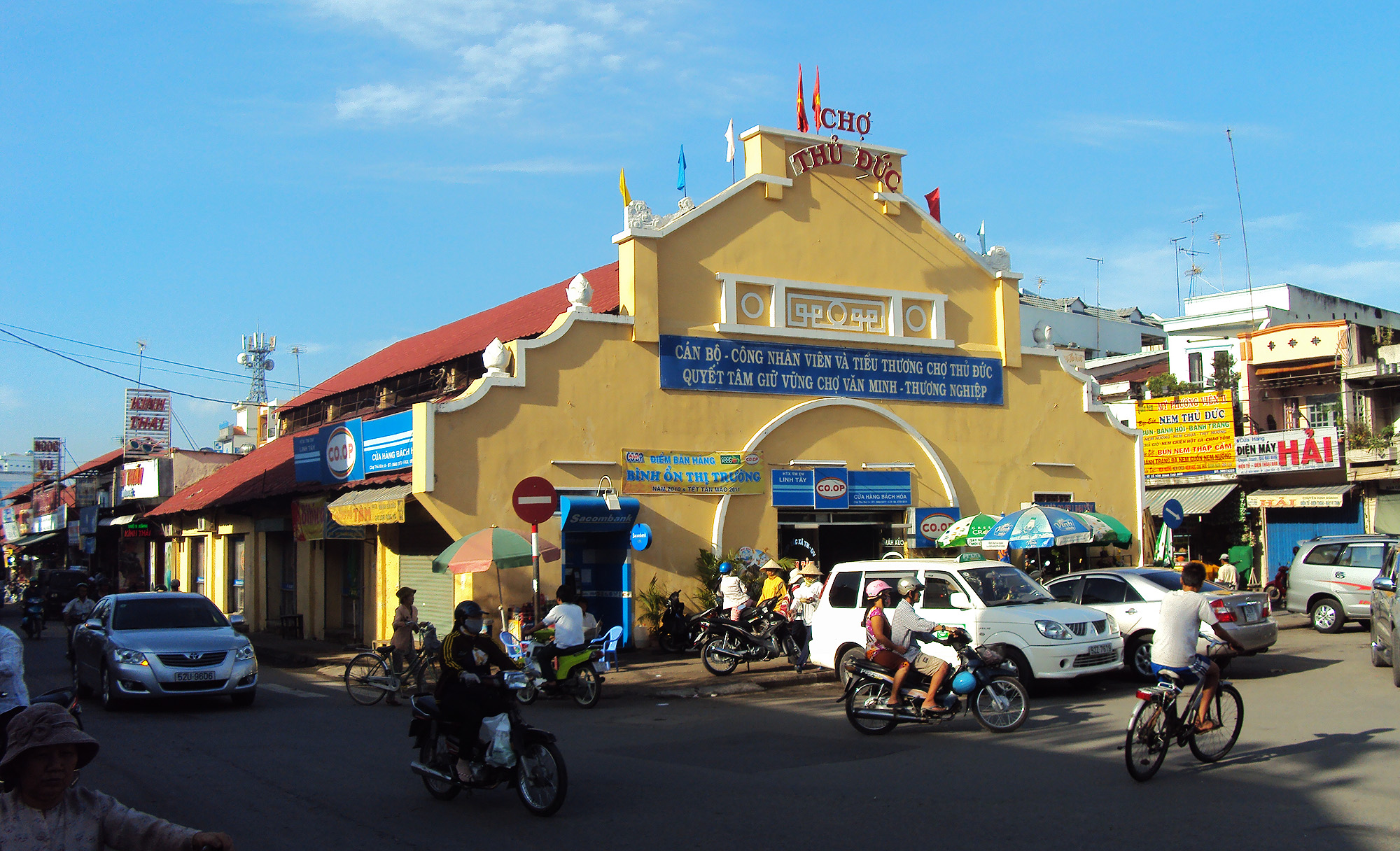
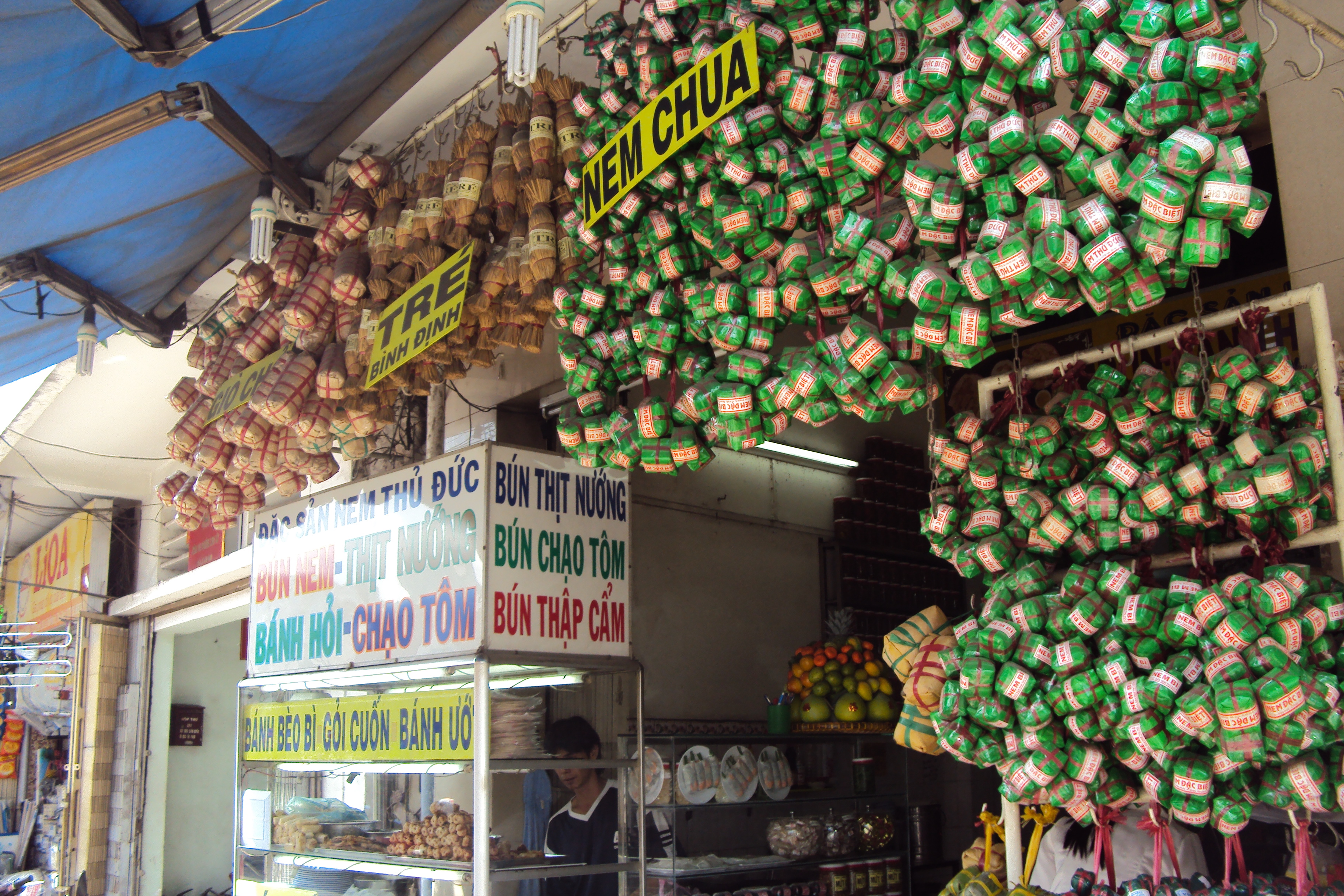
Built in 1879-1880 by the French, the historic Thủ Đức Market has in recent years become an increasingly popular destination for Hồ Chí Minh City residents wishing to stock up with the delicious local speciality snack, nem Thủ Đức. The origins of this attractive old market town may be traced back to the mid 19th century, when it was founded by a Chinese businessman named Tạ Dương Minh.

IMG_4067

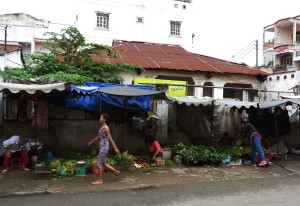
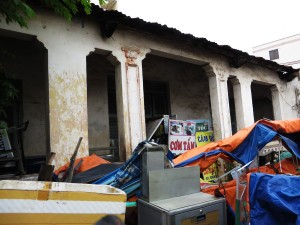
The derelict house at 9 Hồ Văn Tư, Phường Trường Thọ, which once functioned as the Tạ Dương Minh Temple

According to local historians, Tạ Dương Minh, nickname Tạ Huy, fled to Việt Nam from China in the mid 19th century, following his participation in one of that period’s many failed “Overthrow the Qing and restore the Ming” (反清復明) uprisings. However, since absolutely nothing is known of Tạ Dương Minh’s life, we may only surmise that he may have been involved in the Taiping Rebellion, which plunged much of southern China into civil war during the period 1850 to 1864. Arriving in this area, Tạ Dương Minh founded the first settlement of Linh Chiểu Đông, and also built the first market on the site of the current Thủ Đức Market.

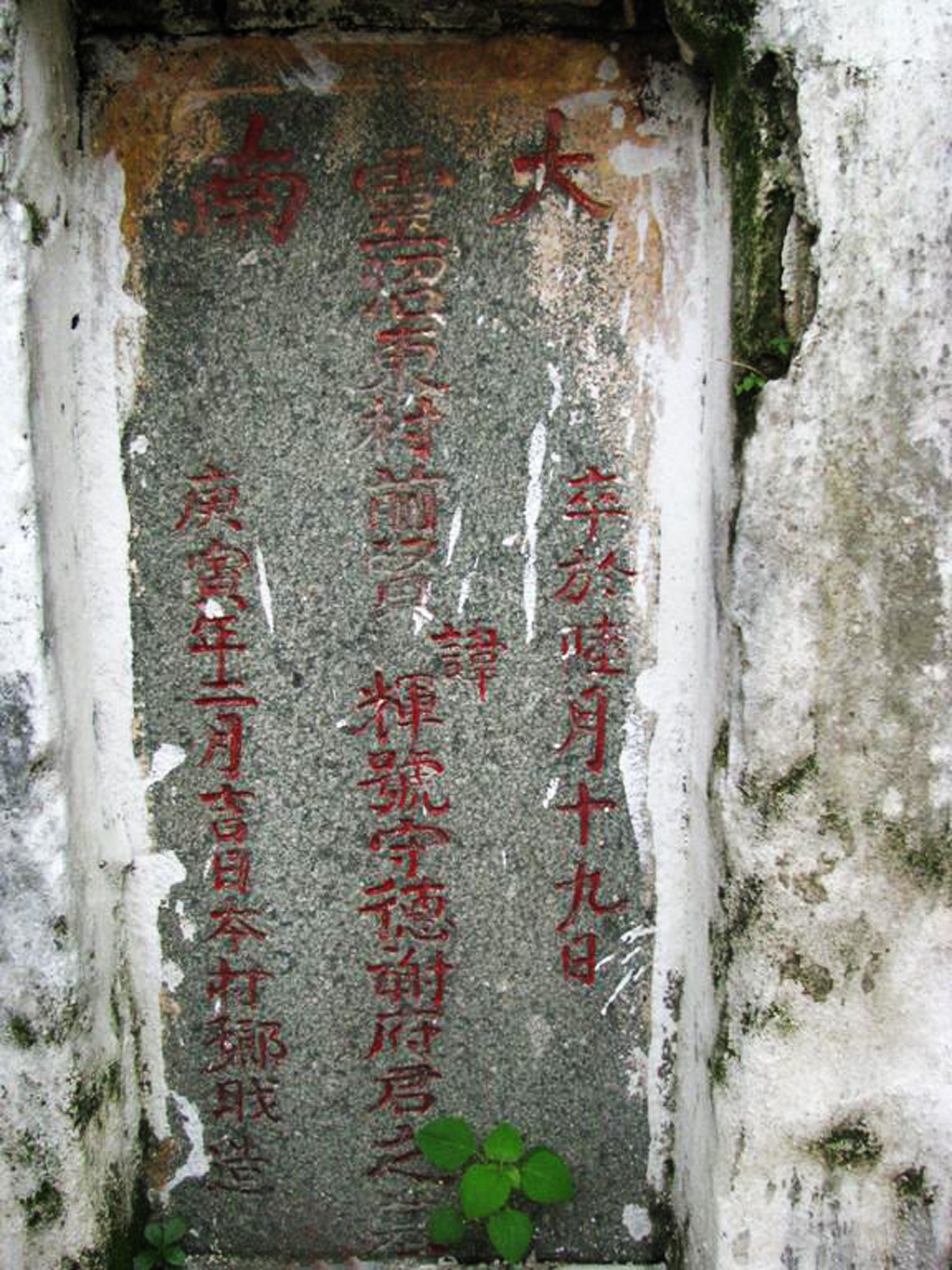
In the past it’s been suggested that Thủ Đức was named after a famous local mandarin named Đức (Quan Trấn Thủ Đức), and that when he built the market, Tạ Dương Minh named it after this official. However, the inscription on Tạ Dương Minh’s tombstone in Phường Linh Chiểu suggests otherwise, describing him as “Tạ Huy, alias Thủ Đức.” This shows clearly that, in addition to his nickname Tạ Huy, Tạ Dương Minh himself was known by the name “Thủ Đức,” and suggests that after he had built the first market, the local people decided to name it after him.

IMG_4061

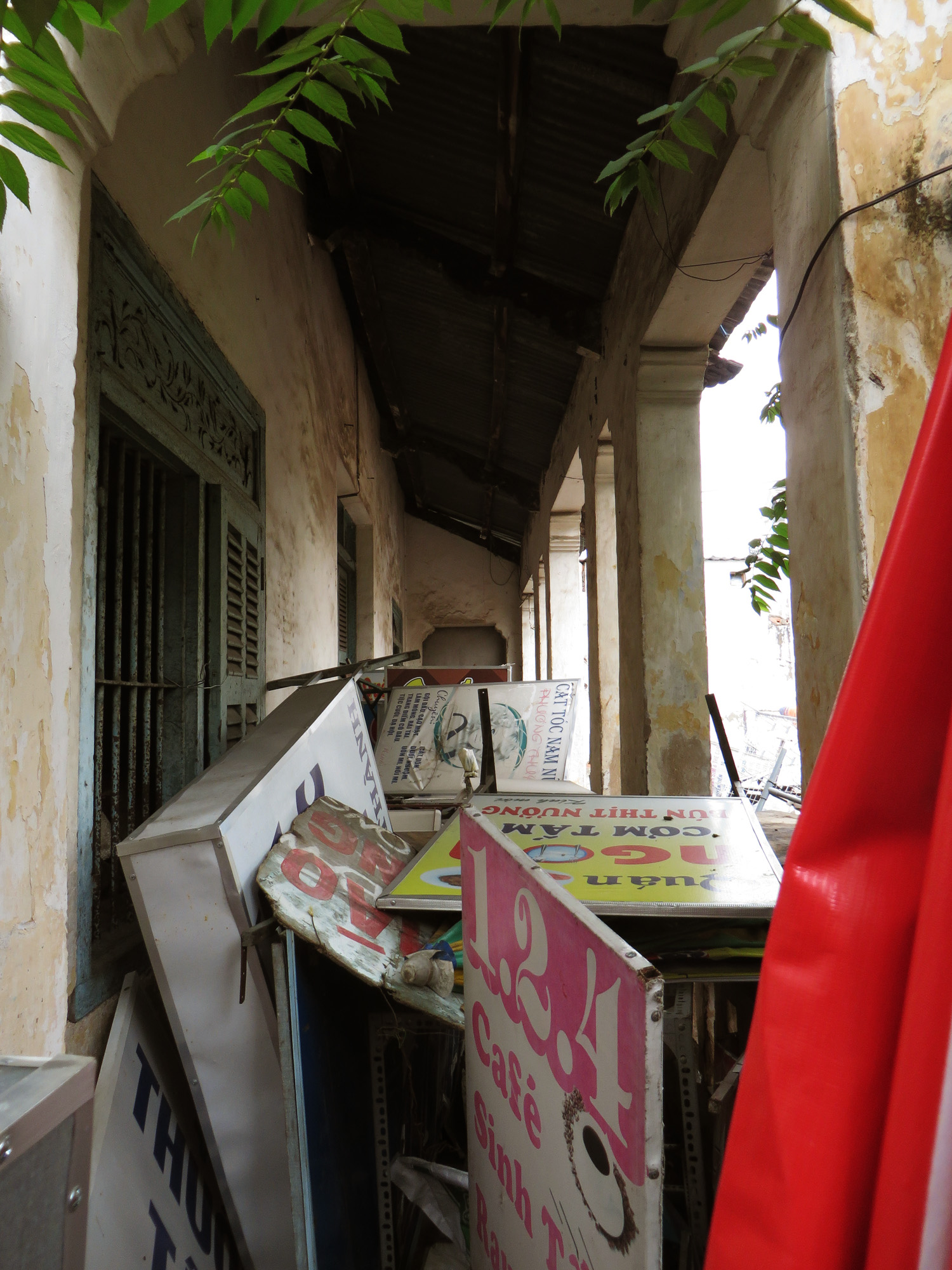
Rubbish is stacked up in the yard of the former Tạ Dương Minh Temple

Unfortunately, the two main historic sites associated with Thủ Đức’s founding father Tạ Dương Minh are both in a poor state of repair.

The house at 9 Hồ Văn Tư in Phường Trường Thọ once functioned as the Tạ Dương Minh Temple (Đền thờ Tạ Dương Minh). Originally a traditional wooden house belonging to the Tạ family, it was rebuilt in 1930 as a colonial style brick residence. However, in 1984 it was taken over by the local authorities and converted into a kindergarten and then a home for orphaned children, before finally being abandoned in the mid 1990s. Since that time, in the absence of funds for maintenance, it has become derelict and its yard is currently filled with piles of rubbish.

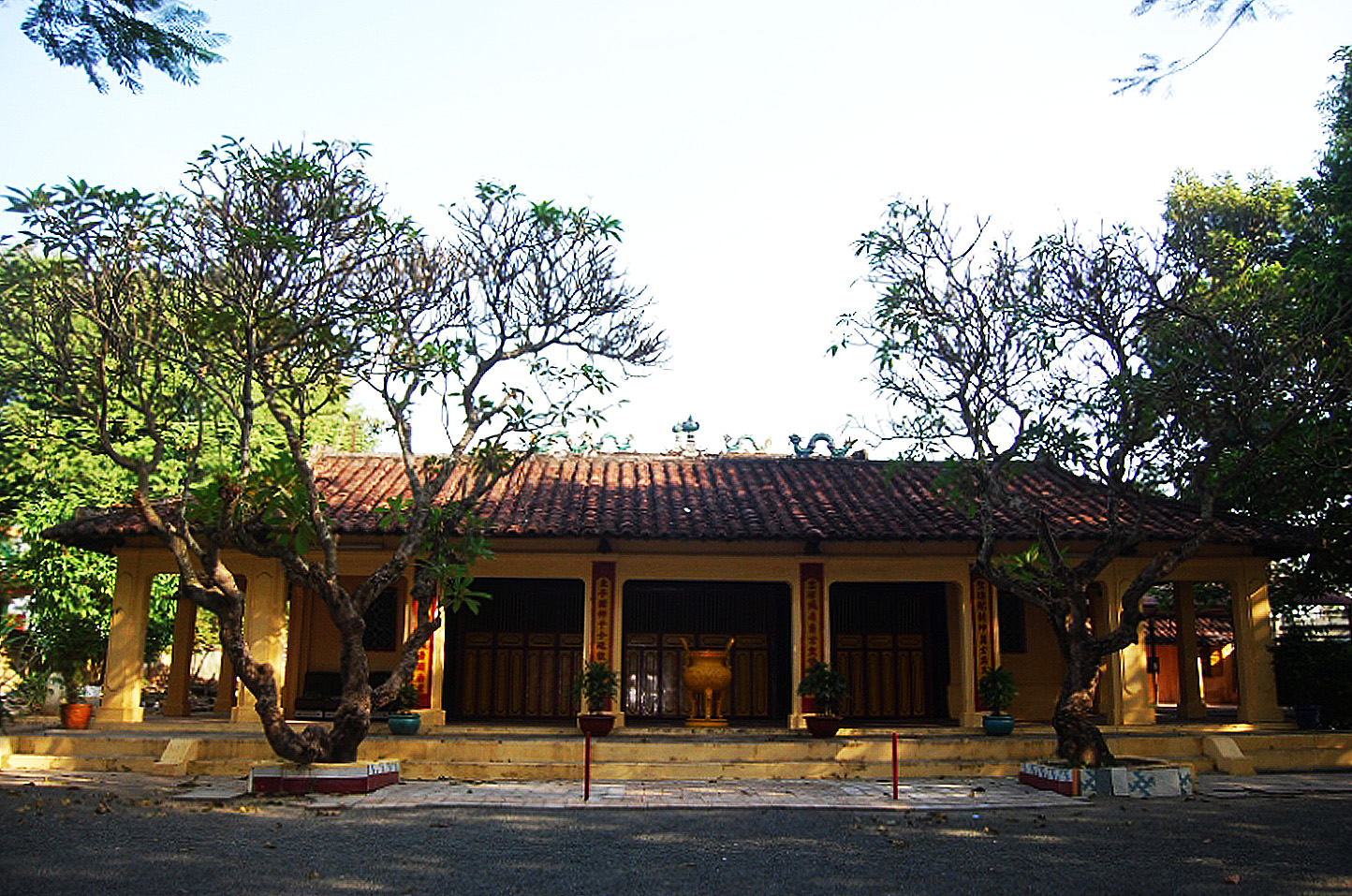
Since 1984, Tạ Dương Minh has been worshipped at a temporary shrine in the nearby Linh Đông Communal House (Đình Linh Đông) at 28 Chương Dương street, Phường Linh Chiểu.

IMG_4076

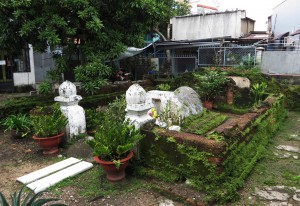
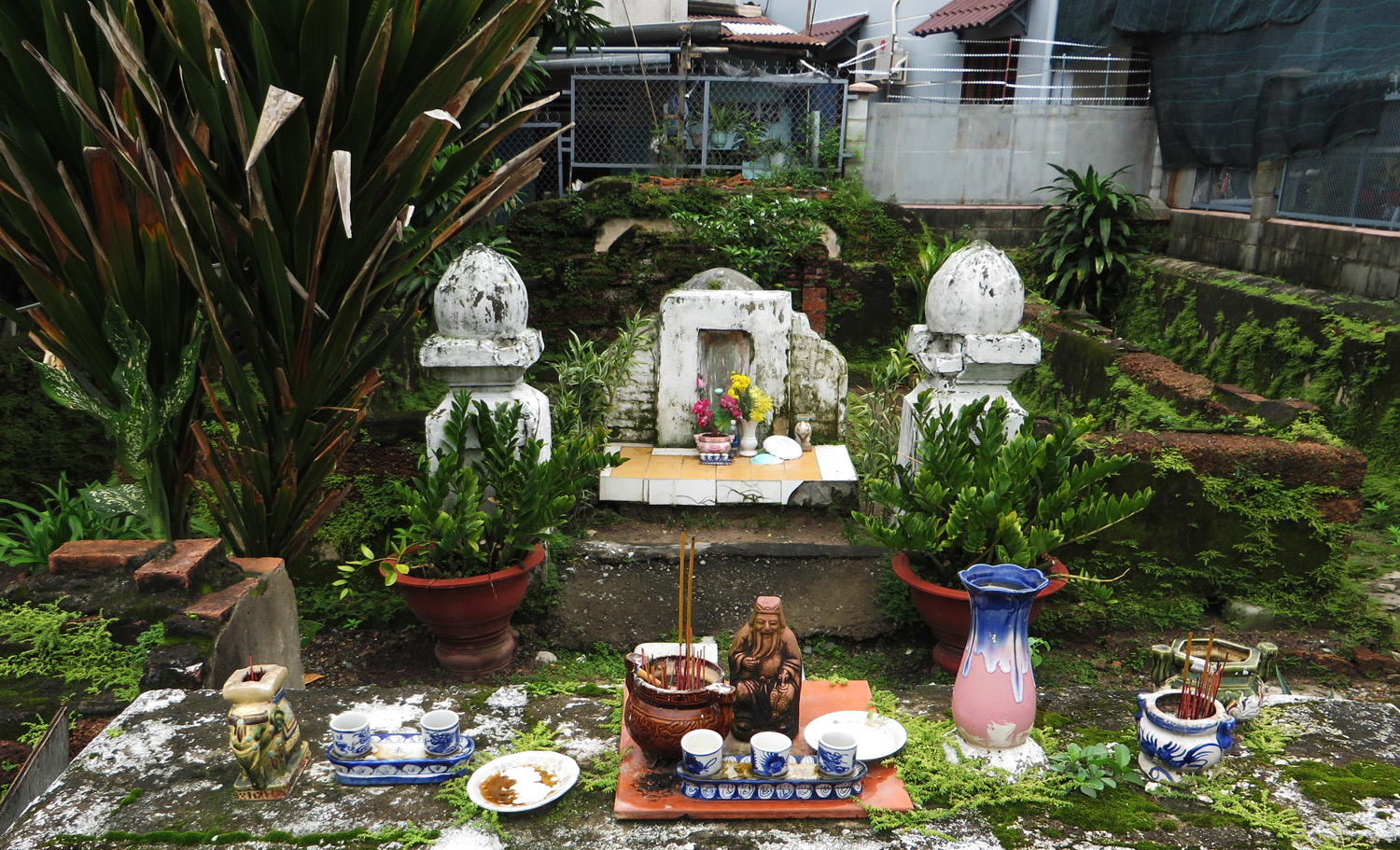
The Tạ Dương Minh Tomb at Đường 10, Khu phố 4, phường Linh Chiểu

When he died in 1889, Tạ Dương Minh was buried in what is now Khu phố 4. Phường Linh Chiểu. Located on a 112m² site, the tomb is surrounded by two low concentric walls and marked with a stele which reads, in Chinese: “This is the grave of Tạ Huy, alias Thủ Đức, founder (tiền hiền) of Linh Chiểu Đông village in Đại Nam. He died on the 19th day of 6th lunar month. Officials of the village built his tomb in the 2nd lunar month of 1890.”

Unlike the derelict temple, Tạ Dương Minh’s tomb was recognised by the Hồ Chí Minh City People’s Committee as a historic and cultural monument in accordance with Decision No 3266/QĐ-UBND of 27 July 2007. However, it too is now badly degraded and in urgent need of restoration.

How to get there:
Tạ Dương Minh Temple: 9 Hồ Văn Tư, Phường Trường Thọ, Quận Thủ Đức
Tạ Dương Minh Tomb: Đường 10, Khu phố 4, phường Linh Chiểu, Quận Thủ Đức (enter via Hẻm 251 Võ Van Ngân)
Tạ Dương Minh Shrine: Đình Linh Đông, 28 Chương Dương, Phường Linh Chiểu, Quận Thủ Đức

You may also be interested to read these articles:

Forgotten Nguyen Dynasty Tombs of Phu Nhuan
Ancient Tombs of Saigon – Phan Tan Huynh Tomb, 1824
Ancient Tombs of Saigon – Lam Tam Lang Tomb, 1841

IMG_4065

Another view of the rubbish stacked up in the yard of the former Tạ Dương Minh Temple

IMG_4074

Another view of the Tạ Dương Minh Tomb

Mo TH Ta Duong Minh - Bia mo

A close-up of the stele of the Tạ Dương Minh Tomb

đình Linh Đông

Linh Đông Communal House at 28 Chương Dương, Phường Linh Chiểu has housed a temporary shrine to Tạ Dương Minh since 1984

2010-11iii

A Nem Thủ Đức seller next to Thủ Đức Market

Tim Doling is the author of the guidebook Exploring Saigon-Chợ Lớn – Vanishing heritage of Hồ Chí Minh City (Nhà Xuất Bản Thế Giới, Hà Nội, 2019)

A full index of all Tim’s blog articles since November 2013 is now available here.

Join the Facebook group pages Saigon-Chợ Lớn Then & Now to see historic photographs juxtaposed with new ones taken in the same locations, and Đài Quan sát Di sản Sài Gòn – Saigon Heritage Observatory for up-to-date information on conservation issues in Saigon and Chợ Lớn.

Saigon Through the Eyes of Early Travellers – Dr Albert Morice in 1872, Part 1

gravure 1875-2-369 v

The Rade de Saigon, engraving by Th Weber taken from a photograph

Voyage en Cochinchine, an account of naturalist Dr Albert Morice’s 1872 visit to Saigon, Chọ Lớn and the Mekong Delta, was first published in the geographical adventure magazine Tour du Monde. This is the first of two extracts, translated into English.

It was 9.30am on 6 July 1872 when the propellers of the La Creuse stopped and we cast anchor in the Saigon harbour. Our huge steam ship was immediately surrounded by sampans, small Annamite [Vietnamese] boats that bring to mind the gondolas of Venice. Almost immediately, a crowd of officers and traders flooded the decks. Knowing that there would be no friendly face looking for me, I contemplated the landscape until it was time to go ashore.

996_001

Awaiting the disembarkation of passengers at Saigon port

The sky was full of huge copper-edged clouds, between which passed the scorching rays of a sun even more implacable than that which I had experienced in Singapore; the river at this point was so broad that it well deserved the name of “rade” which we had given it. A crowd of boats of all kinds – rowing, sailing and steaming – crowded all around us; they included a number of merchant vessels and two English steamships. In the distance, I could see the Fleurus, a stationary vessel from which the daily gun shots announcing the beginning, middle and end of the day were fired.

The right bank of the river was covered with very small mud and straw huts, most of which dipped halfway into the Donaï river, while on the left bank was the city of Saigon (not Saïgon, as we still insist on calling it in France). The great Hôtel Cosmopolitan or Maison Wangtaï, with its wide three-storey façade, stood proudly on the edge of the dock; beyond it, the regularly-spaced tamarinds of rue Catinat and other arteries of the city raised their large, verdant canopies; and the numerous but uncomfortable carriages known as Malabars waited for the multiple prey that would be delivered to them.

At about 11am, leaving my luggage to be carried along with that of French government passengers to the Naval wharf, I disembarked from the ship and my feet finally touched the dusty red earth of Saigon.

0

Colons wearing the salaco

Although new to the colony, I had gathered enough information to know that I should first visit one of the countless Asian merchants whose stalls line the lower streets of the city, in order to purchase a salaco. The salaco is the hat of the tropics; it shares with the pith helmet (known by the English in India as the sola topee) the function of protecting the skulls of Europeans from the over-ardent kisses of the sun. It’s true that it’s unsightly and rather heavy, but one adapts quickly enough to this strange headgear, the white dome of which prevents sunstroke. An honourable Chinese merchant who answered to the harmonious name of Atak soon found me what I needed, after which I hurried into the first hotel that I encountered on my journey.

The name of this caravanserai – “Hôtel de l’Univers” – was proudly displayed above a bright and clean verandah. I entered a room occupied by several Europeans which served as a café. Having already lunched on board, and also being quite tired, I thought only about taking a bath and having a rest: a bedroom was granted to me, with a spacious mosquito net, but alas, the net was riddled with holes! Nonetheless, after a sea voyage of 45 days, it was good finally to rest my sore limbs on land.

I woke up at about 3pm, and after taking a shower, I went to get my luggage. Two large Chinese porters, naked to the waist, wearing tall, thick straw hats and carrying on their shoulders a traditional solid bamboo pole, rushed after me and seized my cases with great speed – not without some shouting in their monosyllabic language which at first sounds displeasing to European ears.

914_001

Chinese porters

Tying the packages to the centre of their long pole and then placing the cases at each end, they lifted them onto their reddened shoulders and resumed their march with a characteristically swinging gait.

This important matter resolved, I made my way down to the dining room. At first, all I saw was a number of small tables, and above them two parallel rows of punkah fans. The punkah, which comprises cotton sheets affixed to both sides of a square wooden frame, is held by a rope that passes through a pulley and then through a hole in the wall to the next room. There, a servant pulls on the rope in order to move the punkah back and forward. It’s thanks to this invention (which comes, I think, from India) that in the evenings one can withstand the general weakness and reluctance to eat which one almost always experiences after a scorching day in this climate. The air current produced by the punkah not only revives the strength and the appetite, but also scatters mosquitoes and other annoying insects that seek your skin… or your soup.

After an abundant meal (a long passage on board ship usually involves frugal eating), I went outside to one of the small tables where coffee and liqueurs were being served, and there I began to examine my new environment more closely. Once more, I noticed something which had struck me when we first arrived – the unique appearance of the colonial inhabitants, in particular those who had lived in the colony for some time: they all had an emaciated figure and a slightly yellowish complexion.

Hotel de l'Univers

The Hôtel de l’Univers

During my meal, I had also noticed that the conversation around me gathered pace and intensity as my fellow diners worked their way through their courses, and that by the time they reached dessert, the diners at some tables were engaged in open dispute with each other. Perhaps soon, my face will also assume this colonial “livery” and, like it or not, I will become more easily irritated.

I spent the remainder of the evening with Mr L, whom I had met during the sea voyage and who was the most jovial individual I had met on my journey. He was also staying at the Hôtel de l’Univers, but had not dined there. He took me to one of the many cafés that lined the wharf, and we drank to our happy stay with a bottle of Norwegian pale ale.

As soon as we began to roll our cigarettes, some small Annamite children approached us and offer us a light. This disguised begging, perhaps the only type which one encounters in Cochinchina, was accomplished with such pleasant gestures and laughter that I neglected to use the little brazier which had been brought to the table for the use of smokers.

The next morning, awaking from a sleep which had been disturbed by too many bloodsucking insects, I decided that my mosquito net should be given the only definition that suited it: a muslin mosquito trap. I got up and resolved to visit the city. But before meeting my natural curiosity, I wanted to check on the health of some creatures I had brought with me from France, and on which I had devoted much paternal care during the long voyage.

4828666585_310b58fd38_oi

Vietnamese children in Saigon, late 19th century

These were two vipers, still young, but whose emerging graces delighted me. I open the dresser where I had placed the box containing the creatures. Horror! Legions of black ants escaped from it, leaving only two very well cleaned snake skeletons. The tropical ant had just revealed to me all of its feverish activity. I will not dwell on my deep pain: you must have a heart of naturalist to understand it.

Still grieving over this sad affair, I left the hotel and went out onto the street, leaving my friend who was still asleep in his room. In fact, when I visit a city for the first time, I prefer to do so alone; it seems to me that in this way, impressions are engraved upon one’s mind in a more lasting manner.

As I made my way outside, the hotel’s honourable “con chó,” an ugly little pug, greeted me with contemptuous barking. I turned right onto rue Catinat [Đồng Khởi street], one of the main arteries of the city. It was about 6.30am, and the Chinese who inhabit the lower parts of the street had already commenced their morning ablutions outside their front doors, with the total lack of embarrassment and shame that characterise this race. Carriages driven by black Malabar Hindus began chasing me with shouts of: “Voiture, capitaine, voiture!” And as soon as I stopped at a stall, a group of ugly little men with uncultivated hair, wearing an old marine infantry soldier’s hats and very brief costumes, gathered around me with their vast baskets of goods and assailed me with the cry: “Capitaine, panier, hein!”

As I walked further away from the river, the street gradually ascended towards the plateau and its European-style buildings increased in number. Towards the top of rue Catinat, I saw on my left the charming little palace of the Director of the Interior, located in the middle of a verdant green area where a large deer suddenly raised his head and looked at me curiously.

Cochinchine – Trésor publique de Saigon

Further along, I saw the offices of the government, the Treasury and the Post Office. It is true that at present these buildings are still mostly separated from each other by empty lots, large or small, where bamboo, castor, datura (jimsonweed), large vines and tall grasses grow at will. But as the main city artery, the rue Catinat is bold and well-designed, and its delightful buildings create a very good impression.

By about 8am, despite my salaco, the heat from the sun had become unbearable, and I began to retrace my steps back the hotel, this time taking the rue Nationale [Hai Bà Trưng street], a street parallel to the rue Catinat and less inhabited. The street contained a mixture of both comfortable houses and tiny bush huts. Along the way, I passed the old Governor’s Palace buildings, the Office of the Director of Health and the Naval Engineering Department.

As I walked, I encountered a number of Hindu men and especially women, with their black or copper-coloured skin, silver nose rings and glittering costumes in bold primary colours such as yellow or green. Their majestic plumpness contrasted strongly with the small frame of the Annamite women, bent under the weight of the goods they carried to the market. The latter were followed by their children, also charged with disproportionately large burdens that forced them to rest frequently.

IMAGE 3

The first Governor’s Palace

Reaching the middle of the street, I saw on the right a police station, out of which came several Europeans, Malabars, Chinese, and above all, Annamites dressed in police uniforms with small swords, tiny salacos and big buns on the sides of their heads. Occasionally my path was crossed by rich Chinese, followed by young Annamite porters carrying provisions.

I went back to the hotel very happy with my first exploration, which had allowed me to take a look at the different races that inhabit the city, as well as the exuberant products of nature to which the rays of the sun and water of the sky are so generous.

But I must immediately say a word about the suffering which every European should expect in Saigon. Already, when visiting the Red Sea, I became acquainted with one of the worst enemies of people of our race in the tropics: the eruption of itchy papules commonly known as prickly heat (Lichen tropicus).

Your whole body, or most of it, is covered with small blisters as big as a pinheads, and the itching is so irresistible that it takes heroic courage to resist the desire to burst thousands of them every day. It is especially during the dry season that this cruel eruption afflicts newcomers, and even the “vieux Cochinchinois,” as those who have several years of experience in the colony are known. The refreshing rains of winter moderate or remove these papules. Indigenous people seem to be exempt from this infirmity, but for Europeans, almost nothing can be done to treat it, and where the skin is thin and delicate, the papules can be very unsightly.

To read Part 2 of this serialisation click here

Tim Doling is the author of the guidebook Exploring Saigon-Chợ Lớn – Vanishing heritage of Hồ Chí Minh City (Nhà Xuất Bản Thế Giới, Hà Nội, 2019)

A full index of all Tim’s blog articles since November 2013 is now available here.

Join the Facebook group pages Saigon-Chợ Lớn Then & Now to see historic photographs juxtaposed with new ones taken in the same locations, and Đài Quan sát Di sản Sài Gòn – Saigon Heritage Observatory for up-to-date information on conservation issues in Saigon and Chợ Lớn.

The Lost Inner-City Waterways of Saigon and Cho Lon – Part 2: Cho Lon

Bản_đồ_Gia_Định_1815 ii

This late 19th century map, based on Trần Văn Học’s map of 1815 with added details from various 19th century sources, shows the old Tai Ngon Market and also illustrates how the 1819 An Thông Hà Canal by-passed the city.

This article was published previously in Saigoneer http://saigoneer.com

When the French arrived in 1859, both Saigon and Chợ Lớn were criss-crossed by networks of canals and creeks, making it possible for boatmen to travel right through both city centres without stepping ashore. However, while most of Saigon’s waterways were filled as early as 1868 to make way for spacious tree-lined boulevards, those of Chợ Lớn survived until as late as 1925. In this second instalment of a two-part feature, we look at the history of the ancient waterways in Chợ Lớn.

To read part 1 of this two-part feature looking at the lost inner-city waterways of Saigon, click here

Originally founded in the 1680s by refugee supporters of the overthrown Ming dynasty, the earliest incarnation of Chợ Lớn, known as the Xã Minh Hương, was established as an outpost of a larger Ming refugee settlement in Biên Hòa. Initially, it comprised a small cluster of houses on the north bank of the Bình Dương river, which at that time ran along the path of what is now Hải Thượng Lãn Ông street.

Boats

Chinese merchant shipping in Chợ Lớn

Unable to return to China, its Minh Hương founders intermarried and gradually evolved into a resident mixed-race community with its own unique ethno-cultural identity, while later settlers from Qing-dynasty Fujian and Guangdong provinces tended to marry within their ethnic group.

During the 18th century, the partnership between the Minh Hương (who controlled the domestic shipping and processing of rice and other agricultural products from the Mekong Delta) and the later Qing Chinese settlers (who shipped these products overseas) turned the town into an important economic hub – as well as an increasingly important source of revenue for the Nguyễn lords. Constructed in 1772 by the Nguyễn government to by-pass several badly-silted creeks, the Ruột Ngựa or “Horse Guts” Canal (so named because of its shape) was designed to facilitate the activities of the merchants and thereby guarantee a high level of trade tax revenue.

During the subsequent Tây Sơn War (1770-1802), most of the Minh Hương and Qing Chinese merchants in this area remained loyal to the Nguyễn lords, but this left them vulnerable to attack by the rebels. Following a Tây Sơn offensive against the Minh Hương settlement of Biên Hòa in 1778, many of its citizens fled to the Xã Minh Hương, increasing the latter’s population significantly. Soon afterwards, a new market was established in the north of the town, on the site of the current Chợ Rẫy Hospital. A canal known as the Phố Xếp Canal was then dug along the path of modern Châu Văn Liêm street, so that merchants could access the market by boat from the Bình Dương River.

Central Chợ Lớn 1893

On this 1893 map of central Chợ Lớn, the original Bình Dương River and related creeks are shown in blue and canals shown in red.

However, in 1782, the Tây Sơn launched a devastating attack on the Xã Minh Hương itself, causing widespread damage and killing many of its citizens. Soon afterwards, the Xã Minh Hương was rebuilt with new wharfs and embankments to guard against flooding and invasion. As a consequence of this, the market and the town gradually became known by the new name 堤岸 – Dī Àn in Mandarin – meaning “embankment.” Many historians believe that this name, spoken in the Cantonese dialect, evolved into the local form “Tai Ngon,” which was then written on several 19th century maps as “Saigon.” In 1859, the French appropriated this name and used it to describe their new administrative capital, the former Bến Nghé. Deprived of its original name, the former Tai Ngon became known simply as Chợ Lớn or “Big Market.”

During the reign of King Gia Long (1802-1820), Chinese commercial knowledge and labour was highly valued. However, by this time both the Ruột Ngựa canal, and the Lò Gốm creek which connected it to the Bình Dương River, had also become badly silted, causing transportation difficulties for those merchants travelling back and forwards to the Mekong Delta. In 1819, King Gia Long’s Vice Regal government responded by digging a large new canal known as the An Thông Hà, which by-passed Tai Ngon town centre completely, downgrading the westernmost section of the Bình Dương River, the Lò Gốm Creek and the Ruột Ngựa canal into a waterway for local shipping. Today the An Thông Hà Canal forms part of the main Tàu Hủ Creek.

IMAGE 4

On this 1893 map of western Chợ Lớn, the original Bình Dương River and related creeks are shown in blue and canals shown in red

As mentioned in the first part of this feature, the French arrival in Saigon in 1859 was followed soon afterwards by the filling of all of the city-centre canals and creeks for reasons of hygiene. In contrast, Chợ Lớn had no large and vocal French population, and its powerful Minh Hương and other Chinese congregations relied heavily upon its creeks and canals for commerce. Consequently, they were able to lobby successfully for the retention of their inner-city waterways until as late as 1926 – over 60 years after the French conquest.

In fact, in 1889, the year in which the filling of the last section of the Grand Canal got under way in Saigon, work had just began in Chợ Lớn to dig a brand new waterway – the Canal Bonard – with the aim of improving access by merchant boatmen into the west of the town.

Following the relocation of the main city market to the site of the current Chợ Lớn Post Office in the 1860s, the old Tai Ngon Market was abandoned and the Phố Xếp Canal lost its purpose. Starting in the 1890s, it was progressively filled.

The end finally came for Chợ Lớn’s inner-city waterways in 1923-1926, when, under the influence of Hà Nội-based urbanist Ernest Hébrard, the Cochinchina authorities finally got to work filling Chợ Lớn’s creeks and canals with the aim of improving traffic circulation within the town.

Canal Bonard

Today what remains of the Canal Bonard is little more than an open sewer, surrounded by temporary housing

However, the Canal Bonard was pointedly excluded from this scheme, possibly at the instigation of wealthy businessman and philanthropist Quách Đàm, who had undertaken to fund the construction of a larger city market to replace the small and now landlocked Marche Centrale de Cholon. In 1926-1928, the Bình Tây Market was built right next to the Canal Bonard, Chợ Lớn’s sole-surviving inner-city waterway, thereby ensuring that the next generation of Chợ Lớn’s merchants would enjoy direct access by boat to the city’s main market.

The Canal Bonard was abandoned in the 1970s, and in 2000 most of its eastern section was filled. Today, the surviving section of this historic inner-city waterway is today little more than a rat-infested open sewer, surrounded by temporary housing.

However, in 2015, work began on a US$100 million project to reinstate this historic canal in its entirety, with the aims of reducing environmental pollution, improving public health and reducing chronic flooding. Temporary housing will be relocated and the quaysides – which still contain a number of important heritage buildings – will be landscaped for both visitors and residents to enjoy. For more details see Icons of Old Saigon: The Canal Bonard.

Cholon creek

The bridge over the entrance to the Chợ Lớn Creek, pictured in the late 19th century

14016030982_af2bd8610c_o

The junction between the Chợ Lớn Creek and the Phố Xếp Canal, pictured in the late 19th century

3887926911_3fc97ff804_o

An aerial view of the Canal Bonard in the 1940s

Tim Doling is the author of the guidebook Exploring Saigon-Chợ Lớn – Vanishing heritage of Hồ Chí Minh City (Nhà Xuất Bản Thế Giới, Hà Nội, 2019)

A full index of all Tim’s blog articles since November 2013 is now available here.

Join the Facebook group pages Saigon-Chợ Lớn Then & Now to see historic photographs juxtaposed with new ones taken in the same locations, and Đài Quan sát Di sản Sài Gòn – Saigon Heritage Observatory for up-to-date information on conservation issues in Saigon and Chợ Lớn.

Petrus Ky – Historical Memories of Saigon and its Environs, 1885, Part 3

IMAGE 211

A late 19th century map of Gia Định based on the 1815 map by Trần Văn Học, with additional place names from Gia Định thành thông chí by Trịnh Hoài Đức, Đại Nam nhất thống chí by Quốc sử quán triều Nguyễn and Souvenirs Historiques by Petrus Ky

In 1885, scholar Petrus Trương Vĩnh Ký delivered a lecture at the Collège des Interprètes entitled Souvenirs historiques sur Saïgon et ses environs (Historical Memories of Saigon and its Environs). Published as a booklet later that same year, it provides us with one of the most important historical accounts of Saigon-Chợ Lớn in the pre-colonial period. This is the third and final instalment of the serialisation, translated into English.

To read Part 1 of this serialisation, click here

To read Part 2 of this serialisation, click here

Now let’s take a journey along the Route basse [the “Low Road” alongside the Bến Nghé Creek] to Chợ Lớn.
4895842175_cd999a8cab_b

A boatman on the arroyo

The arroyo Chinois, formerly known as the Bến Nghé Creek, received its current name from the French. They observed that this arroyo led to the city of Chợ Lớn, and that its most numerous inhabitants were Chinese traders who used it to carry goods aboard their junks which moored at Xóm Chiêu (between the Fort du Sud and the Messageries maritimes), and naturally gave it the name arroyo Chinois.

According to the Gia Định thành thông chí, the name Bến Nghé derives from the fact that in times gone by, buffalo, and especially young buffalo (nghé), bathed in this arroyo.

Both banks of the arroyo have always been crowded with boats of all kinds and lined with houses on stilts, which constitute two thick ramparts, making the passage of the arroyo somewhat cramped.

In the old days, the most significant market, which enjoyed the most active trade, could be found in the area between the Signal Mast and the modern rue Mac Mahon [modern Nam Kỳ Khởi Nghĩa street], the path of which was inhabited by fortune tellers and lathe workers. The houses around this market were well built, all of them made from fine wood with roofs covered in tiles.

From there to the Cầu Ông Lãnh Market, we pass through the territory of the ancient village of Long Hưng Thôn, comprising houses which cover the shore and stretch beyond the road. The current rue Boresse [modern Yersin street] was once a poor road, alongside which were built the dwellings of freed slaves from Laos; they made buckets from nipa palm leaves to carry water.
4896463350_cfe5a03c37_b

Arroyo Cao-Ong-Lanh, Saigon: Vue des Jonques de Mer

Over the Rạch Cầu Ông Lãnh, a small arroyo leading to the slaughterhouse, there was formerly a wooden bridge built in 1785 by a Lãnh binh or military commander [Nguyễn dynasty general Nguyễn Ngọc Thăng] who once lived in this area. This bridge – the Cầu Ông Lãnh or “Commander’s Bridge” [located close to the modern Nguyễn Thái Học and Võ Văn Kiệt junction] – gave its name to the whole quarter.

Further along, we find a bridge named Cầu Muối (“Salt Bridge”), because in days gone by, merchants in small seagoing boats (ghe cửa) would come here to sell salt. These salt sellers could still be found here long after the fall of Saigon, with their vats of salt covered with leaves. This was the largest salt depot in the city.

Advancing further, we come to the bridge named Cầu Kho and a little further on another bridge called Cầu Bà Tiệm. The area between these two bridges was the location of the Chợ Kho (“Stores Market”), so named because it was originally the location of the Royal Stores (Kho Cẩm Thảo) which King Gia Long built to accommodate taxes in kind from merchants arriving from the interior of Cochinchina. The village in which it was located was known as Tân Triêm Phường.

Continuing from the Bà Tiệm Bridge to the bridge named Cầu Bà Đô, we pass the villages of Hòa Thạnh and Tân Thạnh, popularly known as Xóm Lá (after the trade in parchment made from leaves which was carried out on the other side of the arroyo) and Xóm Cốm (after the local speciality grilled rice cakes).
Saigon map early colonial 2

A close-up of the 1815 map showing Bến Nghé (Saigon) and Tai Ngon/Saigon (Chợ Lớn)

After the Bà Đô Bridge, we arrive at the village of Bình Yên. In the old days, many of the residents here occupied large plots of land and carried out commercial exchange with merchant junk owners coming from the north.

Next we come to the bridge known as Cầu Hộc, which takes its name from an ancient well known as the Giếng Hộc which originally had a rectangular wooden interior frame to measure the water level [Hộc meaning “measure of capacity”]. Today we can still find a well at this spot containing clear and potable water which is especially good for making tea.

From this arroyo to the stream near Chợ Quán Hospital (Lò Rèn Thợ Vắp) was once the territory of the ancient village of Tân Kiểng.

Chợ Quán Hospital is located in the territory of Phú Hội Thôn, which used to have many lime kilns. Beyond the hospital we cross a bridge and continue to the villages of Đức Lập and then Tân Châu, popularly known as Xóm Câu (“Fishing Hamlet”).

A little further on is the village of An Bình Thôn, popularly known as Xóm Dầu (“Oil Hamlet”) and centred on the Rạch Xóm Dầu, a waterway where dredging ships are moored today. There was an oil depot here which specialised in the production of peanut oil.

As we continue through An Bình Thôn, from the Rạch Xóm Dầu to the pont de l’Usine à décortiquer (Bridge of the Rice-Husking Factory), we notice that part of An Bình Thôn lay on the other side of the arroyo Chinois. Today it is known as An Hòa village, and we can find there the Vạn Đò or Pagode de l’Association des Bateaux de passage (Pagoda of the Association of Transit Boats).
Cochinchine Saïgon - Le Pilon à décortiquer le Riz

Inside a Chợ Lớn rice husking factory

Just before the Bridge of the Rice-Husking Factory there is an arroyo with a beautiful bridge named the Rach Bà Tịnh which still survives to this day. This waterway penetrates deep into the interior, reaching as far as the great tamarinds on the Route haute (High Road).

A little further on we reach the Adran Well. This once stood on the bank of the arroyo, but thanks to the action of water of the Vịnh Bà Thuông over a long period of time, the land on which it stands now extends out in the arroyo. Many rice husking factories have been set up here on the banks of the waterway.

From here, the village of An Điền stretched as far as the iron bridge formerly known as the Cầu Kinh. This area was known by the popular name of Xóm Chỉ (“Thread Hamlet”), after its main product. It was here that an arroyo once connected the Rạch Bến Nghé with the Ngã Tư Market, passing through the Rạch Lò Gốm. The Bà Thuông Canal, which today runs from Chợ Lớn to Ngã Tư, was dug by Viceroy Lê Văn Duyệt, the “Great Eunuch.”

On the other side of the arroyo Bến Nghé, parallel to the bank we have just travelled along, were a number of other settlements. Stretching from the Messageries maritimes to the Rạch Ông Lớn were the villages of Khánh Hội, Tân Vĩnh and Vĩnh Khánh; between the Rạch Ông Lớn and the Rạch Ông Nhỏ were Bình Xuyên and Tứ Xuân, popularly known as Xóm Te; and west of the Rạch Ông Nhỏ were An Thành (today Tuy Thành), Bình Hòa (Thạnh Bình, popularly Xóm Rớ), An Hòa Đông and Hưng Phú (Xóm Than).
Saigon map early colonial 4

A close up of the 1815 map showing the area immediately west of the 1790 Citadel

A row of houses, mostly huts on stilts, border the banks as far as Chợ Lớn. The two banks of the arroyo are also lined with boats from different provinces. The middle of the arroyo is continually crossed by small boats (ghe lườn) whose owners sell cakes, food and supplies of all kinds. Watching these boats travelling back and forward is like watching the to-and-fro of the yarn on a knitting machine!

Now, let’s follow the Route haute (High Road) from Saigon to Chợ Lớn [today Nguyễn Thị Minh Khai and Trần Phú streets]. The French government has preserved this ancient road, widening and paving it. It was originally traced by M Ollivier, the man responsible in 1790 for the construction of the Citadel, in order to create a direct route between Saigon and Chợ Lớn.

Families were given three ligatures and a piece of cotton cloth for each tomb that had to be removed during the construction of the road. On both sides of the road, mango and jackfruit trees were planted alternately, in long rows.

At the right corner of the ancient Citadel (the location of the old Palais de justice) there was a sulphur depot (Trường Diêm), while on the location of the new Palais de justice, one could originally find the Xóm Vườn Mít (“Jackfruit Garden Hamlet”) or Xóm Bột Vườn Mít (“Flower and Jackfruit Garden Hamlet”). So it seems that there was once a jackfruit plantation at this location, and its inhabitants also manufactured and sold flour.

Later, in the area occupied by the Maison Centrale (Prison) and the new Palais de justice, there was a market called Chợ Cây Đa Còm (“Curved Banyan Tree Market”), clustered around a huge banyan tree with a bent trunk.
IMAGE 1

A Saigon market scene

Besides the food which was sold there, a row of shops had displays of drums, umbrellas, saddles and graduation caps for those who had passed the mandarin examinations.

After this market, also on the north side of the street, was the old Chợ Đũi (Raw Silk Market), where the city’s silk trade was based. A little further on, before reaching the route de Thuận Kiều [modern Cách mạng Tháng 8 street], was Xóm Đệm Buồm, the district which specialised in mats and sails. Today, the name of Chợ Đũi applies to the entire upper part of the rue Boresse up to and around the railway line [now the area around the Phù Đổng six-way junction].

On the way along the route de Thuận Kiều up to the Stud Farm, one passes the Cây Đa Thằng Mọi or Điều Khiển Market: Cây Đa Thằng Mọi means “Banyan tree of the slaves,” while Điều Khiển was the title of a military intendant. The market was built and opened by an intendant, hence its name.

But why the name: “Banian tree of the slaves?” It came from the goods that were traded in this market. It specialised a popular type of terracotta candlestick which was shaped to look like a black slave, with a lantern fixed to its head, in the bowl of which one immersed a wick in peanut or coconut oil.

This market, which extended from the front of the Maison Blancsubé [the grand residence of Jules Blancsubé, mayor of Saigon from 1879-1880, on what later became route Blancsubé, modern Cống Quỳnh street] up as far as the railway line, was filled with houses and shops.

L0055713 Cochin China [Vietnam].

The Plaine des tombeaux by John Thomson, 1867 (Wellcome Library, London, Wellcome Images)

Before arriving at Stud Farm, we see water from the Plaine des tombeaux (Plain of Tombs) draining into the arroyo which ran behind the Maison Blancsubé, so that the ground on this section of the road was in a constant state of saturation. As a result, this area was known as Nước nhĩ or “dripping water.”

Near the Stud, we see the Kim Chương Pagoda, built during the reign of Gia Long on the site of an ancient Cambodian sanctuary. It became famous as a result of two gloomy events which took place there, yet both remain shrouded in mystery.

During the war, Lord Nguyễn Phúc Thuần (Duệ Tông), uncle of King Gia Long, and Prince Nguyễn Phúc Dương (Mục Vương) fell into the hands of Tay Sơn – the first at Bassac (Cà Mau) in 1776, the second shortly afterwards at Ba Vát (formerly in Vĩnh Long province, now in the district of Bến Tre, northeast of Mỏ Cày – and both of them are said to have been executed in this pagoda in 1776.

The Camp des Mares [located in the area south of the modern Công Quỳnh-Phạm Viết Chánh junction], where today you can find the barracks of the Annamite riflemen, was once the Hiển Trung tự (Temple of Brilliant Loyalty) or the Miếu Công thần (Temple of Meritorious Officials). Built by order of Gia Long, it was dedicated to the memory of former royal servants to which the government, at fixed times, solemnly made offerings and sacrifices.

The pagoda contained inscribed tablets for every man of merit who had served the state well. Those of several Frenchmen who died serving Gia Long could also be found here.
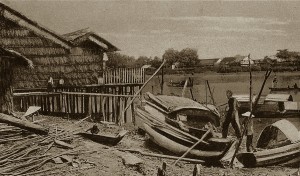
Environs de Saigon - Habitations de pêcheurs ii

Environs de Saigon – Habitations de pêcheurs

Another pagoda, now occupied by the officers of the Annamite sharpshooters, was situated in front of the perimeter wall and flanked by two ponds planted with water lilies, which spread their perfume across the royal road. This was also built in the time of Gia Long, and was known by the names Miếu Hội Đồng or Miếu Thính.

In the old days, two brick columns – one at each end of the section of road running past these two pagodas – contained signs inscribed with the words: Khuynh cái, hạ mã (“Remove hat and dismount”).

Continuing past the Ferme expérimentale des Mares [an experimental farm on the same siter belonging to the Jardin botanique et zoologique de Saïgon] to the route Stratégique, the road once passed a pagoda named Chùa Ông Phúc or Chùa Phật Lớn, now demolished.

After passing a stream linked to the source of the Rạch Cầu Ba Đô, you would have seen the tombs of two princes, Hoàng Thùy and Hoàng Trớt, who it is said were the sons of Nguyễn Văn Nhạc [Tây Sơn king Thái Đức, 1778-1793]; at this location there was once a market called Chợ Mai (“Morning Market”).

Opposite the avenue de l’Église de Chợ Quán [modern Trần Bình Trọng street], on the plain, there once stood the Kim Tiên Pagoda, on the foundations of which we built another temple named the Nhơn Sơn Tự.

On the avenue de l’Hôpital, there was once another pagoda called the Gia Điền Pagoda, which no longer exists today.
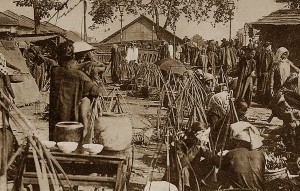
9670008166_5a01c14dd1_o

A Chợ Lớn market scene

As we advance towards Chợ Lớn, we first come to the village of Xóm Bột, where flour was made and sold on both sides of the road. After passing through this village, we arrive at market Chợ Hôm (Evening Market).

Behind this market one can still find the Trần Tướng Pagoda, which was built by King Gia Long in honour of one of his mandarins who was killed by the Tây Sơn.

On a small arroyo where the pagodas of Chinese cemetery are located, there was a small bridge called Cầu Linh Yển. According to tradition, a soldier named Yển carried Gia Long on his shoulders when he was fleeing his Tây Sơn pursuers. At this bridge, he was replaced by another soldier. Exhausted, Yển stopped to rest; however, the Tây Sơn arrived and put him to death. Gia Long built a pagoda in this place devoted to his memory. The village was called Tân Thuận or Hàm Luông.

Here, under the shade of a large tamarind tree, were several quán (hostels) called Quán Bánh Nghệ. From here to the rue des Marins [Trần Hưng Đạo B street], the agglomeration of houses formed part of Xóm Chỉ.

Now let’s walk through ancient Chợ Lớn, before returning to Saigon looking at places on the south side of the Route haute (High Road).

The original Chợ Lớn (“Big Market”) was located on the site of today’s Chợ Rẫy.
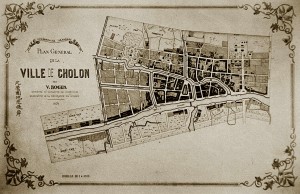
Cholon map 1874

An 1874 map of Chợ Lớn

The area between the rue des Marins [Trần Hưng Đạo street] and the arroyo de Chợ Lớn was inhabited by the Minh Hương, a mixed race Chinese people who wore Vietnamese dress and lived in a village which was granted privileged status by the king.

The arroyo de Chợ Lớn was lined with brick-built shops called Tàu Khậu which were leased to Chinese traders who came from China once every year on sea junks. They brought their goods into these stores where they sold them either wholesale or retail during their stay in Saigon.

The bridge that led across this arroyo [now Hải Thượng Lãn Ông street] to the current city market [on the site of the modern Chợ Lớn Post Office] was called the Cầu Đường (“Sugar Bridge”), because the traders around it sold candies in tablet form and in jars.

The edges of the canal which passed in front of the house of the Đốc Phủ of Chợ Lớn [Đỗ Hữu Phương, 1840-1914, Governor of Chợ Lờn province] formed the rue de Phố Xếp [now Châu Văn Liêm street], while the bridge which crossed this canal carrying the route de Cây Mai [modern Nguyễn Trãi] was named Cầu Phố.

The angle formed by the canals from the market up to the iron bridge contained the Quới Đước village and the Chợ Kinh Market.
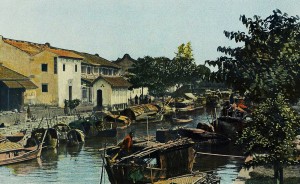
Cochinchine 1903 - Cholon, canaux intérieurs

Cochinchine 1903 – Cholon, canaux intérieurs

The arroyo de Chợ Lớn, stretching westward from the pont du marché (Cầu Đường) to the Cầu Khâm Sai and to the Lò Gốm Creek, was lined with houses.

The Lò Rèn Market, located on the site of the present church in Chợ Lớn [the earlier St-Michel Church on upper rue de Paris, now Phùng Hưng street], was inhabited by blacksmiths and manufacturers of iron wire, who lived in the Xóm Mậu Tài.

Going northward to Cây Mai Pagoda, one crossed the Cầu Ông Tiều bridge.

The Cây Mai Pagoda was originally a Cambodian sanctuary, surrounded on all sides by ponds, in which an annual regatta was held in honour of the Buddha. This pagoda was restored by the Annamites. During the reign of Minh Mạng, General Nguyễn Tri Phương, who came to Cochinchina with mandarin Phan Thanh Giản, endowed it with a two storey building. The name of the pagoda and the hill on which it stands comes from the apricot trees growing there, whose white flowers are highly valued by the Chinese and Annamites.

The current Inspection de Chợ Lớn stands on the site once occupied by the Tân Long District office and administrator’s residence.

Now let’s retrace our steps and head back to Chợ Quán.

The name of Chợ Quán, also applied to the villages of Tân Kiềng, Nhợn Giang, Bình Yên, was originally that of the market located under the big tamarind trees of the avenue de l’Hôpital de Cho-quan. There were many hostels here, hence the name Chợ (market) Quán (auberge or hostel).
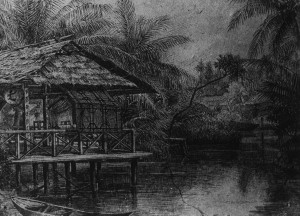
maison du souvenir_cho-quan_1889_2

An 1889 drawing of Petrus Ky’s house in Chợ Quán

Between the avenue de l’Hôpital and the Experimental Farm of the Camp des Mares was the so-called “village of the founders,” Nhơn Ngãi (today Nhơn Giang). In this area we can still find the remains of an ancient Cambodian village. A large Cambodian pagoda with brick towers once stood here. Excavations unearthed Cambodian bricks, terracotta water lilies, and small Buddha statues made from bronze and stone. Two blocks of highly polished granite decorated with relief sculptures may still be seen there today.

Today, the area around the road which descends from Chợ Quán (Nhơn Giang) to Cầu Kho is dotted with houses surrounded by gardens. In the time of Gia Long, the first section of this road as far as the Maison Blancsubé was populated by miserable beggars. Seeing the arrival of the Tây Sơn in pursuit of King Gia Long, they gathered on the street and beat drums, making a terrible din. The Tây Sơn army stopped, figuring that they had encountered a serious obstacle which needed to be overcome, and Gia Long escaped. Later, Gia Long built houses to accommodate these beggars in reward for the services they had rendered him on this occasion.

This hamlet was named Tân Lộc Phường. The bridge over the arroyo behind the Maison Blancsubé was called Cầu Gạo (“Rice Bridge”), because this is where rice was sold. Long ago, Cambodians grew rice in this place, and also made mats.
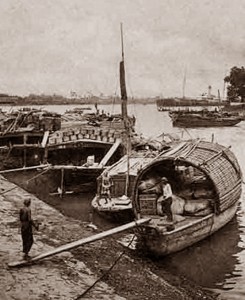
4895825737_a974cc02bb_b

Merchant boats on the banks of an arroyo

In front of the Maison Spooner, they sold sheets of white leaf parchment, lá buôn, and an agglomeration of dwellings made up the Xóm Lá Buôn.

From there to the prison, we see by the roadside several country houses belonging to government mandarins and officials. At the top of the rue Boresse was the Cầu Quan (“Mandarins’ Bridge”).

Today, as we take rue Mac-Mahon [modern Nam Kỳ Khởi Nghĩa street] up to the rue des Moïs, we pass the new Palais de justice, the Palais du gouvernement and the Collège Chasseloup-Laubat, which are all located outside the area of the ancient Citadel. In the time of the “Great Eunuch,” this area contained the residence of Lê Văn Duyệt’s wife (Dinh Bà Lớn), the lodge of the Viceroy (Nhà Hoa), the theatre (Nhà Hát) and the archery range (Trường Ná).

Next to the house of M de Lanneau, one can still see two casuarinas; this area once housed the Nền Xã Tắc – a sacred platform where sacrifices were made to the gods. The city park was previously the village of Xóm Lụa (“Silk Hamlet”), where silk was bleached, sewn and sold.

On the Route stratégique which leads up to the Stud, one passes the villages of Xóm Thuẫn (“Cakes Hamlet”), Xóm Chậu (“Pottery’ Hamlet”) and Xóm Củ Cải (“Turnip Hamlet”).

Let’s turn right now and follow the rue des Moïs [modern Nguyễn Đình Chiểu street] eastward, until we reach the second pont de l’Avalanche. As we travel along this road, we notice on our right, across from M Potteaux’s residence, the former Saigon prison, and a bit further on, the former Elephant Park and the market named Chợ Vông, located between the cemetery and the second pont de l’Avalanche.
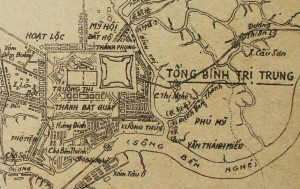
Saigon map early colonial 3

A close up of the 1815 map showing the area east of the 1790 Citadel

In the area between the third pont de l’Avalanche, the Cầu Xóm Kiều (now Tân Định) and the Chợ Xã Tài market, there was once a large village which contained as many as 72 pagodas.

Now let’s travel down from the second pont de l’Avalanche to the mouth of the arroyo de l’Avalanche.

The second bridge was originally known as the Cầu Cao Mên (Cambodian Bridge); but we gave it the new name Cầu Hoa. However, since the word Hoa was forbidden out of respect because it was used by princes of royal blood, the bridge was subsequently renamed Cầu Bông.

The arroyo called the Tắt Cầu Sơn was crossed by two bridges, the first called the Cầu Sơn (“Lacquer Bridge”) and the second Cầu Lầu (“High Covered Bridge”). As for the name Thị Nghè or Bà Nghè, given to both the first bridge and the arroyo de l’Avalanche itself, here’s the story:

Nguyễn Thị Khánh, the daughter of senior mandarin Vân Trường Hầu, was married to a scholar employed in the provincial administration with the title Ông Nghè (bachelor or graduate). To facilitate the crossing of the arroyo for her husband as he travelled back and forwards every day to his office, she had a bridge built, which was named in her honour Thị Nghè or Bà Nghè, “Madame bachelor.” The arroyo was given the same name.
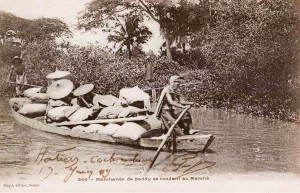
4895871617_f23dd6283e_b

Marchands de paddy se rendant au Marché

In front of the Hospital of the Sisters of Sainte-Enfance at Thị Nghè, there was a rice field reserved especially for the annual royal event known as the Tịch Điền (ploughing) ceremony. Next to it was a platform reserved for sacrifices to Thần Nông, also known as Chinese Emperor Shennong, who invented the first agricultural implements and is worshipped as the god of agriculture.

Between this area and the bank of the Saigon River above the arroyo de l’Avalanche, there was the Văn Thánh Miếu, a large temple dedicated to the worship of Confucius.

When we compare this journey through ancient Saigon and its environs with a trip through the modern city, we can see the rapid physical changes that Saigon has experienced over the years, helping us to reflect on the instability of human affairs.

Thanks to the activities of the French, a country which was almost ignored for the last century, organised in villages which later became the residences of kings and provisional capitals, has now been cleaned and embellished to become the capital of six provinces and one of most beautiful cities in the Far East.

NOTE

It is not without interest to portray in passing the character of Marshal Lê Văn Duyệt, a man so adroit as a minister, so energetic as a general, and so skilful and severe as an administrator.
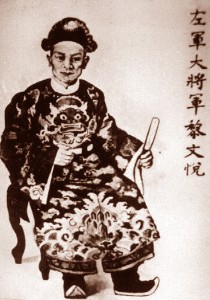
td3

Marshal Lê Văn Duyệt

In 1799, it was thanks to the energy, stubbornness, and cold determination of the Envoy of the Palace Left Guard and General of the Pacification of the Tây Sơn that a famous victory, dearly bought, however, was obtained at the port of Thị Nại (Quy Nhơn).

The first edict of prohibition against the Catholic religion and Europeans in general, ordering the demolition of churches, was launched in 1828 by Minh Mạng.

The Viceroy was attending a cockfight when news of the decree of persecution reached him. “How,” he cried, “can we persecute the fellow believers of the Bishop of Adran, and the French, whose rice we still chew between our teeth? No,” he added, ripping up the royal edict in indignation, “while I live, we will not do this, let the King do what he wants after my death.”

He was severe in the administration of Lower Cochinchina. He was also the terror of the Cambodians and Cochinchinese. His power to condemn people to death and carry out the sentence before sending a report to the king and the minister of justice was the power which kept the peace throughout his rule.

One day, going to Chợ Lớn, he observed on the side of the route de Cầu Kho a child aged four or five years, cursing and disobeying his father and mother. He wanted to stop to chastise the child, but changing his mind, he continued his journey. That evening, on his way back along the same road, he heard the child again, uttering insults and curses against his parents over the dinner table. He stopped and asked the parents for permission to remove the child. Then he gave him food and ordered him to eat with a pair of chopsticks which were purposely given to him the wrong way round. The child turned the chopsticks round to their correct position and began to eat. The governor then seized and beheaded the child immediately, saying that he clearly had enough intelligence to understand the enormity of the crime he had committed.
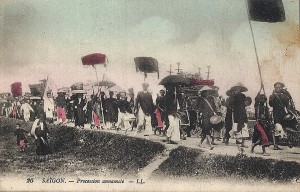
860_001

Saigon – procession annamite

On another occasion, when leaving the city, the Viceroy saw a thief running away after stealing a roll of cigarette paper. He had him caught and beheaded on the spot, without any form of judgment.

He considered it his duty to govern Cochinchina by excessive severity and rigour in the application of laws against crimes.

The first example he gave of his ruthless provisions was the execution of one of his scribes (Thợ lại). Coming out of the office one day, this man met a vendor of soups or sweets at the gate of the Citadel. Wanting to amuse himself, he put his hand on the betel box that the merchant had placed on the lid of his basket, but the vendor cried “Thief!” Caught in the act, the scribe was beheaded immediately on the orders of Lê Văn Duyệt, without any judicial proceedings. Soon, the report of this summary judgment struck terror throughout Cochinchina.

To be respected and feared by the Cambodians, he went to Udong in the capacity of an Extraordinary and Plenipotentiary Envoy. Sitting on an elevated platform next to the King of Cambodia, he was eating candy (đường phèn) and drinking tea. Hearing his teeth crack as he chewed the sugar cubes, some Cambodian courtiers asked the Annamite officers present at the reception what the Tướng Trời (“Celestial General”) was eating. The latter replied that he was eating stones and pebbles.

As Cambodia was under the protectorate of Annam, the king of this country was obliged to come to Saigon every year at Tết (New Year) to pay his respects to the king of Annam in the Royal Pagoda, together with the Viceroy.
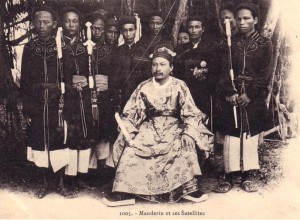
Indochine_Mandarin

Mandarin et ses Satellites

On one occasion, the Cambodian king, accompanied by the officer in charge of the protectorate, arrived on New Year’s Eve; but instead of going to Saigon, he spent the night in Chợ Lớn. Early next morning, the Viceroy proceeded with the ceremony without waiting for the king, who did not arrive until after it was already over. He was subsequently condemned without mercy and forced to pay a fine of 3,000 francs before returning to Cambodia.

Lê Văn Duyệt had a passionate love for cockfighting, comedy and theatre. He maintained his own theatre troupe and had his own theatre. Buildings used for all these diversions were located outside the walls of the ancient Citadel, on land now occupied the Palais du gouvernement and the Collège Chasseloup-Laubat.

The Annamites say that this great Tả Quân had something majestic in his person, and especially in his eyes.

It is said that the tigers he raised for combat were afraid of him and obeyed his voice. Even the most indomitable elephants feared the Viceroy. The biggest and the baddest, called Voi Vinh, was subject to fits of rage, during which he rampaged around, picking up and tossing aside everything that was in his path. When he heard about this, the Viceroy rode in on his palanquin and, standing directly in front of this huge animal, called him by his name and ordered him to calm down. The animal, as if he understood, calmed down immediately.

Finally, I will mention just a few renowned historical and monumental tombs on the Plaine des tombeaux.
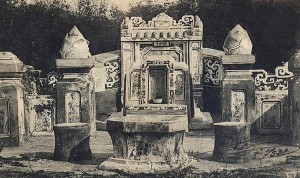
Tombeau

A mandarin’s tomb

Everyone knows the tomb which stands next to the tramway line near the Maison Vandelet. This tomb was built by Minh Mạng in honour of his father-in-law, Huỳnh Công Lý, who was beheaded by order of the Viceroy Lê Văn Duyệt. Huỳnh Công Lý was the Phó Tổng Trấn (Deputy Governor) of Gia Định (Saigon). However, in 1821, when the Viceroy went on a trip to Huế, Lý had illicit relations with one of the latter’s women. After returning from the capital, the Viceroy was informed of the behaviour of his subordinate, and had him executed immediately and without any regard for Minh Mạng .

The great tomb that one sees next to that of the bishop of Adran is that of Tả Dinh, brother of the Viceroy Lê Văn Duyệt, who died before him.

For other articles relating to Petrus Ky, see:
“A Visit to Petrus-Ky,” from En Indo-Chine 1894-1895
Old Saigon Building of the Week – Petrus Ky Mausoleum and Memorial House, 1937
What Future for Petrus Ky’s Mausoleum and Memorial House?

Tim Doling is the author of the guidebook Exploring Saigon-Chợ Lớn – Vanishing heritage of Hồ Chí Minh City (Nhà Xuất Bản Thế Giới, Hà Nội, 2019)

A full index of all Tim’s blog articles since November 2013 is now available here.

Join the Facebook group pages Saigon-Chợ Lớn Then & Now to see historic photographs juxtaposed with new ones taken in the same locations, and Đài Quan sát Di sản Sài Gòn – Saigon Heritage Observatory for up-to-date information on conservation issues in Saigon and Chợ Lớn.
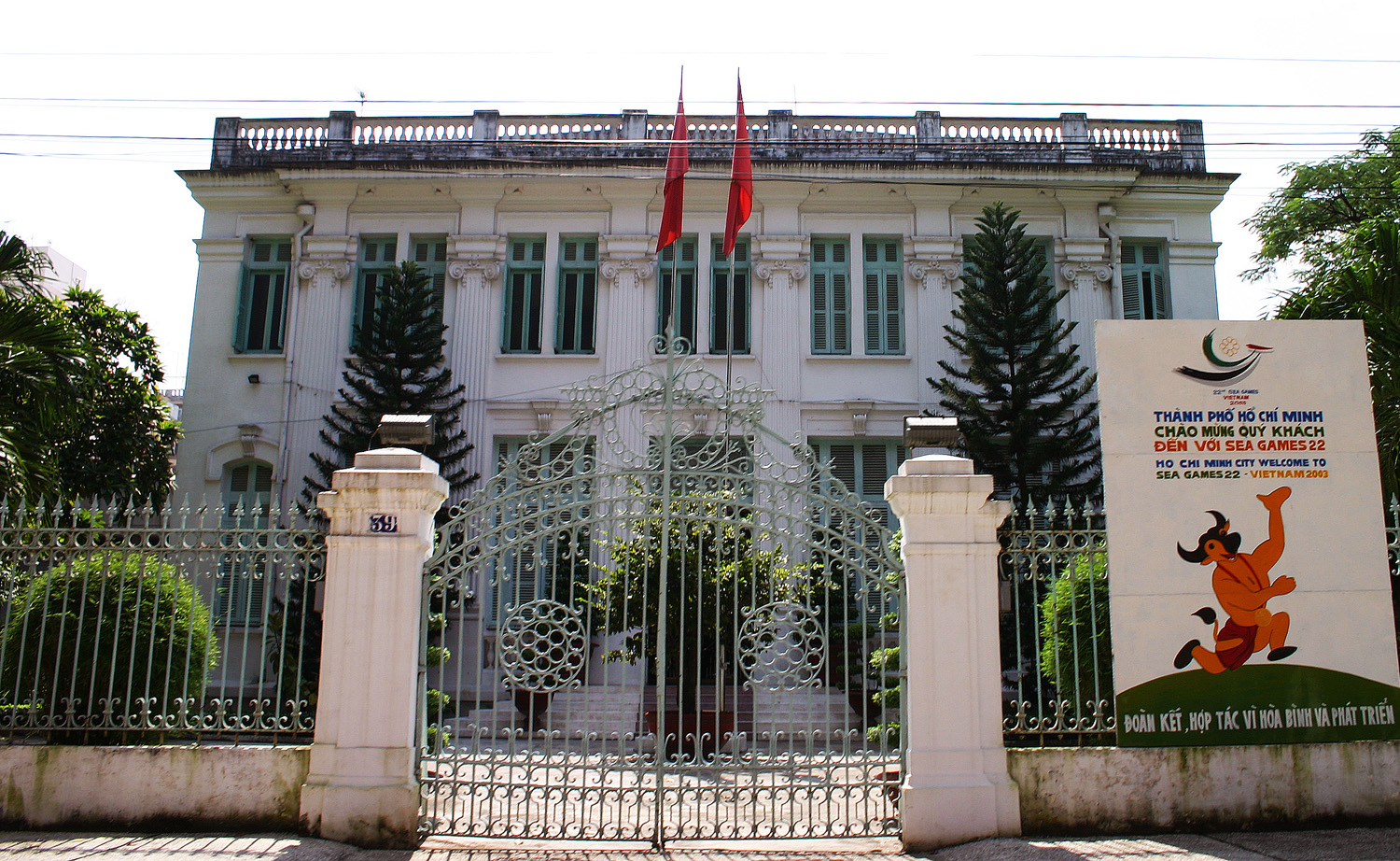
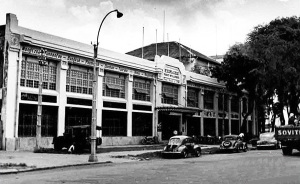
The Lost Inner-City Waterways of Saigon and Cho Lon – Part 1: Saigon

IMAGE 1

This 1865 map shows the Saigon inner-city canal network at its height (courtesy of Institut Parisien de Recherche Architecture Urbanistique et Société, IPRAUS)

This article was published previously in Saigoneer http://saigoneer.com

When the French arrived in 1859, both Saigon and Chợ Lớn were criss-crossed by networks of canals and creeks, making it possible for boatmen to travel right through both city centres without stepping ashore. However, while most of Saigon’s waterways were filled as early as 1868 to make way for spacious tree-lined boulevards, those of Chợ Lớn survived until as late as 1925. This two-part feature looks at the history of the ancient waterways in both cities – starting with Saigon.

IMAGE 2

A 1795 map of Saigon showing the original two canals (courtesy of IPRAUS)

Enclosed by the Saigon river to the east, the Thị Nghè creek to the north, and the Bến Nghé creek to the south, Saigon’s main urban area, known as Bến Nghé, acquired its own small network of inner waterways from an early date.

The origins of this inner waterway network may be traced back to the construction of the 1790 Gia Định Citadel, when a canal, later known to the French as the “Grand Canal,” was dug northwestward along the path of modern Nguyễn Huệ boulevard, to provide water access to Citadel’s main Càn Nguyên (south) gate.

Several maps of the 1790s also show the existence of another canal or creek named the rạch Cây Cám, which ran northwestward from the Saigon river, midway between the mouths of the Bến Nghé and Thị Nghe creeks, as far as modern Lê Thánh Tôn street.

In subsequent years, a third canal was dug westward along the path of modern Hàm Nghi boulevard, providing waterborne access to the old city market, which stood in the vicinity of the modern Hàm Nghi-Tôn Thất Đàm street junction until 1869. Writing in the 1880s, scholar Pétrus Ký tells us that this was known as the rạch Cầu Sấu (“Crocodile Bridge Canal”), because “it was used for breeding crocodiles that were sold for butcher’s meat.”

XX

Merchant shipping on the arroyo Chinois during the colonial period

Saigon’s inner-city waterway network was completed with the construction of a cross-town canal, which ran northwestward from the Bến Nghé creek along what is now the lower end of Pasteur street, before turning to link with the rạch Cây Cám. On its way, this cross-town canal connected with both the Crocodile Bridge and Grand Canals.

In this way, by the time the French arrived in 1859, merchants were already able to circumnavigate the entire city by boat.

In around 1862, Lieutenant Colonel Paul Coffyn of the Marine Engineering Corps Roads and Bridges Department oversaw the dredging and widening of the cross-town canal, in order to improve access for merchant ships. As a result, the canal briefly became known to the French as the Canal de jonction (Junction canal), or less formally, the “Canal Coffyn.”

However, by that year there was already growing debate amongst colonial settlers about the extent to which the notoriously smelly canals and creeks – used by many for the dumping of waste – were contributing to the rapid spread of serious endemic diseases such as cholera, malaria, intestinal parasites and dysentery. Despite opposition from the traders who used the waterways for freight, the hygiene lobby eventually won the day. From 1863 onwards, Saigon’s city-centre waterways were systematically filled.

4896429718_706680b3fc_b

Another colonial era photograph of merchant shipping on one of the arroyos

First to go were the recently-upgraded “Canal Coffyn” and the upper section of the “Grand Canal,” which were filled to create boulevards Bonard (modern Lê Lợi) and Charner (modern Nguyễn Huệ) respectively. By 1868, the “Crocodile Bridge Canal” had become boulevard de Canton and the waterway along what is now lower Pasteur street had also been filled to create rue Pellerin.

The lower end of the “Grand Canal” survived for a further two decades. After 1870, when the city market was relocated to a new site right next to it (the block currently occupied by the Treasury building and Bitexco Tower), this sole-surviving inner-city waterway become known locally as the Kinh Chợ Vải or “Fabric Market Canal,” because the market was famous throughout the city for its fine fabrics.

By 1890, the Kinh Chợ Vải had also been filled, facilitating the extension of boulevard Charner as far as the riverfront. However, it seems that it was not quickly forgotten by local people, who for many years afterwards continued to refer to boulevard Charner as đường Kinh Lấp or “Filled canal street.”

The early filling of Saigon’s city-centre canals and creeks – attributable mainly to the presence of a large and vocal resident French community in the colonial capital – contrasted strongly with the situation in Chợ Lớn, where the powerful Chinese associations were able to protect their inner-city waterways for nearly 60 years after the French conquest.

To read part 2 of this two-part feature looking at the lost inner-city waterways of Chọ Lớn, click here

Tim Doling is the author of the guidebook Exploring Saigon-Chợ Lớn – Vanishing heritage of Hồ Chí Minh City (Nhà Xuất Bản Thế Giới, Hà Nội, 2019)

A full index of all Tim’s blog articles since November 2013 is now available here.

Join the Facebook group pages Saigon-Chợ Lớn Then & Now to see historic photographs juxtaposed with new ones taken in the same locations, and Đài Quan sát Di sản Sài Gòn – Saigon Heritage Observatory for up-to-date information on conservation issues in Saigon and Chợ Lớn.
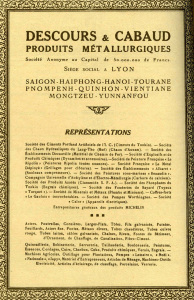
IMAGE 3

This undated map also shows the Saigon inner-city canals before before any of them were filled (courtesy of IPRAUS)

IMAGE 4

By 1882, all that remained of Saigon’s inner-city canal network was the lower end of the “Grand Canal” (modern Nguyễn Huệ boulevard)

IMAGE 5

An 1880 photograph by Emile Gsell of the lower end of the “Grand Canal” (modern Nguyễn Huệ boulevard)

IMAGE 6

Another 1880 photograph by Emile Gsell of the lower end of the “Grand Canal” (modern Nguyễn Huệ boulevard)