Indochina Railways in 1928

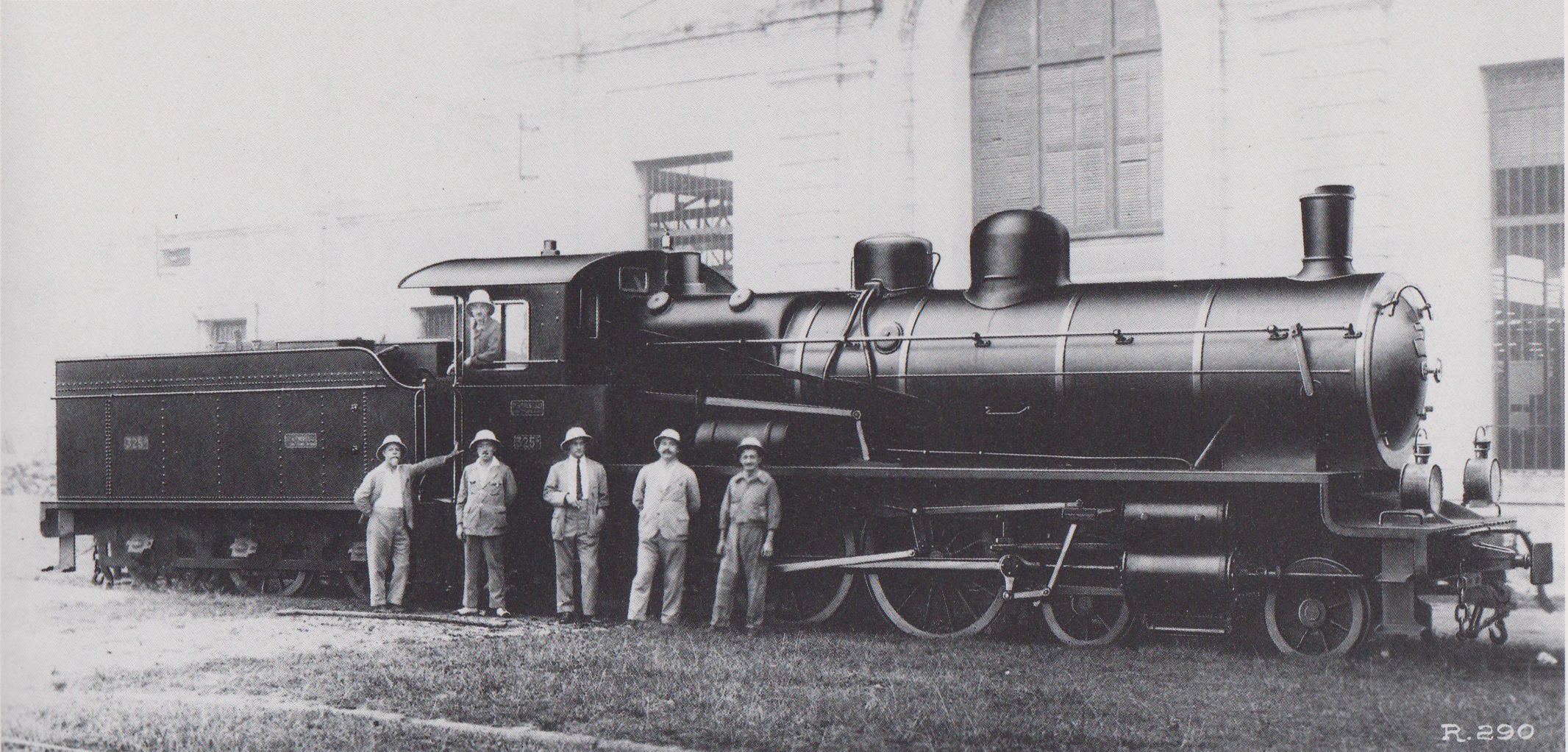
J F Cail 4-6-0 “Ten wheel” locomotive No 235 pictured in the works before delivery to Indochina

Translated from an article in Revue générale des chemins de fer, July 1928
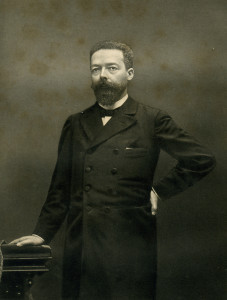
Paul Doumer (1857-1932)

It was in 1897, with the arrival of Paul Doumer as Governor-General of the Colony, that the issue of Indochina Railways began to be studied seriously. At the time of his arrival, only two railway lines had been built, namely, the one running from Saigon to My-Tho and the one running from Phu-Lang-Thuong to Lang-Son, both of which will be discussed later.

Governor-General Doumer developed a comprehensive plan for an Indochina Railways network. He envisaged the creation of “a network to cross the whole of Indochina from Saigon to Tonkin, connecting the ports of the coast with the rich valleys of Annam, connecting the sea with the major navigable reaches of the Mekong, and penetrating China by the Red River Valley.” The planned length of this network reached 3,200km, and according to the available capital, it was thought that we could immediately build between 600 and 1200km of railways, chosen from amongst the lines considered most useful for colonisation.

Notably included in the overall plan were the following railway lines, whose construction, considered especially urgent at the time, was only recently completed, due to the long delays inflicted on all our enterprises by the Great War.

– Haïphong to Hanoï and Lao-Kay at the frontier with China
– Laokay across the frontier to Yun-Nan-Sen in China
– Hanoï to Nam-Dinh and Vinh
– Tourane to Hué and Quang-Tri
– Saïgon to Khanh-Hoa and the Langbian plateau
– My-Tho to Vinh-Long and Can-Tho
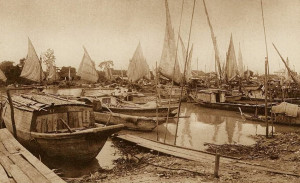
Merchant shipping on the arroyo Chinois in Saigon

The potential usefulness of this network was stated clearly in the explanatory memorandum on the aims of the project, which was appended to the law authorising its construction. It stated:

“In Indochina, the forests of Upper Cochinchina, of Cambodia, of Laos and of Upper Laos, the mines of Laos, and the upper valley of the Red River, are all unexploitable due to the absence of transportation. Neither can rice from Cambodia, nor the varied products of Annam, access the rivers or ports from where they could be exported to markets where demand abounds.”

On the other hand, the region of Annam has recently been suffering from famine, and while rice was accumulating in large quantities in neighbouring provinces, it was physically impossible to transport it to the worst affected areas.

We also see that vast new lands have been placed under our sphere of commercial influence, but as yet, French products cannot reach these lands due to lack of roads and inexpensive forms of transportation.

To find out why it is necessary to build an extensive network of railways, you need look no further than the map of Indochina, which shows that while some of its rivers and waterways are suitable for navigation by sail and steam ships, many others are inaccessible to boats of even the smallest tonnage for much of the year.
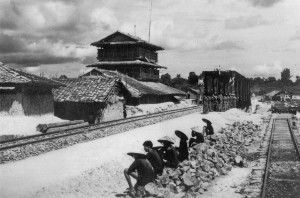
Construction of the Saigon-Mỹ Tho line

To the economic considerations that affect everyone, we must also add the political and military considerations which it is not necessary to dwell upon.

The railway has, moreover, the advantage of opening up to both colonial settlers and Vietnamese people the higher regions, where temperature and soil are favourable and Europeans may find a climate in which they can live and work healthily.

We can now understand more fully how, from the earliest days of our Colony, the creation of railway lines has appeared desirable.

Before 1898, there were, as we said, only two railway lines, those running from Saigon to My-Tho in Cochinchina and from Phu-Lang-Thuong to Lang Son in Tonkin.

The scheme to build the line from Saigon to My-Tho was drawn up in around 1880. Conceded to a concessionaire company in 1881, the line, with a total length of 70km, was put into service in 1885 and initially gave very disappointing results. Then the operation passed to another concessionaire company, the Compagnie des Tramways à Vapeur de Cochinchine. Currently it is the Colony itself which ensures the line’s exploitation.
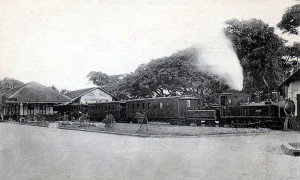
A train leaves Mỹ Tho for Saigon

Running entirely through populated parts of Cochinchina, it connects the two important cities of Saigon and My-Tho via the great city of Cholon, almost entirely populated by Chinese immigrants who hold a monopoly on the export of rice. As a result of this fact, its traffic per kilometre is now much higher than that of all the other lines of Indochina. It cuts through a country of wide rivers, and its route includes several major iron bridges which were built in difficult conditions, given the nature of the soil in this great plain of Cochinchina, formed by the alluvial deposits of the Mekong. The total cost of construction reached 11.6 million francs, corresponding to a cost per kilometre of 165,000 francs.

As for the line from Phu-Lang-Thuong to Lang Son, which eventually became the line from Hanoï to Na-Cham on the Chinese frontier, it was first built in response to military concerns, to ensure easy transportation and supply of French troops taking part in the conquest of Tonkin, pacifying the North and Northeast along the Kouangsi border. Strong garrisons were maintained in these areas and we were thus led, in 1889, to build this line, which was deemed essential.
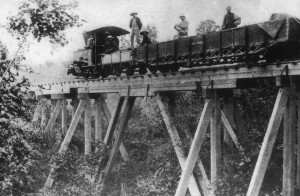
A Decauville 0-4-0 locomotive on the original Phủ Lạng Thương–Lạng Sơn 0.6m gauge railway line in the 1890s

When it was first built, the line did not reach as far as Hanoï, stopping instead at Phu-Lang-Thuong village, which was connected by river with Hanoï and Haïphong. Its primitive 0.60m Decauville rails were replaced in 1896 by 1m gauge track, and at that time it was also decided to extend the line to Hanoï. To this end, in order to cross the Red River near Hanoï, we built the famous Doumer bridge, with a total length of 1,682 metres between abutments, which represented an expense of about 6 million francs. With the completion of this bridge in 1902, the line from Hanoï to Dong-Dang was placed in operation throughout its length. More recently, an additional 17km stretch was built to connect Dong-Dang with Na-Cham on the Chinese border. This line, thus completed, extends over a length of 179km. Its construction cost 45,300,000 francs, approximately 246,000 francs per kilometre.

Let’s return to the 1898 programme, the implementation of which involved the construction of all the lines currently open to exploitation. It provided for the creation of two major arteries:
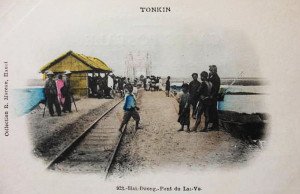
The Lai Vu Bridge, Hải Dương

(i) The Yunnan line – a line of penetration into the large Chinese province of Yunnan, made possible by the Franco-Chinese Convention which was negotiated after our intervention in favour of China at the conclusion of the peace treaty which ended the Sino-Japanese War. Running parallel to the Red River, this line runs from Haïphong to Hanoï, crosses the border at Lao-Kay (384 km) and terminates at Yunnan-fu, its total length being 859km.

(ii) The Transindochinois – a coastal line, bringing together the various territories of the Colony, which will eventually become a great artery running from Hanoï to Hué, Saïgon and Phnom-Penh.

To this effect, the Law of 25 December 1898 authorised the colony to be issued with a loan of 200 million francs, repayable at 3½% over a period of 75 years, not guaranteed by the French state. This 200 million franc loan was to be used as follows:

– Haïphong to Hanoï and Laokay: 383km, 50 million francs
– Hanoï to Vinh: 326km, 32 million francs
– Tourane to Hué and Quang-Tri: 175km, 24 million francs
– Saïgon to Khanh-Hoa and Langbian: 650km, 80 million francs
– My-Tho to Vinh-Long and Can-Tho: 93km, 10 million francs
– Total: 1,627km, 196 million francs
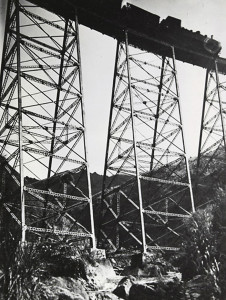
A train passing over the pont en dentelles (“steel lace bridge”) at km 83 on the Chinese stretch of the Yunnan line

Under the terms of the concession agreement to the private company running the Yunnan line, the concessionnaire had to build, at its own expense, the Chinese-section from Lao-Kay to Yunnan-fu (not mentioned above), with the help of the Colony.

It was in 1901 that work began on all of these diverse lines, the expenditure on which is given below:

1. Haïphong to Lao-Kay
Length: 384km
Year commenced: 1901
Year opened to exploitation: 1903-1906
Total construction cost: 78,000,000 francs
Construction cost per kilometre: 203,500 francs

2. Hanoï to Vinh
Length: 326km
Year commenced: 1901
Year opened to exploitation: 1905
Total construction cost: 43,000,000 francs
Construction cost per kilometre: 132,000 francs

3. Tourane to Hué and Dong-Ha
Length: 175km
Year commenced: 1901
Year opened to exploitation: 1908
Total construction cost: 31,800,000 francs
Construction cost per kilometre: 181,500 francs
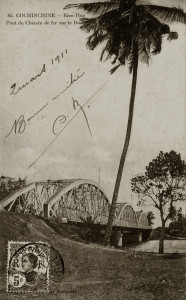
The Bình Lợi Bridge outside Saigon

4. Saigon to Khanh-Hoa and Langbian
Length: 466km
Year commenced: 1901
4.1 Saigon to Tan-Linh (km 132)
Year opened to exploitation: 1908
4.2 Tan-Linh to Khanh-Hoa
Year opened to exploitation: 1913 (except for the Langbian branch, which has only recently been partially executed and opened to exploitation)
Total construction cost: 69,000,000 francs
Construction cost per kilometre: 353,000 francs

As we can see, the construction work was much more expensive on the line from Haïphong to Lao-Kay and Yunnan-fu than on the others. The first section from Haïphong to Lao-Kay crosses the Tonkinese Delta, then travels up the Red River Valley. As for the second part, built in Chinese territory and running from Lao-Kay to Yunnan-fu, its construction met many difficulties, in the recruitment of a poor-quality workforce, in the adverse conditions of both climate and security, and finally in the topography of the area, which required the construction of many important works. It is thus that in the 465km section from Lao-Kay to Yunnan-fu, we had to build 155 tunnels with a total length of 17,864m, and no fewer than 3.422 viaducts, bridges and aqueducts. It is understandable, therefore, that under these conditions, the price of construction could reach a sum so large, the largest for all of our colonial lines and that one could rightly say that this line of Yunnan was the “museum” of the difficulties encountered by engineers in the construction of our railways.
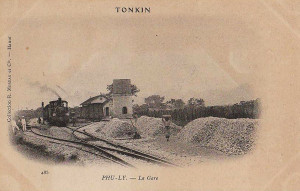
Phủ Lý Station

As for the coastal section of the Transindochinois from Hanoï to Vinh (Annam), this line first ran through the Red River delta before crossing the Tonkin-Annam border at Bim-Son (km 142). It then traversed the deltaic region of Thanh-Hoa, terminating at Vinh (321 km) in the Song-Ca Valley.

The profile of this line is very rugged. An almost entirely rice growing area, the region it passes is populated and prosperous. A 5 km branch line connects Vinh with the port of Ben-Thuy.

The section of the Transindochinois from Tourane to Hué and Dong-Ha is divided into two parts: the first 50km stretch is quite hilly and includes many bridges. The rest of the line travels along the coastal plain, serving another fairly well populated region.

Finally, in the southernmost section of the Transindochinois, from Saigon to Khanh-Hoa and Langbian, the line runs through producing areas between Saigon and Bien-Hoa, then across heavily forested lowland to rejoin the coast of Annam at Muong-Man, a station from where a 12km branch leads to the region’s largest fishing port of Phan-Thiet. From Muong-Man, it follows the coast of Annam as far as Nha-Trang (409 km). It is to this line that the Krongpha-Dalat branch is connected, opening the doors to the Langbian plateau.
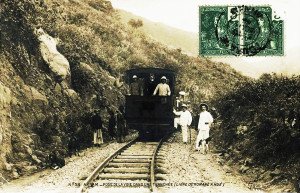
Railway managers supervising construction of the line from Tourane to Huế

These lines, which have been briefly described, are now all in operation. The expenses of building and equipping the lines met by the network are as follows:

Northern Network (Réseau Nord)
Réseaux non-concédés (Non-Conceded Networks)
Total expenses: 88,300,000 francs
Length of lines in operation: 505km
Construction cost per kilometre: 175,000 francs

Annam-Central Network (Réseau Annam-Centre)
Réseaux non-concédés (Non-Conceded Networks)
Total expenses: 31,800,000 francs
Length of lines in operation: 175km
Construction cost per kilometre: 181,500 francs

Southern Network (Réseau Sud)
Réseaux non-concédés (Non-Conceded Networks)
Total expenses: 80,600,000 francs
Length of lines in operation: 536km
Construction cost per kilometre: 150,400 francs

An unidentified CIY Société des batignolles 4-4-0 “Légère” at Hà Nội Station in 1927

Sub Totals, Non-Conceded Networks
Total expenses: 200,700,000 francs
Length of lines in operation: 1,216km
Construction cost per kilometre: 165,000 francs

Compagnie du Yunnan
Réseaux concédés (Conceded Networks)
Total expenses: 243,500,000 francs
Length of lines in operation: 859km
Construction cost per kilometre: 283,500 francs

Totals, Non-Conceded and Conceded Networks
Total expenses: 444,200,000 francs
Length of lines in operation: 2,075km
Construction cost per kilometre: 214,000 francs

We see that the total expenditure far exceeded the 200 million franc loan of 1898, and furthermore that it only provided for an incomplete programme of railway building. Only the construction of the line from Haïphong to Lao-Kay and Yunnan-fu was completed in accordance with the 1898 plan, which provided for a link between the important Chinese province of Yunnan and the international port of Haïphong.
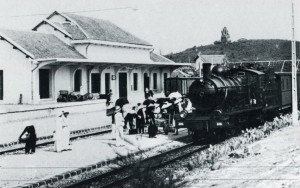
230 No 316 at

J F Cail 4-6-0 “Ten wheel” locomotive No 316 at Tuy Hòa (CAOM)

Moreover, apart from in Tonkin, our interior rail communications are not yet well assured and the meeting of various territories has only just been begun with the building of three separate sections (North, Annam Central, South) of the Transindochinois.

New loans were thus sought with the purpose of completing the first stage of the 1898 programme and studying and building new lines. But because of the outbreak of the Great War, these enterprises unfortunately experienced significant delay. It’s thus, for example, that the line connecting the Northern and Annam-Central Networks from Vinh to Dong-Ha, begun in 1913, has only recently been opened to exploitation; its length is 299km. The same may be said for the Krongpha-Dalat (Langbian) branch on the Southern Network, which was incorporated in the 1898 programme but is still only partially open to exploitation. Its 84km route incorporates steep gradients of 12% and it is equipped with rack and pinion equipment on some sections.

Having thus reviewed the lines of the partially-completed 1898 programme, the exploited length of which currently reaches nearly 2,400km, let’s now say something about the lines which are projected or under study, in accordance with the overall programme to develop our colonies introduced in 1921 by M. Albert Sarraut.
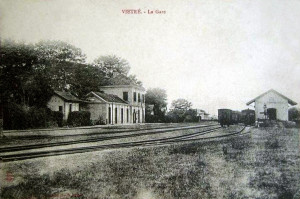
Việt Trì station

In fact, it is now more necessary than ever to develop our railway network. However, construction of new railway lines should now be less of a challenge than it was originally, from the point of view of financing and construction as well as with regard to the expected results of operations. It is no exaggeration to say that the lines currently under consideration will influence the development of the Colony much faster than the first lines which were built, because much of the 1898 Doumer programme was in fact a foundation which must now be completed in order to produce its full effect.

The new lines which the 1921 programme envisaged as essential to the development of the colony are:

1. The Tan-Ap to Thakhek line, 186km
2. The Tourane to Nha-Trang line, 550km
3. The Saigon to Phnom-Penh and Siam line, 632km
4. The My-Tho to Vinh-Long, Can-Tho and Bac-Lieu line, 285km

These comprise a total of 1,653km of railway. which, in addition to the approximately 2,400km already in operation, will bring the total length of our Indochina rail network about 4,000km.
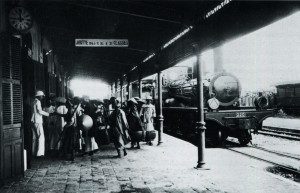
Société Franco-Belge 4-4-0 “Américaine” locomotive No 220 arriving at Vinh station (CAOM)

The first of these lines, from Tan-Ap to Thakhek, will link the Vinh to Dong-Ha section of the Transindochinois at Tan-Ap station with the navigable reaches of the Mekong in Thakhek, on the Lao-Siamese border; its route will cover 53km in Annam and 133km in Laos, with gradients of 15mm on the Annamite side and 8mm on the Lao side. As it is expected that freight carried on the line will mostly be export traffic, heavy trains will only have to climb the lowest gradients on the Lao side. The cost of building this line has been estimated at 15 million piastres (in 1927 the average exchange rate for the piastre fluctuated at around 12.75 francs), giving a cost per kilometre of 80,000 piastres.

The Nha-Trang to Tourane line, construction of which will mark the completion of the Transindochinois, responds to a pressing need. Urgently requested by the elected body of Cochinchina, it should indeed permit important exchanges between Tonkin and Cochinchina (eg the movement of agricultural labour to the south) as well as the transportation of crops from the irrigated plains of Central and South Annam to the north. This section of the line, with its total length of 550km, will cost 38 million piastres, or 70,000 piastres per km. Definitive studies and operations on site have been ongoing since 1923.
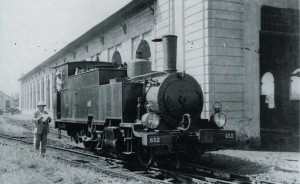
Weidnecht 130-T locomotive No 652 at Hà Nội Depot (CAOM)

The line from Saigon to Phnom Penh and the border of Siam, which should serve the north of Cochinchina and reach the Siamese border through the western part of Cambodia, also meets an urgent need. It crosses fertile areas which are already under cultivation, but, for lack of transportation, cannot be properly developed. On the other hand, the existence of the neighbouring Siamese rail network threatens to divert all traffic from one part of Cambodia (Battambang region). Our new line will link the Indochinese and Siamese networks, facilitating trade and movement of travellers between Bangkok and Saigon, which can only grow in future. Implementation of this 632km line should cost around 45 million piastres, or 71,200 piastres per km.

The construction of the last new line, from My-Tho to Vinh-Long, Can-Tho and Bac-Lieu, will be be less urgent than the previous ones, although it was planned long ago. It corresponds to an expense of 20 million piastres of expenditure for 285km, or 96,000 piastres per kilometre. This high figure is due to the large metal structures which will need to be built in order to cross the Mekong, Cochien and Bassac.
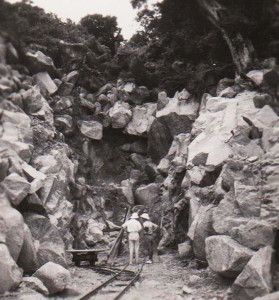
Constructing the final Tourane-Nha Trang stretch of the Transindochinois

One wonders whether this large expenditure will be sufficiently remunerated by a traffic that we do not expect to be very important, dependent as it will be upon merchants whose goods already flow easily on the canals which criss-cross the country, and travellers who increasingly use automobiles or public buses.

The four railway lines which we have described will thus have an overall cost of 118 million piastres. A sum of 100,000,000 piastres has already been assigned to them as part of the programme developed in 1924 by the Government General, which spreads over 10-15 years a set of major works deemed necessary to develop the colony.

After this summary of current routes operated and those whose construction is planned, we should say something about the other railway lines under consideration. For once the four lines of the 1921 programme are complete, it is highly likely that other lines will be commissioned, enhancing the value of our Far East possessions.
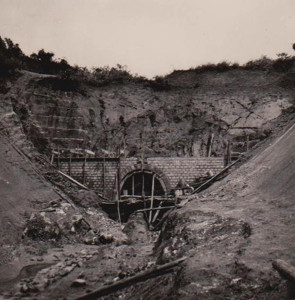
Constructing the final Tourane-Nha Trang stretch of the Transindochinois

For example, one may also envisage, in Annam, the construction of a branch line leading off the Transindochinois in the region of Tuy-Hoa (on the section from Tourane to Nha-Trang) and travelling across the Djaraï plateau to Pleiku. Perhaps the colonisation of this ethnic minority region may also require a line from Saigon heading up to Bandon via Loc-Ninh and Bu-Dop, with an additional branch from Loc-Ninh to Kratie. Equally, we may be able to realise a railway line from Phnom Penh to Kampong Thom, which crosses northern Cambodia and the province of Bassac, extending as far as Pakse and Savannakhet, and connecting two lines already in the planning stages, namely those from Saigon to Phnom Penh and Siam and from Tan-Ap to Thakhek. It’s easy to see the great advantages which could accrue to the Colony from such an increase in its means of transportation, in parallel with the development of all other means of production.

Technical considerations – The Indochina railway network is equipped with 1m gauge track; the trackbed width is 4.40m, in anticipation of a rolling stock body width of 2.80m.
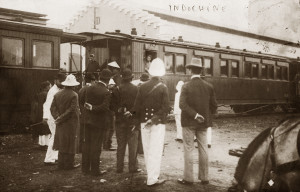
A station scene in the late 1920s

The maximum curve radius is 100m and the maximum gradient is 15mm, except on some parts of the Langbian line, which are equipped with rack and pinion equipment. In Chinese territory, the gradients of the Yunnan line reach 25mm.

Smaller structures are built with ordinary masonry. Major works incorporate metal decking. Concrete has been widely used on recent lines. Bridges are built for both road and rail traffic.

The rail itself weighs, according to the lines, 20, 25 or 27kg per metre. On those lines which remain to be built, the rail weight is 30kg and gradually the other lines will be equipped with this sturdier rail. The metal sleepers now employed on the Yunnan and many other networks give the best results. The weight of a sleeper with its accessories is 40kg and one kilometre of line is equipped with 250 sleepers. Wooden sleepers, used first in forested areas, tend gradually to be abandoned.
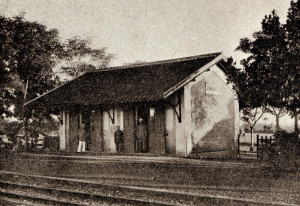
Văn Xá Station, north of Huế.

Smaller stations are of simple design and comprise only one building for freight and passenger usage. The most important stations are more like those of the métropole. The issue of signage, of little concern until recently, is currently being studied further, because of ever-increasing traffic.

Locomotives used most widely are those with six coupled driving wheels and an adhesive weight of 30 tonnes. They can haul loads of 300 tonnes at 40kmh and 370 tonnes at 20/25kmh.

On the Yunnan network which, as we have said, has long gradients of 25mm, more powerful locomotives with eight coupled driving wheels and an adhesive weight of 40 tonnes are used. The Langbian (Krongpha-Dalat) line uses mixed adhesion and cog rail systems.

Finally, locomotive boilers are heated by coal in Tonkin and Yunnan, where this fuel is abundant, while in the heavily forested Annam-Central and Southern Networks, a more economical heating solution is found by using wood.
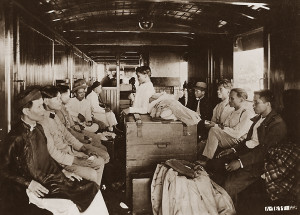
Chemin de fer de l’Indochine. Intérieur d’un wagon de 4ème classe

Travellers have a choice of four classes. Most often, the first three classes are grouped in mixed carriages with corridors. The fourth class is almost exclusively used by local people, who provide over ⅘ of total passenger revenue.

Unlike others, the carriages of this class do not include compartments, but are fitted with longitudinal benches fixed against the side walls, leaving the central portion free for luggage.

The weight of the passenger carriages, all of which have two bogies, is about 16 tonnes.

Freight rolling stock is of the current type for 1m gauge railways.

In the technical field, steady growth in traffic has led to consideration and implementation of many improvements, specifically, increasing the quantity of locomotives and rolling stock, replacing old vacuum brakes with automatic brakes, installing modern signalling systems, strengthening existing track, and providing more appropriate equipment for stations. The programme established for this purpose will be fully realised quite soon, for a price we have estimated at about 5 million piastres.

La montee du Col des Nuages (Annam)

Consideration of commercial exploitation – where the operation of the railway is concerned, we must first of all consider separately the railways of the Colony (the Réseaux non-concédés or Non-Conceded Networks) and the railways franchised to concessionnaires (the Réseaux concédés or Conceded Networks), of which the Yunnan line is the only current example.

The former are grouped into a “circonscriptions” of operation, each under the authority of a Chief Engineer who reports directly to the Inspector General of Public Works of Indochina. Each circonscription has its own budget, fed by operating revenue. It also has special funds outside the budget, working capital (supply of materials and funds), a special fund for additional works and supplies, and reserve funds to cover insufficiency in deficit years.

The internal organisation of the private company which has been granted the franchise to run the Yunnan line offers no unusual features. The financial regime for exploitation provides for the reimbursement of all actual expenses incurred in the maintenance and operation of the line; it also provides a special fund for additional works of exceptional importance.
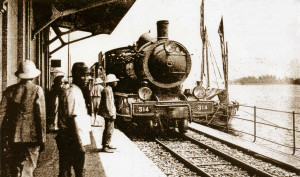
J F Cail 4-6-0 “Ten wheel” locomotive No 314 entering Tourane Marché station

Surplus operating revenues are first used in the service of committed capital and to cover central administrative costs. Any left-over surplus is then shared, under certain conditions, between the Colony and the company. Talks were recently scheduled to establish a new operating system for conceded networks.

Overall, the railway is staffed by Europeans in senior executive positions and Vietnamese at officer-level and below (station managers, train and machine operators, workshop employees and track maintenance staff). The Yunnan Company employs a higher proportion of European staff than the Colony.

The main features of railway operation are:

Passenger traffic was relatively high following the opening of the first lines, and showed a steady increase from 1908 to 1920. However, since 1921, it has manifested a downward trend, due to very active competition from motor transportation, which has been increasingly developed in recent years. In fact, between 1920 and 1925, rail passenger traffic suffered a reduction amounting to around 30%.
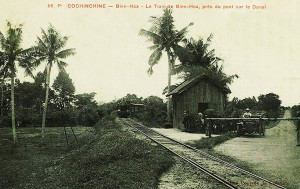
A northbound train heads through Biên Hòa

The current success of the automobile is explained because at present the Vietnamese traveller undertakes only short trips; long journeys have not yet become part of his habits. This situation will certainly change with the completion of Transindochinois, creating very large currents of long-distance traffic which the railway alone can service. Against this trend, we have also successfully developed measures to persuade local people to use the railway more – specifically through reduced ticket prices, which have significantly increased revenue.

As for freight traffic, it is constantly increasing. For both networks (Colony and Yunnan), in 1924 this traffic represented more than 140% of that in the pre-war period. The number of kilometric tonnes, which stood at 86 million in 1920, increased to 123.3 million in 1924, increasing by approximately 44%. The continuous growth in freight traffic has been so rapid that the rolling stock, which could meet all needs back in 1920, is now clearly insufficient. This failure has cost the railway part of the traffic it could normally service, and to remedy this, we have had to order large numbers of new wagons and locomotives.
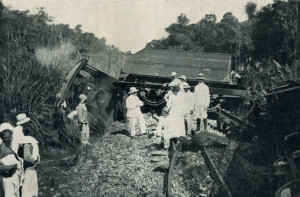
Deraillement causé par un éléphant

Regarding ticket prices, it appears that, overall, the prices of the Colony’s railways are rather low. This, perhaps, to some extent explains why the lines of Indochina see much more intense traffic than other colonial networks. Indeed, before 1914, when the piastre exchange rate was on average 2.50 francs, the number of passengers per kilometre on the Indochinese lines was reported to be half of that reported on other French colonial lines, and the tonnes per kilometre of freight transported in Indochina amounted to just a quarter of that transported on our African lines.

Currently, because of the high value of the piastre, the comparison would be less conclusive.

However the fact remains that the Indochinese rail ticket prices are much lower, when compared to those of railways elsewhere in the Far East, operated in similar conditions.

If we make a comparison with Siam, a country similar in all respects to our colony, we find that the average freight revenue per tonne on Siamese lines is twice that on our Indochinese lines, while a traveller, who yields to Siam two hundredths of a piastre per kilometre, yields less than one hundredth of a piaster per kilometre here in Indochina.
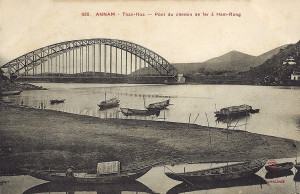
Thanh Hóa Bridge

This is why, despite their superiority in traffic intensity, the railways of our Colony show a certain inferiority when it comes to their receipts.

The receipts per kilometre in recent years amounted to, on average, between 3,560 piastres per annum for all lines (4,800 piastres for Yunnan, 2,750 piastres for the colonial network).

The corresponding expenditure per kilometre amounted to 2,850 piastres (3,500 piastres for Yunnan, 2,400 piastres for the colonial network).

The average operating ratio stood at 74% on the Yunnan network, 87% on the Colonial network, and 80% overall. In order to explain the lower operating ratio of the conceded company, it must be explained that its tariffs are higher in general than those on the Colony’s network.

The overall situation of our Indochina railways is quite satisfactory and in future it cannot, it seems, but improve. No doubt currently the net profit is not enough to compensate, as appropriate, the capital outlay; but it is expected to do so soon, as long as traffic continues to follow the progress of recent years.
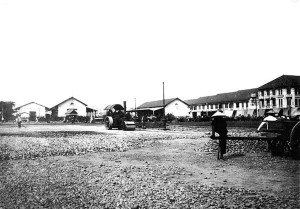
Saigon Station in 1929

We should not, however, measure the value and success of the railway solely according to the financial results. It should be considered that the railway, even more than the road, is a tool for the exploitation and development of the colony, and not a stand-alone fiscal instrument. The characteristics that we have been able to demonstrate – that the relatively weak financial performance of the Indochinese rail network does not derive from the country’s poverty, nor from the lack of traffic, nor from over-expensive operation, but only from the extremely low level of prices – constitute a very reassuring finding. Thus it is that the receipts the railway has failed to generate may be found, stronger, in many other areas, the product of increased economic activity which has only been made possible thanks to inexpensive rail transportation. This is why a general increase in ticket prices, always a delicate operation considering its potential impact on traffic, has been considered with extreme caution in Indochina, especially if one takes into account the extent of competition from waterway and automobile.
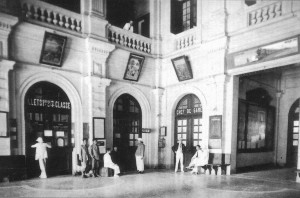
Hà Nội Station booking hall in 1927

As currently managed, the Indochina railway is an instrument for the development and prosperity of the country through which it passes, since it is only by the mere increase in traffic that it can improve its financial performance. This traffic, which has increased significantly since 1920, will soon be able to grow even more, thanks to the availability of new wagons and locomotives. But it will not achieve its full potential until the Indochina rail network has been fully realised in line with the programmes of 1898 and 1921.

Tim Doling is the author of The Railways and Tramways of Việt Nam (White Lotus Press, Bangkok, 2012) and also gives talks on Việt Nam railway history to visiting groups.

A full index of all Tim’s blog articles since November 2013 is now available here.

Join the Facebook group Rail Thing – Railways and Tramways of Việt Nam for more information about Việt Nam’s railway and tramway history and all the latest news from Vietnam Railways.

You may also be interested in these articles on the railways and tramways of Việt Nam, Cambodia and Laos:

A Relic of the Steam Railway Age in Da Nang
By Tram to Hoi An
Date with the Wrecking Ball – Vietnam Railways Building
Derailing Saigon’s 1966 Monorail Dream
Dong Nai Forestry Tramway
Full Steam Ahead on Cambodia’s Toll Royal Railway
Goodbye to Steam at Thai Nguyen Steel Works
Ha Noi Tramway Network
How Vietnam’s Railways Looked in 1927
“It Seems that One Network is being Stripped to Re-equip Another” – The Controversial CFI Locomotive Exchange of 1935-1936
Phu Ninh Giang-Cam Giang Tramway
Saigon Tramway Network
Saigon’s Rubber Line
The Changing Faces of Sai Gon Railway Station, 1885-1983
The Langbian Cog Railway
The Long Bien Bridge – “A Misshapen but Essential Component of Ha Noi’s Heritage”
The Lost Railway Works of Truong Thi
The Mysterious Khon Island Portage Railway
The Railway which Became an Aerial Tramway
The Saigon-My Tho Railway Line
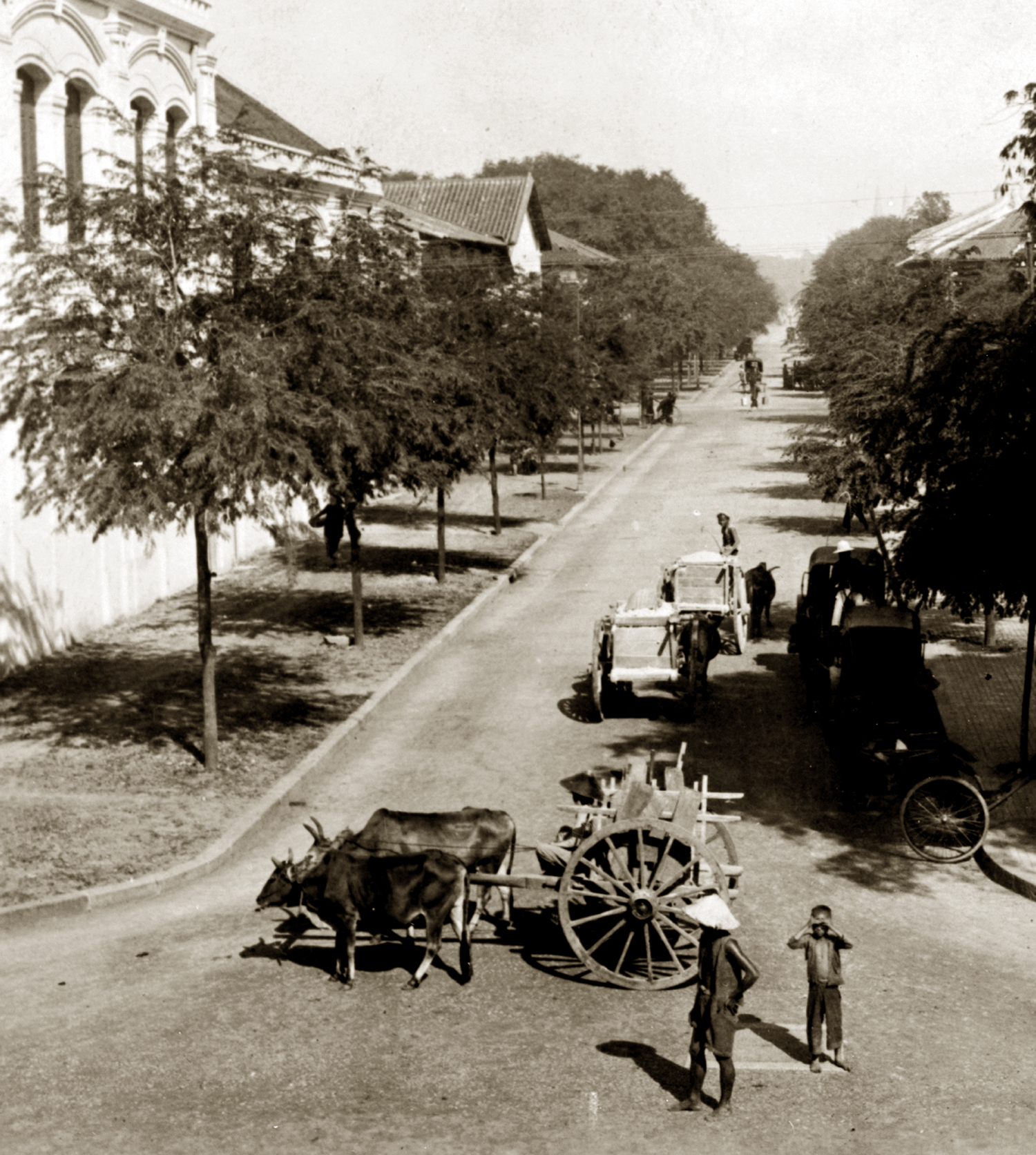
 

Saigon’s Famous Streets and Squares – Pasteur Street

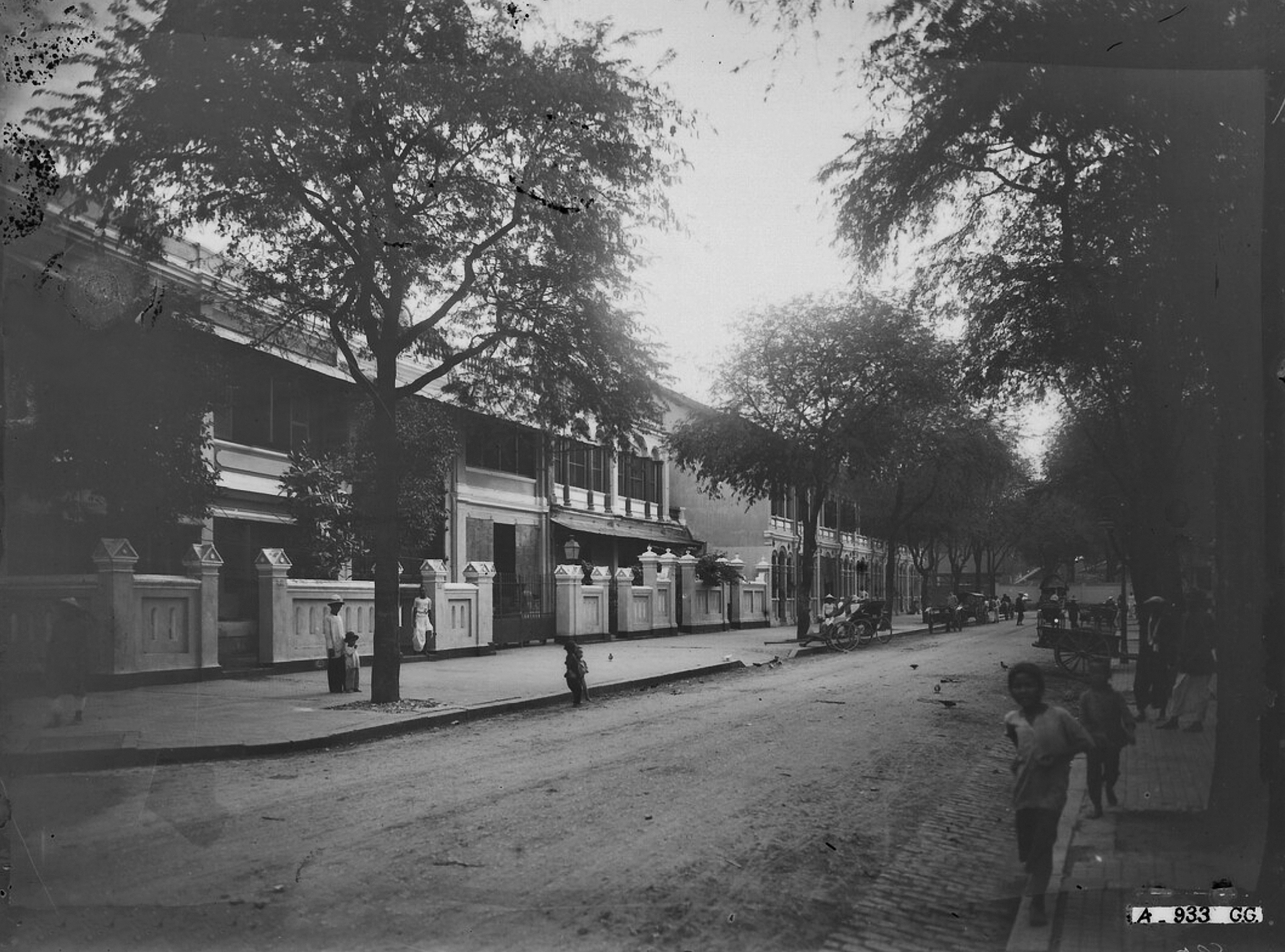
Rue Pellerin in the period 1910-1920

This article was published previously in Saigoneer.

Known for most of the colonial period as rue Pellerin, Pasteur street grew from ancient inner-city waterway into one of the city’s most desirable streets.

Pasteur street began life as part of Saigon’s old inner-city waterway network.

Pasteur street was originally part of Saigon’s ancient inner-city waterway network

The lower end of the street was originally a canal which ran north from the arroyo Chinois (Bến Nghé creek) to the modern Lê Lợi-Pasteur intersection, where it connected with the “Junction Canal” leading east to the shipyard. It also met the “Crocodile Bridge Canal,” now the lower end of Hàm Nghi boulevard. See The lost inner-city waterways of Saigon and Cholon, Part 1 – Saigon.

Following the arrival of the French, the quaysides flanking this canal were both initially denoted as rue No 24. However, by 1863 the quayside on the west bank of the canal was named rue Ollivier (after Ollivier de Puymanel, 1768-1799, a naval officer who came to Saigon with Pigneau de Béhaine to help modernise the army of Nguyễn Phúc Ánh), while the one on its east bank was named rue Pellerin (after Monsignor François-Marie-Henri-Agathon Pellerin, 1812-1862, first Apostolic Vicar of Cochinchina).

In the early 1870s the lower end of the street was a broad tree-lined avenue named boulevard Ollivier

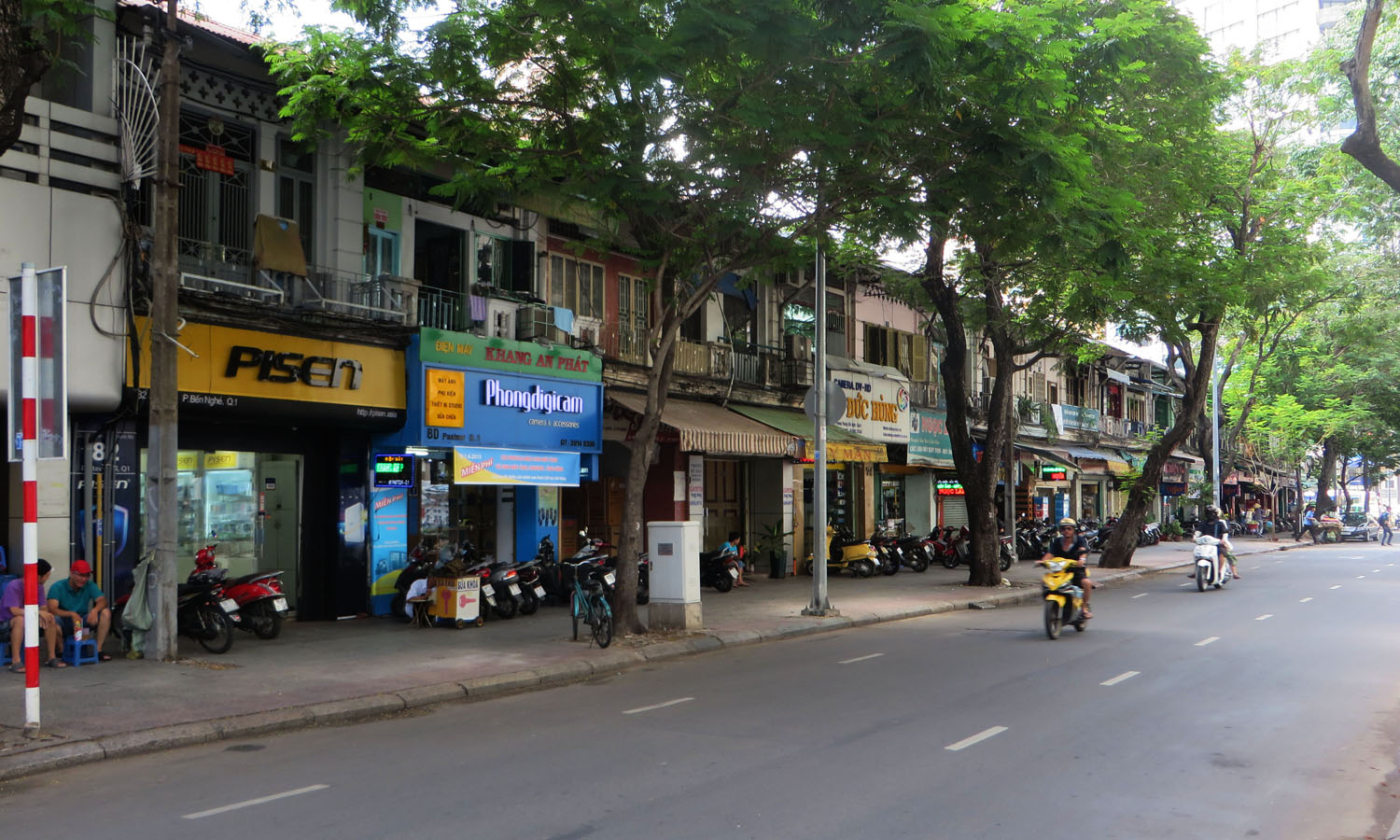
In 1868, rue Pellerin was extended north through the city as far as the rue du Marché de Tan-Dinh (now Trần Quốc Toản street, still its northernmost perimeter today). In the years which followed, long rows of shophouses were built between the modern Hàm Nghi and Lê Lợi junctions, to accommodate the large number of Cantonese settlers moving into the area.

By 1870, the canal had been filled and replaced by a broad tree-lined avenue named boulevard Ollivier, which ran from the quai de Belgique (Võ Văn Kiệt) on the Bến Nghé creek as far north as boulevard Bonnard (Lê Lợi). This boulevard Ollivier survived until around 1875, when it was narrowed and became the lower end of rue Pellerin.

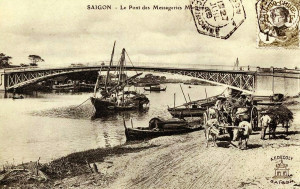
Eiffel’s Pont des Messageries maritimes

In 1882, that lower end of rue Pellerin was connected to Khánh Hội (District 4) and the Messageries maritimes international port area by “a magnificent bridge over the arroyo Chinois” (Notices coloniales, 1885) – today a footbridge, the Maison Eiffel’s Pont des Messageries maritimes or Cầu Mống (Rainbow Bridge) is now one of Hồ Chí Minh City’s most important historic monuments. See The “Rainbow Bridge” – a true Eiffel classic.

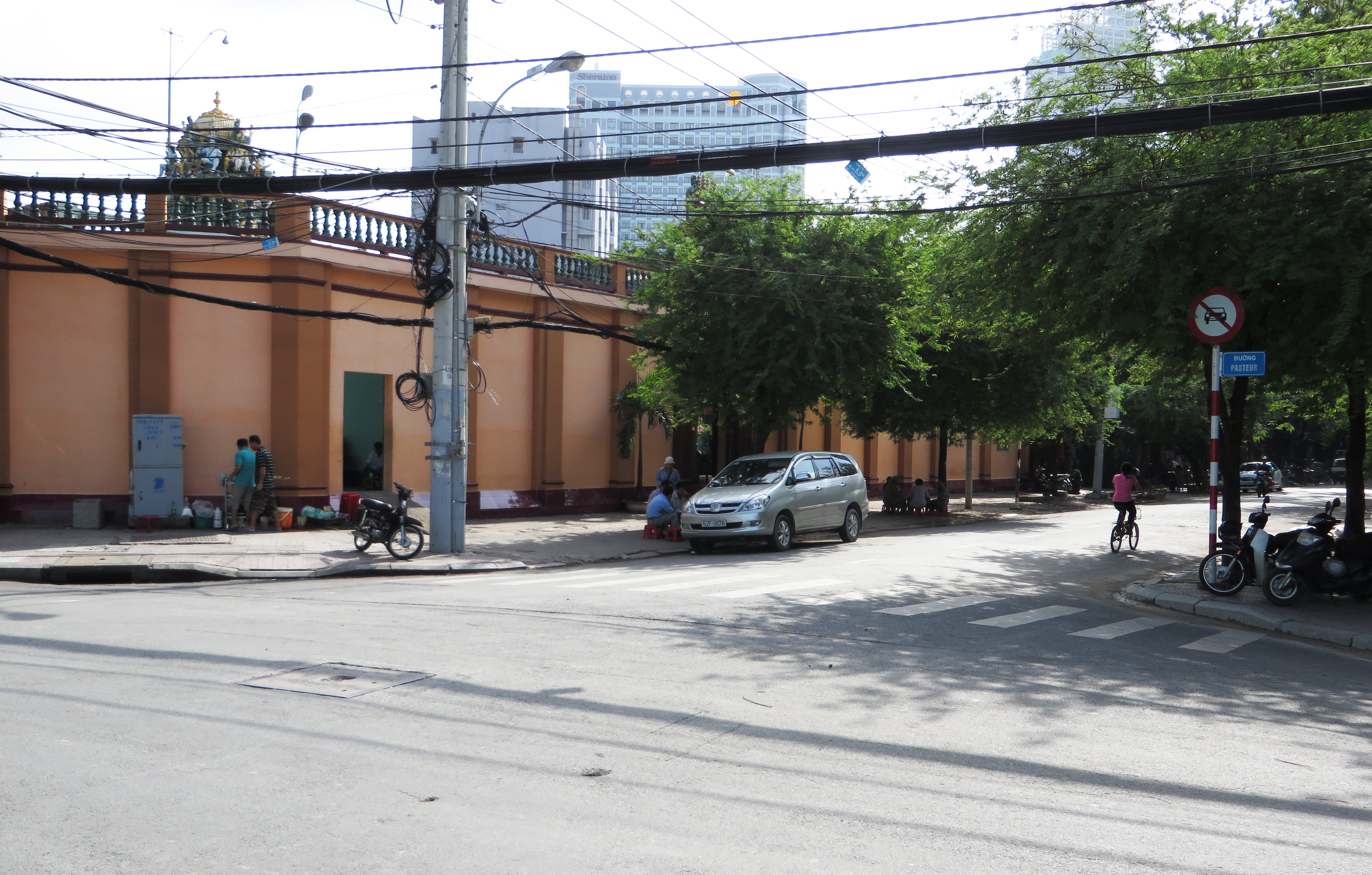
The arrival of the first Tamils from the French Indian Settlements of Pondicherry (Puducherry), Karikal and Yanaon in the 1880s was followed by the construction of the Sri Thendayutthapani Hindu temple on the junction of rue Pellerin and rue Ohier. See Saigon’s famous streets and squares: Tôn Thất Thiệp street. By the early 1900s, this Indian community had overflowed onto rue Pellerin, where several Tamil shops and money lending houses were established.

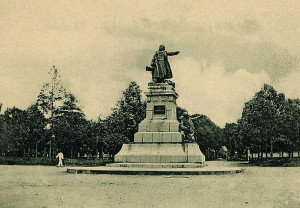
The bronze statue of French statesman Léon Gambetta, installed at the junction with boulevard Norodom in 1889

In 1889, a grand square was created at the junction of rue Pellerin and boulevard Norodom (Lê Duẩn). At its centre, paid for by public subscription, was installed a bronze statue of French statesman Léon Gambetta (1838-1882). The statue remained there until 1914 when, following the inauguration of the new Halles centrales (Bến Thành Market), it was relocated to the centre of the new public garden which replaced the former city market on boulevard Charner (Nguyễn Huệ),

By the early 1900s, the upper reaches of rue Pellerin had become a very desirable residential area, with many large villas on either side. During the 1960s, one of the grandest of these villas – 161 Pasteur – famously became the private residence of Nguyễn Văn Thiệu, President of the Republic of Việt Nam from 1967 to 1975.

161 Pasteur, former residence of Nguyễn Văn Thiệu, President of the Republic of Việt Nam from 1967 to 1975

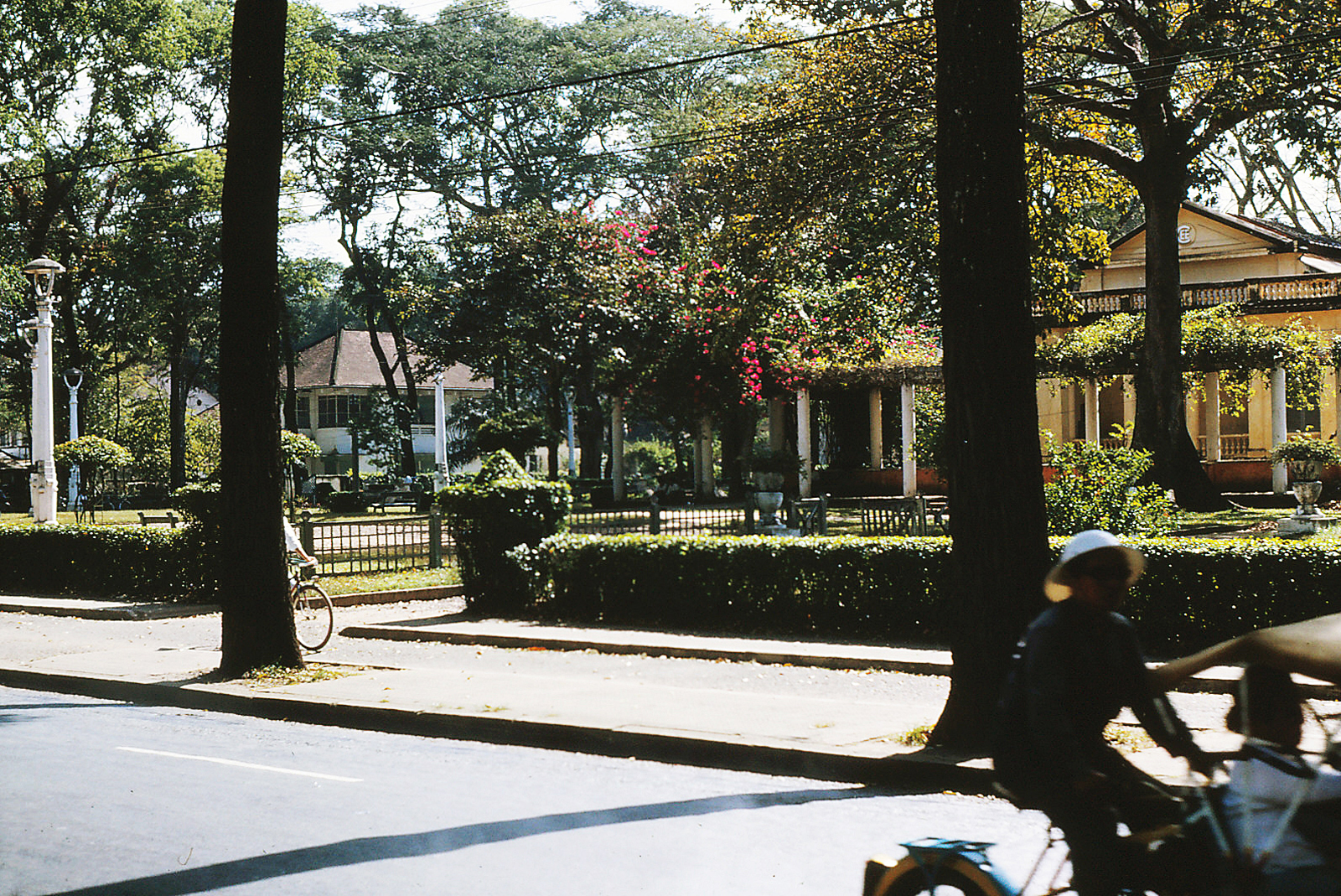
During the 1920s, a small park was established on the west side of rue Pellerin, between the junctions of rue Testard (later Trần Quý Cáp, now Võ Văn Tần) and rue Richaud (later Phan Đình Phùng, now Nguyễn Đình Chiểu). Known from 1939 to 1954 as the square Paul Doumer, it was renamed Vạn Xuân Park (Công viên Vạn Xuân) in 1955. Before 1975, a small sports facility was opened here by the Club Sportif Phan Đình Phùng. In the 1980s the whole park was replaced by today’s much larger Phan Đình Phùng Sports Centre.

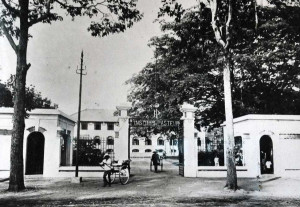
The first Pasteur Institute to be established outside the métropole was set up in 1891 within the grounds of Saigon’s Military Hospital, but in 1905 it was given dedicated premises at 167 rue Pellerin; the current buildings date from a reconstruction of 1918. During its long history, the Pasteur Institut Saigon has carried out pioneering work in many fields, including the study of parasitic, bacterial food-borne and mosquito-borne diseases, lice infestation and leprosy.

The Pasteur Institute Sài Gòn in the 1940s

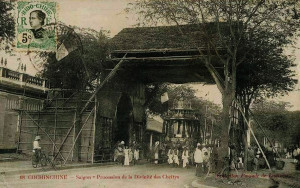
Back in 1897, modern Thái Văn Lung street had been christened rue Pasteur. However, in 1955, it was renamed Đồn Đất and the name đường Pasteur was transferred to rue Pellerin, in honour of the great scientific institution located at its upper end.

After Reunification in 1975, Pasteur street was rechristened Nguyễn Thị Minh Khai, but in 1991 that name was transferred elsewhere and the old name Pasteur street was reinstated.

The Vạn Xuân Park, pictured in 1964 by Don Elsom

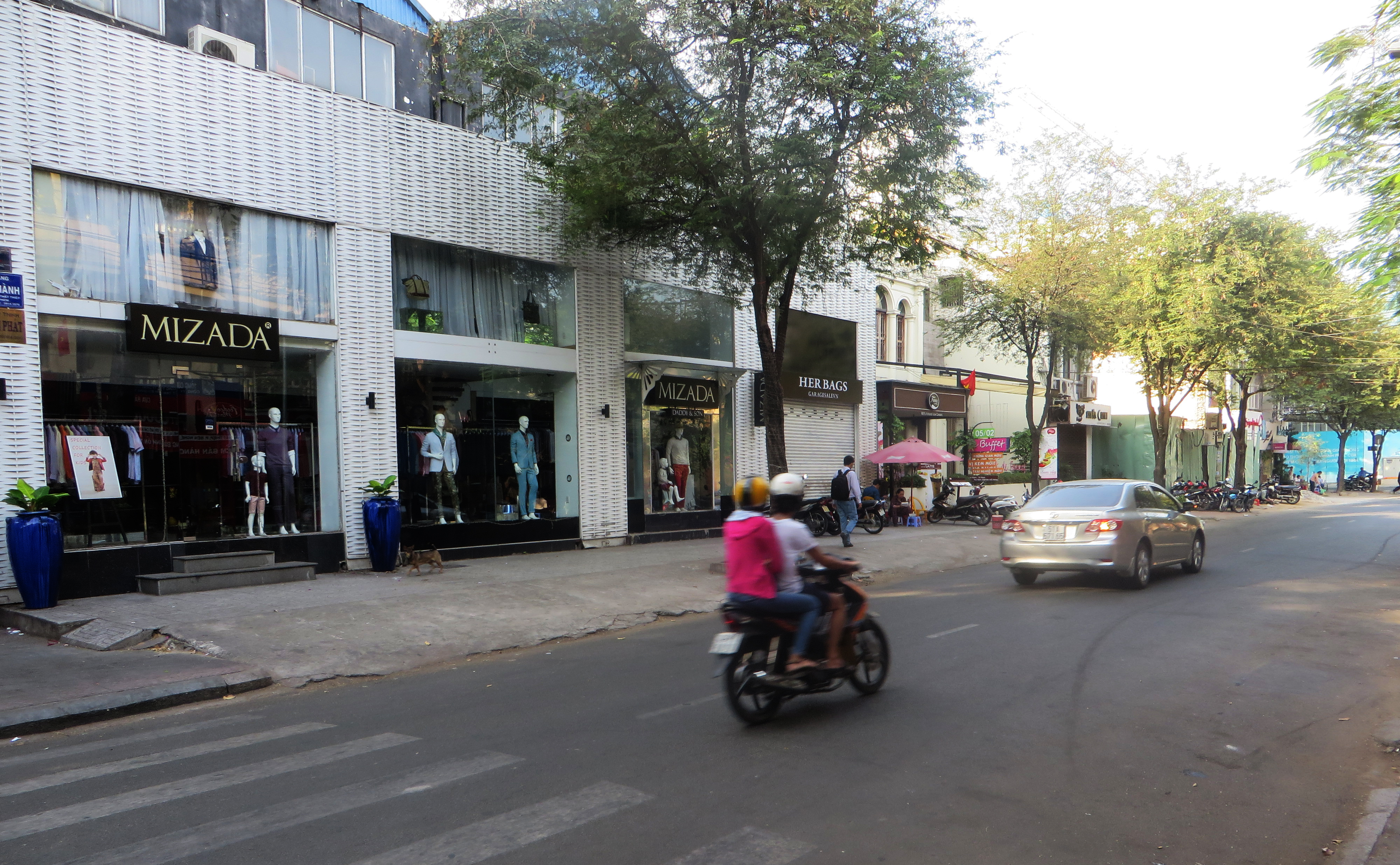
Surviving shophouses on lower Pasteur street today

Tim Doling is the author of the guidebook Exploring Saigon-Chợ Lớn – Vanishing heritage of Hồ Chí Minh City (Nhà Xuất Bản Thế Giới, Hà Nội, 2019)

A full index of all Tim’s blog articles since November 2013 is now available here.

Join the Facebook group pages Saigon-Chợ Lớn Then & Now to see historic photographs juxtaposed with new ones taken in the same locations, and Đài Quan sát Di sản Sài Gòn – Saigon Heritage Observatory for up-to-date information on conservation issues in Saigon and Chợ Lớn.

Old Saigon Building of the Week – 86 Vo Van Tan, Late 1920s

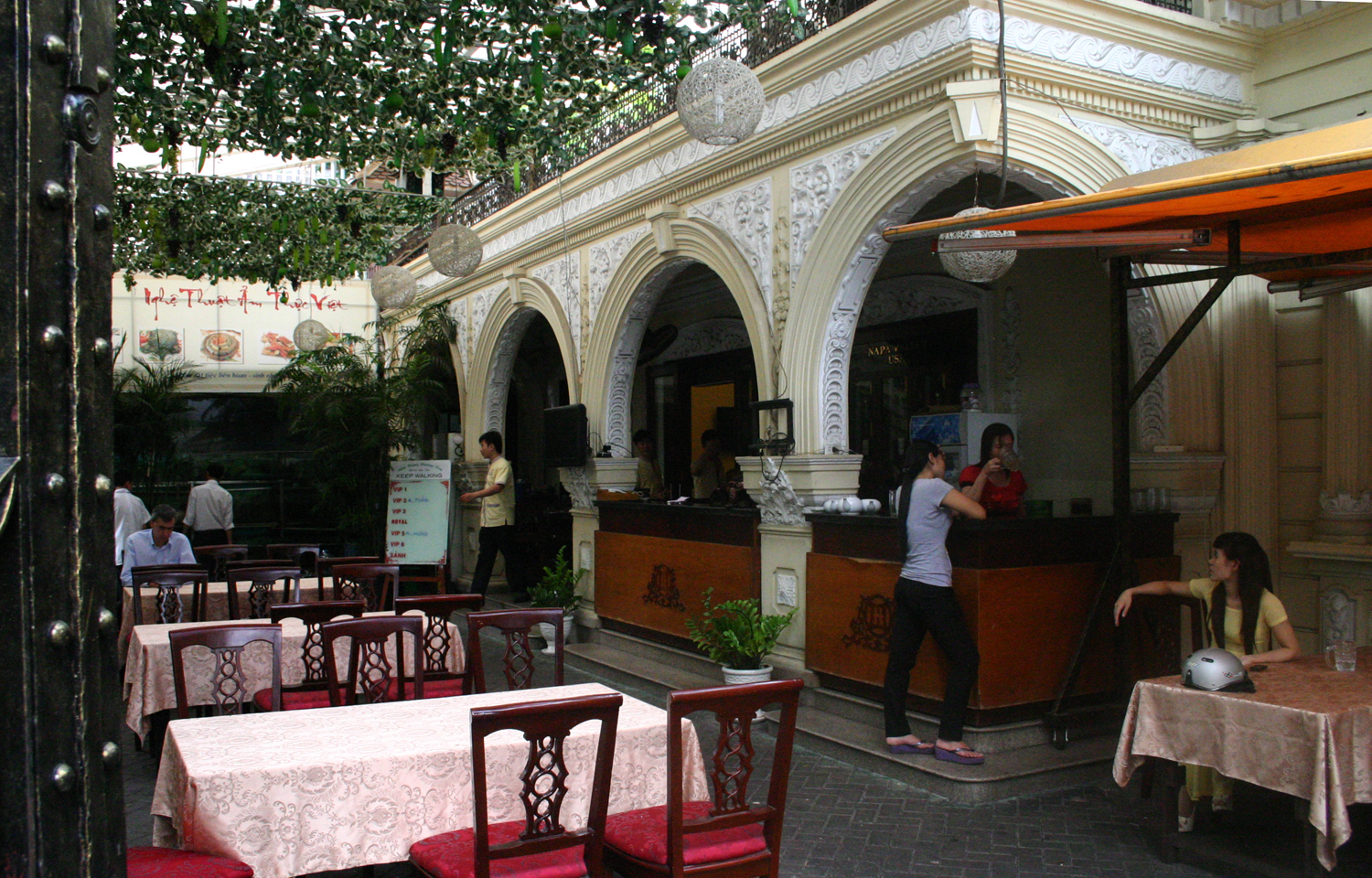
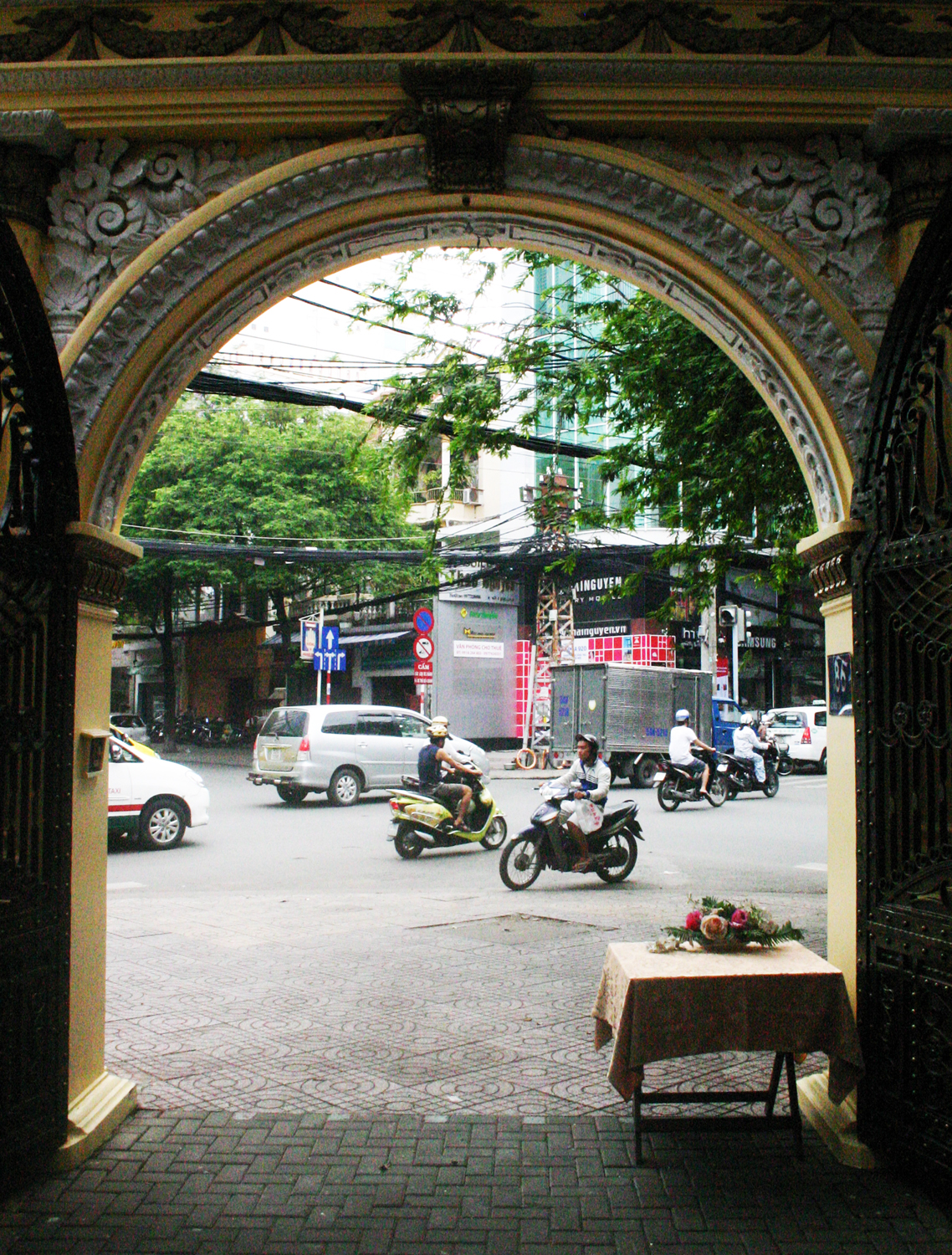
The courtyard of Fernand Nadal’s old mansion at 86 Võ Văn Tần, now a restaurant

This article was published previously in Saigoneer.

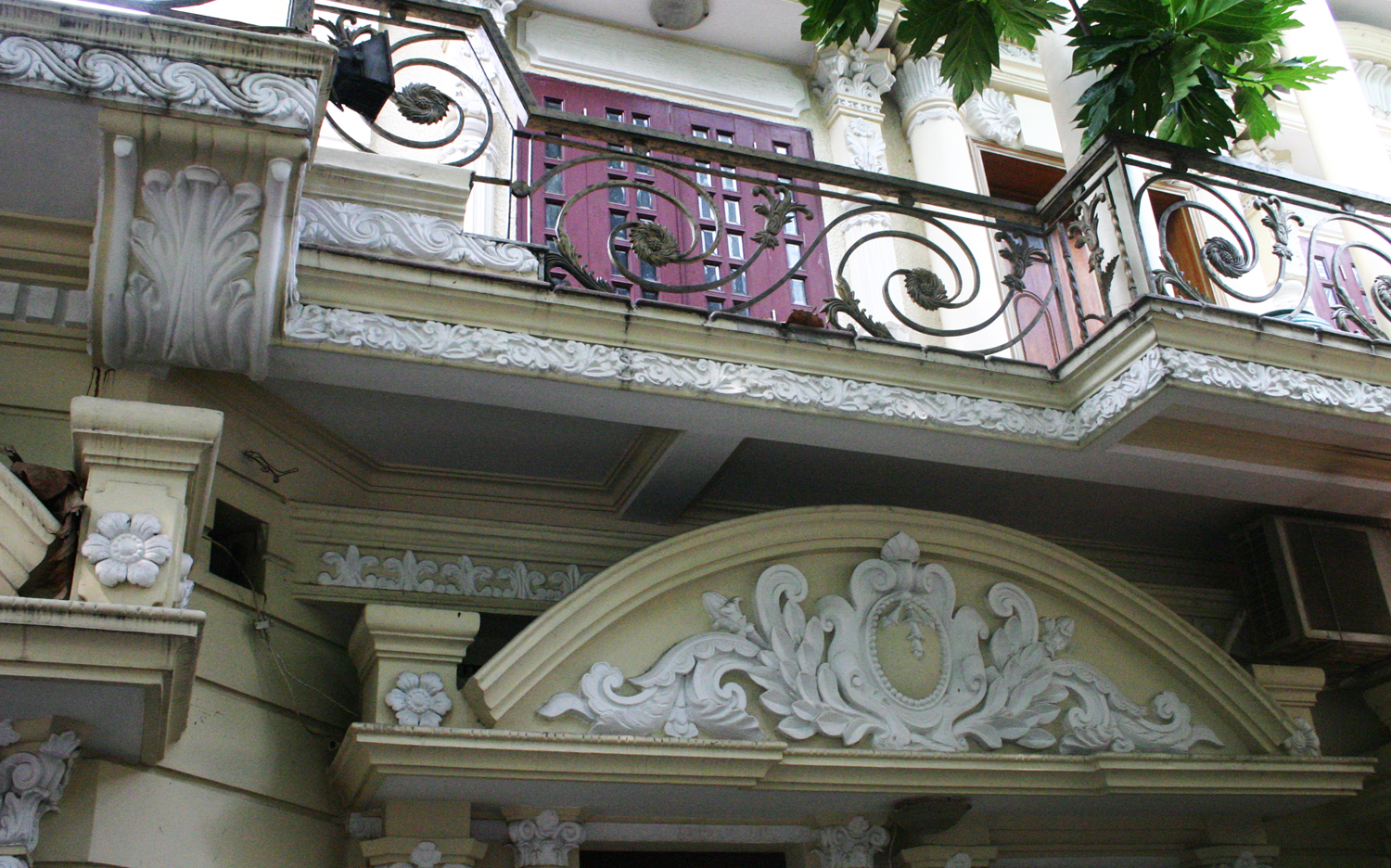
The ornate mansion on the corner of the Bà Huyện Thanh Quan and Võ Văn Tần junction was once the private residence of celebrated photographer Fernand Nadal, whose old sepia postcard images of the city are now collectors’ items.

The Photo Nadal Studio at 150 rue Catinat (Đồng Khởi) in the mid 1920s

A native of Algeria, Nadal arrived in Indochina in the early 1920s, and by 1922 he had opened the Photo Nadal Studio at 150 rue Catinat (Đồng Khởi), close to the junction with rue d’Espagne (Lê Thánh Tôn). A few years later, he relocated his business to 118-120 rue Catinat, part of the block now occupied by the Sheraton Hotel complex.

Nadal employed a European and six Vietnamese staff, and his promotional materials advertised a photographic salon and sale of photographic articles and products, including his famous sepia postcards and a number of printed photographic albums.

One of Nadal’s famous sepia postcards – Rue de Canton, Cholon, Album Nadal 1926

He was commissioned to do various photographic projects for both government and private clients, and between 1929 and 1931 a selection of his photographs was published in Le Monde colonial illustré. By the 1930s, he also had a branch studio in Phnom Penh and was the proprietor of rubber plantations in Biên Hoà and Thủ Dầu Một provinces.

The mansion at 86 rue Testard (now Võ Văn Tần) was built for Nadal in the late 1920s and it remained his home for at least 10 years. In recent years the building has been modified, but much of the original architecture remains intact. It serves currently as both a residence and a restaurant.

In recent years the building has been modified

The main entrance to 86 Võ Văn Tần on the Võ Văn Tần and Bà Huyện Thanh Quan junction

Tim Doling is the author of the guidebook Exploring Saigon-Chợ Lớn – Vanishing heritage of Hồ Chí Minh City (Nhà Xuất Bản Thế Giới, Hà Nội, 2019)

A full index of all Tim’s blog articles since November 2013 is now available here.

Join the Facebook group pages Saigon-Chợ Lớn Then & Now to see historic photographs juxtaposed with new ones taken in the same locations, and Đài Quan sát Di sản Sài Gòn – Saigon Heritage Observatory for up-to-date information on conservation issues in Saigon and Chợ Lớn.

Saigon’s Famous Streets and Squares – Le Duan Boulevard

Boulevard Norodom, view looking east from the Palais du Gouvernement général (1895), by André Salles

This article was published previously in Saigoneer.

When it was first laid out in 1870, the broad avenue we know today as Lê Duản was christened boulevard Norodom, after the Cambodian monarch who in 1863 had entrusted his kingdom to the protection of the French.

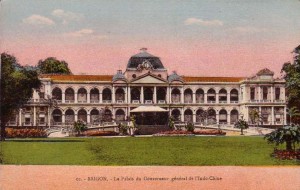
The Palais du Gouvernement général

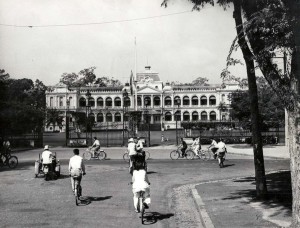
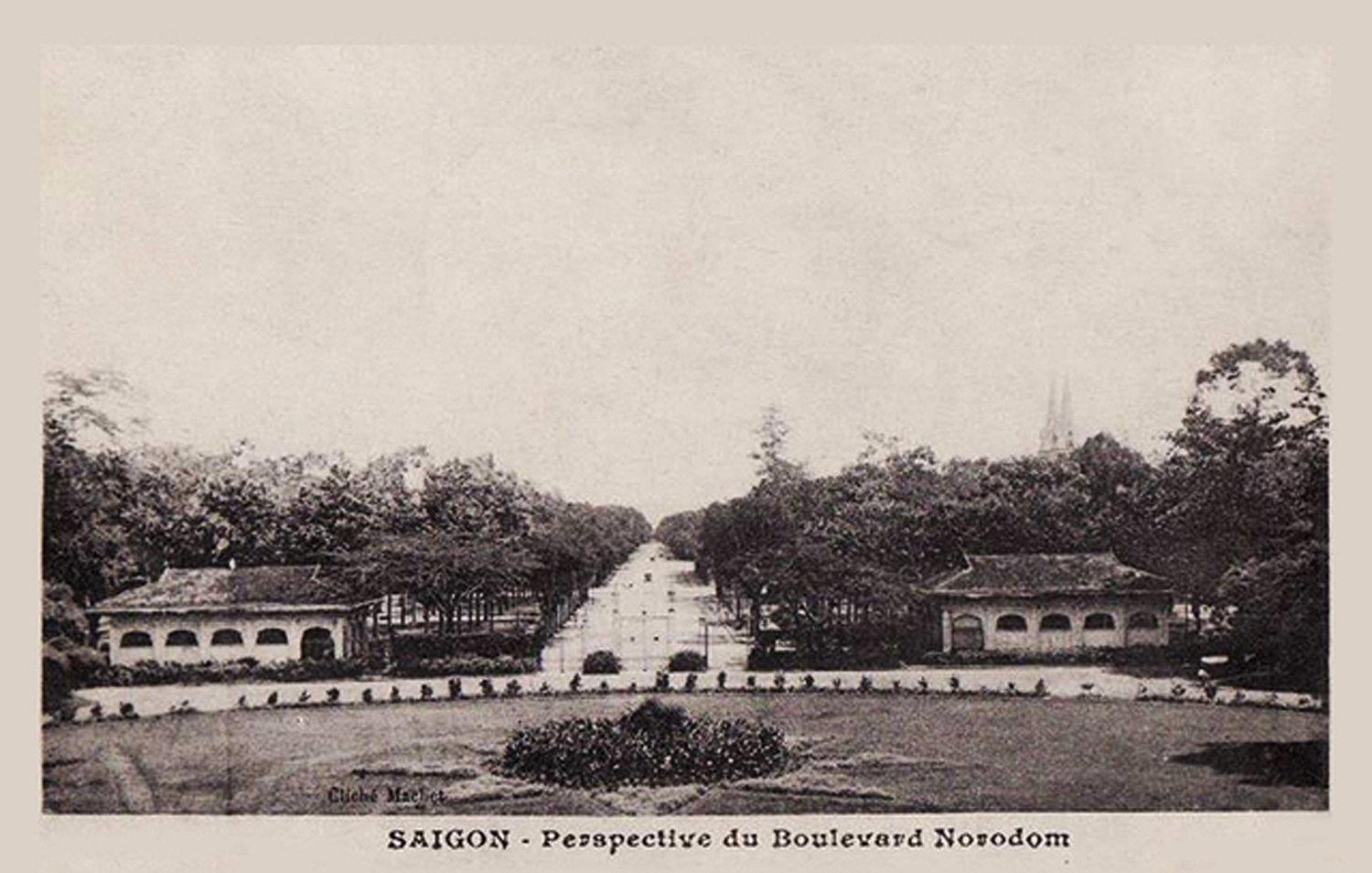
Located immediately in front of the Palais du Gouvernement général (built 1868-1873) and described as “a beautiful avenue lined with tamarind trees,” boulevard Norodom was initially quite short, stretching only from the palace to the top end of rue Catinat (Đồng Khởi).

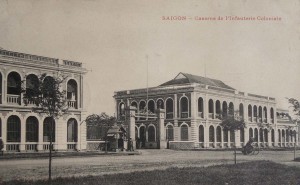
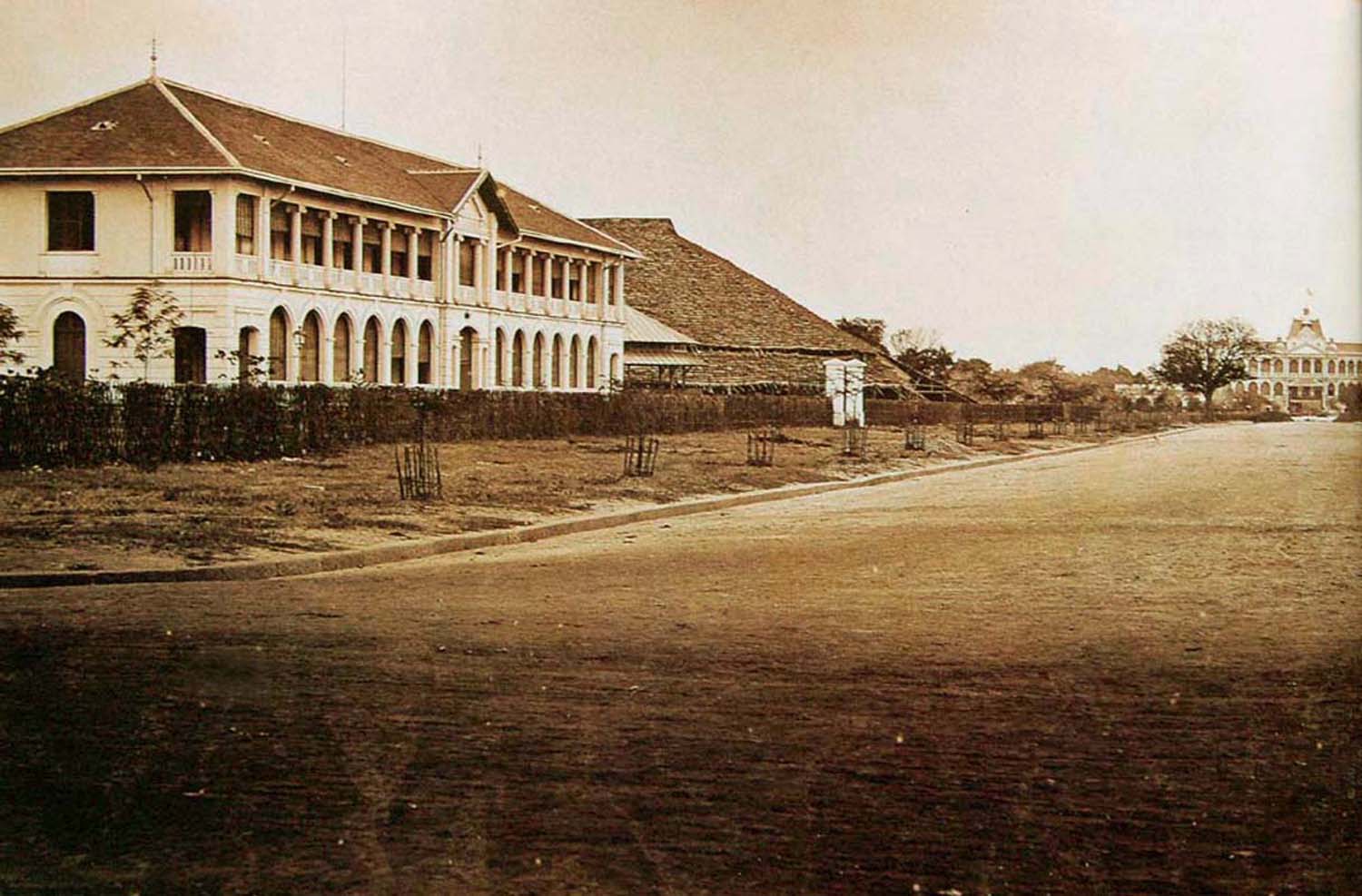
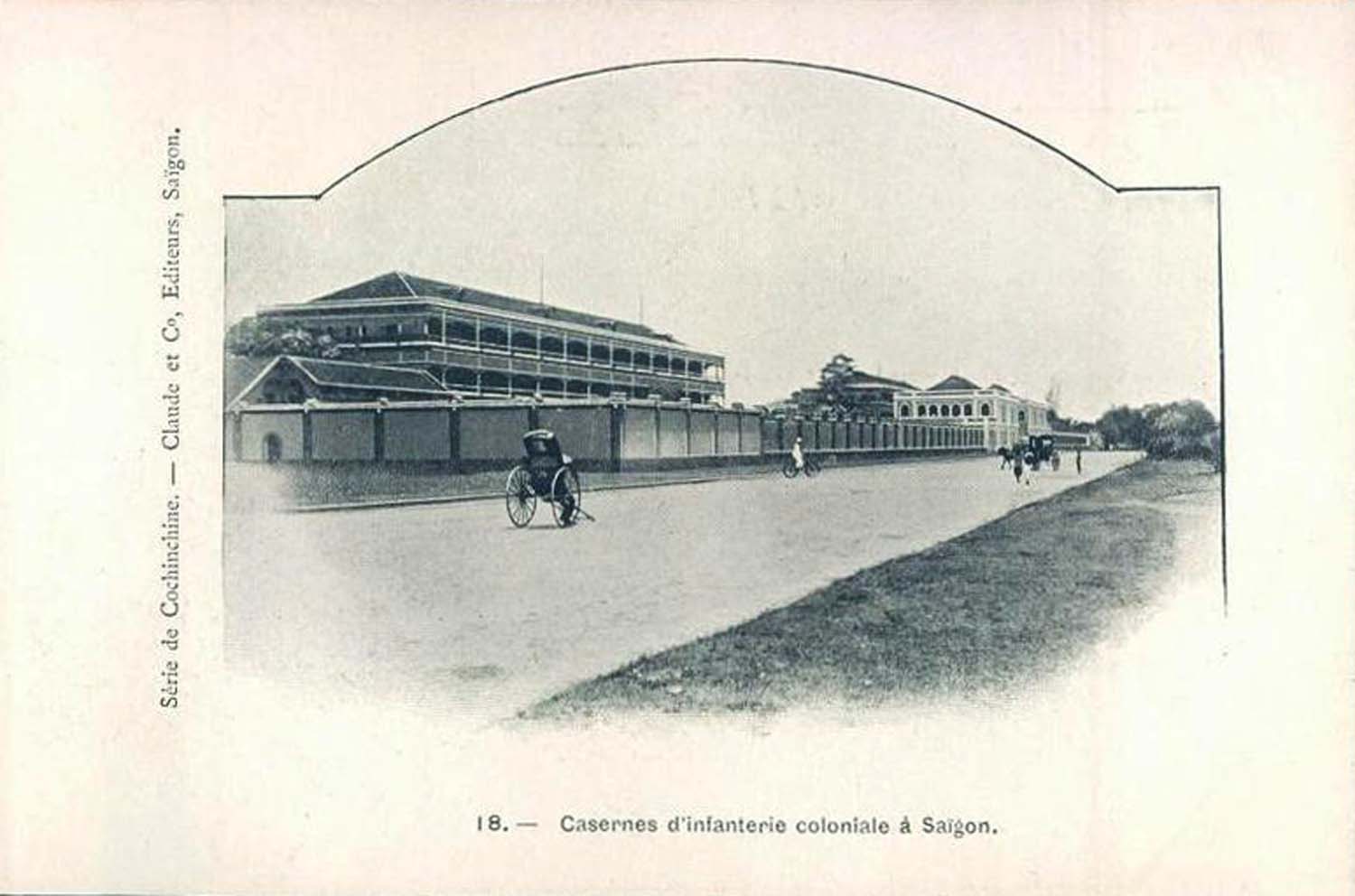
However, following the construction of the Caserne de l’Infanterie (Colonial infantry barracks) in the grounds of the old citadel in 1870-1872, the street was extended eastward in two stages – as far as rue de Bangkok (Mạc Đĩnh Chi) in 1874 and then all the way to the Botanical and Zoological Gardens in 1887-1888.

The Caserne de l’Infanterie

Boulevard Norodom incorporated two squares – one immediately behind the Cathedral (1880), which was used on a weekly basis during the colonial era for reviewing French troops, and the other at the junction of rue Pellerin (Pasteur), which from 1889-1914 incorporated an imposing statue of French statesman Léon Gambetta.

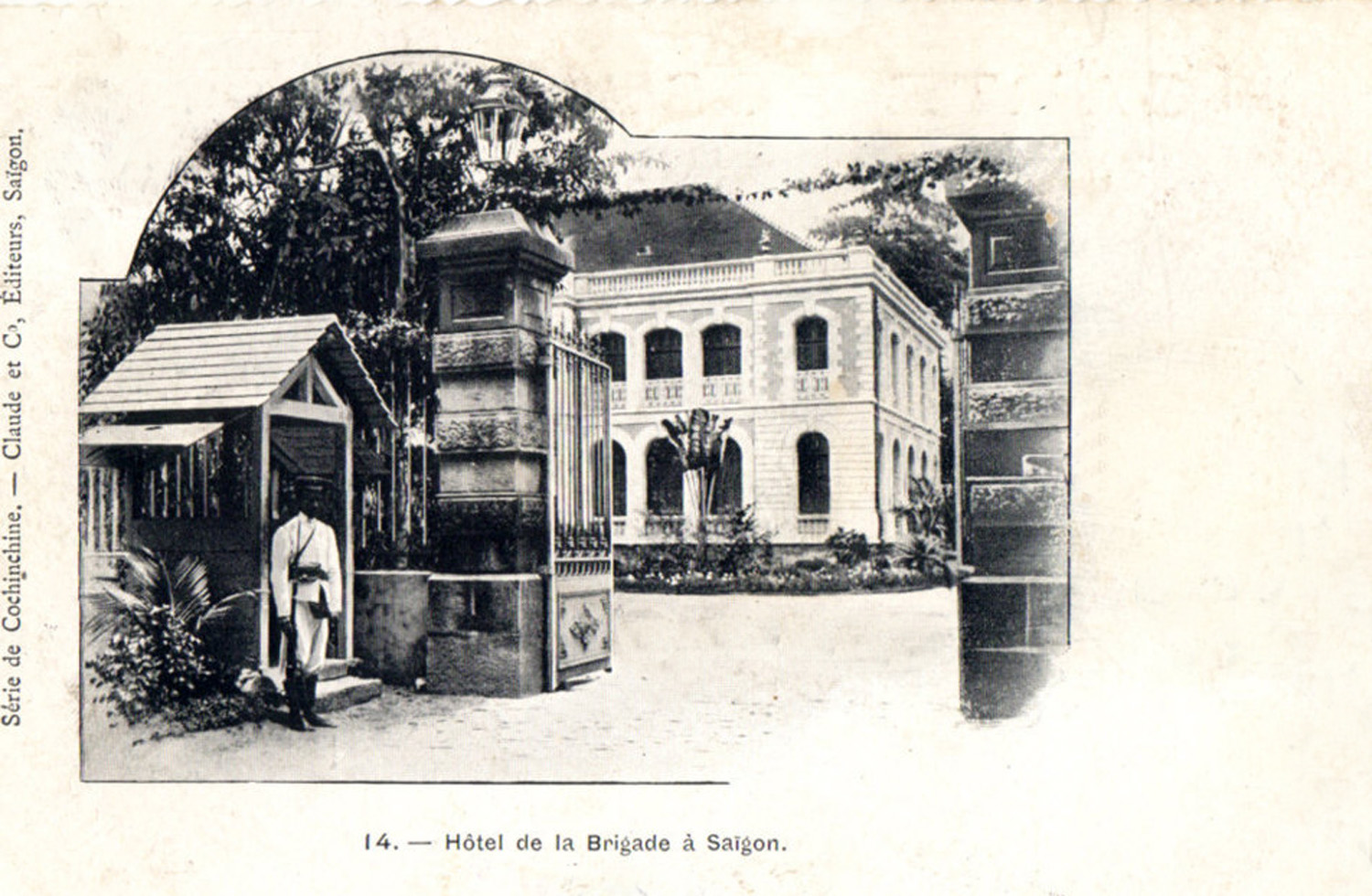
Early landmarks on the boulevard included the Cercle des Officiers (1876, now the District 1 People’s Committee) and the Hôtel du général (1879, now the French Consulate General).

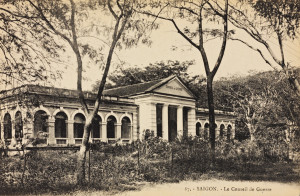
The Conseil de guerre

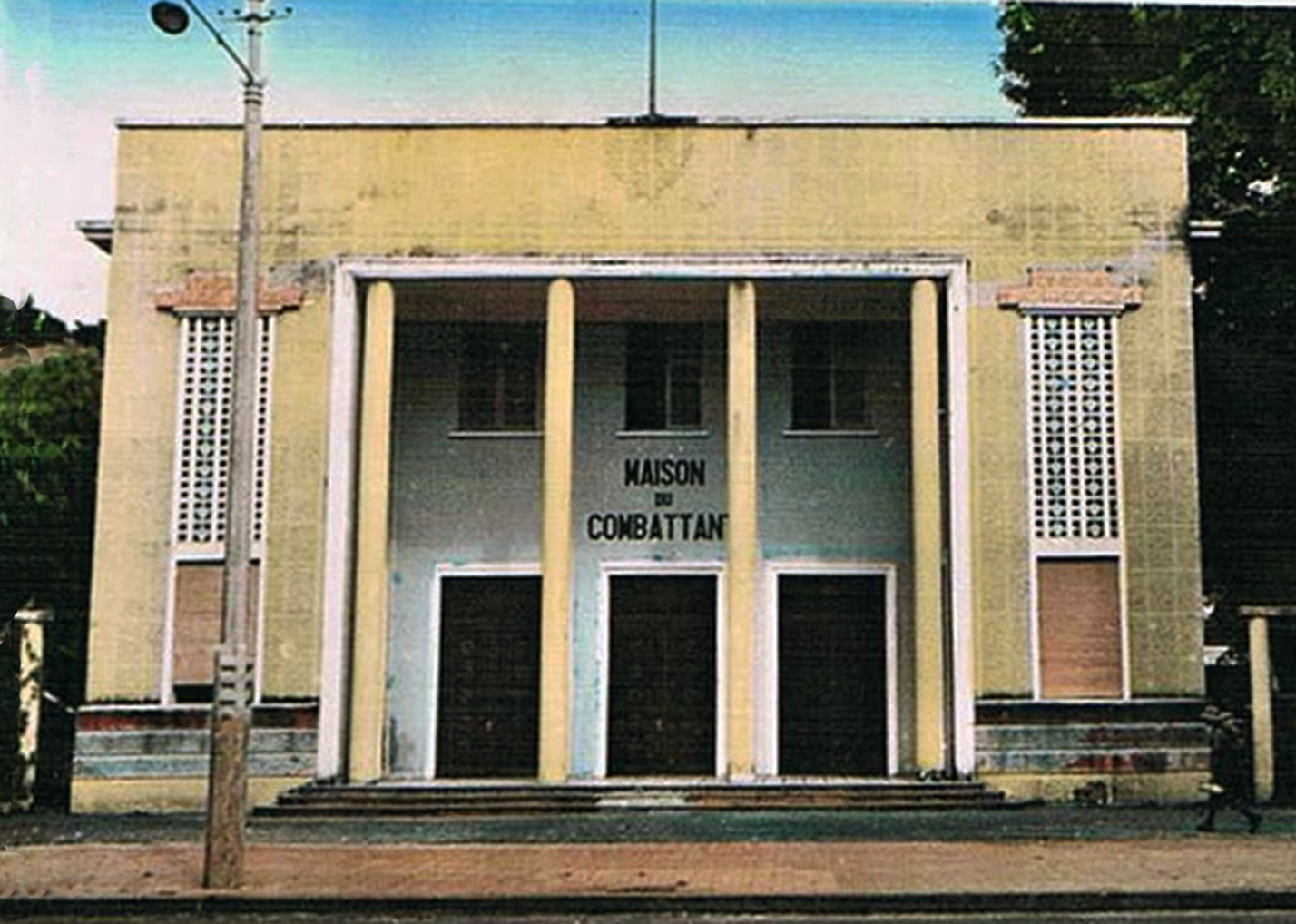
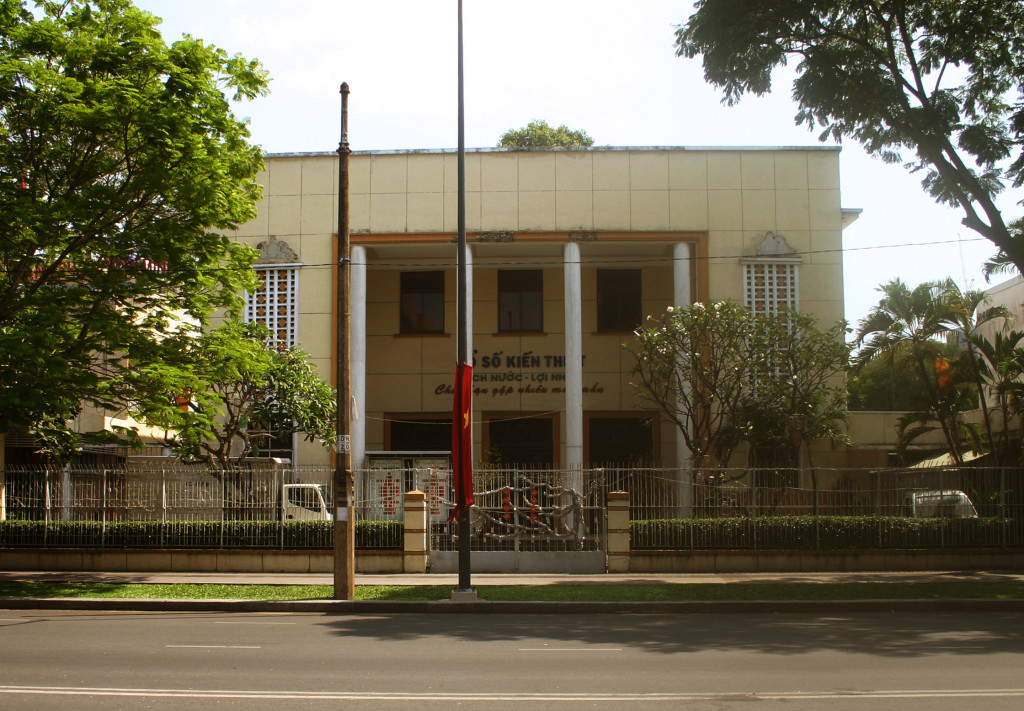
Those buildings were later joined by the Conseil de guerre (1902, located on the site of the US Consulate), the Hôtel du Contrôle financier (1902, recently demolished to make way for the “Lavenue Crowne” development), the Protestant Chapel (1904, now part of District 1 Cultural Centre), the Compagnie Franco-Asiatique des Pétroles headquarters (early 1930s, now Petrolimex), the Maison du combattant (currently the Kiến Thiết Lottery Company, scheduled for demolition) and the Foyer du Soldat et du Marin (1937, now the Hồ Chí Minh Campaign Museum).

Ngô Đình Diệm used the old Palais du Gouvernement général as his presidential residence

Following the departure of the French, boulevard Norodom was renamed Thống Nhất boulevard by the Ngô Đình Diệm administration.

Over the next eight years, with the old Palais du Gouvernement général serving as Diệm’s presidential residence and the former French infantry barracks functioning as the headquarters of his elite republican guard, it continued to be used on a regular basis for troop reviews and military parades. However, after the overthrow of Diệm in 1963, the barracks was redeveloped for civilian usage, bringing the street’s military function to an end.

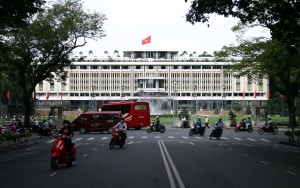
The Independence Palace designed by Ngô Viết Thụ

Bombed during a failed coup attempt in February 1962, the former Palais du Gouvernement général was rebuilt in 1962-1966 to a modernist design by architect Ngô Viết Thụ. Inaugurated on 31 October 1966, this new Independence Palace served as the RVN’s seat of government until April 1975.

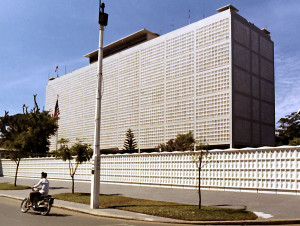
After 1967, the site of the earlier Conseil de guerre building at 4 Thống Nhất boulevard became home to the Embassy of the United States of America, which had been transferred here from its earlier more vulnerable location at 39 Hàm Nghi, following a devastating car-bomb attack on 30 March 1965.

The second US Embassy in 1971 by Dennis Hancock

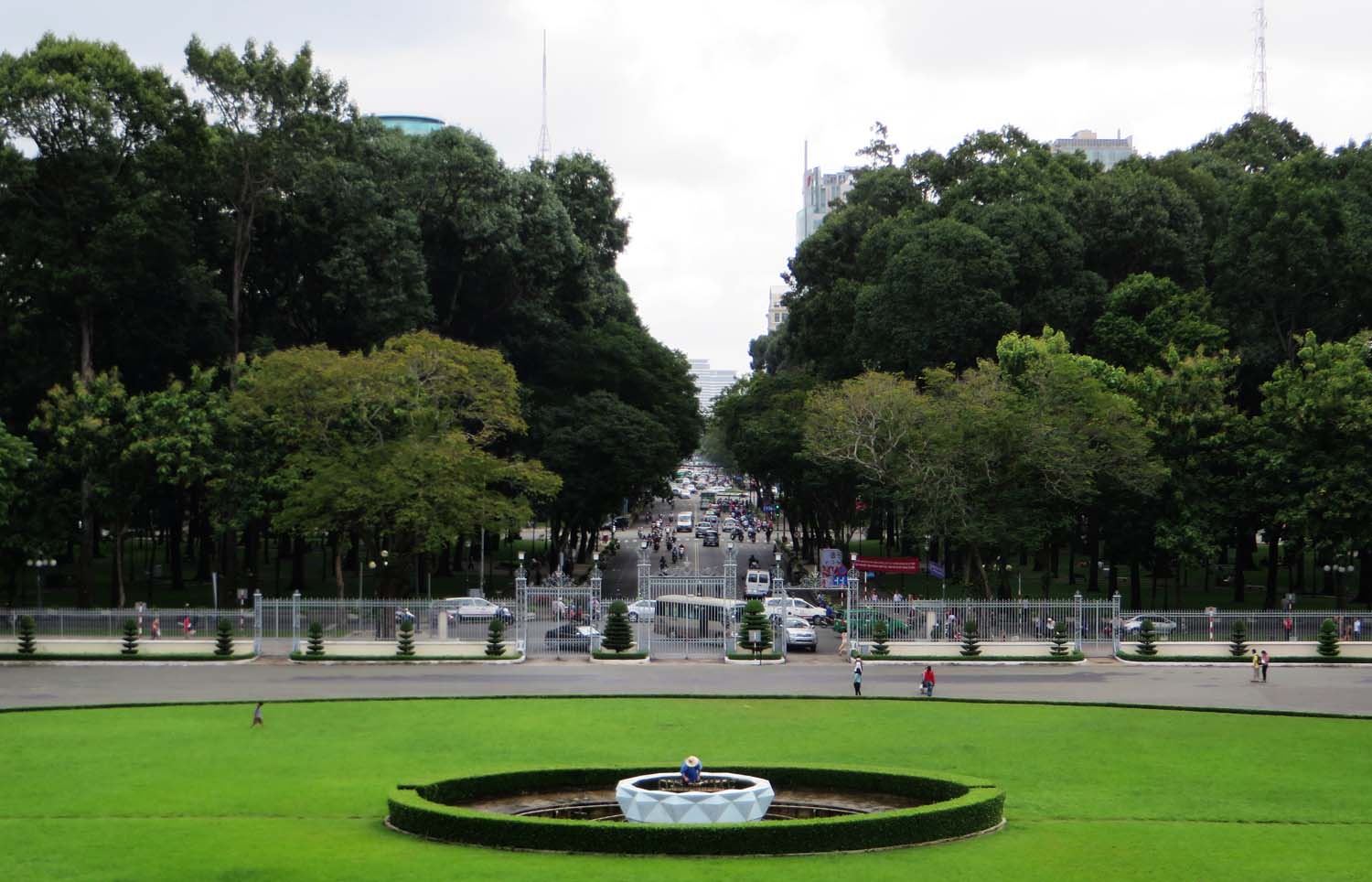
Since 1975, the street has been named after former Communist Party General Secretary Lê Duẩn (1907-1986). No longer forming a grand approach to a seat of government as it did in its first 100 years of existence, this famous Saigon street has now become a much sought-after “gold land” site, home to museums, consulates, government buildings and a range of mixed use developments, including hotels, office towers and shopping centres.

Saigon – perspective du boulevard Norodom

The Cercle des Officiers pictured in the late 1870s with the Cathedral under construction in the background

The Hôtel du général

Another view of the Caserne de l’Infanterie on boulevard Norodom

Lê Duẩn boulevard today

Tim Doling is the author of the guidebook Exploring Saigon-Chợ Lớn – Vanishing heritage of Hồ Chí Minh City (Nhà Xuất Bản Thế Giới, Hà Nội, 2019)

A full index of all Tim’s blog articles since November 2013 is now available here.

Join the Facebook group pages Saigon-Chợ Lớn Then & Now to see historic photographs juxtaposed with new ones taken in the same locations, and Đài Quan sát Di sản Sài Gòn – Saigon Heritage Observatory for up-to-date information on conservation issues in Saigon and Chợ Lớn.

Saigon’s Famous Streets and Squares – Ton That Thiep Street

During the colonial period, Tôn Thất Thiệp street was officially known as rue Ohier, but its popular name was “rue des Malabars,” after the large Tamil community which settled here from the 1880s onwards

This article was published previously in Saigoneer.

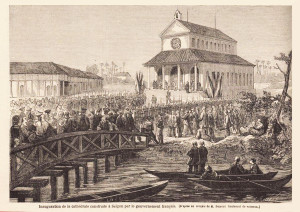
One of the oldest streets in Saigon, Tôn Thất Thiệp street was known in the early French colonial period firstly as rue No 9 and then from 1863 as rue de l’Église, after Saigon’s ill-fated first Roman Catholic Cathedral, which was built at its junction with boulevard Charner (Nguyễn Huệ).

Saigon’s first purpose-built cathedral, the Église Sainte-Marie-Immaculée (Church of Saint Mary of the Immaculate Conception), which once stood at the junction of modern Tôn Thất Thiệp street and Nguyễn Huệ boulevard (now the site of the Sun Wah Tower) – Le Monde Illustré 19 Septembre 1863

Constructed from timber, that first Cathedral had to be demolished in the early 1870s due to termite infestation. As plans got underway to build a replacement brick cathedral on the present site, the future Tôn Thất Thiệp street was rechristened rue Ohier, after Rear Admiral Marie Gustave Hector Ohier, who served as Governor of Cochinchine from 1868 to 1869.

During the 1880s, large numbers of Tamils from the French Indian Settlements of Pondicherry (Puducherry), Karikal and Yanaon began arriving in Saigon, and the rue d’Ohier was gradually transformed into one of the city’s largest communities of “Malabars” or “Chettyars,” many of whom made a living as moneylenders and financiers.

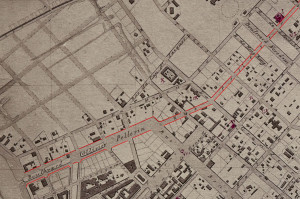
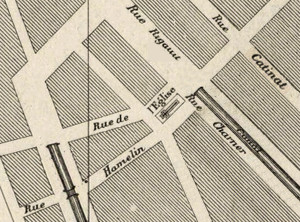
Tôn Thất Thiệp street appears on this 1864 street map as rue de l’Église

By 1890, the rue d’Ohier was known popularly as the “rue des Malabars,” and government directories from that year onward consistently reveal the entire street to be lined with Tamil businesses, mostly banks and moneylending services.

The current Sri Thendayutthapani Temple at 66 Tôn Thất Thiệp dates from the 1920s, but is believed to have been built on the site of an earlier Hindu temple founded in the late 19th century by the earliest Tamil settlers. The Temple Club, housed in an old colonial residence at 29-31 Tôn Thất Thiệp, is said once to have been the temple’s guest house.

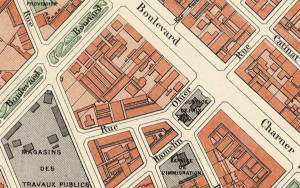
Following the demolition of the first cathedral in the 1870s, the rue de l’Église was renamed rue Ohier; it is shown here on an 1890 street map

After the departure of the French, Saigon’s Tamil businesses continued to make an important contribution to the economic life of the city and the former “rue des Malabars,” renamed Tôn Thất Thiệp street in 1955, continued to be the heart of a vibrant Indian community.

Most of the Tamil community left Saigon before 1975, and the majority of the old colonial shophouse buildings in which they once did business have also been demolished in recent decades.

The annual Thaipusam Hindu festival celebrated by the Tamil community, pictured outside the Sri Thendayutthapani Temple

However, those interested in the history of Tamil settlement in Saigon may still pay a worthwhile visit to the Sri Thendayutthapani Temple, which houses the lavishly-decorated festival chariot once used every year by the Tamil community of the “rue des Malabars” to carry their Hindu deity in procession around the streets of Saigon during the Hindu festival of Thaipusam.

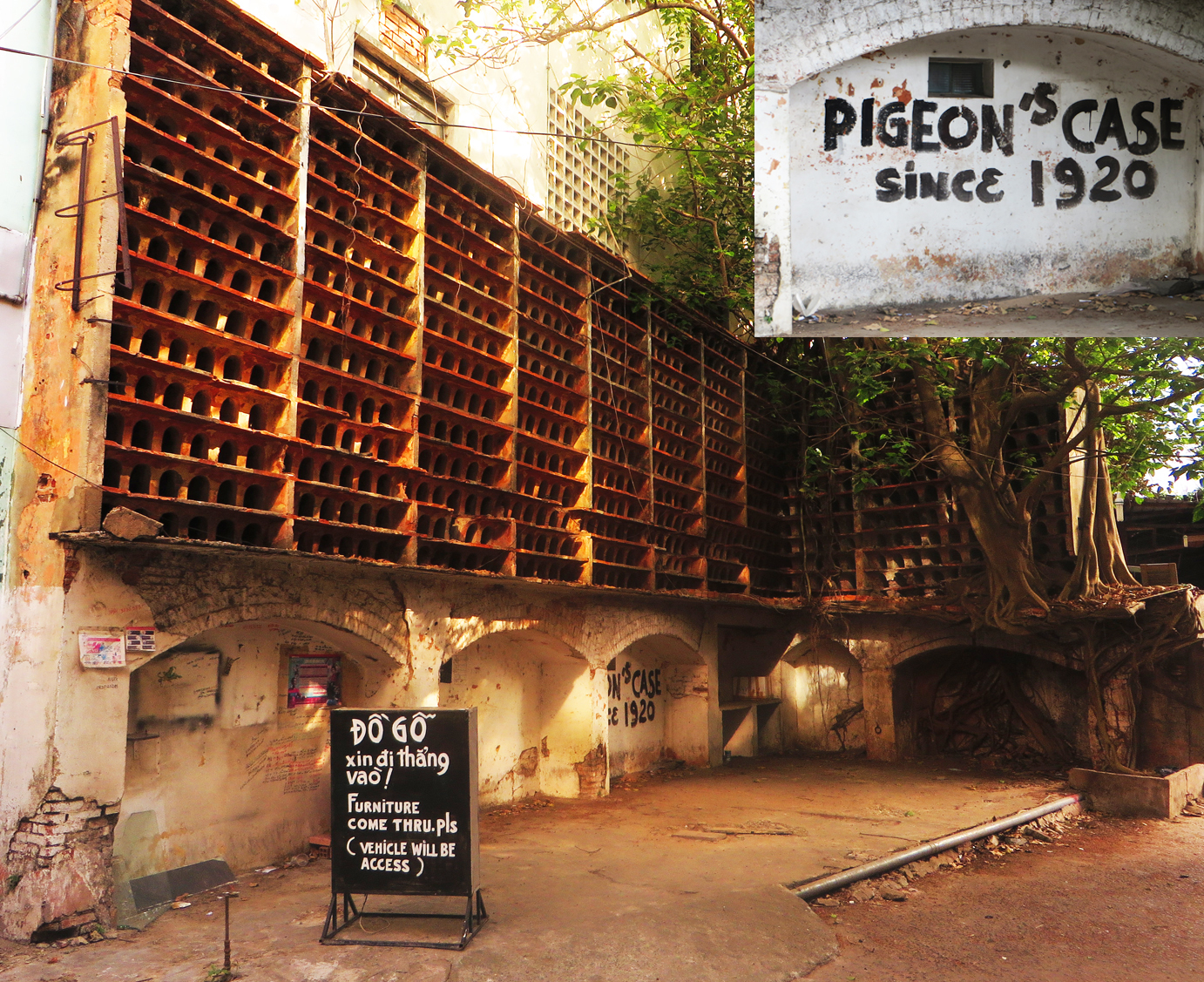
Meanwhile, just round the corner in an alley next to 122 Pasteur, is a rather more unusual vestige of Saigon’s former Indian community – the loft where they once kept their pigeons!

Tôn Thất Thiệp street today

Another view of modern Tôn Thất Thiệp street showing the Sri Thendayutthapani Temple

The old loft where members of the Indian community once kept their pigeons

Tim Doling is the author of the guidebook Exploring Saigon-Chợ Lớn – Vanishing heritage of Hồ Chí Minh City (Nhà Xuất Bản Thế Giới, Hà Nội, 2019)

A full index of all Tim’s blog articles since November 2013 is now available here.

Join the Facebook group pages Saigon-Chợ Lớn Then & Now to see historic photographs juxtaposed with new ones taken in the same locations, and Đài Quan sát Di sản Sài Gòn – Saigon Heritage Observatory for up-to-date information on conservation issues in Saigon and Chợ Lớn.

Saigon’s Famous Streets and Squares – Quach Thi Trang Square

“Saigon – place du Marché central” (1932)

This article was published previously in Saigoneer.

In this, the first of a new series about the history of the famous streets and squares of Saigon and Chợ Lớn, we look at the history of Quách Thị Trang square.

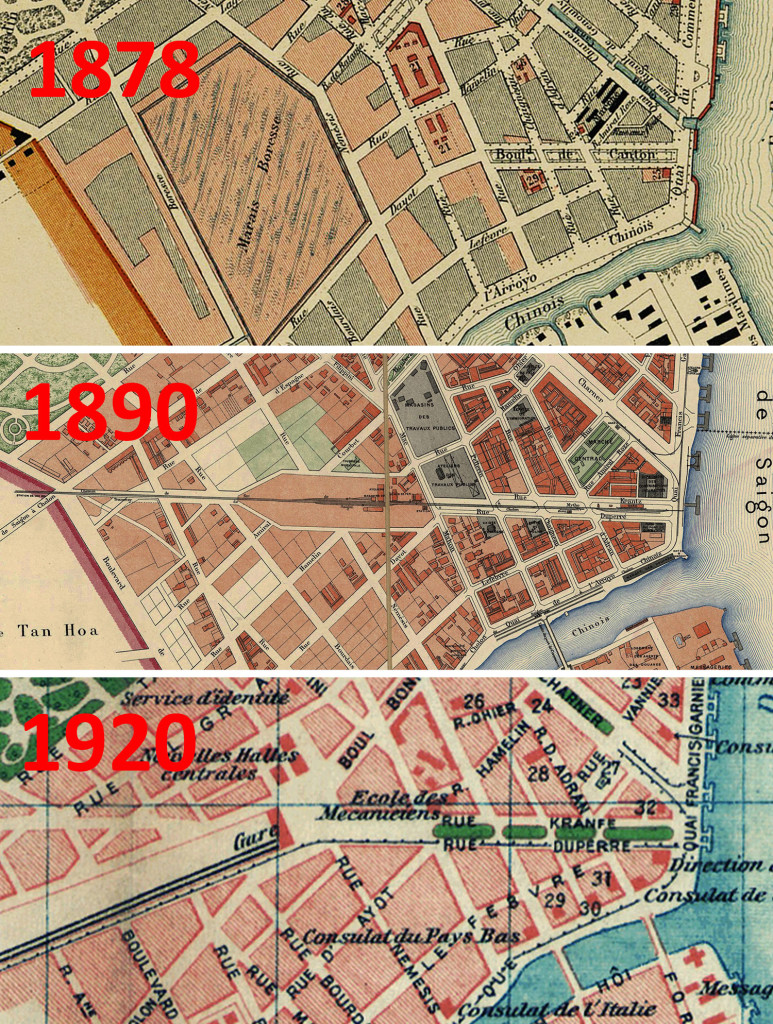
For the first two decades of French colonial rule, the site now occupied by Quách Thị Trang square formed the easternmost border of a large swamp known as the Marais Boresse.

A comparison of city maps dated 1878, 1898 and 1920 illustrates the development of the site from swamp to railway depot to market square

This was reclaimed in the early 1880s to facilitate construction of the Saigon-Mỹ Tho railway line, which opened in 1885 and ran from a terminus at the riverside end of modern Hàm Nghi boulevard right through the future square site, where a large steam locomotive depot was built.

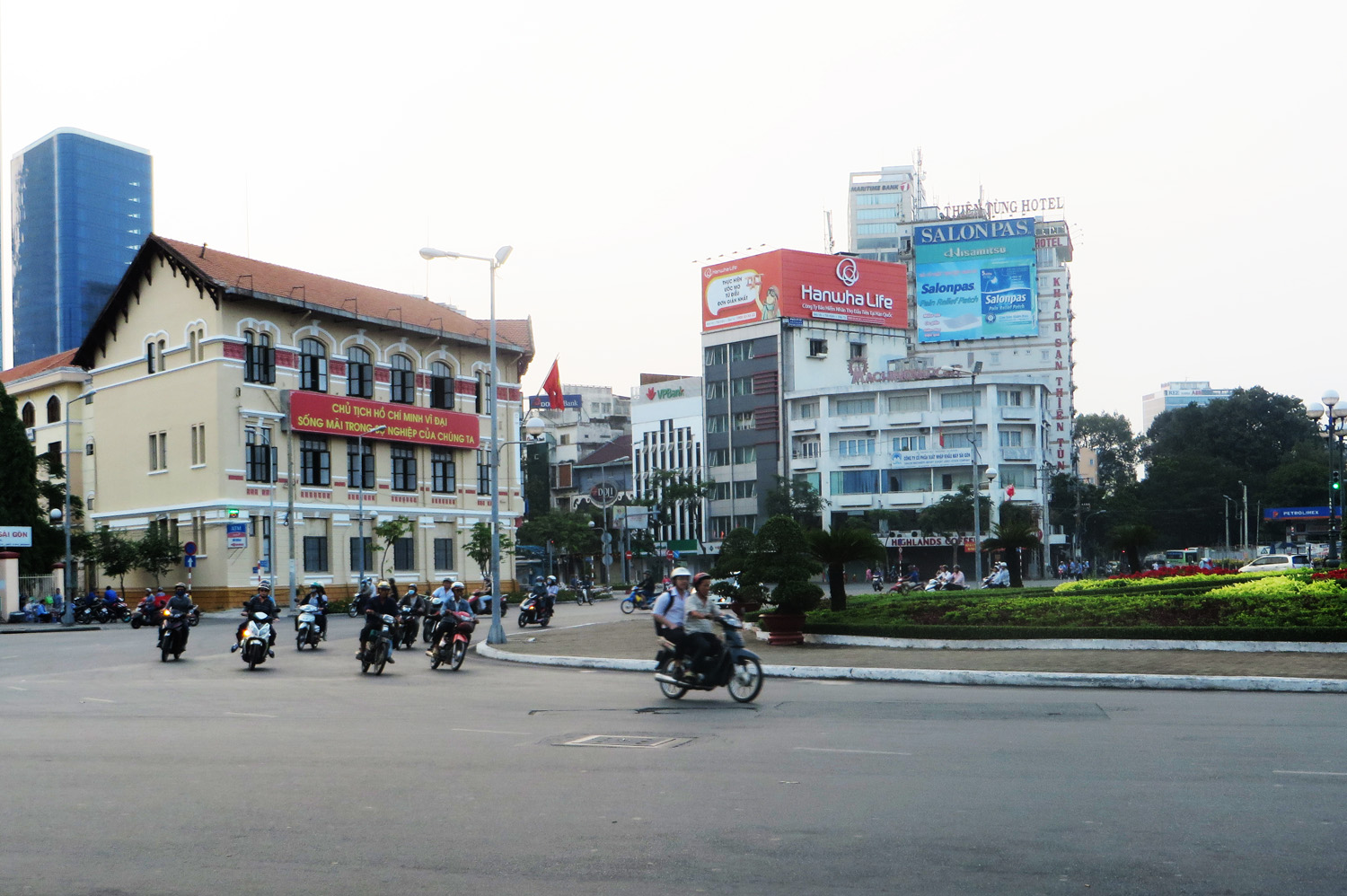
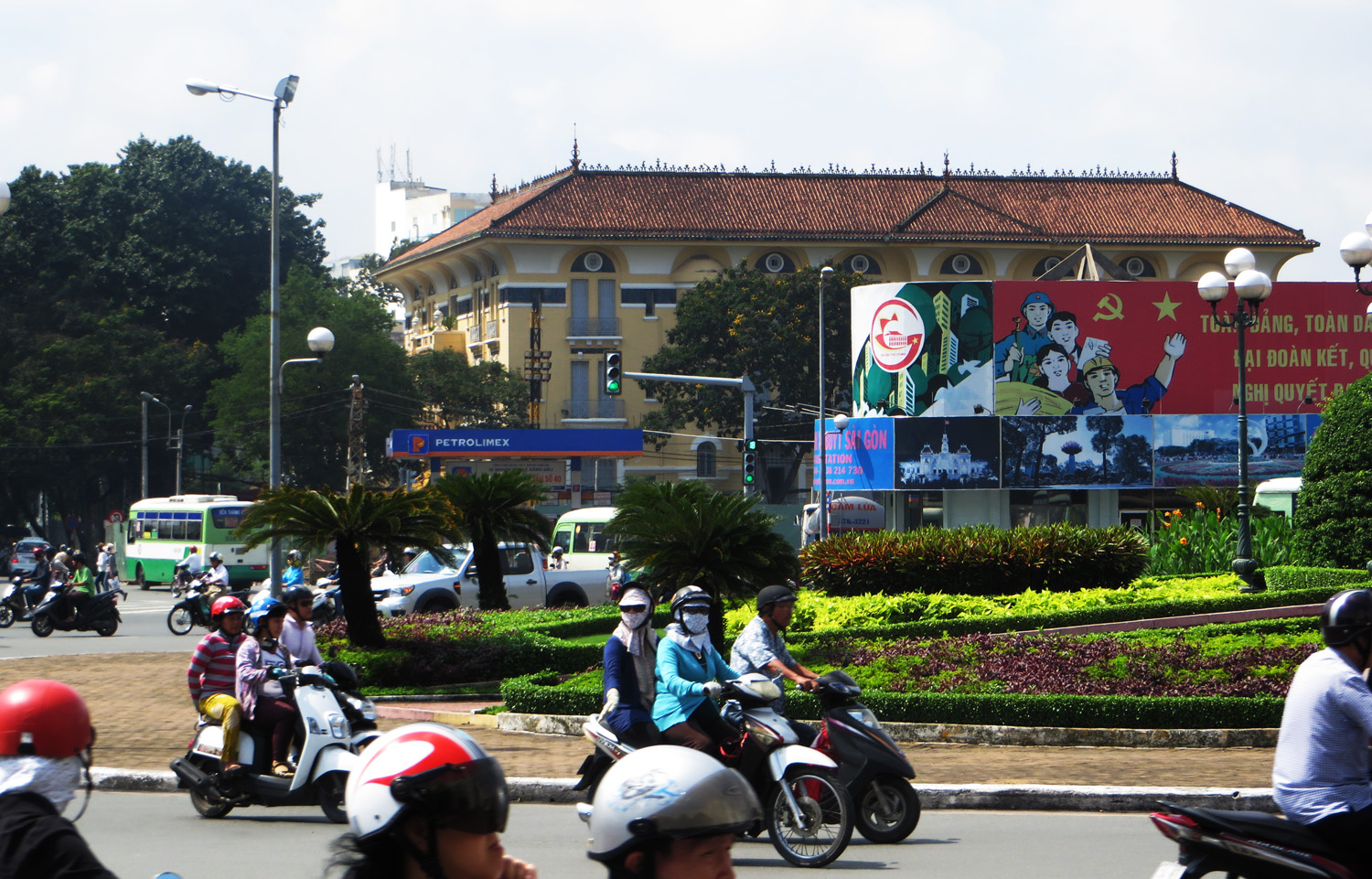
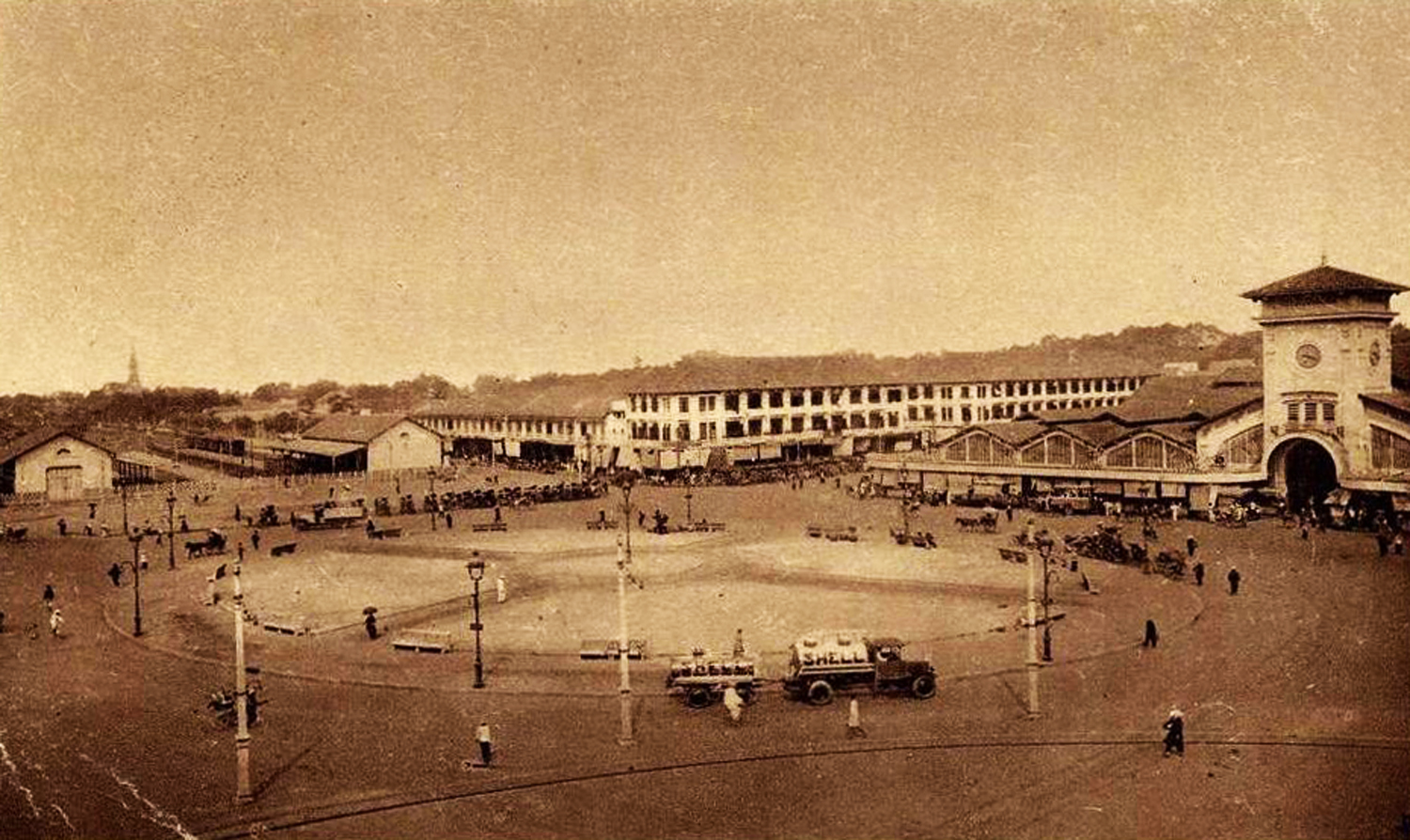
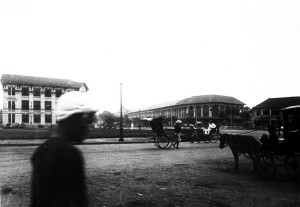
The 0.322 hectare square we know today was laid out in 1912-1914 as the main market square in front of the new Halles centrales, now Bến Thành Market.

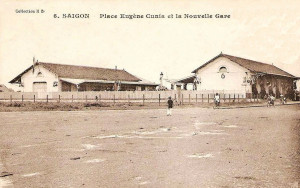
The second Saigon Railway Station opened in 1915 on the southwest side of the square

In order to achieve this, the locomotive depot was demolished and the railway line was rerouted into a new terminus on the southwest side of the square, the area now occupied by 23-9 Park (the Phạm Ngũ Lão backpacker area).

Although it continued to be known for many years as the place du Marché (Market square), in July 1916 the square was officially named as place Eugène-Cuniac, in honour of long-serving former Saigon Mayor Eugène François Jean-Baptiste Cuniac (in office 1890-1891, 1892-1895, 1901-1906 and 1912-1915), one of the key advocates of the new market, who had died earlier that month.

Place Eugène Cuniac pictured in 1929 after the installation of a central roundabout with landscaped gardens (photo by MAP)

The opening of the new Saigon Railway Station in 1915 and of the new Halles centrales electric tramway terminus in 1923 transformed the square into one of the city’s most important transport hubs. Two bus stations – one on the east side of the market and the other on the west – also functioned here until the 1940s.

Place Cuniac remained a simple open space until 1929, when a roundabout with landscaped gardens was installed at its centre.

After 1955, the RVN government renamed place Eugène-Cuniac as công trường Diên Hồng (Diên Hồng square), after the Diên Hồng conference (Hội nghị Diên Hồng) of 1284 – described by some historians as the first democratic gathering held in Việt Nam – which was convened by King Trần Thánh Tông to discuss military strategy in the face of the second Mongol invasion.

The bust of Quách Thị Trang, pictured soon after its installation in August 1964

As protests against the anti-Buddhist policies of the Ngô Đình Diệm administration gathered pace in 1963, Diên Hồng square became a popular venue for dissent. Events took a turn for the worse on 25 August 1963, when 15-year-old Quách Thị Trang was shot dead by police while taking part in a student demonstration there. Twelve months later, a memorial bust of Quách Thị Trang, commissioned by the Saigon Students Association, was installed near the centre of the roundabout, on the spot where Trang had died.

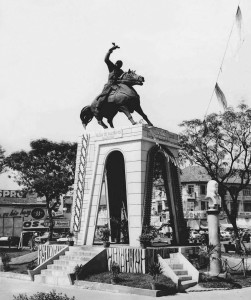
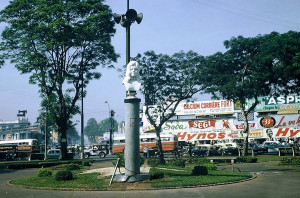
In 1965, the authorities installed an imposing equestrian statue of General Trần Nguyên Hãn (1390-1429) in the centre of the roundabout. A great military leader who helped King Lê Lợi (1384-1433) defeat the invading Ming Chinese and establish the later Lê dynasty, Hãn committed honourable suicide when the king unjustly suspected that he might try to take the throne for himself.

The equestrian statue of General Trần Nguyên Hãn (1390-1429), pictured soon after its installation in 1965

After Reunification, the square was officially renamed quảng trường Quách Thị Trang (Quách Thị Trang square).

Both the General Trần Nguyên Hãn statue and the Quách Thị Trang bust remained in place until last year, when preparations began for the construction of the new Metro Line 1 Bến Thành Station. In December 2014, the Trần Nguyên Hãn statue was moved to Phú Lâm Park in District 6, while the Quách Thị Trang bust was relocated to Lý Tự Trọng Park.
Many are now asking whether the square will now be renamed again, but as yet there has been no official pronouncement on this matter.

Quách Thị Trang square pictured in 2014 before the removal of the General Trần Nguyên Hãn statue and Quách Thị Trang bust

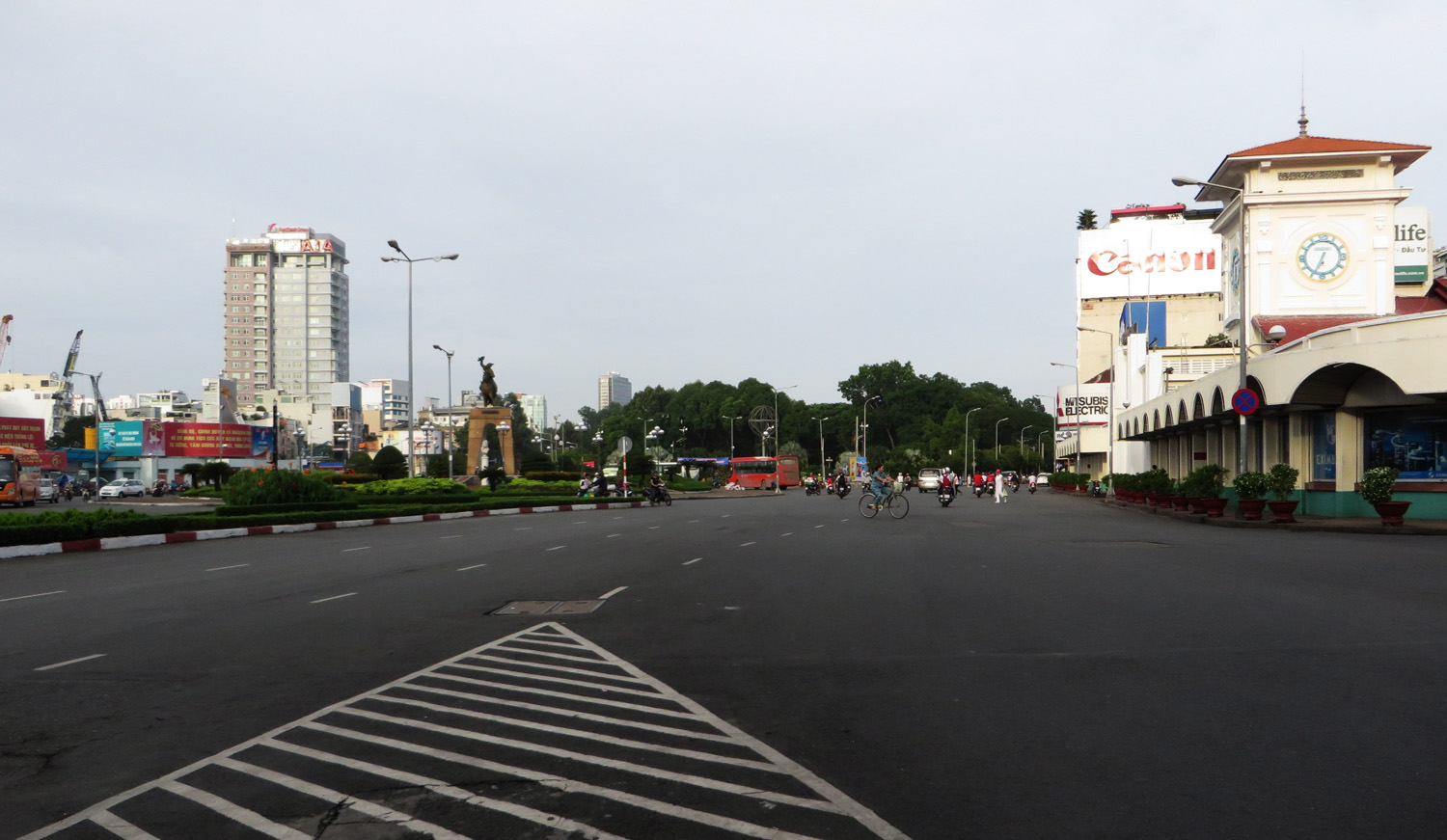
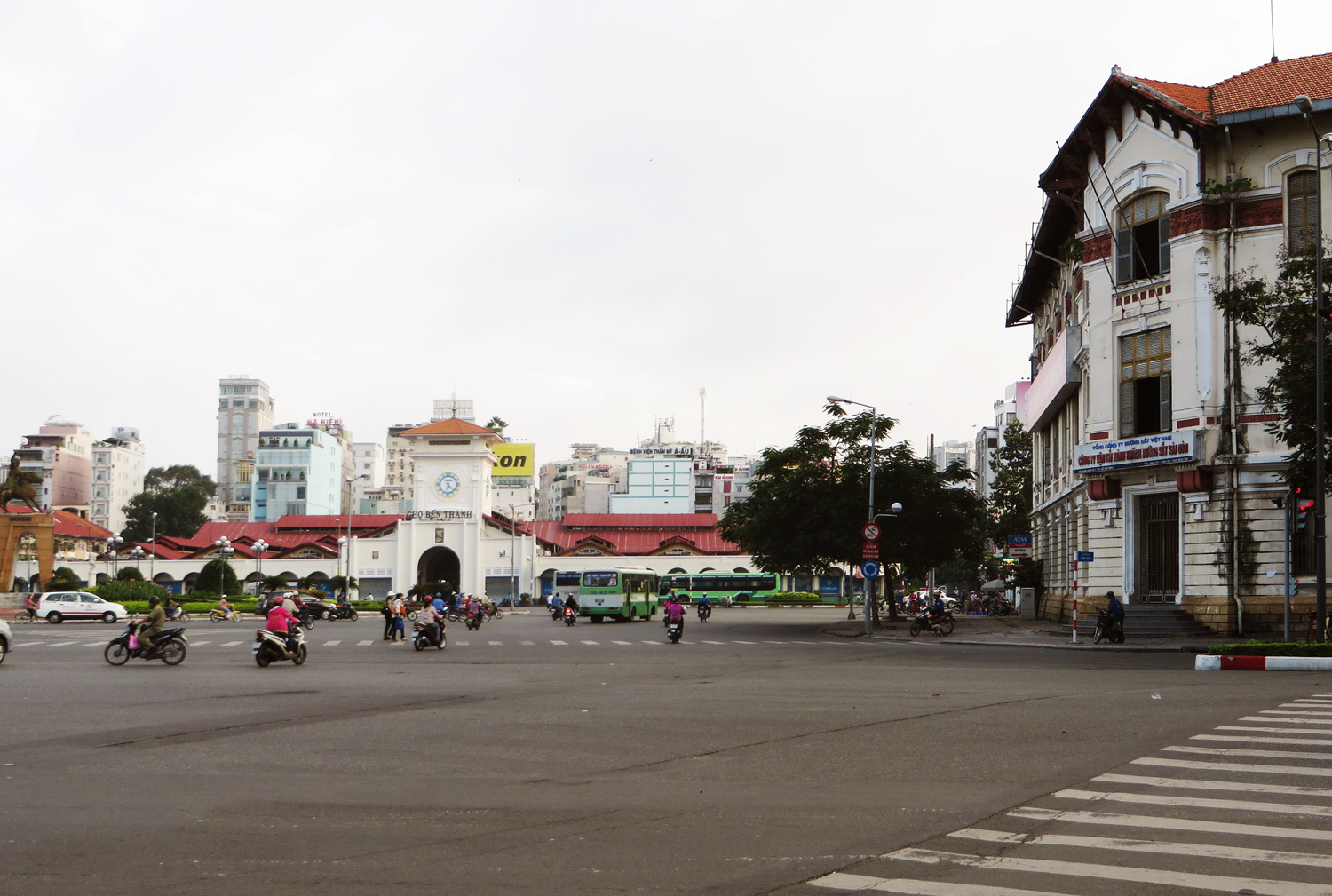
Quách Thị Trang square today looking towards Bến Thành Market, with the railway administration building on the right

Another view of the railway administration building on Quách Thị Trang square

Quách Thị Trang square today with the Hui Bon Hoa building (now the Hồ Chí Minh City Fine Arts Museum) in the background
Tim Doling is the author of the guidebook Exploring Saigon-Chợ Lớn – Vanishing heritage of Hồ Chí Minh City (Nhà Xuất Bản Thế Giới, Hà Nội, 2019)

A full index of all Tim’s blog articles since November 2013 is now available here.

Join the Facebook group pages Saigon-Chợ Lớn Then & Now to see historic photographs juxtaposed with new ones taken in the same locations, and Đài Quan sát Di sản Sài Gòn – Saigon Heritage Observatory for up-to-date information on conservation issues in Saigon and Chợ Lớn.

Saving the Saigon Tax Trade Centre’s Mosaic Staircase – “A Priceless Work of Art”

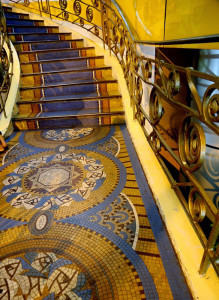
The mosaic staircase by Dona Đỗ Ngọc http://donadongoc.blogspot.com/

This article was published previously in Saigoneer.

Six months after the Hồ Chí Minh City People’s Committee’s promise that both internal and architectural and design features of the old Saigon Tax Trade Centre would be preserved and incorporated into the new tower block which will replace it, question marks still hang over the future of its great mosaic staircase.

The mosaic staircase by Dona Đỗ Ngọc http://donadongoc.blogspot.com/

The announcement last summer that the Saigon Tax Trade Centre would be demolished and replaced by a 43-storey tower block was greeted with dismay by conservationists, who responded with a high-profile campaign which attracted nearly 3,500 signatures to an online petition.
The city authorities listened to the voice of the people. On 21 January 2015, Mr Hứa Ngọc Thuận, Deputy Chairman of the Hồ Chí Minh City People’s Committee, announced in an interview with Thanh Niên newspaper that, in accordance with a recommendation from the City’s Directorate of Planning and Architecture, some interior and exterior design features of the Saigon Tax Trade Centre would be preserved and incorporated into the design of the new 43-storey commercial complex scheduled for construction on the former Tax Trade Centre site.
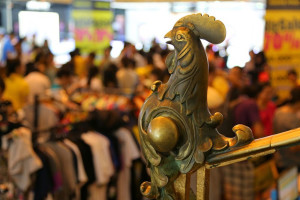
The interior features to be preserved included “the main lobby and atrium covering at least two storeys from the ground floor to the first floor; the original bronze handrails, balustrades and other decorative features; the mosaic staircase floor; and the cast bronze roosters and spheres mounted on the landings.”

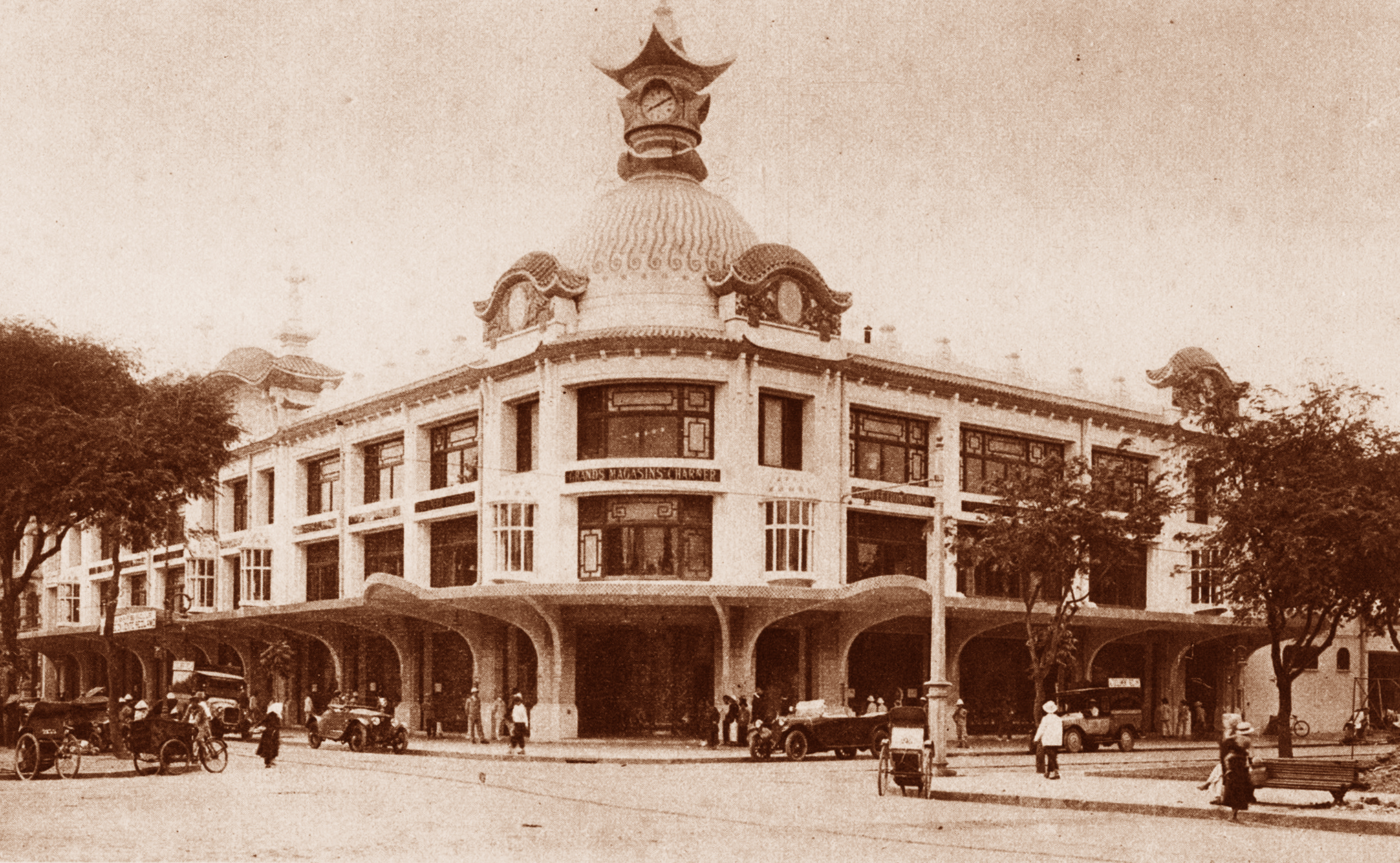
The Grands Magasins Charner (GMC)

Meanwhile, the exterior features of the building to be preserved included “the old Saigon Tax Trade Centre signs and the canopies along the sidewalks,” while some of the architectural lines of the original facade would also be replicated in the design of the new building, particularly those on the corner of Lê Lợi and Nguyễn Huệ boulevards.

In particular, it was suggested that the new façade should be designed “in the form of the original Grands Magasins Charner architecture of 1924, in order to accord with that of other valuable architectural and historical buildings in the same area, such as the People’s Committee headquarters building, the Opera House, Bến Thành Market … in order to conserve and retain memories of old Saigon and its valuable cultural history for future generations of Saigon’s urban residents.”

In addition to the above, it was envisaged that the design consultants might also suggest other features of the original structure for preservation, with a view to enhancing the historical, aesthetic and architectural value of the new building.

The mosaic staircase by Dona Đỗ Ngọc http://donadongoc.blogspot.com/

Mr Thuận explained that the work would be overseen by the Hồ Chí Minh City Department of Planning and Architecture in collaboration with the Department of Culture and Sports, the Department of Construction, the Development Research Institute, the Hồ Chí Minh City Architects’ Association and the building’s owner SATRA, “working with design consultants to research and incorporate solutions for conservation into the plan for the construction of the new property where the Tax Trade Centre is located.”

While recreating elements of the old Grands Magasins Charner façade should pose few problems for the design team, it’s understood that, in order to be incorporated into the new building, the entire mosaic staircase may first need to be removed, stored and then reinstated. If this is the case, it would be a highly specialised job demanding overseas conservation expertise.

In her article The Saigon Tax Trade Centre Mosaic Staircase: a Forgotten Moroccan Masterpiece, Đài Quan Sát Di Sản Saigon – Saigon Heritage Observatory member Ms Trần Thị Vĩnh Tường has shown that the Saigon Tax Trade Centre’s mosaic staircase is in fact a unique and priceless work of Moroccan zellij الزليج‎ which demands very careful treatment.

The mosaic staircase by Dona Đỗ Ngọc http://donadongoc.blogspot.com/

“It would have been unthinkable for this mosaic staircase simply to be demolished along with the rest of the building,” says Ms Vĩnh Tường. “The people of Saigon trust the People’s Committee to carry through with its promise to ensure that this great art work is preserved for future generations to appreciate, and the delicate and complex work of preservation can only be achieved with assistance from overseas conservation experts.”

Nearly a year after the demise of the Saigon Tax Trade Centre was announced, it seems the fate of this great work is still in the balance.

Tim Doling is the author of the guidebook Exploring Saigon-Chợ Lớn – Vanishing heritage of Hồ Chí Minh City (Nhà Xuất Bản Thế Giới, Hà Nội, 2019)

A full index of all Tim’s blog articles since November 2013 is now available here.

Join the Facebook group pages Saigon-Chợ Lớn Then & Now to see historic photographs juxtaposed with new ones taken in the same locations, and Đài Quan sát Di sản Sài Gòn – Saigon Heritage Observatory for up-to-date information on conservation issues in Saigon and Chợ Lớn.

The Saigon Tax Trade Centre Mosaic Staircase – A Forgotten Moroccan Masterpiece

The mosaic staircase, photo by Alexandre Garel

This article by Ms Trần Thị Vĩnh Tường was published previously in Saigoneer.

When the Hồ Chí Minh City authorities announced in 2014 that the Saigon Tax Trade Centre was to be demolished and replaced with a 43-storey tower block, many voices were raised in opposition to the demise of yet another piece of old Saigon heritage. But it quickly emerged that this was not just any piece of old Saigon heritage – the 1924-built French department store housed one of the world’s great pieces of mosaic art.

By the early 20th century, France had three North African Islamic protectorates, Algeria, Tunisia and Morocco. Over 70,000 Muslims from these countries gave their lives to protect France during World War I (1914-1918), and in 1922, the French government began construction of the Grande Mosquée de Paris in order to honour this sacrifice. One of the largest Islamic temples in France, it was built in mauresque style and inaugurated on 15 July 1926 in the presence of French President Gaston Doumergue. The mosque was sponsored until 1957 by the Moroccan royal family.

The mosaic staircase by Dona Đỗ Ngọc http://donadongoc.blogspot.com/

From the 1920s, art from the Maghreb was also used by the French for decorative purposes in a variety of civic buildings, both in France and in its overseas colonies. One of the most important examples is the great staircase of the Grands Magasins Charner (GMC), now the Saigon Tax Trade Centre.

The Société des Grands Magasins Coloniale purchased the land on the corner of boulevards Charner and Bonard in Saigon in 1921, and in the following year they began construction of the GMC store, which was similar in design to the company’s existing Grands Magasins Réunis department store in Hà Nội. According to an article of 14 June 1925 in Les Potins de Paris, the GMC was built over a period of two and a half years, from 1922 to 1924. In this way, almost exactly 90 years passed between its inauguration day on 26 November 1924 and its closing day on 25 September 2014.

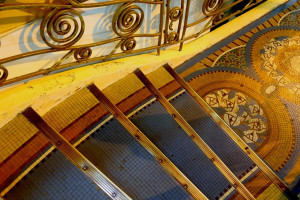
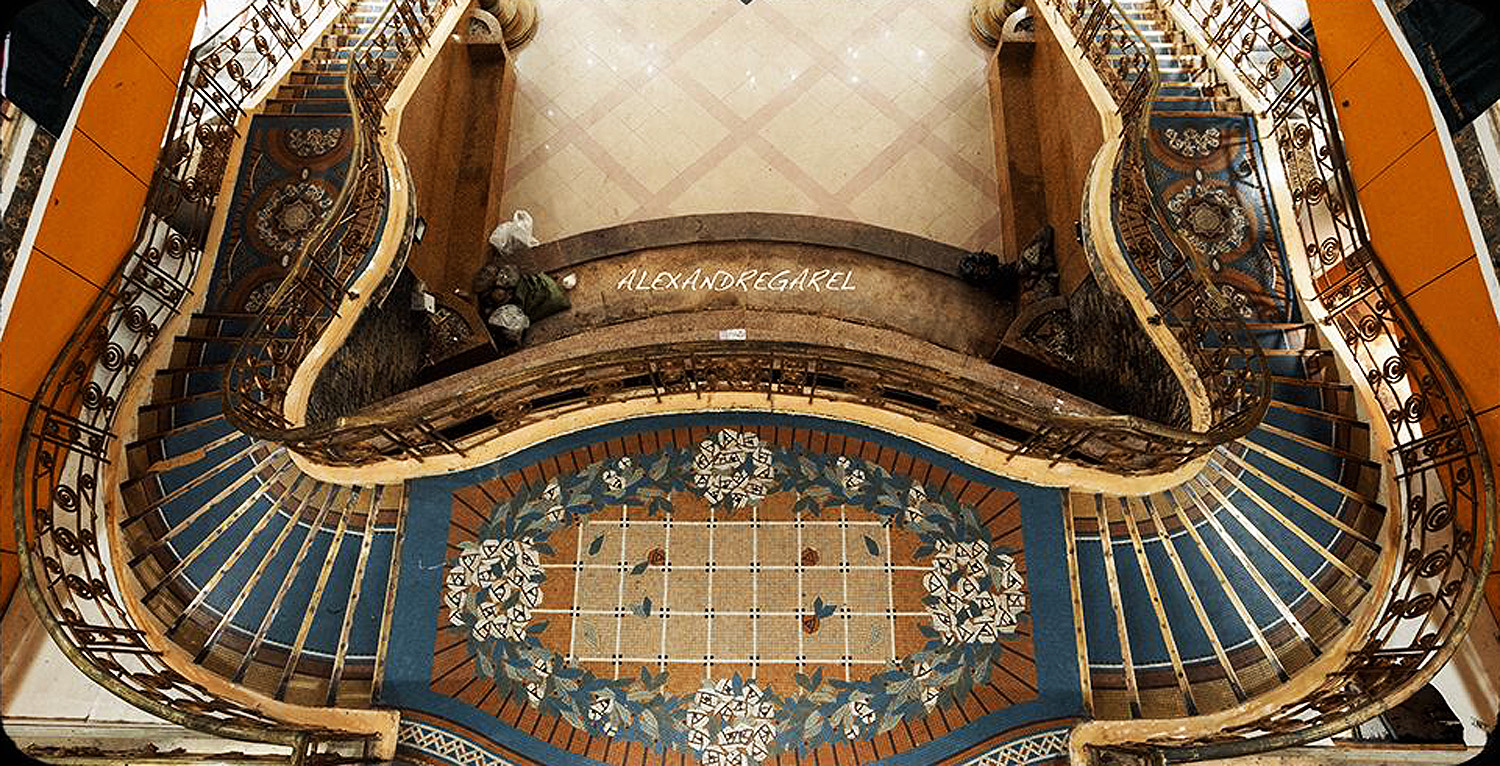
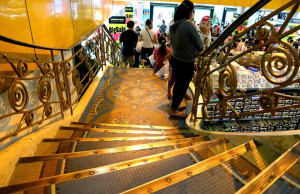
Taking pride of place in the GMC lobby was the grand mosaic staircase, complete with decorative bronze railings. Though long regarded as an artwork of great beauty, the origins of this staircase were quickly forgotten, and only when the fate of the Saigon Tax Trade Centre was announced was its importance reassessed.

The mosaic staircase by Dona Đỗ Ngọc http://donadongoc.blogspot.com/

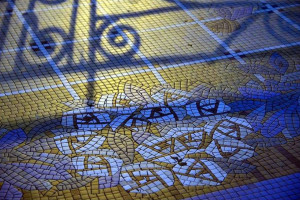
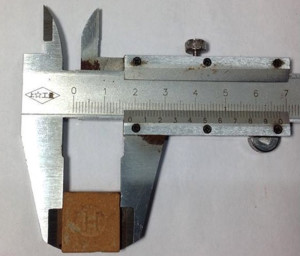
Last September, following the permanent closure of the Saigon Tax Trade Centre, a young Saigon architecture student sneaked into the deserted building to say goodbye to it. Like others, he touched the stairway, took a few last photos, tried to memorise the mosaic patterns… It seemed that over the next few days it would all be gone. Nothing but emptiness, like a shell on the seashore. Then on the floor he noticed a loose mosaic piece which had worked its way loose during the moving of loudspeakers at the closing ceremony. He picked it up and pocketed it as a last memory of “Tax.” He noted: “This mosaic piece is irregular-shaped, measuring around 16mm by 17mm, and of nearly 5mm thickness, stamped with the letter ‘H.’”

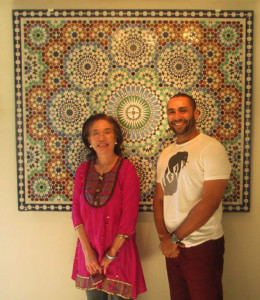
When this young architect sent me the picture of the loose mosaic piece along with a shot of the whole mosaic on the stairway, I immediately recognised that they were of Moroccan origin. This made me so curious that I began to research their history. Then on 10 November 2014, I met with 35-year-old Faissel Farhi, owner of Zellij Gallery in West Hollywood, California. A native of Morocco, Faissel had been born and raised in the capital of Fes and moved to the USA at the age of 18 to study.

Seeing the brown terracotta, Faissel realised at once that this mosaic piece had been made with clay from his hometown of Fes. The unevenness of the size and glazed colours of the piece suggested that it was handmade.

Saigon, 25 September 2014, Private collection, Vĩnh Tường

To my delight, Faissel confirmed my suspicion that the great staircase of the Grands Magasins Charner-Saigon Tax Trade Centre was nothing less than a prime example of the ancient Moroccan mosaic art of zellij الزليج‎, a speciality of his hometown of Fes, created using tiny enamel-covered chips known as tessera (plural tesserae).

The city of Fes was founded by the Idrisid dynasty in 789 and continued to be the capital of Morocco until 1925 under the French protectorate. Always a multicultural city with a population made up of Arabs, Berbers and other ethnicities, it has been called the “Athens of Africa,” mostly on account of its vibrant artistic and architectural heritage.

One of its best-known forms of artistic expression is the mosaic art of zellij, which dates back at least 1,200 years and is synonymous with exquisite craftsmanship. Originally created exclusively for royalty or high ranking officials, zellig has always been regarded as symbol of noble qualities, sophistication, wealth and high social status.

Since ancient times, zellig has been created by Maalem or Masters – the title Maalem was awarded only to artists whose age and experience qualified them to wear white aristocratic robes. Faissel’s father and grandfather were both recognised as Maalem for their work decorating a variety of Islamic temples and palaces belonging to local aristocracy. The artist would conceive the design of the mosaic entirely in his head. The only way to make sketches was to draw in the sand or earth.

Faissel Farhi and Vĩnh Tường, Beverly Hills, California, 10 November 2014

Traditionally, during the construction of a building, the Maalem would move in and be treated like a family member. He would talk to each member of the household and then seek to encapsulate their feelings and personalities in the designs and contours of the zellig mosaics. If he was still single, a Maalem would sometimes marry the landlord’s daughter. Therefore, Maalem had a strong role to play in the community.

Zellig typically takes the form of a series of patterns which utilise both polygonal shapes and cursive scripts. Such spatial decorations avoid depictions of living things, and as such are consistent with the teachings of Islam.

The earliest zellig were generally of a single colour, but in the 14th century, blue, green and yellow tesserae were introduced under the Merinid dynasty and by the 17th century red tesserae had also become popular.

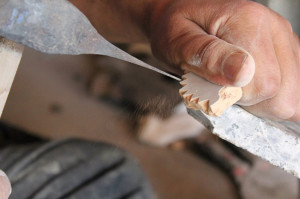
The technique of creating zellij is very similar to that used in making pottery. The earth used to make the clay base is specific to the region of Fez, and no other type of earth seems to work effectively. It is first mixed with water, then kneaded by hand for a long time before being shaped into tiles 10cm on each side, and approximately 12mm thick. These tiles are then dried in the sun before being enameled and baked in a special oven, fired usually by olive pits. Tiles enameled with different colours are placed in the oven at different levels, so that each is baked at the correct temperature (white on the bottom, green on the top).

Photo: Faissel Farhi private collection

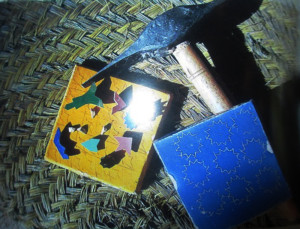
After the tiles are removed from the oven and sorted, they are cut into tesserae. This is done either in a dedicated workshop or directly at the construction site. Apprentices trace the shapes of the tesserae directly on the tile using a template, which is usually an existing zellij tessera. They are careful to mark as many pieces as possible onto each tile.

Then the tile is passed to the cutter, who sits cross-legged in front of a simple workbench, which is often merely a pile of stones with a piece of iron or a harder stone projecting out from it to support the tile being cut. The tool used to cut the tile looks like large wide hammer, carefully sharpened at each end. Its weight and size contrast greatly with the small and delicate pieces being cut.

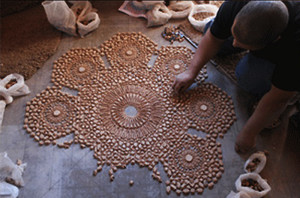
After the zellij tesserae have been cut and their edges filed, they are placed in baskets, sorted by shape and colour. A craftsman can cut up to 400 tesserae per day.

According to Faissel, one of the characteristic features of zellig is the geometric symmetry of many of the patterns achieved by Moroccan artists, despite not having pencils and compasses. If the symmetry is not so strict, this means that the mosaic reflects the influence of Persia, where curves feature strongly in traditional carpet designs. The mosaic in the Tax incorporates many sweeping curved motifs; could its design perhaps have been influenced by Persia?

Photo: www.zellijgallery.com/

Faissel conjectures that only one Maalem came out to Saigon to build the GMC staircase, because at that time few Fes artisans would have been prepared to leave their family and country to work overseas. During that period too, Moroccan French speakers were still few in number. We don’t know what the letter “H” stamped underneath the GMC tesserae stands for, but perhaps it refers to the name of the Saigon construction company which worked with the Maalem.

Faissel believes that in the areas of the GMC mosaic staircase which incorporate complex designs, the Maalem used the “indirect method,” which involves laying the tiles face down onto a thin cloth, taking extra care to ensure that the pieces are in the proper order, before the cement is added. This is an area which demands great skill, because once the cement has dried, it is too late to correct any mistakes. After the cement has set, the entire section of mosaic is removed, turned upright and placed in its final position. For the rest of the stairway where there was no design, the “direct method” of building up the mosaic by hand-positioning individual tesserae would have been used.

Photo: www.zellijgallery.com/

So, exactly why did the French choose a piece of Moroccan art as a centre piece for the Grands Magasins Charner? We know that mosaic art is one of the oldest and most beautiful art forms known to human civilisation, with a foundation in many early cultures, including those of Ancient Mesopotamia, Egypt, Greece, Rome and Byzantine. What better symbol could they choose to represent the growth and development of Saigon than an art form which represents a synthesis of human civilisation.

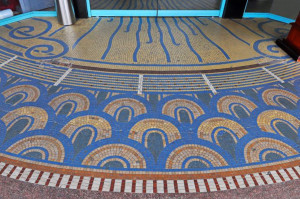
Furthermore, the particular design of the mosaic staircase, with its predominant blue colour, shells and fish motifs, seems to bring to mind the great maritime history of Saigon, making the whole staircase an “invitation to the sea.” It’s thus entirely appropriate that in 1925 the French authorities installed a siren on the roof of Grands Magasins Charner to announce when the courier ship from France had docked with its mail and passengers!

According to Faissel, the great value of the Grands Magasins Charner-Saigon Tax Trade Centre mosaic staircase is its uniqueness, since Maalem never created the same pattern twice. He is very touched that Việt Nam has preserved a work of art made from the clay pieces of his homeland for 90 years, and he aims to ensure that the story of this important artwork is known in his homeland and takes its rightful place in the history of the Islamic art of Fes. Faissel Farhi has also offered to manufacture and supply the missing tesserae to SATRA, if needed.

The mosaic staircase by Dona Đỗ Ngọc http://donadongoc.blogspot.com/

Early this year, in the wake of a high-profile public campaign which attracted 3,486 signatures to an online petition, the Hồ Chí Minh City People’s Committee promised to preserve elements of the Saigon Tax Trade Centre in the new building which will replace it, most notably the great mosaic staircase.

From correspondence between myself and SATRA in February 2015, it is understood that the mosaic staircase may need to be removed, stored and then reinstated in the new building. If that is the case, it would be a highly specialised job for which the expertise required is not currently available in Việt Nam.

The conservation group Đài Quan Sát Di Sản Saigon – Saigon Heritage Observatory, of which I am a member, stands ready to assist the building’s owner SATRA in identifying suitable overseas conservation assistance, in order to ensure that the GMC mosaic staircase, that great masterpiece of Moroccan mosaic art, is preserved for future generations to appreciate.

Written by Trần Thị Vĩnh Tường
California, 10 July 2015

Tim Doling is the author of the guidebook Exploring Saigon-Chợ Lớn – Vanishing heritage of Hồ Chí Minh City (Nhà Xuất Bản Thế Giới, Hà Nội, 2019)

A full index of all Tim’s blog articles since November 2013 is now available here.

Join the Facebook group pages Saigon-Chợ Lớn Then & Now to see historic photographs juxtaposed with new ones taken in the same locations, and Đài Quan sát Di sản Sài Gòn – Saigon Heritage Observatory for up-to-date information on conservation issues in Saigon and Chợ Lớn.

The Inauguration of the Grands Magasins Charner in 1924

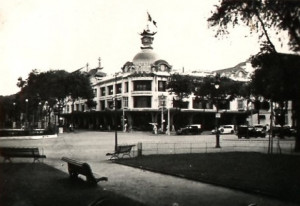
A late 1920s shot of the Grands Magasins Charner

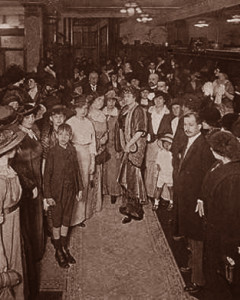
The Saigon Tax Trade Centre, shortly to be demolished and rebuilt as a 43-storey tower block, originated as a luxury French colonial department store named the Grands Magasins Charner. Its inauguration on 26 November 1924 was attended by a reporter from the Écho annamite newspaper – here’s an English translation of the article which was published the following day.

Yesterday evening at sunset, a huge crowd gathered outside the elegant Grands Magasins Charner, which gleamed with illuminations, its imposing architecture enthroned in this select quarter of Saigon like part of a “city of lights” rising from the ground under the effect of a magic wand waved by that French wizard, the Société coloniale des Grands Magasins.

The grand opening

The curious – people of every age, of every race and of every condition – assembled in several rows beneath a huge marquee which had been installed in front of the store’s gleaming windows, in which the most diverse articles – the pride of French industry – had been artistically displayed.

Since the attention of the store’s management’s was focused the press, we had the great honour of being part of the “vintage reserve,” so we went inside to see for ourselves!

Several gentlemen dressed in impeccable tuxedos received visitors at the door with the refined politeness of the perfect trader. Nearby, installed behind a glass screen, a robotic black man, dressed in red with gold braid on his sleeves, flashed everyone a huge smile which showed two rows of milky white teeth, a strange contrast to his beautiful ebony face. Yet he didn’t say one word! Instead, with a tiny rattan cane, he attracted attention by striking tirelessly on the shop window in front of him. He blinked, tilted and lifted his head, indicating with his hand the beautiful departments of the Grands Magasins Charner, in short, gesticulating so much so that we fully understand his expressive mimicry. “Come in, come in, ladies and gentlemen!” his silent gestures seemed to say, “You’ll find everything here! There’s something for everyone!”

The public was “truly spoiled for choice” at the Grands Magasins Charner

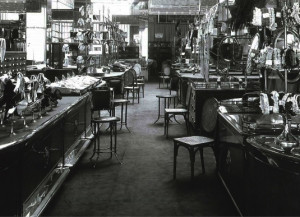
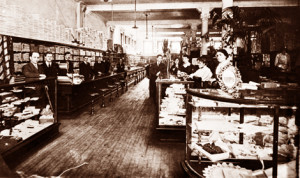
And there is indeed everything in the Grands Magasins Charner, and what is even more admirable, it comes at very reasonable prices. The public is truly spoiled for choice. The jewelry department, for example, feels like one of those dream lands described in the Arabian Nights…. then, almost without transition, you are transported into the less futile domain of knowledge and thought – it’s the book department!

Elsewhere, gourmets will lick their lips in delight as they contemplate bottles of champagne of the most renowned brands, and wines of the best vintages, proudly wearing their labels and stacked in rows like soldiers on review, alongside cans of biscuits and conserves piled in pyramids which seem to look down on them, just like the famous pyramids of Egypt gazed upon Bonaparte’s grenadiers.

I am truly lost for words of description, firstly because I don’t know what to say, and secondly because there are too many things to describe, which would exceed the framework of a modest newspaper article.

The toy department, however, deserves special mention. Mothers and their offspring will be very happy at the coming of Christmas and New Year! There are toys in profusion at the Grands Magasins Charner.

French 1920s guignol puppets

Dolls which close their eyes when they are laid on their backs or say “mama, papa;” animals which play cymbals when you pinch their bellies; guignol puppets; real-looking stuffed bears and dogs which get up on their hind legs when you squeeze their attached rubber bulbs; model railways; clockwork cars with rubber wheels, etc etc. I noted in particular a miniature power plant, powered by a tiny dynamo!

In silence, I passed through departments of homeware, sports, hunting supplies, travel, perfumes, hardware, bedding and many other things. It’s not that they were less interesting, but there is so much to say that if I started describing them I would never finish!

At the rear of the store’s second floor is a luxurious salon de thé. However “tearoom” is hardly an appropriate description, as I see that it also serves good champagne, biscuits, cakes and tasty sandwiches.

That evening, a large and select audience gathered in the salon de thé, in the presence of M Eutrope, representing the Governor (currently in Hanoi) and many other personalities from the world of Cochinchina. The guests sat around small tables, sipping champagne and nibbling on savoury pastries.

A large and select audience gathered in the salon de thé

The ladies present were clearly out to impress, with their elegant dresses and good humour. We all chattered and laughed together in joyous animation – but it was not ladies who chattered most, as one might like to believe! However, there was silence when M Ribupe, representative of the Société des Grands Magasins, delivered the following speech, which was followed by resounding applause:

“M Governor, ladies and gentlemen, dear friends. On behalf of the Société Coloniale des Grands Magasins – a subsidiary of the Union Commerciale Indochinoise et Africaine of which I have the honour to be the delegate – I thank you most sincerely for the eagerness with which you have responded to our invitation. The sheer number of notables of the city, male and female, whom I see gathered here, proves that, even before opening our doors to the public, we already enjoy the sympathy of the majority of the population. I assure you that this, ladies and gentlemen, is infinitely valuable to me, because it fills me with hope for the future of our young company.

Are you being served?

It proves to me above all that I was right, when, nearly three years ago, I laid the foundations for the construction of the large facility we are opening today, and which we’ll declare open in a moment. The creation of a department store like the one we have provided for the city of Saigon had become a social necessity, because this kind of trading facility responds to the modern needs of a great city. I believe that it will impose itself so quickly and profoundly into the life of the local community that, within just a few months time, it will be as if the Grands Magasins Charner has existed forever, and that we could not have failed to build this great palace of French commerce.

Nonetheless, ladies and gentlemen, I admit that I will feel a double sense of regret when you tour our establishment. The first will be that we must present a building whose construction is not completely finished, and the second, more serious to me, is that we are not yet able to present departments with a well-mixed assortment of merchandise, which, by their variety, will give satisfaction to even the most difficult customers. Please excuse us, and especially, please do not hold this against us, because in the months ahead we will do everything possible to get closer to perfection in our commercial choices and in the varieties and assortments of goods we offer.

Various refreshments were offered in the salon de thé

I know, moreover, that you will understood, even before I bring this point to your attention, that a work of importance like the Grands Magasins Charner requires considerable effort, and that it has taken a very long time to sort out all the workings of our great machine in all of its thousand details.

The management of a department store, and a priori its construction, are already extremely complex things back in France, so you can easily imagine the difficulties we had to overcome here in the colony, in order to reach the point we are at now. To do so, we had to ask a crushing amount of work from all of our employees, much greater even than that which would have been given in France, and I am very pleased to acknowledge, before you all, M Gosselin and his staff for what they have accomplished. I would also like to mention all of the contractors who have participated in this great work: Messieurs Lamorte et Cie, Messieurs Lautier et Boursier, the good directors of the Société des Eaux et Électricité, the Entreprise Denkwitz, etc.

Ladies and gentlemen, I repeat that our work is still imperfect, but I want to assure you that in the future we will apply ourselves with all our strength to its meticulous polishing, and I’m confident that, little by little, we can present to you a model store which will be talked about throughout the Far East, and will become one of the great sights of Saigon which passing strangers will come to visit, a true “museum of wonders.”

The Grands Magasins Réunis in Hanoï, pictured in 1906

Our past is indeed a guarantor of our future, and the growing success of our department store in Hanoi, which most of you know well, allows me to be sure that we will also achieve perfect success here in Saigon. So we will succeed, gentlemen, of that you can be certain, and this for several reasons.

Firstly, because we have in the magnificent building which spreads before your eyes an unparalleled installation, and we know how to get the best from it – it is a perfect fit for the colony, the last improvement to the practical and rational exploitation of the department store concept. And secondly, because on the technical side, for the all-important areas of general purchasing and supply, our company is affiliated to one of the finest department store businesses in France. I refer, of course, to the Société Française des Nouvelles Galeries, whose reputation is second to none in terms of commercial resources, and I am happy to take the opportunity offered to me today, while inaugurating our new store, to recognise the president and board of directors of this important company, which has just recently increased its capital to 105 million francs, for the enlightened competition I have always found amongst its members.

Ad

A late 1920s newspaper advertisement for the Grands Magasins Charner

Ladies and gentlemen, we will succeed above all because we are first and foremost conscientious and honest traders, and we want to give our customers both maximum guarantees and maximum facilities. “Loyalty is our strength” is the motto we have adopted, and we will endeavour to justify this to both our customers and our shareholders. We have built here an important nucleus which will certainly develop gradually as our company acquires additional capital to continue its programme of creating new branches, not only in the main centres of our colony, but also in other major cities of the Far East, where French commercial influence will continue to grow and be ever more assertive.

Finally, ladies and gentlemen, I want to inform you today, while inaugurating our Grands Magasins Charner, that the industry of the department store is now extremely successful worldwide, and that nowhere has it ever brought financial ruin. Furthermore, far from the department store killing off small businesses as it is often accused of doing, it has instead been found repeatedly that speciality shops can not only function but also thrive in the vicinity of department stores. Competition is, indeed, the soul of commerce, says the wisdom of nations, and never has that popular adage had brighter justification than in the relationship which has been formed in France, mainly in Paris, between the trade of the department store and that of the speciality store.

The Galeries Lafayette in Paris

As a demonstration of this assertion, I will cite the striking example of an area of Paris which is known universally: the one which extends behind the Opéra on boulevard Haussmann, from the buildings of the Galeries Lafayette to those of the Grands Magasins du Printemps, a boulevard along which, 20 years ago, that is to say when the department store industry first took root there, there was not one shop.

What a change since that tỉme! If you glance at the same boulevard today, you will see a world of small shops, all piled one on top of the other, paying rents worth their weight in gold. Because living very largely in the wake of the two largest trading houses in the capital, all these speciality shops can take advantage of the tremendous movement of buyers attracted into the neighbourhood, who crowd into this veritable human anthill during store opening hours.

Well, ladies and gentlemen, there is no doubt that the same causes produce the same effects, and here too, we have the legitimate ambition of transforming the boulevard Charner – which the old colonial settlers regarded as sad and deprived – into an extraordinarily vibrant and bustling hive, around which we will be happy to see open many businesses of all kinds, which will benefit from the huge trading movement we are creating in this corner of Saigon.

Another late 1920s shot of the Grands Magasins Charner

In this way, department stores are surely proof of life and progress, they are absolutely necessary to the national expansion of a great country like France, and we are very proud to have been the first to import this industry into Indochina.

Today marks an important milestone, a happy day which permits me, my dear friends, to propose a champagne toast to the success of our Grands Magasins Charner, and to the ever-growing prosperity of the Société Coloniale des Grands Magasins, as well as to our dear French Indochina.”

Tim Doling is the author of the guidebook Exploring Saigon-Chợ Lớn – Vanishing heritage of Hồ Chí Minh City (Nhà Xuất Bản Thế Giới, Hà Nội, 2019)

A full index of all Tim’s blog articles since November 2013 is now available here.

Join the Facebook group pages Saigon-Chợ Lớn Then & Now to see historic photographs juxtaposed with new ones taken in the same locations, and Đài Quan sát Di sản Sài Gòn – Saigon Heritage Observatory for up-to-date information on conservation issues in Saigon and Chợ Lớn.

Date with the Wrecking Ball – Former Maison du Combattant, 23 Le Duan, 1932

The Maison du Combattant at 23 boulevard Norodom (23 Lê Duẩn) in the early 1950s

This article was published previously in Saigoneer.

Yet another piece of old Saigon heritage faces the wrecking ball following the recent public auction and sale of the former Maison du Combattant “gold land” site at 23 Lê Duẩn.

The project to build a Maison du Combattant or War Veterans Centre was launched on 19 March 1931 by the Assemblée générale des Anciens Combattants. The land was conceded free of charge by the Governor of Cochinchina Jean Krautheimer with the approval of the Colonial Council, and construction was entrusted to the Société des Dragages, which commenced work on 22 January 1932.

Designed in art deco style, the Maison du Combattant at 23 boulevard Norodom (now 23 Lê Duẩn) was completed on 30 June 1932 and inaugurated on 14 July 1932 in the presence of the Governor of Cochinchina and the Commander General of the Cochinchine-Cambodia Division of the French armed forces.

Designed for “all victims of the Great War, without distinction of race, religion or society,” it incorporated a bar, a restaurant and meeting facilities. However, its most important facility was its auditorium, which became a popular venue for small-scale music and theatre presentations during the twilight years of French rule.

After the departure of the French in 1954, the building was sold and converted into a small theatre known as the Hý viện Thống nhất (Thống nhất Playhouse).

In the wake of Reunification in 1975 it was used for a variety of purposes until 1978, when it was taken over by the current tenant, the Kiến Thiết Lottery Company.

The old Maison du Combattant building is currently home to the Kiến Thiết Lottery Company

According to a recent article in Đàn Ông magazine, the public auction of 23 June 2015 gave the 23 Lê Duẩn site a starting price of 558 billion đồng, but Hà Nội-based real estate and luxury condominium developer Tân Hoàng Minh Trading-Service-Hotels Company (Công ty TNHH Thương mại-Dịch vụ-Khách sạn Tân Hoàng Minh) eventually saw off 12 other competitors by bidding a record amount of 1,430 billion đồng. The company plans to demolish the old Maison du Combattant building and construct in its place “commercial centres, offices and service buildings” which will be limited in height to a maximum of 100m.

UPDATE: This building was demolished in 2017

Tim Doling is the author of the guidebook Exploring Saigon-Chợ Lớn – Vanishing heritage of Hồ Chí Minh City (Nhà Xuất Bản Thế Giới, Hà Nội, 2019)

A full index of all Tim’s blog articles since November 2013 is now available here.

Join the Facebook group pages Saigon-Chợ Lớn Then & Now to see historic photographs juxtaposed with new ones taken in the same locations, and Đài Quan sát Di sản Sài Gòn – Saigon Heritage Observatory for up-to-date information on conservation issues in Saigon and Chợ Lớn.