Date with the Wrecking Ball – Former College de Can-Tho, 1924

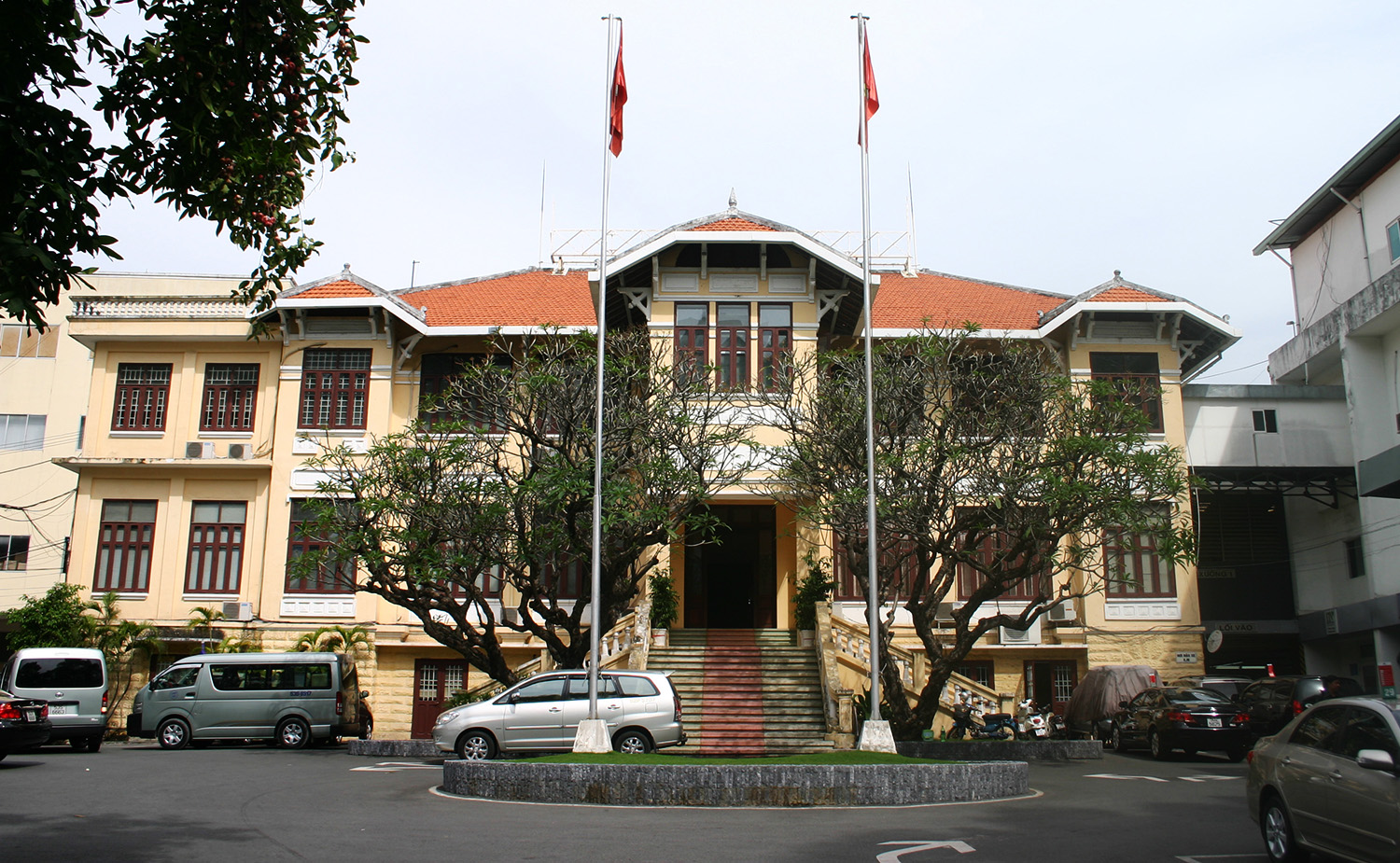
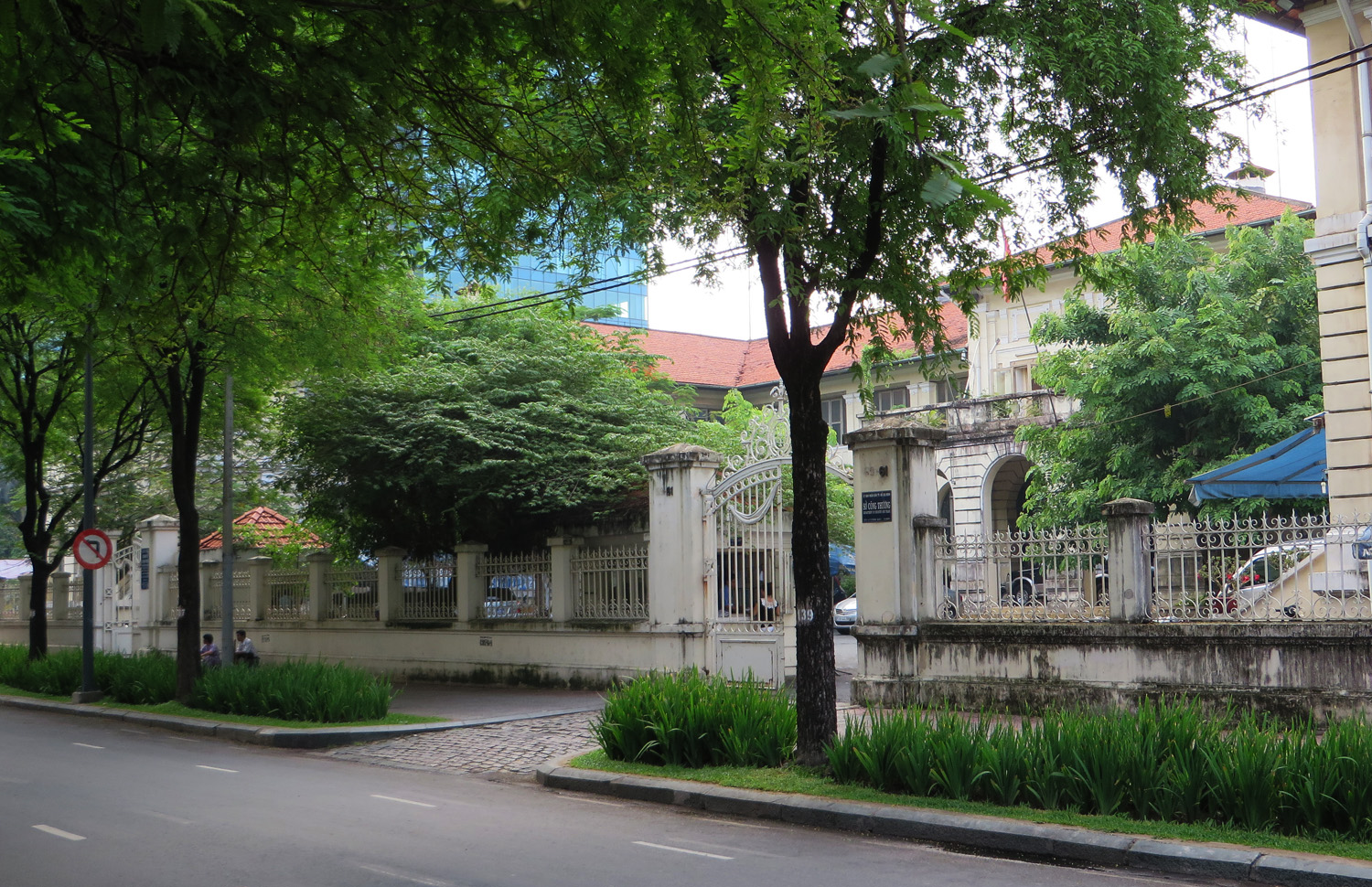
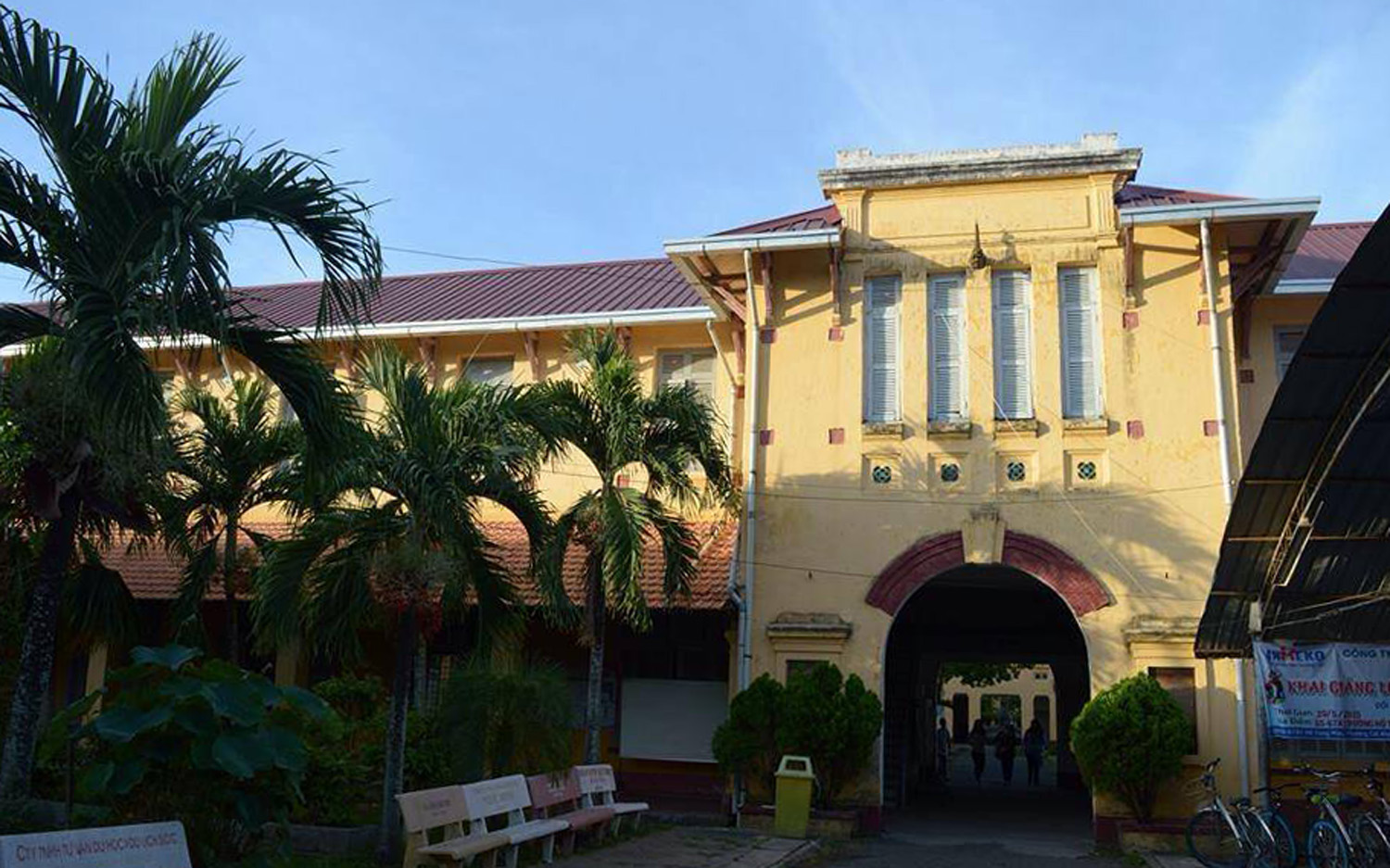
Châu Văn Liêm High School today (photo by Huỳnh Quốc Huy)

This article was published previously in Saigoneer.

Over the past week, Facebook has been awash with articles about the planned demolition of a much-loved Cần Thơ institution, the Châu Văn Liêm High School (Trường Trung Học Phổ Thông Châu Văn Liêm).

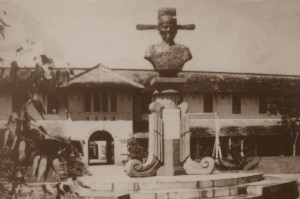
The Collège de Can-Tho in the 1930s

According to various reports, opposition from local people has been ignored and an offer of French restoration assistance rejected in favour of demolition and construction of a brand new school building, paid for out of lottery funding and reportedly entrusted to a contractor with a dubious track record.

One of the oldest schools in the south, the Châu Văn Liêm High School originated in the 1880s as a much smaller school known as the École provinciale de Can-Tho. By 1903 it had a French headmaster (Monsieur Solère), three Vietnamese teachers and 74 pupils. In 1916, additional buildings were added to accommodate scholarship students funded by the Société de protection de l’Enfance de Cochinchine.

Another 1930s shot of the Collège de Can-Tho

The current school building dates from 1923-1924, when it was reconstructed on a larger scale as a high school named the Collège de Can-Tho. Opened in September 1924, it was initially affiliated to the Collège de My-Tho (now Trường Trung Học Phổ Thông Nguyễn Đình Chiểu in Mỹ Tho). In 1925, the Collège de Can-Tho had just 96 pupils, but over the following years it expanded rapidly. By 1929, the year in which it became independent from the Collège de My-Tho, it had increased its enrolment to 208 pupils, taught by nine French and nine Vietnamese teachers. This growth was much to the delight of the Conseil de gouvernement, which commented in a report of that year: “It has tripled its enrolment in just four years, it’s now well underway and very worthy of the great capital of West Cochinchina, whose wealth increases every day.”

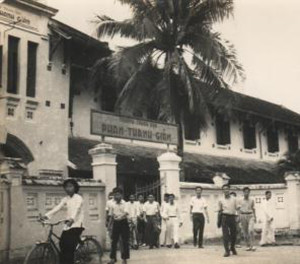
The Phan Thanh Giản High School in the early 1970s (photographer unknown)

The Collège de Can-Tho made the headlines on 4 April 1926, the day of great Vietnamese patriot Phan Châu Trinh’s funeral, when it became one of several schools in Cochinchina whose students wrote ABLF (“À Bas Les Français” – down with the French) on blackboards and participated in what subsequently became a nationwide school boycott. Furthermore, according to Hue-Tam Ho Tai’s Radicalism and the Origins of the Vietnamese Revolution (Harvard University Press, 1992), “a group of students [from the Collège de Can-Tho] who were already in trouble for having complained that the sugar they were given came mixed with coal and their rice with dirt, were expelled for producing a clandestine paper that took its tone from Trần Huy Liệu’s Indochina Times (Đông Pháp Thời Báo).”

Châu Văn Liêm High School today (photo by Huỳnh Quốc Huy)

During the August Revolution of 1945, the Collège de Can-Tho was briefly renamed the Phan Thanh Giản High School, and in 1949 the State of Việt Nam government made this its official name. However, during the period 1958-1968 it was split into two separate schools, the Phan Thanh Giản High School (Trường nam Trung học Phan Thanh Giản) for boys and the Đoàn Thị Điểm High School (Trường nữ Trung học Đoàn Thị Điểm) for girls. In 1995, it was renamed Châu Văn Liêm High School, after one of its most famous former students.

In addition to revolutionaries Châu Văn Liêm (1902-1930) and Uông Văn Khiêm (1910-1991), former alumni of the school include musician Lưu Hữu Phước (1921-1989) and writer Sơn Nam (1926-2008).

General Phạm Xuân Ẩn (1927-2006)

However, perhaps its most famous former student was double agent Phạm Xuân Ẩn (1927-2006), who worked in Saigon for Reuters, Time magazine and the New York Herald Tribune during the Vietnam War while simultaneously spying for the DRV.

Though now in a very poor state of repair, the elegant old school buildings represent an important phase of colonial lycée architecture imbued with elements of early art deco design. As such, they certainly merit preservation for subsequent generations to appreciate, although at present their future looks decidedly bleak.

Tim Doling is the author of the guidebooks Exploring Huế (2018), Exploring Saigon-Chợ Lớn – Vanishing heritage of Hồ Chí Minh City (2019) and Exploring Quảng Nam (2020), published by Nhà Xuất Bản Thế Giới, Hà Nội

A full index of all Tim’s blog articles since November 2013 is now available here.

Join the Facebook group pages Saigon-Chợ Lớn Then & Now to see historic photographs juxtaposed with new ones taken in the same locations, and Đài Quan sát Di sản Sài Gòn – Saigon Heritage Observatory for up-to-date information on conservation issues in Saigon and Chợ Lớn.

Saigon’s Endangered Heritage Buildings – the Top 10, July 2015

This article was published previously in Saigoneer.

We’re now over half way through 2015, and what better time to update that depressing list of Saigon built heritage in imminent danger of destruction.

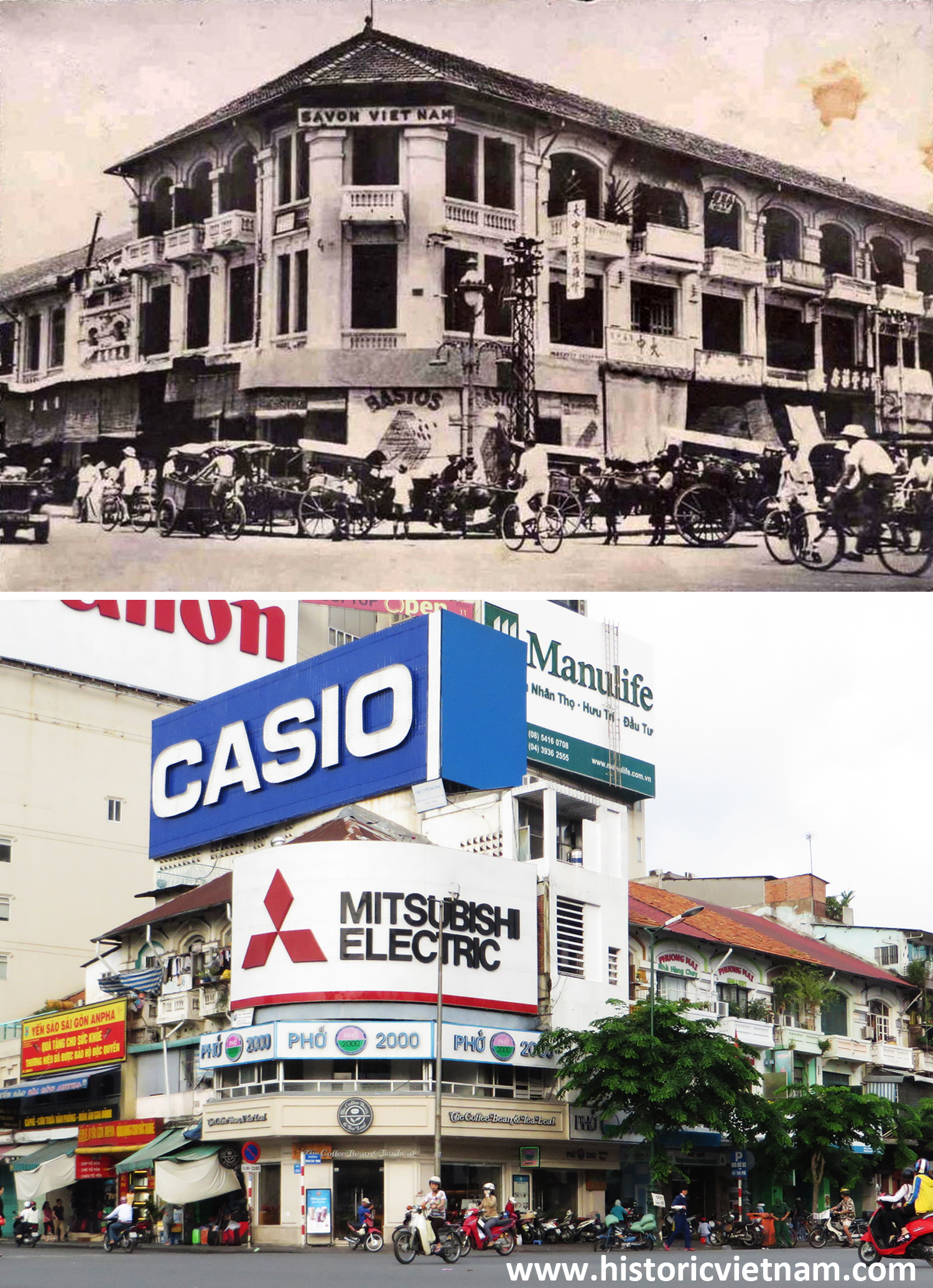
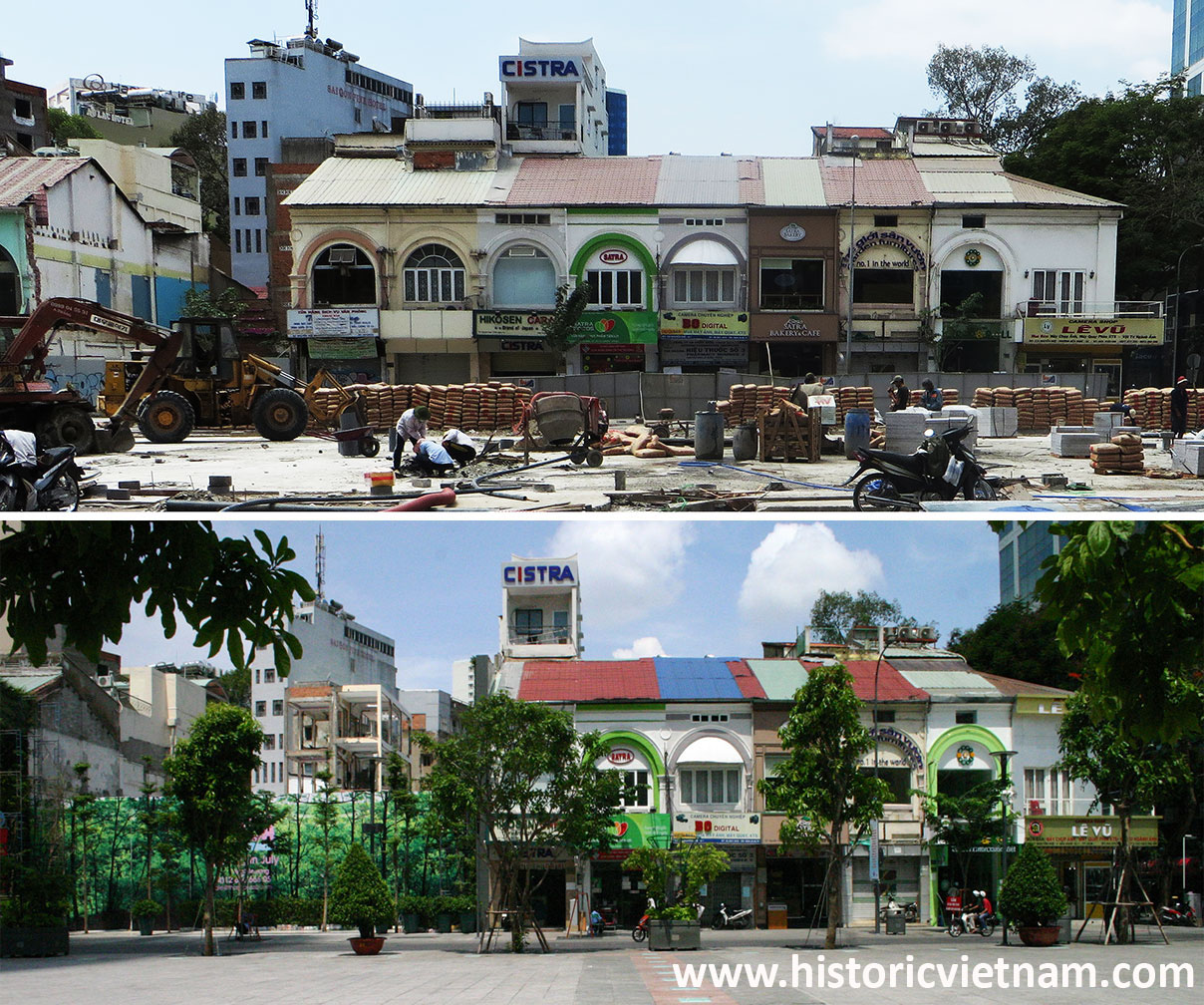
NUMBER 10. Comparative shots of the endangered shophouse architecture on the west side of the Bến Thành Market in late colonial times and today, from the Facebook group Saigon-Chợ Lớn Then & Now

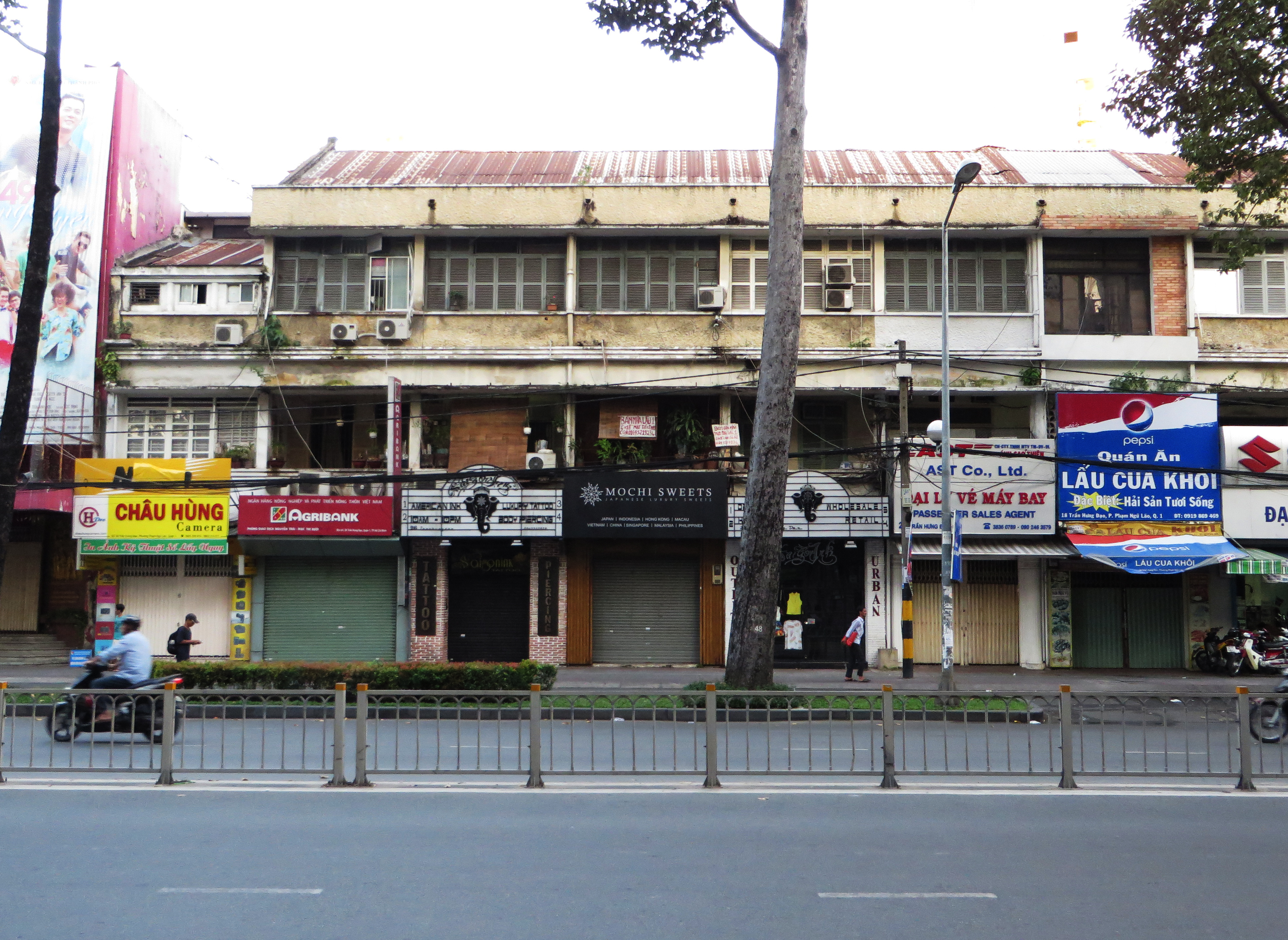
NUMBER 10. The shophouses around Bến Thành Market – The shophouse is a hybrid style of traditional architecture which derives from traditional Asian house architecture, yet displays strong European colonial influences. Saigon was once rich in this style of architecture, but in recent years, many have been demolished, and most of those now remaining in District 1 and District 5 are severely degraded. Partially hidden beneath huge advertising hoardings, the three-storey shophouse terraces on the west side of the Bến Thành Market are among the only surviving examples of their kind in District 1. However, they are already in a poor state of repair and the word on the street is that they will be redeveloped over the next few years as part of a wider revamp of the area surrounding the new Bến Thành Market metro station.

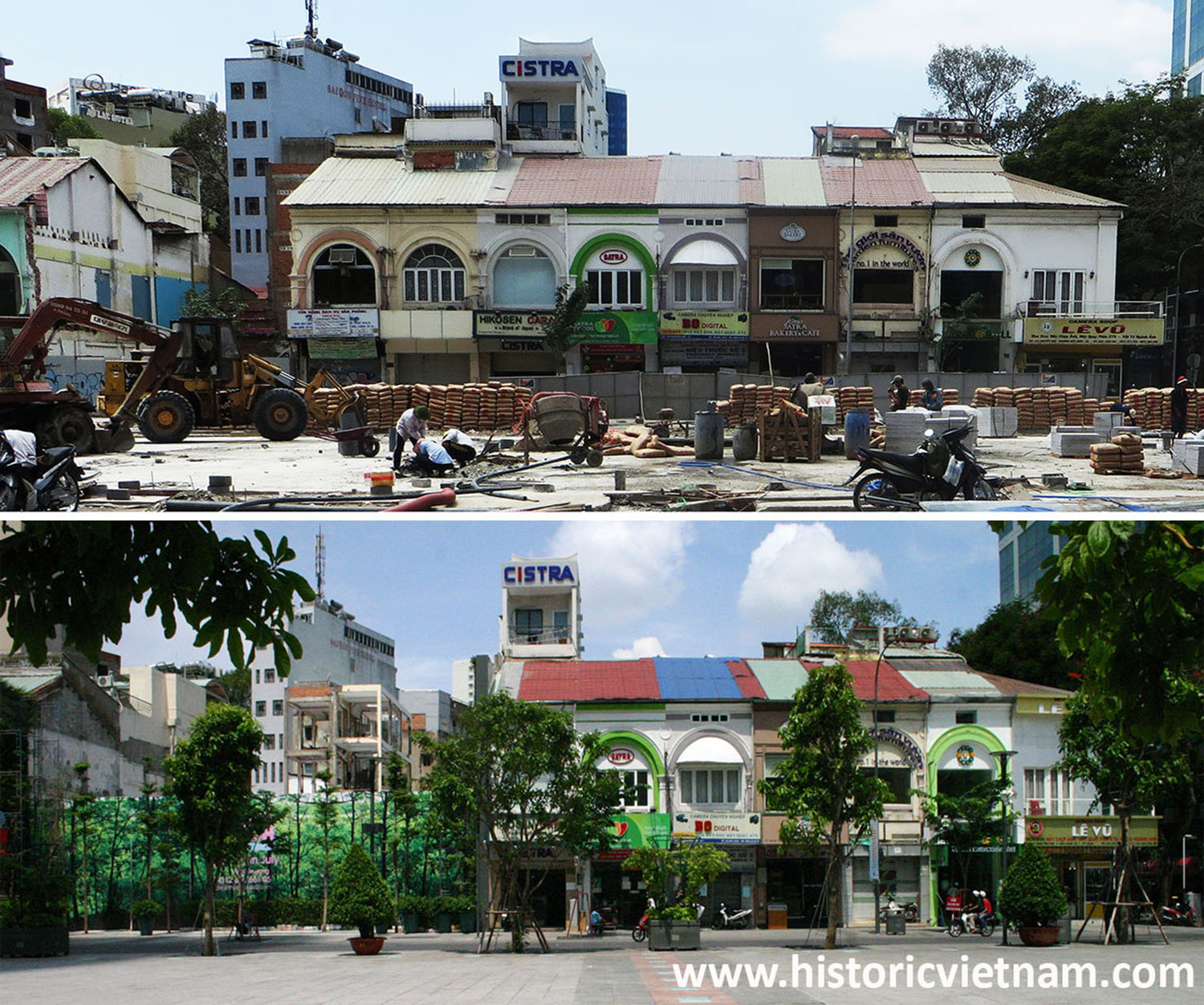
NUMBER 9. Comparative shots of the endangered shophouse architecture on Nguyễn Huệ boulevard showing the destruction which has taken place during the first few months of 2015, from the Facebook group Saigon-Chợ Lớn Then & Now

NUMBER 9. The few surviving shophouses on Nguyễn Huệ – Until recently, one of the best surviving examples of two-storey shophouse terraces in District 1 was 85-113 Nguyễn Huệ, which conservationists had hoped might be refurbished as part of the project to pedestrianise that street. However, within the last two months, shophouses 89-99 have been demolished to make way for a new shopping centre and others are now expected to follow. See Shophouse architecture.

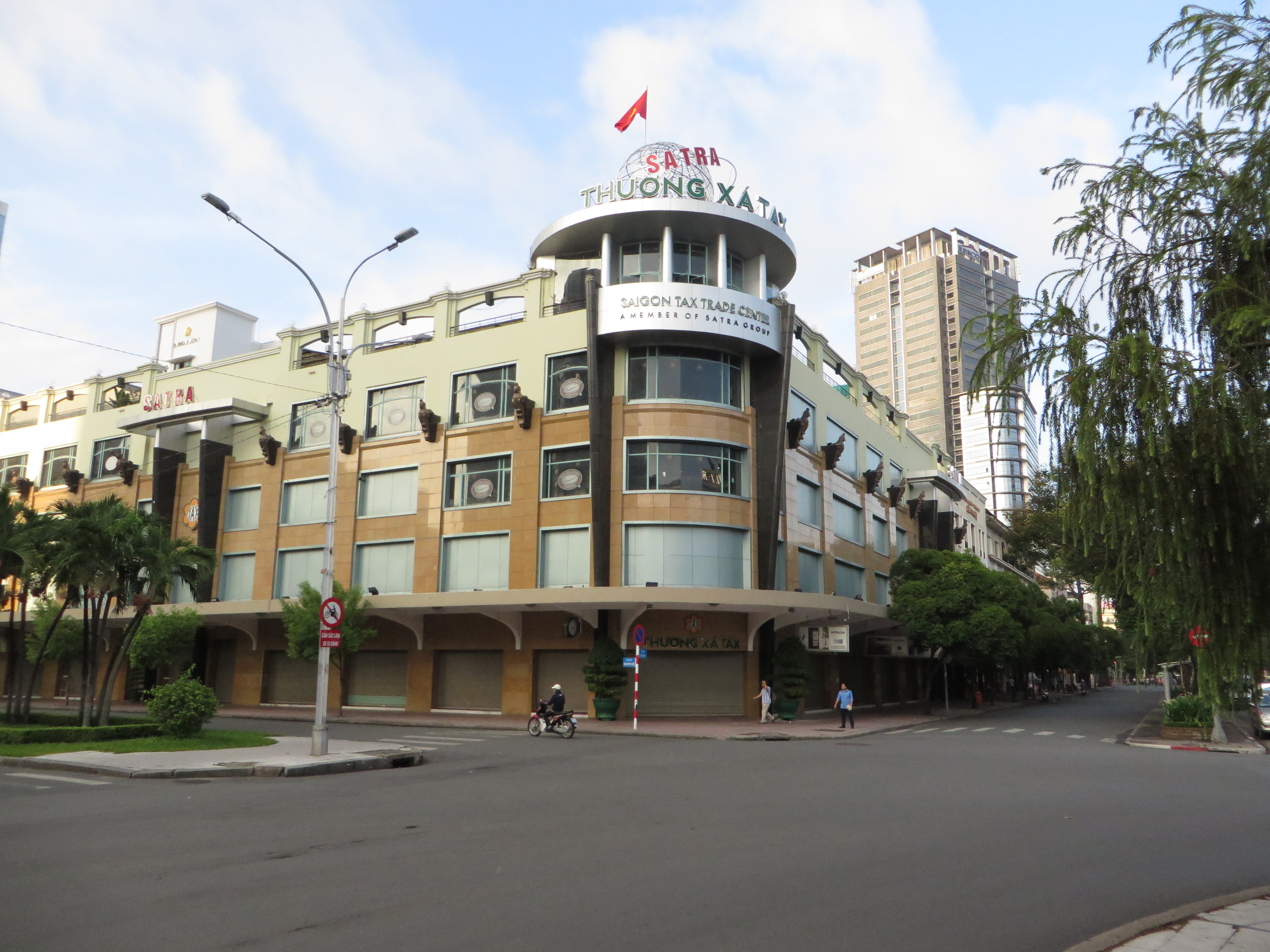
NUMBER 8. The Saigon Tax Trade Centre, pictured in early 2014

NUMBER 8. The Tax Trade Centre – Yes it’s that building again, the Saigon icon which we all thought had been partially saved. Back in January 2015, it was announced that the People’s Committee had agreed to preserve the main external features of the original 1924 Grand Magasins Charner building in the facade of the new 43-storey tower block, and most importantly, to make a feature of its priceless mosaic staircase in the lobby of the new building. However, it now appears that this huge staircase must first be dismantled, removed and then reinstalled, a job which can only be carried out by conservation experts. To date, it is reported that the building’s owner SATRA has made little progress identifying experts to carry out this complex and difficult work. See Saigon Tax Trade Centre.

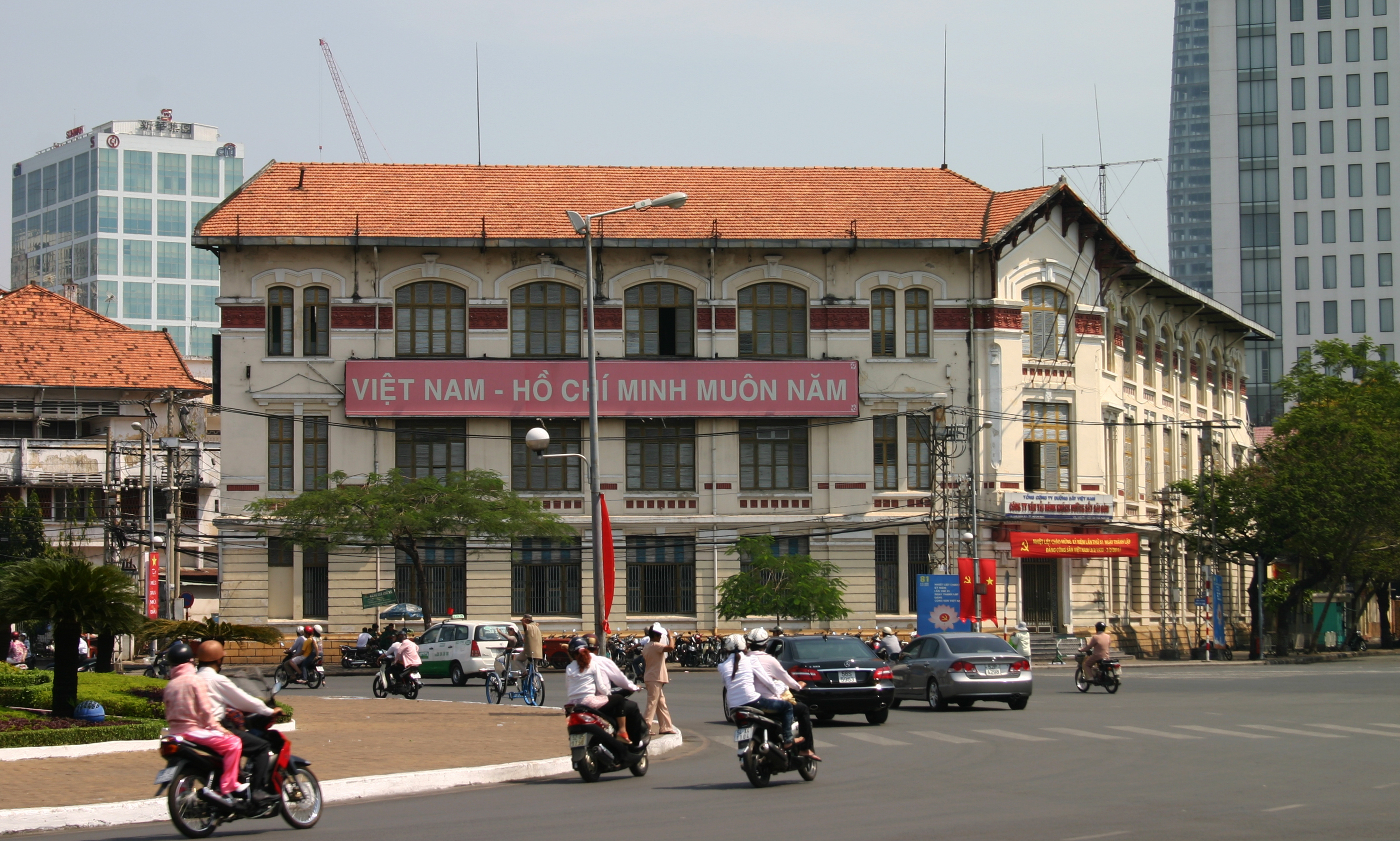
NUMBER 7. The Railway administration building at 136 Hàm Nghi

NUMBER 7. 136 Hàm Nghi – Although the 100-year-old Saigon railway headquarters building at 136 Hàm Nghi has recently been refurbished and repainted, the site is still earmarked for redevelopment as offices and serviced apartments. This plan forms part of a co-operation agreement with Kinh Đô Land, as reported in the article “Thành lập Trung tâm ứng phó sự cố, thiên tai và cứu nạn Đường sắt,” published in Báo GTVT on 20 July 2012. See also Vietnam Railways Building.

NUMBER 6. The former SAMIPIC villa at 606 Trần Hưng Đạo

NUMBER 6. 606 Trần Hưng Đạo – Originally built in 1932 for a state-franchised charity lottery company known as the Société pour l’amélioration morale, intellectuelle et physique des indigènes de Cochinchine (SAMIPIC), this grand villa was later used as a headquarters by the American (MAAG, MACV) and Korean armed forces. According to reliable sources, there are plans to demolish it and replace it with a new office block. See 606 Trần Hưng Đạo.

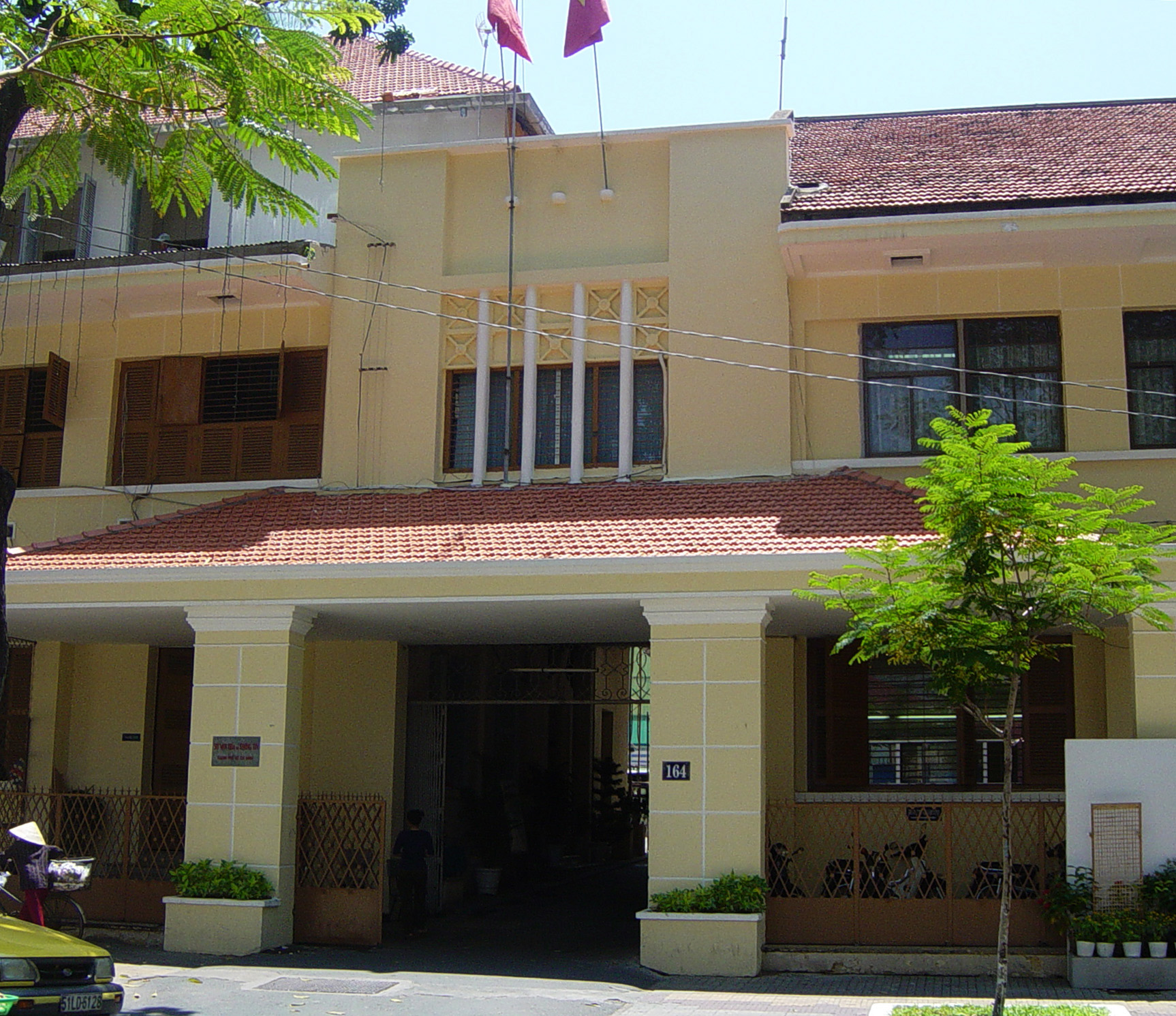
NUMBER 5. The former Bót Catinat building at 164 Đồng Khởi

NUMBER 5. 164 Đồng Khởi – This art deco building stands on a piece of what is known as “gold land” (đất vàng) and has long been earmarked for demolition and redevelopment. Currently the headquarters of the Department of Culture, Sports and Tourism, 164 Đồng Khởi became the Direction de la Police et de la Sûreté as early as 1917, although the current building dates from a reconstruction of 1933. Many leading revolutionary figures were incarcerated and tortured in this building, which is known locally as the “Bót Catinat.” It was also immortalised in Graham Greene’s novel The Quiet American as the workplace of Inspector Vigot, the French detective responsible for investigating the death of American CIA agent Alden Pyle. See Bót Catinat.

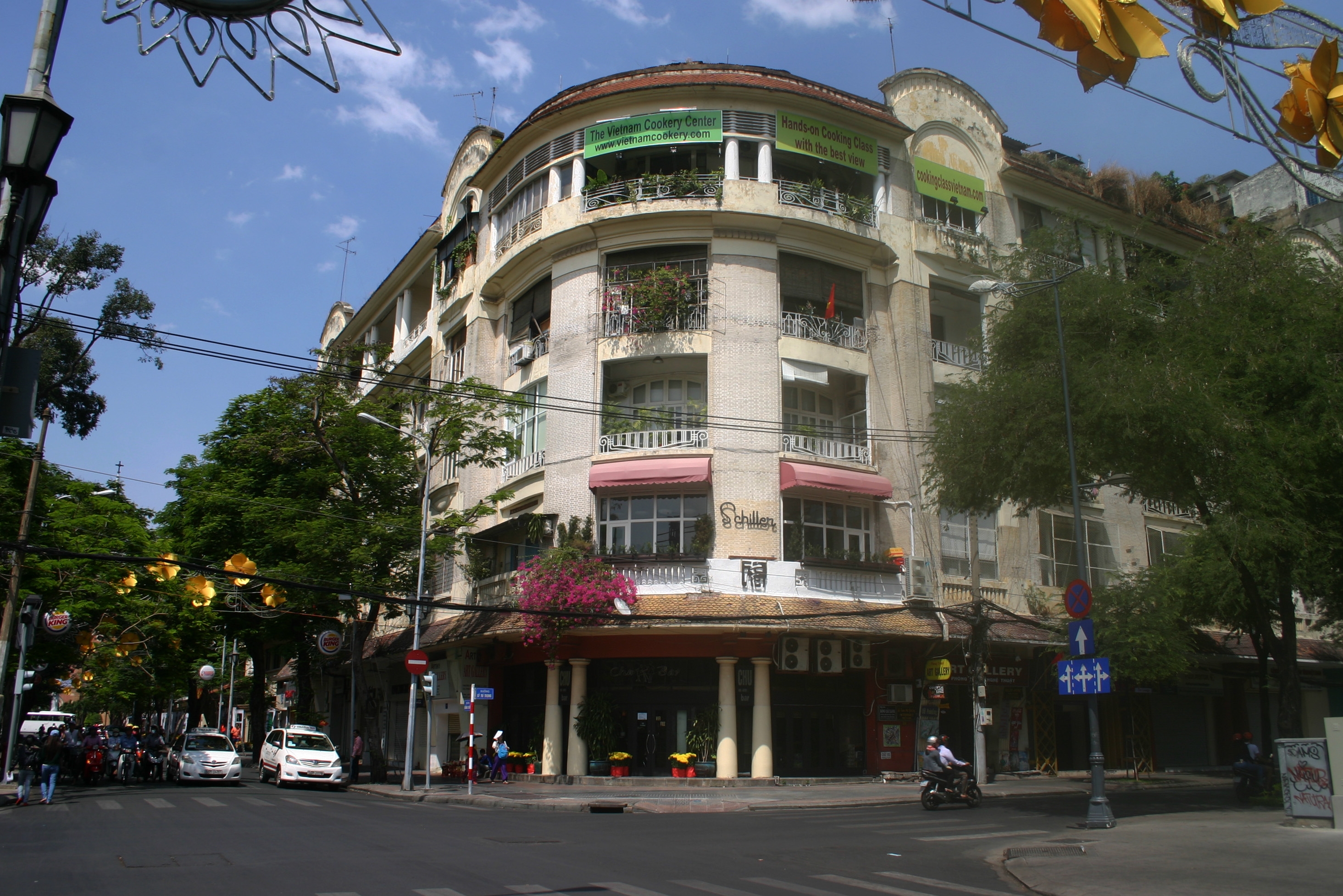
NUMBER 4. The “Catinat Building” at 26 Lý Tự Trọng

NUMBER 4. 26 Lý Tự Trọng – Like the “Bót Catinat,” this much-loved art deco apartment block on the Đồng Khởi-Lý Tự Trông junction, known popularly as the “Catinat Building,” stands on a “gold land” site and is thus awaiting demolition, although so far none of the current tenants have been given any information about when this will happen. It was built in 1926-1927 for the Société urbaine foncière Indochinoise (SUFIC), and over the last nine decades it has been known mainly for its up-market apartments. However, it has also housed numerous companies and foreign missions, including, during the 1930s and early 1940s, the United States Consulate. It was here on 23 November 1941 that the first recorded attack on American citizens in Việt Nam took place – a car bombing perpetrated by “Japanese gendarmerie” – which caused extensive damage to the Catinat Building. Just two weeks later, Japan attacked Pearl Harbor and all US diplomats were expelled from Indochina. See 26 Lý Tự Trọng.

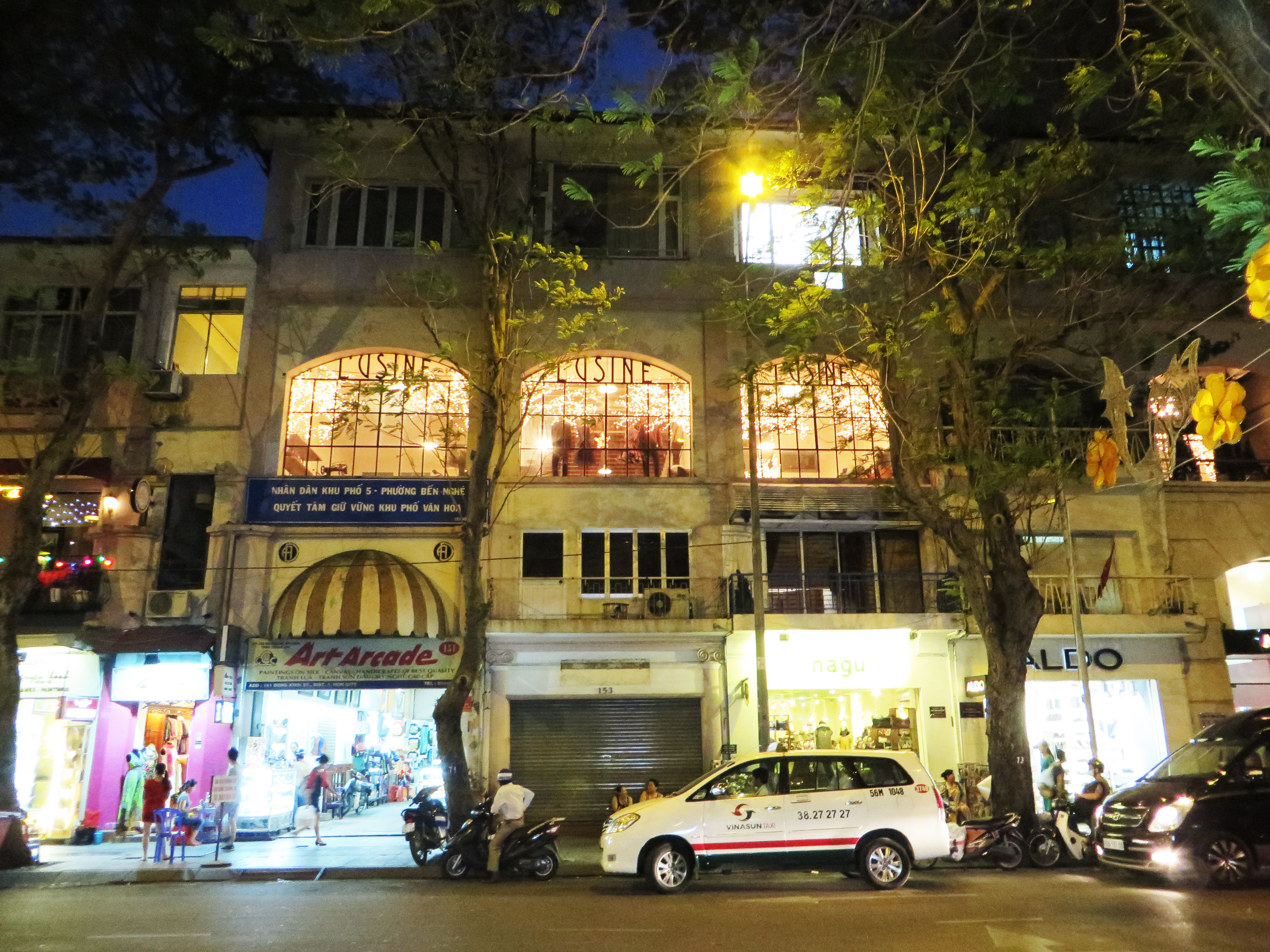
NUMBER 3. 151 Đồng Khởi

NUMBER 3. 151 Đồng Khởi – Earlier this year, it was announced that 151 Đồng Khởi, another old building on lower Đồng Khởi street, was also earmarked for demolition. While comparatively little is known about its history, this building would appear to be an early 20th century reconstruction of the former Grand Hôtel de France (1870s). By the end of the colonial period, its upper floors were rented apartments, while its ground floor was occupied by shops. A unique feature of the building is its arcade, in which a small film theatre known as the Catinat-Cine was installed in the 1930s. The old cinema building with its unusual mosaic wall decorations has survived to this day and may still be seen by customers as they make their way up to the building’s principal tenant, l’Usine.

NUMBER 2. The former Secrétariat général du gouvernement de la Cochinchine building at 59-61 Lý Tự Trọng

NUMBER 2. 59-61 Lý Tự Trọng – Here’s another one which we hoped had been saved but are now not so sure about. Last year, perhaps responding to criticism of the destruction of the art deco apartment block 213 Đồng Khởi, the Hồ Chí Minh City People’s Committee staged a design competition for their new administration building behind the Town Hall, encouraging submissions which incorporated the façade of the old French government building at 59-61 Lý Tự Trọng in the design of the new complex. Six months after 11 shortlisted designs were placed on display for the public to vote on, the winner still hasn’t been announced. However, in an interview of 2 February 2015 with Saigon Online, Mr Nguyễn Thanh Toàn, Deputy Director of Planning and Architecture, unexpectedly disclosed that his department would give no first prize because “most of the submissions were of nearly equal quality,” and then jumped the gun by intimating that his department’s preference was for submission number 107. That submission envisages the preservation of 59-61 Lý Tự Trọng, but involves physically moving it around 500 metres, so that it is in line with the central axis of the People’s Committee building! See 59-61 Lý Tự Trọng.

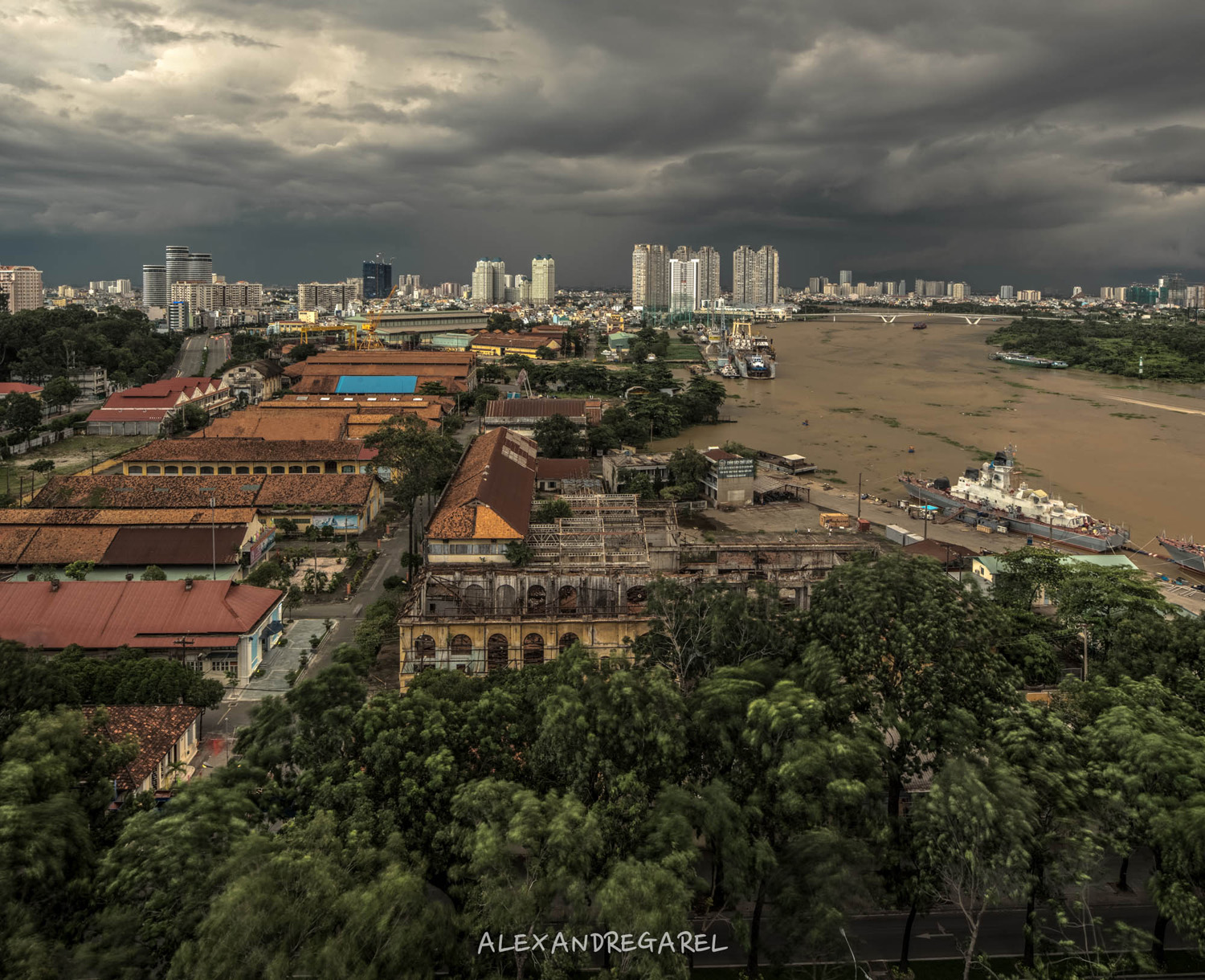
NUMBER 1. Ba Son Shipyard (photograph by Alexandre Garel)

NUMBER 1. Ba Son Shipyard – It’s surely no surprise that this has gone straight to Number One – Ba Son Shipyard is Saigon’s oldest and most important maritime heritage site, recognised by the Ministry of Culture and Information in 1993 as a National Historic Monument (Decision 1034-QĐ/BT). Over the years, several tourism experts have suggested that it could profitably be transformed into a important leisure and heritage complex along the lines of New York’s South Street Seaport, but now it seems that it will be sold off to a South Korean investor for redevelopment into yet more office towers, apartments and shopping malls. See Ba Son Shipyard.

Tim Doling is the author of the guidebook Exploring Saigon-Chợ Lớn – Vanishing heritage of Hồ Chí Minh City (Nhà Xuất Bản Thế Giới, Hà Nội, 2019)

A full index of all Tim’s blog articles since November 2013 is now available here.

Join the Facebook group pages Saigon-Chợ Lớn Then & Now to see historic photographs juxtaposed with new ones taken in the same locations, and Đài Quan sát Di sản Sài Gòn – Saigon Heritage Observatory for up-to-date information on conservation issues in Saigon and Chợ Lớn.

Old Saigon Building of the Week – Hung King Temple, 1929

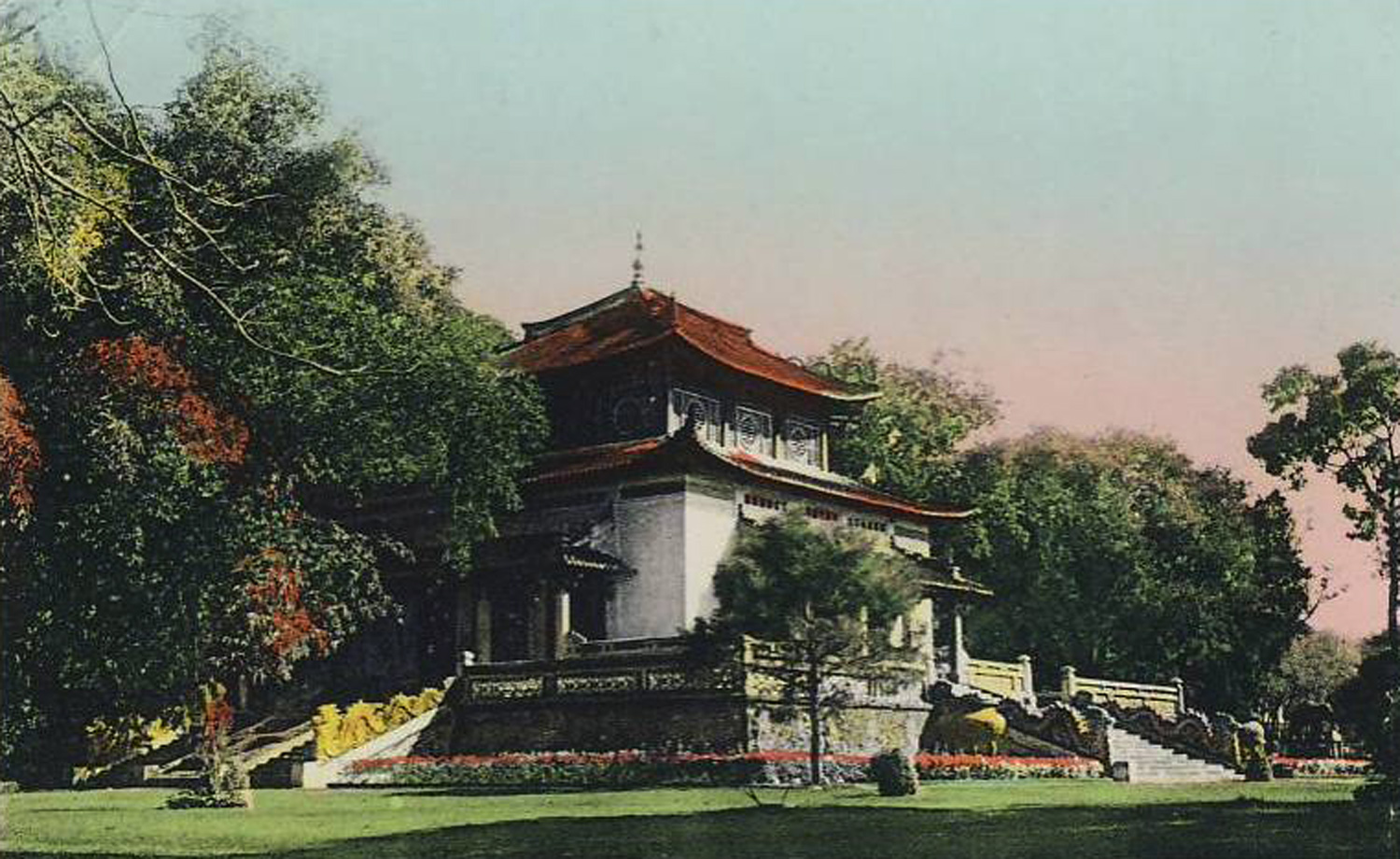
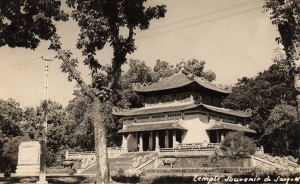
The Temple du souvenir Annamite in the late colonial period

This article was published previously in Saigoneer.

The Hùng King Temple at 2 Nguyễn Bỉnh Khiêm was originally built in 1927-1929 under the name Temple du Souvenir Annamite (“Annamite Temple of remembrance”), primarily to honour the memory of Vietnamese soldiers who died while fighting in World War I.

The Monument aux Morts de la Grande Guerre

It is a little-known fact that more than 92,000 Vietnamese men from French Indochina fought in the French armed forces during the Great War of 1914-1918, and it’s been estimated that at least 12,000 of these lost their lives during that conflict.

In 1920, the Cochinchina authorities decided to build a Great War memorial and cenotaph to honour all those who fought and died for France during World War I. This Monument aux morts de la Grande Guerre was inaugurated on 11 November 1927 on place Maréchal Joffre (now Turtle Lake).

However, leaders of the Vietnamese community in Saigon felt that there should also be a dedicated memorial to the large number of local soldiers who lost their lives in the conflict, and that this should take the traditional form of a temple to worship their memory. After extensive discussion, it was decided that this temple should honour not just Vietnamese war dead, but also great historical figures associated with the south.

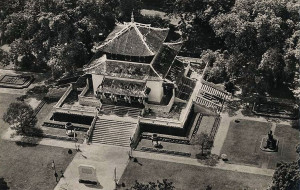
An aerial shot of the Temple du souvenir Annamite in the late colonial period

Consequently in 1921, the Cochinchina administration granted a plot of land next to the Botanical Gardens and a committee was set up under patronage of Cochinchina Governor Le Gallen to raise funds for the construction of the Temple du Souvenir Annamite. The fundraising campaign was targeted at the wealthy Vietnamese community of Saigon – “proprietors, shopkeepers, civil servants and others for whom the work or sacrifice of our dear departed has assured happiness.”

By 1927, a public subscription of 48,000 piastres had been raised, and in November 1927, when architect Auguste Delaval was commissioned to design the new city museum, he was also charged with designing and supervising the construction of the Temple du Souvenir Annamite on the adjacent site.

Another late colonial era shot of the Temple du souvenir Annamite

Built of masonry around a wooden frame supplied by the École professionnelle de Thu-Dau-Mot, and inaugurated together with the new Musée Blanchard de la Brosse (now the Hồ Chí Minh City History Museum) on 1 January 1929, the Temple was described by Le Progrès Annamite newspaper as “a place where the great figures of history, the mandarin benefactors of the people, the writers of talent and the dead of the Great War will be combined in a single official cult.”

Dragons flanked the stone steps leading up to the temple, which was designed in a style typical of Nguyễn-dynasty mausoleums in Huế, with a three-layered curved roof richly decorated with dragons and phoenixes.

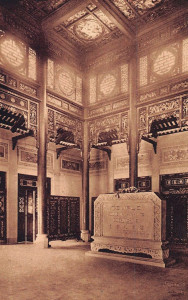
Saigon – Intérieur du temple du souvenir Annamite (Architecte M Delaval)

The newspaper described the Temple as “a building of pure Annamite style, its interior decorated with sculptural motifs which bring together dragons and other symbolic animals (cranes, unicorns, turtles and phoenixes)” and featuring “masonry walls which combine durability with the fine elegance of collonades and bas-reliefs made from precious wood.” Each of the 12 black wooden pillars supporting the roof represented a sign of the zodiac.

In the centre of the temple was placed “a marble stele, where, next to the famous names of Le-Van-Duyet, Phan-Thanh-Gian, Nguyen-Huynh-Duc, Truong-Vinh-Ky, Tong-Doc-Loc, Tong-Doc-Phuong, Paulus Cua and Le-Quang-Hien, are inscribed the more modest but no less glorious names of our brave Annamites who died on the field of battle.”

The newspaper concluded that “as well as a place of meditation and pilgrimage for the Annamites, the monument will also be a masterpiece where foreign tourists will come to appreciate the beauty of our local art.”

The Hùng King Temple, from A Pocket Guide to Vietnam, 1962

In 1955, the temple was rededicated to the memory of the founding Hùng dynasty of Việt Nam, and officially renamed the Đền Quốc tổ Hùng Vương (National Hùng King Ancestor Temple), although the temple continued to be known popularly as Đền Kỷ niệm (“Temple of remembrance”). At this time, the memorial stele was removed and placed in the road separating it from the museum.

Since 1975 the temple has continued to be dedicated exclusively to the Hùng kings. Today, the main Hùng king shrine stands at the centre of the temple, guarded by a set of eight bronze-tipped weapons (lỗ bộ), a gong and a drum. Various other items are placed around the side of the hall, including two replica Đông Sơn drums and a model of the main Hùng King Temple in the northern province of Phú Thọ.

Each year, on the 10th day of the third lunar month (usually around mid April), the temple hosts the city’s official Hùng King Ancestors Festival, which begins with a solemn ceremony giving thanks to the Hùng dynasty for their contribution to the Vietnamese nation.

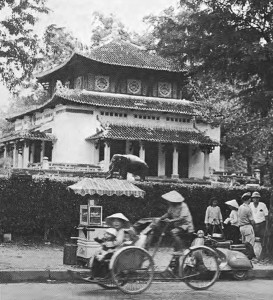
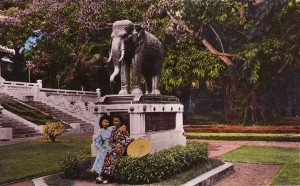
A 1960s shot of the bronze elephant statue presented as a gift to the city by King Rama VII of Siam in 1930

In the yard immediately in front of the Hùng Temple is a three-ton bronze elephant statue mounted on a rectangular concrete pedestal. This was presented as a gift to the city by King Rama VII of Siam on the occasion of his first visit to Indochina on 14 April 1930.

Getting there
Address: Đền thờ vua Hùng, 2 Nguyễn Bỉnh Khiêm, Phường Bến Nghé, Quận 1, Thành Phố Hồ Chí Minh
Telephone: 84 (0) 8 3829 8146 (c/o Việt Nam History Museum)
Opening hours: 8am-11.30am, 1.30pm-4.30pm Tue-Sun, closed Mon
Admission: Free of charge

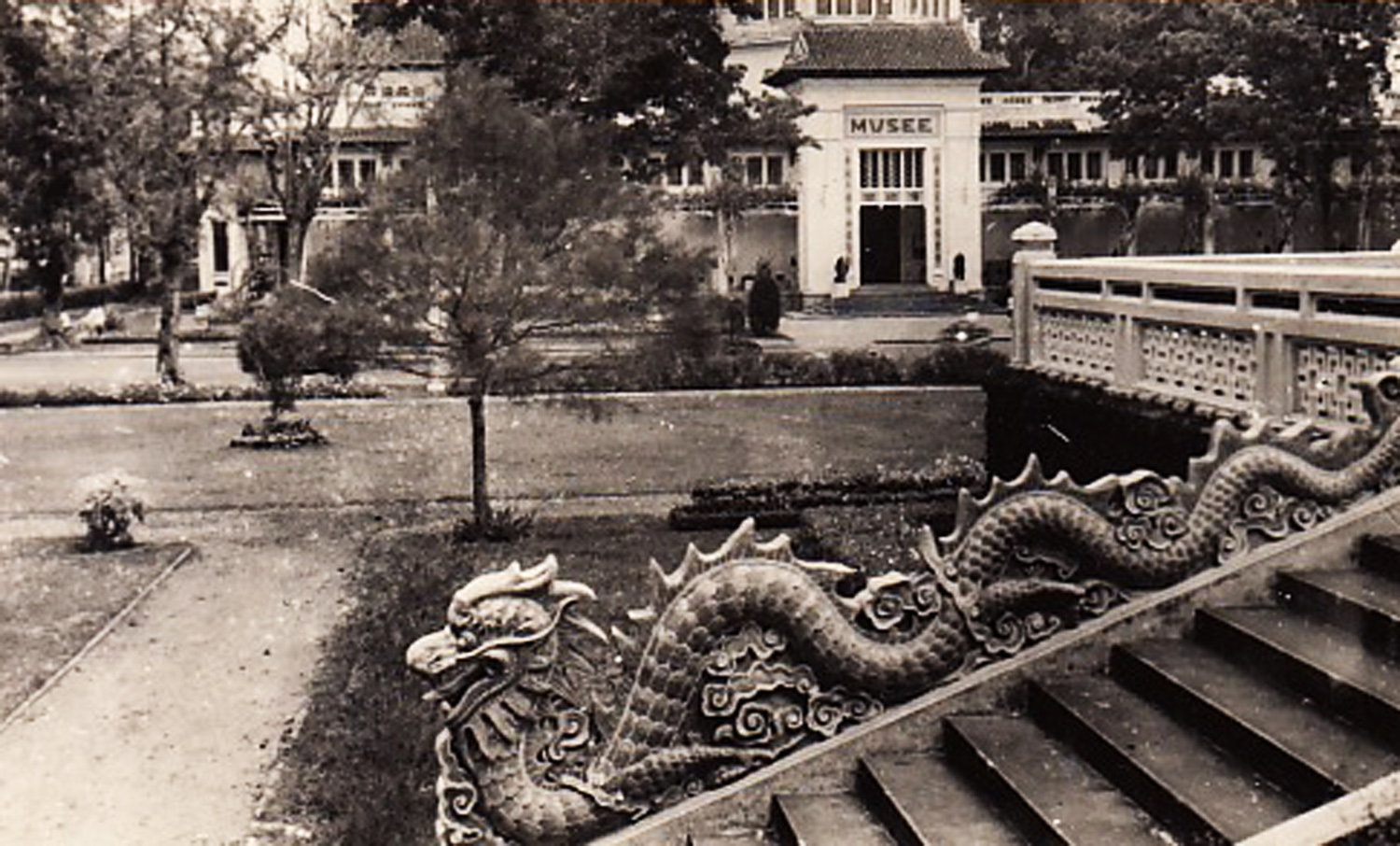
A colonial-era view of the Musée Blanchard de la Brosse from the Temple du souvenir Annamite

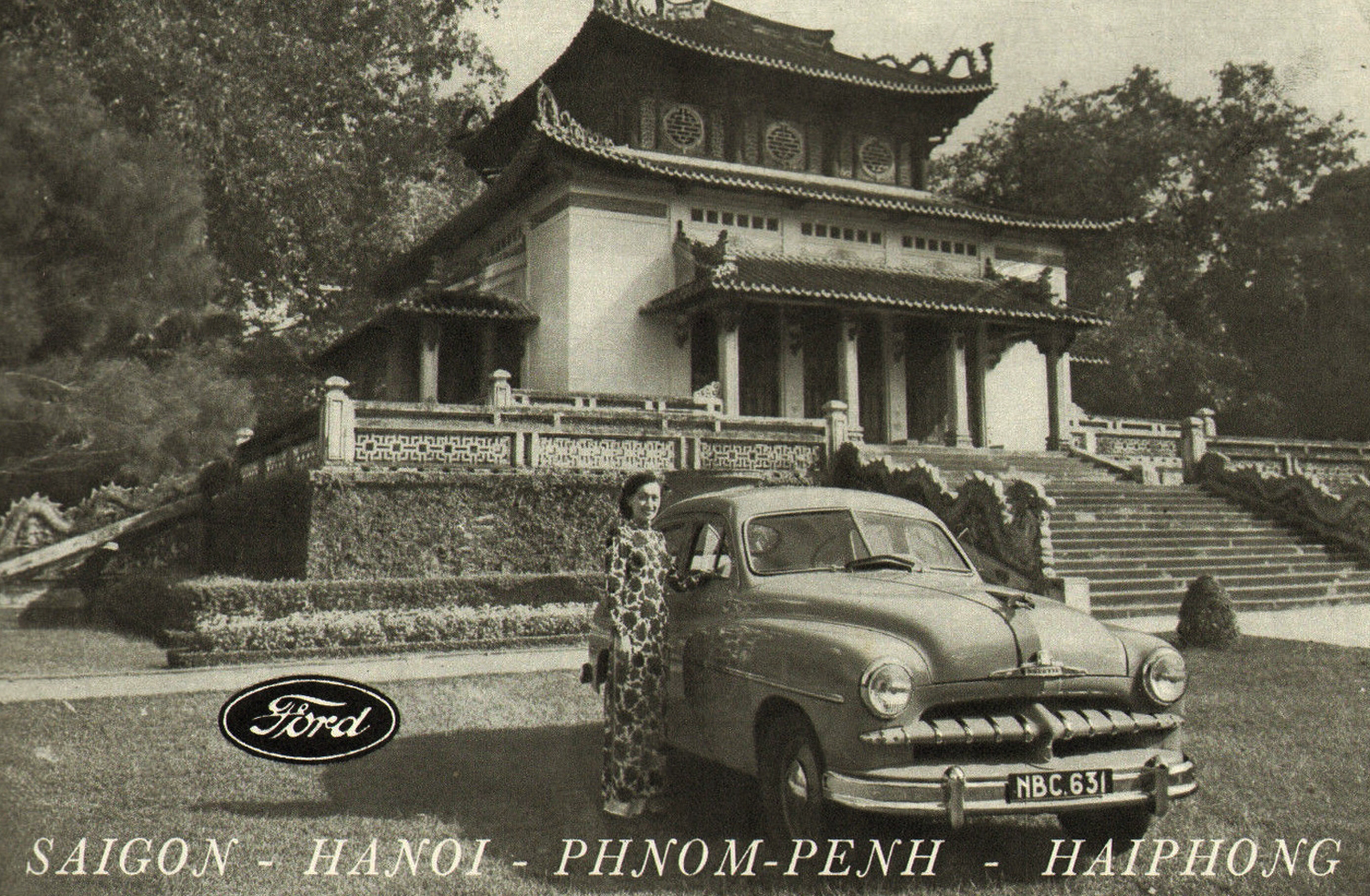
This 1950s Ford advert used the Temple du souvenir Annamite as a location

195_001

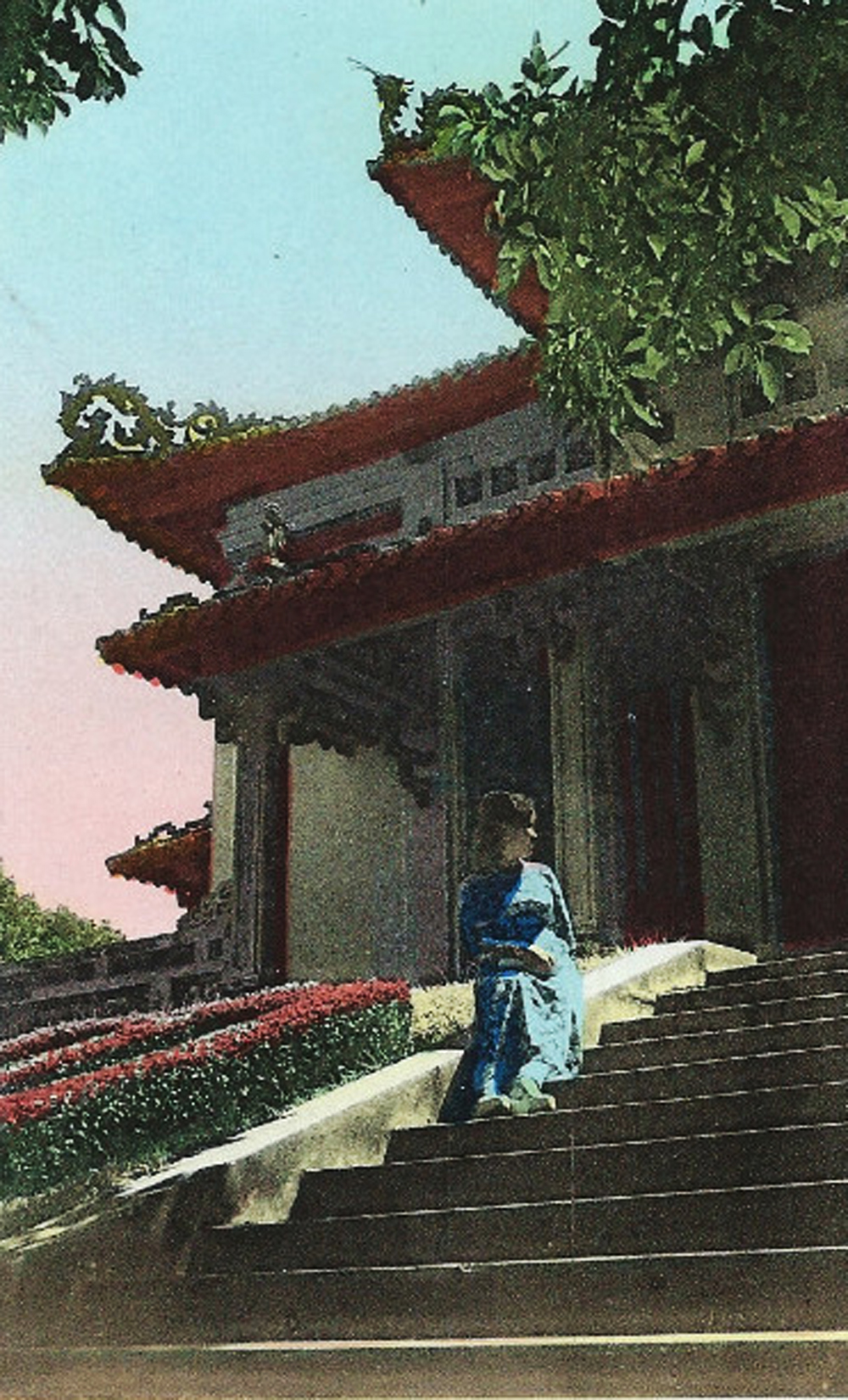
The Temple du souvenir Annamite has always been popular with photographers

Tim Doling is the author of the guidebook Exploring Saigon-Chợ Lớn – Vanishing heritage of Hồ Chí Minh City (Nhà Xuất Bản Thế Giới, Hà Nội, 2019)

A full index of all Tim’s blog articles since November 2013 is now available here.

Join the Facebook group pages Saigon-Chợ Lớn Then & Now to see historic photographs juxtaposed with new ones taken in the same locations, and Đài Quan sát Di sản Sài Gòn – Saigon Heritage Observatory for up-to-date information on conservation issues in Saigon and Chợ Lớn.

Icons of Old Saigon – Shophouse Architecture

The continuing destruction of Saigon’s colonial shophouse heritage: Nos 85-113 Nguyễn Huệ, pictured in March 2015 and in June 2015. To date Nos 89-99 have been demolished and others are expected to follow.

This article was published previously in Saigoneer http://saigoneer.com

The colonial shophouse, one of Saigon’s most iconic forms of architecture, is in imminent danger of extinction.

The shophouse is a hybrid style of traditional architecture found widely throughout South East Asia, most notably in Cambodia, Thailand, Malaysia, Singapore, Indonesia and Việt Nam. It derives from traditional Asian house architecture, yet displays strong European colonial influences.

Historically, because buildings were taxed according to street frontage rather than total area, many shophouses are long and narrow in shape, similar to the vernacular “tube house.” Like the latter, they sometimes incorporate an internal courtyard or rear yard for relaxation, drying laundry or other household activities.

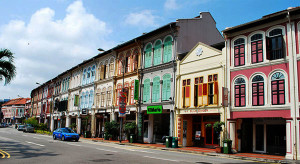
Two-storey colonial shophouses at 26-56 Võ Văn Kiệt, District 1

Shophouses are generally found grouped together in long terraces, separated from each other by masonry walls. The roofs are tiled, mostly in western but occasionally in oriental style. Façade ornamentation is varied and draws inspiration from both the eastern and western traditions.

Here in Saigon-Chợ Lớn, the earliest surviving shophouse is the one-storey type with a shop at the front and a residential space at the rear. Dating back to the 1860s, the few surviving examples seem to be basic brick-built versions of an earlier local design, in contrast to the eleborate one-storey colonial terraces which have survived in Hội An.

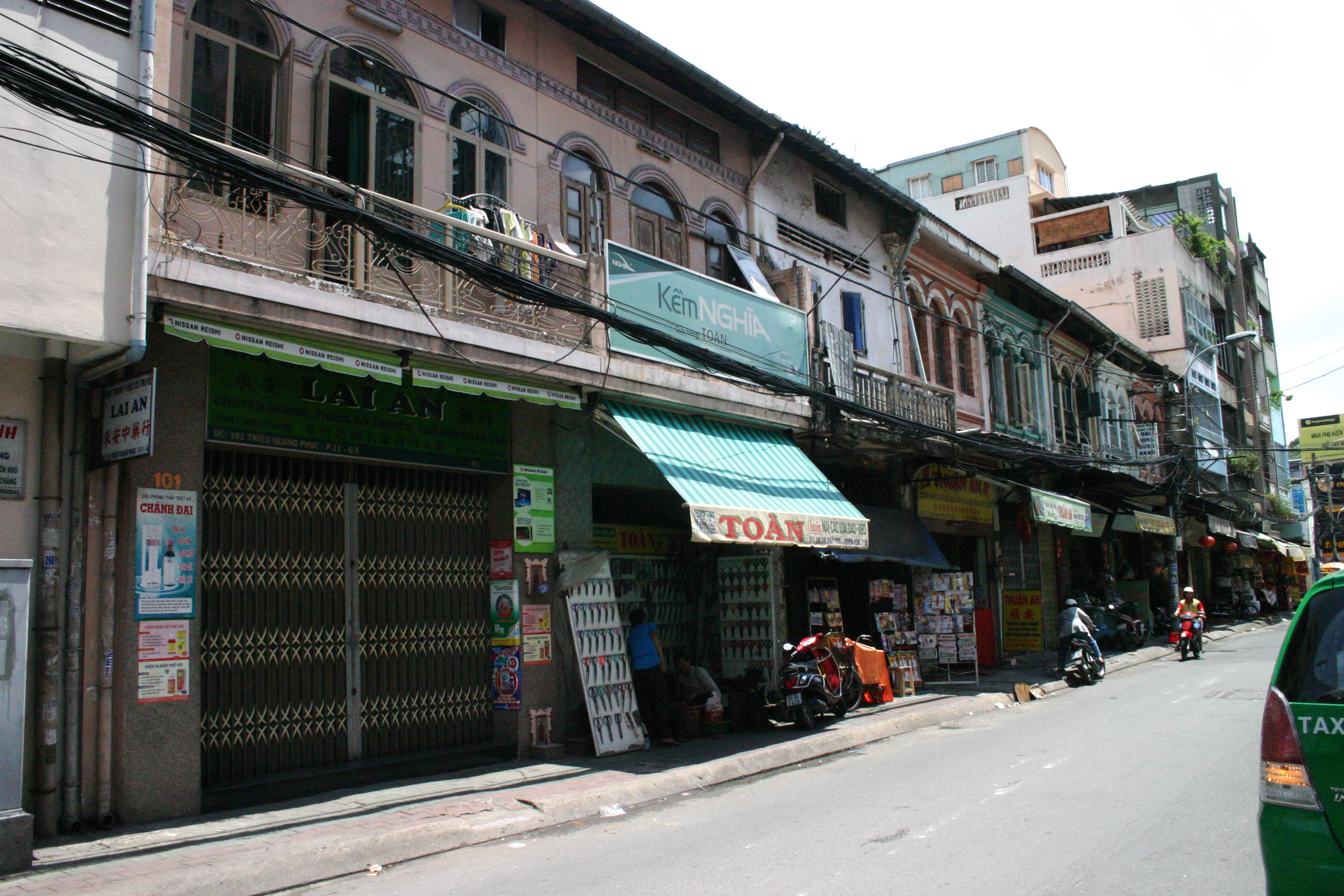
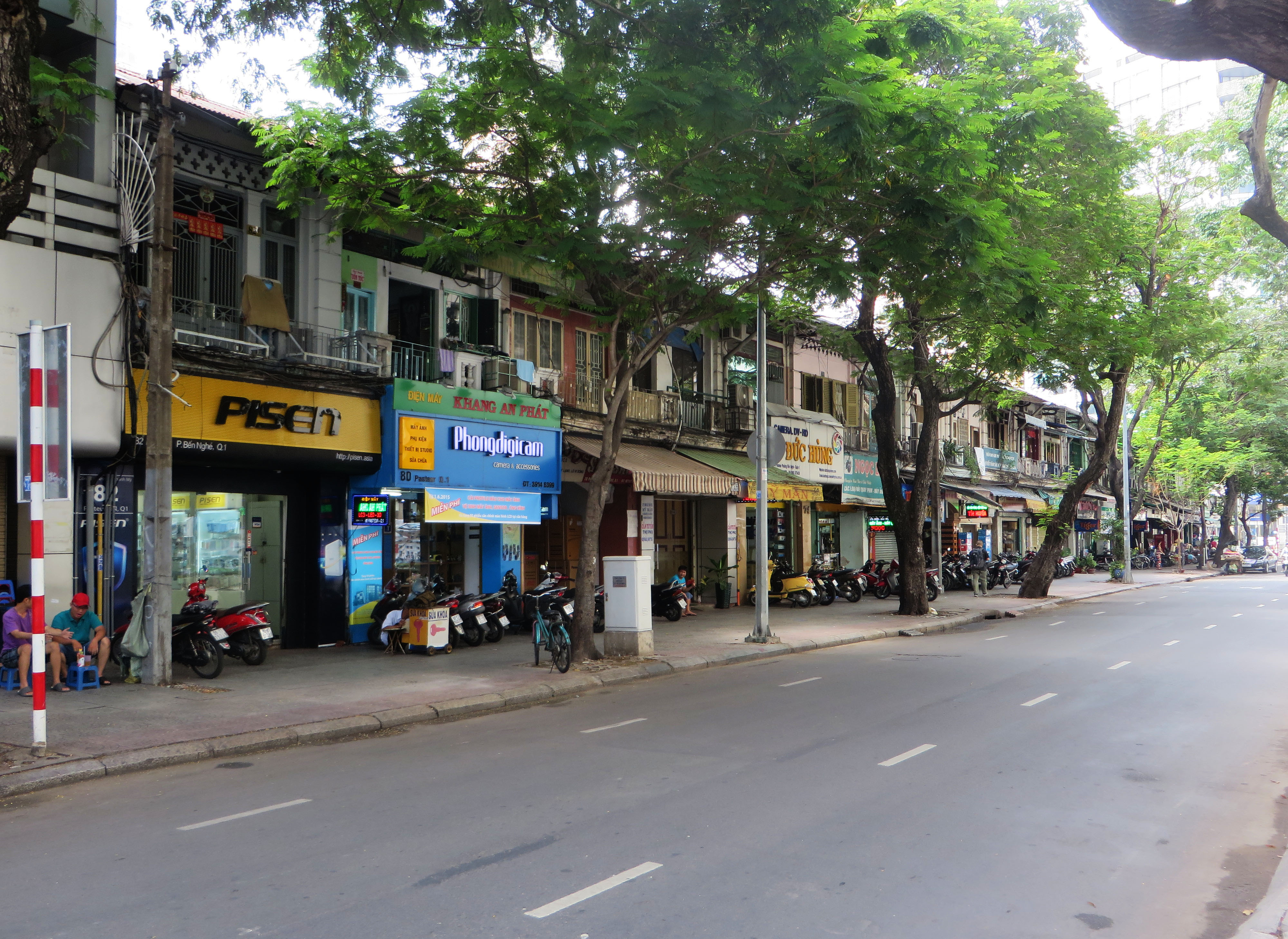
The commonest shophouse design in Saigon-Chợ Lớn is the two-storey type, which also made its first appearance in the 1860s and featured a shop and storage facilities on the ground floor and residential spaces on the upper floor. Surviving examples include intact and partially-intact terraces on Võ Văn Kiệt, Pasteur, Hàm Nghi, Nguyễn Huệ, Huỳnh Thúc Kháng and Đinh Tiên Hoàng streets in District 1, and Trần Hưng Đạo, Triệu Quang Phục and Hồng Bàng streets in District 5.

Three-storey colonial shophouse at 43-49 Hải Thượng Lãn Ông, District 5

As merchant communities grew in prosperity, much larger three-storey shophouses began to appear in clusters, with sizeable commercial spaces on the ground floor and spacious residential apartments on the upper levels. Several ornately-decorated examples from the 1890s have survived on Hải Thượng Lãn Ông street in District 5, including the former headquarters of millionaire businessman Quách Đàm’s Thông Hiệp company at 45 Hải Thượng Lãn Ông.

After the departure of the French, new shophouse buildings were constructed which combined the layout of the earlier colonial-era terraces with a wide range of modern designs.

Over the past decade, lacking in maintenance and recognition as built heritage, a very large number of old shophouse buildings have been destroyed or modified beyond recognition. Perhaps the biggest loss of all was the series of elegant terraces which once lined the south bank of the Bến Nghé Creek in District 4. Sadly, the destruction is still ongoing; in recent months, five shophouses on the south side on the newly-pedestrianised Nguyễn Huệ boulevard have been demolished to make way for a new shopping centre.

Singapore shophouse architecture (photo courtesy of www.shophouses.sg)

Like Saigon-Chợ Lớn, Singapore once had many shophouses, the majority of which were destroyed in the 1970s as the country embarked on a relentless development and modernisation drive. Not until the publication of the Wong Report of 1984 – which claimed that the disappearance of the country’s built heritage was one of the principle causes of a decline in tourist numbers – did the Singapore government begin to reassess the value of its urban heritage. By that time, destruction of familiar urban landscapes, coupled with the stress of everyday life, had left many Singaporeans feeling that they had lost their roots. The government subsequently acknowledged the important role of history, memory and heritage in the making of the city, and launched a major programme to protect and preserve what remained of Singapore’s historic architecture. Today, heritage tourism plays a key role in reinforcing Singapore’s image as a vibrant global city.

In the words of the late first Prime Minister Lee Kuan Yew (1995):

“We made our share of mistakes in Singapore. For example, in our rush to rebuild Singapore, we knocked down many old and quaint Singapore buildings. Then we realised that we were destroying a valuable part of our cultural heritage, that we were demolishing what tourists found attractive and unique in Singapore.”

Singapore shophouse architecture (photo courtesy of www.yoursingapore.com)

“We halted the demolition. Instead, we undertook extensive conservation and restoration of ethnic districts such as Chinatown, Little India and Kampong Glam and of the civic district, with its colonial era buildings: the Empress Place, old British Secretariat, Parliament House, the Supreme Court, the City Hall, the Anglican Cathedral, and the Singapore Cricket Club. The value of these areas in architectural, cultural and tourism terms cannot be quantified only in dollars and cents. We were a little late, but fortunately we have retained enough of our history to remind ourselves and tourists of our past. We also set out to support these attractions by offering services of the highest standard.”

Among Singapore’s many types of built heritage, its shophouses have provided the most flexible and adaptable foundation for repurposing as cultural, recreational and commercial facilities. Restored and renovated according to the principles of “Adaptive re-use” to meet the needs of modern life, they now house a wide range of organisations, including theatres, galleries, offices, hotels, cafés and shops. Crucially, it has been shown that property prices in areas containing refurbished shophouse terraces, such as the historic Boat Quay and Emerald Hill districts, have increased substantially in recent years – see Carl G Larson, Adaptive Re-Use, Singapore River, http://archnet.org.

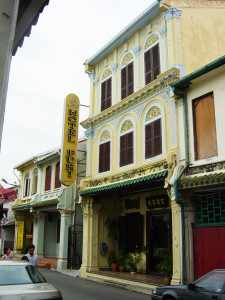
Melaka shophouses (photo by Tim Doling)

In recent years, Malaysia has also sought to “develop understanding of built heritage as an expression of history and identity” (Badan Warisan Malaysia, 2004), and today it, too, encourages heritage tourism as a key component of an economic strategy which extends across the whole service sector. Refurbished shophouses once again play a central role in the lifestyles of local people and in tourism promotion – those in Melaka and Georgetown have been recognised by UNESCO as World Heritage.

Here in Hồ Chí Minh City, a balance between development and conservation has yet to be found; there is still no inventory of colonial-era buildings, let alone regulation or zoning to protect them. Consequently, the future for the city’s few surviving colonial shophouses looks very bleak indeed.

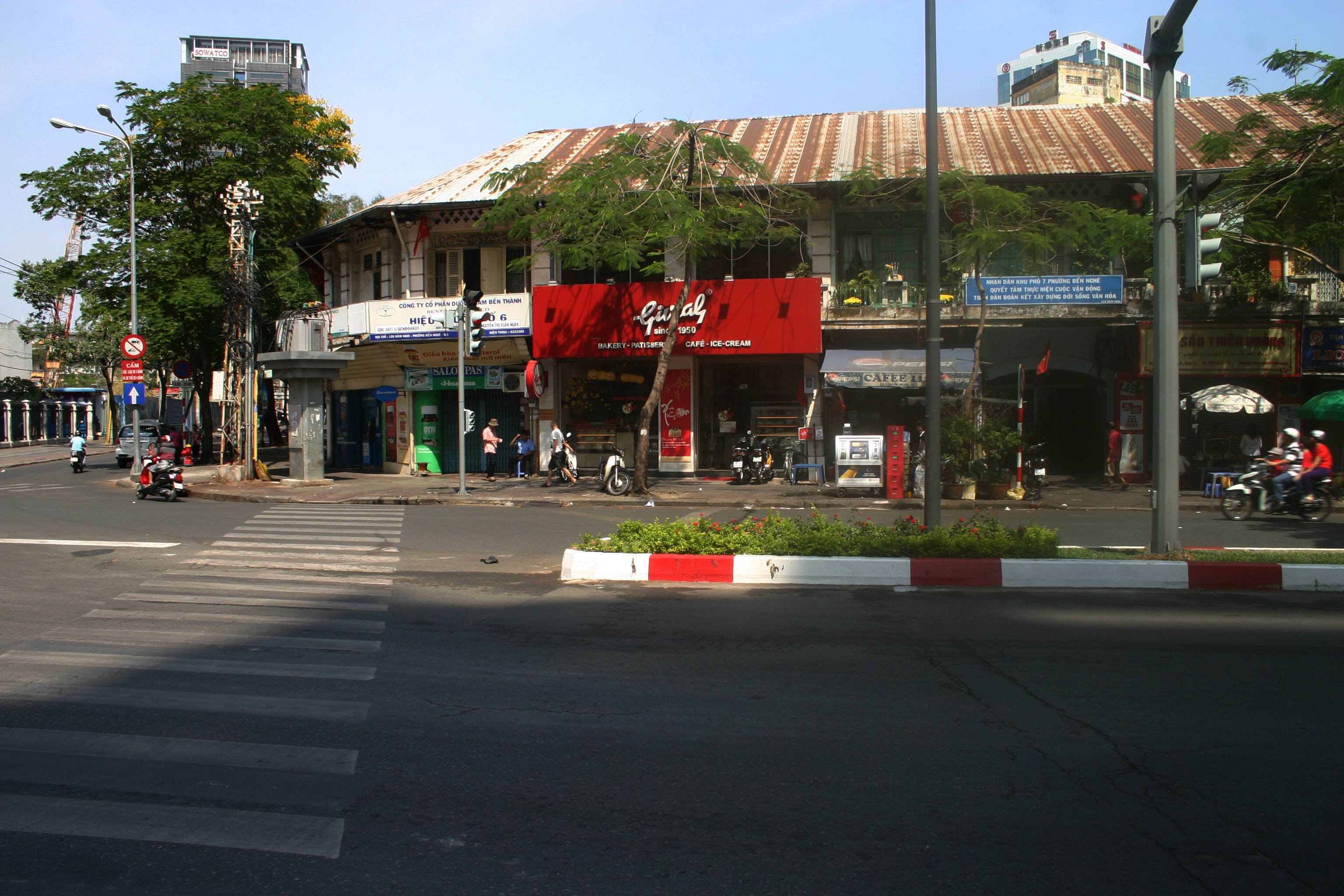
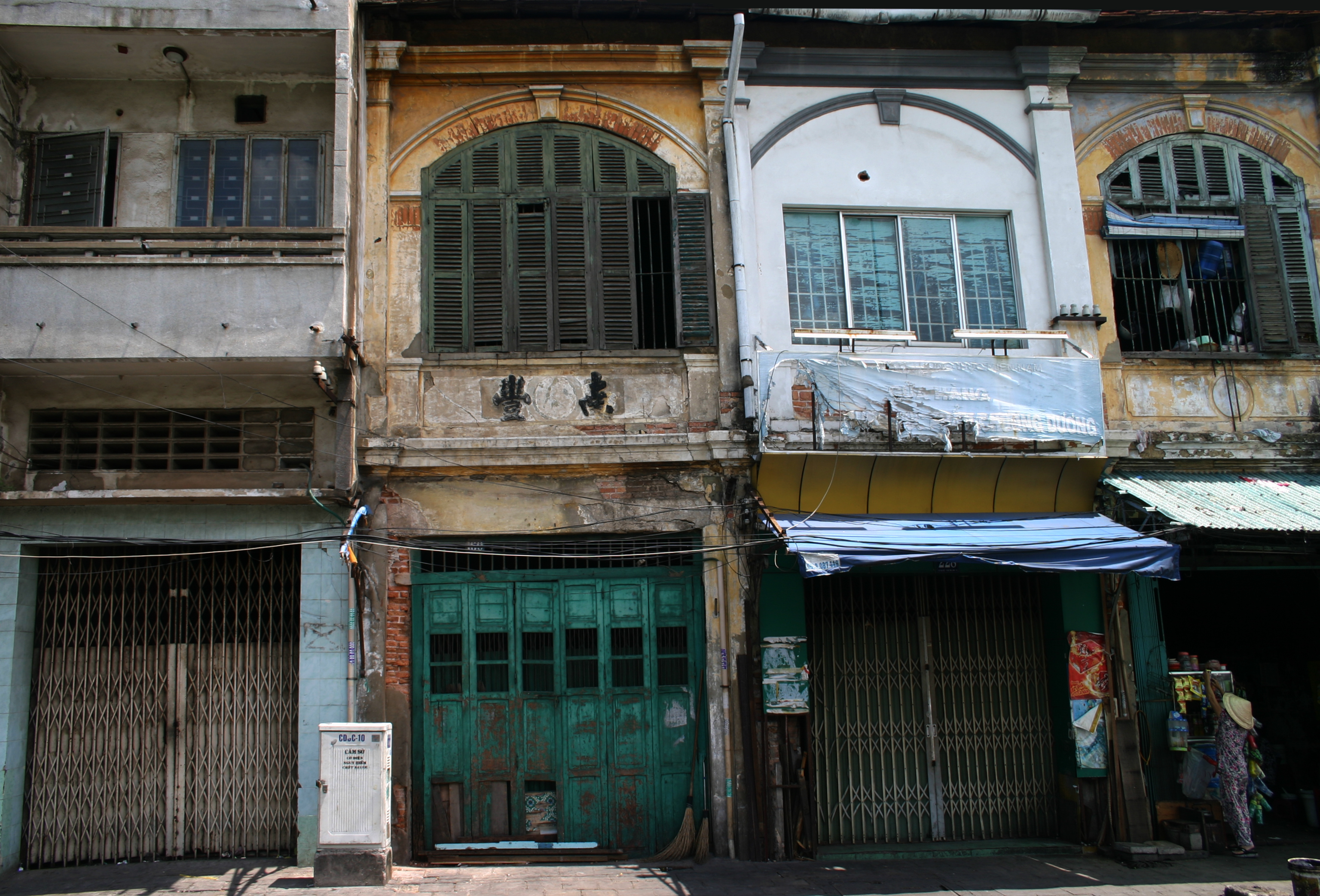
Two-storey colonial shophouses at 102-120 Hàm Nghi, District 1

Two-storey colonial shophouses at 206-230 Võ Văn Kiệt, District 1

Three-storey colonial shophouse at 93-99 Lương Nhữ Học, District 5

Two-storey colonial shophouses at 101-115 Triệu Quang Phục, District 5

Two-storey colonial shophouses at 234-278 Võ Văn Kiệt, District 1

Two-storey colonial shophouses at 40-82 Pasteur, District 1

Three-storey 1960s shophouses at 18-28 Trần Hưng Đạo, District 1

The Facebook page Shophouse heritage Saigon Chợ Lớn – Cửa tiệm mặt phố di sản Sài Gòn Chợ Lớn is an online forum for information and photographs of the city’s shophouse architecture. You are invited to join the group and upload/share your own images of this rapidly-vanishing heritage.

Tim Doling is the author of the guidebook Exploring Saigon-Chợ Lớn – Vanishing heritage of Hồ Chí Minh City (Nhà Xuất Bản Thế Giới, Hà Nội, 2019)

A full index of all Tim’s blog articles since November 2013 is now available here.

Join the Facebook group pages Saigon-Chợ Lớn Then & Now to see historic photographs juxtaposed with new ones taken in the same locations, and Đài Quan sát Di sản Sài Gòn – Saigon Heritage Observatory for up-to-date information on conservation issues in Saigon and Chợ Lớn.

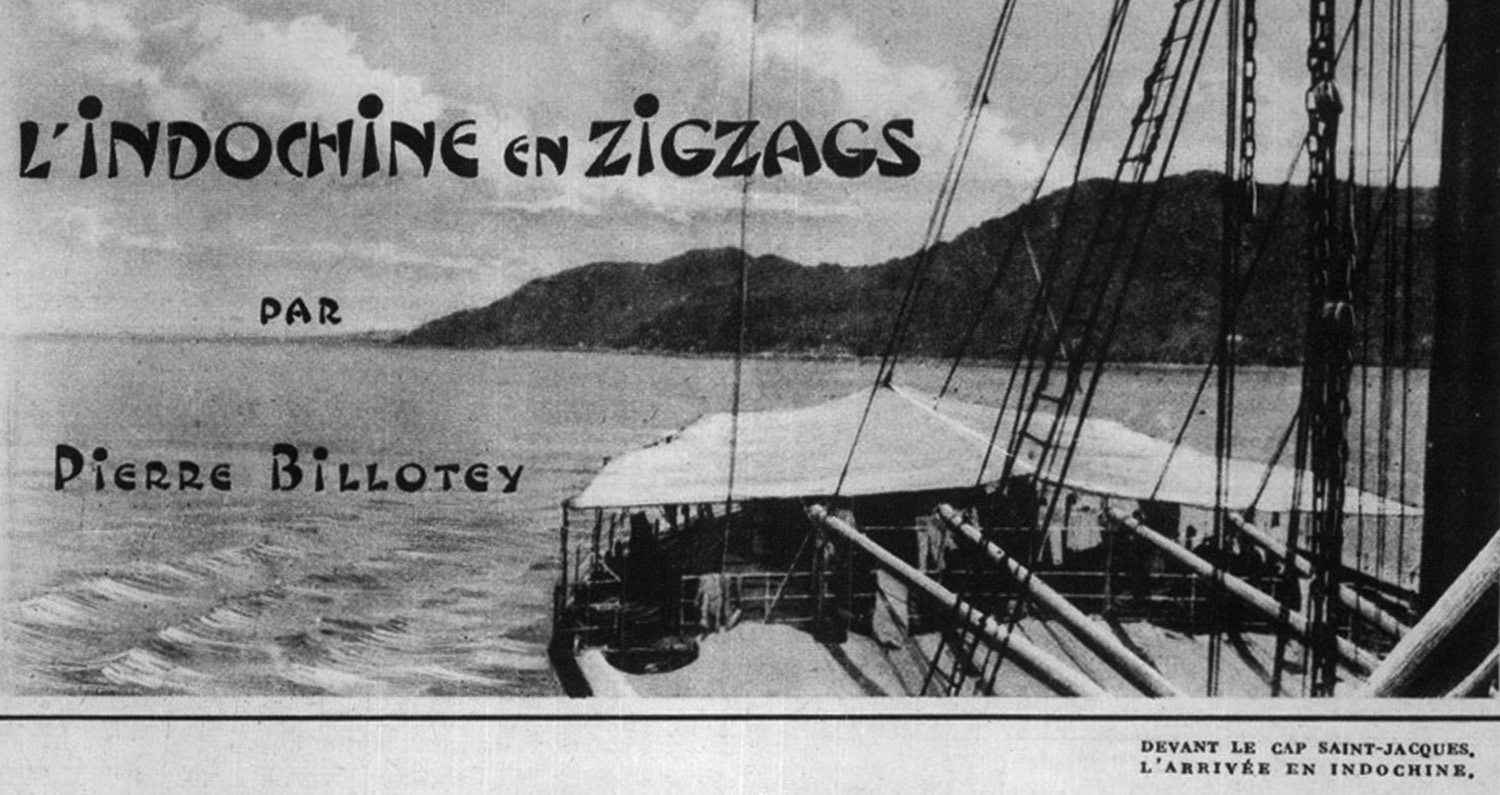
“Indochina in Zigzags” by Pierre Billotey, 1928

After touring Southeast Asia in 1927-1928, French novelist Pierre Billotey (1886-1936) was inspired to write his most famous novel, Sao Keo. But he also penned a series of articles entitled “Indochina in Zigzags” for the monthly review Les Annales politiques et littéraires, describing his travels in Indochina. Here is a translated excerpt describing Billotey’s visits to Saigon and Đa Lạt.

Cap Saint-Jacques beach with fishermen

Our ship comes to a standstill off the coast of Cap Saint-Jacques [Vũng Tàu], a mountainous promontory with a lighthouse on top of one of its three peaks. The flag is hoisted as we wait for the tide so that we can enter the Saigon River which leads into Indochina…

The water is a thick and green, like absinthe or even pureed peas. On either side, there is nothing but low plain. Each bank supports a thin line of black soil in which sprout the brilliant but monotonous mangroves.

Here and there, we see fishing junks moored. Several of them, standing near the shore in front of native huts, are decorated with French tricolour flags. Why? This is almost certainly a wedding. The native people of Cochinchina have the habit of marrying under French colours!

The river narrows and begins to turn yellow as it negotiates a bend. Behind our ship, we leave long golden waves in which green and purple reflections of the sky shine in concentric ovals, creating what look like huge peacock feathers. Proceeding with the flow of the current, we pass through the little islands of Loc-Binh, which are surrounded by floating plants with beautiful blue flowers and leaves almost similar to those of our lilies. This Loc-Binh is, however, a scourge for navigation: it often paralyses the propellers of the most powerful steamships.
A view of the Saigon river

Now, only mangroves and short palm trees border the shoreline. Beyond them spread the endless expanse that we take, in early October when the rainy season ends, for splendid pastures. No, these are the rice fields of Cochinchina, which we view under the vivid light – I would even call it Italian light – of late afternoon. Meanwhile, next to the soft, clean earth, the river, now crowded with sampans and junks, draws ever more complicated curves.

Then suddenly, amidst the purple smoke of the city, we see the two towers of Saigon Cathedral rising in the distance.

When one has spent nearly a month travelling from sea to sea, feeling the growing distance from one’s native land and gradually coming to the realisation that most of the world is ruled by the English kingdom, this sudden glimpse of the spires of a French cathedral makes a very great impression indeed.

The ship has docked. Night descends. Insects whirl around the electric lights which illuminate the bridge. Not without farewell, nor without emotion, I disembark after four weeks of travel. We certainly had the time to get used to it. I soon miss the quiet and comfortable life on board that great ocean liner of the Chargeurs Réunis, which, even in a storm, hardly rocked more than a riverboat on the Seine.

A few minutes later, I am walking in the rue Catinat: France rediscovered!
La rue Catinat

Yes, Saigon is a great and beautiful French city, set in lush tropical greenery. I wasn’t expecting anything like this. Many of the descriptions I’d read or heard were spoiled by a superfluous and sometimes ridiculous exoticism.

Here on the rue Catinat, the shops are lined up almost in unbroken sequence. They include those selling European products, as well as those of the Malabar (Hindus of French India, settled in large numbers in Indochina), the Chinese and the native Annamites. Elsewhere, especially in the huge area known as “le Plateau,” one sees villas and public buildings, all surrounded by flame trees, bamboo thickets and palm trees of every kind. And what flowers – whole clusters of gorgeous roses and liane antigone, baskets of orange canna lilies, splashes of scarlet hibiscus and climbing bougainvillea, a thousand purple petals crowded against each other in gigantic bouquets.

It’s not very long ago (1859) that the conquerors, the admirals who created Saigon and Cochinchina, found nothing here but a vast swamp intersected by arroyos with houses on stilts. Thereupon they plotted the city. The arroyos were filled to create today’s beautiful and vibrant avenues, the boulevards Charner, Bonnard and Galliéni, as well as boulevard Norodom, which is somewhat reminiscent of our avenue du Bois. But the trees here are far more grandiose than those back home. Tamarinds, teak, mango and many others, always green.
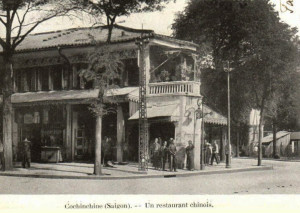
Saigon – a Chinese restaurant

After having visited all those British colonial cities, with their rectangular buildings, so ugly in their weighty pride, and their pleasant but isolated and selfish bungalows, what a delightful impression Saigon makes – offering visitors a real welcome and a glimpse of genuine civilisation – urbanity and urbanism!

And what animation we see! We pass Chinese men wearing white trousers, Annamites in black jackets which gleam like oilcloth, and Malabars wearing turbans, or more often red or white caps, and enrobed from head to foot in garish patterned fabric. All of them, without exception, walk barefoot. Yes, even the native pousse-pousse (rickshaw) driver. The shoe trade would certainly not prosper here! Also barefoot are the pretty rich Annamite women who wait outside the stores for their luxury automobiles.

The cars! How many there are! Most of the French settlers have one. A number of Chinese and natives also own automobiles. And the pousses-pousses! Here in Saigon there is an entire population of rickshaw drivers, each sporting a towel or headband and a conical hat over his eyes, dressed sometimes in basic shorts and sometimes wearing a coat. He runs along at a frenetic pace, dodging large vehicles and occasionally shouting a faint cry to warn passers-by to get out of the way.
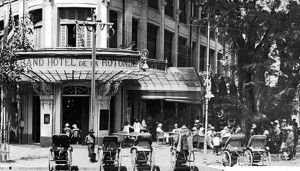
Le Grand Hôtel de la Rotonde (Neurdein/Roger Viollet/Getty Images)

While he waits expectantly outside places like the Grand Hôtel de la Rotonde, hoping for a customer, one may observe the pousse-pousse driver closely, squatting oddly on the curb between the two bamboo poles of his lightweight carriage, watching with a keen eye the Europeans he surmises are nearly ready to leave their restaurant tables. There is nothing more delightful than to take a journey in one of these vehicles. Remember that they are equipped with pneumatic tyres. These, of course, sometimes burst. Then we see the driver with his head bent low, slowly and sadly taking his vehicle to be fixed.

Do not complain too much about the hard life of the rickshaw drivers. They make a pretty good living. And the humanitarian philosopher who speaks of getting rid of this trade would have them to answer to.

From time to time, amidst the flood of automobiles and pousses-pousses, one also sees carts pulled by two tiny oxen, or the occasional Malabar, that baroque box of painted wood suspended on four wheels, which is very reminiscent of our coaches of yore.
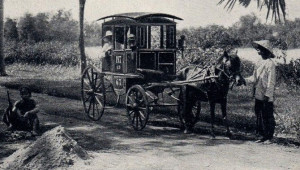
Saigon – a “Malabar” in the Botanic Gardens

French people promenade through the streets wearing white or grey canvas suits, followed by half-naked domestics and native administrative staff whose dress is very often more elegant than one’s own. Then come Annamite women wearing long flowing black silk tunic and trouser suits and carrying children on their hips. This particular Saigon street, especially after sunset, offers a continuous and very entertaining show!

Right in front of one’s eyes, in the course of just one minute, it is possible to see anything up to a hundred different and contrasting sights, which blend perfectly together to give the viewer an impression of harmony, difficult to define, yet strongly felt. Here one will find all the charm of the French city – or large provincial town, if you will – under an East Asian sky, together with all the splendour of wonderful tropical vegetation, and the amazing variety of races which live here.

Through the windows of my apartment, round like large portholes, I take in the green lawns, red soil driveways, beautiful palm trees and clumps of bamboo which stand at least 20m high. However, by now a storm is raging, and in this season it’s a daily occurrence. A double rainbow may be seen amidst dark clouds, from behind which lightning flashes everywhere.
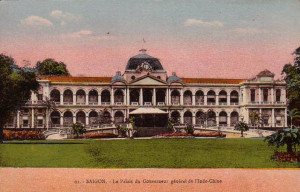
The Palace of the Government

Right in the middle of this “Parc-Monceau of the tropics” stands the imposing and graceful Palace of the Governor General. It constitutes, of course, the best of Indochina’s colonial architecture. I love its large porches, lofty halls and two long galleries which overlook the city. Here one may really believe oneself to be on the deck of a large ocean liner.

It is in a pleasant wing of this castle that I am housed during the few days before my departure for Hanoi and Upper Tonkin, China perhaps, and especially for that mysterious Laos, so little known here and which I have been told is very difficult to access.

During my first hours in Saigon, I meet my friend and colleague MH, who was formerly the editor of a Paris newspaper, and now runs one of the largest papers in Indochina. It is with this very fine and knowledgeable observer that I first tour Saigon, its harbour and walks, shops, new buildings and smokey factories, ending up at an automobile garage so vast and so well equipped that one might have difficulty finding a similar facility back home, even in Paris.

“Huh!” Says my guide at every step, “didn’t you expect to see this?”

“Well, no. Saigon is really a very modern city.”
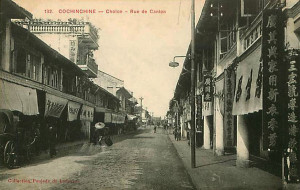
Cholon – rue de Canton

“When Lord Northcliffe arrived here, he was as surprised as you are, and yet he’d just completed a round-the-world tour. He wrote that there could never be enough praise for a creation like Saigon which was developed so quickly and so happily.”

I walk through Cholon with MH on several occasions, day and night. Who doesn’t know about this Chinese city, the nearby annex of Saigon, since Roland Dorgelès spoke so well of it? But perhaps Dorgelès, who once judged Loti to be too poetic, was also guilty of poeticising Cholon? This commercial town is mainly populated by Chinese, sympathetic, always smiling, gentle and dignified, and who, if they are not all good people, at least know how to give the impression that they are.

Cholon is clean, Cholon does not smell bad, Cholon is not truly Chinese. You just need to wander through the fetid alleys of Singapore, with their hovels of humid rotten filth, to measure the difference, to understand that our Cholon is almost Frenchified. Above all, it is a large industrial and mercantile city. And its traffic, which passes through the port of Saigon, contributes in no small way to making the latter France’s sixth most important port, just below Rouen.
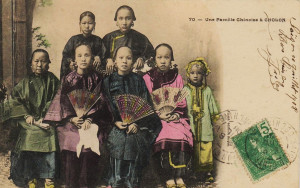
A Chinese family in Cholon

It is not that Cholon has no secret life, or disturbing and bizarre legends. But let us be silent on those. Let’s permit Cholon to keep its last mysteries. You Chinese princes of paddy, I will not denounce your saturnalia…..

Time to leave. Before me I have a 1,800km road between Saigon and Hanoi. This is nothing. This does not count, since many others have followed this road before me. The government has lent me an excellent car with a proficient driver. Thus, with just myself and the spectacle, what an admirable promenade I will take through Annam and up to Tonkin!

But the day before I leave, I am introduced a very amiable man who had landed a few hours earlier, and also wishes go to Hanoi.

“Look,” he tells me, “You can see that I’m not fat, so I won’t take up much room. And don’t you think that for such a long trip it would be better that you don’t travel alone?”

He adds that he knows some of my family, and, hand on heart, he swears that travelling with me will be an unforgettable pleasure for him.
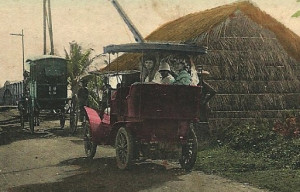
Setting off for the north

About himself, he gives me a few details. In a Gascon accent, he tells me that he is a Basquaise named Sigognac.

“And I am,” he finishes with gravity, “an artist of great talent.”

It doesn’t take me long to decide. The next morning I send the car to get him. But when it comes back, I begin to think that I will have to give up my seat altogether. The astute Sigognac has completely filled the back of the car with suitcases, those of his charming cousin and himself. Thanking the gods, I manage to find a seat in front, next to the driver.

From that trip, what I remember most are the Annamite villages, the first I’d ever encountered. All of them the same, or nearly so – whitewashed, single-storey houses and thatched huts.

But the most essential thing to see is the multitude of beautiful covered markets which the administration has built everywhere for the native people. The Annamites meet, buy, sell, eat and talk there at any time, day and night. They are so many of them! Some sleep while the others chatter. And then they swap places. What a noise!
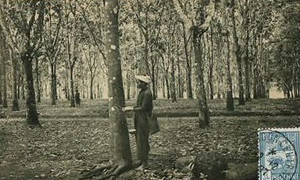
Collecting rubber sap

The other day, sailing up the river to Saigon, I contemplated the immense rice fields, which constitute the main wealth of Cochinchina. Now, as we head north, there appear the rubber plantations, the second most important fortune of this country. Line after line of rubber trees stretch into the distance until they are no longer in sight. On each trunk hangs a wooden bowl flowing with latex – this is the nascent rubber which pays the interest on so many shares. Sometimes, one catches sight of a worker going down the aisles, emptying the wooden bowls into a bucket.

And, now we find ourselves in the great forest. The trees have fluted trunks which look like cathedral pillars and are of the same stone grey colour, while their layered canopies reach prodigious heights. Bamboos bow and bend, forming bridges across the road, while any gaps are filled so perfectly by creepers and other vegetation that all one can see either side of the road are two sparkling green mountains, so dense that the undergrowth is completely hidden.

This is the forest of South Annam, which every now and then gives way to a clearing. I’m sure I was told that it’s home to gaurs – Asian aurochs – as well as elephants, rhinos, leopards and tigers. But I see only doves … and then a large lizard basking in the middle of the road, which amusingly nods its flat and pointed head at us.
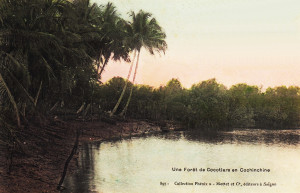
A forest of coconut trees in Cochinchine

And what rivers! Before each river crossing, a prudent and charitable sign warns us:

“Attention: Hazardous Bridge.” The bridge boards, not nailed down, bounce up and down under the wheels of our automobile, making a noise like castanets. We negotiate 14 or 15 bridges like this, in quick succession. However, it seems that they are not that dangerous, since none of them collapses under our weight.

Suddenly the trees disappear. To our left, in the far distance, we see violet-tinted mountains, silhouetted against the pale cobalt sky. And then we arrive in Phan-Thiet.

I had been told the day before: “Phan-Thiet? It’s of no interest.” Yet Phan-Thiet interests me. Firstly for its swarming Annamite population. And secondly because it is a port.

Large and yellow, the river which runs through the town before reaching the sea is covered right up to its mouth by hundreds and hundreds of large fishing junks, grey in colour, each with one or two masts and decorated sails. These vessels also line the seashore, where they are parked alongside the sandy beach. A little above the town, small boats, sampans, rattle against each other.
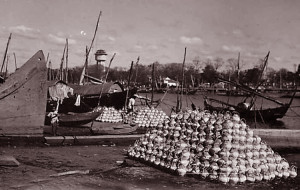
Fishing boats in Phan-Thiet harbour

When night falls, I notice that the central living quarters of each boat has a copper lamp which illuminates the tiny space where a whole family is accommodated.

One invisible yet very striking thing marks out the character of Phan-Thiet. It’s the frighteningly nauseous smell which spreads across the town from the nuoc-mam factory installed there. This Annamite national condiment, appreciated by few Europeans, is a kind of essence of fish – rotten fish, say those who do not like this strange product. It is the latter whom one must one warn in advance to wear nostril plugs before walking through this town…

Early next day we leave Phan-Thiet. Sigognac has left his largest bags there. Turning our back to the coast, we advance again, and soon find ourselves once more in the middle of boundless jungle.

This time, the road begins to climb the mountain, rising through masses of rock and earth, the colour of the latter ranging from Venetian red to the most intense purple. In front of us, the road forms a scar through the bright green forest.
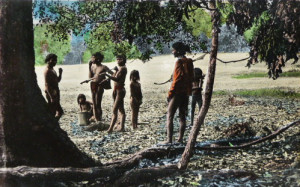
157_001

A montagnard family in the central highlands

Frequently bordering a precipice, the road continues to climb, twisting its way through huge trees, those trees which cannot be named, and which, when compared to ours, seem like giants to little children. High on a branch, parrots chatter. As we pass, birds of enamel blue, green pigeons and grey doves take flight.

On several occasions we pass montagnards, walking in small groups. To all intents and purposes they are naked – because a simple string tied around the waist to support a square of cloth like the tiniest of handkerchiefs can hardly be described as clothing. Most of the women do not even wear that – they wear nothing at all, just a basket on their back.

The men, these creatures of prehistory, walk in single file, spears in hand, bows on their shoulder. Since Phan-Thiet, we seem to have gone back in time six thousand years.

Later, speaking to me of the region’s montagnards, someone told me:

“They aren’t wicked, these montagnard hunters. If they hate the Annamites, they have their reasons. With us, they get along very well. They only ask that we respect their customs and their women.”
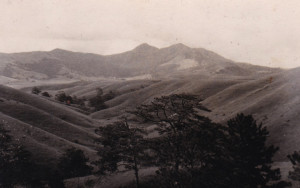
The Lang Bian mountains

“How?” I mused,“They are jealous of their women, and yet they let them walk around like that?”

The forest, always the forest… Sometimes, on the side of a peak, one sees a group of bamboo huts on stilts, with lofts of straw or woven reeds. These are montagnard villages, enclosed by palisades. All around, buffalo with black ringed horns are grazing.

Soon, those strange tropical trees disappear. Beyond a certain altitude, one encounters only pine trees, as majestic as those of our Pyrenees.

But in France, the pine forests have something sad, almost deathly about them. And they remain silent, the soil around them covered only with a layer of dead needles. Here, in contrast, vegetation abounds between the scaly pine trunks. High clusters of red flowers bloom in the bushes. And the forest is alive with wildlife. Birds flutter, monkeys scream, branches stir without one knowing what agitated them. Nearby, a torrent runs down the hill. Further on, it becomes a waterfall as it meets a precipice and plunges into an abyss.
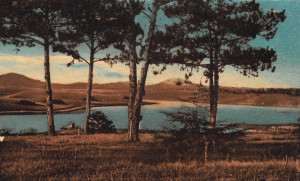
Dalat

We’ve arrived in Dalat, the famous and much lauded Dalat. After the splendours we sighted on the journey, all new for me, this city of nascent waters, with its palace, its villas, its lake, and its plateau enclosed to the west by the peaks of Lang Bian, leaves me feeling indifferent. I’ve already seen this, or nearly so, in Font-Romeu or Savoie…

However, we must remember that Dalat is a most precious hill station where Europeans – especially women and children – who are anaemic and sometimes almost wiped out by the excruciating heat and humidity of Cochinchina and the coast of Annam, come to regain their health in the cool and crisp air.

But what surprises the traveller most is not feeling the cold after having been so hot. Rather, it is the striking contrast in scenery. For hours and hours, one has climbed through high forest and wild mountain, meeting naked hunters armed with stone-age spears and bows with poisoned arrows. Then suddenly, the road arrives at a palace worthy of Cannes or Biarritz, where black-coated domestics serve lunch in an ultramodern dining room.
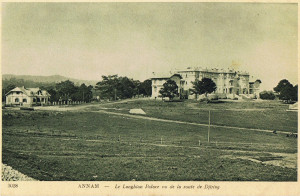
The Langbian Palace Hotel, Dalat

“Whether you like it or not,” says the director of this palace, “Dalat will one day be the capital of the Indochinese Union. Is it not madness to have chosen Hanoi, so far from the centre and so close to China?”

Hearing this makes me smile. But later, in Hanoi, I would hear one of the highest officials of the colony say much the same thing. And then I would not smile. For I would see in that comment the sign and the desire for capitulation, for the abandonment of a once grand design. When a governor, in 1902, had decided that Hanoi would be the capital, when he undertook the construction of that great thing which we now call the Yunnan Railway, it was because he then believed, beyond any doubt, that Yunnan would sooner or later be part of Indochina.

My companion Sigognac interrupts the conversation. Pointing to the walls, he suggests that they would be more attractive to the eyes if they were covered with large decorative paintings, executed with great skill, just like those which he, Sigognac, considers himself capable of producing.

“There is no rush to decorate the walls,” replies the director. “But wait (at this juncture, he turns to look outside), can you see that bare rocky outcrop? If you could paint that white for me, it may give my guests the impression of snow…”
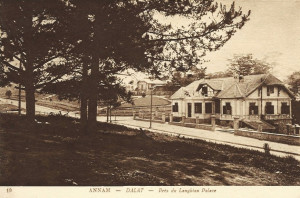
Dalat viewed from the Langbian Palace Hotel

The real surprise for me, arriving in Dalat, is not finding a growing town 1,500m above sea level, amidst a savage country, far from everything, nor – I’m ashamed to say – the admirable efforts which have created everything I see here.

No, after travelling so many leagues across a forest so grand that it becomes overwhelming, what makes me suddenly so pleased is to discover a delicate and unexpected thing: beautiful pink roses, fragrant and in full flower.

Tim Doling is the author of the guidebooks Exploring Huế (2018), Exploring Saigon-Chợ Lớn – Vanishing heritage of Hồ Chí Minh City (2019) and Exploring Quảng Nam (2020), published by Nhà Xuất Bản Thế Giới, Hà Nội

A full index of all Tim’s blog articles since November 2013 is now available here.

Join the Facebook group pages Saigon-Chợ Lớn Then & Now to see historic photographs juxtaposed with new ones taken in the same locations, and Đài Quan sát Di sản Sài Gòn – Saigon Heritage Observatory for up-to-date information on conservation issues in Saigon and Chợ Lớn.
A Second Chance for Tan An Communal House

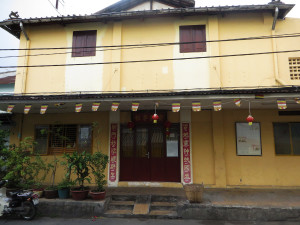
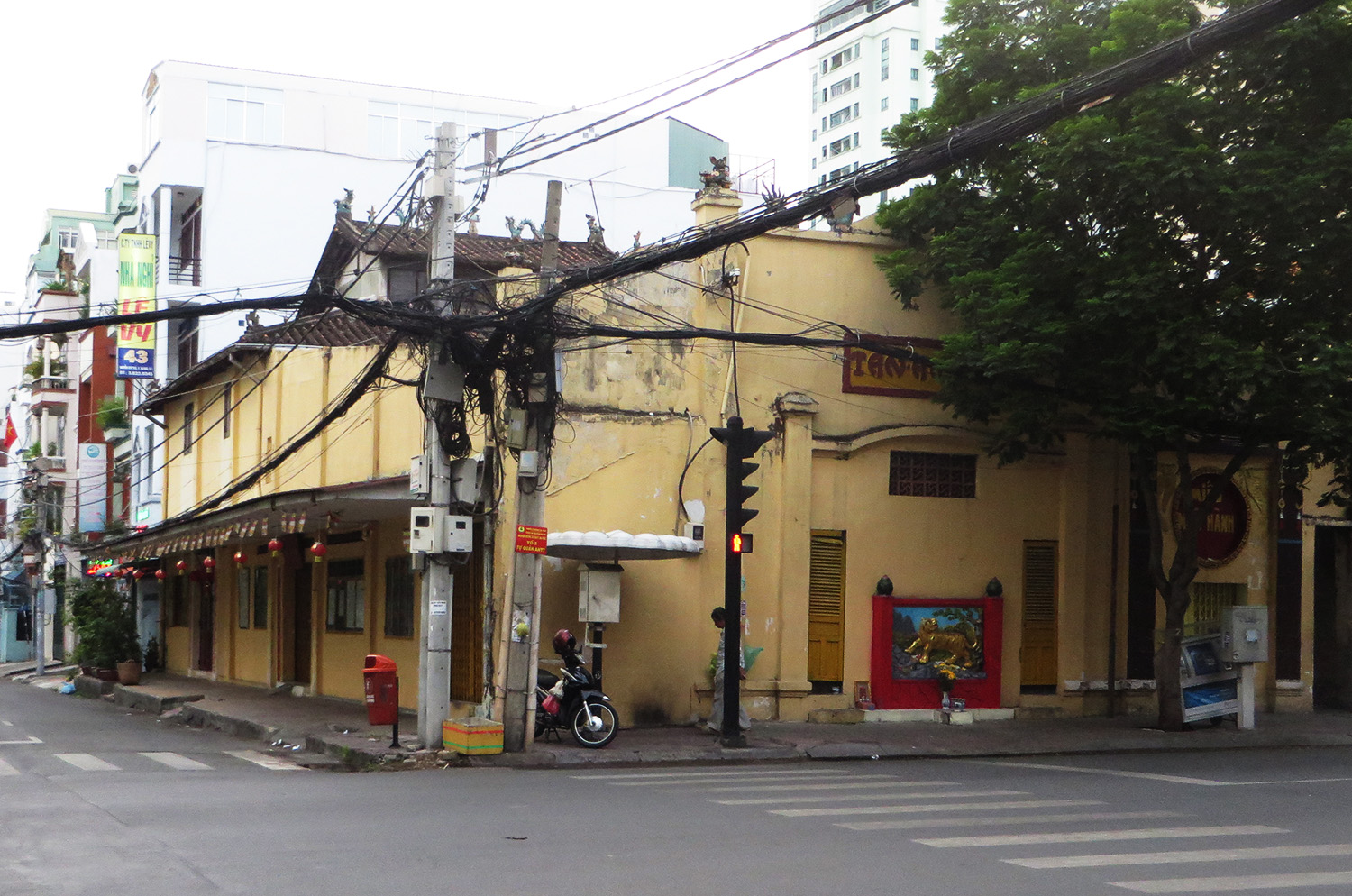
The Đình Tân An at 26 Bis Nguyễn Bỉnh Khiêm in Đa Kao, pictured in early 2011 before it was restored

This article was published previously in Saigoneer http://saigoneer.com

With so many old buildings being destroyed in the name of development, it’s encouraging to learn that one of the city’s most ancient communal houses, the Đình Tân An at 26 Bis Nguyễn Bỉnh Khiêm in Đa Kao, has recently been given a second chance.

According to Trịnh Hoài Đức’s Gia Định thành thông chí (嘉定城通志), Tân An village was set up in 1818 as part of the tổng (canton) of Bình Trị, in Bình Dương district. The village communal house is believed to have been inaugurated soon after, though the current two-storey building dates from 1909, when King Duy Tân (1907-1916) issued an official nomination (sắc phong) consecrating it as a sanctuary for the worship of the Thành hoàng bổn cảnh or tutelary gods of Tân An village.

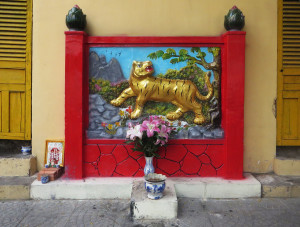
A tiger stele in front of the Đình Tân An

Despite being located very close to the 1837 Gia Định Citadel walls, the communal house survived the destruction of the 1859 French invasion. However, in the 1860s, its front yard and outer gate were lost to colonial road construction. The entire building was refurbished in 1931.

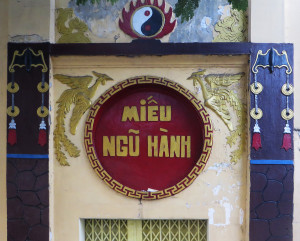
Like many southern communal houses, the Đình Tân An combined the worship of the village deities with the veneration of founding and later ancestors (tiền hiền and hậu hiền) and of feminine deities with a creative function, such as the Tư Vị Thánh Nương Nương or four “Holy Mothers” – Mẫu Thượng Thiên (goddess of the upper sky), Mẫu Thượng Ngàn (goddess of the highlands), Mẫu Thoải (goddess of the waters) and Mẫu Địa (goddess of the earth) – as well as the goddesses of the five elements (Ngũ hành). From an early date, the latter were worshipped in their own separate temple at the front of the building.

In total, the Đình Tân An is said to have received four sắc phong from the Nguyễn dynasty court, although only one granted by King Tự Đức (1847–1883) has survived.

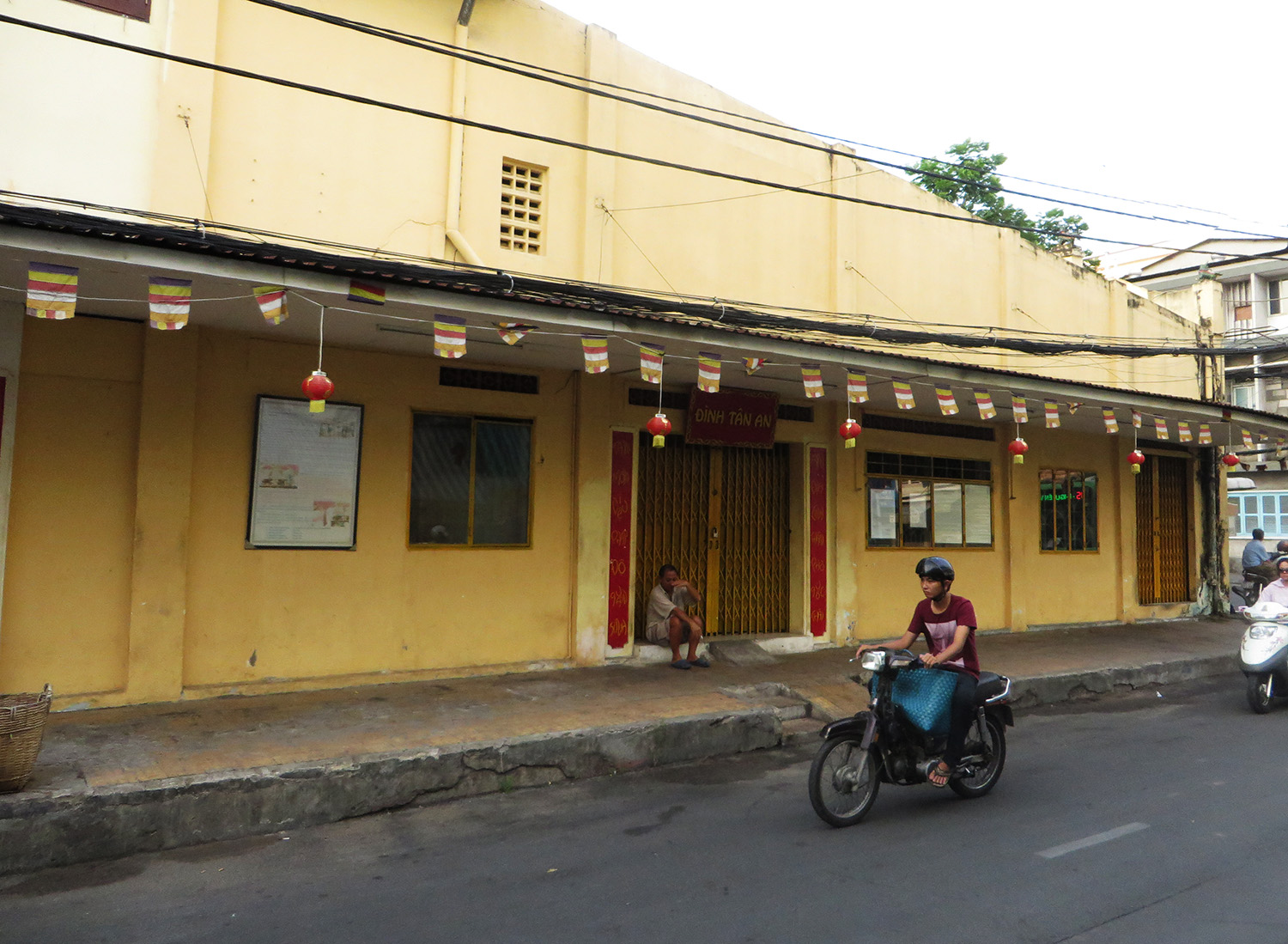
A side view of the Đình Tân An

After 1975, lacking a maintenance budget, the old communal house gradually fell into disrepair. The main hall (chính điện) upstairs with its principal shrines continued to be used by local elders, but by the 1990s, the ceremonial space (võ ca) on the ground floor was in such poor condition that the annual Kỳ Yên ceremony could no longer be celebrated there. Đa Kao Ward People’s Committee subsequently decided to lease the entire downstairs space to outside organisations.

In July 2011, Người Lao Động (Worker) newspaper ran a series of articles entitled “Xẻ thịt đình thần” (Cutting up temples), drawing the public’s attention to the sad state of many of the city’s old temple buildings. Considerable column space was given to the Đình Tân An, the ground floor of which had been “chopped to pieces” to create company store rooms, a weight training room and a women’s health education centre.

The article clearly had the desired effect, because in the following month, leaders of the Hồ Chí Minh City People’s Committee directed the Ward to resolve this embarrassing problem. Then in February 2012, the communal house received a grant of 500 million đồng for its restoration.

The Ngũ hành (five elements) goddesses are worshipped in their own temple at the front of the building

After the work had been completed, a solemn Kỳ Yên ceremony was arranged for the morning of the 7 April 2012 (the 17th day of the 3rd lunar month). However according to a follow-up report by Người Lao Động, participants arrived only to find the võ ca still packed full of equipment belonging to the former tenants!

Approached by the newspaper to comment on the fact that the communal house had still not been returned to the local people, Mrs Nguyễn Thị Liên, Vice Chairman of District 1 People’s Committee, commented: “The đình is a place for people to perform religious rites and worship the gods; as for all other activities, such as weight training and company storage, this is a problem which needs to be overcome. The Ward should also review the use of the đình for women’s health education. All activities which adversely affect the đình are unacceptable.”

That finally did the trick. The võ ca was cleared, and since that time, Tân An village communal house has resumed its traditional role as the heart and soul of the local community in this, one of the busiest parts of town.

Another side view of the Đình Tân An

The Đình Tân An sits on the junction of Nguyễn Bỉnh Khiêm and Nguyễn Văn Thủ

Tim Doling is the author of the guidebook Exploring Saigon-Chợ Lớn – Vanishing heritage of Hồ Chí Minh City (Nhà Xuất Bản Thế Giới, Hà Nội, 2019)

A full index of all Tim’s blog articles since November 2013 is now available here.

Join the Facebook group pages Saigon-Chợ Lớn Then & Now to see historic photographs juxtaposed with new ones taken in the same locations, and Đài Quan sát Di sản Sài Gòn – Saigon Heritage Observatory for up-to-date information on conservation issues in Saigon and Chợ Lớn.
The “Leaning Cathedral” of Saigon

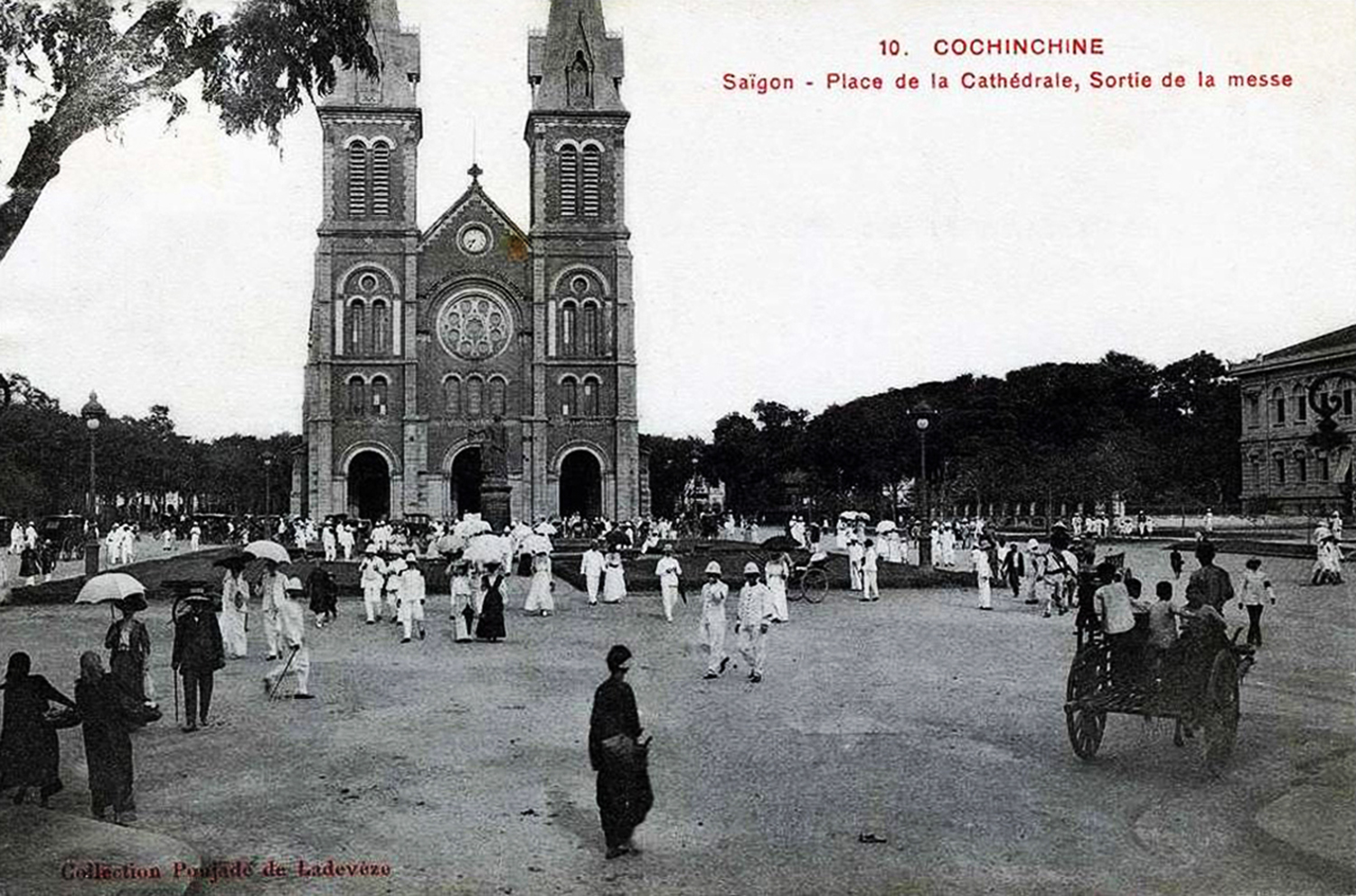
Saigon – Cathedral square – coming out of mass

This article was published previously in Saigoneer http://saigoneer.com

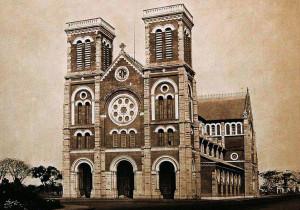
Soon after its completion in 1879, Saigon’s iconic Notre Dame Cathedral developed an embarrassing tilt.

The ill-fated Église Sainte-Marie-Immaculée (1863)

Saigon Cathedral was built in 1877-1879 to a design by Jules Bourard, as a replacement for the ill-fated 1863 Église Sainte-Marie-Immaculée, which stood on the site of the modern Sun Wah Tower (Nguyễn Huệ) until it became infested by termites and had to be demolished – see Icons of Old Saigon: the Eglise Sainte-Marie-Immaculee .

The first stone of the new cathedral was laid on 7 October 1877 by Admiral-Governor Victor Duperré, in the presence of Bishop Isidore Colombert.

At the time of construction, the problem of supplying fresh water to city residents had reached crisis point. It was therefore seen by many as an “act of God” that in 1877, while the foundations of the cathedral were being laid, workers chanced upon a deep underground aquifer. Later that year, the first Château d’eau (water tower) was built on the junction of rue Sohier and rue Catinat prolongée (the modern Turtle Lake roundabout), to supply drinking water to city residents via a network of underground conduits and street pumps.

Saigon – the Water Tower

In his feature “Monumental Saigon – streets and boulevards,” published in the July-December 1893 edition of the geographical adventure magazine Tour du Monde, Pierre Barrelon commented: “That great underground aquifer now amply feeds Saigon with water which many cities in France would be envious of. The flow of this underground lake is inexhaustible, and during the dry season, as during wintertime, public fountains and private pipes never dry up” – see Saigon Waterworks Tower.

However, as Barrelon went on to explain, the discovery of this aquifer was not welcomed by the cathedral construction team.“The sandy soil, which forms a natural filter for this beneficial lake, created a thousand problems for the builders of this heavy construction, making it necessary for them to lengthen their initial works in order to find a very deep resistant layer.” Eventually a solution was found, construction resumed, and three years later on 11 April 1880 (Easter Sunday), Cochinchina Governor Charles Le Myre de Vilers and Bishop Isidore presided over the inauguration of the new cathedral.

Saigon Cathedral in 1882

In the years which followed, this “beautiful monument of brick and stone” became “dear to many Saigonnais…” until one day, someone noticed that the cathedral had begun to tilt over on one side. “The mass gained the upper hand,” explained Barrelon, “and one of the towers began to sink! Quite lightly, but nonetheless in an observable way, so that, like Notre Dame in Paris, the cathedral of Saigon now has towers of unequal height, which displease those in favour of irreproachable symmetry.”

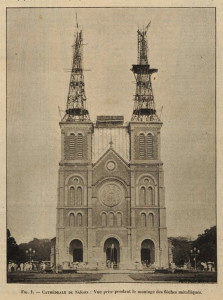
Urgent remedial work was done to prevent further subsidence, but the embarrassing tilt remained. Finally, in 1892, it was decided that two cast iron spires should be added, at a cost of 66,500 francs. Albert Butin’s article “Les Flêches métalliques de la Cathédrale de Saigon” (The metallic spires of Saigon Cathedral), published in the May 1896 edition of Le Génie civil: revue générale des industries françaises et étrangères, describes in detail the construction of the spires, which was entrusted to M Michelin, “Ingénieur des Arts et Manufacture,” and got underway on 26 December 1894.

The Saigon Cathedral spires under construction in 1895

In the original specifications, the spires took the form of 27m high octagonal pyramids with unequal sides, placed directly on the top of each tower and sealed into the masonry by means of brackets extending 3m inside the towers. Each spire was topped by a cross and incorporated four skylights order to provide ventilation to the upper parts of the building. However, during construction, a decision was made to increase the height of the west spire slightly, making it taller than the east spire, in order to restore symmetry. The spires were completed on 28 February 1895.

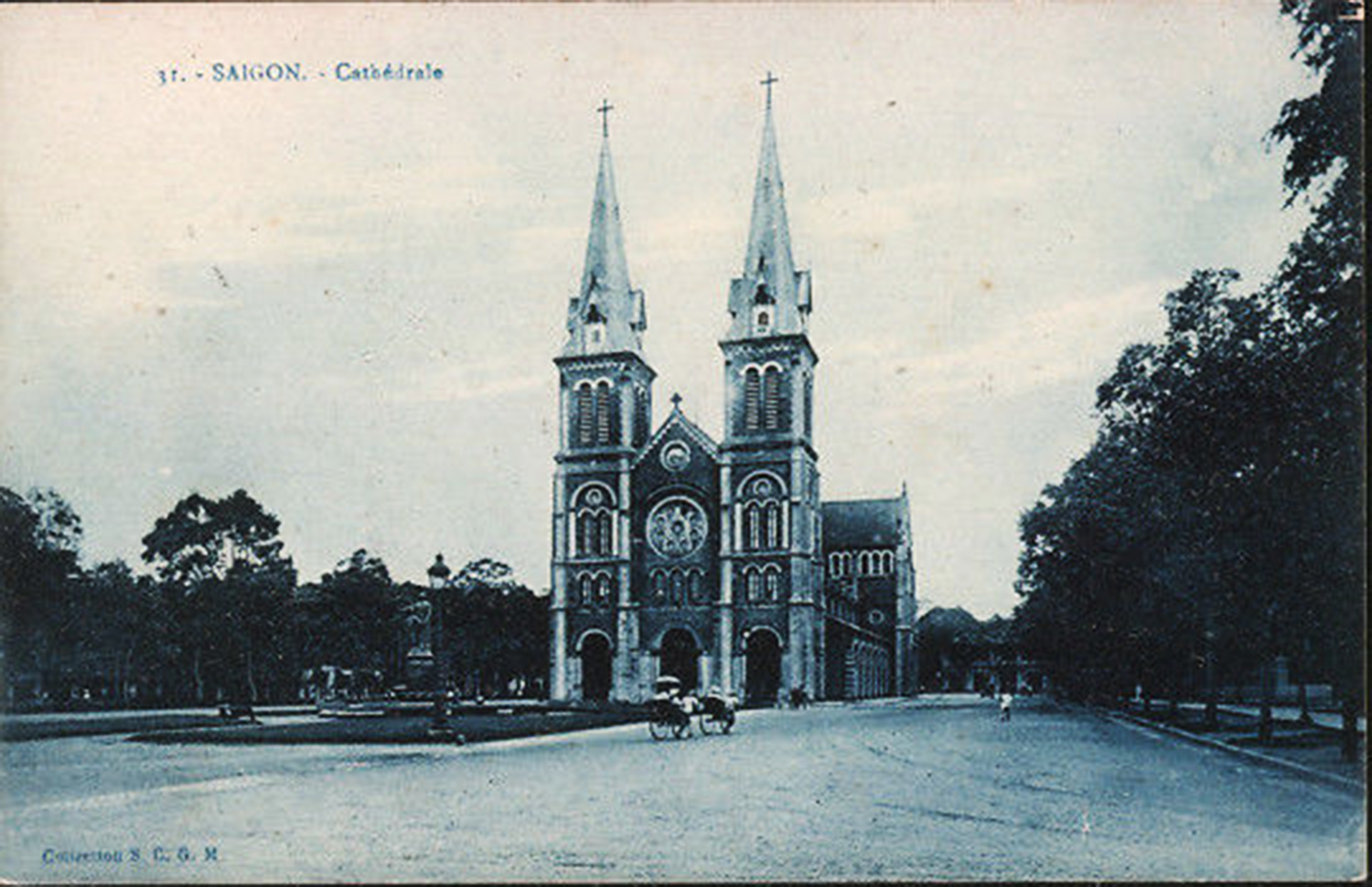
The addition of those spires seems to have solved the problem of the “Leaning Cathedral of Saigon,” but it seems that that not everyone was convinced – for many years afterwards, it was said that if you stood at the top of rue Catinat (modern Đồng Khởi street), the difference in height between the two towers was still clearly visible!

15

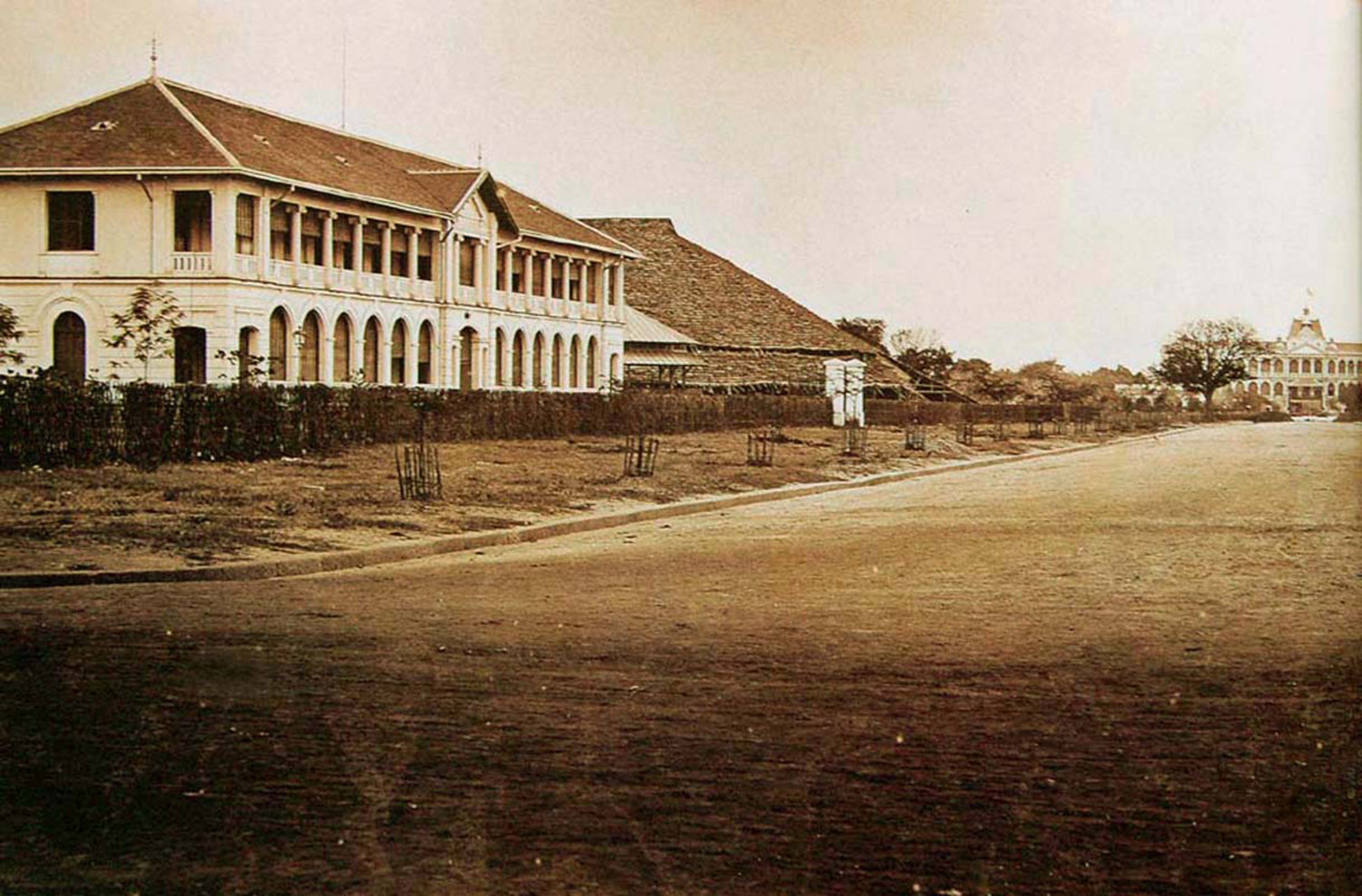
The cathedral construction site is visible in the background of this picture of the Cercle des Officiers building (1876)

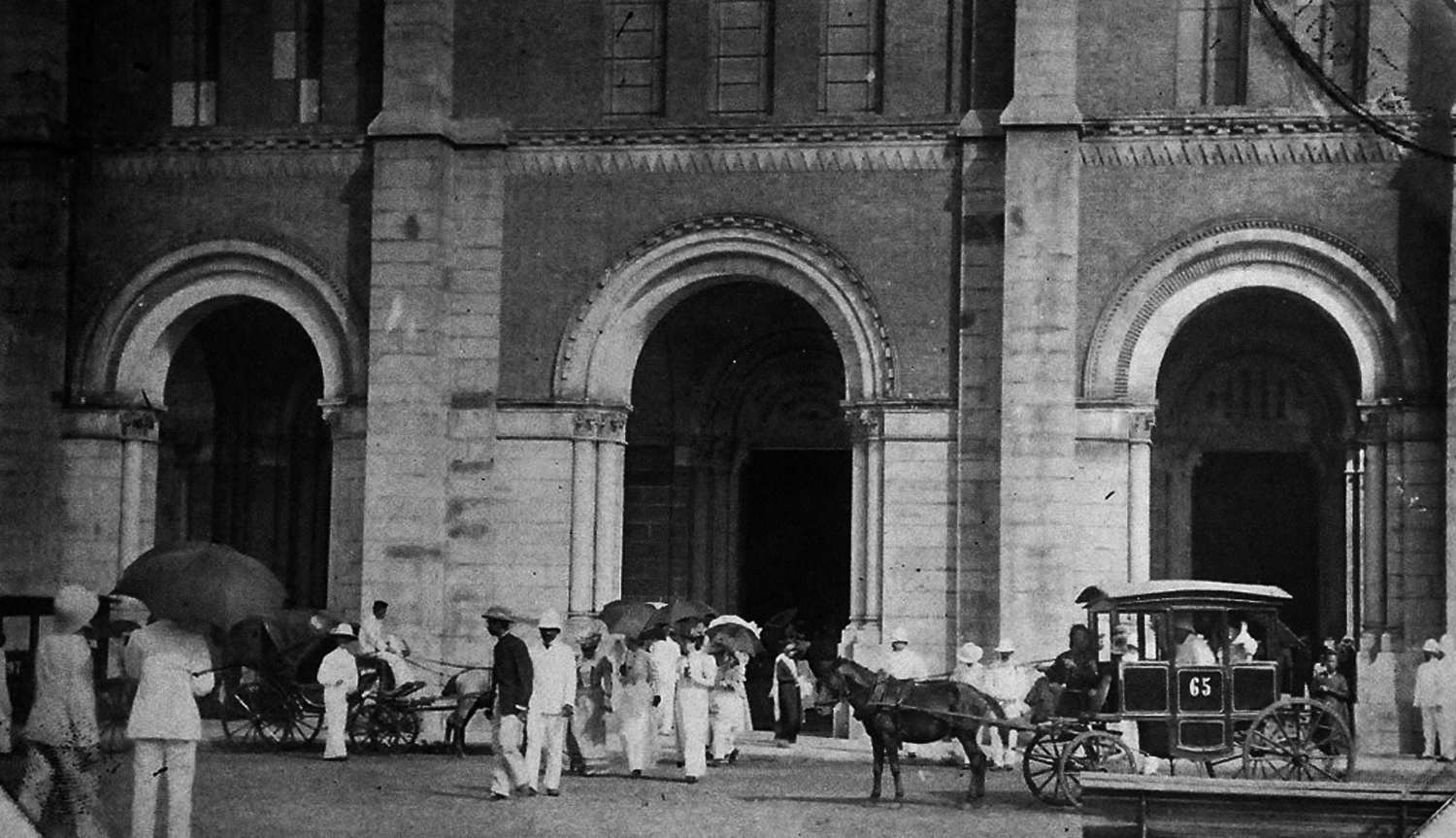
Saigon Cathedral in the early 1900s

The entrance to Saigon Cathedral in the early 1900s

Tim Doling is the author of the guidebook Exploring Saigon-Chợ Lớn – Vanishing heritage of Hồ Chí Minh City (Nhà Xuất Bản Thế Giới, Hà Nội, 2019)

A full index of all Tim’s blog articles since November 2013 is now available here.

Join the Facebook group pages Saigon-Chợ Lớn Then & Now to see historic photographs juxtaposed with new ones taken in the same locations, and Đài Quan sát Di sản Sài Gòn – Saigon Heritage Observatory for up-to-date information on conservation issues in Saigon and Chợ Lớn.
Old Saigon Building of the Week – 136 Ly Tu Trong, 1900-1910

The former villa of Apostolic missionary Father André Edouard Stanislas de Coopman at 136 Lý Tự Trọng

This article was published previously in Saigoneer http://saigoneer.com

Owned during the colonial era by the Roman Catholic Church, the two-storey French villa at 136 Lý Tự Trọng in District 1 is one of just a handful of surviving French villas on that busy street.

For over 60 years after the French conquest, Saigon was served by an Apostolic Vicariate, a special type of ecclesiastical jurisdiction set up in missionary regions not served by full dioceses. In 1924, Saigon finally became a diocese in its own right, but even after that date, missionary outreach continued to be an important aspect of the church’s work in Cochinchina. To that end, right down to 1954, the diocese retained a core staff of “Apostolic missionaries,” who were accommodated in various church properties around the city.

One of these Apostolic missionaries was André Edouard Stanislas de Coopman, who, according to the records of the Missions Etrangères de Paris, was born on 7 May 1879 in Friville-Escarbotin (Somme) and ordained as a priest on 28 September 1902. He left for Cochinchina on 19 November 1902.

De Coopman became a respected figure in the church in Saigon, and in the early 1920s he was appointed as Vicar of Saigon Cathedral. Then in 1927-1928, Bishop Dumortier made him responsible for setting up a new parish with a resident Annamite priest on Poulo-Condor (Côn Sơn) prison island.

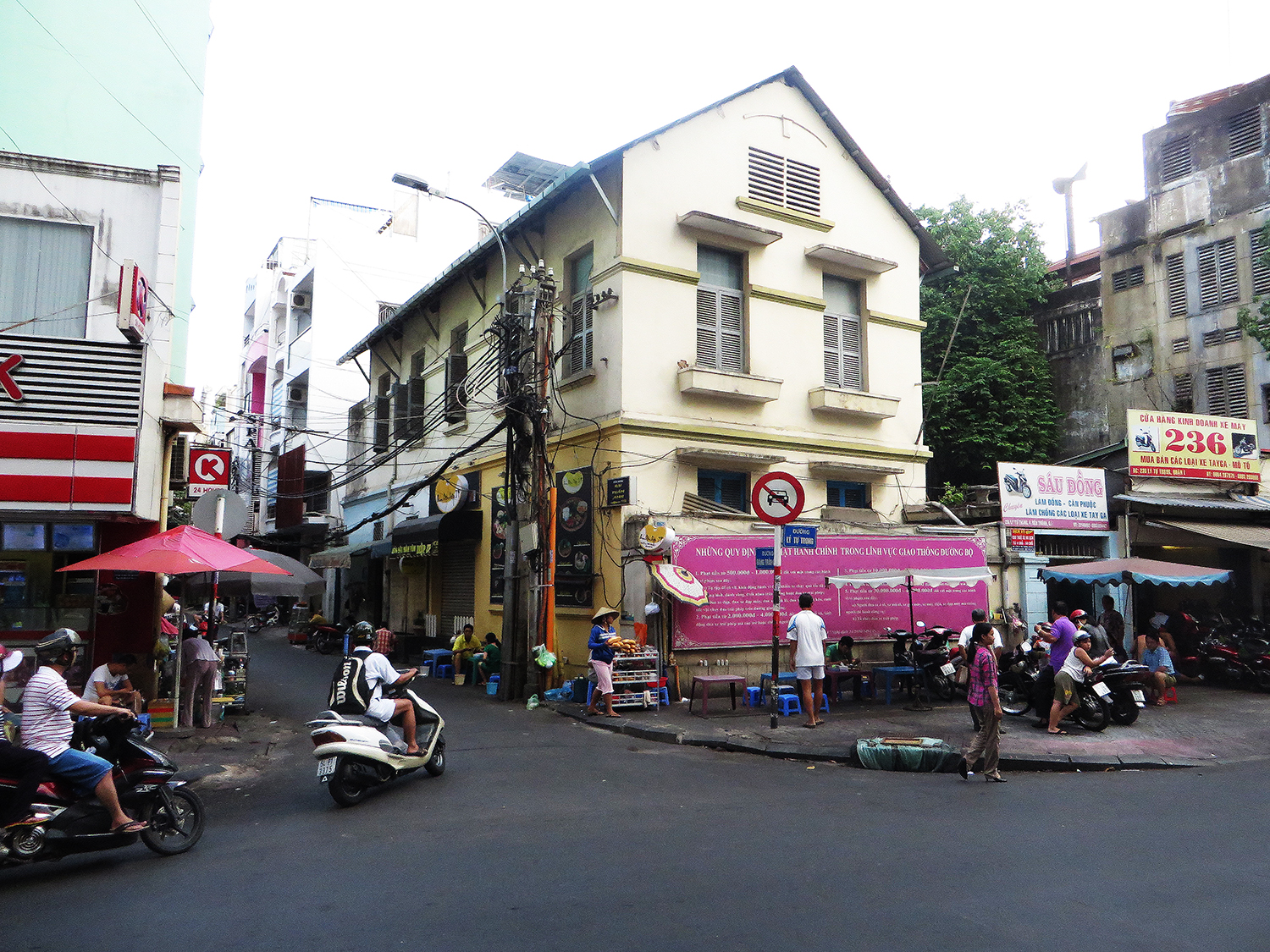
Father de Coopman was based at the Bishop’s (now Archbishop’s) Palace at 180 rue Richaud (Nguyễn Đình Chiểu), but his residence was the two-storey villa at 136 rue de Lagrandière, which still stands today on the corner of modern Lý Tự Trọng and Đặng Trần Côn (the former rue Farinole) in District 1.

De Coopman died on 20 February 1940 in Saigon. After the departure of the French, his former residence was one of many former church properties to be placed on the market. Since that time, it has served variously as mixed residential and office space.

Tim Doling is the author of the guidebook Exploring Saigon-Chợ Lớn – Vanishing heritage of Hồ Chí Minh City (Nhà Xuất Bản Thế Giới, Hà Nội, 2019)

A full index of all Tim’s blog articles since November 2013 is now available here.

Join the Facebook group pages Saigon-Chợ Lớn Then & Now to see historic photographs juxtaposed with new ones taken in the same locations, and Đài Quan sát Di sản Sài Gòn – Saigon Heritage Observatory for up-to-date information on conservation issues in Saigon and Chợ Lớn.
Ancient Tombs of Saigon – Phan Tan Huynh Tomb, 1824

The Phan Tấn Huỳnh tomb at Hẻm 120 Huỳnh Văn Bánh in Phú Nhuận district

This article was published previously in Saigoneer http://saigoneer.com

Hidden away at the end of an alley in Phú Nhuận is the forgotten tomb of Marshal Lê Văn Duyệt’s deputy, Phan Tấn Huỳnh.

The tiger on the front face of the screen at the Phan Tấn Huỳnh tomb

Phan Tấn Huỳnh 潘晉黃 (1754-1824) was a royal mandarin who distinguished himself in the 1790s in the military service of Lord Nguyễn Phúc Ánh, later becoming a high-ranking official at Gia Định Citadel. His modest tomb, situated at the end of Hẻm 120 Huỳnh Văn Bánh in Phú Nhuận district, is housed within a small walled compound and concealed by a large screen.

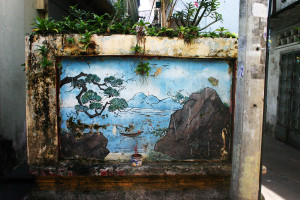
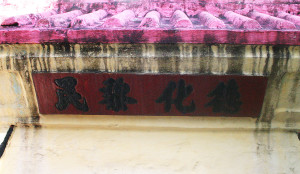
The screen in front of Phan Tấn Huỳnh’s tomb features paintings of a tiger on the front and a coastal scene on the rear. The tomb itself is accessed by a small gate with an imitation traditional tube-tiled roof, above which are inscribed the Chinese characters 德化黎民 (Dé huà lí mín or Đức hóa lê dân, literally “Making the common people virtuous”). Twin sentences (câu đối) in Chinese on either side of the gate praise Phan Tấn Huỳnh’s great loyalty and service to his country.

The coastal scene on the rear face of the screen at the Phan Tấn Huỳnh tomb

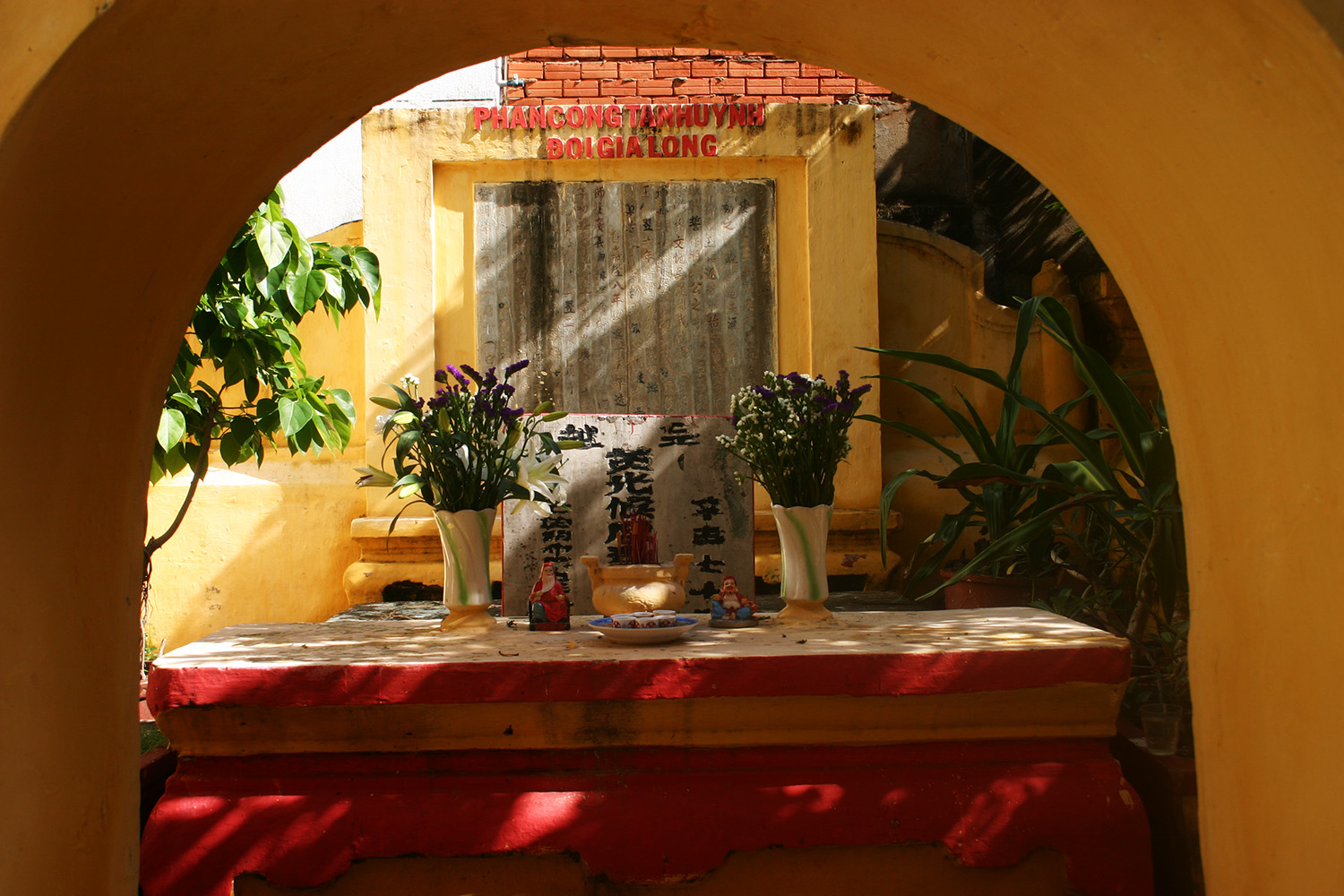
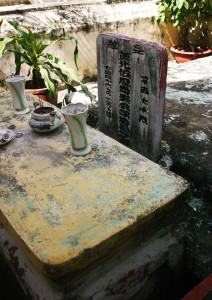
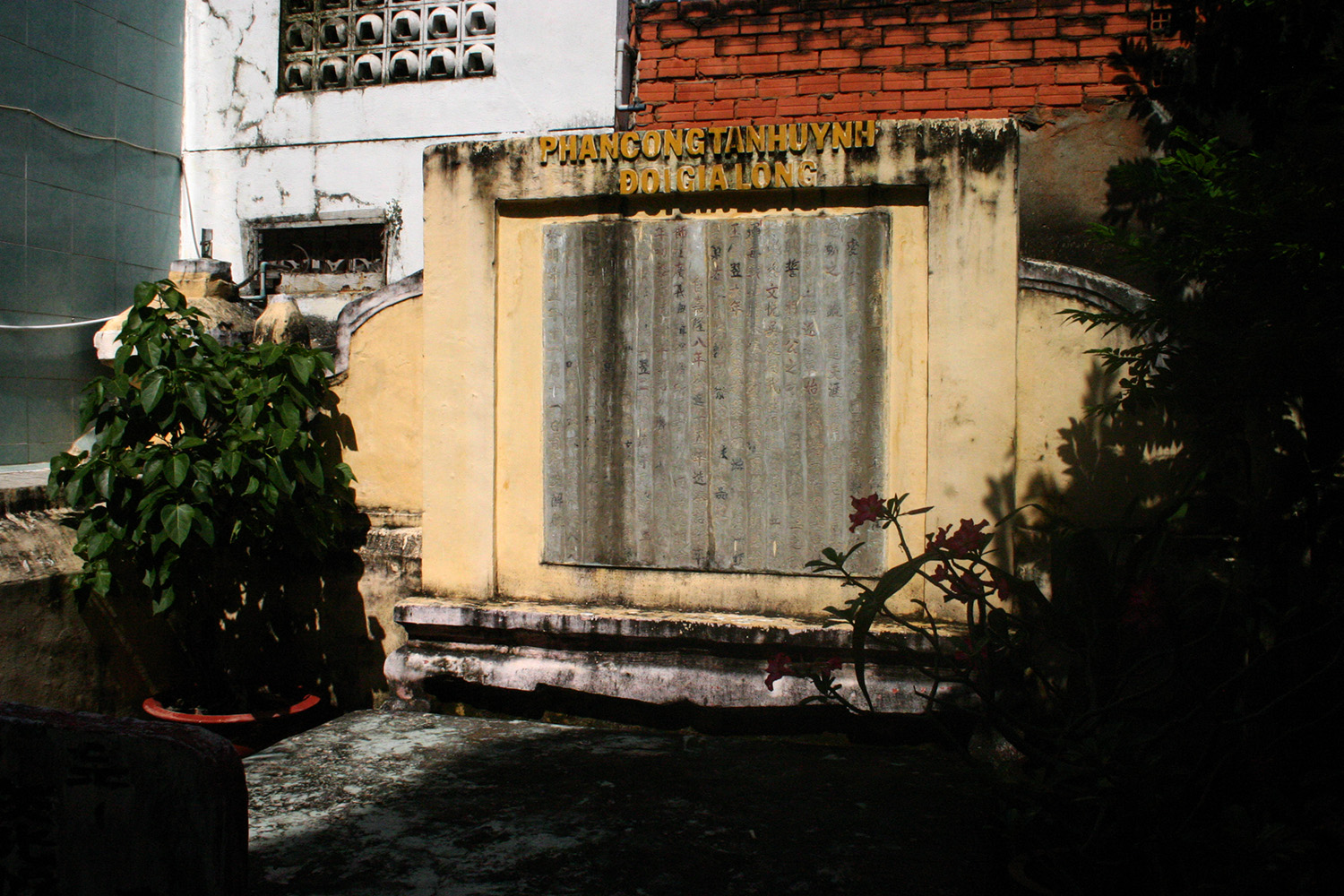
Inside the tomb compound, there is an altar in front of the tomb, backed by a small stele bearing Phan Tấn Huỳnh’s names and titles. However, it is the eulogy – inscribed in Chinese characters on the rear screen behind the tomb – which tells us most about the man who was buried here nearly 200 years ago.

According to the eulogy, Phan Tấn Huỳnh (posthumous name Khiêm) was a descendant of one Phan Công Thiên, who migrated from Quảng Nam to Gia Ðịnh in the late 17th century. During the Nguyễn-Tây Sơn war, “having greater skill than others,” Huỳnh fought courageously in Nguyễn Phúc Ánh’s armies under such famous generals as Lê Văn Duyệt, Ngô Tùng Châu, Võ Tánh and Trương Tấn Bửu.

The Chinese characters 德化黎民 (Dé huà lí mín or Đức hóa lê dân, literally “Making the common people virtuous”) above the gate of the Phan Tấn Huỳnh tomb

In 1802, after Nguyễn Phúc Ánh took the throne as King Gia Long, Phan Tấn Huỳnh was granted the honorary title Hoàng Ngọc Hầu. Then in 1807, he himself became a General and High-ranking Special Envoy, charged with assisting Marshal Lê Văn Duyệt in his duties as Governor of Gia Định.

Phan Tấn Huỳnh distinguished himself in battle again in 1809-1816, when he served as deputy commander of a long campaign against rebel forces in Quảng Ngãi.

In 1820, he became Divisional Commander of Phiên An (Bến Nghé, now Saigon), and “over the next two years, all of the documents of Marshal Lê Văn Duyệt were drafted by his hand.” During this period, he also promoted the colonisation of new land in Gia Định by offering incentives to Việt settlers.

In front of the tomb is an altar and a small stele bearing Phan Tấn Huỳnh’s names and titles

In 1822, Phan Tấn Huỳnh’s health began to deteriorate due to old age and he was permitted to retire on an official pension. However, the eulogy tells us that just two years later, “for reasons of poor health and severe illness, he did not want to become an encumbrance to his children, so he committed suicide to free himself from suffering, on the 11th day of the 11th lunar month in the fifth year of King Minh Mạng (1824).”

Not yet recognised as a heritage site, the Phan Tấn Huỳnh Tomb is currently cared for by a local family, though sadly, few of the other residents of Hẻm 120 seem to have any knowledge of the great royal mandarin buried in their midst.

You may also be interested to read these articles:

Forgotten Nguyen Dynasty Tombs of Phu Nhuan
Ancient Tombs of Saigon – Lam Tam Lang Tomb, 1841
Ta Duong Minh – Thu Duc’s Founding Father 1860s

Behind the tomb is a large screen inscribed with Chinese characters which recount Phan Tiến Huỳnh’s distinguished career.

Tim Doling is the author of the guidebook Exploring Saigon-Chợ Lớn – Vanishing heritage of Hồ Chí Minh City (Nhà Xuất Bản Thế Giới, Hà Nội, 2019)

A full index of all Tim’s blog articles since November 2013 is now available here.

Join the Facebook group pages Saigon-Chợ Lớn Then & Now to see historic photographs juxtaposed with new ones taken in the same locations, and Đài Quan sát Di sản Sài Gòn – Saigon Heritage Observatory for up-to-date information on conservation issues in Saigon and Chợ Lớn.

“It Seems that One Network is being Stripped to Re-equip Another” – The Controversial CFI Locomotive Exchange of 1935-1936

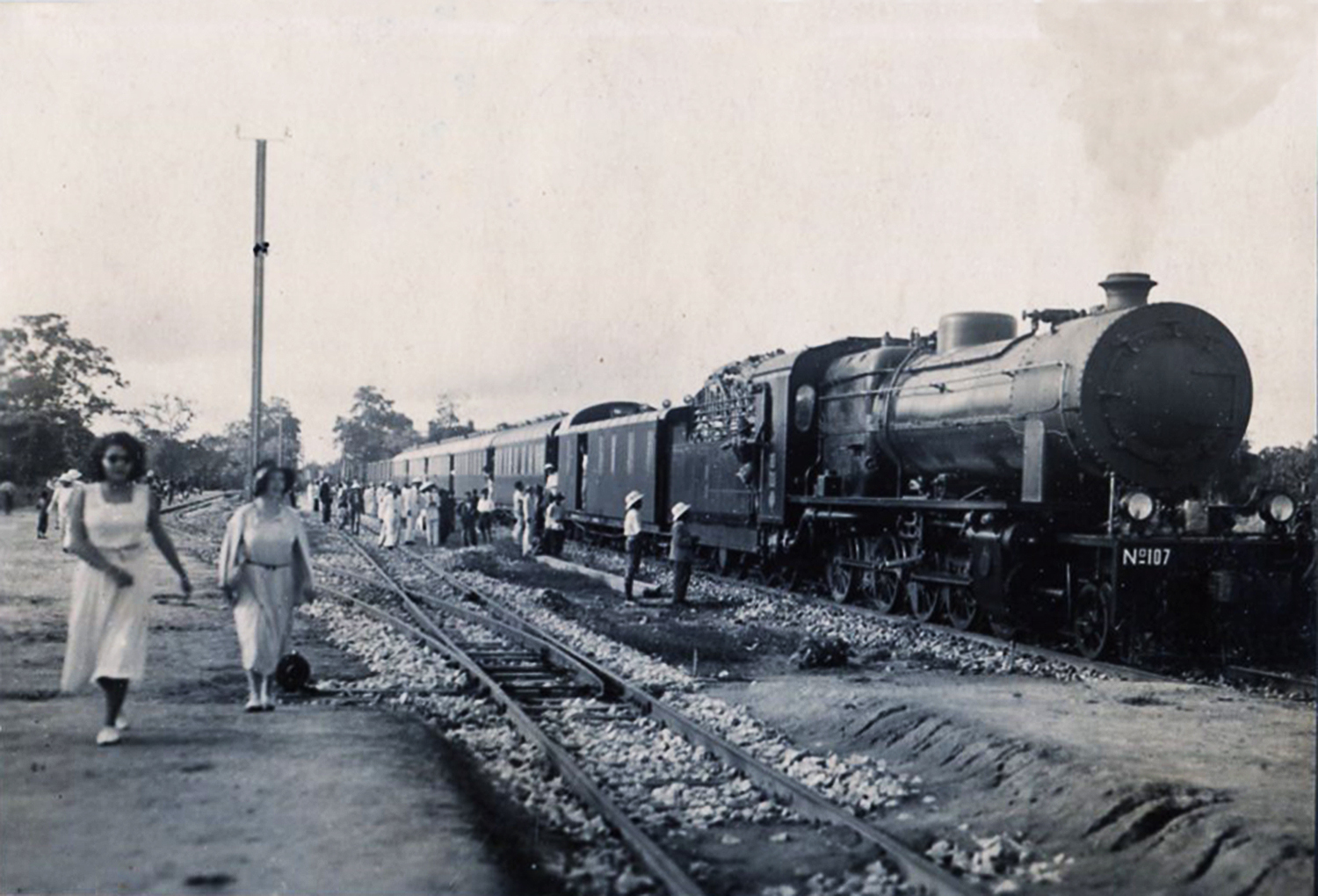
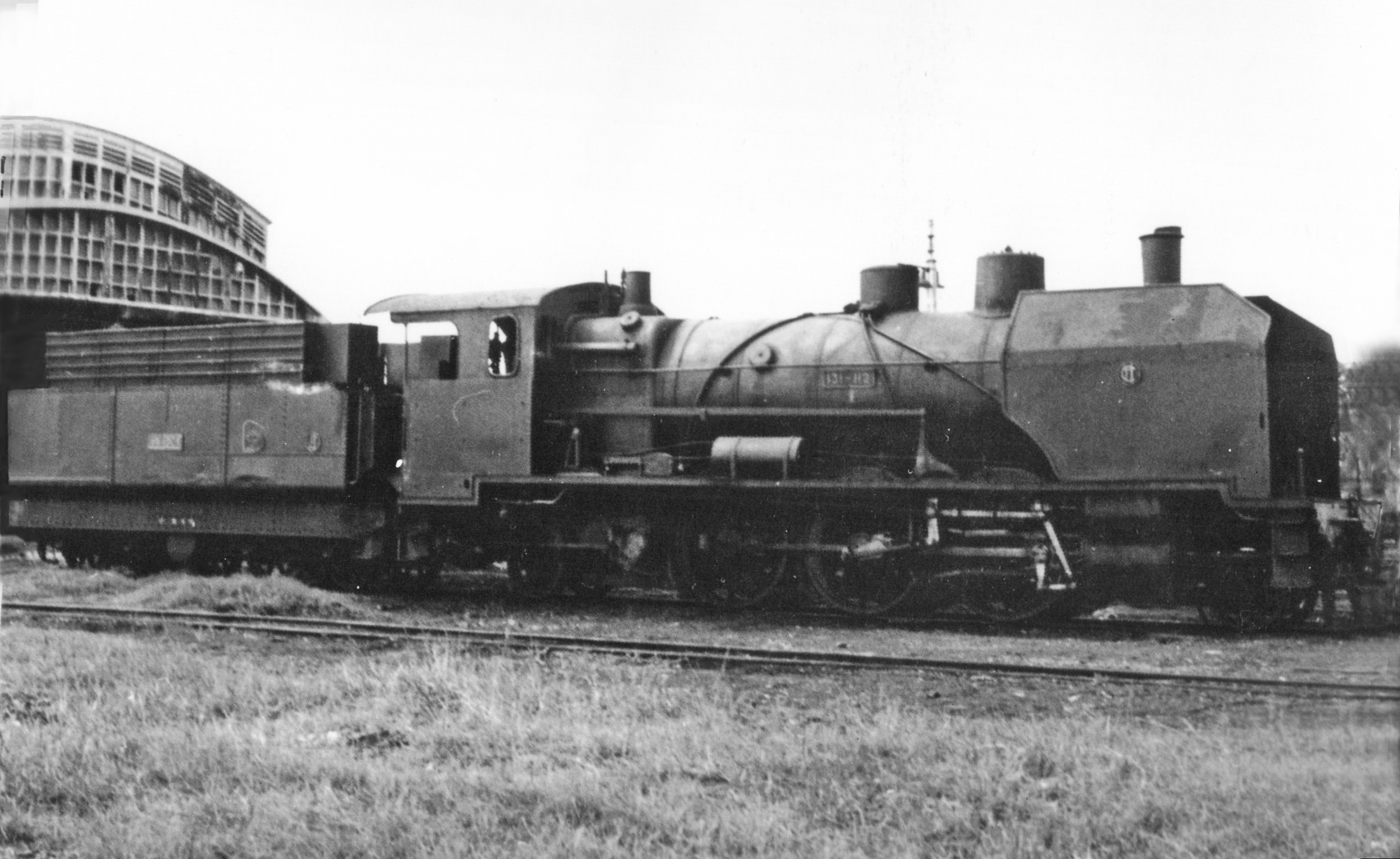
Hannoversche Maschinenbau AG (Hanomag) 2-10-0 “Decapod” No 107 pictured in service in Cambodia before its transfer to Saigon

Several years before the opening of the Transindindochinois (North-South railway line) in 1936, officials of the Chemins de fer de l’Indochine (CFI) resolved to bring a number of privately-run railways under government control, with a view to rationalising the rail network and, crucially, getting their hands on some powerful new German-built locomotives.

Opened in 1933, Cambodia’s Phnom Penh-Mongkolborey line was built and operated initially as a franchise by the Compagnie des chemins de fer du sud de l’Indochine (CCFSI). The funding for the construction of the line came from German war reparations, which also made possible the acquisition of a powerful fleet of 20 locomotives built by the Hannoversche Maschinenbau AG (Hanomag) company of Hanover. These comprised seven 4-6-2 “Pacifics” (numbered 1-7), ten 2-10-0 “Decapods” (numbered 101-110) and three 2-8-2T freight locomotives (numbered 201-203), all built in 1930.

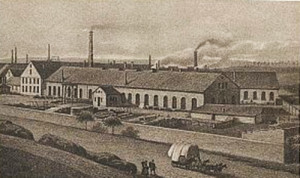
The Hannoversche Maschinenbau AG (Hanomag) factory

In fact, the CCFSI franchise lasted little more than three years. Soon after the line opened, scrutiny of the company’s accounts by government auditors revealed that significant savings could be made if the line was returned to the Colony and run directly as part of the réseaux non concédés (non-conceded networks, also known as CFI). On that basis, following a decision of the Governor General dated 1 December 1934, it was announced that with effect from 1 January 1936 the franchise would be returned to the government and the line would become part of the CFI’s Réseau du Sud (Southern Network), headquartered in Saigon.
However, subsequent events suggest that the takeover of the Phnom Penh-Mongkolborey line from CCFSI was part of a wider plan by the colonial authorities to rationalise the rail networks in advance of the opening of the Transindochinois (North-South line), and in particular to permit CFI to get its hands on the powerful German locomotives which were owned by the private railway companies.
Even before the expiry of the CCFSI contract, the CFI began a controversial locomotive exchange between Phnom Penh and Saigon, transferring the heavier and stronger Cambodian Hanomag locomotives to Cochinchina and replacing them with older and lower-powered CFI engines. This exchange was viewed with alarm by colonial councillors in Phnom Penh, who in late 1935 sent a strongly-worded Resolution to the Grand conseil des intérêts économiques et financiers de l’Indochine (Supreme Council for the Economic and Financial Interests of Indochina) for discussion. Here is a translation of the Resolution and the Supreme Council’s reply:

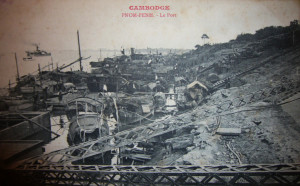
Phnom Penh Port in the colonial era

RESOLUTION No. 8 regarding the locomotives of the Phnom Penh-Battambang-Mongkolborey railway.

The Governor General, by means of an order issued before the end of 1934, has withdrawn the concession agreement granted previously to the Phnom Penh-Mongkolborey railway; the Company will return the conceded line to the Administration on 1 January 1936.

From that date; the line will be administered by the Circonscription d’exploitation des chemins de fer non concédés [the administration of the non-conceded rail networks, ie CFI].

We had assumed that the CFI would not take over the running of the Phnom Penh-Mongkolborey line until 1 January 1936, after the expiry of the franchise.

But that’s not the case. Assuming its powers several months in advance of the expiry of the existing franchise, CFI has already given the order to dismantle the best locomotives in the network. The first one has already been crated up for delivery by ship to Saigon, and the others will follow.

It seems that one network is being stripped to re-equip another.

What will be sent to replace our good locomotives, which gave such excellent service on our expresses, without ever once being late? One cannot improve on a perfect service, it can only be made worse.

Hannoversche Maschinenbau AG (Hanomag) 2-10-0 “Decapod” No 107 pictured in service in Cambodia before its transfer to Saigon

Is it really wise, in a period of crisis, to carry out experiments like this, the results of which will more than likely be doubtful? Wouldn’t it be better to leave things as they are?

Under these conditions, the undersigned Councillors express the wish that the status quo is maintained, and that the locomotive already dismantled be reassembled forthwith and returned to service on the Phnom Penh-Mongkolborey line.

Signed: Navarre, Tromeur, Tan-Mau, Lim-Hac-Seng, Tea-San

RESPONSE

The change in usage of some locomotives, which had hitherto been used on the Phnom Penh-Battambang-Mongkolborey line, and which prompted the submission of this Resolution, are the logical consequence of the recovery of this line by the Colony, and of the need to make the best use of equipment belonging to all of the non-conceded networks.

The concession of the Phnom Penh-Battambang-Mongkolborey line was withdrawn from the Compagnie des Chemins de fer du Sud de l’Indochine for various reasons. One is that, with the impending completion of the Transindochinois, the withdrawal of the franchise facilitates the reorganisation of services on the non-conceded networks, in other words a complete regrouping and consolidation of the railway lines under the management of the Colony, as recommended by the Finance Committee of the Chamber of Deputies and advised by the Minister of Colonies.

The Transindochinois under construction

One benefit of this regrouping is that, by facilitating locomotive exchanges, it permits a better distribution of rolling stock throughout all of the networks. While the reserve equipment required for a single network is substantial, considerable savings may be made by drawing on a common pool of reserve equipment for all of the networks together.

It turns out that the Phnom Penh-Mongkolborey line had been very generously endowed with equipment, because at the time of construction of the line, it had been expected that after opening there would be a rapid and significant increase in traffic. The Cambodian locomotive fleet today is superabundant: Two “Pacific” locomotives, five “Decapod” locomotives and three freight locomotives could easily be removed without inconvenience to the line’s operation. Moreover, the “Pacific” locomotives in service on the line have much greater power than is necessary for the haulage of trains between Phnom Penh and Mongkolborey, and thus their continued use is not economical.

Furthermore, the completion of the Transindochinois obliges the Colony to increase the amount of rolling stock in service on the non-conceded networks; in particular, it will need “Pacific” locomotives to haul the accelerated Hanoi-Saigon service, which from 1936 must be offered on a daily basis. On the other hand, the less powerful 200 [Société Franco-Belge 4-4-0 “Américaine”] and 300 [J F Cail 4-6-0 “Ten wheel”] locomotives, which are not suitable for use on the Transindochinois, will be more than sufficient on a railway of excellent profile such as Phnom Penh-Mongkolborey, to ensure the haulage of the passenger trains currently scheduled, at current tonnages and speeds.

One of the Société Franco-Belge 200 4-4-0 “Américaine” locomotives exchanged for larger and more powerful Hanomag machines

The merger of the Cambodian network with CFI, to be carried out on 1 January 1936, will permit the transfer of 200 and 300 locomotives to the Phnom Penh-Mongkolborey line and of the seven CCFSI locomotives (five currently in service and two surplus to requirements) to the Saigon-Hanoi line.

The five units removed from service on the Phnom Penh-Mongkolborey line will be replaced unit for unit: trials are currently underway for the selection of the most suitable locomotive models to replace them. Thus, the Colony has ordered the transfer of at least seven locomotives, without compromising in any way the good operation of either network. The exchange began in 1935 and has thus far been limited to one “Pacific” which has been replaced by a 200. The CCFSI does not regard the disposal of surplus locomotives before the return of the line to the Colony as an inconvenience.

Thus, the actions described in this Resolution had neither the purpose nor the result of “stripping” one network for the benefit of another, but rather of ensuring, throughout all of the unconceded networks, a better distribution of traction. The exchange is being conducted for the benefit of the general interest, which must take precedence over private interests.

From Réponses aux voeux émis par le Grand conseil des intérêts économiques et financiers de l’Indochine au cours de sa session ordinaire de 1935 (Hanoï: Imprimerie G Taupin & Cie, 1936)

One of the J F Cail 300 4-6-0 “Ten wheel” locomotives exchanged for larger and more powerful Hanomag machines

In fact, CFI had their eyes on more than seven locomotives – by the end of 1936, the entire 20-strong Hanomag fleet had been transferred to Saigon, where they were all put to work on the more demanding distances and gradients of the North-South line. In return, the Cambodian railway received not just 4-4-0 “Américaines” and 4-6-0 “Ten wheels,” but also several Société Franco-Belge 2-6-2 “Prairies.”

A very similar fate befell another southern rail franchise, the Bến Đồng Sổ-Lộc Ninh rubber plantation branch, which had also been built using German war reparations and opened in 1933 under the management of the Compagnie des voies ferrées de Lộc Ninh et du centre Indochinois (Lộc Ninh and Central Indochina Railway Company, CVFLNCI).

However, the powerful German locomotive fleet with which this line had been endowed – three 2-8-0 “Consolidation” locomotives (numbered 300-302) built in 1930–1931 by Borsig of Berlin – proved too heavy for the lighter grade rails of the Saigon tramway network, on which CVFLNCI freight services relied to access the Saigon Port. Consequently, the company was already hiring lighter locomotives from CFI when the termination of its franchise was announced in a governmental order of 6 August 1935.

Once again, the CFI used the argument that direct exploitation by the CFI could turn the company’s operating deficit into a surplus within a few years. As with the Cambodian line, the Bến Đồng Sổ-Lộc Ninh branch passed into government ownership with effect from 1 January 1936. Later that year, all three Borsig “Consolidation” locomotives were transferred to Saigon for use on the Transindichinois.

Eventually, the Cambodian railway was more than compensated for the removal of its powerful German locomotive fleet. In 1949-1952, in the wake of the establishment of the new Associated State of Cambodia within the French Union, the Cambodian network received a quota of SACM 4-6-2 “Super Pacifics” and SACM-Graffenstaden 2-8-2 “Mikados” to replace the older “Américaines” and “Ten wheels” which the CFI had compelled them to accept 15 years earlier.

Saigon, 1958 – Hannoversche Maschinenbau AG (Hanomag) 2-10-0 “Decapod” No 150-305, originally built for Cambodia, arrives with a local train. Photo Guy Rannou

Hannoversche Maschinenbau AG (Hanomag) 4-6-2 “Pacific” No 3 pictured in service on the Transindochinois in the late 1930s

A works photograph of a Borsig 2-8-0 “Consolidation” locomotive similar to those which were supplied to the Bến Đồng Sổ-Lộc Ninh line

A Société Franco-Belge 4-4-0 “Américaine” arriving at Vinh Station (CAOM)

A later superheated version of the J F Cail 300 4-6-0 “Ten wheel” locomotive at Hà Nội Depot

Société Franco-Belge 2-6-2 “Prairies” were also sent to Cambodia

Tim Doling is the author of The Railways and Tramways of Việt Nam (White Lotus Press, Bangkok, 2012) and also gives talks on Việt Nam railway history to visiting groups.

A full index of all Tim’s blog articles since November 2013 is now available here.

Join the Facebook group Rail Thing – Railways and Tramways of Việt Nam for more information about Việt Nam’s railway and tramway history and all the latest news from Vietnam Railways.

You may also be interested in these articles on the railways and tramways of Việt Nam, Cambodia and Laos:

The Saigon-Mỹ Tho Railway line
The changing faces of Saigon railway station
The Việt Nam Railways Building in Saigon
Saigon tramway network
Derailing Saigon’s 1966 monorail dream
Dồng Nai Forestry Tramway
Saigon’s Rubber Line
The Langbian Cog Railway
A relic of the steam railway age in Đà Nẵng
By Tram to Hội An
The railway which became an aerial tramway
The lost railway works of Trường Thi
The Long Biên Bridge – “a misshapen but essential component of Hà Nội’s heritage”
Hà Nội tramway network
Phủ Ninh Giang-Cẩm Giàng tramway
Goodbye to Steam at Thái Nguyên Steel Works
Full steam ahead on Cambodia’s Toll Royal Railway
The mysterious Khon island portage railway